


6,99 €
Mehr erfahren.
- Herausgeber: BQB Publishing
- Kategorie: Gesellschafts- und Liebesromane
- Sprache: Englisch
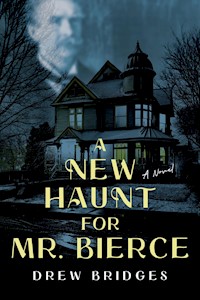
The ghost of a soldier turned writer joins a quest to save a human life.
The ghost of Ambrose Bierce, American writer and civil war Union soldier, has been displaced from the home he had been haunting.
Enlisting the aid of a "haunting agent," he finds a new residence that has the requisite dark history and terrible secret that makes it appropriate for haunting. Here he meets new spirits who reside in this version of the afterlife, a middle place between life and the ultimate destination.
Against his intentions, Bierce becomes caught up in the unsolved mystery of his new haunt. In partnership with an old friend, a Buddhist priest named "Sid" who has inhabited the spirit world for 25 centuries, he reluctantly involves himself in the matters of still living people. Bierce and his friend also become aware of the presence of mysterious "others" who are spirits who never held human form.
Bierce, Sid, and other new spirit friends ultimately find themselves as part of a quest to save a human life, rescue another spirit from oblivion, and discover the identity of the "others."
Das E-Book können Sie in Legimi-Apps oder einer beliebigen App lesen, die das folgende Format unterstützen:
Veröffentlichungsjahr: 2022
Ähnliche




















A New Haunt for Mr. Bierce, a Novel
© 2022 Drew Bridges. All rights reserved.
No part of this book may be reproduced in any form or by any means, electronic, mechanical, digital, photocopying, or recording, except for the inclusion in a review, without permission in writing from the publisher.
While the story is based on a real person, this is a work of fiction. All of the characters, names, incidents, organizations, and dialogue in this novel are either the products of the author’s imagination or are used fictitiously.
Published in the United States by BQB Publishing (an imprint of Boutique of Quality Books Publishing, Inc.)
www.bqbpublishing.com
Printed in the United States of America
978-1-952782-44-2 (p)
978-1-952782-45-9 (e)
Library of Congress Control Number: 2021949461
Book design by Robin Krauss, www.bookformatters.com
Cover design by Rebecca Lown, www.rebeccalowndesign.com
First editor: Caleb Guard
Second editor: Andrea Vande Vorde
PRAISE FOR A NEW HAUNT FOR MR. BIERCE AND DREW BRIDGES
“A New Haunt for Mr. Bierce is a page turner. As a storyteller, I appreciated the surprising twists and turns, and the satisfying ending. The author creates a unique version of the afterlife featuring competing desires and motivations of spirits, within a tangle of honor and emotion. One choice is between detachment from care about others and the opportunity to do something benevolent.”
– Robin Kitson, Professional Storyteller, Stories from d’Bayou
“Bridges follows Civil War soldier and journalist Ambrose Bierce after his death into an adventure in the afterlife that presents compelling characters and inspirational situations. One key to this adventure is how the spirits of this afterlife interact with the living world and the decisions they must make about these encounters. A most rewarding story, well told.”
– E. Gale Buck, author of Vrenessbith, Treasured Adversaries, and A Quiet Service
“A New Haunt for Mr. Bierce is a compelling and thought provoking story about life, death, and what comes next. The ghost of American author, Ambrose Bierce is looking for a new residence to haunt while searching for answers about his ghostly existence and what it means to move on. Drew Bridges builds a fascinating psychological mystery that any reader can relate to. This novel will appeal strongly to readers who love ghost stories or mysteries and any fans of Ambrose Bierce.”
– Vanessa Lafleur, author of Hope for the Best, Tomorrow Will be Better, and Prepare for the Worst
“His death more than a century ago apparently hasn’t stopped Ambrose Bierce from wishing to produce new literature. Unfortunately, existence as a spirit means he can’t do anything. He lacks a human form and all the capabilities thereof. Recent renovations to the house he’s been haunting force him to seek a new home. But the late-nineteenth-century Virginia mansion has a fresh tragedy of its own, a widow in mortal danger, and to murderous conmen to contend with. Mercifully for Suzanne Hurd, Bierce isn’t the only inhabitant of the afterlife nearby. His best friend, Sid (a Buddhist monk who lived 2,500 years ago) and Kiki, a recent victim of a drunk driver, pool their limited abilities to save her life and avenge her husband Dave’s murder. And as he spends more time between worlds, learning from and philosophizing with those who’ve gone before, Bierce discovers he has one last story to tell.
Bridges, with a background in English and psychiatry, dispenses with the stereotyped portrayals of ghosts as either forlorn lost souls or malevolent pranksters. His spirits are thoughtful beings who subtly develop supernatural gifts to help the living as the story progresses. The plot brings together great people from different eras. Sid is Bridges’ tongue-in-cheek nod to Siddhartha, Buddhism’s founder, while Bierce comes from the Victorian age and American Civil War. Kiki hails from the present day. Soldier and author Bierce disappeared in Mexico in 1914. Nobody knows exactly how or when he died. Humorously, Sid says that not even Bierce himself knows how he died. Bridges borrows portions of text directly from several of Bierce’s short stories. He italicizes the excerpts and provides attribution in footnotes. Anyone fond of Bierce’s work and willing to entertain this as a possible postmortem scenario for him will likely enjoy this novel.”
– Heather Brooks, U.S. Review of Books
“A New Haunt for Mr. Bierce is a ghost story adventure that is also a fascinating and imaginative reflection on the afterlife. The unlikely cast features Kiki, a young woman new to the spirit world, Ambrose Bierce, who I remember as the 19th century short story writer who penned An Occurrence at Owl Creek Bridge, and Siddhartha, who is affectionately referred to as ‘Sid.’ Bridges does a masterful job of utilizing a simple haunted house story as a platform for a provocative exploration of life, death, and beyond. Heavy subjects that are skillfully leavened with humor and heart. I thoroughly enjoyed this story. Highly recommended.”
– Len Joy, author of American Past Time and Everyone Dies Famous
CONTENTS
Introduction
Chapter 1: Ambrose Bierce and the Haunting Agent
Chapter 2: The Tomorrow After Yesterday
Chapter 3: Kiki Does Her Homework
Chapter 4: Kiki and the Buddhist
Chapter 5: Finding Dave
Chapter 6: Two of the Nicest Guys You Could Ever Meet
Chapter 7: Return to the House
Chapter 8: Bringing Dave Home
Chapter 9: Grove Wants His Money
Chapter 10: Trying to Put the Puzzle Pieces Together
Chapter 11: Queen for a Day
Chapter 12: Grove at War
Chapter 13: Seeking Answers
Chapter 14: A Call to Action
Chapter 15: Ambrose’s Commentary
Chapter 16: Departures
Chapter 17: A Letter for Ambrose
Chapter 18: The Search Goes On
Chapter 19: New Beginnings
Epilogue
Appendix: The Professor and the Devil
Appropriations
References
Acknowlegements
About the Author
Other Books by Drew Bridges
I have written very little since my death, a circumstance the reader should not find unusual. Those of us who presently reside in the spirit world appear to have little motivation or capability for the creation of works of art, either literary, visual, or otherwise.
This book was written a century after my earthly death. I gave my blessing for its publication directly to the living author, Drew Bridges, through a process that I acknowledge is somewhat mysterious and, to my knowledge, unprecedented. Perhaps through my willingness to be involved in this controversial endeavor, others may be encouraged to do likewise. By others, I mean writers who have departed the mortal world but who reside in the spirit world and continue to have creative desires.
A word is in order about the use in this book of my previously published material. I enthusiastically support the author’s appropriation of certain of my phrases, comments, and narrative descriptions, in whole or in part, that have appeared in my work. Mr. Bridges requested permission to do this in order to enhance the authenticity of my character in the telling of this story. I agree with him that he is not capable of using his own words to fully capture the essence of my personality, and thus truly represent my way of expressing myself. He has done a sufficiently capable job of blending quotations of mine with his own narrative. I take it as a compliment that he believes, as do others, that I am somewhat unique and difficult to mimic.
Each instance of reuse of known material is, of course, documented. Each appropriation of my published writing will be marked with a simple footnote at the end of the paragraph in question and italicized when it is a direct quote. We are, however, aware and in agreement that such footnotes may distract from the narrative action. The reader is asked to ignore this marking for the moment in the service of the telling of the story. In order to appreciate this narrative, it is not necessary to know from what specific work of mine that the words originated. Any reader who wishes to undertake a critical examination of these appropriations will find at the end of this book a documentation of their source.
The author of this work, Mr. Bridges, originally maintained the story that unfolds here first came to him fully formed in a vivid dream that refused to fade from memory upon his awakening and persisted in unique clarity even under the crush of his everyday anchorage. That, of course, is an oversimplified description of our partnership. A full understanding of how we communicated is not necessary.
Suzanne Hurd wiped the tears from her eyes as she sat alone at her dining room table. She continued to review two document files open before her. The first presented her house for sale with a local real estate firm, complete with photos of the house. Her attention lingered on two pictures of the house: the ornate, grand staircase leading up to the second floor, and the modern kitchen that replaced the small, cramped one. She smiled as she imagined the look on the faces of potential buyers when they first saw the size of the kitchen and the granite countertops that extended for the length of one wall. She scribbled a note to herself to include an explanation of what walls were removed to open up the space and her choice of the repurposed square Victorian gingerbread columns to replace the weight-bearing walls.
The second set of papers, legal documents that she found complex and confusing, were designed to set in motion the court process that would declare her missing husband officially dead. Holding back tears for the time needed to read the documents that would change her life, but not finished with doubt and uncertainty, she asked herself the same questions. Is this the right thing to do? Will selling the house help me move on? How can a healthy, loving, astonishingly sane man just disappear from the planet with no trace? No one had been able to give her answers.
Carson, the real estate broker, tapped softly on the frame of the front door. Suzanne at first considered pretending to not hear and waiting for him to leave. She rose and walked purposefully through the large interior hallway, past the ornate, polished wood china cabinet, glancing briefly at the formal dining room with places still set for two, and welcomed her visitor.
Carson paused respectfully before he accepted her invitation to come in. Smiling with her lips but with sad eyes, she motioned for him to come in. Once inside, in a soft voice more like that of a minister than a salesman, Carson asked simply, “So, are you okay about moving forward with this?”
The tears threatened to return, punching at her heart, but only briefly, and she wiped away a single droplet from her cheek and nodded. They walked together from the front door to the dining room to begin their review of the fundamentals of the offering of sale. They took seats at the table, side by side in tall, carved wooden arm chairs, a large picture window behind them. The wall in front of them displayed oversized husband and wife individual portraits in ornate frames.
Her soft voice in almost a whisper, she motioned to the pictures. “I know I have to get these pictures off the wall for the showing. But it’s hard. I don’t really have a place for them in my temporary apartment. I guess I’ll just stick them in storage for a while. Just seems disrespectful, somehow.”
“I’ll get one of my staff over to help you, if you want?” Carson offered.
“That would be a big help.” Suzanne wiped tears from her eyes and forced a smile.
At the top of the magnificent staircase of this 1883 Victorian house stood a lone female figure, unknown and unseen by Suzanne and Carson. She inhabited a different world, call it the spirit world, and indeed, the living might refer to her as a ghost.
The female spirit’s mortal name was Kiki Delahey, only recently deceased at the age of twenty-three due to the misdeed of a drunk driver. She had worked as a real estate agent in a firm that competed with Carson. Upon entering the spirit world, Kiki was surprised and pleased to find this other world needed brokers like her as well.
The proper term in her new world was haunting agent. She learned the basics of her new job quickly, including the fact that not all properties are appropriate for habitation by a spirit, and that homes that are haunted are frequently lost through fire, flood, or otherwise. It made sense to Kiki that a displaced spirit could struggle to find an appropriate home when such a loss occurred. Equally as important, she was taught that unplanned encounters between homeless spirits and the living could be clumsy, even unfortunate, until said homelessness was addressed. She felt a sense of pride and purpose that haunting agents served such a valuable function for both worlds. She took her responsibilities seriously and, although she had worked for only two years, believed herself to be a capable agent.
Kiki took note of the fact that she was present in this house to conduct a business similar to that of the two living persons below. She was there to entertain an application from a gentleman, a Mr. Bierce, to reside as a spirit in the house. A feeling of sadness came over her. Suzanne’s life was somewhat like her own, interrupted by another untimely death, that of her husband Dave. Despite knowing she was invisible to the two humans below, she felt she was intruding and turned away, moving to another part of the house.
In the master bedroom, she admired the tall, graceful large-paned windows, old enough to show imperfections in the original glass panes. She turned to stand before an eight-by-four-foot framed mirror and was startled by her own reflection. She saw that she appeared much as she did immediately before her death. On her way to a business meeting, she had been dressed in her professional best no-nonsense gray pantsuit and adorned with modest jewelry. Reaching up to brush back a strand of her short brown hair, she was again reminded of the limits of her current form: her hair did not move.
She continued to observe herself in the mirror, remembering that she had once seen a movie where spirits did not show any form at all in mirrors. She reflected on the fact that although she still looked the same, thin and fit, maybe even pretty, in this spirit world her body had no actual physical capabilities. Her hands could not lift or move things and she had no need for food. Breathing air in and out was unnecessary. Her feet did not actually touch ground, but somehow she moved through space.
She was again startled, this time by the arrival in the mirror of another spirit, a man. She turned around and confirmed that the man was indeed present in the room. She wondered if his long coat was not once part of an old military uniform, altered for more general wear. His boots were consistent with what a soldier might wear, but his pants were more elaborately tailored. A white shirt with modest trim and impressive cuffs added style with a hint of formality.
“Oh, are you Mr. Bierce?” she asked.
“Indeed. I am Ambrose Bierce. I assume you are the agent to which I am making my plea?”
Kiki began her interview of the applicant for this home with an outstretched hand. The man spirit, unlike Kiki, had lived in this dimension for many years and knew that spirits did not shake hands. In this form beyond the mortal, they did not actually have hands in the human sense, despite the appearance of it. He gave her a knowing smile and she quickly corrected herself.
“Oh . ., I’m sorry … I knew that … but it’s good to meet you.”
“And I am most pleased to meet you, young lady.”
Regaining her business focus, Kiki continued. “So, I believe your name is Bierce, Mr. Ambrose Bierce? Shall I tell you about the house, and why it has all the elements appropriate for a haunting? Or should we talk about you first?”
“Indeed, do go on, young lady, I appreciate it is a marvelous house to the eye, but having just arrived at this location a few moments ago, I know precious little of the history of it.” He spoke in a formal manner, appropriate to his garments that Kiki recognized correctly as coming from a previous century.
Kiki delivered her sales pitch with poise and energy. “Not only is the house a classic build, the outside virtually unaltered from the late 1800s, but the inside has undergone extensive electrical and plumbing upgrades and some structural improvements. The floors have been leveled where it is structurally safe to do so, yet some slant is characteristic of houses this old. It is currently well maintained, and more importantly for you, it has the requisite history of a horrific death and keeps an undiscovered and ominous secret.”
Ambrose lifted an eyebrow. “Well, I dare say you give a well-crafted pitch here. In time I would like to know the details of the crime and the secret. Are you a woman of letters?”
“A woman of letters?” It took her a moment to decipher his terminology. He had asked if she had a background in literature.
“Not really, but my college major was communications,” she answered.
Ambrose’s face showed puzzlement as he replied. “While I am not familiar with the exact use of that term, I think I understand the gist of it. I have kept my mind open to learning things beyond what I gleaned as a breathing being. But now I suppose you are going to ask me some questions about my appropriateness to be an inhabitant of this residence.” He clasped his hands behind his back, stood tall and straight with his face turned slightly upward, waiting for her to question him.
“Yes … uh, I do have some information already. You were a soldier, and later a writer, both fiction and some, uh, history or newspaper work. Late nineteenth century, early twentieth, I’m told. But I’m sorry, I can’t really say I have heard of you or read anything you wrote. But that’s on me, not you. I wasn’t big in history or English lit back in my school days. I liked business and computers.”
“Computers,” he said blandly, his intonation not clearly indicating whether his comment posed a question or carried some other connotation.
She resumed. “There are only a few things I need to know about you. First, where were you haunting before and what was the general style of your presence there? Was this some place you were personally attached to, and did you make yourself known to those who lived there, either directly or indirectly?” Kiki presented her questions with an enthusiastic, cheerful style.
He moved away from her and looked out the bedroom window as he spoke wearily.
“I’m afraid you will find my story less than notable. Although I have taken residence in three separate dwellings since leaving the living, one in San Francisco, the others in New Orleans, I have been very discrete, seldom making myself known, and I dare say almost never making myself troublesome or frightening. None of the places I stayed held a personal connection, but all had, as you have said, either the requisite dark story or the terrible secret.”
“So why did you leave?”
“If I were one to laugh, I would bellow out a guffaw that would startle and make you step back. That is, if I did laugh. Because each of the places from which I was displaced came about through the most inane and trivial of circumstances. I think the proper modern term would be ‘urban renewal,’ or perhaps some other term that implies economic progress.”
“So, they tore them down for new development?”
Ambrose paced slowly in a circle around Kiki. “Oh, but why could those noble structures not have burned in a tragic fire, or met their end devastated by flood or earthquake, even war? At least their destruction would have been a fitting end. But a parking lot? A ‘Walmart Superstore’? How does one haunt a parking lot? And I will not reside in a giant warehouse for affordable merchandise.”
“Okay. I see. So, why are you attracted to this place? Will you be bringing a personal grudge or need for revenge? The desire to rescue someone? Anything having to do with this house?”
Ambrose turned back toward her and answered with a tone that she thought showed frustration. “Decidedly not. Decidedly none of those ‘ghostie’ chain-rattling and moaning occurrences. I desire simply a place filled with some energy that connects to this spirit realm. A place to watch the living world and be entertained. I confess that I do have an interest in this part of southern Virginia because of all the history. If you were fully informed about my experiences you might understand that I am drawn to the southern battlefields of that American war. I have traveled frequently to the battlefield at Gettysburg, and a residence here will provide me with a sense of personal satisfaction.”
Kiki smiled and started to speak, but Ambrose lifted his hand to stop her. “And there is one more thing. The name of the house.”
“The name of the house? I didn’t know the house had a name! How could I have missed that?”
Ambrose motioned for her to follow him down the hallway where a large window allowed a clear view of the grounds at the back of the house. “Look towards the two large Magnolia trees, just to the left of the small acclivity toward the right. I think you can see a large stone pillar between the trees. Do you see it?”
“Yes. Is there something written on it?
“It is a rather old construction. Carved and easily visible on a section of polished granite is the designation, ‘The Stables at Old Robin’. I surmise that the larger grounds featured a horse stable and perhaps other farming endeavors, although scarce evidence of that remains.”
“I am truly embarrassed that I didn’t do my research on this property,” Kiki said. “I’m usually better than that. I’ll get to work on it and find out where the name came from.”
“I believe I can be of some assistance about the name. Old Robin was the name of Abraham Lincoln’s favorite horse. I am told that Old Robin walked with the slain president in his funeral procession, although I was not in attendance so I cannot attest personally to that.”
Kiki responded with a broad smile. “Sure. You know, I think you will be a good fit here in this house. I believe Old Robin will be in good hands with your presence. And with that, we might be finished here. I don’t really have any other questions. Except … no … that’s not really a question for you.” Kiki’s smile faded.
“What is it, young lady?” Ambrose stepped forward. “What is on your mind other than questions about me?”
Before answering him, she looked down and gave what passed for a sigh given the limitations of absent mortal physiology. “Well … you see … I haven’t really been here that long, and I’m just trying to figure all this out. I’m trying to better understand where I am and what to do with myself, and you seem to have been here a long time—”
“What did you think death would be like?”
She gestured with lifted arms and eyes opened widely. “I was twenty-three years old! I never thought about death. I mean, I went to church and I guess I believed in Heaven and Hell, but to say I really ever thought about it—”
Ambrose interrupted before she finished her reply, “What religion did you embrace?”
“Methodist.”
“Pity. Too bad you weren’t Catholic. Then we could talk about purgatory.”
“I know about that. Are we in purgatory?”
Ambrose paused before answering and gave his response with a brief shrug of his shoulders. “Not really. None of the religions I knew of really had it right. Not even the Buddhists. But one thing that is clear is that we exist here in a kind of middle place. Everyone comes here for at least a short period of time before they move on to what is next, to what I think might be the final resting place for the spirit, or the soul, or whatever name you attribute to what we are now or what, perhaps, we are becoming.”
Kiki’s response came quickly and enthusiastically. “But I haven’t met a lot of people yet and I haven’t met anyone who seems to have been here as long as you. And there just aren’t a lot of people—uh … spirits, around. With all the people who ever lived before and died, it seems like it would be more crowded here. So, this other place, the place you say that people move on to, it seems like most people move on pretty quickly to … where? Or what?”
He replied, “There are some things I know and some things I don’t know. But I would very much like to make an arrangement with you. In return for you telling me about the terrible death and the grand secret held within this temporal structure, I will tell you what I think I know about this world, your new world. But let me caution you, this information is not the sort of thing that one can simply blurt out. It will take some time to present it in a believable manner. Shall we finish our practical business here? And if I am granted your permission to reside here, will you come back tomorrow and we shall begin our further conversations?”
“Deal!” she replied. “But one more quick question. Why have you stayed here so long? Why haven’t you moved on to wherever and whatever this next thing is?”
“That is another thing I cannot explain in a simple statement or two,” he said. For the first time, Kiki heard enthusiasm in his speech. He reminded her of a favorite high school teacher who could light up a room with energy. “But mostly it concerns things that give me pleasure and things that hold my curiosity. Yes, there is pleasure here, even absent corporeal sensations. And there are also some things I do not yet know, but want to know, about this realm. There are mysteries here, but our conversation must wait. I have other matters to which I must attend at the moment. Shall we talk tomorrow? Meet right here? Perhaps at the same arbitrary designation that the mortals label as time?”




