


Erhalten Sie Zugang zu diesem und mehr als 300000 Büchern ab EUR 5,99 monatlich.
- Herausgeber: Pushkin Press
- Kategorie: Gesellschafts- und Liebesromane
- Sprache: Englisch
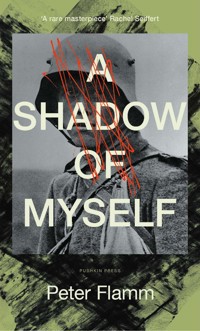
A vivid, hallucinatory rediscovered classic about split identity in the wake of First World War trauma Hans, an esteemed surgeon, has just returned from the hellish battlefields of the First World War. But everything in his home feels alien, even his wife Grete. As he tries to regain a sense of normality, he is haunted by nightmarish visions and a profound sense of dissociation. Has the war turned him into someone else? Or has another man wormed his way into Hans's life? Told in a feverish monologue, A Shadow of Myself is a vivid, hallucinatory immersion in an unsettled mind. First published in 1926 and rediscovered in Germany only last year, this lightning-bolt of a war classic is now appearing in English for the first time.
Sie lesen das E-Book in den Legimi-Apps auf:
Seitenzahl: 205
Veröffentlichungsjahr: 2025
Das E-Book (TTS) können Sie hören im Abo „Legimi Premium” in Legimi-Apps auf:
Ähnliche


















1
2
Contents
5
6
Introduction
Congratulations. You have in your hands a rare masterpiece. Rediscovered in the S. Fischer archives almost a century after its first publication and sixty years after its author’s passing, this novel made Peter Flamm’s name when it was released in 1926, lauded for its modernist flair and terrifying vision of post-war alienation.
A Heimkehrroman—a tale of a returning soldier—it falls within a venerable German storytelling tradition. This reissue sees Flamm take his place alongside other twentieth-century masters of the art, from Wolfgang Borchert to Heinrich Böll and Erich Maria Remarque, all of whose writing also recalls the folk tales of collective memory gathered together in the Grimm collection; stories of soldiers of fortune, returning from unnamed battles of old with nothing but their boots and their haversacks. A Shadow of Myself makes a great companion piece to Berlin, Alexanderplatz, too. Alfred Döblin was a contemporary of Flamm’s; they share a formal inventiveness, a dizzying narrative directness, and a sharp-eyed perspective on their times. In Döblin’s book, the returner is a prisoner rather 8than a soldier, but both novels capture Weimar Germany in all its contradictions.
Before we go any further, though, I should issue a warning. This book will make demands of you. To read it, you must be able to bear its many uncertainties.
Framed as a confession, the narrator tells us from the outset that all is not right here. ‘It is not me, your honours, but a dead man speaking through my lips.’ The novel’s first sentence sets out its unnerving premise: the dual identity of its protagonist. On the last day of war, he says, hearing news of the revolution in Berlin and Munich, he went stumbling out across the blasted landscape of Verdun, across ‘abandoned graves, abandoned ground, the abandoned dead.’ He’d survived the slaughter, but couldn’t trust in the promise of change. ‘A future? We’d work, we’d need to start again from scratch, where are the white sheets, we’ll be at the front in the muck again with the generals in the rear, the generals are always in the rear, those rich people driving cars, with all the glory, the grub and the women, while the others croak…’
But then there, under the ruins of Douaumont, he chanced upon a fallen compatriot in the mud. ‘My hand patted down his body, I didn’t mean to, it just happened automatically […] my heart beating like mad, but over the pounding I felt, with a strange, ecstatic thrill, the small grey booklet, the passport I’d taken from the dead man, his passport, his name—and his destiny.’
9The man speaking claims to be Wilhelm Bettuch, a baker and member of the Frankfurt proletariat. The man he speaks through—the man whose destiny he claims to have stolen from the grave—is Hans Stern, a surgeon and Berlin bourgeois. Flamm’s swap is audacious: a logical impossibility and a literary sleight of hand, dissolving personal and class boundaries at a stroke. Bettuch may doubt in the revolution which ended the fighting, but he seems to have been afforded a personal revolution of his own.
Leaving the trenches, he slips into the life of a Berlin doctor: Stern’s comfortable apartment, his surgeon’s practice, his marriage to the beautiful Grete. ‘Now I have hatched out, now I’m someone else, I have a different name, I’m a different person—it’s so easy, you only need to change your clothing, names maketh the man, and now I’m a doctor, Dr Hans Stern, yes, that’s who I am, me, I’m an educated person, I’m rich, my worries are over.’
Except in the midst of this good fortune, Bettuch finds himself plagued by doubts and questions. At the same time as loving Grete, he feels he is cheating his wife of the truth. ‘The secret has been placed like a barrier over my mouth, over happiness, pleasure and life.’ To make matters worse, an old associate comes calling and our protagonist discovers this Sven Borges has designs on Grete—perhaps she has even been unfaithful. And then a further visitor, Frau Bussy Sandor, turns out to be his own lover, and Bettuch/Stern must confront the fact that he is equally faithless.
10This trading places conceit would be enough for many a novel. Showing the reader Stern’s life through Bettuch’s incredulous eyes, Flamm reveals the German middle classes as duplicitous, their respectability nothing more than a confidence trick. However, Flamm doesn’t rest there—and this is where the novel’s genius lies. His narrator may insist he is Bettuch living as another, yet the reader can never be certain that such a swap has taken place at all.
For all his dislocation, his unnerved sense that he is living as another, our narrator is Stern to all those around him. From the moment he arrives, he is on familiar ground. ‘I’d never been to Berlin, but I knew this was Berlin and I was stunned.’ Leaving the station, he’s greeted by a man who clearly knows him, delighted to welcome the doctor home again. Out on afternoon walks with Grete, he receives nods from neighbours and patients: ‘See, no one’s forgotten you.’ When he doesn’t acknowledge Bussy, she reacts just as a lover would: hurt and spurned. It is only the dog, Nero, which raises our suspicions: by turns hostile and frightened, the animal cannot settle around his old master—but still he follows him everywhere. So is he Wilhelm Bettuch, a baker living a lie, or is he Hans Stern, a surgeon with a shattered mind?
With his new life one of feverish exhaustion, of fathomless contradiction, the narrator seeks stability in routine, opening his surgery, seeing his patients; the day of his return becomes a year, time proving as slippery in this novel as identity. And all the while, ‘my words tumble out of my mouth on their 11own, my blood finds its path of its own choosing, around me are muscles and flesh, I’m sitting inside myself looking out of my eyes as if through a narrow shaft: there is the world, there is everything else, people and streets and clouds and a room and destinies.’
Who am I if my experiences have made me a stranger even to myself? This is the novel’s fundamental question, its fundamental uncertainty. ‘How am I supposed to relate this with a tongue not mine in a mouth not mine? How are you supposed to believe me when I don’t even believe myself?’ This nervous intensity drives Flamm’s prose, its headlong first-person narration; it permeates the novel’s structure, too, scenes and events tumbling over one another. On every page, Flamm pushes at limits—not least when he has Stern’s life cross over with the Bettuch family’s, leaving their fate placed in his deeply uncertain hands.
But I shan’t say more on that; I shall let you read on and discover for yourself how this plays out.
I will close, though, with a note on the author, and an encouragement to read the postscript—an elegant, reflective piece, also by Flamm but written decades after the novel’s publication, and long after he had left Germany.
Born Erich Mosse in Berlin in 1891, his father a high court judge and city elder, his uncle the founder of the Berliner Tageblatt, his family deeply invested in German culture, he says of himself, ‘I was born a Jew, but I felt more German than many other Germans. I spoke German, I wrote German, I felt 12German.’ It was only later, in adulthood and exile, that he came to see his family’s many achievements and plaudits as ‘a giant, many-layered plaster on a wound I didn’t want to see’.
Readers who, like me, feel the absence of German Jewish life in the novel – who assume, for example, that Hans Stern may be Jewish because of his surname yet find this neither confirmed nor denied, and who are then also left wondering at the absence of antisemitism in a novel written by a Jewish German during the rise of the Nazis – will find the postscript enlightening, if painful.
How to understand home when home is gone? Flamm tackles this question head on. He left writing behind when he left Germany; he made a new life in New York, and began a new career as an analyst. Germany’s (and literature’s) loss were America’s (and psychoanalysis’s) gain, and aspects of this second chapter in life are described with enviable lightness and insight. But loss is also there, of course, a restless companion.
Maybe I cannot afford to live hand in hand with the past. It was too painful, and the hand was too easily paralysed. I forget what I wish to forget. I have called this a constructive and healthy neurosis. We cannot carry all our ballast around with us all the time. We throw what bothers us overboard—as far as possible.
—Rachel Seiffert, 2025
A Shadow of Myself
14
15
It is not me, your honours, but a dead man speaking through my lips. It’s not me standing here, not my arm raised, not my hair that has turned white, not of my doing, none of my doing.
You won’t understand. You think this must be a living person, this is a human being speaking—or a madman. I’m not mad, I just don’t know. But I’ve been lying in the ground for ten years, my limbs rotted, my bones grey powder, my breath… I have no breath. It’s all silent. It’s all over. I’m lying in the ground near Verdun. Up above are the ruins of Douaumont, the wind’s blowing across abandoned graves, abandoned ground, the abandoned dead. Go there, dig into the sand, burrow away in the large shell crater to the left with water in it, maybe soft mud. Don’t be afraid—the war’s over, no shell will fall and splatter you to bits, no screams ring out now, no limbs fly through the air, no blood, no shredded 16bodies. It’s quiet. Not a sound. For evermore. Now you bend down. You scrape away a bit of earth. And you find… me. Yes, bones and skull and dust and my name which is not my name and yet is, my destiny that belongs not to me but to someone else, though it has now befallen me, every bit as suffocating as my own.
How am I supposed to relate this with a tongue not mine in a mouth not mine? How are you supposed to believe me when I don’t even believe myself? But that’s how it was, that’s what happened, it was real, it was a day like many others—no, not like many others, because Lieutenant Basch told us there was a revolution, a revolution in Munich and Berlin, the war was over, after four years it was over, no more shells, no death, no mud, no obligation, no laws, no shrapnel, no pressure: everything seemed to be dissolving, falling apart. A new era, a new life.
I was drunk, we were all drunk. Something was singing inside me, surging up inside me, so I climbed out of the trench, my senses reeling—there was no way it could be over so suddenly, we’d been waiting for so long that we’d given up believing it would ever end. Now, a new opening, a new life, we wouldn’t lie around in muck any more, we’d be back in a room on white sheets, we’d have a future. A future? We’d work, we’d need to start again from scratch, where are the white sheets, we’ll be at the front in the muck again with the generals in the rear, the generals are always in the rear, those rich guys driving cars, stealing all 17the glory, the grub and the women, while the others croak, while we…
I clambered out of the dugout, tripped over mounds and holes, stumbled over corpses and tree trunks; it was a cold night, the moon was shining, music trickling from the dugout, fever boiling my blood, I was so tired I could have toppled over and yet I was driven, driven forwards, driven on by fear… suddenly something was lying in front of me, a dark mass, I almost fell over it. I made to walk on, back to the dugout… why was I out here anyway instead of with my comrades, singing with them, celebrating, what had lured me out here in the middle of the night, alone among wrecked carts and collapsed walls, alone among… the dead? Yes, it was a dead man, I knew, obviously, he’d gone out on patrol yesterday, twenty-four hours before the end, the war was over, and he’d been killed a day before, even the final bullet struck a mother, couldn’t we have stopped a day earlier, so stupid, now he was dead, lying there, the doctor, an ‘educated’ man, though what good was his education to him now, he was only a sergeant like me, ought to have been a lieutenant… now he was dead, and I… My hand patted down his body. I didn’t mean to, it just happened automatically, I’d walked here automatically—had I meant to, had I known? Automatically. How? My trembling hand groped its way over the body, mud, sticky blood, I turned on my torch, its small, blunt beam creeping spookily through the shadows; then two eyes were staring up at me, dead empty eyes twinkling 18between sunken lids, I recoiled, my hand was shaking… wasn’t the head nodding, wasn’t there a mischievous grin on those cold, blue lips? I was lost; back in the dugout I clutched my hands to my chest, my heart beating like mad, but over the pounding I felt, with a strange, ecstatic thrill, the small grey booklet, the passport I’d taken from the dead man, his passport, his name—and his destiny.
I didn’t know at the time. No one asked you amid the hurrahs for the revolution, who asks for papers, who checks them, who knows a name? We’re all human, we’re all brothers, and the other guy was dead, he didn’t care, rotting in the mud with twinkling eyes, bones and dust, eugh!
I was sitting on the train, an express train, first class of course, how easy it is to get used to, how strange too that all the agitation was gone, quite natural the whole thing. Did I use to stand by the oven door and get up in the middle of the night? And the dough was risen and hard, and through the door the embers caught you right in the face, singed your skin, and young Hennings burnt his apron and one hand and screamed so loud… no way, no way, that wasn’t me, that isn’t me, I was on this train, an elegant, educated man, a rich man reclining on a red-cushioned seat, first class, of course you can pity the others packed into fourth class like animals, like cattle, unable to even sit down and so tired, their knees shaking, but they have to stand, all of them, even the small, thin dragoon, pale-faced beneath his black parted hair, who stared and stared at me earlier with so much pain in his 19eyes until suddenly he fell over, all white in the face. Or did I only dream it or see a picture once, and it’s a memory of something that may or may not be real?
‘When you reach Berlin,’ says the fat baldie on the cushioned seat opposite. ‘Revolution—who’d have believed it! You are going to Berlin?’
‘Is this train going to Berlin? It is? Yes. I actually meant to… Of course I’m going to Berlin.’
Of course? Why did I go? I didn’t mean to, but I was sucked there. I thought it was my choice, but how then could I forget my mother and my sister in Frankfurt, how could I? Hadn’t seen them for a year, but all the same—Berlin now? Berlin, of course. It wasn’t even difficult, it wasn’t even an issue. I smiled, I had to smile the whole time, but there was still a darkness on my soul, a strange, hovering shadow, heavy and smothering.
Outside in the corridor a man was leaning against the window, watching the landscape flash past. I couldn’t see his face, but his narrow back, his slanted shoulders, the left pulled higher than the right, and the curious tension in his neck all seemed familiar; something came bubbling up inside me, a peculiar agitation, an unprecedented hatred, an almost physical revulsion. I couldn’t take my eyes off him. Was I hypnotized? I was travelling first class and I knew no one here! Why should I hate a stranger, a neck, a back, with such pointless, unprovoked hatred? What was he to me?
20Now the back turned, the neck creased with diagonal folds, now the head turned into profile—a stranger. But I knew him: all the blood came rushing to my forehead, there was a darkness there that scared me, it was like a blow to the head, my thoughts became confused, I wanted to stand up, turn away; but the man had noticed me now and swivelled his body abruptly in my direction, a pair of eyes stared hard and fierce until the whites looked as if they might pop out, the nostrils began to quake, the hand started to clench into a fist, for a second it looked as if the fist was going to rise and punch the narrow, thin pane of glass between our faces—then with a jolt he lowered it, turned away contemptuously and disappeared with rapid, spasmodic movements.
I sat there numb. What was that? Had I dreamt it? Was I hallucinating? The war had certainly affected my nerves, no wonder, but it would probably pass. When I’d settled down and gone back to work… I wiped my brow with my hand. Strange, how white my hand was, thin and transparent, thin blue veins marbling the wax-like skin, as if it weren’t my hand, as if…
Strange, the thought crossed my mind, what kind of person am I, what am I actually, sitting here, and what weird hands I have!
The train pulled into the station. I’d never been to Berlin, but I knew this was Berlin and I was stunned. I walked along the platform, down the station steps and turned left along Königgrätzer Strasse to Potsdamer Platz. In Bellevuestrasse 21a man came towards me, was about to pass, gave a start, stopped and greeted me, and there was a sparkle in his eye and then a rejoicing hand tugging at my arm.
‘Gosh, it’s you, doctor, you’re here, you’re alive? How’s Grete going to react? A rumour something had happened to you… you did send her a telegram? I was at her house only yesterday and your mother happened to be there too. They were all very worried. And your last letter was so strange, deathly premonitions, my God, no one should write such things, and then that rumour, and now you’re here, how wonderful, I’ll walk a stretch with you if you like, of course, come on, a car, how can you walk so slowly, and wasn’t there anyone to meet you at the station?’
I sat in the car, next to a stranger driving me I didn’t know where. I couldn’t think straight, I was not at all surprised, everything was happening automatically, I was floating on a river, on a cool, silvery surface, there’d been a war and now there was peace, I was walking through the crowd and then along comes a man and drives me in a car. Isn’t that natural? Everything’s natural. We all get one lucky break, you just have to seize it, and the miracle lasts only until it becomes reality.
The car pulled into the street and stopped. The throbbing of the engine suddenly ceased and a strange silence enveloped my brain, I got out mechanically, watched unthinking as the other man counted, scanned the house, the row of windows, a particular one, suddenly my heart stood still, the ground seemed to tilt and the world began to spin before my eyes in 22green and gold circles. But her image was always before me, standing up there at the window—who? A woman, girlish in appearance, shining golden-brown Titian locks above a face turned pale, a face full of sweetness, fear, pain, longing and so much love—who was this meant for, whose are this woman and this love, who possessed her: I’d give my whole life… no, I don’t want to move, why’s he pushing me towards the door, I want to stay standing here looking up for ever… the stairs, where am I supposed to… why’s my heart hammering like this?
My God, a door opened, up on the second floor, there were sixty-two steps, why did I count them, count them for no reason, the door swung open, it was already ajar, an old woman standing there in a white bonnet with trembling hands, and then, appearing from the narrow hallway, in the draughty air, in the flickering white light… suddenly the girl was there, the woman from the window, standing there palely and smiling with a faint, sickly, modest smile, a small, pallid, twitching mouth, her shining eyes blue and gazing radiantly into mine until a shudder ran through her slender limbs, her eyes sank behind long, dark lashes, and her suddenly waxen body began to sway. She’d have fallen, but one leap and I was by her side, she was lying in my arms, her pallid lips moving quietly, her warm breath brushing my face and I shook as I held that warm body in my embrace, then she raised her thin hand as if in a dream, touched my hair disbelievingly, tentatively, the lashes slowly rising, a blue beam 23of indescribable tenderness shining forth from her eyes and, as tear after tear trickled unstoppably over those cheeks, the lips opened moist and soft for an inseparable kiss.
How long did we stand there? I was oblivious to time, oblivious to the world, noticing only something tugging at my leg, it kept coming, jumping up and falling back while something hot scorched my leg, a hot, tingling, piercing pain. I wouldn’t even have noticed it but for her scream and her horrified face, her forehead flushed red again; suddenly her hands were no longer above me, her wide-open eyes were staring sideways now and I felt as if I were in some terrible danger, as if I had to wrench myself back to my senses with all my might, wake up, defend myself, but I was gripped by such confusion, intoxicated by the smell of her hair and the scent of her skin and all I kept seeing was her face, there was no one there, I wasn’t really here, it was all a dream, happiness seemingly hanging in the air, that was real, I mustn’t wake up, I had to stay very quiet… what was screaming, why were the lips pulling away, they’d just touched me, they’d just kissed me, what’s twitching, why’s this face grimacing, what’s happening, what’s tearing at me?!
Two dog’s eyes spurting green flames, a black shaggy body, a wild shaggy head, bared white teeth sunk and caught in my flesh, and blood flowing, my blood trickling hot and sticky towards my foot, down my sock, a small dark stain there on the rug, a strange red mass, the man by the door shouting, his heavy hand plunging into the animal’s coat, hauling it 24backwards; again it charges forwards, he kicks it in the nose and at last it lets go, its jowls flap, its red tongue hangs out bloodied and powerless, sheepishly it creeps away to the wall, growling, eyes still on me, eyes still on me…
‘How could you, Frau Grete,’ the man’s panting voice says, ‘a fine welcome! That beast is mad, it could’ve torn him apart. It might be rabid. And why don’t you defend yourself? Look at the slobber flying from its jaws, how it’s looking and staring at you, like a… like a human being.’
‘That has never happened before, never,’ she shudders helplessly, then suddenly, ‘Hans, Hans, you’re back, out of the blue you’re back, my God, I’m going out of my mind, that animal’s crazy, it bit you, why did it bite you—don’t just stand there, go and fetch a doctor, you can see it’s bleeding.’
‘Nothing serious, forget it,’ the man says. ‘A bit of gauze, a plaster, you must have some here—’
‘Oh yes.’ And she goes off and comes back and the trouser leg is rolled up and the wound’s bandaged, they take off my coat without asking, why should they ask, don’t I belong here, isn’t this my building, my room, my flat, my… wife?! My wife! This girl, these hands, lips, hair, these eyes—my wife!! This is mad, what’s going on, this can’t be happening. Who is this? I’m in a stranger’s home. I don’t know anyone. Who is she? What’s her name? Who do these people think I am? It’s a misunderstanding. Who am I? Who am I??




