


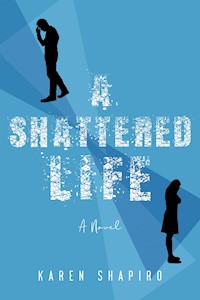
7,99 €
Niedrigster Preis in 30 Tagen: 7,99 €
Niedrigster Preis in 30 Tagen: 7,99 €
Mehr erfahren.
- Herausgeber: BQB Publishing
- Kategorie: Gesellschafts- und Liebesromane
- Sprache: Englisch
What happens to one's soul when a child dies?
A moving story of denial and depression taking the reader inside the complexities of a marriage shattered by the devastating loss of their only child. Kim, a psychotherapist and Mark, an emotionally distant actuary build layers of protective defenses around them in order to survive. But when Kim receives a diagnosis of cancer, her unhealed pain rises to the surface.
Kim embarks on an exploration of her Midwestern ancestors to find answers to the "why me" question. Starting with a diphtheria epidemic in the late 1800s to her current practice as a psychotherapist, she seeks understanding of the person she has become.
Following Kim and Mark through doctor's visits, chemo drips, long nights, and even longer days, the story chronicles the grueling process of chemotherapy, as well as the complicated dance of a marriage in crisis. As Kim's treatment progresses, so too does her relationship with Mark, and the layers of emotional pain begin to peel away.
Das E-Book können Sie in Legimi-Apps oder einer beliebigen App lesen, die das folgende Format unterstützen:
Veröffentlichungsjahr: 2021
Ähnliche




















A Shattered Life, a novel
© 2021 Karen Shapiro. All rights reserved.
No part of this book may be reproduced in any form or by any means, electronic, mechanical, digital, photocopying, or recording, except for the inclusion in a review, without permission in writing from the publisher.
This is a work of fiction. All of the characters, names, incidents, organizations, and dialogue in this novel are either the products of the author’s imagination or are used fictitiously.
Published in the United States by BQB Publishing
(an imprint of Boutique of Quality Books Publishing, Inc.)
www.bqbpublishing.com
Printed in the United States of America
ISBN 978-1-952782-40-4 (p)
ISBN 978-1-952782-41-1 (e)
Library of Congress Control Number: 2021950049
Book design by Robin Krauss, www.bookformatters.com
Cover design by Rebecca Lown, www.rebeccalowndesign.com
First editor: Caleb Guard
Second editor: Andrea Vande Vorde
Contents
Gauger Family Tree
Kim
December 2008
Round One: January 25, 2009
The Gaugers
The Strangling Angel: Henry Summer 2009
Winter 1880–1881
Kim
Round Two: February 15, 2009
The Gaugers
The Twins: Henry 1912
Clarence
Kim
Round Three: March 8, 2009
The Gaugers
The War: Lizzie 1944
Kim
Round Four: March 29, 2009
Chicago: Democratic National Convention: Kim August 1968
Round Five: Kim April 19, 2009
Therapy: Kim September 2001
Round Six: Kim May 10, 2009
About the Author
A Note from the Author
GAUGER FAMILY TREE
KIM
DECEMBER 2008
The lights fade on the oversized screen behind me as I cross the stage, my presentation almost complete. A single cone of white light shines downward onto a podium, and as I enter its orb, the glare of the whiteness blackens my surroundings. I am now in a cocoon, protected and safe, isolated from the auditorium filled with people. Their energy motivates me, encouraging me to continue, but I see only emptiness.
“. . . When grief continues to be intense for more than a year, it is complicated grief. It is different than depression and needs an accurate diagnosis so appropriate treatment can be started. Thank you.”
The house lights come on and, once again, I see the audience. I hope they find me entertaining as well as informative, but I’m never sure. Years as a psychotherapist have given me confidence, but that experience has yet to cure my performance anxiety. Complicated grief is something I’ve experienced, but it’s easier for me to talk with others about theirs rather than solve the problem within me. I wonder if the audience can see through the smoke and mirrors.
I know my husband, Mark, is sitting out there in the audience. His approval, which was once all I ever needed, is no longer the driver behind my vision. I want the audience’s level of energy to validate my effectiveness and success.
When my talk is finished, a few people linger behind to ask additional questions. Out of the corner of my eye, I see Mark move to the far side of the stage where he can observe but remain unseen. He watches me as I interact with each person, taking time to clarify my remarks and comment on any inquiries. Mark tells me I have the grace of a Tai Chi master, the strength of a dancer, and the intellect of an Einstein. He loves me, so he says those things. He sees through my protective façade and understands the deep, horrible pain we both went through with the death of our son. Mark was able to put it aside and move on, while I have continued to sink into a depression that leaves me dead inside.
After everyone leaves, Mark greets me with his usual optimism. “Great job,” he says, giving me an obligatory hug. “I know this has been a difficult topic for you, but just the way you presented the material—wow!”
I gather my notes, ignoring his flattery. Turning away, I say, “I hope I had an impact on the audience.”
“You are a charismatic speaker,” continues Mark. “There were a lot of questions which means you engaged the audience and made them think.”
“I don’t know,” I respond, controlling my agitation. How can he be so overly optimistic? “I don’t really know if I got through to anyone.”
“You did.” Mark looks at his watch. “Let’s go back to the hotel.”
We are in New York City where I am a guest speaker at a symposium on mental health. Mark took vacation time from his consulting practice to accompany me so we could enjoy a couple of days in the city that never sleeps, even though our idea of a vacation involves a lot of sleep. I don’t know if Mark came with me because he wanted the vacation or if his real motive was to be my caretaker in the city where so many conflicting emotions live in my mind. Memories of pain and pleasure, happiness and depression, family and loss are all part of my makeup when I enter New York. I am longing for a balance between these conflicts, but I don’t seem to be able to find it.
As we walk along 9th Avenue to the Hudson Hotel, the sidewalks are crammed with people of every ethnic variety, all headed into the maze of New York City. We snake our way through the mix, skirting around the slow walkers and accelerating when trying to beat the walk signs at every corner. At ten p.m. on a weeknight, the city bustles with excitement. Smells waft over us—waves of beer from open-air bars, roasted food from sidewalk vendors, the stale smell of garbage not yet collected are unlike our hometown of Milwaukee.
New York is unique, unlike any other big city. It twinkles at night and never allows silence to enter my mind. The electricity of the city energizes me. The whirling sound of a bicyclist passing, the digital screens illuminating Broadway, and the smell of ethnic food grilling on a food truck all revive good memories. But there are also other memories, painful memories, resurfacing at random moments. Walking in the park with Billy, moving Billy into an apartment, just being with Billy are memories I have buried deep inside, until some sight, some sound, some smell triggers them. The ghosts of New York are with me; I cannot shake their presence.
I wasn’t always like this. Mark and I came here long before Billy was born, both of us filled with the joy of anticipating a bright future. It was the jumping-off point of our lives together, as Mark had just taken a position at an actuarial consulting firm and I was an associate professor at our local university. Now I look back and remember the young, idealistic me, confident with the knowledge my life was on the right trajectory.
“Do you want to stop at Maison-Kayser for some dessert?” Mark asks, bringing me back into the present as we reach Columbus Circle.
I hesitate, not sure if I’m in the mood for sweets, although my real concern is whether I want to talk to Mark any further. “Let’s just call it a night. I’m tired.”
“Okay,” Mark says. “Maybe tomorrow we can treat ourselves.”
Back at the hotel, I remain silent, lost in thought. I think about my earlier talk at the symposium and look for an honest opinion from Mark. “What did you really think about my speech at the conference?”
Mark’s brows knit into a frown and he looks at me through veiled eyes. “I thought you were great. I already told you I knew you were talking from your heart, and you made strong points.”
The air becomes so brittle it could snap, or maybe it is me that will snap. Mark’s expressions do not sync with his words and the tension it creates surges through me like a low voltage shock. This is our typical conversation—Mark is complimentary but never tells me what he really thinks. I clench my fists in frustration. I’m tired of him placating me when what I really want is to have an honest talk, one where the pain comes out instead of staying hidden. We haven’t had a meaningful discussion in years. I brace myself for what’s up ahead.
“Mark, stop telling me what you think I want to hear,” I say. “I know you’re afraid of spending the next three days with me brooding, but you don’t have to try and make me feel better to avoid that.”
“Kim, that’s so far from the truth it’s ridiculous,” Mark says. His anger rises as he turns away from me and pretends to look for some reading material.
“But that is the truth, and you know it,” I retort, circling to face him.
A chilling look edges itself into Mark’s face as a storm surges within him. “Whenever I say anything critical, I have to suffer the consequences. So yes, I don’t want to say anything.” He looks away from me, trying to end what he considers a foolish argument.
I won’t let it go. “You were happiest,” I blurt out bringing up a long-forgotten issue, “when I gave up my career to take care of Billy. You just don’t want to admit it.” My voice is loud and terse, my grace faltering.
This time it is Mark who clenches his fists as the volume of his voice rises. “You wanted to stay home and put your career on hold. We agreed. Why are we talking about something from twenty years ago? I can’t deal with your issues. I’m tired.”
“I don’t have issues. I want your honesty, not pandering.”
Mark stiffens his back as he glares at me. “I never stopped you from doing whatever you wanted to do. I knew you would do it anyway. You always do.”
“Are you criticizing me for wanting a life of my own? Are you saying I wasn’t a good mother? I protected Billy as best I could.” I storm off into the bathroom to brush my teeth, anything to get away from Mark.
“Dammit, don’t ignore me,” Mark demands. “You always start these arguments and then leave when I don’t agree with you. And this has nothing to do with you being a good mother.”
I am shaking with anger. “But you blame me. Every time. Our life together is meaningless. We are going through the motions of the happily married couple, but we aren’t.”
The piercing ring of a phone interrupts our argument. Mark answers, is silent for a moment, and says, “Sorry, no problem.”
“Who’s calling?” I ask.
He shakes his head in shame. “We’re making too much noise and the people next door can’t sleep.”
“It’s only eleven o’clock. I thought this was the city that never sleeps. Whatever.” I slam the bathroom door and am alone.
I take a couple of deep breaths and look at myself in the mirror. Anger is not a pretty sight on my face. My eyebrows bump together, my nose widens, my lips press into a thin line, and the fine lines around my eyes are now deep crevasses. I never meant for the argument to happen, but now the words are out, and I am afraid of the consequences.
I cannot look in the mirror any longer, so I step into the shower and turn the shiny chrome dial to let the hot water flow over me in an everlasting waterfall. The steam calms me, and rivulets of water drip down my side as my mind begins to slow down. I want to stay under its healing magic forever.
The next few days, Mark and I pretend like the argument never happened. We treat each other with extreme politeness. We do all the New York things we like: a play, a walk through the village, dinner at fabulous restaurants, all totally normal New York things to do. We are once again the couple that has it all. The mask is in place.
Once home in Milwaukee, we settle into our normal pattern of living, except nothing is normal. Going out to eat, we argue about which exit to take off the expressway. When we get to a restaurant, we argue about where to park the car. When ordering food, we cannot reach an agreement on whether to share our dinners or order separately. Tension fills our lives every day. Sometimes simply being in the same room provokes an argument.
I think back to the early days of our marriage and the passion Mark and I felt. We would be at parties and steal away into the bathroom for “a quickie,” or take a long lunch and just smile at each other, holding hands under the table. He was the only drug I ever needed.
Our life started out like a fairy tale. All I ever wanted from Mark was kisses, hugs, and the smile in his eyes. His long, dark curly hair attracted me from the beginning, although he told me later, he only grew his hair long to counteract the nerd image he had being a math major. He was muscular, clean-shaven, and his casual dress betrayed the conservative businessman within.
Everything about him was soft with an understated joy. He filled me with happiness.
We both had successful careers, a house in the suburbs, and, eventually, a son. Outwardly, we had the perfect marriage, the perfect family, and the perfect life. It’s too bad it took so much effort to create the image, and even more to maintain it. Nobody knows what is revealed once the surface is scratched. The loss of our son propelled me to make meaning out of my pain. I did the only thing that made sense, and the next thing I knew I was giving talks on grief. I don’t see Mark grieving like I do, so I can’t help but feel isolated in my own pain.
Divorce is not an option for me, as Mark is the only person I ever wanted. Our issues are not about love, because I can never love anyone else, but about making our relationship feel right. What I want is to find a way to get past our now-established barrier of non-communication and put our broken pieces back together. It is not an easy job.
“What do you want for dinner tonight?” I ask.
“Do you want to go out to the Bistro?” Mark responds.
“Sure,” I say. “What time?”
“I have a little work first, so how about six p.m.?”
“Sounds good,” I say.
We finish our work and get to the restaurant in time to watch the young bar crowd milling around, trying to impress one another. Once seated, we order our food and stare at other people because we are unable to make conversation with each other.
“How was your day today?” I ask, trying to make conversation.
“It was boring. Nothing really going on. No new mergers in the insurance industry.” Mark says as he sips his glass of wine. “How was your day?”
“Kind of the same. I had one interesting patient who thinks the world is coming to an end because we don’t have a female president, and she wants me to fix it,” I respond with the same lack of enthusiasm. “I think I need to take some time off.”
“You do work hard,” Mark says, looking away from me.
I sigh. “I know when we were in New York last month I felt really anxious. I always get nervous before a presentation, but the nervousness lasted a long time. Maybe New York does strange things to me.”
“Probably,” Mark says, staring at a spot on the table.
Our food arrives, and we put aside thoughts of New York, both of us wordlessly sharing the same sorrow of that city. Neither the savory pasta marinara nor the linguine with clams, not to mention a bottle of red wine, can penetrate our mood or remove the communication barrier between us. Boredom sets in. It is an invitation for my brain to find a new path out of this tedium.
Gazing at the bar once again, I see the patrons talking and laughing. Their energy floats around the room, and I sense their joy, a feeling I seem to lack. My life is missing that joy. Playtime used to involve Mark and Billy, but sadness has intervened and pushed everybody away. Mark was always the light of my life. I know his peace, but it is so distant now I don’t know how I could ever find a way back to him.
Once home, I go upstairs to take a shower to relax. An evening shower prepares me for sleep and quiets my mind, just the opposite of the many people who use a shower to wake them up. I look at my image in the mirror and the reflection shows the aging process at work. My skin is less elastic and mottled, making it look thick. My makeup has worn off, which leaves my skin with a pale texture of veins running across my cheeks like connected rivers. The red bumps of rosacea, now fully visible, look like teenage acne, only I will not grow out of it.
My skin is dry and itchy. I look at my profile and think I have lost weight, usually a welcome happening, but now I look like I’m imploding into myself, with my posture compromised. I step into the shower and the hot water is soothing, masking many of my concerns. I stand there for several minutes, relaxed and calm. I begin to wash myself but stop when I feel a bulge in my armpit. I decide to go a day without shaving them, so I continue to lavish in the luxury of my shower.
Drying off with the soft, fluffy spa towel, I again feel the lump. Once more I look at myself in the mirror, raise my hands high above my head, and see a large protrusion in my armpit. This can’t be good.
“Mark!”
ROUND ONE
JANUARY 25, 2009
“Angioimmunoblastic T-Cell Lymphoma,” says Dr. Belmont.
“What?” I respond.
“The pathologist diagnosed your cancer as Angioimmunoblastic T-Cell Lymphoma.”
“What the hell is that?”
Focusing his gaze directly on me, Dr. Belmont wants to be sure I understand. “The Cleveland Clinic diagnosed the type of Lymphoma you have. We wanted to be sure the treatment protocol was correct.”
Stunned into silence, I feel resentful toward Dr. Belmont, who is calmly sitting at his desk, wearing his white doctor’s coat, and delivering devastating news. He’s speaking in brief, unhurried sentences, as if talking to a person who can’t understand complicated information. He reminds me of an anchorman, whose only mission is to deliver succinct soundbites.
“Why did it take two weeks to make this diagnosis?” I ask defiantly.
“Your condition is unusual,” says the doctor.
“So, what did the Cleveland Clinic have to say?” My mouth becomes dry as I set my jaw into a rigid line.
Pushing his overly large, tortoise-shell glasses onto his nose, Dr. Belmont continues. “T-cell Lymphoma is more aggressive than B-Cell. We have to look at different treatment options.”
“So, I’m the lucky one who got the incurable form of Lymphoma?”
“No, it’s not incurable.” Dr. Belmont remains calm and shows little affect, not even sympathy. “You will need chemotherapy . . . in your case, it’s called CHOP.”
Inhaling deeply and breathing out slowly, I ask with a shaky voice, “What am I facing?”
In a professional manner, Dr. Belmont begins. “You will receive four different chemo drugs in one day as an infusion, followed by three weeks off. The drugs are strong and should kill the bad cells. The side effect of the drugs will likely include fatigue, nausea, hair loss . . .”
“Stop!” I yell, interrupting his monologue. “Am I going to die? Every day I feel worse, and now I have some rare, aggressive disease.”
“I understand what you’re saying,” responds the affectless Dr. Belmont. “None of this is easy, and there’s a lot of uncertainty that can’t be avoided.”
Mark places a hand on my arm trying to quiet my agitated nerves, but I pull away, rebuffing his attempt at soothing me. I want my anger. I want Mark to leave me alone to handle it. So much feels out of my control, having my own anger feels empowering.
Controlling the taut tone of my voice, I ask, “What is the prognosis?”
“It’s uncertain at this time,” replies Dr. Belmont. “There are a lot of factors going into the success of this treatment.”
“Uncertain?” I look at Mark. He is outwardly calm, but a distant calm. There are signs of anxiety he is cleverly masking. I can see it in the creases around his mouth and the slight tremor around his eyes. I know him so well. Tears well up in my eyes as the world begins to shrink away from me, replaced by a cold void.
“Tell me about the uncertainty,” Mark interjects. “What are we looking at?”
Relieved to be talking to Mark rather than me, Dr. Belmont explains. “There will be six rounds of chemotherapy with three weeks between each session.”
“What is the prognosis?” Mark asks the question again, already having heard the answer once. Maybe he thinks if he asks it over and over, he will get the answer he wants.
“It’s difficult to say,” Dr. Belmont patiently replies. “Every case is different. This is a rare form of Lymphoma and not a lot of research is available. Mortality rates are higher.”
This is not the answer Mark is looking for, but he doesn’t press any further. He always does this, pretending he’s already accepted it all.
It is suffocating in this closed, cramped office. Mark and Dr. Belmont continue to talk while I slip into a coma-like state.
When the weight of the pressure becomes unbearable, I break out of my void. “When the chemo is over, what is my quality of life?”
Dr. Belmont stares at me, losing his patient demeanor. “Again, each case is different, but you are starting out healthy and have no other medical conditions to interfere with the treatment.”
“You can’t give me a better answer?” I challenge him. “Have you ever heard of this thing I have?”
Mark interrupts before I can go any further. “This diagnosis is a shock to both of us, so please understand our reluctance to accept it.”
“I don’t want a wig,” I blurt out, inadvertently grabbing my hair and running my fingers through the blonde curls that will soon be gone.
Dr. Belmont and Mark both stare at me, and I realize how foolish I sound. My mind is gray and fuzzy, like a fog where the sun is unable to break through the iron curtain of clouds. I know the seriousness of this diagnosis, but my thoughts are erratic.
“Don’t worry about your hair now,” Mark says, admonishing me. “The important thing is to get you well.”
“I want to get well, but I don’t want to lose myself in the process,” I say, such a simple desire.
Dr. Belmont sees the tension building, and with calm indifference, he says, “You can start the chemo treatment next Monday. Get plenty of rest over the weekend.”
The meeting is over, and uncertainty hangs in the air. As Mark and I leave the doctor’s office, I move slowly, like an injured puppy. Mark’s gravity-drawn shoulders belie any feeling of optimism, and his sad eyes focus on a distant point, away from me. We are alone with our thoughts, separated by an invisible wall. Will it ever be dismantled?
Monday morning, Mark and I arrive at the cancer center, ready to face the first round of treatment. Unexpectedly, a Zen-like atmosphere greets us, and a faint odor of jasmine permeates the air that was designed to create a garden-like feel. We enter a habitat where mental health and physical well-being intertwine. Every surface is dust-free, and bamboo palms and fiddle-leaf figs fill every corner with life-giving energy. The minimalist décor is serene.
“Are you okay?” Mark asks me.
“It’s now or never,” I answer, not wanting to think about what lies ahead.
We approach the sleek, wood-and-metal-framed reception desk, and Mark begins speaking. “This is Kim Weber,” he says. “We are here for her first chemo session.”
The receptionist smiles with friendly, welcoming eyes, and I force a limited smile onto my face. My mouth moves into a subtle U shape, but everything else remains fixed in a stoic stare.
Once Mark fills out the forms, I take my place along a wall of windows, populated with at least ten large reclining chairs facing Lake Michigan. A curtain separates each space, and other patients are receiving their treatments as they gaze out the window and enjoy the scenery. The nurses interact in a friendly manner, giving out medical information and discussing the weather. The patients easily exchange pleasantries and seem able to ignore the needles poking into their veins.
I turn to Mark and say, “You know, you don’t have to stay. It’s going to take about three hours.”
“Of course I’ll stay. Do you think I would leave you alone on your first chemo session?”
“I will probably read my emails while I get treatment. I brought my computer. You really don’t have to stay. I’m fine.”
“Kim, you know I’m staying.”
“Suit yourself.” I look outside at the view and realize my old office is just around the corner. “Did you notice this is the same view of the park and Lake Michigan I had from my old office? I can reminisce about better times.”
He knows that when I mention better times, I mean the times when Billy was a boy, before we knew the heavy grief that replaces him in every room.
Mark looks at me with compassion. “Don’t get discouraged,” he says. “You’re an incredibly strong person, and I know you will beat this.”
“Sure,” I say, trying to sound positive. “At least the view is good.”
The reclining chemo chair is like a Barcalounger, the kind my grandpa always fell asleep in while watching TV. It’s for old people, but looking around, I realize I am now a member of that group. A nurse comes over to cover me with a heated blanket, which radiates warmth and feels good against my skin. I try taking deep breaths to meditate, but unfortunately, even after twenty years of yoga, mindful meditation still alludes me. The nurse arranges the tubes descending from the bags of drugs and inserts a needle into my vein. Time to start.
The drips start, and my frail hands begin to shake. The window’s glass reflects my image, and my eyes examine the surface of my face. My skin is ashen, my usually full cheeks have sunken into the hollows of my facial skeleton, and my eyes, lips, nose, and eyebrows have flattened into a plane with little texture. The sickness has taken its toll.
I wrap my fingers around the gold coin in my hand and squeeze the good luck charm given to me by my mother years ago. The feel of the fine lines forming the face of lady liberty and its golden reflection help to ease my fear of the treatment.
The chemo nurse quietly appears from behind the privacy screen and sees me clenching my fists. “You’re cutting off all of the circulation to your fingers. What are you squeezing so tight?”
Surprised by this interruption, I tell her my story. “It’s a gold coin my great-grandfather brought home from the War Between the States, or so the story goes. It glows in the sunlight and I hope it will bring me luck.”
“I’m sure it will,” replies the nurse. “How did you end up with it? A coin that old and solid gold is pretty valuable.”
“It probably is, but I’ll never sell it. My mother gave it to me before she died, and she got it from her father. I’m not sure how he got it, but he gave it to my mom on the day she married my father. I don’t know the mystery, only the meaning.”
“That’s a romantic story,” says the nurse as she switches the chemo bags, making sure I get the right stuff.
“I question how lucky that was, after all, she had to live with my father. I’m not sure that turned out to be lucky!” I laugh despite myself, thinking back to my days as a child living with an angry parent. The nurse finishes regulating my chemo drips and leaves to treat her other patients.
“I appreciate your sense of humor,” Mark says. “At least you can laugh about your family crises.”
I think back to the day my mother gave me the coin. She knew she did not have long to live and was suffering terribly with her cancer. This was before the days of chemotherapy when radiation was the standard treatment. It didn’t work for my mother, and she slowly, painfully faded away. “Kim,” she said one day after a particularly difficult radiation treatment. “I want you to have something dear to me.”
“You already gave me everything I need,” I replied. “I don’t need a good luck charm. I’ve had sixteen years with you.”
“This is not a lucky charm, but more of a legacy. It has been in our family for a long time, and I want it to stay there for generations to come. You should be the keeper of memories.”
My mother’s eyes became tearful as she placed the gold coin in my hand.
“Are you sure I’m that person?” I asked. “You know what a scatterbrain I can be.”
“You will grow out of that phase of your life. I see you in a different light and I know you are the person to keep this legacy.”
My mother closed her eyes, having been exhausted by our conversation.
I looked at her with sadness, knowing our time together was limited. I choked back tears and said, “I am honored.”
It was a week after this conversation that my mother passed. I was young and foolish at the time, but I never forgot the importance of the coin. It was a link between me and all who came before me, and it carried their untold stories. I could make as much luck out of it as I wanted. Now I wonder if all this time it has only carried misfortune. If I’m cursed.
As the chemo treatment progresses, I begin to unwind and think about my mother and her final days of cancer. After a while, the nurse reappears to check on my treatment. “I see your hands are looser now. The coin must have worked its magic,” she says with optimism.
“I guess. I’d like to believe it can get me through this ordeal with a little dignity left.”
“You’re strong, you’ll do fine,” she says as she smiles and tucks some more warm blankets around me.
Turning to Mark, who is working on his computer, I say, “I apologize for my earlier outbursts. I’m working on becoming more positive.”
Mark nods but doesn’t look away from his screen. Finally, he looks at me and says, “I wonder if we’ll see Dr. Belmont today.”
“I hope not. He is so unsympathetic it makes my blood boil. He talks like a robot spewing pre-programmed soundbites.”
“I admit he has the attitude of someone excessively proud of himself,” says Mark. “I didn’t like him either.”
Time passes slowly and I cannot focus on the magazine I am trying to read. Mark is back to his computer, engrossed in some transaction reports about the latest merger or acquisition deal, or something like that. I gaze out of the window to see what is happening outside and quietly slip into a fantasy world where cancer does not exist. My chair looks out over a park with Lake Michigan as a backdrop. The ambiance is peaceful, no ice floes or turbulent movements. The park along the shoreline is alive with people enjoying the outdoors, wrapped in woolen scarves, hats, and mittens. Below my window, a bike path transports riders to the downtown area. Everybody looks happy and free, something I no longer feel.
Mark sees me staring out the window. “What’s going on out there?” he asks. “Did you get this distracted by the view when you were working in the beautiful Victorian mansion just down the street?”
I think back to the days when I maintained a private office for my Psychotherapy practice. “I did not get distracted when I was really concentrating, or working with a difficult patient,” I recall. “But my clients found it a peaceful place. I wish those serene vibes would sink into me now.”
“Don’t worry,” Mark says. “You will get through this episode of your life, and we will get back to normal.”
“You look at things differently. I’m not sure I even know what normal is. Are we a normal couple? Do normal people act like we do when cancer strikes?” I look away and try to focus on the blue winter sky, now dotted with multiple hues of white fluffy clouds. I have too many feelings of grief related to Billy’s absence. Now is no time to bring it up. Concentration is difficult, and for the first time in several days I want to talk openly about my cancer.
“Mark,” I say taking his attention away from his computer. “I am fighting a battle where the enemy is smart and has a lot of complexity.”
Closing his computer, Mark answers, “I know this is difficult, but you will get through it. I know you will.”




