


4,00 €
Mehr erfahren.
- Herausgeber: The Lilliput Press
- Kategorie: Gesellschafts- und Liebesromane
- Sprache: Englisch
In mid-1970s rural Wicklow, John Hughes, a once-feted journalist/author with writer's block, reflects on recent events. When English author William Cromer and his German lover Ingrid move to the Old Rectory nearby, their lives are transformed and an alcohol-fuelled affair begins. Hughes puts at risk everything he has ever loved – his wife Laura, teenage daughter Rachael and the bucolic ease of their quiet corner of Ireland. Nationalist resentment of this tax-free haven enjoyed by foreigners is sparked by events in Northern Ireland, and John finds himself in the middle of extortion, blackmail, marital betrayal and a suicide. As old and new friendships unravel, even lunchtime visits to the local pub become points of attrition. Losing his friends and mistress, John is forced to take responsibility for his actions in order to save his family and his integrity, and to find release as a writer.
Das E-Book können Sie in Legimi-Apps oder einer beliebigen App lesen, die das folgende Format unterstützen:
Veröffentlichungsjahr: 2009
Ähnliche




















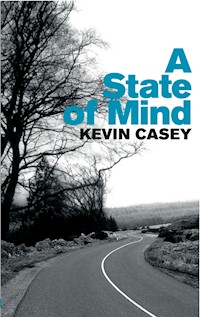
A STATE OF MIND
Kevin Casey
for Eavan Boland and Eavan Casey, with love
Contents
Title PageDedicationONETWOTHREEFOURFIVESIXSEVENEIGHTNINETENELEVENTWELVETHIRTEENFOURTEENFIFTEENSIXTEENSEVENTEENEIGHTEENNINETEENTWENTYTWENTY-ONETWENTY-TWOCopyright
A STATE OF MIND
ONE
THIS IS AN ATTEMPT to record the events of last summer. I want to understand what happened. I am tired of bewilderment and sadness and the faint unease with which I awake each morning, as if from a disturbing dream. If I describe my feelings, I will, perhaps, learn to understand them. In the fiction I have written, I sometimes stumbled with surprise on a hidden truth, a sudden awareness of a character’s possible motivation, something that I did not realize I knew. I would push on with the plot in the manner planned, always hoping for the unexpected moment, the reward for a month’s labour. I start this record with the same hope of discovery, writing in this small red notebook, awkwardly, like a child.
I love words. I love their shape, their sound, the precision of their meaning, yet somehow, four or five years ago, I lost confidence in my ability to use them. Day after day I would stare at the blue lines in my notebook, the blank sheet of paper in my typewriter. Nothing could have been worse. My craft crumbled, my confidence waned. I felt defeated and incomplete. My books went on selling but I felt estranged from them. The bright covers of paperback editions rebuked me. I was no longer the man who had written them. My publishers, believing that I was working on an ambitious project, sent me encouraging letters which made me feel even more fraudulent. I went less and less into my study. I drank more but managed to give up cigarettes.
I pretended to my wife and daughter that I was not worried, but they would occasionally express their concern. I wondered if I should return to journalism. I thought of ideas for plots. I lived a life of rural leisure and private desperation.
The house that my books had bought for us was situated in that part of County Wicklow favoured by foreign writers who wish to avail of Ireland’s tax-free concessions. It has a stolid, middle-class charm that has appealed to us from the start. A drive leads from the roadway upwards through a small and sloping paddock towards a Gothic portico that a previous owner, a merchant in the village of Ashford, had added to proclaim his prestige. One should, I suppose, have set about demolishing this gesture, to reveal the more spare and telling lines that the original builder had devised but somehow the self-important imperfection of those pillars is like a character defect that makes a friend all the more endearing.
Behind the portico there was a house that one could come to admire and even grow to love, angular and self-confident, a proclamation of windows and chimneys that, in their parody of the mountains that rose above them, benign and enduring and safe, echoed an owner’s hope of longevity. I had become fascinated by the title deeds. My solicitor, a friend since schooldays, had set about the minor task of detecting the name of the man who had built the house. He was, it appears, the second son of the local landlord. The series of social awkwardnesses and progressions by which this modest lodge, overlooking a pond and a river and a series of unchallenging peaks, had become more imposing and assertive could be understood through a study of the changing ownership since then.
We had bought it from the widow of a Dublin barrister. When all her furniture had been taken away in vans, the interior looked subdued and shabby but after a few months’ work and the installation of our own things it became friendly and filled with light.
There is a large hallway with a parquet floor and a narrow welcoming fireplace. Much-admired mahogany doors with plain brass fittings lead into a sitting room, a dining room and the study in which I am writing these words. A passage leads to the kitchen and to a former scullery, now converted into a breakfast room. Upstairs, there are five bedrooms and two bathrooms. I suppose that I am describing all this bourgeois respectability because I am proud of it. It proves that I was once a writer, that I knew something about plots and about characters, that I had something to say. I can touch the walls of this house and for a few seconds, at least, my success is tangible.
I could not have afforded this leisurely lifestyle on my salary as a journalist. The five or six books I wrote so effortlessly redefined me and my way of life. The first success was unexpected and, because of that, all the more exciting, like a new sexual experience involving facets of the personality that have previously remained detached. Good reviews, the first film offer, the first foreign translations, the first interview on television – it was a world of heightened consciousness which seemed to interleaf fantasy and reality even more adroitly than I could do in my books. I was, for a while, a minor celebrity, a creature of the media, quoted and corruptible. I look back at that time with some amusement, missing only the quiet hours that I spent working on the next book.
When I left journalism, after practising the trade for almost twenty years, my colleagues presented me with an inscribed silver salver. I have it here on my desk. There was a reception in the local pub at which most of us got very drunk.
I must confess that my memories of the occasion are blurred but I know that as the evening went on the opinions being expressed by a number of the guests were radically different from the sentiments inscribed on the salver. This hurt me, for I had taken pride in my persistence and accuracy as a journalist. For two years I had acted as Northern Ireland correspondent and the pieces I had filed from there were often praised and were not without some influence. I was a professional and I expected to be assessed professionally. ‘You were always a hack,’ Brady the chief sub-editor said to me that evening, ‘so it’ll be no problem to you to go on churning out hack fiction.’ Everyone standing near to us had laughed. I felt both hurt and oddly isolated, knowing, rationally, that he was motivated by jealousy at my success, yet wounded, emotionally, because I was made to feel different and friendless. Brady and I had never been particularly close but neither had we had any disagreement. I had to conclude that he was articulating an official viewpoint and that those who publicly wished me well may have been saying something different in private. It occurred to me then that I had little gift for friendship. There was something about my manner or my personality that discouraged intimacy. I had a tendency to invent myself for others, presenting them with that aspect of my character with which, instinctively, I assumed they would feel most comfortable. This tendency allowed me to have a wide circle of acquaintances, all of whom impinged on my life on different levels and in different ways but none of whom could be described as a friend. My only close relationships are with my wife and daughter.
Wife and daughter: this might be the title of some forgotten Victorian novel or one of those exquisitely subtle but almost unreadable books by Ivy Compton-Burnett. My home is feminist, a tiny matriarchy built on the new and alert aspirations of intelligent women. I sometimes feel awkward, like an old colonizer who is back, blundering through the landscapes of oppression in what is now a newly independent nation. There is no one here with whom to share the crude race memories of the oppressor. It is the future that is pointed to, not the past. When my daughter leaves these peaceful rooms, she will have to conquer the world.
Wife and daughter: Laura and Rachael. The names now assume a kind of Biblical authority. Some months ago Rachael asked us, for the first time, how we had chosen her name from all the others that would have been at least as appropriate. To our surprise, we could not remember. It had no particular logic, it commemorated no ancestor; we must simply have liked it. This is the way I have given names to the characters in my books but it seemed a little sad that the identity of a real and much-loved person should have been arrived at almost casually. Yet lives are made as casually as that in couplings, happy and thoughtless, and in this island of ours they are also taken away with perhaps even less premeditation. I must admit that it is only since I have had a child of my own, a life that would not have existed if I had not felt some passion or commitment or, at the very least, some lust, that I have become sensitive to the personal domestic tragedy of little deaths. One can use words like soldier, terrorist, gunman, Catholic, Protestant, innocent victim. These words and phrases preclude important daily rituals and needs: the kiss, the pay-packet, the smile of approval, the good school report. It must be terrible to look down on the shattered body of a loved one, to see the blood oozing and the bone exposed by the impact of a planted bomb. How could one accept the finality of that act of violence? There were moments last summer when I worried about the safety of my family and I remember the feeling of rage, rising like lust, difficult to control.
When I first saw Rachael, her little body was dark and streaked with blood. I was reminded of African tribal markings, as if she had come from the womb already initiated into some secret ritual. Laura was laughing, her face glistening with sweat as the nurse lifted the new and separate life and the first sound that the baby made was more like a cough than a cry. That was fifteen years ago but the emotions created by the event spread out from the table, filled the harshly lit and antiseptic delivery room and they come back to me now as if just experienced. I can remember the smell of the moment of birth, the urgings towards exertion as if it were an athletic event, and Laura’s anxious eyes. She held my hand, gripping it as a climber might, holding on for life. I felt closer to her than in the lovemaking that had created the baby, joyous though that had been. She was vulnerable and courageous and even pain could not take away her pride. She settled into the exercises that she had practised, holding my hand and ignoring the strange if not unfriendly faces of white-coated men and women who would pause to take a look and then move to the door of another cubicle.
Last summer, when I feared that they were threatened by a force that I could not understand, I thought a lot about those hours in Holles Street Hospital. And, as if seeking for some pattern of logic in a sequence of unconnected events, I also thought about our first meeting. To what extent can the accuracy of my recall be trusted? I do not think of myself as having a particularly good memory but the necessities of journalism trained me to create pegs and pointers for important events, so I believe that I am a reliable witness to some, at least, of the events in my past. I envy painters who can find greater truths by distancing the image from the object but I must rely on literal accuracy with the mundane aid of sounds, smells and snatches of music.
A collection of schoolgirls, boisterous rather than lyrical, were singing Christmas carols to the accompaniment of some guitars, a whistle or two and the rattle of collection boxes as I walked down Grafton Street to the Bailey to meet a girl with whom I dearly wished to have sex. It never happened. She was an American, the daughter of a Chicago businessman, and she reminded me of a woman in a Sargent portrait, unsure yet full of tension and of grace. In the yeasty warmth of the bar she introduced me to her flatmate. ‘This is Laura,’ she said and out of the anonymity of the crowd a girl smiled at me, lips parting slowly to reveal strong white teeth. That smile, familiar now, but exciting, even exotic, then, was like the gift of a password to a new way of life. She was wearing something ordinary – denim jeans and probably a denim jacket – and although she was pretty, even beautiful, there was no logical reason why it should have seemed to me that everything in my past had been a preparation for this special moment. I looked at her and tried to think of something adequate to say. I noted her small skull and the dark hair parted rather severely in the middle and her prominent eyebrows and the long lashes and the grey-green loveliness of her eyes. Her nose had a sensuous sweep, despite a slight fleshiness. I liked the way that she smiled and her determined chin and her air of calmness appealed to me as if it had been devised for my benefit. ‘It’s so nice to meet you,’ I said, and she laughed.
It all started from there; out of the trivial we create the tabernacle of our feelings. An English-born radiographer, the daughter of emigrant Irish parents, became a part of everything that I was and that I wanted to be.
TWO
THIS MORNING, when I woke and pulled the curtains on the window of our bedroom, the scene that I witnessed had a beauty of such intensity that it caught me by surprise. There are numerous landscapes by minor Victorian painters that can prompt a similar emotion: small frozen stillnesses, precisions of clouds and trees and tranquil, grazing cattle, glimpses of escape from reality. These other worlds can haunt us with their promises of peace.
When I opened the window, the air was already warm and resinous. Magpies clattered in a neighbouring wood, angry at some intrusion. The mountains were benign and one-dimensional, the fields mottled with subtleties of greenness. A rook moved slowly against the translucent sky.
I turned from the window and looked around the room, chilled by a memory of impending loss. I wanted to construct some lasting edifice to the concept of family, to create a bond of enduring strength with the two women in this house. Laura was asleep and breathing peacefully, but her face had a troubled expression as if she were contemplating, in the awkward logic of a dream, some newly perceived threat. Her eyelids flickered and the fingers of her left hand pulled restlessly at the sheet. A strand of hair had fallen across her high and unlined forehead and, as she moved her head, as if dissenting from the dream, there appeared to be some bruise-like smudges beneath her eyes. She shifted her position; the soft outline of a breast was detectable under the rumpled sheet and suddenly, involuntarily, she swallowed, her throat constricting, the lean line of her jaw momentarily tightening, a curve of defeat or depression lowering the usual tilt of her lips. I watched her, anxious to interpret these moments of utterly private reappraisal, stirred by the shape of her body, imagining the texture of her skin beneath my fingers, wanting her. We had made love so often, there was little novelty or surprise left in the act but there was always reassurance. Our passion may have assumed a certain ritualistic progression based on so many years’ awareness of individual preference, but beyond that elaboration we had retained some spontaneous urgency. We needed the sudden intimacy of release, the tastes, the sounds, the involuntary bodily movements that redefined us to each other. We belonged together. We had combined to form a family.
The concept of family meant little enough to me until Rachael almost died. Its three syllables encompassed the memories of a lost boyhood in County Meath rather than a manner of comprehending and redeeming middle age. Families stretched backwards in faded photographs; they were a benign coven of black-skirted, large-bosomed maternal ancestors with severe hairstyles, keen eyes, broad mouths and the same pieces of jewellery unageing against wrinkled necks. Families were redolent of dust. They were familiar names chipped into damp gravestones, they were ornaments bought while abroad.
When Rachael wasn’t yet two years old I was invited to Iowa City to take part in a conference on contemporary writing. The three of us travelled together and everything was going well until, on the fifth day, I went to wake Rachael and saw immediately that she was unwell. She was holding her head oddly and there was foam at the corners of her mouth. I remember longing for her to smile, to come out from behind some pretence, but she stared up at me, her lovely eyes the colour of sucked butterscotch and there was no sign of recognition, no welcome for the start of a new day. She had kicked back the blankets and there were sweat marks on the sheet. From the apartment next door I could hear the familiar urgent sound of water sizzling in a shower. The voice of a radio announcer injected some drama into the news. For a few moments I was locked into inaction, staring down at her staring up at me, her little hands clenched into fat fists, her breathing fracturing the air between us with its harshness. The yellow-walled room, bare except for the cot and a few of our empty suitcases, was already fluid in the distinct and magical early morning light of Midwestern America. The panic I felt was a mixture of fear and cowardice. I wished I could have been somewhere else, that this precious life depended on a person of greater resourcefulness. I simply did not know what to do. Iowa City had been comprehensible and welcoming for days but was now an alien place. There was no one to call on the telephone, no authoritative relative to consult. There was just the three of us.
Laura, aware of an abnormal silence, came hurrying into the room.
‘What’s wrong?’
‘I don’t know. I just found her like this.’
‘Her neck is stiff,’ Laura said. ‘I think there’s a risk it’s meningitis.’
‘But people die of meningitis!’
‘We can’t lose another minute.’
After that it was all rush and flurry. One of us remembered that the conference folder contained a list of useful addresses. We had not had to consult it before. The time in Iowa City had been full and interesting and happy. Now Rachael’s illness made all that seem unreal. The list, when I found it, included the name of a doctor. The street on which he had his surgery was close to our apartment. Holding Rachael tightly and anonymously, like an imperfectly wrapped piece of shopping, I ran along the length of leaf-strewn North Dodge towards the downtown area, aware that Laura was running just behind me. We must have looked like a crazed couple from an amateur movie or from a country in which some atrocity was happening. I remember a woman frowning at us and pulling her small, ugly dog nearer to the safety of her legs. We passed the corpse of a squirrel on the sidewalk, its worn teeth revealed in a grimace of rage or of pain. If she dies, I thought, if she dies, if she dies … unable to complete that unthinkable proposition. Laura was crying, big, public, uncharacteristic tears.
The doctor was decisive. I remember him with gratitude, his early-morning manner disappearing beneath sudden professional alertness. In a small, underfurnished room, functional and cold as a photographer’s studio, he went about his arcane tasks. ‘The neck’, he said, ‘isn’t good. You’re lucky in one way. The best man you could go to is at Mercy Hospital. I’ll call him for you now.’
She lay looking up at us with a kind of exhausted trust, seeming even more diminished by examination. ‘Meningitis,’ he said into the phone, pronouncing the word as casually as a familiar endearment. ‘They’re coming over to you now.’
I knew where Mercy Hospital was. Only two or three days before I had read the words on the commemorative stone outside the main entrance. The site had been chosen by a small band of Irish Sisters of Mercy who had come, on a mission, to follow the logic of their vocations in this obscure corner of the Midwest. I was intrigued by their journey, wondering what they had made of the still discernible wagon tracks in the hard, black Iowa earth, the corn, the hogs, the respectable Lutheran ethos. I imagine those women, to whom we may owe the life of our daughter, as arriving from Chicago, early in the morning, on the Rock Island Line, stepping nervously from the carriage with their cheap Irish suitcases clutched tightly. Dressed in black, like my maternal ancestors, they must have busied themselves amongst the poor, speaking in accents as unfamiliar as the manner of their movements, hiding their emotions as adroitly as they disguised the curves of their bodies, so that androgynous and strange as a new species, they created the building into which we ran.
The next days blur in my memory like something that one has overheard but not experienced. I remember the doctor reading the results of a lumbar puncture.
‘There sure are a lot of pus cells in there.’
Laura borrowed a medical dictionary from the university library and we read and reread the miserable details. I remember kneeling in the wax-scented hospital oratory, making an attempt at prayer. Rachael lay still in a small room with a clear ceiling. They had shaved one side of her head and inserted a tube through which the antibiotic dripped. There was a small television set in the corner of the room. She stared without interest at cartoon characters or doleful Captain Kangaroo.
The meningitis did not respond to ampicillin. I was not there for the convulsion which lasted for a little more than four minutes. When Laura described it to me, we were sitting in a café just off Market Street; over the amplification system The Commodores were singing ‘Three Times a Lady’. I would avoid the sentimentality of that detail if the memory were not so vivid. We gripped each other’s hands and made unconvincing attempts at reassurance. In those trite surroundings, with the easy emotion of the music, we were forced to consider the possibility of Rachael’s death; memories of creaking swings in Happy Hollow Park and the hot sound of crickets and the long, lovely Midwestern twilights and the trips by bus to the liquor store out near to the K Mart and the Interstate and the Saturday afternoons spent watching the Hawkeyes playing at Kennick Stadium, all frozen into some metaphor of grief. They changed the drip to chloramycetin and slowly, like an image emerging in a darkroom, Rachael was transformed from the uncertain colour of sickness and came out from behind the mask of a medical condition to become a familiar person, alert and with curious eyes.
I remember the doctor taking a phial from the pocket of his white coat. We stared suspiciously at the spinal fluid as if it had the properties of a crystal ball. ‘It’s like water,’ he said. ‘Your worries are over.’ We took Rachael back to the apartment and after a few days we began to relax again and think about the importance of family.
I kissed Laura very gently on her hot, dry cheek, inhaling as if in a effort to experience the mysterious essence of her sleep. Her eyelids flickered and her lips parted but her expression remained troubled. Sometimes, recently, when we cling to each other in the act of love, I have detected a resistance, a holding back of some part of the assent that I have taken for granted for so long. My betrayal has wounded some element of her spontaneity.
She woke and stared at me as if puzzled that I was there. ‘I love you,’ I said, reaching to touch her cheek. ‘I’ve been watching you for ages. Were you dreaming?’
‘I forget. I don’t think so.’
She stretched her arms. ‘I had a lovely sleep. Is Rachael awake yet?’
‘I haven’t seen her. It’s a really nice day. What time do you have to be at the airport?’
‘Not until three. And I have everything packed.’
I longed to make love to her then, to bring her an intensity of reassurance that was beyond resisting, but the moment was too inhibiting. I felt awkward and intrusive and knew that I detected a slight impatience that I had woken her and expected conversation.
Her mouth had an early-morning softness when I leaned down and kissed her, and I loved the taste of her tongue and the way that her fingers arced around the back of my neck. ‘Will you miss me?’ she asked, pulling back a little so that she could watch my expression and for a moment I could see her father’s face behind the prominence of her cheekbones and her inquisitorial eyes.
‘Of course I will,’ I said. ‘Everything’s different.’
‘I didn’t mean that. I just wanted to know that you’d miss me.’
‘I miss you now.’
‘Me too. I’m so glad that we have each other.’
I pulled her close to me, kissed the top of her head, moved my hands across her shoulder-blades into the soft hollow of her back. Her hair smelled of some herbal shampoo that Rachael might have given her as a gift and I noticed with a faint stirring of unease the first intrusive flecks of grey. I moved my hands down her body; then we heard Rachael outside. She knocked and came in, as I stood up quickly, and she approved of our closeness with a superior smile. I have never spoken to her with candour about the events of last summer and don’t know exactly what Laura might have told her. She is a bright and enquiring girl; it would be foolish to imagine that all the muted conflict left her totally unmarked. She stood near to the doorway with that mixture of awkwardness and grace that is the paradox of adolescence. In her faded blue jeans and white tee-shirt, her long hair falling casually across her face, she was unrecognizable as the baby we had brought back from Iowa, alive. She had grown into an entity that could no longer be easily defined, indicating some part of our future and the complex unfolding of our past. I looked at her, loved her, and wondered what to say.
‘You’re up early.’
‘Well it’s such a nice morning.’
‘Are you looking forward to the flight?’
‘More or less.’
‘I’m going to miss you both.’
‘You could still change your mind,’ Laura said. ‘My parents would be delighted.’
‘No. I’m determined to work. It’s gone on for too long. I’ve just got to get a book underway. Apart from anything else, we need the money.’
‘Are we poor?’ Rachael asked.
‘Not exactly poor but what’s in the bank won’t last forever. We’d really be scuppered if Mum didn’t work. But I have an idea for a book that I think might be good.’
‘I’m sure it will be,’ Rachael said with the loyalty known to children who prefer not to confront disappointment. ‘May I read what you’ve written when we get back?’
‘You know I don’t like that. I get superstitious.’
‘We’ll be rooting for you,’ Laura said and I wanted to take her into my arms. Rachael, sitting on the bed, was like a pencil sketch of the woman behind her with features that were a gifted if smudged impression of the original. They were both looking at me as if expecting me to define some area of accord. There were moments when they were as indivisible as panels of a diptych.
‘I’ll really miss you,’ I said to them. ‘I’ll go and get some coffee now.’
I enjoy driving on the narrow, unexpected Wicklow roads. Suddenly, through a gate that is the only break in a long line of thick yet intricate hedges, there is a view of fields plunging towards the suburbs of the city. The V8 Discovery smoothens even the deepest potholes. It is the toy that has brought the greatest amount of innocent pleasure into my middle years. Today, the roads were dusty and clouds of almost transparent midges came like heat against the windscreen. We listened to a Gershwin tape and Laura reminded me of things that needed to be done, domestic details that are a part of one’s subconscious response to the routines of the day. When we came to the crossroads near to the disused Church of Ireland that features in all direction maps to our home, I turned left and realized only then that I was avoiding going past what I still thought of as Cromer’s house. This route added about a mile to our journey, but neither Laura nor Rachael made any comment. I felt oppressed by their tactfulness but realize now that they may not even have noticed. These roads replicate themselves but, for me, the stretch in front of Cromer’s house had assumed all the authority of a historical landmark. By avoiding it I acknowledged, if only to myself, its enduring importance. It was impossible to expunge it from the memories of last summer. I knew the house too intimately, the creak of its floorboards, the way the branch of a flowering cherry tree scraped against the landing window. I knew the view from that window, the distant prospect of our own house standing grey and grave against the mountains.
When we got to the airport, the elaborate swoops and flourishes of Gershwin’s music bonded us together. I left them at the Departures Terminal and found a parking space. As I went back to the Terminal, I experienced a sudden craving for the comfort and companionship of a cigarette but I resisted it and the craving passed.
They had already gone through the departure gates. I bought a morning paper, then drove back here and started work on this journal.
THREE
I SLEPT BADLY last night. The empty house was unfamiliar, even eerie. Lying awake, I found myself wondering what would happen if I died. How long would it take before some concerned stranger would break the glass in a window and come cautiously up the stairs to discover, with barely concealed distaste, the body in the bed? This level of morbidity is uncharacteristic but I could not push it away. I felt self-pity like the onset of an illness, as I lay there, lonely in the darkness, a potentially comic figure, open to the many indignities that attend on paranoia.
There was something unnerving about the torpidity of the night. I switched on the bedside lamp but could still imagine darkness rubbing up against the window like a cat. I thought I heard footsteps and waited anxiously for other sounds but there was nothing except for my own breathing and that most mournful of country intrusions, the distant braying of a donkey.
I went downstairs and poured myself a whiskey, then went into the study to find something to read. The notebook in which I am now writing was open on my desk. I looked along the shelves of books and was calmed by their generous presence. For as long as I can remember, they have given me pleasure. They are as intimate as pieces of my own experience. I believe I can remember the exact circumstances in which many of them were purchased. Idly, I took down a copy of Cromer’s autobiography. He had given it to me and written in it ‘This precocious memoir, with much affection and admiration from your friend William Cromer’. I brought it upstairs. I suppose that I wanted to recapture his tone of voice. I got back into bed, and began to re-read it with considerable apprehension.
Does anyone else remember the phenomenon of the Angry Young Men? The phrase sounds as dated as much of their work and as facile as the attempts that journalists made to gather such disparate voices into a group. In the decades before them, the English novel was largely a chronicle of middle-class life. Then, towards the end of the nineteen fifties, the working-class hero became a fashionable figure, endowed with brash, personal freedom, great sexual vigour, a hatred of cant and of the rigorously protected machinations of the British class system. This new hero refused to accept boundaries, so he appealed to timid readers. He was a romantic, sentimental, but not unattractive creation and for a decade or so the prevailing voices in fiction spoke with the honest accents of the North of England. Sometime in the nineteen seventies, for reasons that would repay both critical and political attention, the fashion changed and the working-class hero, with all his rages, hangovers and attractions to destructive sex, was seen to be a bore. Cromer’s most recent novel, a picaresque account of a young man let loose in Europe, causing chaos at soccer matches and in clubs, acting out a nationalism that would be alien at home, was given only the briefest of mentions in the Sunday newspapers. That neglect would have been impossible to predict at the start of his career when his first novel, Anything You Want, enjoyed remarkable success. It was typical of the new genre but a good deal more expertly written than most. ‘Raw, incisive and often very funny’ was a much-used quotation from the review in the New Statesman. It appeared that Cromer had discovered both a voice and a perspective that would reveal new worlds.
It occurs to me just now that Cromer and his contemporaries were oddly misogynistic. In book after book the hero regards women as a threat to freedom, the antithesis of his individuality. In the company of other men they could be themselves but they knew that women were waiting for any sign, however small, of weakness. Women wanted to ensnare and enslave them with absurd needs and many pregnancies, a desire to reduce great worlds of possibility to the dimensions of terraced houses and small suburban homes.
When Anything You Want was published, Cromer was twenty-six. His childhood, if his memoir is to be believed, was shaped by the frequent absences of a weak and ineffectual father and the presence of a mother who was inordinately ambitious for her puny only son. Through him she lived the life that had passed her by in the drab humiliation of domestic service. They discovered books together and went secretly to the local repertory theatre. Together, as if bound by some illicit aim, they plotted ways in which Cromer could get to a provincial university; he endured grim schooldays and general unpopularity in pursuit of this uncommon dream. At the age of eighteen, when he walked into the large and ill-designed entry hall of the university, he was without friends and already resentful about the difficulties of the journey he had made.
The next few years changed him and extirpated his mother’s influence. As he grew away from her, in a world of radical student politics, she became a sad and bitter figure who, for the second time in her life, had committed herself to the wrong man. Cromer describes in his memoir, and in several of his novels, the attempts, on his infrequent weekends at home, to regain some easy communication. They ended, always, in failure, tears and acts of emotional recrimination. His independence affronted his mother. She was ashamed of his politics. He failed to do her proud in the eyes of her neighbours. Above all, she deplored his guiltless sexual promiscuity. When he married an actress who was to become famous, his mother attended the ceremony and sat stony-faced beside his father, who was drunk. She took no pleasure in his literary success. She had craved respectability; he had brought her nothing but a certain notoriety.
The memoir ends with Cromer’s first visit to America. In the last chapter, I recognize, without difficulty, the man I knew. His book is on the best-seller list, his wife has a good role in a British play about to succeed on Broadway, yet there is a hint of fear in the writing, a certain tension in the tone, as if he were already aware that brashness is an insufficient guarantee of continuing success. There are some brooding pages in which he attempts to analyze the nature of his gifts or comprehend the necessity to invent a fictive self. His political awareness leads him to describe the novel as a palliative. He longs to change society, yet knows that he is achieving less than a competent social worker. He wants to be a man of action but his talent depends on introspection. It is a conflict that he can never resolve.
Our neighbour, the novelist Barbara Worthing, was the first to tell me that Cromer was coming to live in the locality. I remember being interested in the news. Little enough that happened in the neighbourhood provided much stimulation. We were in the lounge of the pub where, every day, between half past four and seven, Barbara put away an awesome quantity of large gins and tonics. This was years ago. Since I was not working, I often joined her there for the pleasure of her sharply observed gossip. She was typical of the English writers who had been attracted to the area, wealthy and unserious, the authors of over-researched thrillers or of sagas about ambitious women who pay the price for having reached the top. Barbara was cheerfully dismissive of her own historical novels, which sold in large numbers in many countries. ‘Crap, darling, absolute crap! I hardly even know how I write them. I sometimes think that the word-processor has a mind of its own.’
Cheerfulness characterized her. She got drunk slowly and happily. Her only moments of asperity were reserved for her young to middle-aged lovers who appeared on the scene at unpredictable intervals looking and sounding oddly alike, chosen to some formula and rejected for some inadequacy within a matter of weeks.
‘He’s bought that house down at the corner. The one they’ve been working on.’
‘It was once a rectory,’ I said. ‘It has lots of potential.’
‘Well let’s hope he enlivens the place. Do you know if he’s married? Isn’t he married to that actress, what do you call her?’
‘I think there’ve been one or two Mrs Cromers since then.’
‘Well, he’s rather handsome, isn’t he? Or was, if his photographs are anything to go by. Maybe he’s ravaged like the rest of us by now. He’ll be company for you, darling. The two of you can have terribly important literary discussions.’
I remember feeling obscurely offended by this remark, as if she were relegating me to the role of local bore, the man who buttonholes you in the corner with deadly serious conversational intent. I liked to think of myself as being more vital than that, yet was not unaware of a certain tendency towards the ponderous in my social manner.
‘I wonder if he has children,’ I said, attempting to hide my feelings. ‘It would be nice if there was someone who could be friends with Rachael.’
‘He probably has an entire quiver full of them. Wild, insufferable children and a mistress with big tits and an enviable arse who’ll attempt to make the rest of us feel terribly tiresome.’
I bought her a drink. A special supply of Beefeater’s was maintained for her exclusive use. Then we talked idly about local happenings and the idiosyncrasies of other writers whom we knew. The details have blurred but I’m sure that my recall of our conversation about Cromer is exact. I suppose that I have looked back and thought about it often in the past two years, attributing significance to the relatively unimportant, seeking additional meanings. We both got drunk that evening but I’m fairly certain that Cromer’s name wasn’t mentioned again.
He arrived two or three weeks later while we were visiting Laura’s parents in their home in a village outside Southampton. Being there was a little like finding oneself in a discarded world. People talked calmly and affectionately and with unfailing good manners in rooms filled with polished furniture, flowers and nautical memorabilia. An elderly cook made good, if rather plain, meals in a kitchen with windows that overlooked a croquet lawn. Neighbours trimmed their hedges, often into elaborate shapes, hosed their lawns and were friendly and unassertive. They voted Tory as they always had done and valued the continuum of their days. Despite the hospitality, which was formal but almost warm, I never really felt comfortable there. I was always on the point of turning speculation into argument or of having too much to drink. Laura was different. She would revert without difficulty to a childhood world of security and routine, surrendering her independence to the fuss that her mother made of her and to her father’s self-deprecatory but firmly held opinions. Rachael didn’t seem to mind this change but it would create, in me, an uneasy mixture of love and irritation, appreciative of her family’s good qualities but anxious to reassert the more acceptable checks and balances of our own life. It could all be something of a strain, so I tend to remember the relief of coming home more acutely than any other aspect of our holiday.
Perhaps I am investing this particular homecoming with a surfeit of emblematic content but it is very vivid in my memory. Dublin was festive, its streets filled with visitors, its old buildings blue-grey against a faded sky. Hundreds of amateur painters were displaying their works on the railings around St Stephen’s Green and all those landscapes and seascapes and portraits seemed to combine into a large mosaic of Irish life. When we drove out of the city, the prospect of mountains and winding roads was wonderfully familiar. I felt grateful to be home.
‘Look,’ Rachael said suddenly, ‘someone’s moved into the Old Rectory. They must be having a party.’
There were eight or ten cars parked along the narrow road in front of the house. I recognized Barbara Worthing’s customized Morris Minor.
‘Of course,’ I said, slowing down out of curiosity. ‘I heard that William Cromer had bought it.’
‘Cromer,’ Laura said. ‘He was really famous once, wasn’t he? I remember reading one of his books. Daddy didn’t approve!’
‘He’s out of fashion now,’ I said, ‘but he’s still quite well known.’
‘That was Barbara’s car, wasn’t it? I wonder if they’re friends.’
Laura didn’t like Barbara; she mostly offered her little more than tolerance. She found her uncomfortable and a little vulgar yet, sometimes, at parties, they would be attracted to each other’s company and appear to enjoy themselves.
‘I don’t think so. In fact I know they aren’t. It was she who told me that he had bought the place and was having it decorated but she never mentioned that she knew him.’
‘I wonder if he has kids,’ Rachael said.
She missed the friendships and intrigues of her boarding school and was often lonely during the holidays. We would drive her to the city or to towns in other counties so that she could spend time with her friends but that kind of prearrangement lacked the intimacy of easy companionship. Both Laura and I felt guilty about this; it was the major negative in our choice of a place to live.
‘Let’s hope so,’ I said, ‘but the chances of their being of the right age is a little remote. Still, we’ll soon find out.’
‘I’m already missing Granny and Papa.’
‘We must write to them,’ Laura said dutifully, ‘and thank them for being so nice to us.’
‘I can see our house!’ Rachael said.
She had being making this exact comment at the exact spot on the road for many years, when the gable end of the house became suddenly visible between the trees.
‘It looks lovely,’ she said. ‘I’m glad we’re home.’
The remainder of the summer stretched peacefully ahead. I’m sure that I was hoping to begin some work. The act of taking our suitcases from the car resembled some ceremony of a new beginning, carrying offerings into rooms that had grown a little strange in the few weeks of our absence. We spoke in slightly hushed voices at first as if to propitiate a ghost.
This had been a good day’s work, more than I have attempted or achieved for a number of years. It would have been better if the work had been creative rather than the recounting of memories in a journal but I am satisfied by the sight of words on pages. Earlier, I spoke to Laura and to Rachael on the phone. They sounded well. They said that they miss me. I certainly miss them. The house is still but perhaps the intensity of this atmosphere has helped my concentration.
Now that I have finished working for the day and the surface of the desk is tidy, I begin to fear the slow passage of the hours that lie ahead. I don’t want to drift back towards morbidity. I want to preserve the source of energy that I was able to draw on today. I will go down to our local pub, which is called Kennedy’s, although it is owned by a morose man named Moore, have something to eat and talk for a while to whomever happens to be there. An hour or two of companionship will certainly be relaxing. I can also look around with a newly interested eye for some details that I may need to use in the next section of this journal.
FOUR
ON THE DAY AFTER we returned from England, I drove down to Kennedy’s for a drink. The lounge has been created from the three or four downstairs rooms of what had once been a family home, so it is low-ceilinged and contains many quiet corners as well as an L-shaped area where the counter is and where a turf fire burns, during autumn and winter days, in an ugly, yellow-tiled fireplace. The walls are covered with a surprisingly large collection of framed photographs of local interest: victorious football teams and the winners of sheep and pony shows and pilgrims to a nearby holy well. There is a dartboard in the corner farthest from the door. The local team has an invincible reputation; tarnished trophies are lined up on a high shelf. Small octagonal tables are arranged in no particular order and there are artificial plants in the dusty windows.
The young locals drink in the bar; they can sometimes be heard but not seen. Their elders have proprietorial rights to the tables nearest the fireplace. They have shown consistent tolerance to the five or six writers and their families who have settled in the area. Over the years I have witnessed some minor outbursts of temper or some clashes of personality but these were never the result of a simple divide or of an inbuilt hostility between the old and the new.
Mr Moore’s greeting was characteristic.
‘You’ll be wanting a Powers?’
His conversation, although probably intended as friendly, always succeeded in making anything that required some action on his part sound like an intolerable imposition.
‘Yes thanks.’
‘And I suppose you’ll want water with it?’
He was a large man with a bald head of almost fluorescent brightness. It was difficult not to stare at this expanse of highly polished skin which seemed to glow in the generally gloomy light of the lounge. He was probably sixty years old and had never married. Once, when he was asked about this, I heard him explaining that he preferred greyhounds. This, inevitably, led to some ribald speculation. I have no idea whether he was serious or not.
‘I haven’t seen you this long while,’ he said.
‘No, I haven’t been here. We were visiting my in-laws in England.’
He considered this explanation for some moments before nodding in acceptance.
‘I hope your lady wife is well.’
‘She is indeed. Are there any sandwiches left?’
‘Ham.’
‘I’ll try one of them.’
‘There’s a new one of you lot above in the Old Rectory. Do you know him?’
‘No, but I know who you mean. I heard that he had bought it.’
‘That’s him over there.’
He nodded towards a table in the corner where a man whom I couldn’t see very well was holding a pipe and drinking a glass of red wine. The bottle was on the table.
‘The best in the house,’ Mr Moore said with mysterious disapproval. ‘Côtes du Rhône, if you don’t mind. No vin ordinaire for that boyo.’




