


Erhalten Sie Zugang zu diesem und mehr als 300000 Büchern ab EUR 5,99 monatlich.
- Herausgeber: Cinnamon Press
- Kategorie: Gesellschafts- und Liebesromane
- Sprache: Englisch
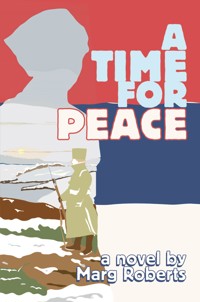
Set in Serbia during the First World War, the lives of a brave soldier and a patriotic medical orderly interweave. Stefan is brutalised by war atrocities but torn by loyalty to his men. Ellen buries the memory of women's rotting corpses piled in a church. When Serbia is occupied during 1915, the army, 30,000 of its cadets, and hundreds of its people evacuate in a mass exodus to Corfu. In the worst Balkan winter in living memory, Stefan leads the rear guard action and Ellen escorts cadets. Their survival depends on them facing what they fear most. There is a satisfying blend of spareness and depth in A Time for Peace, which is very accomplished. Marg Roberts has a natural-seeming ability to blend outer sensory detail with inner life and a light touch with perfectly poised use of sensory detail that brings scenes alive. There is a subtlety that knows about pacing and delivery as well as understatement. A fine and brave novel. —Roselle Angwin This is a very convincing piece of writing. The terse tone suits the subject matter and the characters inhabit their world well. — Ian Breckon, author of Knight of Swords
Sie lesen das E-Book in den Legimi-Apps auf:
Seitenzahl: 558
Veröffentlichungsjahr: 2017
Das E-Book (TTS) können Sie hören im Abo „Legimi Premium” in Legimi-Apps auf:
Ähnliche



















Contents
Title page
Copyright
Historical Background
Author’s Note
Serbia and its neighbours: 1913-1915
Dedication
Chapter One
Chapter Two
Chapter Three
Chapter Four
Chapter Five
Chapter Six
Chapter Seven
Chapter Eight
Chapter Nine
Chapter Ten
Chapter Eleven
Chapter Twelve
Chapter Thirteen
Chapter Fourteen
Chapter Fifteen
Chapter Sixteen
Chapter Seventeen
Chapter Eighteen
Chapter Nineteen
Chapter Twenty
Chapter Twenty-one
Chapter Twenty-two
Chapter Twenty-three
Chapter Twenty-four
Chapter Twenty-five
Chapter Twenty-six
Chapter Twenty-seven
Chapter Twenty-eight
A TIME FOR PEACE
MARG ROBERTS
Published by Cinnamon Press
Meirion House, Tanygrisiau, Blaenau Ffestiniog, Gwynedd LL41 3SU
www.cinnamonpress.com
The right of Marg Roberts to be identified as author of this work has been asserted by her in accordance with the Copyright, Designs and Patent Act, 1988. © 2016 Marg Roberts
ISBN 978-1-910836-37-8
British Library Cataloguing in Publication Data. A CIP record for this book can be obtained from the British Library.
All rights reserved. No part of this publication may be reproduced, stored in a retrieval system, or transmitted in any form or by any means, electronic, mechanical, photocopying, recording or otherwise without the prior written permission of the publishers. This book may not be lent, hired out, resold or otherwise disposed of by way of trade in any form of binding or cover other than that in which it is published, without the prior consent of the publishers.
Designed and typeset by Cinnamon Press.
Cinnamon Press is represented by Inpress and by the Welsh Books Council in Wales. Printed in Poland.
Acknowledgements
During the many years it has taken me to write this novel I have had:
the love and support of my husband, Pete;
the advice and encouragement of Novelink, a women’s writers’ group (Penny Harper, Katrina Osborne, Jeanette Sheppard and Judy Tweddle) which meets at the Oken Tea Rooms, Warwick, and my writing buddy, Angela Lett;
Rachel Duckhouse who drew the explanatory map.
Thanks to you all and other supportive writers and tutors.
The turning point in this project was the Cinnamon Press mentorship scheme. Thank you Jan and Rowan for your belief and help.
The quotation from Ecclesiastes 3 v.1, 3 and 8 is taken from the New Revised Standard Version Bible, copyright 1989, Division of Christian Education of the National Council of the Churches of Christ in the United States of America. Used by permission.
The publisher gratefully acknowledges the support of the Welsh Books Council.
Historical Background
On 28thJune 1914, Gavrilo Princip, a Bosnian student revolutionary, shot and killed Archduke Franz Ferdinand, heir to the Austro-Hungarian thrones. The Austro-Hungarian government declared war on Serbia who was seen (rightly or wrongly) as the source of the agitation leading to the assassination. Other nations took sides and on 4thAugust 1914, Great Britain declared war on Germany because it invaded Belgium en route to France. Great Britain and Serbia thus became allies. A number of British doctors, nurses and VADs volunteered for service in Serbia, including women’s medical units.
In October 1915 four armies invaded Serbia. Its army was driven into a small corner of the country. The Serbian government therefore ordered its army, its cadets and its government to evacuate to Corfu through neutral Albania.
Author’s Note
A Time for Peace is a work of fiction. I have undertaken research into the events of the First World War in Serbia, prior, during and after 1914-15. References to the Sixth Army, the Jevo regiment and named battles in the novel are imagined, as are the atrocities committed on civilians in the Balkans, although similar ones are documented. My descriptions do not refer to real events or attempt to apportion blame but rather to imagine the effects on decent men and women on both sides.
Serb cadets were part of the exodus from that country, as a government response to invasion and occupation by enemy forces. It is difficult to be certain as to their ages—some may have been as young as twelve. As far as I know, there is no record of women leading such a group. However, women certainly played a significant role in medical units in Serbia and elsewhere. I have made brief mention of the Scottish Women’s Hospital but the Women’s Medical Corps attached to the Jevo regiment is fictional.
Marg Roberts, 2016
Serbia and its neighbours: 1913-1915
For everything there is a season, and a time for every matter under heaven: … a time to kill, and a time to heal;… a time to love, and a time to hate; a time for war, and a time for peace.
Ecclesiastes 3 v.1, 3 and 8.
In memory of my parents and grandparents
Chapter One
Belgrade, Serbia, August 1914
Stefan Petrovic should have been enjoying himself, for he was dining at the Karakjodj, the most expensive restaurant in Belgrade. He picked up his wine glass so a waiter could reach across and remove the unused cutlery and side plate. The food had been excellent. He had sampled hors d’oeuvres whose names he had never heard of, whose flavours, even after tasting, remained a mystery to him. He had chosen jagnjetina for his main course and appreciated the lamb’s sweetness, enhanced by rosemary and thyme.
Another waiter lit the three-branched candelabra in the centre of his table, and as Stefan leaned back into the comfortably upholstered dining chair, he tried not to think of his wife waiting at home. His friend Tomislav was celebrating his promotion to General of the Sixth Army. Stefan himself, newly appointed as colonel of the Jevo regiment, was dining among generals and divisional commanders. He should have been honoured to eat in such company, but he felt uneasy.
The dining room in the Karakjodj was carpeted and adorned with glass chandeliers. On a warm evening at the beginning of August, the sun having almost set, Stefan considered it the most splendid place. He sat with two of his men and their orderlies at one of the round tables at the opposite end of the room to Tomislav’s, whose top table was decorated with ivy and stephanotis and fragrant, cream-coloured roses. Stefan rested the palm of his hand along the scar on his thigh, which had healed well though it itched from time to time. To try and relax, he moved his fingers to the beat of the traditional music being played on a dais in the conservatory. In the mirror on the wall to the left, the grey-green dress uniforms were framed within the candlelight, decorated with the gold and silver braid shoulder straps, gold and silver buttons, the many coloured campaign ribbons and the occasional gold Obilich medal.
When Tomislav had said, ‘Bring two friends from the regiment, for it is friendship that binds Serbs together,’ Stefan had chosen Rajko and Mikaiho. Mikaiho, a widower, was part of his extended family. His feelings towards his cousin were those of duty rather than affection. Rajko was a good friend; Stefan loved him as only men who fought alongside each other could.
He leaned across the table to speak to Rajko, who gripped his glass as though an enemy might wrench it from him. About to say that a beer would be most welcome, Stefan decided it might be interpreted as reflecting badly on their host. Though his jaw ached from courteous talk, he asked cheerfully, ‘Enjoying yourself, brother?’
Rajko’s eyes were bloodshot. ‘Yezthankyou, zir.’
During their twenties, they had both liked carousing. Ten years later, Rajko still did, but Stefan cut back after he was wounded in the last campaign. Mikaiho, sipping water from a champagne glass, muttered under his breath.
Stefan examined his wristlet. He’d an appointment at home at ten-thirty with an American journalist and would be glad to leave. Another potential embarrassment. No, he would not dwell on it; nothing might come of it.
After the main course, Stefan was surprised to see Tomislav get to his feet. At first he presumed he was to make an announcement, but he edged his way behind the seated officers. They’d met at Military Academy when Stefan was considering an academic career and Tomislav was politically out of favour. He’d aged in the last few days; his moustache was more white than grey. Despite the jaunty shrug of gold braid shoulder boards, he stooped. He strode through waiters in black suits and bow ties who were serving desserts of intricate sugar confections piled high on cut-glass dishes, rose and lemon flavoured Turkish delight, baklava and kadayif pastries.
Stefan’s discomfort increased. His friend was making his way to their table, singling him out. He jumped to his feet, ready to make the introductions but Tomislav, after greeting them, motioned a waiter to bring him a chair, which he positioned to Stefan’s right. The orderlies moved back to allow Tomislav more space at the table.
‘I hope you’re enjoying yourselves.’ Tomislav leaned forward as he used to when lecturing, never from notes, but standing in front of the lectern, flicking a white silk scarf, enthusing about strategy, encouraging debate.
‘Thank you, sir,’ Stefan said, ‘The evening does you credit. You were introduced to Major Rajko Kostic and Lieutenant Mikaiho Nis as we came in, weren’t you?’
Tomislav appeared to be examining Rajko intently. ‘I’m glad you could come, Major.’
Stefan hoped his friend could hide the extent of his drunkenness.
Rajko removed his elbows from the table, rubbed his fingers on the linen serviette on his lap. He picked up and replaced his wine glass as though, like Mikaiho, he’d been drinking water. Then he said, ‘I am proud to be here, sir.’
‘We are a select gathering and I am glad you could come. I believe you and Stefan are old friends?’
‘Commissioned together, sir.’ Rajko cleared his throat.
Stefan clarified, ‘1902.’
‘Longer than us, eh?’ Tomislav glanced at Stefan, who thought he was going to say more; however, he continued to observe Rajko before adding, ‘You have an excellent reputation, Major, not only against the Turks but you did well for us at Bregalnica.’
Rajko’s face flushed. He mutely opened his mouth; he could be reticent on a first meeting.
Stefan boasted, ‘He was the only one in the regiment to win the gold Obilich.’
Tomislav turned to Mikaiho. ‘And we have your cousin. Allow me to welcome you, also. Your action at Bregalnica earned you promotion and, if you prove as brave and intelligent a soldier as either of these men, you will do well.’
‘It is an honour to fight for our glorious Serbia.’
‘Are you from the same village?’
Stefan wasn’t sure to whom the question was directed or even if, aware of the answer, Tomislav was being polite. He said, ‘The Major is from the borders with Montenegro and the Lieutenant from Orasac.’
Tomislav said to Mikaiho, ‘Both these gentlemen are loyal soldiers of Serbia.’
Mikaiho sprang to his feet. ‘I am willing to die for my country, sir.’ He saluted, his face pale against black hair and moustache. ‘The whole regiment is proud of your promotion, sir. It is an honour for us all.’
Stefan shuffled his feet. Mikaiho was slightly too keen.
Tomislav said, ‘Please sit down, Lieutenant. We have a hard battle ahead, but tonight we celebrate that a peasant from the village of Struganica can reach the height of public service. We, too, can enjoy the best that Belgrade provides. Now is the time for dancing and drinking. Tomorrow we will defend our country from its enemies.’
Stefan was relieved Tomislav couldn’t read his unease. Though it was true Austria had taken the initiative and declared hostilities, Stefan wished his government had complied with their old enemy’s demands. Victory was unlikely after their army and hospitals had been decimated during last year’s fighting, civilians and soldiers killed by the countrywide typhus outbreak which followed.
He pointed to the wall behind the top table where portraits of Serbia’s heroes hung. ‘I confess I never expected to dine here…at the Karakjodj…’ His hands dropped. ‘…where King Petar himself entertains.’
Smiling, Tomislav nodded. ‘Like you, I was born a peasant, and would not presume, but when good fortune occurs we celebrate in the manner of princes. One day, Colonel, when you take my place, I hope you will invite your commanders here to celebrate.’
‘Thank you, sir.’ With an effort, he kept his voice level, trying to mask his depression at such a prospect.
After a brief chat, Tomislav returned to his table.
A waiter reaching to remove unused glasses, asked, ‘More wine, sir?’ Stefan put a hand across his. Half past nine. He would slip out and go home in half an hour.
Smoke drifted over the tables. His jaw ached from smiling politely and he looked across to the top table where Tomislav was holding forth. He feared the government was exploiting his friend. With Serbia only days into its war with Austria, the politicians needed him, so they had promoted him to general of the Sixth Army. When Tomislav caught him looking, he turned away.
Stefan paid scant attention to Rajko and Mikaiho’s struggle to converse. Instead he prepared for the arrival of the journalist, picturing him in a Western-styled suit, ringing the bell outside the gates of his enclosure, waiting a moment for the porter to admit him, walking across the cobble-stoned courtyard, climbing the stone steps to his house. He imagined this man who’d access to train seats, hotel rooms, berths on a liner all the way to Southampton, England, sitting at the bench in front of the fire, accepting a glass of shlatko from the welcome tray his wife, Stamenka presented. He swirled the wine, savouring its warmth.
Stefan forced himself into the present. The dessert dishes had been removed. The clock in the foyer was striking the hour as waiters served coffee and liqueurs. Stefan chose sljivovica, which reminded him of the plum orchards of boyhood. Throughout the room men were pushing back chairs, stretching legs, discreetly loosening waistbands. To his right in the conservatory, the floor was being cleared for dancing. Two violinists were leaning against a pillar while the guslar strummed. Stefan began to listen to the conversation.
‘Mules are best through mountains.’ Rajko spoke in certainties.
His cousin leaned across the table, his face close to the candles. Stefan sighed as Mikaiho waggled an admonishing finger at Rajko. ‘No.’
Mikaiho had yet to learn caution in unfamiliar company, Stefan thought. He didn’t appear a worldly young man.
‘Donkeys are best,’ Mikaiho asserted. Two orderlies exchanged smiles.
‘What do you know?’ Though he appeared more sober now, Stefan recognised the anger in Rajko’s voice.
‘We have donkeys at home. They do what we say and carry more than mules.’
‘Donkeys are for fools. What do you say, sir?’
Stefan replied after a moment, ‘They both have their place.’
‘Our young lieutenant here, he too has his place. Isn’t that right, sir?’
Rajko was perhaps insinuating that at twenty-five, Mikaiho was a novice.
Stefan sipped his coffee. Rajko was the senior of the two and ought to be conciliatory, but Stefan’s sympathy lay with him.
Mikaiho pushed forward so far across the table that his brows risked being singed by a candle. ‘Our mule was frightened by a shot and tore down the track so our turnips and cabbages spilled out and were trampled on…’
‘That’s a matter for little boys. I’m talking of the mountains of Albania and Macedonia.’
‘We don’t live in the mountains.’ For a moment, Stefan felt sorry for his cousin.
‘So don’t talk of things you know nothing of.’
At the top table, a waiter refilling glasses blocked the figure of Tomislav. The generals and their adjutants were obscured by smoke. During the short silence, Stefan picked out the love song, a song of long evenings dining on boulevard pavements with Tomislav and their respective wives. The guslar was singing, ‘Ruza! Ruza!’ in accompaniment to his own strumming.
‘In the Turkish campaign…’ Mikaiho began.
‘Yellow belly!’ Rajko jumped to his feet, a glass of wine in his hand. His chair and newly acquired walking stick crashed to the floor.
Stefan’s orderly, Dragan, stirred by his side. Stefan didn’t need to look at him. He was forty-five, old for the army and served Stefan well, but tiredness and drink caused him to nap on long evenings. He would be resting, chin on his chest, like a bird dozing on a branch. Should Stefan choose to rouse him however, he’d do whatever he ordered. For the moment he was best asleep.
‘Major! Sit down now.’ Stefan raised his voice just as the guslar stopped playing. It didn’t help that Mikaiho was in the right. Whatever happened, Stefan mustn’t let the tiff go any further.
The two men turned towards him. Stefan was aware that the divisional commanders at the next table had stopped talking though the officers on the top table were far enough away not to have noticed or were pretending they were not distracted. The violins and gusle began a mournful ballad.
Rajko began to speak, but Stefan interrupted. ‘We are the general’s guests. For God’s sake, do not spoil our regiment’s good name.’
He could have added that Rajko’s accusation was unjust. Mikaiho had led his unit with the cry, ‘Prince Marko will aid us,’ and they’d held their position. True, he’d not remained at the head of his unit, but that was inexperience.
Sitting down, Rajko gulped the contents of his glass. An officer on the next table resumed the conversation. At the top table the generals were laughing; Tomislav was preening his moustache.
Stefan reached for the box of cigars and handed it to Rajko. ‘Pass them round, brother.’
Rajko glowered round the table, his eyes as black as raisins, but after a moment, he took a cigar and passed the box to Mikaiho.
Rajko’s arm was shaking as he picked up the three-pronged candelabra and held it towards Stefan, who steadied the central stem with a hand. Amid the guffaws of men on the other tables, Stefan lit a taper from one of the candles and started to light his cigar. Not long till he could leave. Perhaps he would feel more settled when arrangements for Stamenka and their son, Mitar, were finalised.
It was a quarter past ten before Stefan felt able to leave. If he skirted the edge of the restaurant, he could walk through the conservatory, on through the gardens, without drawing attention to himself. He suspected Tomislav wouldn’t think well of his choosing a family appointment in preference to this all-male celebration. Reaching for his cigarettes from inside his tunic pocket, he smelled sweat. The silver case slipped in his hands and he removed a glove so he could open it more easily.
He’d not accepted the offer of the journalist the first evening they’d met in the Gornji Café, but asked, ‘What do you get out of it?’
‘You pay me of course.’ The journalist went on to say he’d family in Chicago and understood Stefan’s concerns, but Stefan felt uncomfortable at the mention of money. He could afford to ensure his wife, son and mother were removed from the arena of fighting; his men were not so privileged.
Later, on telling Stamenka, he’d been surprised by her reaction. She’d missed her parents when she moved to Belgrade to marry. Now she would travel to England with thirteen-year-old Mitar as long as Stefan promised to join them after the war.
He struck a match, watched it fizzle into flame before lighting his cigarette. He’d been angry when the Austrians declared war. It wasn’t unexpected. They’d wanted revenge for the murder of the Austrian Archduke by a Serb, wanted to demonstrate they remained a mighty empire. The British, French and Germans were crazy for war, and the Russians would do anything to keep a foothold in Europe, but Serb politicians were equally foolish. He spat strands of tobacco into his hand. He’d bitten straight through the cigarette.
He stood up and stepped back from the table, wondering how Rajko would react. He was dancing, swaying with the violins, his stick, shoulder height horizontal. His friend was unquestioning in his support for the war. When Stamenka took the train to Salonika, would Rajko condemn Stefan for lacking faith in the army?
There was a roll of thunder, but too distant to bring the threatened rain. Stefan caught a whiff of sljivovica and he glanced up at Tomislav sitting with his guests. He felt a wave of affection. The politicians had known what they were doing when they promoted him; they needed a leader who was popular with the people at a time when some of the military warned of a long struggle. Nonetheless, he hoped Tomislav remembered people and politicians could be fickle.
In the distance, another reverberation. Not a storm then. Probably a bomb that hadn’t exploded. There was nothing he could do. Engineers would deal with it.
Just as he took a drag on his cigarette and Dragan was rousing himself, Tomislav looked across. Damn. He couldn’t slip out. He would have to walk over and make his excuses; he extinguished his cigarette.
‘Wait here,’ he instructed. As he approached the top table, Tomislav bounced to his feet. ‘Stefan! I was just saying we must not let the enemy spoil our evening.’
‘Indeed, no.’ Stefan drew closer, ready to shake Tomislav’s hand. He would explain he’d business and pray Tomislav didn’t ask questions.
‘And yet… a bomb in the wrong place can kill innocent men and women. I’m looking for a volunteer to find out what’s going on. We can hardly sit drinking and making merry while our people are suffering.’ His friend was exaggerating. Civilians didn’t expect a General to concern himself with a bomb when the enemy was gathering on the other side of the river in preparation for invasion. Tomislav’s arm was around his shoulders, his breath warm on his cheek.
They shook hands. ‘Stefan. I knew I could depend on you. Send word if there are deaths and tell the people their army will take revenge.’
As Stefan hurried along the gravel path through the restaurant gardens and towards the main street, he caught a whiff of roses and lavender, favourites of Stamenka’s. All he would do was assess the damage, ensure any survivors were being rescued and send a message to Tomislav. Then he could go. The journalist would wait half an hour.
The torches on either side of the path flickered. Behind him, Stefan heard his orderly’s footsteps, the tap tap of Rajko’s stick. Already irritated with Tomislav, for sending him on a useless errand, his ill humour was increased by Rajko’s presence. At times like this, he wished his friend’s bravery extended to risking an operation to remove the bullet lodged in his knee.
Rajko panted by his side. ‘No-one heeds the warnings.’
‘Take your time, brother.’ Stefan tried to sound reassuring.
Rajko went on, ‘They think because we’ve had one victory, bombs won’t explode.’
‘It seems to be on Ulica Morava.’
Rajko paused, leaning on his stick. ‘The Bulgars will attack next.’ Rajko spoke in short bursts and Stefan waited, tapping his foot.
Rajko went on, ‘Then the Turks. The whole world hates us.’
Stefan snapped, ‘You should take the offer to retire and return home to your wife.’ His wife was reputed to be a dark haired beauty. Stefan couldn’t remember him going home on leave; no doubt she’d found someone else.
‘Who knows, even the Greeks could turn against us. All before our damned allies set foot in Serbia.’
Stefan grunted. The sensible response was, Why the hell are we fighting, if we can’t win without the help of allies? Serbs, a passionate people, were rarely sensible.
As Rajko began to walk again, Stefan increased his pace through the gates of the Pavilion gardens. Dragan stepped closer. The avenue of trees on Bulevar Foccicia was poorly lit and the side streets dark. The smell of barbecued meat from restaurants drifted towards them, along with the sound of women’s voices.
At King Petar’s statue, a train of ox-drawn wagons clattered along the cobblestones. The cavalcade had no beginning and no end. If he waited for it to pass, minutes would be wasted. He stepped into the road, his shoes slipping on shit and urine, as he moved towards the steaming mouths of bullocks, the stinking hindquarters of oxen. He didn’t want to witness the wounds of the men lying in the wagons, but couldn’t ignore their groans when one wagon obstructed his path.
Fighting nausea, he peered over the wooden side panels, able only to distinguish a blur of shapes. Humps, which moved. Grey blankets. Grey hair. Bodies heaped like logs outside his house. He recoiled, as an arm dangling from the wagon, snaked towards him, touched his sleeve. Not able to stop himself, Stefan’s eyes followed the fingers, the trembling hand, the ragged sleeve. Shadows flickered across the wagon, before retreating. It was too dark to distinguish a person, but in his mind he saw a man lying on heaving bodies, and in the instant the wagon moved on, from within it, a voice called out, ‘Serbia is great.’ He pictured an ashen face under a crust of black blood, a bandage in tatters. Through a mist of tears, he saw, or imagined, faces drained with pain, eyes pleading for mercy, calling out to their country.
The rich food from Tomislav’s celebration rose from his belly, sprang from his throat, before he’d time to control it. He grappled for the handkerchief inside his trouser pocket, wiped his mouth and chin, and flung the handkerchief and vomit to the ground. He gulped night air as though it were water, and stumbled behind the backs of wagons to the other side. Dragan wasn’t far away, but he’d lost a sense of Rajko’s whereabouts. In the distance, a woman screamed.
On the pavement he waited. Ancient stone buildings loomed through the murky darkness, and a boy of about six darted from a shadowy doorway. Stefan stretched out his arms to catch the child, for it was dangerous for youngsters in the city, but he swung towards the traffic, and though Stefan ran after him for a yard or so, he was too slow. The experience added to the unreality of the evening.
A moment later, he was joined by Dragan, who used his handkerchief to remove the vomit. Stefan hated the smell, but Dragan spat, wiped, spat again, wiped and wiped until the front of the tunic was clean. When Rajko joined them, limping, Stefan’s impatience returned. The three men moved on.
From a side street, there was the sound of heavy, rapid footsteps. Stefan hurried ahead, relieved when he recognised one of his own men.
They saluted.
‘What news?’
‘A bomb by Gornji café.’
Stefan grimaced.
‘Yes, sir. Students and soldiers. Over there.’ The voice was pained. ‘We’re checking the site.’
‘Well done, brother. Do you need reinforcements?’
‘There’s not a lot we can do, sir.’
Stefan ordered Rajko to return to the Karakjodj and report to Tomislav. The Gornji was where he and Rajko had drunk as students, young officers, and where Stefan had first met the journalist. If it had been any other public building, he could have left the job to the engineers.
It was as Stefan expected. Where the café had stood, smoking rubble shuddered like men in shock. While he looked down the street, Stefan wiped his arm across his mouth, which tasted of masonry grit. A few women huddled on the pavement. A cordon stretched the width of the side street, while soldiers evacuated families from houses. A woman in a night dress carried a baby in a black shawl, followed by a dog. Now and again, a figure ran up or down the street.
Stefan peered at the remains of the café. There was no sign that an hour ago students and soldiers crammed into its bars, drinking, smoking and laughing. This was where he’d celebrated his promotion a few days ago.
The engineer in charge, his uniform drenched with ash dust, said, ‘Terrible business, sir.’
‘Many survivors?’
‘Not yet.’
If the Austrians had been able to choose the site on which their bomb fell, they couldn’t have done better. It felt a bad omen. It was the hub of patriotic fervour. The men stood in silence.
‘See to it, and show me where to dig.’ It would be at least an hour before he got home, and it would be difficult for Stamenka to occupy the journalist. She wouldn’t think it decent to sit with a foreigner for long.
It was first light by the time Stefan staggered past the shop where his father used to work, its doors shut to the street. The bench his father built, had disappeared many years ago. Stefan used to watch him planing, sawing, whittling, but that wasn’t the picture that stayed in his mind this morning. He saw him, eyes shut, black hair under a red fez, sprawled along the bench in the evening, when his work was over, a glass of rakija in his hand.
Already birds were singing, and someone was drawing water from the well near to his mother and older brother’s dwelling. There was no foreign vehicle in the courtyard, but if the journalist had come by horse, that would have been stabled.
He dragged himself up the steps to his house. The shutters to the living room were closed, so he couldn’t see if the room was lit.
He pushed open the door. A low candle flame trembled in the centre of the long table. He tripped over the rug, stumbled almost to his knees, before he regained his balance. The room smelled of wood ash, candles, and polish. It was a woman’s room. What had the American thought? Were they too poor? He’d heard all the houses in America had electric light, though that could be propaganda. He staggered across to the bench in front of the dying fire. There was no sleeping figure. Head in hands, he sat down, relieved.
Only when Stamenka, fully clothed, emerged from their sleeping quarters, did he stir.
‘Do you want to inspect Mitar?’ she asked.
‘Did the journalist come?’
The door snapped shut. She stepped towards him. She smelled of wood smoke and lavender oil. ‘I thought you’d returned to barracks.’
In her black gown, she reminded him of his mother when he was a boy. Nothing about her dress reflected modern city life. He resented her refusal to dress like an officer’s wife. A flash of anger followed by an urge to run away.
He pursued his question. ‘The journalist?’
‘I must light a candle to celebrate your return.’
He reached for his cigarette case. He mustn’t blame her for his disappointment. His throat was too dry to smoke. He let his hand fall.
‘We were expecting the American journalist,’ he said wearily.
She strode across to the fire, as though shooing chickens, lit a taper from the embers and held a protective hand around it, as she carried it to the table. The candles in front of him flared into primrose flames, and when he turned to look at her, noticed red blotches on her cheeks where she’d lain against the blanket. Perhaps she thought he’d cancelled the appointment.
‘Do you like the new tapestry?’ She held the candle above the bookcase his father had built for them, when they married. He gazed at the tapestry. A patchwork of mud, wooden stakes, mountain trenches, burned out buildings among wheat or maize stubble.
‘He was to take you and the boy to freedom,’ he said glumly.
She poked the fire, added a few logs, lit the candles in the recesses, and pushed the books on the shelves so they stood like men in line. At the table, with her sleeve, she rubbed the photograph of him in dress uniform.
‘You are a brave soldier for Serbia.’ She lowered her eyes. He knew she boasted of him to other women and the priest. He squirmed on the bench, embarrassed, his body yearning for rest.
She tucked the bunch of dried thistles back into the wooden feet of the photograph frame. ‘A bomb destroyed the gymnasium.’
‘Mitar?’
‘It was a Saturday.’
‘We were to finalise the arrangements for your leaving.’
The burning candles tickled his nostrils and he sneezed. After he’d wiped his nose, he said, ‘There are things about war that are too shocking for me to tell you.’ Women weren’t resilient. It wasn’t just deaths on the battlefield, and they were bad, but the men in wagons, officer cadets buried alive. He couldn’t admit to her, to anyone, how much every death mattered.
She said, ‘They’re running out of space in the cemetery.’ She sat down on the chair nearest him and frowned. Her fists were clenched. ‘Turks have left us their curse…’
His voice rose to quell her words. ‘Superstitious nonsense.’ In his memory his father shouted at his mother, and he turned his back on her, and stared at the logs catching alight.
There was a click, and the door to the sleeping quarters opened a crack. He couldn’t see the boy, didn’t want to talk to him. Stefan believed, though others didn’t, that Belgrade would soon be occupied and he, the boy’s father, would be unable to offer protection. He turned to look at Stamenka. She’d shrivelled into the chair. The door closed.
‘Have you been afraid?’ He tried to soften his tone, but though quieter, his voice was still harsh. He pushed himself to his feet. Whatever had possessed him to think he could get them away? He would go back to the barracks, catch some sleep.
‘I’ll fetch Mitar,’ she offered tentatively.
‘No.’ On an impulse he stepped over to her chair, knelt and touched her hand. ‘We have been apart too long.’ He stroked her fingers. ‘We need peace.’
Her palm was warm, as she placed it over the back of his hand. ‘The journalist who was to take us to safety did not come.’
He sighed. Straightening, he looked across at the tapestry she wanted him to admire. He remembered her as his sixteen-year-old bride. What had happened to the yellow, blue and red tapestries she’d brought, the ones she’d displayed on the day of their betrothal? Why was she sewing tapestries as dark and desperate as the trenches? He looked down. Her eyes were full of tears, and he didn’t know how to comfort her.
‘Maybe he will come tomorrow,’ she said.
‘An unexploded bomb went off near the Gornji café. Many were killed.’
‘You think he’s dead?’
‘I don’t believe he will come tomorrow, or the next day.’
It occurred to him, he was relieved his wife and child wouldn’t be travelling on a train out of Belgrade. He didn’t want them to leave. He trembled with shame, and pushed the thought away.
‘Then you must take us, Stefan.’
He gasped, jumped to his feet. ‘I am Colonel of the Jevo regiment. It is not possible.’
‘We’re not safe in Belgrade.’
She was asking too much. Desertion? The candles on the table flickered, illuminating her face. What if all three of them left? Blinds pulled down, the train would steam through the night. They’d sit opposite, Mitar holding his hand.
‘The army will protect its people,’ he lied.
Slowly she stood up, her fingers round his. She led him to the table, leaned to blow out the candles. ‘I fear you love Tomislav more than us.’
Numb with what she’d asked him to do, he gazed at the reddening wick.
‘Lie with me,’ she said.
Chapter Two
Regimental hospital, Jevo, South of Belgrade, October 1914
In the late afternoon, the ward had fallen into darkness. An oil lamp fizzled on the wooden desk on a dais, candles burned in the alcoves of deep, narrow windows. Men were crammed two, sometimes three, to a palister. Many wore the ripped and bloodied clothes they fought in, hadn’t been bathed, weren’t dressed in the royal blue pyjamas of the Women’s Medical Corps.
Closing the door, Ellen Frankland looked round for the nurse-in-charge.
She hated these first moments on the ward. Rotting flesh. Suppurating wounds. Stale blood. At her feet a man clutched at the air above his blanket. Hair stuck to an ashen face. In the same bed, another patient, on his side, groaned in his sleep. Drops of rain dribbled onto the floorboards, as Ellen removed her sou’wester, and shook it.
When the women’s unit had arrived at Dobro Majka, the regimental hospital, a week ago, Matron determined to establish order and prove to Colonel Petrovic their unit could save lives. Ellen had responded, by distempering walls and ceilings with other orderlies, by day and candlelight. The next morning, they’d filled the palisters with straw and covered them with sheets and grey blankets. And now, that transformation was smothered in smells, as strong as those in the courtyard, where patients queued for beds among tethered oxen and mules.
Unbuttoning her mackintosh, Ellen strode along the central aisle until she reached the foot of the bed where Rose squatted. Her fingers slipped on the oilskin, finding it hard to concentrate, distracted by so many wounded men, so much pain. Rose didn’t look up from where her patient slurped from a glass, eyes closed. Three shared the palister. A small man in the middle stared at the ceiling, a blue knitted hat on his head.
Ellen squeezed the folded sou’wester into a mackintosh pocket. ‘May I register one of Dr. Eyre’s patients?’ she asked.
‘From the casualty station?’ Rose twisted, seemed to take stock of Ellen.
Embarrassed, Ellen blushed. To hide her discomfort she said, ‘Dr. Eyres wants to operate straight away.’ She’d been helping another orderly lift the wounded man from the mule ambulance chair when her surgeon friend had hurried to examine him.
‘You’re new to field hospitals?’
Ellen nodded, ready to apologise for her inexperience.
Rose continued, ‘It’s always the same. Either they arrive days before they’re expected, or not at all. It’s a good sign, this activity.’
Conscious of mud falling off her boots, Ellen didn’t move. She volunteered, ‘I thought … I thought it would be tidier than this.’ Some confusion was expected among tent wards, hastily erected by men from the Jevo regiment in the recently cleared orchard, but not here in the main building.
‘’Fraid not. Every Matron I’ve come across says the same, “No-one to be admitted to the wards until they’ve been bathed, shaved, their wounds dressed,” but straight after a battle it’s damned impossible.’
Rose stood up. Ellen liked her. In her apron pocket she carried a white handkerchief dabbed with lavender water, which she held in front of her nose every time she thought a man a bit ‘whiffy’.
‘Can you cover while I take my break?’
‘Is it allowed?’
‘I’ll only be ten minutes.’
Ellen made way for the nurse. She couldn’t anticipate a problem, and if there was, she’d only to run to the corridor and shout for another orderly.
‘If you think it’s all right.’
Rose was bustling towards the trolley. Before she put the beaker down, she asked, ‘What’s wrong with your patient?’
‘He’s blind.’ When he’d arrived, he’d been unable to raise his head or support his body. ‘Dr. Eyres said it might be exacerbated by shock.’
‘Write, “head shrapnel”.’ Rose dropped the beaker on the bottom shelf, moved to leave. ‘There’s another one you can add while you’re at it.’ She pointed to a bed close to the door. ‘Ivan Velec. Left leg, gangrene. I’ll check you’ve done it properly when I get back, so don’t worry.’
Rose’s straight forwardness reassured a little, but in charge of patients who didn’t speak much English, Ellen felt uncertain. At home, where she managed her father’s household, and was spoiled by her fiancé, self-doubt never occurred.
She tucked her mackintosh under the desk, stepped on to the dais, and sat on the high stool. Rose must think she was doing all right or she wouldn’t have left her.
She decided to fetch Ivan’s nametag, so she could enter both names at the same time. Gangrene meant amputation. She shivered despite the muggy warmth. It seemed cruel, but Audrey had told her that where gangrene took hold, there was no choice.
Her boots clipped, as she strode down the aisle. Some men watched, others shouted, cried in their sleep, chatted, one called a greeting.
She recognised an Austrian prisoner of war she’d met yesterday. Gustav. He was gazing at a jar of holly, she’d placed in one of the tiny alcoves. She’d write in today’s letter to her fiancé, how her German enabled her to exchange pleasantries. Gustav had become a person, with a life outside the hospital, and the experience encouraged her to continue her off-duty classes in Serbian.
Ivan, lying very still on his back, wore a homespun jacket, his legs covered by a blanket, through which blood trickled onto the floor. She wondered if it mattered, if she ought to call a nurse. No, Rose had looked at him, she wouldn’t have left if his life were in danger.
While she stretched to reach into his jacket pocket, she spoke calmly in English, ‘I’m going to take your identity tag,’ thinking as she did that she must learn more vocabulary for when she was on ward duty. A sharp kick jolted her shin. She wobbled under the blow, surprised by Ivan’s strength. At first, she took it as a rebuke. She peered at him, but his eyes were closed, his skin ice pale under several days’ growth. She chided herself. The movement was involuntary, not personal. She extracted the tag and returned to the dais.
The register was open at page 4. Now she was becoming accustomed to the sounds, she could better identify who made them. The man next to Ivan snored fitfully.
The man in the blue woollen hat, in the middle of the palister where Rose had kneeled, was whimpering, calling out for his mother, Majko, majko. The cries were distressing, and Ellen wondered if he thought he was on the battlefield. The third occupant of the bed was sitting up. He’d been shaved and the stump, where his hand had been amputated, was bandaged. He was talking to the patient to whom Rose had given the drink.
She smoothed the name-tag with the edge of her hand. Ivan Velec. In the language class during the journey to Serbia, she’d learned the rudiments of pronunciation. The ‘v’ like an English ‘v’. The ‘c’ like the ‘ch’ of ‘church’.
The nib spluttered as she scratched the capital ‘I’. After his name, she wrote ‘J’ for Jevo under the column headed ‘regiment’, and 4thOctober for the date of admission.
‘Please, miss!’ The man, who’d been chatting, waved. He shouted, ‘Water. The boy wants water.’
Balancing her pen on the register, Ellen jumped down. As she hurried along the aisle, to the earthenware jug on the trolley, she adjusted a loose strand of hair with a comb. If Matron saw her, she would be in trouble for not wearing a cap.
Water splashed the back of her hand. How hot the ward was. After a morning and afternoon heaving the wounded out of wagons and mule chairs, and then lowering them on stretchers, she felt grubby and sweaty. Still, it was good to be useful. Maybe when she’d learned how to wash and dress a wound, make conversation, she would feel more confident.
As she approached the threesome, she asked, ‘Who wants the water?’
‘He’s gone, miss.’
She positioned herself at the foot of the palister. ‘Who wants water?’ She spoke more slowly, thinking he’d misunderstood. In the next bed, a patient with jaundiced skin fingered rosary beads.
‘He’s dead.’
Her hand shook, water spilt on the blanket.
‘He wanted a drink,’ she stammered. She thought the patient accused her. Men on neighbouring beds listened. ‘He asked for his mother,’ she pleaded.
Still holding the beaker, she shuffled between the palisters, not quite believing. Her feet became entangled in the loose blankets and sheets. Mud crumbled on the floor.
‘I’ll have that water, miss.’
She continued to edge towards the man who’d died. What was she supposed to do? What if he was asleep or in a coma? When she got close, she handed over the drink.
Colour had drained from the dead man’s face. The eyes stared. Strands of black hair lay across his forehead, below his knitted hat. He’d been too young to shave. His body seemed smaller close up. She couldn’t stop trembling. She was aware of the beaker being returned, but she was obsessed with this man, this boy soldier.
‘He looks young,’ she whispered.
‘He was fourteen.’
‘A child.’
‘A soldier, miss.’
She placed her hand on the boy’s cheek. It was warm. Black eyebrows, long lashes. She tried to interpret his expression, to search for reassurance his death had been peaceful. Wouldn’t it have been better to die on the battlefield? She closed his eyelids. She’d read that’s what you were supposed to do. Unable to cover his face with a sheet, without disturbing the others, she removed his hat and laid it over his face. Blood stuck to her fingers and she wiped them on her skirt.
Just as she’d returned the beaker to the trolley, the door opened with a flourish and Matron, in white gown and head-dress, entered the ward. Ellen rubbed her bloodied hand on her skirt once more, jabbed loose hair in a comb and hurried to the dais. As she scrambled onto the stool, she noticed that behind Matron, the dark hair under Serb military cap, the silver pips of Colonel Petrovic.
‘Who has obstructed this doorway?’ Matron said.
‘There’s not enough room, Ma’am.’
Matron strode down the aisle, surveying each row of beds. Last night Ellen had taken her cocoa as she’d held the hand of a patient with a high temperature. Ellen hadn’t seen her initially. Unassuming, insignificant. But not this afternoon.
Turning to the colonel, Matron announced, ‘You can see the problem. We need another admissions’ tent.’
‘You’re doing good work, Ma’am.’ The colonel spoke English with a slight German accent.
‘We could save more lives.’
Ellen wondered how to tell Matron of the death. The body needed to be removed, she was sure that was the procedure.
‘Excuse me, Ma’am,’ Ellen began.
‘Miss Frankland, please get on with your work.’
The oil lamp spluttered. Ellen sat down, picked up her pen. In the column ‘Reason for admission’ she wrote, ‘l. leg gangrene.’ As she blotted the entry she glanced over to the colonel. He was crouched over Ivan.
When he straightened, he addressed Ellen. ‘Ivan Velec from Orasac, my birth village.’
‘He came in today, sir.’
‘They lost a son last year. I hope you can save him. They’ll need him to work on the land, when they get old.’
She ran her hand over the blotting paper, thinking that if Ivan had gangrene, he wouldn’t be able to walk.
‘Where’s the nurse-on-duty?’ Matron said sharply.
‘She slipped out.’
‘When?’
‘No more than a minute ago.’
‘A minute?’
‘No more than two, Ma’am.’ She hoped Rose wouldn’t be in trouble. Soon, Matron would notice that she wasn’t wearing a cap.
‘I want to report, Ma’am…’
‘Three in a bed, Colonel. Look.’
Ellen jumped from her chair, off the dais landing with a thud. ‘That’s what I wanted to explain…You see, just a… second ago, while I was fetching him some water, that boy… the one in the middle…I put his hat over his face… because…’ Out of the depths of her stomach, a sob began to surface. She pushed it down. ‘…because, Ma’am…sadly he’s died.’
The colonel joined Matron. He was younger than Ellen expected for a colonel. Perhaps, forty. Weather-beaten face, thick eyebrows. In his grey-green uniform, gold shoulder boards and buttons, a dark red collar, campaign medals and polished, black riding boots, he was as impressive as a British officer.
Matron said, ‘Have you checked his pulse?’
She shook her head, saying sorrowfully, ‘He was fourteen.’
Matron slid between the beds, knelt on the edge of the palister, holding the boy’s wrist. As she got up, she said gently to Ellen, ‘I expect he was dead, Miss Frankland, but that’s why we always have a nurse on duty. If there is nothing that can be done, she can at least record the time of death.’
Wanting to ask the colonel if he knew the boy, if he was from his birth village, Ellen turned to him. He was holding his gloves in his hand, his nails were trimmed, the cuticles pushed back to the half-moons. He seemed to be examining her face.
‘Why did you come to Serbia, Miss Frankland?’
‘To save lives, sir.’ It wasn’t entirely true; she was repeating what Matron said. She could hardly say she wanted to see a bit of life before she got married, and even that wasn’t quite accurate.
Matron was nodding approval. ‘We could do more, Colonel Petrovic.’
‘Priority has to be given to the movement of troops, Ma’am, or Serbia cannot survive.’
Matron began to walk towards the door. She spoke briskly. ‘We’re on our last bandage bale. We can do nothing without bandages. They’re at the railway station in Jevo. In a few weeks, we’ll have our own motor transport, but in the meantime, your men die.’
He rubbed his hands together. ‘I will arrange vehicles.’
‘And gauze. And Dr. Eyres must have her anaesthetic.’
‘Of course.’
Ellen returned to the dais, so she could add blind Vukasin’s name to the register. At the door to the ward, the colonel turned back, and said to Ellen, ‘It is not always possible to save lives, but we’re grateful for what you’re doing.’
Later that evening, stretched on the bed, Ellen looked up from her writing pad at Audrey, who was reading a medical book at the table by the window, a tiny frown between her eyebrows. She wore a dressing gown over her pale blue nightdress, having just had a bath. Two grips pushed curly, shoulder length hair, out of her face.
Ellen had Audrey to thank for this room in the old nunnery because the other British volunteers were bedded in dormitory tents. And though she was grateful, she also felt intimidated. Audrey, one of the first women surgeons, was clever, never stopped thinking, talked mostly about her work.
The wall was cold on her back and Ellen adjusted the pillow. It was the first time she’d not known what to write to Edward; she’d written every day during off-duty.
‘It’s difficult to describe death, isn’t it?’ she commented.
‘Don’t.’
‘We promised to tell each other everything.’
‘That’s ridiculous.’ Audrey looked at her watch. ‘Are you going to the mess for cocoa?’
‘I’ll finish my letter, if that’s all right. I’m worried I haven’t had one from Edward.’
‘Nor me from Douglas. They’re busy.’
‘I suppose so.’ Ellen leaned down to dip her nib in the inkwell on the floor. It felt a long time since she’d seen Edward.
He’d been extraordinarily kind, when she’d told him she wanted to join the Women’s Medical Corps as an orderly. Papa had refused permission and Edward had looked into the situation. That involved touring the largest military hospital in England, and discussing Ellen’s plans with the matron. He’d spoken to Audrey, appointed as orthopaedic surgeon at Dobro Majka, and at length on the telephone to Lady Alice, the founder of the Women’s Medical Corps. Satisfied, that his future wife would be acting patriotically, without coming to any harm, he’d tried to persuade her father. That he’d not done so, was his only doubt about her venture.
With a sigh, she began,
My Dear Edward,
I have been thinking of Lady Alice at St. Thomas’ hall. Those peacock feathers, that emerald dress, the tilt of her hips. Yet it’s difficult to imagine her in Serbia, particularly at Dobro Majka. She was elegant and I was impressed, but my recollection of her description of the Women’s Medical Corps does not match my present experience.
Resting the nib on the page, she remembered that afternoon at St. Thomas’ hall. The mingling of women’s perfume in the rows around her, the swelling of her feet in satin shoes, too small for walking on London pavements in August, the buzz in her stomach. Straight after the meeting, she’d telephoned Edward at his club, had enthused that Lady Alice believed women could play an active role during the war. Obviously it included witnessing death, but she (and perhaps Edward) had glossed over that.
‘If you’re not going to write your letter, you may as well fetch our drinks now.’ Audrey spoke sharply.
‘It’s harder than I thought.’
‘Death?’
‘Writing. I was different at home, I wonder if Edward will recognise me.’
‘After a single death?’
‘It’s something you’re used to I expect…’
‘Any death is tragic, especially of one so young, in a needless war, but being here will help you decide what to do with your life.’
It was hard to explain to her pacifist friend, that though she grieved, she accepted death. Her uncle Victor had died fighting in the Boer war.
However, there was no point in trying to finish the letter with Audrey in the room. She would get up early tomorrow, take pen and ink to the chapel, and write by candle light as she’d done before. She picked up the sheet of blotting paper from the coverlet and laid it across the half page she’d managed to get down.
‘You know I don’t want to be a doctor or a nurse.’
‘You can’t be a soldier!’
‘That was a misunderstanding.’
‘Only you could possibly imagine that a respected woman like Lady Alice would suggest women fight.’
‘It was silly, I know.’ She wished she’d never blurted out, in an unguarded moment, she wanted to be a soldier.
‘I’ll make us hot water bottles and bring over cocoa, shall I?’
Ellen tucked the letter inside the writing pad. As she put it in the drawer of the bedside locker along with the letter she’d already written to her sister, she took a deep breath.
‘I want what’s best for you,’ Audrey went on, ‘that’s all. Maybe we could see something of the country while we’re here. Colonel Petrovic suggested to Matron that we take a ride into the villages. I’m sure she’d let you come with me.’
Ellen bent down and picked up the inkwell. ‘If you like.' She doubted anything would come of it; Audrey sometimes worked through her off-duty though Matron didn’t allow nurses and orderlies to.
As she carried the ink well across the room to the stand she kept inside the wardrobe she said, ‘Your fiancé is a surgeon so he won’t be shocked by these things.’
‘There’s a lot here that would surprise him.’
‘In some respects, Edward is leading a more sheltered life than I am.’
‘Ellen, Edward is twenty-eight. He’s running a factory making motor ambulances, negotiating with the Ministry of Defence. If he doesn’t know men die in war, he’s living in a different world from the rest of us.’
Ellen nudged the drawer shut. Why did Audrey have to lecture her?
Audrey went on, ‘Life is not a melodrama with you the tragic hero. You wanted to find out what war’s about, and you are.’
As she crossed the room for last night’s hot water bottles, Ellen was silent. When she’d started at St. Catherine’s as a weekly boarder after her mother’s death, Audrey, a Sixth Former, was asked to help her settle in. Ellen, aloof in her desolation, hadn’t been dramatising though Audrey had presumed so.
At the door, with the hot water bottles in her hand, she clarified. ‘All I’m saying is, that I think I know more about the human cost of war, than Edward.’
She didn’t admit to Audrey that it disturbed her, the unfamiliar feeling of wanting to protect him.
Chapter Three
Dobro Majka, outside Jevo. October 1914
The crisp, evening air burned Ellen’s throat, as she made her way through the winding paths to the operating tent. Apple trees had been chopped down to make way for the Unit’s tents, and she followed the lighted lanterns on the stumps to the far end of the hospital grounds. As she turned into the final alley, she straightened her shoulders, tried to ignore the stirrings in her tummy. Ahead, the tent loomed like a prehistoric bird, the corner flags, wings preparing for flight. The electric generator Audrey had paid for and collected from Belgrade last week thrump, thrump, thrumped, by its side. Gladys, the theatre nurse, was waiting under a lantern hanging from a wrought iron post.
While they shook hands, Ellen was conscious of the basket to the left of the entrance. In the flickering light, she glimpsed legs, shins and feet, hands, finger knuckles, arms. It was a place she avoided, her imagination stirred by stories of amputations, the smell of blood and decomposition.
Gladys nudged the basket with her foot. ‘Don’t take this as normal. You’d lose your job at St. Bart’s if you left limbs lying about.’ She sidled close, ‘It’s primitive here.’
Ellen twisted from her, hands clasped, stared into the starry sky.
‘Have you got a parcel from home?’ Gladys went on. Wisps of grey hair shone in the lamplight. Gladys was another of the older nurses. She’d left two children with her sister, her husband having enlisted. ‘My mother’s sent biscuits and chocolate if you want to join us after supper. That scrambled egg and beans was awful, wasn’t it?’
Ellen disliked communal eating at Dobro Majka, hated the dried egg mix and had managed only a slice of bread and jam. The prospect of chocolate sickened her. ‘We’ve had worse,’ she said politely.
She’d herself to blame for being here. Audrey meant well. Last night as they’d chatted drinking cocoa, Audrey had suggested she observe the operation on Vukasin, so she would have a fuller picture of what happened in the women’s medical unit. Upset by the boy soldier’s death, tired at the close of a day, Ellen had succumbed. Matron had given permission for Ellen to be present during one operation in the early evening, emphasising to Audrey that Ellen needed ward experience before specializing.
Gladys, tall, with broad shoulders and a broad Cockney accent instructed, ‘Now, you must take off your boots, nice leather, and put on those overshoes.’
She pointed to a three feet long rack, on which were balanced several pairs of wellington boots. Ellen removed her gloves, ready to unfasten her laces. Her heart fluttered.
‘Do you think it will snow?’ Gladys asked cheerfully.
Seeing nothing but the ordeal ahead, Ellen was slow to reply. She hoped the operation wouldn’t last long. Audrey couldn’t estimate, but sometimes she came to bed long after Ellen was asleep. Gladys pushed on, ‘This head. Even at St. Bart’s he mightn’t make it.’
Impulsively, Ellen confided, ‘I don’t like it when they die.’
‘I used to cry and cry, after a patient passed on. You learn to be tough.’
The laces knotted. Ellen’s fingers trembled, she fumbled.
‘Audrey thought your patient might feel better if I spoke to him in Serbian, though I’m not very good.’
‘Is she your friend?’ Gladys stood hands on hips as Ellen slipped one foot into the boot.
‘Sorry. I should call her Dr. Eyres. We met at school.’
‘Must be older than you, surely?’
‘Six years.’
While Ellen slid on the second boot, Gladys gabbled. ‘The Serbs are useless. Their doctors and nurses died from typhus last year with their patients. Their army isn’t that good either.’
‘They won their last war.’




