


Erhalten Sie Zugang zu diesem und mehr als 300000 Büchern ab EUR 5,99 monatlich.
- Herausgeber: Allen & Unwin
- Kategorie: Gesellschafts- und Liebesromane
- Sprache: Englisch
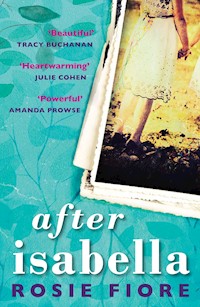
'Both heartwarming and sad, it's an insightful, thought-provoking glimpse into female friendships, love and loyalty.' - Julie Cohen 'After Isabella is a beautiful, absorbing novel that deals with the issues at the very heart of what it means to be a woman.' - Tracy Buchanan 'I was lost in this powerful, poignant tale.' - Amanda Prowse When Esther's childhood best friend Isabella dies of cancer, she is devastated. Years later, she is brought together with Isabella's sister Sally, who cared for Isabella in her last days, and who subsequently nursed their mother through years of dementia. English professor Esther sees shy, innocent Sally emerge from a life of isolation and loneliness. But as Esther herself suffers blow after blow, and sees her carefully ordered life collapse around her, she is forced to contemplate the notion of friendship and trust. Do the ones we hold dearest always have our best interests at heart?
Sie lesen das E-Book in den Legimi-Apps auf:
Seitenzahl: 552
Veröffentlichungsjahr: 2017
Das E-Book (TTS) können Sie hören im Abo „Legimi Premium” in Legimi-Apps auf:
Ähnliche



















TABLE OF CONTENTS
COVER PAGE
TITLE PAGE
COPYRIGHT PAGE
CONTENTS
PROLOGUE
CHAPTER ONE
CHAPTER TWO
CHAPTER THREE
CHAPTER FOUR
CHAPTER FIVE
CHAPTER SIX
CHAPTER SEVEN
CHAPTER EIGHT
CHAPTER NINE
CHAPTER TEN
CHAPTER ELEVEN
CHAPTER TWELVE
CHAPTER THIRTEEN
CHAPTER FOURTEEN
CHAPTER FIFTEEN
CHAPTER SIXTEEN
CHAPTER SEVENTEEN
CHAPTER EIGHTEEN
CHAPTER NINETEEN
CHAPTER TWENTY
CHAPTER TWENTY-ONE
CHAPTER TWENTY-TWO
CHAPTER TWENTY-THREE
CHAPTER TWENTY-FOUR
CHAPTER TWENTY-FIVE
CHAPTER TWENTY-SIX
CHAPTER TWENTY-SEVEN
CHAPTER TWENTY-EIGHT
CHAPTER TWENTY-NINE
CHAPTER THIRTY
CHAPTER THIRTY-ONE
CHAPTER THIRTY-TWO
CHAPTER THIRTY-THREE
CHAPTER THIRTY-FOUR
CHAPTER THIRTY-FIVE
CHAPTER THIRTY-SIX
CHAPTER THIRTY-SEVEN
CHAPTER THIRTY-EIGHT
CHAPTER THIRTY-NINE
CHAPTER FORTY
CHAPTER FORTY-ONE
CHAPTER FORTY-TWO
CHAPTER FORTY-THREE
CHAPTER FORTY-FOUR
EPILOGUE
LIST OF PAGES
ii
iii
iv
1
2
3
4
5
6
7
8
9
10
11
12
13
14
15
16
17
18
19
20
21
22
23
24
25
26
27
28
29
30
31
32
33
34
35
36
37
38
39
40
41
42
43
44
45
46
47
48
49
50
51
52
53
54
55
56
57
58
59
60
61
62
63
64
65
66
67
68
69
70
71
72
73
74
75
76
77
78
79
80
81
82
83
84
85
86
87
88
89
90
91
92
93
94
95
96
97
98
99
100
101
102
103
104
105
106
107
108
109
110
111
112
113
114
115
116
117
118
119
120
121
122
123
124
125
126
127
128
129
130
131
132
133
134
135
136
137
138
139
140
141
142
143
144
145
146
147
148
149
150
151
152
153
154
155
156
157
158
159
160
161
162
163
164
165
166
167
168
169
170
171
172
173
174
175
176
177
178
179
180
181
182
183
184
185
186
187
188
189
190
191
192
193
194
195
196
197
198
199
200
201
202
203
204
205
206
207
208
209
210
211
212
213
214
215
216
217
218
219
220
221
222
223
224
225
226
227
228
229
230
231
232
233
234
235
236
237
238
239
240
241
242
243
244
245
246
247
248
249
250
251
252
253
254
255
256
257
258
259
260
261
262
263
264
265
266
267
268
269
270
271
272
273
274
275
276
277
278
279
280
281
282
283
284
285
286
287
288
289
290
291
292
293
294
295
296
297
298
299
300
301
302
303
304
305
306
307
308
309
310
311
312
313
314
315
316
317
318
319
320
321
322
323
324
325
326
327
328
329
330
331
332
333
334
335
336
337
338
339
340
341
342
343
344
345
346
347
348
349
350
351
352
353
354
355
356
357
358
359
360
361
362
363
364
365
366
367
368
369
370
371
372
373
374
375
376
377
For Alli and Annie Tibbatts with all my love
Published in trade paperback in Great Britain in 2016 by Allen & Unwin
Copyright © Rosie Fiore, 2016
The moral right of Rosie Fiore to be identified as the author of this work has been asserted by her in accordance with the Copyright, Designs and Patents Act of 1988.
All rights reserved. No part of this publication may be reproduced, stored in a retrieval system, or transmitted in any form or by any means, electronic, mechanical, photocopying, recording, or otherwise, without the prior permission of both the copyright owner and the above publisher of this book.
This novel is entirely a work of fiction. The names, characters and incidents portrayed in it are the work of the author’s imagination. Any resemblance to actual persons, living or dead, events or localities, is entirely coincidental.
Every effort has been made to trace or contact all copyright holders. The publishers will be pleased to make good any omissions or rectify any mistakes brought to their attention at the earliest opportunity.
Allen & Unwin
c/o Atlantic Books
Ormond House
26–27 Boswell Street
London WC1N 3JZ
Phone:020 7269 1610
Fax:020 7430 0916
Email:[email protected]
Web:www.allenandunwin.com/uk
A CIP catalogue record for this book is available from the British Library.
Trade paperback ISBN 978 1 76029 241 6
Ebook ISBN 978 1 92557 521 7
CONTENTS
PROLOGUE
CHAPTER ONE
CHAPTER TWO
CHAPTER THREE
CHAPTER FOUR
CHAPTER FIVE
CHAPTER SIX
CHAPTER SEVEN
CHAPTER EIGHT
CHAPTER NINE
CHAPTER TEN
CHAPTER ELEVEN
CHAPTER TWELVE
CHAPTER THIRTEEN
CHAPTER FOURTEEN
CHAPTER FIFTEEN
CHAPTER SIXTEEN
CHAPTER SEVENTEEN
CHAPTER EIGHTEEN
CHAPTER NINETEEN
CHAPTER TWENTY
CHAPTER TWENTY-ONE
CHAPTER TWENTY-TWO
CHAPTER TWENTY-THREE
CHAPTER TWENTY-FOUR
CHAPTER TWENTY-FIVE
CHAPTER TWENTY-SIX
CHAPTER TWENTY-SEVEN
CHAPTER TWENTY-EIGHT
CHAPTER TWENTY-NINE
CHAPTER THIRTY
CHAPTER THIRTY-ONE
CHAPTER THIRTY-TWO
CHAPTER THIRTY-THREE
CHAPTER THIRTY-FOUR
CHAPTER THIRTY-FIVE
CHAPTER THIRTY-SIX
CHAPTER THIRTY-SEVEN
CHAPTER THIRTY-EIGHT
CHAPTER THIRTY-NINE
CHAPTER FORTY
CHAPTER FORTY-ONE
CHAPTER FORTY-TWO
CHAPTER FORTY-THREE
CHAPTER FORTY-FOUR
EPILOGUE
PROLOGUE
She’d been restlessly asleep for hours, her fingers plucking irregularly at the covers, her eyelids fluttering, her breathing rattly and noisy. Esther sat and watched her. She’d been told that these were all signs that the end was near. It was quite possible that she wouldn’t wake again. Her breathing would slow and then stop, and that would be it. Esther leaned back in her chair. She hadn’t slept for a long time and she was weary. She shut her eyes for a second, just to rest them.
The breathing stopped and Esther’s eyes flew open. The face on the pillow looked awake and alert, her eyes wide open and almost amused.
‘Caught you napping.’
‘Sorry,’ Esther said. ‘Can I get you anything?’
‘No thanks.’ She smiled a genuinely warm, attentive and lovely smile. ‘You must be knackered, sorry.’
‘I’m fine,’ said Esther. ‘Honestly. How are you doing? Want more morphine?’
‘No pain right now. But I tell you what, my feet are bloody freezing.’
‘Your feet? Really?’ The room was warm, and the bed was covered with a heavy, fluffy duvet.
‘Yeah.’
‘Can I get you some socks?’
‘I don’t think that’ll work. I think my body’s storing all the heat around what’s left of my essential organs. I don’t think I’m able to generate my own heat for my extremities. Maybe a hot water bottle… only I don’t think I own one.’
‘I don’t think you do,’ said Esther. She paused for a second. ‘I read somewhere, although I suspect it’s completely spurious, that when D. H. Lawrence was dying, he complained his feet were cold, and his wife, Frieda, put them in her bosom to warm them.’
‘Her bosom?’
‘I haven’t got much of a bosom, but I do generate quite a bit of body heat.’
The chuckle from the bed sounded lively, not at all like the chuckle of someone dying. ‘Would you? Would you do that for me?’
‘For you, Millais, anything.’
Esther folded back the duvet from the bottom of the bed and lay on her side. She lifted her shirt and drew the two cold feet to her, pressing them against her stomach, then drawing her jumper and the duvet down over them. ‘Better?’
‘Better. Thank you. Your belly is so soft. Squidgy.’ A smile, silence, and eyes that closed slowly.
Esther lay still, breathing softly and watching, until she too fell asleep for a time.
CHAPTER ONE
‘The first time I saw Isabella, I was nine years old. We’d moved from Richmond to north London. It was only ten miles or so, but it might as well have been the other side of the world. I knew I’d never ever see my friends again, and that I would be alone forever.
‘My mum took me for my first day at the new school, and they called Isabella to the office to take me to my classroom. The head, who was one of those touchy-feely enthusiastic types, leapt up and stood with her hands on Isabella’s shoulders as she introduced us. “Isabella Millais is one of our star students!” She beamed. “She’s just won a competition and had a picture published in a national magazine, fancy that!” She went on about how Isabella was a credit to her teachers, and Isabella looked straight at me. It took me a moment, but then I realized we were exactly the same height. We had the same long, straight, dark brown hair, and the same dark eyes. She had skinny legs and bumpy knees like me too. She could have been my twin sister. It was like looking in a mirror.
‘I must have been staring, because she stared back. She kept her face quite still, but then she very slightly crossed her eyes so she was squinting and stuck the tiniest tip of her tongue out of the corner of her mouth. I couldn’t believe her nerve. If the head had spotted her… She didn’t even seem to care that my mum, who was standing next to me, could see her. And as quickly as she’d pulled the face, she stopped, and said, “Welcome to St Mary’s. I’ll show you where the classroom is.”
‘I picked up my bag and followed her, and my mum stayed behind to talk to the head. Isabella and I walked down the corridor together. She walked fast, and she held her head high. She always walked like that, looking straight ahead. She walked like that for as long as I knew her. I had to trot a bit to keep up. We got to the classroom door and she stopped and checked her watch. Then she yanked my arm so we were bent double and couldn’t be seen through the glass panel of the door. She pulled me along, past the classroom and on down the corridor. We went down some stairs into the gymnasium, which was empty. She took me across the room to a huge pile of gym mats, and we sat on the floor behind them, so we couldn’t be seen from the door. “It’s fifteen minutes to lunchtime,” she said. “We’ll go back at one minute to, and then there won’t be time for embarrassing introductions and making you stand up in front of the class. We can just go straight to lunch.” She reached into her blazer pocket and brought out a squished chocolate bar. She broke it in two and gave me half. The bigger half. I knew then that she would be my friend for life.
‘And she was. All the way through school, and through university, even though we weren’t in the same city. She was always on the end of the phone, or sending me funny letters and pictures in the post, or turning up at my room in halls at eleven o’clock on a Friday night to stay for the weekend. She held my hair back the first time I got drunk enough to be sick. She was my bridesmaid when I got married, and she was godmother to my little girl, Lucie.
‘When she found out she was ill, she didn’t want to tell anyone. She had this idea that she could just carry on, live her life and have her treatment. She couldn’t bear the idea that anyone would pity her, or whisper about her, or think of her as “the one with cancer”. She didn’t even tell me. I only found out when Sally rang to let me know. Isabella was so sick, she couldn’t look after herself, so Sally moved in with her. Now to us, growing up, Sally was the annoying little sister, trailing after Isabella and me, wanting to join in our games – we used to hide from her, or send her on impossible errands. Sometimes we even locked her in the cellar. But when the chips were down, it was Sally Isabella needed. Sally gave up her job and looked after Isabella 24/7 for a year and a half until… Until the end.
‘And here we are. The end, the end of Isabella. The most vibrant, hilarious and brilliant person I have ever known. An amazing architect, cook and friend. I know she meant something different, something special to every single one of you, or you wouldn’t be here to say goodbye. It just seems… unbelievable that a light like that can have gone from the world. I know it’ll take me a very long time to get used to it. I’ll still expect to hear her voice on the end of the phone, to see her name popping up in my inbox with a crazy, witty message. I can’t believe I won’t get another one of her handmade birthday cards. I can’t begin to imagine how this feels for Sally, and Isabella’s mum, Joan. Our hearts are with you, Sally and Joan, and we’ll all be there for you, anytime of the day or night. Rest in peace, Bells. The sister I never had. I can’t believe you’re gone.’
Esther held it together until she read these last words from the pages gripped in her hand. She could feel the hot tears gathering, and then they spilled over, blurring her glasses. She had somehow got into the pulpit in this church, but she wasn’t sure how to get out. She turned ineffectually from side to side. She felt the priest’s hand take her elbow firmly but gently and guide her down the three little steps, and she slumped back into the pew next to Stephen.
The ridiculous shiny dark brown of the coffin intruded into her peripheral vision. How could Isabella, or what was left of Isabella, be lying silent and still in that box? She couldn’t look at it, hadn’t looked at it through her eulogy. It made no sense.
She was thirty-nine years old and this was only the third funeral she had ever been to. It seemed like a strange and archaic ritual, but she wasn’t terribly sure how it should be done differently. What are we supposed to do with dead people, she wondered. We have to put them somewhere, dispose of the bodies in a way that is safe and hygienic, assure ourselves that they really, truly are gone, and find a way of moving on. This odd agglomeration of words, music, a box and flowers seemed to be the accepted method. In this case, however, it seemed to have nothing to do with Isabella, who had been an atheist, unmusical, and rather averse to flower arrangements, preferring to decorate her home with minimalist, dramatic displays of bamboo or still lifes of sticks and stones.
The assembled people rose to sing a hymn, Psalm 23. It must have been Joan’s choice. Esther hadn’t sung it since primary school, and she had a vague memory, or thought she did, of last having sung it beside Isabella, who had a deep and rather gravelly voice and a tendency to sing everything in a low monotone. Esther had never known if Isabella was tone-deaf or was just taking the mick. The latter was likely. The priest began to intone prayers, and even though Esther had been to so few funerals, the words were familiar to her. From films or TV, she imagined.
And then, suddenly, it was all over. The black-coated men entered in procession and efficiently shouldered the coffin. Sally stood to follow it, her arm around Joan’s plump shoulders. As they walked out, Sally glanced over and gave Esther a weak smile, nodding her thanks for the eulogy. The cremation was to be private. Esther was relieved about that – she certainly didn’t feel up to watching that sleek box slide through a curtain into the furnace. Right now, all she could think of was that she would give anything, anything at all, to drink a large glass of very cold wine very quickly indeed. And then maybe another.
Luckily, everyone else was of the same mind. As soon as the funeral party arrived at the pub where the wake was to be held, Esther was handed a glass. Waiters circulated with trays, and she couldn’t help noticing that even though it was just two in the afternoon, people seemed determined to drink quite a lot, quite fast. The chatter was more animated than she might have expected. There was palpable relief that the solemn and grim part of the proceedings had been concluded. She was conscious that Stephen was watching her gulp down her wine. He made no comment but called the waiter over and asked for a lime and soda. Good. So he was planning to drive. That made things easier. She took the last sip and lifted another glass off a tray as the waiter passed near her.
She looked around the room. She had been so nervous about the eulogy that she hadn’t really registered who else was in the church. She recognized very few people. There were a lot of elderly women, friends of Joan’s, she assumed. Then there were the well-dressed, well-groomed people – work colleagues of Isabella’s probably. There was no one else from their school days, although there was a rumpled man of about her age, who she thought might be an old university boyfriend of Isabella’s. He stood alone by the food table, sipping from his drink and steadily and absent-mindedly eating Scotch eggs and crumbed mushrooms. Whoever he had been in years gone by, he didn’t look like Isabella’s type now.
With a glass and a half of wine inside her, Esther relaxed a little. She hadn’t embarrassed herself. She had given her dearest and oldest friend a decent send-off. She just had to say a few words to Joan and Sally and she could go. They had arrived a few minutes before from the crematorium and were surrounded by a group of well-meaning old biddies. She wasn’t going to get near them anytime soon. She sipped her glass more slowly. She really should eat something, but going to get food meant going near the food table and the slightly desperate-looking ex-boyfriend.
‘Could you possibly get me a plate of something to eat?’ she said to Stephen, who was standing staring gloomily into his lime and soda. He nodded and headed for the table.
It was a mistake, because Stephen’s going left her alone, and the rumpled ex-boyfriend clearly took that as a sign. He brushed crumbs from his lapels and came over to her.
‘Thanks for your words,’ he said, holding out a hand. ‘Good to see you again.’
Esther shook his hand and smiled.
‘I can’t quite believe she’s gone,’ he continued. ‘Someone like that…’
‘She was uncompromisingly alive, wasn’t she?’
‘You always had a way with words.’ He smiled at her, and she couldn’t help noticing he had a tiny smear of ketchup in the corner of his mouth. She had no idea what his name was, or even whether her assumption that he was Isabella’s ex was correct. She didn’t know how to take the conversation forward.
‘You don’t remember who I am, do you?’ he said.
‘Sorry.’
‘Geoff,’ he said, and in an instant she remembered. He had been a housemate of Isabella’s at university. He had been funny and kind, and had played the guitar. She knew Isabella had liked him, in a non-romantic way. Esther recalled vaguely that he had gone to America after he had graduated. He hadn’t crossed her mind in more than twenty years.
‘It’s funny to look at you,’ he said conversationally. ‘You look so like her, still. You always did. Like sisters. You must be really devastated.’ There seemed no possible answer to this, so Esther said nothing. He laughed suddenly. ‘You really were the two musketeers, weren’t you? I remember you coming up to uni for parties… There was one in particular, when we all went clubbing together. The two of you were dancing, hanging onto one another. You were wearing a black dress, and Isabella was wearing white… I often imagined what it would be like to—’
‘Excuse me,’ said Esther. ‘Must go to the loo.’ She saw Stephen approaching with a plate full of food and she gestured to let him know where she was going.
She locked herself in a cubicle, put the lid down and sat on it, her head on her knees. Geoff’s behaviour was so hilariously inappropriate, she hadn’t been sure whether to slap him or laugh. Neither would have been fitting at Isabella’s wake. It was a first, though. She had never before been retrospectively presented with someone’s fantasy of a threesome at the funeral of the prospective third party. At some point in the future, it would make a grand anecdote – and naturally, the one person who would most have enjoyed hearing it would never be able to.
She should go back out to the gathering. She would, as soon as she could persuade herself to stand up. Someone else came into the bathroom, and so she sat still and silent. She wasn’t going out now and risking small talk by the basins. She listened to the person pee, flush and wash their hands, and she waited to hear the door open and close, but whoever it was remained in the room. Were they redoing their make-up? Praying? Crying?
Then she heard a voice say hesitantly, ‘Are you all right? Hello?’ And someone tapped on the door of her cubicle.
She swore inwardly. ‘Fine,’ she said, as cheerfully as she could manage. She stood up and flushed, and made some pretence of straightening her clothes before she emerged.
Sally stood by the basins.
‘Oh, it’s you,’ she said, and hugged Esther warmly.
‘How are you doing?’ Esther asked.
Sally smiled. ‘Oh, fine. Glad it’s over. Hoping we don’t run out of Scotch eggs. You know.’
‘How’s your mum?’
‘Well, she’s as you’d imagine. Bearing up most of the time. It comes in waves. The last few weeks, we had a lot of time to sit and talk quietly, so it’s not a terrible shock, you know, like a sudden death would be. Not like my dad.’
Isabella and Sally’s father had died of a heart attack on the train on his way to work one day, when Isabella was at university and Sally was still at school. It had devastated Sally, who had been very close to him, and left Joan frail and wobbly for years. Isabella always said it felt unreal. She had learned of her father’s death in a crackly call on a street-corner payphone in Edinburgh, where she was living in digs. She hadn’t managed to get back to London until the morning of the funeral. Joan had discouraged the girls from viewing the body, so for Isabella, the bereavement was oddly theoretical. She had gone from having a father to having none, merely because she had been told that that was what had happened. Sally, left at home, had had to bear the brunt of it – the practicalities of settling the estate, her mother’s grief.
And here she was, bearing the brunt again. Esther squeezed her hand. Sally smiled and turned to the mirror to tidy her hair and put on some lipstick. She was a pretty woman, but she didn’t look anything like Isabella. Where Isabella had had straight dark hair, Sally had a halo of blonde curls. She had wide blue eyes and a sweet, curved, pink mouth. She had been an adorable toddler, but the cuteness of her features did not sit quite as well on the face of an adult woman. She was much shorter than Isabella had been, and tended towards the curvy, a similar shape to their mother.
‘My mum sends her love and condolences,’ said Esther. ‘She told me she sent flowers…’
‘Yes, thank you,’ said Sally. ‘We got them. They’re beautiful, of course. I wouldn’t expect anything different. Your mum always had such amazing taste. I’ll write and thank her.’
‘Please don’t worry about it,’ Esther said quickly. ‘She lives on the Isle of Wight now, and she just wanted you to know she was thinking of you. She was very fond of Isabella.’
‘I know Isabella loved her too,’ said Sally. ‘They were both artistic…’ Her voice trailed off, as if the effort of sustaining conversation had suddenly become too much.
‘What are your plans now?’ Esther asked, then inwardly cursed herself. ‘Now that your sister’s dead,’ seemed to be the implied end of that question. ‘I mean… what are your plans for the future?’
‘Oh, there’s still a lot to do,’ said Sally, carefully combing her fluffy hair. ‘I’ll have to wind up the estate, sell Isabella’s house and so on. There’s a lot of medical equipment which needs to go back to the NHS. Then I hope to take a little holiday maybe. Bit of a break. After that it’s back to work. I’m very lucky they’ve kept my job open.’
‘Where are you working?’
‘Same place. I’m an office manager for an estate agent’s, not far from here. I’ve been there ten years. I kept meaning to move on, maybe study something new. Isabella was always on at me to do it. But it never seemed the right time.’
‘Well, maybe now’s the right time,’ said Esther, smiling at Sally’s reflection. ‘New horizons. Use some of Isabella’s bravery and go for it.’
‘You might be right.’ Sally smiled back. ‘Just need to get my courage up, eh?’
‘Let me come and say hi to your mum,’ said Esther. ‘Stephen needs to get back to work, so we really must be going soon.’
‘Of course,’ said Sally, popping her lipstick and comb back into her bag. ‘Just understand, she’s, well, she’s not at her best right now.’
‘Of course she isn’t.’ Esther followed Sally out of the toilet. What an odd comment to make. Of course Joan wasn’t doing very well. She had just cremated her beloved elder daughter.
Joan was sitting at a table, a plate of snacks in front of her and a cup of tea at her elbow, staring into the distance. Two of her friends sat at the table with her, but they weren’t speaking. Joan had been a young mother, just twenty-one when Isabella was born, so Esther calculated that she couldn’t be more than sixty now. She looked a decade older than that, her face grey and pouchy, an inch of frizzy grey showing at her roots. None of this was a surprise. Not after what she had just endured. Esther hadn’t allowed herself – couldn’t allow herself – to think about burying a child. No parent could. The horror was too extreme.
Sally took her over and they sat down in two vacant chairs at the table. ‘Mum, Esther’s here,’ she said, touching Joan’s arm.
‘Hello there,’ said Joan, mustering a smile. ‘How nice to see you. You look well. How are you?’
‘I’m fine, thank you,’ said Esther. ‘I… I’m so sorry for your loss.’
‘Beautiful day,’ said Joan.
‘Yes. And the service was lovely. The music especially.’
‘I always preferred David Cassidy myself,’ said Joan. ‘Or Donny Osmond. Lovely teeth.’
Esther laughed gently. It was good she could make jokes on a day like this. That she still had a little spirit. She caught Sally’s eye across the table and was surprised to see that Sally looked strained, embarrassed even. The two other women at the table were looking away, not joining in the conversation.
‘I’ve got one question though,’ said Joan.
‘Mum…’ said Sally warningly, but Joan would not be hushed.
‘Where’s Isabella? I’m sure she said she’d be here by now. She said she was going to take me to the theatre.’
CHAPTER TWO
eight years later
The same church. The same brilliant blue sky. But not the same crowd. Not even a crowd at all, just a handful of mourners – some elderly, frail ladies, Esther and Sally.
Esther wouldn’t have been there, wouldn’t even have known that Joan had died, had she not got a letter from Sally. It was odd to get a handwritten, physical letter – she couldn’t remember the last time she’d received one. But that was what Sally had chosen; she clearly felt one shouldn’t announce the death of one’s mother in an email or on social media. Perhaps if it had been an email or a text, Esther might have made her excuses. But there was something about Sally’s careful, round handwriting on the old-fashioned notepaper (which was peach coloured, with an illustration of a bunny in a basket of flowers in the bottom right-hand corner). She felt she should go, if Sally had made the effort to write to her, so she took the afternoon off, found a simple black dress in her wardrobe (noting that it was considerably looser round the waist than it had been the last time she wore it), and went to Joan’s funeral.
It wasn’t the same vicar who had done Isabella’s service. This one was young and had a posh, drawling accent that suggested Cambridge. He had clearly never met Joan, which was a little surprising, as Esther remembered her as a regular churchgoer. Even if she had been too ill to attend, surely he would have visited? It seemed not.
Sally was sitting alone in the front pew. The vicar finished his remarks and said, ‘Joan’s daughter Sally will now say a few words.’
Sally stood and went to the lectern. Esther was sitting towards the back of the church, quite far away, but even at that distance she was shocked at Sally’s appearance. Since she had last seen her, Sally had gained weight – a lot of weight. Possibly three or four stone. Her bright blonde curls had faded to an unkempt mess of mouse and grey. She looked like an overweight, middle-aged woman defeated by life. There was no trace of the attractive blonde of eight years before.
Esther assumed Sally would give some kind of eulogy, but instead she read from Revelations, the reading that began ‘And I saw a new heaven and a new earth’. Her voice sounded softer and more hesitant than Esther remembered. When she finished reading, she paused for a moment and glanced at the small coffin, her expression unreadable, then stepped down.
The service was concluded. This time there were no hymns, which was a mercy. There really weren’t enough people to sing them. The organist played a rather mangled and soulless version of Elgar’s ‘Nimrod’ and the mourners straggled out behind the coffin.
There was no private cremation, no escape to the pub for Esther. Joan was to be buried, and they followed the hearse in convoy to a large, featureless, modern cemetery about a mile away. Most of the old ladies were obviously not up to the trip to the graveside, so it was an even smaller crowd of just five or six people and the vicar that watched Joan get lowered into her grave. Sally stepped forward when invited to scatter some earth on the coffin. She turned and gestured to Esther, inviting her to do the same. It seemed rude, almost sacrilegious, to do so – she hadn’t seen Joan for nearly a decade, had seen her only very infrequently in the years before that. But there genuinely was no one else, and it would have been even ruder, and hurtful to Sally, to refuse. She bent and gathered a clod of earth and dropped it on the polished lid. She found a tissue in her pocket to clean off her hand and stood awkwardly by as the old ladies did the same. The gravedigger was waiting impatiently nearby, leaning on his small earth-moving machine. Clearly they didn’t do this job with a shovel anymore. Esther didn’t think Sally would want to stand by and watch the man fill in the grave like a trench in some roadworks, so she looped her arm through hers and prepared to lead her away.
‘You will come back to the house, won’t you?’ Sally looked up at her, her blue eyes pale and watery. ‘There didn’t seem much point in organizing a wake, so I just did some sandwiches and cake at home.’
‘Of course,’ said Esther.
She had not been to Joan’s house for nigh on twenty-five years. Once Isabella had graduated and moved into her own place, Esther had had no reason to visit her friend’s childhood home. From the outside, the house looked as one might have expected – shabbier and smaller, but much as she remembered it. But as soon as she came through the door, she was assailed by the oppressive sadness of the place. The furniture seemed to be the same as it had been when they were children – she remembered the brown velour sofa, the seascape prints and the glass coffee table. Sally had obviously made an effort to clean and tidy the place, but it had the deeply ingrained dullness of a home that had not been redecorated for decades. Despite an almost oppressive miasma of sweet air-freshener, the underlying scent of urine and unwashed old person was unmistakeable.
Sally settled two old ladies into armchairs and then bustled into the kitchen to make tea. Esther, unsure what to do, followed her. The Formica kitchen table was the same one she remembered from teatimes when she was nine. The chairs were the same too, although the seat covers were now faded and stained and the arched chrome backs and legs were spotted with rust. Sally clicked on the kettle and started taking cling-film off plates of sandwiches. She seemed to have made enough for twenty or thirty people, and there was also a large, bought chocolate cake and several platefuls of biscuits.
‘I don’t think we’ll need all these,’ said Esther. ‘Maybe pop some in the fridge for later.’
‘Of course.’ Sally smiled faintly. ‘I always worry there won’t be enough, so I tend to over-cater.’
She bent to get the milk out of the fridge, and Esther noted how broad she looked from behind. She was even heavier than Esther had first thought. She knew that carers often put on weight – it was a sedentary occupation, and often boring and disheartening. One couldn’t judge someone for self-medicating with the odd packet of ginger nuts, but it was a worry.
She helped Sally to carry the plates and cups through, then sat on the edge of the sofa, trying to make small talk with the two old ladies. They were much more interested in the sandwiches and cakes, piling their plates high and calling Sally to bring more tea. Esther couldn’t help feeling they didn’t seem very grief-stricken, and it turned out they were in fact two of Sally and Joan’s neighbours. They both freely admitted they hadn’t seen Joan for some years.
‘Since she went doolally,’ one of them said, ‘I didn’t see much point in coming to see her. She never knew who I was. And I’m sure five minutes after I left she’d forgotten I’d been here.’
‘Memory like a goldfish,’ said the other, helping herself to another slice of cake.
Esther wondered if they were there out of neither grief nor duty but simply because it gave them a day out, a free meal and possibly a chance to snoop inside the house. Sure enough, once they’d both had their fill of tea, they took turns to go to the toilet, obviously having a good look into all the rooms on their way to and from the bathroom. Then they said their goodbyes and left, walking up the road together, their heads almost touching as they exchanged gossip. To their credit, they didn’t promise to come back and visit Sally again.
Sally smiled rather weakly, then heaved herself out of her armchair and began clearing the plates. Esther leapt up to help her, but there was very little to do. She would have loved to have gone too, but it seemed brutal to leave Sally alone after the sad insufficiency of this goodbye to her mother. Esther glanced at her watch.
‘I think this might call for something stronger than tea,’ she said. ‘Have you got any wine, or shall I nip out and get some?’
‘Oh…’ Sally dithered, clutching a dishtowel in both hands. ‘I don’t usually… I’ve got nothing in the house…’
‘You don’t usually, but do you drink at all?’
‘Well, I used to… The odd glass…’
‘Red or white?’
‘Oh, white. Never could see the point of red.’
‘I’ll be back in two minutes,’ said Esther, heading for the door as she spoke. ‘Dust off some glasses.’
She had walked the few hundred yards from that front door to the corner shop more times than she could remember. She and Isabella had gone there for sweets and crisps when they were little, then for magazines and fizzy drinks. From the age of about fifteen, they had lurked outside, yearning for bottles of Lambrini. Occasionally they’d been able to persuade someone’s big brother to go in and buy some, and then they would take it to the park and pretend to be tipsier than they really were.
Now she could walk right in and peruse the wine shelf. She wasn’t even going to be asked for ID. The old Indian couple who had run the shop for decades had obviously sold up and left, and it was now a chain mini-supermarket. There were a number of two-for-one special offers on well-known wines, but, rather incongruously, there was a bottle of Veuve Clicquot in the chiller, and Esther grabbed it. It was expensive, but somehow she knew it was the right thing to buy. She also picked up a couple of bottles of Californian Sauvignon Blanc and went to pay.
Back at the house, Sally gasped and giggled when she saw the champagne.
‘Let’s give your mum a proper send-off,’ said Esther, peeling the foil off the cork.
Sally fussed around and found a dingy ice bucket and they took the bottle and their glasses into the living room and sat down. They toasted Joan, and Sally took a small sip and then a bigger one. Her cheeks instantly flushed pink, and she appeared to relax a little.
‘So,’ Esther said, ‘how are you bearing up?’
‘Gosh,’ said Sally. ‘Oh, I’m all right. It’s lovely to see you. Have a catch-up. It seems we only get to chat when someone in my family dies.’
‘I’m sorry,’ said Esther uncomfortably. ‘I should have called. Been around more…’
‘Nonsense, why should you? You were Isabella’s friend.’
‘It looks like…’ Esther said carefully. ‘It looks like the last few years might have been pretty hard for you. And lonely.’
‘Well, yes, and yes,’ said Sally. ‘Dementia is very ugly. Or at least the kind Mother had was. She was very distrustful. And rude. It wasn’t nice for people to come round here, because she’d insult them. Or do something awful… Break things, or hide her face and refuse to talk. And I couldn’t risk taking her out, because she’d wander off, or sit down on the pavement and refuse to move. I couldn’t get her up and shift her if she did.’
‘That sounds awful. I’m so sorry.’
‘Oh, it wasn’t so bad.’ Sally managed a smile. ‘As long as I kept the routine absolutely rigid – meals at the same time every day, the same food, the same TV programmes – she was mostly all right.’
‘And did you not have any help?’
‘We had carers in every day, or most days – I couldn’t manage to bathe her alone. And they’d sometimes come and sit with her for an hour or so, so I could get a bit of shopping in.’
Esther was stunned into silence. It seemed Sally had barely left the house for eight years. No wonder she had aged. It sounded like prison. There was no point in asking her about friends, boyfriends, her job. It was clear that she had been denied all of these. She refilled Sally’s glass, and her own, which mysteriously seemed to be empty.
‘So what have you been up to?’ asked Sally.
‘Oh, you know. I joined the university as a junior lecturer in English literature, and I’m still there. Still teaching Dickens and Austen.’
‘Not a junior lecturer anymore though.’
‘No,’ said Esther. ‘I’m, er… a professor now. And currently also head of the English Department.’
‘Oh my.’
‘Sounds more impressive than it is. Everyone in the department gets a go at being head for a few years, then they get tired of the administration and the meetings and want to go back to teaching and research. Then someone else has a pop at it.’
Sally nodded. Esther had a feeling she might as well have been speaking Chinese. Her world and her life would make no sense at all to a woman who hadn’t been able to work for more than a decade.
‘And your husband? Stephen, is it?’ said Sally. As she spoke, she glanced at Esther’s left hand and Esther saw her regret the question.
‘We split up.’
‘I’m so sorry.’
‘Don’t be. It’s all very amicable. He’s remarried and lives in Manchester now.’
‘And Lucie?’
‘She’s twelve. She’s amazing. Very together. Very confident and articulate. Much more so than I was at her age.’
‘Isabella was her godmother.’
‘Yes.’
‘Lucky,’ said Sally, and Esther wasn’t sure if she meant Lucie was lucky, or Isabella, or Esther herself.
Much later, woozy from too much wine, Esther wandered back out to her car. It felt like midnight, although it was only late afternoon. She was in no state to drive, so she made sure the car was locked and wasn’t going to get a fine, and then walked on towards the Tube station. What a depressing day. She’d come back the next day to pick up the car, and she’d never ever have to come to this miserable corner of town again.
CHAPTER THREE
‘That’s the saddest story I ever heard,’ said Lucie later, sitting at the dining room table, leaning forward and fixing Esther with her clear gaze. ‘It’s like she never really lived.’
‘I suppose so.’
‘Is she very sad?’
‘Well, she’s sad her mum died,’ said Esther, but as she spoke, she wondered if Sally really was sad. She would have lost Joan, the Joan she knew, years ago. This final break might have been a relief. ‘She’s doing her best to be cheerful.’
‘That’s terrible.’
‘What is?’
‘People should be able to be sad. Especially when someone’s died. They should have friends to care for them so they can be as sad as they like. It’s awful to have to be cheerful for other people.’
Esther marvelled, not for the first time, at her daughter’s emotional intelligence. She was compassionate to a fault, forever giving her pocket money to charitable causes and making friends with the least appealing children at school. If Esther hadn’t been allergic, she had no doubt Lucie would be out rescuing stray animals too.
‘Well, we need to invite her over,’ said Lucie firmly.
‘What? Oh, darling, that’s lovely of you, but it’s not as if she was ever really my friend. Isabella was.’
‘Isabella was, and she was Isabella’s sister.’
‘Yes.’
‘Isabella was my godmother, which means if you died, she was supposed to look after me.’
Esther’s heart sank. She could see where this was going. She had no doubt that Lucie was destined for a career in law. She had the argument all worked out.
Sure enough, Lucie said, ‘And so, in return, you should look after Isabella’s nearest and dearest… Now she’s dead.’
‘You’re right. I know you’re right. It’s just…’
‘Just what?’ Lucie fixed her with her steady, dark gaze, so like Esther’s own. So like Isabella’s.
‘Well, we don’t really have anything in common. She… Well, she never went to university, she hasn’t worked in years… What would we talk about?’
‘Mother!’ said Lucie, shocked. ‘Are you being a snob? And judgemental? All the things you nag me not to be?’
Esther dropped her head on her folded arms. ‘I am, I am. You’re right. How hard can it be to make a little space in our lives for someone who’s lonely? I’ll ring her this evening and ask her over for tea.’
‘Dinner.’
‘All right. For dinner.’
Lucie nodded, satisfied. Her sense of right and justice had been appeased. And Esther knew she would not be allowed conveniently to ‘forget’ to call. Lucie would ask insistently until she did it. So she might as well get it out of the way.
She didn’t have a mobile or landline number for Sally. She could try Directory Enquiries (when had she last rung them? Ten years ago?), but it might just be worth ringing the old house number, the one she had indelibly committed to memory from years of ringing Isabella when they were children.
She dialled it and it rang for a long time. She was beginning to think it had probably been changed or disconnected, when Sally’s voice, fuzzy and blurred with sleep, or sleep and wine, answered. Esther checked her watch. It was not quite nine o’clock. Not an unconscionably late hour to ring.
‘Sally, it’s Esther,’ she said briskly.
‘Esther. Oh, hello! What a lovely surprise!’
Lucie had been right. Sally’s forced cheeriness was heartbreaking.
‘I just wanted to… say thanks for today, and check you were all right,’ she said carefully.
‘Oh, I’m okay,’ Sally replied, and Esther could hear the wide smile in her voice. ‘Right as rain. Just dozed off in front of the telly. Not used to the wine, you know. But thank you so much for that. So lovely of you.’
‘Well, I was just chatting to my daughter,’ Esther said, ‘and we wondered if you might be free for dinner sometime soon? Maybe Friday evening?’
‘Dinner? Oh my,’ said Sally, as if it was not a meal she was familiar with. ‘Well, that’s very kind of you, but…’
‘Nothing fancy,’ said Esther, trying to keep her voice gentle, listening to Sally flutter anxiously on the other end of the line. ‘Just you, me and Lucie, here at home. I’ll make us some pasta or something. Now the evenings are nicer, we might even be able to sit outside.’
‘Where are you? I mean, where do you live?’ Sally sounded genuinely anxious now.
‘Not far from you.’ Esther gave the address. ‘I pass near you on my way home from work. I could stop by and pick you up in the car.’
‘Well, that would be nice…’
‘I’ll drop you back too,’ said Esther, and that seemed to reassure Sally. How very small her world must be. She probably hadn’t left the borough she lived in for years. She didn’t drive, and navigating the complexities of London public transport would be very scary if you weren’t used to it, especially at night.
Lucie was satisfied with the arrangements and announced that she would bake a cake for dessert. On the Thursday evening Esther prepared a lasagne and put it in the fridge, ready to be cooked on their return the following evening. She checked they had salad ingredients and a bottle of chilled white wine as well as the usual selection of soft drinks.
Esther wasn’t quite sure why she was dreading the dinner so much. She wasn’t unkind by nature, or ungenerous. It was just… Sally was from a different part of her life. A long-ago time. Her split from Stephen had made her wary of looking back. She had reinvented herself, and she wasn’t at all sure she wanted to be reminded of the Esther that had been. She had worked so hard to look forward, to build a new life for herself and Lucie. She had taken her half of the proceeds from the sale of the family home and bought a neat, new-build, two-bedroomed townhouse. She had furnished it with new things, except for Lucie’s room, which still contained her old white-painted bed and her collection of soft toys.
As much as Esther tried to shed her past, Lucie seemed determined to hang onto hers. Many of her friends had chucked out their Barbie duvet covers and Sylvanian Families collections, replacing them with posters of boy bands and rejecting outright all that was pink and princessy. But Lucie’s room was still determinedly the bedroom of a little girl. Esther knew better than to argue; Lucie had lost enough in the divorce. If she wanted to hang onto her My Little Ponies for a few more years, that was fine by her.
For herself, however, she loved the clean, blank newness of their home – the pale sofa and carpets she could never have had when Lucie was a toddler, the framed prints which held no memories of other walls. She had bought them all together, in a single morning, from a faceless, upmarket poster shop. She found the townhouse calming and peaceful, an expression of the person she had worked so hard to become. She wasn’t sure how she felt about sad, dowdy Sally, with all her associations with Isabella, coming into the space.
Esther had her open-door office hours on Friday afternoons, between two and five. However, if she had finished seeing students and no one new arrived by 4.45, she often shut up shop in order to get home a little early. Today was such a day, and at twenty to she turned off her computer, tidied her desk and switched off the light. Traffic was unusually light for a Friday and she was outside Sally’s house by just after five. It was a little earlier than they had arranged. She spent a few minutes checking her email on her phone and then squared her shoulders and went to ring the doorbell.
Sally answered almost immediately. She had her bag in her hand and her coat on and buttoned up. She still spent ten minutes fussing, going back to check the kitchen windows were locked and the correct lights had been switched off or left on. She dithered by the front door for a few minutes, wondering if she should take her umbrella until Esther, with barely concealed impatience, pointed out that the sky was clear and she would be going directly from house to car to house and was unlikely to be caught in an unseasonable and unexpected downpour.
It was like managing a frail and elderly lady who was leaving the house for the first time in years. Esther had to remind herself that Sally was in fact six years her junior. Her uncertain behaviour, frumpy clothes and bulky physique added decades to her age. Eventually, she got Sally out of the house, but only after she’d locked, unlocked, double-locked and double-checked the front door. She would have gone back in one more time to check the windows were all closed if Esther hadn’t practically shoved her into the car.
Esther took a moment to text Lucie, who would already be home from school, and ask her to turn the oven on. Meanwhile, Sally fussed and settled herself in the passenger seat, taking an age to find a place for her handbag at her feet, then pulling the seatbelt across. She couldn’t seem to find the clasp to fasten it, so after feeling about for it, she simply held the seatbelt across herself. Esther couldn’t help smiling – she remembered her grandma doing the same thing, as if presenting the appearance of wearing a seatbelt was what counted, rather than actually being safe. She reached over gently and took the belt from Sally’s hand, pulling it down and clipping it into the buckle. It was odd to touch her, and Esther couldn’t help thinking that Sally probably didn’t get touched a lot. That said, she could hardly talk. She hadn’t had any physical intimacy since her divorce, and her experience of touch was limited to cheek kisses from friends and hugs from Lucie.
She pulled out into the traffic and headed for home. Sally seemed fascinated by everything around her, looking avidly out of the window. Once they’d got more than a mile or so from her house, she began reading the names of shops aloud. ‘Magic Kebab!’ she said happily, as if she had never seen a kebab shop before. ‘Paddy Power. My, there are a lot of betting shops, aren’t there?’
Esther nodded and concentrated on getting through the Friday evening traffic. Sally was content to witter on. She didn’t seem to expect a reply to her remarks. Esther supposed she had spent years talking to, or rather at Joan, once Joan’s faculties had deserted her. She had probably got out of the habit of reciprocal conversation.
When they got to Esther’s street, dusk was beginning to fall.
‘Oh, this is lovely!’ Sally breathed, totally agog, as if she’d been brought to the Palace of Versailles.
‘It is nice, isn’t it?’ said Esther, parking the car. Seeing it through Sally’s eyes, she was struck anew at how pretty it was, with its grassy verges and evenly spaced trees laden with blossom. She could see the lights were on in the house, and she glimpsed Lucie’s sleek dark head moving around in the living room on the first floor. This would be all right. Of course it would be.
Sally stumped up the stairs and just from that brief exertion became a little out of breath. Esther steeled herself for ten minutes of gushing, and out it came – about how pretty the house was, how nicely appointed, what a lovely view. What a beauty Lucie was, and the image of Esther, how tasty the bowl of crisps was, how delicious her glass of sparkling water. Esther quickly realized that Sally’s constant stream of chatter came from nervousness and shyness; she was determined to try and put her at her ease. She eventually persuaded Sally to sit down and asked Lucie to keep her company while she checked on dinner. ‘Maybe you could put some music on, Lucie,’ she suggested as she went into the kitchen.
She enjoyed her few minutes alone in there, getting salad ingredients out of the fridge and pouring herself a glass of wine. She’d only be able to have one as she was driving Sally home, so she might as well enjoy it now. The lasagne was bubbling away in the oven. She popped in a loaf of frozen garlic bread and went out to see how Lucie and Sally were getting on.
They were standing close together, going through the CD rack, chatting animatedly.
‘I saw the Pet Shop Boys at Wembley in 1989,’ Sally was saying, taking a copy of Elysium off the shelf and turning it over to look at the track list. ‘It was a gradual slide downhill from there for them, till this album. This was their last with Parlophone. I’m interested to see how they do with their new label.’
Lucie turned to look at Esther, her eyes wide and her mouth in a round little O. Esther returned the open-mouthed gaze.
Sally looked up and saw both of them staring. ‘What? You’re surprised I know about the Pet Shop Boys? I’ve always loved music.’
And as she said it, Esther remembered. Sally had always had music playing in her room when she was young – cassette tapes piled up on her bedside table beside her clunky top-loading old tape player. She had generally been more knowledgeable about the pop acts of the day than either Isabella or Esther, and had often recommended things for them to listen to. There was no reason why that interest should have faded, and even if she perhaps wasn’t internet-savvy, music magazines and radio could have kept her connected to the world of music. It gave them a conversational opening, and she encouraged Sally to choose things for them to listen to and talk about. That got them through until dinner, and they sat down to eat with Prince’s ‘Raspberry Beret’ playing in the background and Sally flushed and happy.
Over dinner, talk turned to computers and the internet. To Esther and Lucie’s surprise, Sally didn’t own a computer, had never owned one, hadn’t used one for more than ten years and didn’t even have an email address.
‘I didn’t see the point,’ she said, helping herself to a second portion of lasagne. ‘When I was working, it was all still Windows 95 and dial-up, even in the office. It was slow and clunky and I didn’t enjoy using it at work. Why would I have wanted a computer at home?’
Esther imagined for a moment what a difference it might have made – an opportunity for her to connect with people or maybe join an online forum for carers. Friends. Support. Information. What a difference indeed.
After dinner, Lucie went to her room and returned with her laptop. She got Sally to sit beside her on the sofa and showed her YouTube, asking her to name bands then calling up their videos. Then she showed her Spotify and set up a playlist of obscure recordings as Sally named them, excitedly. There was a moment of confusion when Sally noticed that there were no cables attached to Lucie’s laptop, and they had to explain wireless broadband to her.
‘Could I have that at home?’ she asked.




