


11,99 €
Mehr erfahren.
- Herausgeber: And Other Stories
- Kategorie: Gesellschafts- und Liebesromane
- Sprache: Englisch
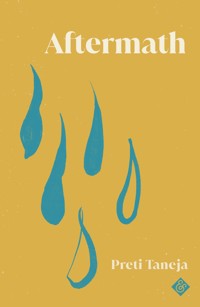
Usman Khan was convicted of terrorism-related offenses at age 20, and sent to high-security prison. He was released eight years later, and allowed to travel to London for one day, to attend an event marking the fifth anniversary of a prison education programme he participated in. On November 29, 2019, he sat with others at Fishmongers' Hall, some of whom he knew. Then he went to the restroom to retrieve the things he had hidden there: a fake bomb vest and two knives, which he taped to his wrists. That day, he killed two people: Saskia Jones and Jack Merritt. Preti Taneja taught fiction writing in prison for three years. Merritt oversaw her program; Khan was one of her students. 'It is the immediate aftermath,' Taneja writes. '"I am living at the centre of a wound still fresh." The I is not only mine. It belongs to many.' In this searching lament by the award-winning author of We That Are Young, Taneja interrogates the language of terror, trauma and grief; the fictions we believe and the voices we exclude. Contending with the pain of unspeakable loss set against public tragedy, she draws on history, memory, and powerful poetic predecessors to reckon with the systemic nature of atrocity. Blurring genre and form, Aftermath is a profound attempt to regain trust after violence and to recapture a politics of hope through a determined dream of abolition.
Das E-Book können Sie in Legimi-Apps oder einer beliebigen App lesen, die das folgende Format unterstützen:
Seitenzahl: 279
Veröffentlichungsjahr: 2022
Ähnliche



















‘Aftermath is written from the heart. I am both impressed by it and so grateful that someone has tried to make sense of the many issues surrounding what happened at Fishmongers’ Hall. There is so much truth in this slim volume.’
David Merritt, father of Jack Merritt
‘Aftermath is a major landmark in British narrative non-fiction. It’s a beautiful and profound account of creative writing teaching as a radical act of trust and interrogation of power; its anti-racist and abolitionist stance makes it a vitally important and deeply moving book to read now in these dismal days for the British political project. It is fearless in the way it shows its agonised workings as it unfolds into a complex map of grief.’
Max Porter
‘In this stunning book, light bleeds into darkness. An astute indictment of our carceral system and the violence it perpetuates, it is also a compassionate meditation on our interconnected lives. Taneja blurs the lines between literary genres so that the divisions between ‘us’ and ‘them’ also blur. I was challenged, inspired and grateful for every word.’
Tessa McWatt
‘Astonishing. Radical, beautiful, broken, intimate. A surge. A yearning. A tribute. An indictment. You won’t read another book like this ever. Taneja’s wrestling with radical empathy, survivor’s guilt, politics – is a masterclass in literary brilliance.’
Nikesh Shukla
‘With We That Are Young, Preti Taneja established herself as one of the most courageous and lyrically gifted writers of her generation. Here again she offers living proof that great literature does not rise fully formed from the canon. It begins, rather, with a grasping in the dark for voices worthy of trust, until its urgent call for equality and dignity comes true – first on the page, and then in the hearts and minds of all who read it.’
Maureen Freely
‘Illuminating, daring, world-expanding. Essential, in the truest sense of the word.’
Daniel Trilling
‘This is a remarkable book: generous, searching, insightful and searingly intelligent as it draws out the complex relationship between writing and terror, language and the unspeakable, trauma and event.’
Olivia Sudjic
‘A piercing inquiry into the ways criminality is perceived … [Taneja] skilfully and carefully unpacks the complex systems violence emerges from. This is an inspired book fortified with acute contemplation and courage, a book born out of a love for the world and the people in it.’
Anthony Anaxagorou
‘A study, a song, a calling – Taneja’s work offers a crucial and radical account of control, conviction, complicity and trauma.’
Eley Williams
‘Aftermath is impossible to categorise: it sits in a tradition of bereavement literature; it sits with poetry. There is no fake moralising in its pages, just Taneja patiently walking us through the wreckage of unimaginable grief, noticing everything, lifting up the rubble, she makes us question everything we know and hold fast – a courageous and brilliant book.’
Mona Arshi
‘This searing abolitionist work sees, and refuses, other prisons too – of narrative-for-hire, racial shame, the trauma industrial complex, cause and effect. It tries to convince no one of nothing, to confess nothing to no one. Instead it breaks sentences and pages open, makes language rush into you (you are an estuary, the dam is gone). Its shape is unmappable. It lives on as a drumming in your head.’
Maria Tumarkin
‘A tremendous feat of scholarship, of historical interlacing, of contemporary criticism, of literary examination, of ethical clarity and personal interrogation and, most indelibly, of grieving.’
Gina Apostol
‘Aftermath is a book of extraordinary heart and intellectual force … Its achievement lies in its generosity and intimacy, and, crucially, in how it shows the way traumatic rupture can occur amid the less visible but equally pernicious forces of systemic violence.’
Los Angeles Review of Books
‘Stunning … [Taneja] turns a critical lens toward the way language shapes violence … This poetic, urgent, and self-reflective work will delight fans of Valeria Luiselli’s Tell Me How It Ends and Claudia Rankine’s Citizen.’
Publishers Weekly, starred review
This edition published in 2022 by And Other Stories Sheffield – London – New Yorkwww.andotherstories.org
First published in the United States by Transit Books
Copyright © Preti Taneja, 2021
All rights reserved. The right of Preti Taneja to be identified as author of this work has been asserted.
ISBN: 9781913505462 eBook ISBN: 9781913505479
Proofreader: Gesche Ipsen; Typesetting and eBook by Tetragon, London; Cover Design: Anna Morrison.
And Other Stories gratefully acknowledge that our work is supported using public funding by Arts Council England.
Contents
I. Radical DoubtAn Event Happens andOrder, OrderDisenfranchised GriefViolence as Trauma as FormMetaphors for ShameBefore and AfterBackstory as Event That HappensSeptember Comes AgainII. Radicalising ThoughtPoetryTheoryCitizenship and Politics: A Postcolonial StoryCitizenship and Politics: A Postcolonial GlossaryAbolitionIII. Radical HopeThe Single ShelfThe Point of DepartureThe ProphetFalling PreyYou as the Terrorist: You in the RoomThe Prison Inside the PrisonA Singularly Talented, Wildly Imaginative Debut NovelistThe Question of HealingThose Who Leave, Those Who StayReality Hunger as Joint Enterprise (a Killjoy Manifesto)Antigone’s LamentIn Prison, the Lack of Resources Improves One’s CreativityEpilogueAuthor’s NoteNotesHow longcan I lamentwith this depressedheart and soul
how longcan I remaina sad autumnever since my griefhas shed my leaves
the entire spaceof my soulis burning in agony
how long can Ihide the flameswanting to riseout of this fire
how long can one sufferthe pain of hatredof another humana friend behaving like an enemy
with a broken hearthow much morecan I take the messagefrom body to soul
I believe in love(and I know that you do too)I swear by lovebelieve me my love
how longlike a prisoner of griefcan I beg for mercy
you know I’m nota piece of rock or steelbut hearing my storyeven water will becomeas tense as a stone
if I can only recountthe story of my liferight out of my bodyflames will grow
Jalal al-Din Rumi (1207–1273) Translated by Nader Khaliliwith Nick Cave refrain
I
Radical Doubt
An Event Happens and
It is a bright morning when the call comes. Everything becomes brighter: like a vision of a nuclear blast in a film. It is as if everything solid has broken into pieces. As if the world has cracked. It is a shivering, an unshakeable sickness. It feels like concrete in the stomach. Shattered and stark as ice on deep water, struck with a blade. Like being held under, lungs filling. Sorrow deep enough to drown in. And this is a failed attempt to say: it feels like being locked in a dark room, screaming. Alone and falling. The repetitive rhythm is not a glitch, it is an artefact of pain repeating. It feels like being constantly watched. It is an assault: it is a wailing. It is being forced into a nightmare without being allowed to sleep. It is everywhere, as if all the masks have dropped. It is living in the real and it is the remembered real. This is a shattering. A ‘textbook version’ of trauma as an extreme cliché. The silence after an echo of a stone, pounding. It is begging: no one hearing. Like losing a mind while breathing and smiling. Like a hand around the throat. Forced deeper into the wreck of it. A rage. Like raging. This is the core of the atro-city. The outside world turned inwards.
There is so much violence. It is mainlining butterflies. It is swallowing nails. It is being hollowed. Scraped out. As if saturated with a secret that must only pour from eyes. The wind exists only as pine trees, moving. Trust, the elixir, seeps from our bodies. Always too far away to feel. We cannot stand. There is just skin and hair and fragile bone. It is like being stabbed from the inside. Being held under: struggling, still. Not wanting to move. Holding out a hand, finding nothing. Losing any grip. Being interrogated by buildings, by streets, by your absence, the air. Standing in silence. What is left? It is a heart, broken.
There is no syntax or simile to do justice to this. No metaphor.
As if to speak would be more violence.
It was as if I had lost language / been forced / to the outer edge of words
Left with a body that even Antigone
would refuse to hold in her arms
It is the immediate aftermath. I am living / at the centre / of a wound still fresh.1 Inside only silence. I have lost all sense of countable time and all respect for aesthetics or that which, Audre Lorde writes, pertains to things perceptible to the senses; that pertain to things material as opposed to things thinkable,2 the unthinkable has happened: it is here. I can only bear this body, these words heavy, in plea to others’ words as the I is not only mine it belongs to many
Ocean Vuong writes that metaphor in the mouths of survivors becomes a way to innovate around pain.3 But language locks in my throat. It is wrong to innovate around this pain. My limbs are frozen. Is it futile to dig for the roots of violence? I have nothing to dig with but my fingers, these primitive keys as words the only way in. Metaphor belongs to the Eurocentric sublime: it has no place in this brown skin (which has only ever been understood in relation to, as shadow is to light).
An event happens and happens and happens: this is a definition of trauma. Splintering trust in language. This is horror, and horror is piercing. This is terror, and it floods the synapses, freezing all response. Break to gesture. And the gesture of horror is hand over mouth. And the gesture of terror is the blade. And the gesture of trauma is hand over eyes. And the gesture of pain is head in hands. Do not see, do not speak, do not hear. There are acts of such vicious duplicity and damage they turn solid bodies into molten grief.
In moments of deep loss we become as children, trained to seek comfort in the old fairy tales: the fundamental good versus the fundamental evil. We crave the redemptive hope of the hero’s journey in the old tradition of linear story from when we are born we are immersed in this the dominant mythic; we wait for someone to deliver us
But my skin and tongue are dark. My mind made multitudes by history. Memory as pani water as anagram of pain. I experience love through a porous border. I apprehend faith as the lack of it. Trust only as its loss. The body is grief, the body is guilt, the body is doubt, the body is the state I must write it. I cannot skin myself. I am shattered: cannot put the pieces down. Cannot speak, cannot ask you to listen. It would be too much to hope for as the event has happened, and when hearing is a form of feeling.4
Is it easier to write fiction, to represent?
An event happens and happens and happens, as wave after wave, breaking us. My blood turns on itself. I have always known whiteness / as splitting. I was schooled to know brownness as shame. The world as experienced keeps turning. I know that the quiet ones are inside us, waiting, ferocious and bound to harm.
Something has happened: I no longer believe in the potential of words to resist, to heal or to sing the horizon.
This is the heart of the country of radical doubt: the atro-city called home.
Its rules were written in the beginning. The ivory towers stare straight ahead. Their dizzying heights demand we do not look down. To the unsurvivable depths. Power covers its pale stone red as the autumn ivy cultivated to hide the crumbling bricks. Its delighted beauty rises from these foundations: the organising fictions of gender and race. A class system: education, literature as structural harm. Cracking and breaking: law and order, cement of the atro-city walls. Some of its subjects are citizens, and all of us are its subjects.
And its fairy tale goes that violence is born in some bodies, it lies innately within. The ontological categories are: human, not quite human, non human That we hide our nature until we choose We must be forfeit from feeling: from our feeling. We must be punished and banished. Made and remade and nurtured to obey, or reveal ourselves in our monstrosity and when one case proves the rule
To create such categorical myths requires, in fact, a novelist’s skill. And your suspension of disbelief. The endgame is a child’s life and mind. Maybe one day even ours
What does the atro-city fear above all? The dissolving of distinctions that would separate the inside from the outside; the collapse of the fantasy of sovereignty5
Extreme power is a drug; beckoning solace with the promise of community / tantalising the shine of individual glory / demanding obedience whilst it peddles death.
The distance from words to violence is infinite, unmeasurable, and intimate and infinitesimal, and felt as relentless until. Inside the gates of the atro-city the threat level is extreme
This body is heavy as words they are unbearable. Carry them now through this pale, flat land, the page. To fact / to lie, to grief / to shame. To daring to speak. There is no safety here.
When we speak, no wonder: it can feel like everything shatters.
We can become the point from which things cannot be reassembled.6
Turn an imperfect circle: seeking solace in familiar forms now splintered by violence into radical doubt: school, stories, poetry, theory, stories, politics, stories, police and return: to prison, which at most we only apprehend through the hammering fictions of the reading room, written, they say, for empathy – heavy, heavy my arms reach out, palms open, fingers splayed – but they cannot find yours.
This is a lament for many.Who will gather and hold these fragments? Who will, O who will?
Order, Order
‘INQUESTS INTO THE DEATHS ARISINGFROM THE FISHMONGERS’ HALL AND LONDON BRIDGE TERROR ATTACK: CASE MANAGEMENT’7
with asides, insertions, questions and other patterns repeating
Begin with the facts: A convicted terrorist attacked and killed Saskia Jones and Jack Merritt at Fishmongers’ Hall on 29 November, 2019. The attacker [… ] was shot dead by police officers on London Bridge.
No: again.
A terrorist incarcerated in a high-security prison appeals his indeterminate sentence He will now be released automatically, in a fixed number of years, without parole board assessment
December 2018. He is released. He is living halfway and then alone under myriad restrictions. He had counterterrorism mentors the government contract abruptly ended. Months pass. No train stations, no trains no internet access, no trips to London, no level of security stops what happens next. The oversight of Multi-Agency Public Protection Arrangements (MAPPA) probation, police, counterterrorism, Prevent, Special Branch, MI5 who read creative writing, who read Cambridge University programme (there was none, post-release) and with bare discussion, and the risk downgraded from very high to highand no one exactly gives permission no one exactly assesses the risks
he takes the train to London for one day. 29 November, 2019.
Arrives at London Bridge to celebrate five years of Learning Together, a prison education programme.8 Taking university students into prisons to learn alongside incarcerated people. In minimum, medium and maximum facilities (call it high-security, Category A), learning Plato in Philosophy, the laws of probability, and creative writing.
The Justice asked the prison governor: did youconsider the risks of putting people who were potentially violent, manipulative and predatory directly alongside potentially young students in a learning environment yes and the course began
No physical harm came to them there. The deep violence of the prison apparently held outside the writing room. The meeting of writing together considered low risk the violence of the prison where he was known as emir. The concentration on him and his masks the violence of the prison, the breaking the drug abuse, the harm the many serving long and life there the violence of the prison only seen in reflection the emphasis on counter-narrative on hope
He took part. He was enthusiastic, did more learning, became a mentor on the probability course he was released. He was welcomed / encouraged / writing / allowed to keep close to the education programme, it was considered a protective factor (there were no others) the only thing he had apart from the gym.
He sits through the morning. After the break, he straps knives to his hands, wears a fake bomb vest he made and murders two people at the event. He injures more. He is apprehended by citizens He is shot at twenty times by police on London Bridge.
No: again.
A British youth, who all the teachers liked, is bullied at school though tried to fit in. He is involved in racist incidents, and in violence turns recluse9 and is done with the place by age fourteen. At fifteen, as his sister’s house is raided by police, they find jihadi leaflets, and so on he faces local news cameras to say he aint no terrorist, that everyone around knows him. He goes to Pakistan for time and returns to gangs he never goes back to school and no one can corroborate those lost years whether he was excluded / expelled / just didn’t show up no one can state the details now ask how is it that
He is radicalised into violent ideology by known hate preachers who emphasise education, (you know the immigrant drug). He becomes part of a group wants to prove calls what he does just fundraising, or simply spreading the word. They plan to bomb the London Stock Exchange / under the guise of education found a jihadi training camp in Pakistan some say Kashmir the difference interchangeable in the press/ is redacted. He is nineteen
And sent to high-security prison. Spends eight years some of it (accounts vary how much) deep inside the prison within a prison / some of it (though less than he claimed) in solitary / in proximity to violence / a killer of Fusilier Lee Rigby / Anwar al-Awlaki wanting to impress he begins to radicalise others / is dispersed / is dispersed / is a bully / is violent / hates criticism / denies harm or any culpability / wants learning / never finished school / takes a distance learning course/ creative writing / is dispersed to HMP Whitemoor / maximum / high / security.10 Built under the blades of a wind farm in a flat, waterlogged place called East Anglia. A one-hour drive from Cambridge University where some bright students gain admission to life in the once-drowned world where waves of land mirror the long-receded sea and those who taught him face to face were not informed he was categorised A: the highest risk possible in a Category A prison: among the most high-risk men in the country inside the heart of violence there is a cell
Here is a question from the jagged edge: how far must we go back to find a beginning? We cannot ask why (the answer will break us), but only, hearts broken, ask how. He was released. No one agency gave him permission to go to London. No one denied it either. He said he enjoyed creative writing this was given as evidence of hope. The only speech possible is lament
Who will gather and hold these fragments? Who will, O who will?
Deradicalisation system untested / desistance as difficult as staying off spice / or crack no parole board assessment / the forensic psychologist warned and warned that compliance was a danger sign / that isolation was a danger sign / that lack of employment / or a gang was a danger sign / he was presenting positive behaviour the probation officer said, towards the end of his sentence / in the prison classroom / he was released
Straight into a town / no de-categorisation from A to B to C to open prison D / no slow acclimatisation / no re-socialisation / just some education courses while inside starting with creative writing it / coincided with a change/ He had a sense of self-importance / he told the gym he went to about his offence / he could not use the library computers when his mentors disappeared / could not search for a job / could not get one / would be on licence for 30 years.
I can write that the body can never be laid down. I can write the fact of its knives as hands, as I now suffer them in dreams. Its crimes are its legacy, its only title. Call it liar / reader / murderer/ monster / call it terrorism. (Now imagine – the first freedom of fiction – that terrorist as a body. What body do you see?) The question of what lies under the skin: silent, electric, potential; call it life and the memory of listening, trying to learn
The forensic psychologist reported that he showed no sense he had committed any crime. No criticism ever allowed without resentment. He got a kick from learning, she said, from being highly regarded. That prison had exacerbated his risk. And the prison is a violent place / that can be believed
He goes on to who read her report and took it in?
We wake to the thought every day: good people have been killed. We wake again and the dead cannot speak. Except through metaphor, memories, signifiers, sounds. All stories can be read as possible beginnings, as the event repeating
MI5 opens an investigation. This was not known to his probation. His category was downgraded from very high risk. They know he was known as an emir on the wing for inciting disruption writing violent poetry throwing himself on the nets between prison floors in 2013.
He was a British Pakistani youth radicalised young. In 2009 he is photographed with a well-known extremist11 whose emphasis is on power and on education. Preying on the damage caused by Western political and military intervention. Playing on personal pride, the injuries of everyday racism. This was not known by his brother.
He preaches in public he boasts on a market stall and under surveillance is caught speaking about funding and establishing a jihadi training camp in Pakistan-administered / Azad Kashmir – he is the son of a retired taxi driver – who told him his life after prisonwas not harderthan his was when he first came to the UK – he the second youngest of seven – out of home / with a friend / in a gang / his sister – after leaving school at fourteen. He was married to a woman he never lived with or knew. He wants to be known. He says he wants to write – he has planned – is held in segregation sometimes in isolation in prison he says he is an avid reader of novels in prison rife with abuses, narratives, violent gangs, bullying, all the intensity of outside distilled to cells kudos for recognition, praise, to be a leader, radicalising others where more and more might succumb
He is violent as radical form – it is a way of gang life in the prison.12 He says he is mocked for watching pop music videos – he meets more violence inside – he attends the government’s deradicalisation programme13 – to make the choice every day, as an addict must want to abstain, must not choose harm or to harm – the harm is always latent – and can only be prevented – he says he is celled next to ‘Britain’s most dangerous’ offender – a man named Charles Bronson whose own life has been made into a film14 who tells him just do it or something like that – by which he means attack. He is still forcing others to convert as he excels in the education programme he is in he is made a mentor a prolific writer
These details are not for juxtaposition or titillation or to pathologise prison or people but real. His prison is a divided place. His mind – doubled locked – a hall of dark mirrors reflecting the bias of whoever he was speaking to back to them now again under decades of splitting the pressure to be someone he chooses
Probation visits him for eight minutes and registers nothing of concern. He takes cash out, goes to the market and buys knives. He takes apart his Xbox and makes a fake bomb vest out of a slimming belt. And kills two people at a celebration of education, the creative writing seminar / the poetry workshop he kills two people and hurts more he knew he always pushed to be downgraded to a lower risk
We cannot ask why no one knew what they say they didn’t know. He was calm / pleasant / blank-faced / always polite his handlers said though he had been written up as deceptively compliant We cannot think anymore: When someone shows you who they are, believe them the first time15 We cannot ask why this happened, but only, hearts raging, ask how He came to be
He was nineteen when he was convicted a terrorist. He went to prison for eight years. Entered the subculture (the legal term for uncivilised, for not like us) the spice. Glorifying high risk, terrorists and their crimes. He nurtured these histories political excluding what he would not admit became, it seemed, towards his release a model man. Some saw good change, extremism always present underneath. He came out into a world that responded to his stories, to probation and Prevent officers lacking enough experience a world that had been, in the interim, carefully cultivated to become a full decade more hostile than the one he left.
He has forfeited the right to a full backstory, the fiction writer’s gas and air.
In 2013 he was found in prison stockpiling chemicals for a bomb. They found a loose razor blade taped to the underside of his locker in 2017 and the address of a prison governor he took part in the government’s Healthy Identity Intervention (HII) deradicalisation scheme while influencing inmates to kill and harm others and Intelligence records, (though this was never seen) that he was playing the system, his tactic was false compliance in reports inside on the wing. Some of this was known but never passed to his teachers who had young students in a high-security room for hours with others and with him.
Living alone, tagged by the state. Wearing new clothes. On-brand boots. Under many counterterror restrictions he barely knows about. Alone. In a post-industrial town. He never hides his index offence is perfectly compliant raises warnings when he might breach licence conditions unwittingly for example he was given an internet-capable mobile phone he reported it his mentors all underestimated him little state help ego demanding ideology constant, playing Xbox all day and walking around town
The counterterrorist probation guy was concernedthat there was a celebrationthat a terrorist offender had changed his life he didn’t want him to take on the identity of an ex-terrorist (speaking / writing and so on) He was reassured when he was made aware of the creative writing aspect. As if that was a symbol of something and thought not many with his background are fortunate to get into universities such as Cambridge that this would be potentially positive for his sense of belonging to society.
Scant community support: the gym owner, the job centre, were kind. He was not allowed to go on a dump truck licence course. Creative writing was considered a sign of hope Those who should not have come into contact with him will never be the same again. After years of routine, inside, split between praise and denigration, and the violence of it, no longer in the classes where one could prove something to oneself, feel the respect of peers, and this is true. Experts around him hearing only his stories his theological mentor called him a compelling storyteller but did not know (because he was not officially told) his offending history preying on hope goes two ways the horror is in the depth of intention, the intimate violence the failures to read the signs O my heart
In the heart of the citadel his image was featured as a story of achievement, the face of the prisoner education programme. He was far from it writing a play about a knife attack MI5 considered it simply rehabilitative (the rest will be redacted) as no one admitsthat in retrospect anything could have been different
Language doubles and folds as a witness remembers him saying, minutes before he went to prepare, something like, he had been involved with a group of people who had been leading him down the wrong path, and he was essentially turning another way, or a different wayit was words to that effect16
I am looking for some responsibility. I need some accountability. I won’t be complicit in denial. Don’t be complicit in denial. Please don’t be complicit in denial. I am looking for some integrity Or don’t say their names again
He was a radicaliser, a violent extremist. Passed around the maximum security prison estate to disperse his influence, he landed at HMP Whitemoor, a place with a complicated history. Holding terror. Of abuse of solitary. More Muslims there since 9/11. Only a handful of terrorists mixing with others making them in the search for peace inside, safety, community, brotherhood, meaning a life sentence – time is the punishment. There is also the epidemic violation of dignity. There was an extreme problem, it was reported, before he was sent there. There was a history of violence and unsettling need. Hope that education can change
He was released straight into a world he was born into helped to make more bitter, more scared, more split, more racist since his incarceration. There was survival, and there was routine. There was no more education. There was nothing left.
Many who vouched for his release told the court later: he was driven by violent ideology and a constant requirement for endorsement and praise he always intended to do something, he was clever enough to game the system.17 Meaning everything he seemed was nothing but fiction while everything he did gave the lie to his words
Former Guardian columnist Erwin James, ex-prisoner, convicted for murder, whose recounting of his own life story sometimes leaked into fiction, writes, Few people in prison are strong enough to be themselves. Everybody on a prison landing is a play actor,18 is it a question of survival – the attempt to control – under forces you cannot control? Others call taqiyya, the religious permission to dissemble (he denied it, and denied it and denied it) and prison is a place of stories within stories: as currency as at school what you say about yourself and what you show is a way of passing time to live with yourself find status there was evidence from a prisoner he would ‘return to his old ways’ upon his release that he was ‘planning an attack’ the source considered ‘low grade’ MI5 knew he was going to London they said they wanted to test his mindset the rest is redacted the inquest evidence said.
He did not want to go / he changed his mind. He asked for a police escort, for his own pastoral care, so as not to break his licence conditions he was wearing a tag it would have been triggered underground. The programme also made the request I cannot justify two police the answer came, have a good day He said he wanted to mentor others for deradicalisation he prepared to attack while on the train
It was a bright winter day. A celebration planned of the hardest work done in the most difficult conditions the atro-city can manifest within its own borders. The purpose of prison is the underlying question
If you say punishment your sense of degradation must answer to this: how far are you prepared to go? How far down inside the places most people never see, hear from, want to think of, would you go?
He was tackled, he was wearing a coat. He said he had a bomb. He said he was waiting for police He did not look particularly bothered or psyched up. He did not look particularly angry. He did not seem to have any particular expression on his face the witness said
We cannot imagine that day. It should not be imagined. It began as a marker of hope and trust: the longed for, most difficult of bonds, forged from fierce work in the meanest of worlds.
It is nine years since a report damns the treatment of Muslims in UK prisons, where 1 per cent of a rising 10,300 people are inside for terror-related offences, where risk of radicalisation or entrenching of views is high, where desist and disengage programmes are in process but have weak foundations and have never been tested: the accepted markers for radicalisation easily deflected by their opposite effect and he was inside for that, with fourteen warning signs of recidivism he had hit them all still no one sounded the alarm by the time he got on the train
It was Friday, 29 November, 2019, twelve days before yet another bitter general election was scheduled,19 and in the dog days of a vicious, xenophobic Brexit campaign, a racist resurgence fed by those in power in government, their voices on the radio, the TV, the internet, their white cold patriotism their fantasy of an indivisible sovereignty returned ten-fold in violence as rhetoric that split the country almost clean in half.
He was released straight from high-security,




