


Erhalten Sie Zugang zu diesem und mehr als 300000 Büchern ab EUR 5,99 monatlich.
- Herausgeber: Tilted Axis Press
- Kategorie: Poesie und Drama
- Sprache: Englisch
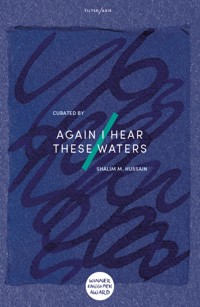
The 'Miyah' community of the Northeast Indian state of Assam is formed from the descendants of migrant Bengali-Muslims living in the chars (low-lying islands prone to floods and erosion). Very rarely do we see translations of literature from India's Northeast, a contested region seen as 'off the map' of India proper, or from the hundreds of languages which are not official at either the national or state level. In poetry and song originally written mostly in Assamese or local dialects spoken by the community, over twenty voices are brought together in this anthology to document deeply intimate stories of nature, loss, and yearning, foregrounding these contemporary lives beyond mere victimisation. From folk river-songs as poems to love poetry, the islands and riverbanks of the chars and chaporis of the Brahmaputra River become both background and metaphor in this anthology, never shying away from the prismatic effect of water. Curated by Shalim M. Hussain, a leading figure in the Miyah poetry movement, Again I Hear These Waters is an offering, a gathering.
Sie lesen das E-Book in den Legimi-Apps auf:
Seitenzahl: 55
Veröffentlichungsjahr: 2024
Das E-Book (TTS) können Sie hören im Abo „Legimi Premium” in Legimi-Apps auf:
Ähnliche















Again I Hear These Waters
Again I Hear These Waters
Title Page
Dedication
Introduction
Write Down ‘I Am Miyah’
Babajaan
Nana I Have Written
My Love’s Letters
Republic’s Broken Wall
Journey
Comrade
Someone Walks By
I Am Yet a Miyah
Detention Camp
Brother, I Am a Man from the Chars
Our Mother Has a D Vote
Don’t insult Me as a Miyah
My Country, You Promised
My Son Has Learned to Cuss like the City
Every Day on the Calendar is Nellie
For Seventy Years I Have Been Afraid
Heartache
The Freedom of Slavery
Grandma’s Pet Crow
Kashem Miya’s Heart
First, Your Shadow
The Gab Tree
A Two Hundred Year Old Spring
Why Do Our Poems Scare You?
My Mother
Our Ma
Ghost Nation
Stay Well, My Country
Come, Republic
After My Death
The River Nymph
Independence Day
The History of Stones
Reclaiming
In Doubt and Worry My Time Has Passed
You Are The Songbird of My Soul
Mad River
There’s No Other; He’s One
Editor’s Note
Acknowledgments
Funding Acknowledgements
Copyright
About Tilted Axis Press
1
3
8
9
10
11
13
14
15
16
17
18
19
21
22
23
24
25
26
27
28
29
30
31
32
33
34
35
36
37
38
39
41
42
43
45
46
47
48
49
50
51
52
53
54
55
57
58
59
60
61
62
63
64
65
67
68
69
71
72
73
74
75
77
79
80
81
82
83
84
85
86
87
88
89
91
92
93
94
95
97
99
101
102
103
104
105
107
109
110
111
Landmarks
Cover
Table of Contents
Start of Content
Again I Hear These Waters
Again I Hear These Waters
Poems By
Hafiz Ahmed
Shalim M Hussain
Kazi Neel
Shajahan Ali Ahmed
Ashraful Islam
Abdur Rahim
Siraj Khan
Abdul Kalam Azad
Johirul Islam
Rafiqul Islam
Rejaul Islam Bulbul
Abdul Mozid Sheikh
Mohin Khan
Ringkul Ahmed
Aman Ali
Rehna Sultana
Gazi Rahman
Mirza Luftar Rahman
Heena Al Haya
Ameena Ahmed
Begum Asma Khatun
Curated by Shalim H. Hussain
Published by Tilted Axis Press
This book is for Assam, our home.
Introduction
This anthology of translated poems and songs comes from the ‘Miyah’ community of the Northeast Indian state of Assam. Except for Hafiz Ahmed’s ‘Write Down “I am Miyah”’, all of the poems were originally written in Assamese or the local dialects spoken by the community. This story of this community is tied to the history of modern India. Present-day Assam shares an international border with Bangladesh. Historically, Assam has seen multiple waves of migration. However, during the rule of the British Raj in the nineteenth century, the government facilitated the migration of a large agricultural labour community, predominantly Muslim, into Assam from areas which now fall in Bangladesh. This class of labourers were the ancestors of the ‘Miyahs’.
They settled mostly in the low-lying riverine areas, demarcated by the administration as ‘wastelands’, and grew rice and jute. Both these crops feature heavily in this anthology. The areas they settled in, chars and chaporis, unstable islands and riverbanks of the Brahmaputra River, were always at the mercy of floods and erosion – the twin natural disasters that visit Assam every year. However, the terrain was not unknown to them because the areas they migrated from were the same. Over time their population grew but a major chunk of it continued living in the char-chaporis, facing the same ravages of nature their ancestors had faced. This is why the themes of the folk river-songs in this anthology carry over so easily to the poems. One of the terms the community still uses to identify itself is ‘char-chapori people’, a people defined by their immediate geography. In this anthology the islands and riverbanks keep reappearing, both as background and metaphor. And like poetry and songs from most working-class communities, the poems in this anthology glamourise labour, particularly tough physical labour which can bend the world and nature to its will.
The word ‘Miyah’ itself is derogatory street slang with implications of barbarism and otherness. Originally a respectful term of address, no one knows when it began to be used in a negative sense for the ‘char-chapori people’ in Assam. In April 2016, the poet Hafiz Ahmed wrote the poem ‘Write Down “I am Miyah”’ modelled on Mahmoud Darwish’s ‘Identity Card’. The poem highlighted the problem with the term ‘Miyah’ while at the same time reclaiming it. This was not the first time a ‘Miyah’ poet declared themselves Miyah but it made other poets from the community respond to this poem through their own poems. Some of the responses are included in this anthology. A journalist called this collection of responses ‘Miyah poetry’ and that’s where the term had its genesis. A corpus of rich ‘char-chapori poetry’ existed in Assam three decades before ‘Miyah poetry’ started and continues to grow to this day but most of these poets didn’t identify as ‘Miyah poets’.
Miyah poetry started as political poetry, responding to the then current issues of the National Register of Citizens or NRC which was being updated only for the residents of Assam and the Foreigners’ Tribunals. The former was an exercise to identify illegal immigrants resident in Assam. The latter was a quasi-judicial body that has the power to identify ‘foreigners’ or illegal immigrants. ‘Declared foreigners’ could be sent to detention centres. Initially many of the poets challenged the heavy-handedness of these processes. The NRC was updated and a final draft was published in 2019 but it was not enacted.




