


Erhalten Sie Zugang zu diesem und mehr als 300000 Büchern ab EUR 5,99 monatlich.
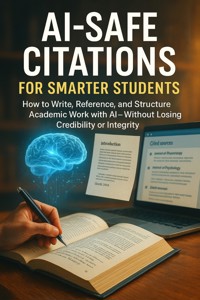
AI-Safe Citations for Smarter Students is the essential guide to mastering academic writing in the age of artificial intelligence. Designed for students and teachers alike, this book demystifies how to use AI tools responsibly while keeping your work original, well-structured, and citation-perfect. You'll learn how to identify credible sources, integrate AI-generated insights ethically, and avoid plagiarism traps that can undermine your academic integrity. Step-by-step examples show how to craft clear citations, structure essays with proper referencing systems, and balance your own thinking with AI support. With practical templates, citation models, and formatting tips, AI-Safe Citations for Smarter Students helps you impress even the toughest instructors while staying confident about the originality of your work. It's a modern guide for anyone writing in an AI-driven world—smart, ethical, and academically solid. Master the art of credible writing—because integrity never goes out of style.
Sie lesen das E-Book in den Legimi-Apps auf:
Seitenzahl: 171
Veröffentlichungsjahr: 2025
Das E-Book (TTS) können Sie hören im Abo „Legimi Premium” in Legimi-Apps auf:
Ähnliche


















Table of Contents
Chapter 1: Understanding the Role of AI in Academic Writing
The Emergence of AI in Academic Writing
Benefits of AI in Academic Writing
Challenges of Using AI in Academic Writing
Understanding Ethical Considerations
Building a Balanced Approach to AI
Chapter 2: The Importance of Academic Integrity
Understanding Academic Integrity
The Role of AI in Academic Integrity
Building a Culture of Integrity
Practical Tips for Upholding Integrity
Chapter 3: Identifying Credible Sources
Understanding Source Credibility
Key Characteristics of Credible Sources
Using AI Tools to Identify Credible Sources
Common Pitfalls in Source Selection
Strategies for Validating Sources
Chapter 4: Integrating AI Insights Ethically
Understanding AI-Generated Content
Ethical Use of AI Insights
Balancing AI with Personal Voice
Tools for Ethical AI Integration
Chapter 5: Avoiding Plagiarism in the Age of AI
Understanding Plagiarism
The Importance of Citations
Effective Paraphrasing Techniques
Utilizing AI Tools Responsibly
Tools for Checking Plagiarism
Chapter 6: Crafting Clear and Accurate Citations
Understanding the Importance of Citations
Overview of Citation Styles
Structuring Your Citations
Integrating AI in Citations
Common Citation Mistakes and How to Avoid Them
Resources for Accurate Citations
Chapter 7: Structuring Your Academic Paper
Importance of a Strong Thesis Statement
Organizing Your Arguments
Crafting Compelling Introduction and Conclusion
Integrating Evidence and Examples
Utilizing AI Tools for Structure
Finalizing Your Paper: Review and Revision
Chapter 8: Balancing AI Support with Your Own Voice
Understanding Your Voice in Academic Writing
The Role of AI in Enhancing Your Voice
Strategies for Integrating AI in Your Writing Process
Recognizing and Avoiding Over-Reliance on AI
The Importance of Originality and Authenticity
Chapter 9: Practical Templates for Academic Writing
Understanding Academic Writing Templates
Essay Writing Template
Research Paper Structure Template
Report Writing Template
Literature Review Template
Integrating AI Tools with Templates
Chapter 10: Formatting Tips for Success
Understanding Basic Formatting Guidelines
Structuring Your Title Page
Effective Use of Headings and Subheadings
Incorporating Visuals and Tables
Chapter 11: The Future of Academic Writing with AI
The Integration of AI in Academic Writing
The Changing Nature of Research Skills
Evolving Citation Practices
Balancing AI Support and Personal Voice
The Future: Trends to Watch
Chapter 12: Ethics of AI in Research and Writing
Defining Ethical Use of AI in Research
Understanding Plagiarism in the AI Era
The Role of Ethical Guidelines in AI Usage
Balancing Human Insight with AI Input
Privacy and Data Security in AI Research
Empowered to Write: Your Path Ahead
Chapter 1: Understanding the Role of AI in Academic Writing
This chapter explores how artificial intelligence is transforming the landscape of academic writing. Students are increasingly turning to AI tools for assistance, but understanding their role is crucial. We will discuss both the benefits and challenges that come with the use of AI in academic environments.
The Emergence of AI in Academic Writing
This section introduces how artificial intelligence is making its mark in academia. As technology evolves, AI tools are becoming readily accessible and usable for students seeking to enhance their writing process. Understanding this emergence helps students leverage AI effectively.
AI tools are increasingly integrated into educational platforms.
The integration of artificial intelligence tools into educational platforms marks a significant shift in how students approach academic writing. Platforms such as learning management systems, online libraries, and course materials now often incorporate AI functionalities to enhance user experience. Features like personalized learning recommendations and automated feedback systems enable students to identify their strengths and weaknesses in writing.
Moreover, these AI-driven features provide real-time support, allowing students to access writing resources and guidance when they need it the most. This evolution of educational technology empowers learners to create more polished work and fosters a proactive approach to their academic responsibilities.
As students embrace these tools, it is important for educators to ensure that AI integration supports critical thinking and maintains academic integrity. Understanding how to effectively use AI within these platforms can greatly enhance a student’s writing process.
Students now have access to AI-based writing assistants that offer grammar checks and style recommendations.
The availability of AI-based writing assistants represents a valuable resource for today’s students. These tools are designed to analyze text for grammatical errors, stylistic issues, and overall coherence. By providing instant feedback, they allow students to refine their writing skills and improve their command of language in a manner that is both efficient and user-friendly.
For instance, applications like Grammarly and ProWritingAid go beyond rudimentary grammar checks, introducing style suggestions and readability scores. This feature empowers students to not only correct mistakes but also enhance their writing style and adaptability to different academic formats.
However, reliance on these AI tools should be balanced. While they can significantly improve the quality of writing, students must remain vigilant to ensure they develop their own voice and critical analysis skills, thus maintaining authenticity in their academic work.
The availability of AI has changed the approach to research and writing in educational settings.
The presence of AI in academia has fundamentally transformed research methodologies and writing processes. Students can now utilize sophisticated algorithms to sift through vast amounts of data in mere seconds, enabling them to uncover relevant sources more efficiently than traditional methods. This access to comprehensive research allows for more in-depth exploration of topics and elevates the overall quality of academic writing.
Additive to research, AI tools like citation generators simplify the process of referencing sources, ensuring that students adhere to various citation styles effortlessly. However, this transition to AI-aided research prompts a need for students to remain discerning about the credibility and relevance of their sources.
With greater efficiency comes the responsibility of maintaining academic integrity, as reliance on AI must not supersede critical thinking and thorough vetting of information. This balance is key to successfully navigating the complexities of modern academic writing.
AI can help in organizing thoughts and structuring essays effectively.
One of the significant advantages of utilizing AI in academic writing is its ability to aid in organizing thoughts and structuring essays. Tools such as mind mapping software and essay planners leverage AI to help students brainstorm ideas, categorize information, and outline their work logically. This structured approach is invaluable for crafting coherent essays that clearly present arguments and evidence.
Furthermore, AI tools often suggest standard essay formats, such as thesis statement placement and paragraph structuring, guiding students in adhering to academic conventions. This level of support ensures that even those who struggle with organization can create compelling pieces of writing.
Nevertheless, while AI can facilitate organization, students should still engage critically with their material. The ultimate expression of thought and reasoning must come from the student, as the AI serves merely as a supportive aid rather than a replacement for original insight.
Benefits of AI in Academic Writing
This section discusses the various advantages that artificial intelligence brings to the academic writing process. By highlighting specific benefits, students can understand how AI can enhance their writing skills and research capabilities.
AI can assist in generating ideas and brainstorming topics for essays.
One of the standout benefits of artificial intelligence in academic writing is its ability to aid students in generating ideas and brainstorming topics. AI-based tools can analyze existing literature, identify trending themes, and propose avenues for exploration that a student might not have considered. This capability is especially valuable during the initial stages of writing when developing a thesis or selecting a focus area can be daunting.
Moreover, by inputting a few keywords or phrases, students can receive a range of relevant topics tailored to their academic discipline. This not only streamlines the brainstorming process but also empowers students to engage with content that is both current and pertinent to their field. In embracing AI’s brainstorming capabilities, students can enhance their creative thinking and find a fresh perspective that invigorates their writing process.
It simplifies citation management, reducing the hassle for students.
Citation management is a critical, yet often cumbersome, aspect of academic writing. AI tools have revolutionized this process, making it significantly easier for students to manage their references. With features that automatically generate citations in various formats—such as APA, MLA, and Chicago—students can focus more on their writing and less on formatting details.
Furthermore, some AI software can integrate with research databases or document editors, allowing students to retrieve citation information seamlessly while they research. This automation minimizes the risk of errors that can stem from manual entry and helps ensure that citations adhere to academic standards. As a result, students can maintain a high level of credibility in their work without the usual stress associated with proper referencing.
AI tools can improve writing quality by offering vocabulary suggestions and style adjustments.
The integration of AI in academic writing also enhances the quality of writing through intelligent vocabulary suggestions and style adjustments. Advanced AI tools analyze the text in real-time, providing feedback on word choice, sentence structure, and overall tone. This instant feedback can help students refine their writing style to better suit academic contexts.
For instance, AI can recommend synonyms to avoid repetition or suggest more impactful phrasing to convey ideas effectively. By making these small yet significant adjustments, students can elevate their writing to a higher standard. This not only aids in clarity and precision but also encourages students to develop a more sophisticated command of language as they engage with AI throughout the writing process.
The efficiency of AI can save students time on drafting and revisions.
Time management is often a significant issue for students juggling multiple assignments and commitments. AI tools contribute to greater efficiency in the writing process, offering mechanisms that streamline drafting and revisions. For instance, AI can generate outlines based on a student's prompts, allowing for a clearer roadmap before diving into full drafts.
Additionally, these tools can assist in identifying areas that require revision by analyzing readability and coherence throughout the document. By quickly highlighting sections that might need improvement, students can focus their efforts more effectively, leading to a more polished final product in less time. Ultimately, the incorporation of AI into the writing process can facilitate a smoother workflow, providing the opportunity for students to dedicate more time to research and critical thinking.
Challenges of Using AI in Academic Writing
This section outlines the potential pitfalls and challenges students may face when using AI in their writing tasks. Awareness of these challenges can empower students to navigate them wisely and maintain academic integrity.
Over-reliance on AI may lead to a decline in personal writing skills.
As students increasingly depend on artificial intelligence for their writing tasks, there is a significant risk of diminishing their own writing abilities. When AI tools generate text, students may bypass essential practices that refine their skills, such as brainstorming, drafting, and revising. This lack of engagement with the writing process can create a reliance that stunts critical thinking and creativity.
Moreover, writing is an iterative process where individuals learn to express their thoughts clearly and effectively. If students lean too heavily on AI, they may miss the opportunity to develop their unique voice and style. It's vital for students to strike a balance, utilizing AI as a supportive tool rather than a crutch, ensuring that they actively participate in their academic writing journey.
AI-generated content can lack depth and critical analysis, which are essential in academic work.
While AI tools can produce text quickly, they often lack the depth and critical analysis that characterize high-quality academic work. These systems generate content based on existing data and algorithms, which may lead to superficial conclusions rather than well-argued, nuanced positions. Academic writing requires rigorous analysis, a thorough understanding of topics, and the ability to synthesize various perspectives.
Students must remember that academic integrity is rooted in original thought and critical engagement. Thus, relying solely on AI may result in essays that are factually correct but devoid of meaningful insights, missing the mark on what constitutes scholarly work. Integrating AI-generated content should be accompanied by thorough personal research and thoughtful analysis to ensure the richness and originality of the final product.
Students may unintentionally incorporate plagiarized AI content into their assignments.
One major risk of using AI tools is the potential for unintentional plagiarism. AI systems are trained on vast datasets, some of which may contain copyrighted material. When students use AI-generated text, they might inadvertently include phrases or concepts that have not been paraphrased adequately, leading to serious academic misconduct.
It is crucial for students to verify the originality of the content produced by AI tools. This requires a keen awareness of citation practices and the need to reframe or summarize AI-generated outputs in their own words. Employing plagiarism detection software and analyzing AI-generated insights critically can help safeguard against incorporating unauthorized content into their work.
Some AI tools may not accurately cite sources, leading to academic misconduct.
Another significant challenge is the unreliable citation practices of certain AI writing tools. While these technologies can assist with generating references, they do not always provide accurate citations or adhere to specific formatting guidelines, which can lead to significant errors in students' academic work.
Students must be proactive in verifying that the sources suggested by AI tools are credible and correctly cited. Understanding various citation styles, such as APA or MLA, is essential for maintaining academic integrity. Ultimately, using AI tools as a guide for potential references should not substitute the student’s responsibility to double-check citations, ensuring that their work is both credible and up to the standards of academic excellence.
Understanding Ethical Considerations
This section focuses on the ethical implications surrounding the use of AI in academic writing. Understanding these principles helps students maintain integrity and ensure their work adheres to academic standards.
Students must be aware of the distinction between collaboration and plagiarism when using AI.
As students navigate the increasing presence of artificial intelligence in academic writing, grasping the fine line between collaboration and plagiarism is essential. Collaboration refers to the ethical process of utilizing AI tools to enhance one’s work, where students engage with the technology to generate ideas and improve clarity while ensuring that the final submission is authentically their own. In contrast, plagiarism occurs when students improperly attribute or present AI-generated material as their own original work.
Understanding this distinction enables students to leverage AI effectively while preserving academic integrity. It is crucial, therefore, for students to develop a critical perspective when integrating AI resources. This means acknowledging the AI’s contribution without surrendering ownership of their thoughts and ideas. Cultivating this skill empowers students not only to maintain their credibility but also to produce unique scholarly work that reflects true intellectual engagement.
Transparency about AI assistance should be maintained in academic submissions.
Transparency is a cornerstone of academic integrity, particularly when AI tools are employed in the writing process. Students should be forthcoming about the extent of AI assistance in their work, which includes properly documenting the AI's contributions in their acknowledgments or citations. Such transparency not only upholds academic honesty but also helps to establish a culture of trust within the educational community.
When students declare the role of AI in their submissions, they enhance their credibility and demonstrate a commitment to ethical scholarship. This practice can also guide instructors in evaluating the originality and depth of a student's understanding. Ultimately, by maintaining clear communication regarding AI assistance, students can navigate their academic journey with integrity and reinforce the importance of honesty in their scholarly work.
Ethical use involves critically evaluating AI-generated suggestions rather than accepting them blindly.
The advent of AI tools in academic writing necessitates that students adopt a critical approach toward AI-generated content. While these tools can provide valuable insights and suggestions, accepting their recommendations without scrutiny can lead to unintentional academic dishonesty. It is vital for students to analyze the relevance, accuracy, and context of the information provided by AI before incorporating it into their work.
By critically evaluating AI outputs, students can enhance their analytical skills and ensure that their writing not only reflects clarity but also adheres to high academic standards. Engaging with AI-generated suggestions allows students to retain control over their original voice and perspective, enriching the final work with their unique insights while also ensuring that the content is credible and well-supported. This ethical engagement with AI tools underscores a balanced approach to academic writing.
Understanding copyright laws related to AI-generated content is crucial for academic honesty.
As students increasingly utilize AI to support their academic writing, it is crucial to understand the legal landscape surrounding copyright and intellectual property. Copyright laws can be complex, particularly when it comes to works generated with the assistance of AI tools. Students should familiarize themselves with the ownership of AI-generated content and the extent to which it can be used in their submissions without violating copyright regulations.
By understanding these laws, students can navigate the intricacies of using AI responsibly and ethically. This includes ensuring that they do not infringe on the original creators' rights while leveraging AI outputs to enhance their academic work. Awareness of copyright allows for informed decision-making and promotes academic honesty, protecting students from potential legal consequences while fortifying their commitment to ethical scholarship.
Building a Balanced Approach to AI
This section emphasizes the importance of finding a balance between using AI tools and developing personal academic skills. A balanced approach allows students to benefit from AI while still cultivating their writing abilities.
Students should use AI for guidance, not as a crutch for writing.
Artificial intelligence can serve as a valuable resource for students aiming to enhance their academic writing skills. By using AI tools for guidance, students can receive assistance with grammar, structure, and even topic generation. However, it is essential to view these tools as supportive aids, not replacements for personal effort and creativity. Relying solely on AI may hinder the development of critical writing skills essential for academic success.
When students adopt a perspective that respects the role of AI without becoming dependent on it, they can leverage its strengths while still cultivating their unique voice. Consequently, this balanced approach empowers students to engage more deeply with their subjects, ensuring that the learning process enhances their understanding rather than bypassing it. This method is crucial as students navigate the ever-evolving landscape of academic writing.
Combining AI insights with personal research fosters deeper understanding of topics.
Integrating insights generated by AI with personal research encourages a more comprehensive exploration of topics. While AI can quickly process vast amounts of information, it does not replace the nuanced understanding that comes from direct engagement with academic materials. By synthesizing AI-generated insights with individual research efforts, students are better positioned to discover connections and develop original ideas that enrich their writing.
This approach not only strengthens comprehension but also supports the development of critical analysis skills. When students analyze AI recommendations alongside their research, they are compelled to question, validate, and expand on the information presented to them. This enriched learning experience ultimately leads to a more profound mastery of the subject matter, putting students in a strong position to craft insightful and impactful academic work.
Engagement with AI-generated content should still reflect personal voice and critical thought.
While AI can provide assistance in writing, it is crucial that students maintain their unique voice in their academic work. Engaging with AI-generated content should not stifle creativity; rather, it should amplify the student’s personal perspective. Critical thought must remain at the forefront of writing, as students blend their insights with AI assistance. This integration fosters a more authentic expression of ideas.
To ensure personal voice is preserved, students should take time to reflect on and critique the AI-generated suggestions. By asking questions such as, “Does this align with my viewpoint?” or “How does this add to my argument?” students can refine their work further. When personal interpretation and AI support intersect, the result is a richer, more engaging piece that resonates with both the writer's intention and the audience's expectations.
Regular practice and feedback can help students refine their writing skills alongside AI assistance.
Consistent practice in writing, coupled with feedback, plays a pivotal role in skill refinement. Students should engage frequently with both their writing and AI tools, continuously incorporating suggestions while also honing their skills. Regular writing exercises can promote a solid foundation, helping students to identify areas for improvement and growth.
Feedback from peers or instructors is invaluable, offering insights that AI cannot provide. While AI can assist with syntax and style, human feedback addresses content depth, argument strength, and overall coherence. By combining regular practice and constructive criticism, students can effectively bridge the gap between utilizing AI and developing their own writing abilities, ultimately leading to more confident and competent academic writing.




