


0,99 €
Mehr erfahren.
- Herausgeber: micpub.com
- Kategorie: Gesellschafts- und Liebesromane
- Sprache: ja
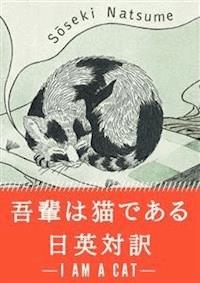
小説・童話で学ぶ英語シリーズの「吾輩は猫である」、日英対訳版です。 このシリーズでは、パブリックドメインとなった作品を編集し、英語と日本語の文章を併記することによって、英語学習に活用できる教材にしてご利用いただけます。 知らない英単語や表現も、日本語訳をすぐに確認することによって辞書を使わずに理解できるようになり、また誰もが良く知っているストーリであるため、自分で言葉の意味を予測しながら読み進めることができます。 ぜひ本書を活用して、英語学習に磨きをかけてください。 なお、本書では始めに英語全文、その後に日本語全文が掲載されています。 「『吾輩は猫である』は、夏目漱石の長編小説であり、処女小説である。1905年1月、『ホトトギス』に発表され、好評を博したため、翌1906年8月まで継続した。 「吾輩は猫である。名前はまだ無い。どこで生れたかとんと見当がつかぬ。」という書き出しで始まり、中学校の英語教師である珍野苦沙弥の家に飼われている猫である「吾輩」の視点から、珍野一家や、そこに集う彼の友人や門下の書生たち、「太平の逸民」(第二話、第三話)の人間模様が風刺的・戯作的に描かれている。」 (Wikipediaより)
Das E-Book können Sie in Legimi-Apps oder einer beliebigen App lesen, die das folgende Format unterstützen:
Veröffentlichungsjahr: 2018
Ähnliche




















目次
I am a cat (English)
1
2
3
4
5
6
7
8
9
10
11
吾輩は猫である 日本語版
一
二
三
四
五
六
七
八
九
十
十一
I am a cat
1
I AM A CAT. As yet I have no name. I’ve no idea where I was born. All I remember is that I was miaowing in a dampish dark place when, for the first time, I saw a human being. This human being, I heard afterwards, was a member of the most ferocious human species; a shosei, one of those students who, in return for board and lodging, perform small chores about the house. I hear that, on occasion, this species catches, boils, and eats us. However as at that time I lacked all knowledge of such creatures, I did not feel particularly frightened. I simply felt myself floating in the air as I was lifted up lightly on his palm. When I accustomed myself to that position, I looked at his face. This must have been the very first time that ever I set eyes on a human being. The impression of oddity, which I then received, still remains today. First of all, the face that should be decorated with hair is as bald as a kettle. Since that day I have met many a cat but never have I come across such deformity. The center of the face protrudes excessively and sometimes, from the holes in that protuberance, smoke comes out in little puffs. I was originally somewhat troubled by such exhalations for they made me choke, but I learnt only recently that it was the smoke of burnt tobacco which humans like to breathe. For a little while I sat comfortably in that creature’s palm, but things soon developed at a tremendous speed. I could not tell whether the shosei was in movement or whether it was only I that moved; but anyway I began to grow quite giddy, to feel sick. And just as I was thinking that the giddiness would kill me, I heard a thud and saw a million stars. Thus far I can remember but, however hard I try, I cannot recollect anything thereafter.
When I came to myself, the creature had gone. I had at one time had a basketful of brothers, but now not one could be seen. Even my precious mother had disappeared. Moreover I now found myself in a painfully bright place most unlike that nook where once I’d sheltered. It was in fact so bright that I could hardly keep my eyes open. Sure that there was something wrong, I began to crawl about. Which proved painful. I had been snatched away from softest straw only to be pitched with violence into a prickly clump of bamboo grass.
After a struggle, I managed to scramble clear of the clump and emerged to find a wide pond stretching beyond it. I sat at the edge of the pond and wondered what to do. No helpful thought occurred. After a while it struck me that, if I cried, perhaps the shosei might come back to fetch me. I tried some feeble mewing, but no one came. Soon a light wind blew across the pond and it began to grow dark. I felt extremely hungry. I wanted to cry, but I was too weak to do so. There was nothing to be done. However, having decided that I simply must find food, I turned, very, very slowly, left around the pond. It was extremely painful going. Nevertheless, I persevered and crawled on somehow until at long last I reached a place where my nose picked up some trace of human presence. I slipped into a property through a gap in a broken bamboo fence, thinking that something might turn up once I got inside. It was sheer chance; if the bamboo fence had not been broken just at that point, I might have starved to death at the roadside. I realize now how true the adage is that what is to be will be. To this very day that gap has served as my shortcut to the neighbor’s tortoiseshell. Well, though I had managed to creep into the property, I had no idea what to do next. Soon it got really dark. I was hungry, it was cold and rain began to fall. I could not afford to lose any more time. I had no choice but to struggle toward a place which seemed, since brighter, warmer. I did not know it then, but I was in fact already inside the house where I now had a chance to observe further specimens of humankind. The first one that I met was O-san, the servant-woman, one of a species yet more savage than the shosei. No sooner had she seen me than she grabbed me by the scruff of the neck and flung me out of the house. Accepting that I had no hope, I lay stone-still, my eyes shut tight and trusting to Providence. But the hunger and the cold were more than I could bear. Seizing a moment when O-san had relaxed her watch, I crawled up once again to flop into the kitchen. I was soon flung out again. I crawled up yet again, only to be flung out yet again. I remember that the process was several times repeated. Ever since that time, I have been utterly disgusted with this O-san person. The other day I managed at long last to rid myself of my sense of grievance, for I squared accounts by stealing her dinner of mackerel-pike. As I was about to be flung out for the last time, the master of the house appeared, complaining of the noise and demanding an explanation. The servant lifted me up, turned my face to the master and said, “This little stray kitten is being a nuisance. I keep putting it out and it keeps crawling back into the kitchen.” The master briefly studied my face, twisting the black hairs under his nostrils. Then, “In that case, let it stay,” he said; and turned and went inside. The master seemed to be a person of few words. The servant resentfully threw me down in the kitchen. And it was thus that I came to make this house my dwelling.
My master seldom comes face-to-face with me. I hear he is a schoolteacher. As soon as he comes home from school, he shuts himself up in the study for the rest of the day; and he seldom emerges. The others in the house think that he is terribly hard-working. He himself pretends to be hard-working. But actually he works less hard than any of them think. Sometimes I tiptoe to his study for a peep and find him taking a snooze. Occasionally his mouth is drooling onto some book he has begun to read. He has a weak stomach and his skin is of a pale yellowish color, inelastic and lacking in vitality. Nevertheless he is an enormous gormandiser. After eating a great deal, he takes some taka-diastase for his stomach and, after that, he opens a book. When he has read a few pages, he becomes sleepy. He drools onto the book. This is the routine religiously observed each evening. There are times when even I, a mere cat, can put two thoughts together. “Teachers have it easy. If you are born a human, it’s best to become a teacher. For if it’s possible to sleep this much and still to be a teacher, why, even a cat could teach.” However, according to the master, there’s nothing harder than a teacher’s life and every time his friends come round to see him, he grumbles on and on.
During my early days in the house, I was terribly unpopular with everyone except the master. Everywhere I was unwelcome, and no one would have anything to do with me. The fact that nobody, even to this day, has given me a name indicates quite clearly how very little they have thought about me. Resigned, I try to spend as much of my time as possible with the master, the man who had taken me in. In the morning, while he reads the newspaper, I jump to curl up on his knees. Throughout his afternoon siesta, I sit upon his back. This is not because I have any particular fondness for the master, but because I have no other choice; no one else to turn to. Additionally, and in the light of other experiments, I have decided to sleep on the boiled-rice container, which stays warm through the morning, on the quilted foot-warmer during the evening, and out on the veranda when it is fine. But what I find especially agreeable is to creep into the children’s bed and snuggle down between them. There are two children, one of five and one of three: they sleep in their own room, sharing a bed. I can always find a space between their bodies, and I manage somehow to squeeze myself quietly in. But if, by great ill-luck, one of the children wakes, then I am in trouble. For the children have nasty natures, especially the younger one. They start to cry out noisily, regardless of the time, even in the middle of the night, shouting, “Here’s the cat!”Then invariably the neurotic dyspeptic in the next room wakes and comes rushing in. Why, only the other day, my master beat my backside black and blue with a wooden ruler.
Living as I do with human beings, the more that I observe them, the more I am forced to conclude that they are selfish. Especially those children. I find my bedmates utterly unspeakable. When the fancy takes them, they hang me upside-down, they stuff my face into a paper-bag, they fling me about, they ram me into the kitchen range. Furthermore, if I do commit so much as the smallest mischief, the entire household unites to chase me around and persecute me. The other day when I happened to be sharpening my claws on some straw floor-matting, the mistress of the house became so unreasonably incensed that now it is only with the greatest reluctance that she’ll even let me enter a matted room. Though I’m shivering on the wooden floor in the kitchen, heartlessly she remains indifferent. Miss Blanche, the white cat who lives opposite and whom I much admire, tells me whenever I see her that there is no living creature quite so heartless as a human. The other day, she gave birth to four beautiful kittens. But three days later, the shosei of her house removed all four and tossed them away into the backyard pond. Miss Blanche, having given through her tears a complete account of this event, as**sured me that, to maintain our own parental love and to enjoy our beautiful family life, we, the cat-race, must engage in total war upon all humans. We have no choice but to exterminate them. I think it is a very reasonable proposition. And the three-colored tomcat living next door is especially indignant that human beings do not understand the nature of proprietary rights. Among our kind it is taken for granted that he who first finds something, be it the head of a dried sardine or a gray mullet’s navel, acquires thereby the right to eat it. And if this rule be flouted, one may well resort to violence. But human beings do not seem to understand the rights of property. Every time we come on something good to eat, invariably they descend and take it from us. Relying on their nak**ed strength, they coolly rob us of things which are rightly ours to eat. Miss Blanche lives in the house of a military man, and the tomcat’s master is a lawyer. But since I live in a teacher’s house, I take matters of this sort rather more lightly than they. I feel that life is not unreasonable so long as one can scrape along from day to day. For surely even human beings will not flourish forever. I think it best to wait in patience for the Day of the Cats.
Talking of selfishness reminds me that my master once made a fool of himself by reason of this failing. I’ll tell you all about it. First you must understand that this master of mine lacks the talent to be more than average at anything at all; but nonetheless he can’t refrain from trying his hand at everything and anything. He’s always writing haiku and submitting them to Cuckoo; he sends off new-style poetry to Morning Star; he has a shot at English prose peppered with gross mistakes; he develops a passion for archery; he takes lessons in chanting No play-texts; and sometimes he devotes himself to making hideous noises with a violin. But I am sorry to say that none of these activities has led to anything whatsoever. Yet, though he is dyspeptic, he gets terribly keen once he has embarked upon a project. He once got himself nicknamed “The Maestro of the Water-closet” through chanting in the lavatory, but he remains entirely unconcerned and can still be heard there chanting “I am Taira-no-Munemori.” We all say, “There goes Munemori,” and titter at his antics. I do not know why it happened, but one fine day (a payday roughly four weeks after I’d taken up residence) this master of mine came hurrying home with a large parcel under his arm. I wondered what he’d bought. It turned out that he’d purchased watercolor paints, brushes, and some special “Whatman” paper. It looked to me as if haiku-writing, and mediaeval chanting were going to be abandoned in favor of watercolor painting. Sure enough, from the next day on and every day for some long time, he did nothing but paint pictures in his study. He even went without his afternoon siestas. However, no one could tell what he had painted by looking at the result. Possibly he himself thought little of his work; for, one day when his friend who specializes in matters of aesthetics came to visit him, I heard the following conversation.
“Do you know it’s quite difficult? When one sees someone else painting, it looks easy enough; but not till one takes a brush oneself, does one realize just how difficult it is.” So said my noble master, and it was true enough.
His friend, looking at my master over his gold-rimmed spectacles, observed, “It’s only natural that one cannot paint particularly well the moment one starts. Besides, one cannot paint a picture indoors by force of the imagination only. The Italian Master, Andrea del Sarto, remarked that if you want to paint a picture, always depict nature as she is. In the sky, there are stars. On earth, there are sparkling dews. Birds are flying. Animals are running. In a pond there are goldfish. On an old tree one sees winter crows. Nature herself is one vast living picture. D’you understand? If you want to paint a picturesque picture, why not try some preliminary sketching?”
“Oh, so Andrea del Sarto said that? I didn’t know that at all. Come to think of it, it’s quite true. Indeed, it’s very true.”The master was unduly impressed. I saw a mocking smile behind the gold-rimmed glasses.
The next day when, as always, I was having a pleasant nap on the veranda, the master emerged from his study (an act unusual in itself) and began behind my back to busy himself with something. At this point I happened to wake up and, wondering what he was up to, opened my eyes just one slit the tenth of an inch. And there he was, fairly killing himself at being Andrea del Sarto. I could not help but laugh. He’s starting to sketch me just because he’s had his leg pulled by a friend. I have already slept enough, and I’m itching to yawn. But seeing my master sketching away so earnestly, I hadn’t the heart to move: so I bore it all with resignation. Having drawn my outline, he’s started painting the face. I confess that, considering cats as works of art, I’m far from being a collector’s piece. I certainly do not think that my figure, my fur, or my features are superior to those of other cats. But however ugly I may be, there’s no conceivable resemblance between myself and that queer thing which my master is creating. First of all, the coloring is wrong. My fur, like that of a Persian, bears tortoiseshell markings on a ground of a yellowish pale grey. It is a fact beyond all argument. Yet the color which my master has employed is neither yellow nor black; neither grey nor brown; nor is it any mixture of those four distinctive colors. All one can say is that the color used is a sort of color. Furthermore, and very oddly, my face lacks eyes. The lack might be excused on the grounds that the sketch is a sketch of a sleeping cat; but, all the same, since one cannot find even a hint of an eye’s location, it is not all clear whether the sketch is of a sleeping cat or of a blind cat. Secretly I thought to myself that this would never do, even for Andrea del Sarto. However, I could not help being struck with admiration for my master’s grim determination. Had it been solely up to me, I would gladly have maintained my pose for him, but Nature has now been calling for some time. The muscles in my body are getting pins and needles. When the tingling reached a point where I couldn’t stand it another minute, I was obliged to claim my liberty. I stretched my front paws far out in front of me, pushed my neck out low and yawned cavernously. Having done all that, there’s no further point in trying to stay still. My master’s sketch is spoilt anyway, so I might as well pad round to the backyard and do my business. Moved by these thoughts, I start to crawl sluggishly away. Immediately, “You fool” came shouted in my master’s voice, a mixture of wrath and disappointment, out of the inner room. He has a fixed habit of saying, “You fool” whenever he curses anyone. He cannot help it since he knows no other swear words. But I thought it rather impertinent of him thus unjustifiably to call me “a fool.” After all, I had been very patient up to this point. Of course, had it been his custom to show even the smallest pleasure whenever I jump on his back, I would have tamely endured his imprecations: but it is a bit thick to be called “a fool” by someone who has never once with good grace done me a kindness just because I get up to go and urinate. The prime fact is that all humans are puffed up by their extreme self-satisfaction with their own brute power. Unless some creatures more powerful than humans arrive on earth to bully them, there’s just no knowing to what dire lengths their fool presumptuousness will eventually carry them.
One could put up with this degree of selfishness, but I once heard a report concerning the unworthiness of humans, which is several times more ugly and deplorable.
At the back of my house there is a small tea-plantation, perhaps some six yards square. Though certainly not large, it is a neat and pleasantly sunny spot. It is my custom to go there whenever my morale needs strengthening; when, for instance, the children are making so much noise that I cannot doze in peace, or when boredom has disrupted my digestion. One day, a day of Indian summer, at about two o’clock in the afternoon, I woke from a pleasant after-luncheon nap and strolled out to this tea-plantation by way of taking exercise. Sniffing, one after another, at the roots of the tea plants, I came to the cypress fence at the western end; and there I saw an enormous cat fast asleep on a bed of withered chrysanthemums, which his weight had flattened down. He did not seem to notice my approach. Perhaps he noticed but did not care. Anyway, there he was, stretched out at full length and snoring loudly. I was amazed at the daring courage that permitted him, a trespasser, to sleep so unconcernedly in someone else’s garden. He was a pure black cat. The sun of earliest afternoon was pouring its most brilliant rays upon him, and it seemed as if invisible flames were blazing out from his glossy fur. He had a magnificent physique; the physique, one might say, of the Emperor of Catdom. He was easily twice my size. Filled with admiration and curiosity, I quite forgot myself. I stood stock-still, entranced, all eyes in front of him. The quiet zephyrs of that Indian summer set gently nodding a branch of Sultan’s Parasol, which showed above the cypress fence, and a few leaves pattered down upon the couch of crushed chrysanthemums. The Emperor suddenly opened his huge round eyes. I remember that moment to this day. His eyes gleamed far more beautifully than that dull amber stuff which humans so inordinately value. He lay dead still. Focussing the piercing light that shone from his eyes’ interior upon my dwarfish forehead, he remarked, “And who the hell are you?”
I thought his turn of phrase a shade inelegant for an Emperor, but because the voice was deep and filled with a power that could suppress a bulldog. I remained dumb-struck with pure awe. Reflecting, however, that I might get into trouble if I failed to exchange civilities, I answered frigidly, with a false sang froid as cold as I could make it, “I, sir, am a cat. I have as yet no name.” My heart at that moment was beating a great deal faster than usual.
In a tone of enormous scorn, the Emperor observed, “You. . . a cat? Well, I’m damned. Anyway, where the devil do you hang out?” I thought this cat excessively blunt-spoken.
“I live here, in the teacher’s house.”
“Huh, I thought as much. ’Orrible scrawny aren’t you.” Like a true Emperor, he spoke with great vehemence.
Judged by his manner of speech, he could not be a cat of respectable background. On the other hand, he seemed well fed and positively prosperous, almost obese, in his oily glossiness. I had to ask him “And you, who on earth are you?”
“Me? I’m Rickshaw Blacky.” He gave his answer with spirit and some pride: for Rickshaw Blacky is well-known in the neighborhood as a real rough customer. As one would expect of those brought up in a rickshaw-garage, he’s tough but quite uneducated. Hence very few of us mix with him, and it is our common policy to “keep him at a respectful distance.” Consequently when I heard his name, I felt a trifle jittery and uneasy but at the same time a little disdainful of him. Accordingly, and in order to establish just how illiterate he was, I pursued the conversation by enquiring, “Which do you think is superior, a rickshaw-owner or a teacher?”
“Why, a rickshaw-owner, of course. He’s the stronger. Just look at your master, almost skin and bones.”
“You, being the cat of a rickshaw-owner, naturally look very tough. I can see that one eats well at your establishment.”
“Ah well, as far as I’m concerned, I never want for decent grub wherever I go. You too, instead of creeping around in a tea-plantation, why not follow along with me? Within a month, you’d get so fat nobody’d recognize you.”
“In due course I might come and ask to join you. But it seems that the teacher’s house is larger than your boss’s.” “You dimwit! A house, however big it is, won’t help fill an empty belly.” He looked quite huffed. Savagely twitching his ears, ears as sharp as slant-sliced stems of the solid bamboo, he took off rowdily.
This was how I first made the acquaintance of Rickshaw Blacky, and since that day I’ve run across him many times. Whenever we meet he talks big, as might be expected from a rickshaw-owner’s cat; but that deplorable incident which I mentioned earlier was a tale he told me. One day Blacky and I were lying as usual, sunning ourselves in the tea-garden. We were chatting about this and that when, having made his usual boasts as if they were all brandnew, he asked me, “How many rats have you caught so far?”
While I flatter myself that my general knowledge is wider and deeper than Blacky’s, I readily admit that my physical strength and courage are nothing compared with his. All the same, his point-blank question naturally left me feeling a bit confused. Nevertheless, a fact’s a fact, and one should face the truth. So I answered “Actually, though I’m always thinking of catching one, I’ve never yet caught any.” Blacky laughed immoderately, quivering the long whiskers, which stuck out stiffly round his muzzle. Blacky, like all true braggarts, is somewhat weak in the head. As long as you purr and listen attentively, pretending to be impressed by his rhodomontade, he is a more or less manageable cat. Soon after getting to know him, I learnt this way to handle him. Consequently on this particular occasion I also thought it would be unwise to further weaken my position by trying to defend myself, and that it would be more prudent to dodge the issue by inducing him to brag about his own successes. So without making a fuss, I sought to lead him on by saying, “You, judging by your age, must have caught a notable number of rats?” Sure enough, he swallowed the bait with gusto.
“Well, not too many, but I must’ve caught thirty or forty,” was his triumphant answer. “I can cope,” he went on, “with a hundred or two hundred rats, any time and by myself. But a weasel, no. That I just can’t take. Once I had a hellish time with a weasel.”
“Did you really?” I innocently offered. Blacky blinked his saucer eyes but did not discontinue.
“It was last year, the day for the general housecleaning. As my master was crawling in under the floorboards with a bag of lime, suddenly a great, dirty weasel came whizzing out.”
“Really?” I make myself look impressed.
“I say to myself, ‘So what’s a weasel? Only a wee bit bigger than a rat.’ So I chase after it, feeling quite excited and finally I got it cornered in a ditch.”
“That was well done,” I applaud him.
“Not in the least. As a last resort it upped its tail and blew a filthy fart. Ugh! The smell of it! Since that time, whenever I see a weasel, I feel poorly.” At this point, he raised a front paw and stroked his muzzle two or three times as if he were still suffering from last year’s stench. I felt rather sorry for him and, in an effort to cheer him up, said, “But when it comes to rats, I expect you just pin them down with one hypnotic glare. And I suppose that it’s because you’re such a marvelous ratter, a cat well nourished by plenty of rats, that you are so splendidly fat and have such a good complexion.” Though this speech was meant to flatter Blacky, strangely enough it had precisely the opposite effect. He looked distinctly cast down and replied with a heavy sigh.
“It’s depressing,” he said, “when you come to think of it. However hard one slaves at catching rats. . . In the whole wide world there’s no creature more brazen-faced than a human being. Every rat I catch they confiscate, and they tote them off to the nearest police-box. Since the copper can’t tell who caught the rats, he just pays up a penny a tail to anyone that brings them in. My master, for instance, has already earned about half a crown purely through my efforts, but he’s never yet stood me a decent meal. The plain fact is that humans, one and all, are merely thieves at heart.” Though Blacky’s far from bright, one cannot fault him in this conclusion. He begins to look extremely angry and the fur on his back stands up in bristles. Somewhat disturbed by Blacky’s story and reactions, I made some vague excuse and went off home. But ever since then I’ve been determined never to catch a rat. However, I did not take up Blacky’s invitation to become his associate in prowling after dainties other than rodents. I prefer the cozy life, and it’s certainly easier to sleep than to hunt for titbits. Living in a teacher’s house, it seems that even a cat acquires the character of teachers. I’d best watch out lest, one of these days, I, too, become dyspeptic.
Talking of teachers reminds me that my master seems to have recently realized his total incapacity as a painter of watercolors; for under the date of December 1st his diary contains the following passage: At today’s gathering I met for the first time a man who shall be nameless. He is said to have led a fast life. Indeed he looks very much a man of the world. Since women like this type of person, it might be more appropriate to say that he has been forced to lead, rather than that he has led, a fast life. I hear his wife was originally a geisha. He is to be envied. For the most part, those who carp at rakes are those incapable of debauchery. Further, many of those who fancy themselves as rakehells are equally incapable of debauchery. Such folk are under no obligation to live fast lives, but do so of their own volition. So I in the matter of watercolors. Neither of us will ever make the grade. And yet this type of debauchee is calmly certain that only he is truly a man of the world. If it is to be accepted that a man can become a man of the world by drinking saké in restaurants, or by frequenting houses of assignation, then it would seem to follow that I could acquire a name as a painter of watercolors. The notion that my watercolor pictures will be better if I don’t actually paint them leads me to conclude that a boorish country-bumpkin is in fact far superior to such foolish men of the world.
His observations about men of the world strike me as somewhat unconvincing. In particular his confession of envy in respect of that wife who’d worked as a geisha is positively imbecile and unworthy of a teacher. Nevertheless his assessment of the value of his own watercolor painting is certainly just. Indeed my master is a very good judge of his own character but still manages to retain his vanity. Three days later, on December 4th, he wrote in his diary:
Last night I dreamt that someone picked up one of my watercolor paintings which I, thinking it worthless, had tossed aside. This person in my dream put the painting in a splendid frame and hung it up on a transom. Staring at my work thus framed, I realized that I have suddenly become a true artist. I feel exceedingly pleased. I spend whole days just staring at my handiwork, happy in the conviction that the picture is a masterpiece. Dawn broke and I woke up, and in the morning sunlight it was obvious that the picture was still as pitiful an object as when I painted it. The master, even in his dreams, seems burdened with regrets about his watercolors. And men who accept the burdens of regret, whether in respect of watercolors or of anything else, are not the stuff that men of the world are made of.
The day after my master dreamt about the picture, the aesthete in the gold-rimmed spectacles paid a call upon him. He had not visited for some long time. As soon as he was seated he inquired, “And how is the painting coming along?”
My master as**sumed a nonchalant air and answered, “Well, I took your advice and I am now busily engaged in sketching. And I must say that when one sketches one seems to apprehend those shapes of things, those delicate changes of color, which hitherto had gone unnoticed. I take it that sketching has developed in the West to its present remarkable condition solely as the result of the emphasis which, historically, has always there been placed upon the essentiality thereof. Precisely as Andrea del Sarto once observed.” Without even so much as alluding to the passage in his diary, he speaks approvingly of Andrea del Sarto.
The aesthete scratched his head, and remarked with a laugh, “Well actually that bit about del Sarto was my own invention.” “What was?” My master still fails to grasp that he’s been tricked into making a fool of himself. “Why, all that stuff about Andrea del Sarto whom you so particularly admire, I made it all up. I never thought you’d take it seriously.” He laughed and laughed, enraptured with the situation.
I overheard their conversation from my place on the veranda and I could not help wondering what sort of entry would appear in the diary for today. This aesthete is the sort of man whose sole pleasure lies in bamboozling people by conversation consisting entirely of humbug. He seems not to have thought of the effect his twaddle about Andrea del Sarto must have on my master’s feelings, for he rattled on proudly, “Sometimes I cook up a little nonsense and people take it seriously, which generates an aesthetic sensation of extreme comicality which I find interesting. The other day, I told a certain undergraduate that Nicholas Nickleby had advised Gibbon to cease using French for the writing of his masterpiece, The History of the French Revolution, and had indeed persuaded Gibbon to publish it in English. Now this undergraduate was a man of almost eidetic memory, and it was especially amusing to hear him repeating what I told him, word for word and in all seriousness, to a debating session of the Japan Literary Society. And d’you know, there were nearly a hundred in his audience, and all of them sat listening to his drivel with the greatest enthusiasm! In fact, I’ve another, even better, story. The other day, when I was in the company of some men of letters, one of them happened to mention Theofano, Ainsworth’s historical novel of the Crusades. I took the occasion to remark that it was a quite outstanding romantic monograph and added the comment that the account of the heroine’s death was the epitome of the spectral. The man sitting opposite to me, one who has never uttered the three words ‘I don’t know,’ promptly responded that those particular paragraphs were indeed especially fine writing. From which observation I became aware that he, no more than I, had ever read the book.”
Wide-eyed, my poor dyspeptic master asked him, “Fair enough, but what would you do if the other party had in fact read the book?” It appears that my master is not worried about the dishonesty of the deception, merely about the possible embarrassment of being caught out in a lie. The question leaves the aesthete utterly unfazed.
“Well, if that should happen, I’d say I’d mistaken the title or something like that,” and again, quite unconcerned, he gave himself to laughter. Though nattily tricked out in gold-rimmed spectacles, his nature is uncommonly akin to that of Rickshaw Blacky. My master said nothing, but blew out smoke rings as if in confession of his own lack of such audacity. The aesthete (the glitter of whose eyes seemed to be answering, “and no wonder; you, being you, could not even cope with watercolors”) went on aloud. “But, joking apart, painting a picture’s a difficult thing. Leonardo da Vinci is supposed to have once told his pupils to make drawings of a stain on the Cathedral wall. The words of a great teacher. In a lavatory for instance, if absorbedly one studies the pattern of the rain leaks on the wall, a staggering design, a natural creation, invariably emerges. You should keep your eyes open and try drawing from nature. I’m sure you could make something interesting.”
“Is this another of your tricks?”
“No; this one, I promise, is seriously meant. Indeed, I think that that image of the lavatory wall is really rather witty, don’t you? Quite the sort of thing da Vinci would have said.”
“Yes, it’s certainly witty,” my master somewhat reluctantly conceded. But I do not think he has so far made a drawing in a lavatory. Rickshaw Blacky has recently gone lame. His glossy fur has thinned and gradually grown dull. His eyes, which I once praised as more beautiful than amber, are now bleared with mucus. What I notice most is his loss of all vitality and his sheer physical deterioration. When last I saw him in the tea garden and asked him how he was, the answer was depressingly precise: “I’ve had enough of being farted at by weasels and crippled with side-swipes from the fishmonger’s pole.”
The autumn leaves, arranged in two or three scarlet terraces among the pine trees, have fallen like ancient dreams. The red and white sasan-quas near the garden’s ornamental basin, dropping their petals, now a white and now a red one, are finally left bare. The wintry sun along the ten-foot length of the southwards-facing veranda goes down daily earlier than yesterday. Seldom a day goes by but a cold wind blows. So my snoozes have been painfully curtailed.
The master goes to school every day and, as soon as he returns, shuts himself up in the study. He tells all visitors that he’s tired of being a teacher. He seldom paints. He’s stopped taking his taka-diastase, saying it does no good. The children, dear little things, now trot off, day after day, to kindergarten: but on their return, they sing songs, bounce balls and sometimes hang me up by the tail. Since I do not receive any particularly nourishing food, I have not grown particularly fat; but I struggle on from day to day keeping myself more or less fit and, so far, without getting crippled. I catch no rats. I still detest that O-san. No one has yet named me but, since it’s no use crying for the moon, I have resolved to remain for the rest of my life a nameless cat in the house of this teacher.
2
SINCE New Year’s Day I have acquired a certain modest celebrity: so that, though only a cat, I am feeling quietly proud of myself. Which is not unpleasing.
On the morning of New Year’s Day, my master received a picture-postcard, a card of New Year greetings from a certain painter-friend of his. The upper part was painted red, the lower deep green; and right in the center was a crouching animal painted in pastel. The master, sitting in his study, looked at this picture first one way up and then the other. “What fine coloring!” he observed. Having thus expressed his admiration, I thought he had finished with the matter. But no, he continued studying it, first sideways and then longways. In order to examine the object he twists his body, then stretches out his arms like an ancient studying the Book of Divinations and then, turning to face the window, he brings it in to the tip of his nose. I wish he would soon terminate this curious performance, for the action sets his knees asway and I find it hard to keep my balance. When at long last the wobbling began to diminish, I heard him mutter in a tiny voice, “I wonder what it is.” Though full of admiration for the colors on the picture-postcard, he couldn’t identify the animal painted in its center. Which explained his extraordinary antics. Could it perhaps really be a picture more difficult to interpret than my own first glance had suggested? I half-opened my eyes and looked at the painting with an imperturbable calmness. There could be no shadow of a doubt: it was a portrait of myself. I do not suppose that the painter considered himself an Andrea del Sarto, as did my master; but, being a painter, what he had painted, both in respect of form and of color, was perfectly harmonious. Any fool could see it was a cat. And so skillfully painted that anyone with eyes in his head and the mangiest scrap of discernment would immediately recognize that it was a picture of no other cat but me. To think that anyone should need to go to such painful lengths over such a blatantly simple matter. . . I felt a little sorry for the human race. I would have liked to have let him know that the picture is of me. Even if it were too difficult for him to grasp that particularity, I would still have liked to help him see that the painting is of a cat. But since heaven has not seen fit to dower the human animal with an ability to understand cat language, I regret to say that I let the matter be.
Incidentally, I would like to take the occasion of this incident to advise my readers that the human habit of referring to me in a scornful tone of voice as some mere trifling “cat” is an extremely bad one. Humans appear to think that cows and horses are constructed from rejected human material, and that cats are constructed from cow pats and horse dung. Such thoughts, objectively regarded, are in very poor taste though they are no doubt not uncommon among teachers who, ignorant even of their ignorance, remain self-satisfied with their quaint puffed-up ideas of their own unreal importance. Even cats must not be treated roughly or taken for granted. To the casual observer it may appear that all cats are the same, facsimiles in form and substance, as indistinguishable as peas in a pod; and that no cat can lay claim to individuality. But once admitted to feline society, that casual observer would very quickly realize that things are not so simple, and that the human saying that “people are freaks” is equally true in the world of cats. Our eyes, noses, fur, paws—all of them differ. From the tilt of one’s whiskers to the set of one’s ears, down to the very hang of one’s tail, we cats are sharply differentiated. In our good looks and our poor looks, in our likes and dislikes, in our refinement and our coarsenesses, one may fairly say that cats occur in infinite variety. Despite the fact of such obvious differentiation, humans, their eyes turned up to heaven by reason of the elevation of their minds or some such other rubbish, fail to notice even obvious differences in our external features, that our characters might be characteristic is beyond their comprehension. Which is to be pitied. I understand and endorse the thought behind such sayings as, the cobbler should stick to his last, that birds of a feather flock together, that rice-cakes are for rice-cake makers. For cats, indeed, are for cats. And should you wish to learn about cats, only a cat can tell you. Humans, however advanced, can tell you nothing on this subject. And inasmuch as humans are, in fact, far less advanced than they fancy themselves, they will find it difficult even to start learning about cats. And for an unsympathetic man like my master there’s really no hope at all. He does not even understand that love can never grow unless there is at least a complete and mutual understanding. Like an ill-natured oyster, he secretes himself in his study and has never once opened his mouth to the outside world. And to see him there, looking as though he alone has truly attained enlightenment, is enough to make a cat laugh. The proof that he has not attained enlightenment is that, although he has my portrait under his nose, he shows no sign of comprehension but coolly offers such crazy comment as, “perhaps, this being the second year of the war against the Russians, it is a painting of a bear.”
As, with my eyes closed, I sat thinking these thoughts on my master’s knees, the servant-woman brought in a second picture-postcard. It is a printed picture of a line of four or five European cats all engaged in study, holding pens or reading books. One has broken away from the line to perform a simple Western dance at the corner of their common desk. Above this picture “I am a cat” is written thickly in Japanese black ink. And down the right-hand side there is even a haiku stating that “on spring days cats read books or dance.”The card is from one of the master’s old pupils and its meaning should be obvious to anyone. However my dimwitted master seems not to understand, for he looked puzzled and said to himself, “Can this be a Year of the Cat?” He just doesn’t seem to have grasped that these postcards are manifestations of my growing fame.
At that moment the servant brought in yet a third postcard. This time the postcard has no picture, but alongside the characters wishing my master a happy New Year, the correspondent has added those for, “Please be so kind as to give my best regards to the cat.” Bone-headed though he is, my master does appear to get the message when it’s written out thus unequivocally: for he glanced down at my face and, as if he really had at last comprehended the situation, said, “hmm.” And his glance, unlike his usual ones, did seem to contain a new modicum of respect. Which was quite right and proper considering the fact that it is entirely due to me that my master, hitherto a nobody, has suddenly begun to get a name and to attract attention. Just then the gate-bell sounded: tinkle-tinkle, possibly even ting-ting. Probably a visitor. If so, the servant will answer. Since I never go out of my way to investigate callers, except the fishmonger’s errand-boy, I remained quietly on my master’s knees. The master, however, peered worriedly toward the entrance as if duns were at the door. I deduce that he just doesn’t like receiving New Year’s callers and sharing a convivial tot. What a marvellous way to be. How much further can pure bigotry go? If he doesn’t like visitors, he should have gone out himself, but he lacks even that much enterprise. The inaudacity of his clam-like character grows daily more apparent. A few moments later the servant comes in to say that Mr. Coldmoon has called. I understand that this Coldmoon person was also once a pupil of my master’s and that, after leaving school, he so rose in the world to be far better known than his teacher. I don’t know why, but this fellow often comes round for a chat. On every such visit he babbles on, with a dreadful sort of coquettishness, about being in love or not in love with somebody or other; about how much he enjoys life or how desperately he is tired of it. And then he leaves. It is quaint enough that to discuss such matters he should seek the company of a withered old nut like my master, but it’s quainter still to see my mollusk opening up to comment, now and again, on Coldmoon’s mawkish maunderings.
“I’m afraid I haven’t been round for quite some time. Actually, I’ve been as busy as, busy since the end of last year, and, though I’ve thought of going out often enough, somehow shanks’ pony has just not headed here.” Thus, twisting and untwisting the fastening-strings of his short surcoat, Coldmoon babbled on.
“Where then did shanks’ pony go?” my master enquired with a serious look as he tugged at the cuffs of his worn, black, crested surcoat. It is a cotton garment unduly short in the sleeves, and some of its nonde-script, thin, silk lining sticks out about a half an inch at the cuffs. “As it were in various directions,” Coldmoon answered, and then laughed. I notice that one of his front teeth is missing.
“What’s happened to your teeth?” asks my master, changing the subject.
“Well, actually, at a certain place I ate mushrooms.”
“What did you say you ate?”
“A bit of mushroom. As I tried to bite off a mushroom’s umbrella with my front teeth, a tooth just broke off.”
“Breaking teeth on a mushroom sounds somewhat senile. An image possibly appropriate to a haiku but scarcely appropriate to the pursuit of love,” remarked my master as he tapped lightly on my head with the palm of his hand.
“Ah! Is that the cat? But he’s quite plump! Sturdy as that, not even Rickshaw Blacky could beat him up. He certainly is a most splendid beast.” Coldmoon offers me his homage.
“He’s grown quite big lately,” responds my master, and proudly smacks me twice upon the head. I am flattered by the compliment but my head feels slightly sore.
“The night before last, what’s more, we had a little concert,” said Coldmoon going back to his story.
“Where?”
“Surely you don’t have to know where. But it was quite interesting, three violins to a piano accompaniment. However unskilled, when there are three of them, violins sound fairly good. Two of them were women and I managed to place myself between them. And I myself, I thought, played rather well.” “Ah, and who were the women?” enviously my master asks. At first glance my master usually looks cold and hard; but, to tell the truth, he is by no means indifferent to women. He once read in a Western novel of a man who invariably fell partially in love with practically every woman that he met. Another character in the book somewhat sarcastically observed that, as a rough calculation, that fellow fell in love with just under seven-tenths of the women he passed in the street. On reading this, my master was struck by its essential truth and remained deeply impressed. Why should a man so impressionable lead such an oysterish existence? A mere cat such as I cannot possibly understand it. Some say it is the result of a love affair that went wrong; some say it is due to his weak stomach; while others simply state that it’s because he lacks both money and audacity. Whatever the truth, it doesn’t much matter since he’s a person of insufficient importance to affect the history of his period. What is certain is that he did enquire enviously about Coldmoon’s female fiddlers. Coldmoon, looking amused, picked up a sliver of boiled fishpaste in his chopsticks and nipped at it with his remaining front teeth. I was worried lest another should fall out. But this time it was all right. “Well, both of them are daughters of good families. You don’t know them,” Coldmoon coldly answered. The master drawled “Is—th-a-t—,” but omitted the final “so” which he’d intended.
Coldmoon probably considered it was about time to be off, for he said, “What marvellous weather. If you’ve nothing better to do, shall we go out for a walk? As a result of the fall of Port Arthur,” he added encouragingly, “the town’s unusually lively.”
My master, looking as though he would sooner discuss the identity of the female fiddlers than the fall of Port Arthur, hesitated for a moment’s thought. But he seemed finally to reach a decision, for he stood up resolutely and said, “All right, let’s go out.” He continues to wear his black cotton crested surcoat and, thereunder, a quilted kimono of hand-woven silk which, supposedly a keep-sake of his elder brother, he has worn continuously for twenty years. Even the most strongly woven silk, cannot survive such unremitting, such preternaturally, perennial wear. The material has been worn so thin that, held against the light, one can see the patches sewn on here and there from the inner side. My master wears the same clothes throughout December and January, not bothering to observe the traditional New Year change. He makes, indeed, no distinction between workaday and Sunday clothes. When he leaves the house he saunters out in whatever dress he happens to have on. I do not know whether this is because he has no other clothes to wear or whether, having such clothes, he finds it too much of a bore to change into them. Whatever the case, I can’t conceive that these uncouth habits are in any way connected with disappointment in love.
After the two men left, I took the liberty of eating such of the boiled fishpaste as Coldmoon had not already devoured. I am, these days, no longer just a common, old cat. I consider myself at least as good as those celebrated in the tales of Momokawa Joen or as that cat of Thomas Gray’s, which trawled for goldfish. Brawlers such as Rickshaw Blacky are now beneath my notice. I don’t suppose anyone will make a fuss if I sneak a bit of fishpaste. Besides, this habit of taking secret snacks between meals is by no means a purely feline custom. O-san, for instance, is always pinching cakes and things, which she gobbles down whenever the mistress leaves the house. Nor is O-san the only offender: even the children, of whose refined upbringing the mistress is continually bragging, display the selfsame tendency. Only a few days ago that precious pair woke at some ungodly hour, and, though their parents were still sound asleep, took it upon themselves to sit down, face-to-face, at the dining-table. Now it is my master’s habit every morning to consume most of a loaf of bread, and to give the children scraps thereof which they eat with a dusting of sugar. It so happened that on this day the sugar basin was already on the table, even a spoon stuck in it. Since there was no one there to dole them out their sugar, the elder child scooped up a spoonful and dumped it on her plate. The younger followed her elder’s fine example and spooned an equal pile of sugar onto another plate. For a brief while these charming creatures just sat and glared at each other. Then the elder girl scooped a second spoonful onto her plate, and the younger one proceeded to equalize the position. The elder sister took a third spoonful and the younger, in a splendid spirit of rivalry, followed suit. And so it went on until both plates were piled high with sugar and not one single grain remained in the basin. My master thereupon emerged from his bedroom rubbing half-sleepy eyes and proceeded to return the sugar, so laboriously extracted by his daughters, back into the sugar-basin. This incident suggests that, though egotistical egalitarianism may be more highly developed among humans than among cats, cats are the wiser creatures. My advice to the children would have been to lick the sugar up quickly before it became massed into such senseless pyramids, but, because they cannot understand what I say, I merely watched them in silence from my warm, morning place on top of the container for boiled rice.
My master came home late last night from his expedition with Coldmoon. God knows where he went, but it was already past nine before he sat down at the breakfast table. From my same old place I watched his morose consumption of a typical New Year’s breakfast of rice-cakes boiled with vegetables, all served up in soup. He takes endless helpings. Though the rice-cakes are admittedly small, he must have eaten some six or seven before leaving the last one floating in the bowl. “I’ll stop now,” he remarked and laid his chopsticks down. Should anyone else behave in such a spoilt manner, he could be relied upon to put his foot down: but, vain in the exercise of his petty authority as master of the house, he seems quite unconcerned by the sight of the corpse of a scorched rice-cake drowning in turbid soup. When his wife took taka-diastase from the back of a small cupboard and put it on the table, my master said, “I won’t take it, it does me no good.”
“But they say it’s very good after eating starchy things. I think you should take some.” His wife wants him to take it.
“Starchy or not, the stuff’s no good.” He remains stubborn.
“Really, you are a most capricious man,” the mistress mutters as though to herself.
“I’m not capricious, the medicine doesn’t work.”
“But until the other day you used to say it worked very well and you used to take it every day, didn’t you?”
“Yes, it did work until that other day, but it hasn’t worked since then,” an antithetical answer.
“If you continue in these inconsistencies, taking it one day and stopping it the next, however efficacious the medicine may be, it will never do you any good. Unless you try to be a little more patient, dyspepsia, unlike other illnesses, won’t get cured, will it?” and she turns to O-san who was serving at the table.
“Quite so, madam. Unless one takes it regularly, one cannot find out whether a medicine is a good one or a bad one.” O-san readily sides with the mistress.
“I don’t care. I don’t take it because I don’t take it. How can a mere woman understand such things? Keep quiet.” “All right. I’m merely a woman,” she says pushing the taka-diastase toward him, quite determined to make him see he is beaten. My master stands up without saying a word and goes off into his study. His wife and servant exchange looks and giggle. If on such occasions I follow him and jump up onto his knees, experience tells me that I shall pay dearly for my folly. Accordingly, I go quietly round through the garden and hop up onto the veranda outside his study. I peeped through the slit between the paper sliding doors and found my master examining a book by somebody called Epictetus. If he could actually understand what he’s reading, then he would indeed be worthy of praise. But within five or six minutes he slams the book down on the table, which is just what I’d suspected. As I sat there watching him, he took out his diary and made the following entry.
Took a stroll with Coldmoon round Nezu, Ueno, Ikenohata and Kanda. At Ikenohata, geishas in formal spring kimono were playing battledore and shuttlecock in front of a house of as**signation. Their clothes beautiful, but their faces extremely plain. It occurs to me that they resemble the cat at home.
I don’t see why he should single me out as an example of plain features. If I went to a barber and had my face shaved, I wouldn’t look much different from a human. But, there you are, humans are conceited and that’s the trouble with them.
As we turned at Hotan’s corner another geisha appeared. She was slim, well-shaped and her shoulders were most beautifully sloped. The way she wore her mauve kimono gave her a genuine elegance. “Sorry about last night, Gen-chan—I was so busy. . .” She laughed and one glimpsed white teeth. Her voice was so harsh, as harsh as that of a roving crow, that her otherwise fine appearance diminished in enchantment. So much so that I didn’t even bother to turn around to see what sort of person this Gen-chan was, but sauntered on toward Onarimachi with my hands tucked inside the bre**ast-fold of my kimono. Coldmoon, however, seemed to have become a trifle fidgety.




