


Erhalten Sie Zugang zu diesem und mehr als 300000 Büchern ab EUR 5,99 monatlich.
- Herausgeber: Oldcastle Books
- Kategorie: Religion und Spiritualität
- Sprache: Englisch
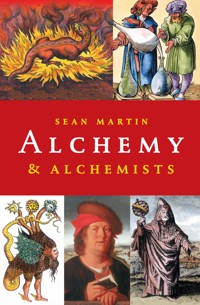
Often alchemy is seen as an example of medieval gullibility and the alchemists as a collection of eccentrics and superstitious fools. Sean Martin shows that nothing could be further from the truth. It is important to see the search for the philosopher's stone and the attempts to turn base metal into gold as metaphors for the relation of man to nature and man to God as much as seriously held beliefs. Alchemy had a self-consistent outlook on the natural world and man's place in it. Alchemists like Paracelsus and Albertus Magnus were amongst the greatest minds of their time and the history of alchemy is both the history of a spiritual search and the history of a slowly developing scientific method. Sir Isaac Newton devoted as much time to his alchemical studies as he did to his mathematical ones. This book traces the history of alchemy from ancient times to the 20th century, highlighting the interest of modern thinkers like Jung in the subject, and in the process covers a major, if neglected area of Western thought.
Sie lesen das E-Book in den Legimi-Apps auf:
Seitenzahl: 202
Veröffentlichungsjahr: 2011
Das E-Book (TTS) können Sie hören im Abo „Legimi Premium” in Legimi-Apps auf:
Ähnliche









ALCHEMY AND ALCHEMISTS
Alchemy has traditionally been viewed as ‘the history of an error’, an example of mediaeval gullibility and greed, in which alchemists tried to turn lead into gold, create fabulous wealth and find the elixir of life.
But alchemy has also been described as ‘the mightiest secret that a man can possess’, and it obsessed the likes of Isaac Newton, Robert Boyle and many of the founders of modern science.
This book traces the history of alchemy from ancient times to the twentieth century, highlighting the interest of modern thinkers like Jung in the subject, and in the process covers a major, if neglected, area of Western thought.
CRITICAL ACCLAIM FORALCHEMY & ALCHEMISTS
‘Packed with facts as well as opinions, the book has all the key information you need to know about alchemy and alchemists’– Alchemy Journal
Sean Martin
SEAN MARTINis a writer, poet and filmmaker. He has written Pocket Essential guides on The Knights Templar, Alchemy and Alchemists, The Gnostics, The Cathars and Kamera Books onAndrei Tarkovskyand New Waves in Cinema. His films includeLanterna Magicka: Bill Douglas & the Secret History of Cinema(‘a fine documentary’ –Guardian), andFolie à Deux.
For My Parents
Acknowledgements
Nick Rennison for his encouragement and support; Mike Paine, for going the distance at the same time; the venerable Nick Harding (who has not got in at Hendon, despite claims to the contrary), for lending me certain ancient and dusty tomes when I had need of them; the Wardens of the Church at Otter-hampton, Somerset, who provided fascinating insights into the life and work of Thomas Charnock, and showed me the lane that he lived on; the Hather family, for driving me out to Charnock’s neck of the woods; and my sister Lois, for her love. Thanks also due to Ion Mills, David Mathew and John Shire, for lending me Kenneth Rayner Johnson’s rare classicThe Fulcanelli Phenomenon, a book I held onto for far too long.
Contents
Introduction
Basic Ideas and Themes
Alchemy in the West
Alchemy in the East
Modern Alchemy
The Golden Chain
Suggestions for Further Reading
Copyright
Scholastic philosophy with its infinitely subtle arguments, theology with its ambiguous phraseology, astrology – so vast and complicated – are only child’s play compared with alchemy.
Albert Poisson
Medieval people weren’t seeking logical explanations; they were seeking harmony.
Midas Dekkers
Be ye transmuted into living philosophical stones.
Gerard Dorn
For verily I say unto you, that whosoever shall say unto this mountain, ‘Be thou removed, and be thou cast into the sea’; and shall not doubt in his heart, but shall believe that those things which he saith shall come to pass; he shall have whatsoever he saith. Therefore I say unto you, what things soever ye desire, when ye pray, believe that ye receive them, and ye shall have them.
The Gospel According to Mark
Introduction
The History of an Error, or the Mightiest Secret that a Man can Possess?
Alchemy has been with us since the beginning of recorded history. It has been present in almost every culture, from Old Kingdom Egypt to the China of Lao Tzu; from the Greece of Alexander the Great to the era of Islamic conquest; from the islands of the Indonesian archipelago to the twilight world of Victorian occultism. It has been called ‘the mightiest secret that a man [or woman] can possess’, yet it has also been derided as ‘the history of an error’. It has often been portrayed as a fraudulent, delusional quest for wealth and worldly power through the attempt to transmute base metals into gold, but has also been regarded as a Divine art, the highest gift of God, one that should only be practised by the sincere seeker and the pure of heart.
It is estimated that 100,000 books have been written on alchemy – possibly more than any other subject in history. Ben Jonson famously satirised it in his playThe Alchemist(1610), while the Brazilian writer Paolo Coelho’s fable-like book of the same title, which seems to be much more sympathetic to alchemy than Jonson, was one of the best-selling novels of the 1990s. Then of course, we have seen the foibles and failures of alchemy brilliantly sent up by Ben Elton and Richard Curtis inBlackadder the Second, where Percy, much to Edmund’s withering disappointment, creates not a lump of gold, but a lump of green.
Alchemists have not surprisingly been seen as charlatans out to dupe wealthy potential backers, as Subtle and Face do so brilliantly in Jonson’s play. Frequently, rulers have had to outlaw the art, as Pope John XXII did in his bull of 1317:
Poor themselves, the alchemists promise riches which are not forthcoming; wise also in their own conceit, they fall into the ditch which they themselves have digged.
Pope John was not the only one. As early as 144 BCE, the Chinese Emperor issued an edict forbidding the manufacture of gold. Similar decrees were issued periodically throughout history: China banned it again in 60 BCE; the Roman Emperor Diocletian in 296 CE; while Henry IV made it illegal in England in 1403.
Yet behind the litany of charlatans, or the hopelessly misguided, is a tradition that claims to give one access to the deepest mysteries of both nature and the self. For every king and emperor who outlawed the art, there are numerous examples of kings, popes and nobles who either practised alchemy or at the very least encouraged it, no doubt attracted by the rumours that alchemists had the secret of infinite wealth, longevity and other strange powers such as being able to create life in the laboratory, and the ability to manipulate time. Sylvester II, the first French pope (999–1003), was alleged to have made a talking head through magical means and seven or eight years before his election to the pontificate had to swear before a council at Amiens that he wasn’t a sorcerer. King James IV of Scotland (1473–1513) carried out experiments at Stirling Castle; Queen Christina of Sweden (1626–1689) abdicated in order to study alchemy; Charles II of England had his own private laboratory built beneath the royal bedchamber; and, perhaps most famously of all, the Holy Roman Emperor Rudolph II (1576–1611) was so obsessed by the art that he is supposed to have neglected affairs of state in his quest for transmutation.
Not only kings and princes lent their time and money to the study of alchemy. Eminent mediaeval scholars such as Albertus Magnus, Moses Maimonides, Roger Bacon and Thomas Aquinas all shared an interest in the quest for transmutation. Perhaps more interestingly, so did most of the founders of modern science, men such as Jean Baptiste van Helmont, Robert Boyle and Sir Isaac Newton. Bacon discovered the properties of antimony, while the great Arab alchemist Alhazen invented the camera obscura. Alcoholic distillation, phosphorus, porcelain and sodium nitrate were all the products of the alchemist’s lab. Paracelsus spoke of the circulation of the blood one hundred years before it was ‘officially’ recognised, while Michael Sendivogius discovered oxygen over a century and a halfbefore Joseph Priestley’s discovery in 1774. The French alchemist Tiphaigne de la Roche understood the process of fixing images, and may well have been taking photographs as early as the 1750s, a century ahead of Daguerre and Fox Talbot. Sir Isaac Newton, a lifelong practising alchemist, spoke of the art as concealing secrets that would be dangerous should they fall into the wrong hands, which has led some to believe that he understood, or intuited, the secrets of nuclear power.
Alchemy has also been seen as a spiritual path, undertaken by students studying under an adept or master. From the earliest times, this is how alchemy was studied. With the beginnings of modern science in the seventeenth century, alchemy became more and more an inner discipline. Writers such as Jakob Boehme (1575–1624) and Thomas Vaughan (1621–1665) were almost certainly total strangers to the laboratory. These writers often equated the Philosopher’s Stone with Christ, and can be seen as mystics as much as alchemists. (It is no surprise to learn that Thomas Vaughan was the twin brother of the great metaphysical poet Henry Vaughan, who also employed alchemical imagery in his work on occasion.)
The mystical branch of alchemy produced countless allegories of spiritual development. Pre-dating John Bunyan by fifty years or so, is the remarkableThe Labyrinth of the World and the Paradise of the Heartby JA Comenius. In this, the narrator is led through an endless city where he witnesses all forms of human folly. In the end, he is saved only by his faith in God. In addition to Comenius, there are countless shorter works, such as Thomas Vaughan’sHouse of Lightand Tommasso de Campanella’sCity of the Sun.
Alchemical books were often profusely illustrated. Anyone familiar with the history of Western art will, however, find the images strangely timeless and possibly a little shocking. There are pictures of people tearing their own hearts out, or of bodies being dismembered. People are shown as cripples, as if to mirror their crippled or limited understanding of the art, or the world (if indeed there is ultimately a difference). Sexual imagery is strong, with the alchemical archetypes of the King and Queen frequently portrayed engaging in sexual intercourse. In others, a man has a tree growing out of his body where his penis should be. Men and women merge, not just in the sexual act, but to become hermaphrodites. It seems clear that these images were to be read or meditated upon, not merely looked at. The Swiss psychologist Carl Jung believed that, whatever sort of gold the alchemists were looking for, they had in fact discovered the unconscious, and that their frequently strong, challenging images were portraits of various states of consciousness that could lead us into a greater understanding of ourselves.
There is also a medical side to alchemy. The great Swiss physician and reformer Paracelsus (1493–1541) worked largely in medicine, and in his alchemy can be seen the origins of modern homeopathy. This tradition claimed its modern disciples in Archibald Cockren and Armand Barbault, both of whom saw it as a valuable complementary medicine. The popularity of alternative medicines is a testament to how powerful the ideas of Paracelsus have been. Anyone who has taken a homeopathic remedy has dipped a toe into the waters of alchemy without realising it.
Alchemy can also be seen to have played a part in the arts and culture. Jonson’s play is no doubt the most celebrated example, andBlackadder the Secondthe most recent, but alchemical ideas have also found their way into the works of Honoré de Balzac, Thomas Mann, the art of Joseph Beuys and Marcel Duchamp, countless books in the self-help sections of bookshops, and into more recent novels such as Lindsay Clarke’s Whitbread Prize-winning novelThe Chymical Wedding,Patrick Harpur’sMercuriusand Neal Stephenson’sBaroque Cycle.Dire Straits named an album after it, and the art itself played a big part in the invention of opera, purposely designed as the ‘ultimate art form’. The earliest operas (Peri’sEurydice, dating from 1600, is the earliest opera to survive complete) all dealt with themes that were essentially alchemical, and opera’s first great figure, Monteverdi, was a practising alchemist. It could be argued that the cinema, being an extension of the principles of opera, is also essentially alchemical.
It is perhaps all too easy to forget that the worldview that dominates the West, and has dismissed alchemy for so long, is a comparatively recent development. Newton saw the world much as his predecessors did, and has been described as the last Renaissance Man, ‘the last of the Babylonian and Sumerian magi’, as Maynard Keynes put it, because he saw Nature as a unity, a vast puzzle to be solved by the devout seeker. It is ironic that the world that Newton helped create has anything but a unified view of nature, a world whose short-sightedness and materialistic greed threaten nature herself, and humanity as a whole.
Modern physics seems to be suggesting that such a materialistic worldview may have had its day. Alchemy would hold that everything in nature, and within the alchemists themselves, is related, and scientists are increasingly finding that there do seem to be connections between apparently isolated phenomena. Chaos theory’s famous ‘butterfly effect’, where a butterfly flapping its wings in Australia can cause tidal waves in the Atlantic, is a case in point. Quantum physics has shown that the role of the observer in an experiment is vital in determining its outcome; again, alchemy would seem to have come to these conclusions centuries earlier. And physics again has rediscovered ancient secrets in suggesting that experimenters themselves canactually manipulate matterthrough strong visual imagination, which, to the alchemist, would be called Faith. (In perhaps the supreme irony, particle physics has shown that it is theoretically possible to turn lead into gold, if the number of molecules in the lead atom were to be increased. This would require vast expense and particle accelerators, which obviously the mediaeval alchemist of popular imagination did not have.)
In alchemy the idea of the unified worldview plays a central part: to the alchemists, even to the frauds or ‘puffers’, every part of the work was important. Not only was great care taken in all aspects of laboratory work, but attention was paid to the stars and phases of the moon; dreams were recorded, intuition listened to. To the alchemist, there was nothing that was unrelated or irrelevant. There was no such thing as ‘coincidence’. Everything was part of the work. This holistic view of the world has not been lost, and is still practiced by traditional societies the world over. Only in the West have we become cut off from this way of perceiving reality, and we are arguably the poorer for it. This is perhaps why alchemy is still relevant to us: it deals with a power that we need to rediscover and reclaim; a secret that each of us, unknowingly, already possesses.
Basic Ideas and Themes
Our view of alchemy in the West is dominated by that of a mediaeval pre-chemist in a fume-filled laboratory, a solitary figure working endlessly amidst bubbling flasks and studying ancient cryptic texts in a futile quest to turn lead into gold. They have perhaps received financial backing from a rich man who is keen to expand his wealth even further, but they are really just wasting his money. Once it became known that alchemy supposedly had the power to make the practitioner immensely wealthy, the art began to attract frauds like flies to a dung heap. These were known as ‘puffers’, a reference to the bellows used to maintain the laboratory fire.
If the alchemist is genuine, he may inadvertently make a discovery that proves useful, but not in the way the alchemist or his backer had hoped. Alcoholic distillation was discovered in the alchemist’s laboratory, for instance, and so was phosphorus. If the alchemist is not genuine, he will exhaust his backer’s funds, and continue to move from town to town, impressing the rich and gullible with his laboratory demonstrations, and hoping that the authorities don’t catch up with him.
The swindlers are the ones who usually find their way into literature and painting. Ben Jonson’s play is perhaps the most famous example, overshadowing Chaucer’s earlierCanon’s Yeoman’s Tale. The two works deal with false alchemy, and Jonson and Chaucer seem to have had first hand knowledge of the subject; that they might both have lost money to fraudulent alchemists has been suggested as the motive behind the writing of both pieces.
The real alchemists, the workers unconcerned with becoming fabulously wealthy, are more shadowy figures. We could assume that they would be educated, given to keeping their own counsel and hard-working. Their laboratories might have looked the same (at least to the uninitiated), but there would have been no sudden flashes of smoke or bright lights to impress would-be investors. Here work would have proceeded quietly and cautiously, almost like a Trappist monastery, with the alchemist swearing the lab assistants to strict secrecy. Equipment would have to be specially made without arousing the suspicions of the glassblower or potter. If word got out that one was involved in the alchemical work, there would be no telling what misfortunes might arise. If wealth was generated here, it was not the sort you could flaunt in front of others, or use to accumulate material goods for the sake of impressing your neighbours. The work was said to use only the simplest of materials, and was enigmatically likened to ‘women’s work and childrens’ games’.
Much of the work would have consisted in observing changes in the flask as it was slowly heated. As this was traditionally one of the most secret, revered and feared of human quests, we have little to compare it to directly. We could liken it to an artist in his studio, personally preparing the paints, and then using them to create art, something luminous and beautiful that would inspire others, and, in outliving the artist, partake of a form of immortality. We could also liken the alchemist to the doctor or apothecary, studying nature, selecting plants and herbs in order to prepare them in order to heal. The smith, frequently seen as a likely ancestor of the alchemist, occupied a similar position. In forging metals he was feared and revered as the solitary artist who stood on the doorway of worlds. Or the monk, studying texts, carefully illuminating them with either pictures or marginalia, providing a gloss that hinted of hidden treasure within what one may read and otherwise miss. We may also see an equivalent in the quantum physicist, who has moved so far beyond experimental verification in investigating the properties of matter that he is working in areas formerly visited by the metaphysician and mystic.
Albertus Magnus (1193–1280) listed the qualities that the genuine alchemist must possess:
First: He should be discreet and silent, revealing to no one the result of his operations.
Second: He should reside in an isolated house in an isolated position.
Third: He should choose his days and hours for labour with discretion.
Fourth: He should have patience, diligence, and perseverance.
Fifth: He should perform according to fixed rules.
Sixth: He should only use vessels of glass or glazed earthenware.
Seventh: He should be sufficiently rich to bear the expenses of his art.
Eighth: He should avoid having anything to do with princes and noblemen.
As we shall see, would-be alchemists ignored this eighth precept at their peril.
The Goal of Alchemy
The goal of Western alchemy was the production of the Philosopher’s Stone, which would enable the alchemist to turn base metals such as lead into silver and gold. This however, was merely the test employed to check whether the Stone was genuine, and its real purpose was to bestow spiritual wealth and prolong life. It has been described as the Royal Art, or the Divine Art, or sometimes simply as the Art. Gold has traditionally been identified with divine powers because of its impermeability; it is resistant to both fire and water. Since the earliest times, gold and other, lesser, shiny metals such as silver, were regarded as having a divine origin and possessed the ability to overcome death: therefore, to own gold, or to try and emulate its properties, was to partake of divinity and immortality. It was also the colour of the sun, and silver that of the moon, the two great celestial powers that nurtured life by day and dreams – the life of the soul – by night.
Alchemists saw gold as growing in the belly of Mother Earth, and the aim of the art was to speed up natural processes in the laboratory. The fact that they saw gold and other metals as growing like plants over a very long period of time suggests that they intuitively understood the concept of geological time. They saw that there was a place within nature for alchemists (humanity) as the ones who should work with nature in order to perfect it. Because they saw within themselves the whole of creation, they were also perfecting themselves, and realising their true, divine natures.
Alchemy & Hermeticism
The idea that the alchemist can perfect nature is Hermetic, and alchemy has been described as the Hermetic sciencepar excellence.The Hermetic arts – alchemy, astrology and magic – were thought to have been revealed to humanity by the god Hermes in the mythical time before recorded history. All three share a belief in the power of human beings to influence their environment through their respective disciplines, an environment in which there were echoes of the divine. Both astrology and magic influenced alchemy, with alchemists never embarking upon an operation unless the stars were favourable.
Alchemy, like the other Hermetic arts, had a worldview that was derived from antiquity. Central to Hellenistic (and later) alchemical thought is the classical theory of the four elements of earth, air, fire and water. It seems to have been first propounded by the fifth century BCE Greek philosopher Empedocles, who argued that they were governed by the twin principles of love and strife. The theory was further developed by Aristotle (384–322 BCE), whose writings were to remain canonical until the advent of modern empirical science in the late seventeenth century. Aristotle held that the four elements had two qualities, either hot or cold and wet or dry. Thus earth is cold and dry; air is hot and wet; fire is hot and dry; and water is cold and wet. In each element, one of the qualities predominates: in earth, it is dryness; in air, wetness; in fire, heat; and in water, coldness. The elements can change, according to properties they have in common with other elements. Fire can become air through heat, or become earth by drying out. Implicit in this is the possibility of transmutation: lead could become gold through the manipulation of the metal’s qualities. (Modern physics has shown that this theory is, in essence, true, as elements can be changed into others through the manipulation of their atomic structures.)
In addition to the theory of the four elements, alchemy held that metals grew in the earth, a product of the marriage between sulphur and mercury. These were seen as opposing forces, male and female, or volatile and fixed. In both laboratory and inner alchemy, the concept of bringing opposing forces together is at the foundation of the work. In the sixteenth century, Paracelsus added a third principle, salt. The three principles of sulphur, mercury and salt can be taken to mean soul, spirit and body respectively. It is the salt, or body, that unifies soul and spirit, and is the element within which the alchemical work takes place.
Laboratory Procedures
The work of the alchemist was known as the Great Work or Opus Magnum, and was sometimes divided into two stages, the Lesser Work, and the Greater Work. There is some dispute as to this, as each alchemist tended to see the process in their own way, and more importantly, to experience and live the work in their own way. It was said that there were seven stages to the work, or eight or nine or ten; the fifteenth century English alchemist Sir George Ripley spoke of Twelve Gates. It was, moreover, a solitary work, with little chance for alchemists to meet and swap ideas for fear of capture by the authorities or ridicule.




