


107,99 €
Mehr erfahren.
- Herausgeber: John Wiley & Sons
- Kategorie: Wissenschaft und neue Technologien
- Sprache: Englisch
This authoritative guide provides a basis for understanding the emerging technology of ground source heating and cooling. It equips engineers, geologists, architects, planners and regulators with the fundamental skills needed to manipulate the ground's huge capacity to store, supply and receive heat, and to implement technologies (such as heat pumps) to exploit that capacity for space heating and cooling.
The author has geared the book towards understanding ground source heating and cooling from the ground side (the geological aspects), rather than solely the building aspects. He explains the science behind thermogeology and offers practical guidance on different design options.
An Introduction to Thermogeology: ground source heating and cooling is aimed primarily at professionals whose skill areas impinge on the emerging technology of ground source heating and cooling. They will be aware of the importance of the technology and wish to rapidly acquire fundamental theoretical understanding and design skills.
This second edition has been thoroughly updated and expanded to cover new technical developments and now includes end-of-chapter study questions to test the reader's understanding.
Sie lesen das E-Book in den Legimi-Apps auf:
Seitenzahl: 948
Veröffentlichungsjahr: 2012
Ähnliche



















Table of Contents
Cover
Dedication
Title page
Copyright page
About the Author
Preface to the First Edition
Preface to the Second Edition
Acknowledgements
1 An Introduction
1.1 Who should read this book?
1.2 What will this book do and not do?
1.3 Why should you read this book?
1.4 Thermogeology and hydrogeology
2 Geothermal Energy
2.1 Geothermal energy and ground source heat
2.2 Lord Kelvin’s conducting, cooling earth
2.3 Geothermal gradient, heat flux and the structure of the earth
2.4 Internal heat generation in the crust
2.5 The convecting earth?
2.6 Geothermal anomalies
2.7 Types of geothermal system
2.8 Use of geothermal energy to produce electricity by steam turbines
2.9 Binary systems
2.10 Direct use
2.11 Cascading use
2.12 Hot dry rock systems [a.k.a. ‘enhanced geothermal systems (EGS)’]
2.13 The ‘sustainability’ of geothermal energy and its environmental impact
2.14 And if we do not live in Iceland?
3 The Subsurface as a Heat Storage Reservoir
3.1 Specific heat capacity: the ability to store heat
3.2 Movement of heat
3.3 The temperature of the ground
3.4 Insolation and atmospheric radiation
3.5 Cyclical temperature signals in the ground
3.6 Geothermal gradient
3.7 Human sources of heat in the ground
3.8 Geochemical energy
3.9 The heat energy budget of our subsurface reservoir
3.10 Cyclical storage of heat
3.11 Manipulating the ground heat reservoir
4 What Is a Heat Pump?
4.1 Engines
4.2 Pumps
4.3 Heat pumps
4.4 The rude mechanics of the heat pump
4.5 Absorption heat pumps
4.6 Heat pumps for space heating
4.7 The efficiency of heat pumps
4.8 Air-sourced heat pumps
4.9 Ground source heat pumps
4.10 Seasonal performance factor (SPF)
4.11 GSHPs for cooling
4.12 Other environmental sources of heat
4.13 The benefits of GSHPs
4.14 Capital cost
4.15 Other practical considerations
4.16 The challenge of delivering efficient GSHP systems
4.17 Challenges: the future
4.18 Summary
5 Heat Pumps and Thermogeology: A Brief History and International Perspective
5.1 Refrigeration before the heat pump
5.2 The overseas ice trade
5.3 Artificial refrigeration: who invented the heat pump?
5.4 The history of the GSHP
5.5 The global energy budget: how significant are GSHPs?
5.6 Ground source heat: a competitor in energy markets?
6 Ground Source Cooling
6.1 Our cooling needs in space
6.2 Scale effects and our cooling needs in time
6.3 Traditional cooling
6.4 Dry coolers
6.5 Evaporation
6.6 Chillers/heat pumps
6.7 Absorption heat pumps
6.8 Delivery of cooling in large buildings
6.9 Dehumidification
6.10 Passive cooling using the ground
6.11 Active ground source cooling
6.12 An example of open-loop groundwater cooling
7 Options and Applications for Ground Source Heat Pumps
7.1 How much heat do I need?
7.2 Sizing a GSHP
7.3 Open-loop ground source heat systems
7.4 Closed-loop systems
7.5 Domestic hot water by ground source heat pumps?
7.6 Heating and cooling delivery in complex systems
7.7 Heat from ice
8 The Design of Groundwater-Based Open-Loop Systems
8.1 Common design flaws of open-loop groundwater systems
8.2 Aquifers, aquitards and fractures
8.3 Transmissivity
8.4 Confined and unconfined aquifers
8.5 Abstraction well design in confined and unconfined aquifers
8.6 Design yield, depth and drawdown
8.7 Real wells and real aquifers
8.8 Sources of information
8.9 Multiple wells in a wellfield
8.10 Hydraulic feedback in a well doublet
8.11 Heat migration in the groundwater environment
8.12 The importance of three-dimensionality
8.13 Mathematical reversibility
8.14 Sustainability: thermally balanced systems and seasonal reversal
8.15 Groundwater modelling
8.16 Examples of open-loop heating/cooling schemes
8.17 Further reading
9 Pipes, Pumps and the Hydraulics of Closed-Loop Systems
9.1 Our overall objective
9.2 Hydraulic resistance of the heat exchanger
9.3 The hydraulic resistance of pipes
9.4 Acceptable hydraulic losses
9.5 Hydraulic resistances in series and parallel
9.6 An example
9.7 Selecting pumps
9.8 Carrier fluids
9.9 Manifolds
9.10 Hydraulic testing of closed loops
9.11 Equipping a ground loop
10 Subsurface Heat Conduction and the Design of Borehole-Based Closed-Loop Systems
10.1 Rules of thumb?
10.2 Common design flaws
10.3 Subsurface heat conduction
10.4 Analogy between heat flow and groundwater flow
10.5 Carslaw, Ingersoll, Zobel, Claesson and Eskilson’s solutions
10.6 Real closed-loop boreholes
10.7 Application of theory – an example
10.8 Multiple borehole arrays
10.9 Simulating cooling loads
10.10 Simulation time
10.11 Stop press
11 Horizontal Closed-Loop Systems
11.1 Principles of operation and important parameters
11.2 Depth of burial
11.3 Loop materials and carrier fluids
11.4 Ground conditions
11.5 Areal constraints
11.6 Geometry of installation
11.7 Modelling horizontal ground exchange systems
11.8 Earth tubes: air as a carrier fluid
12 Pond- and Lake-Based Ground Source Heat Systems
12.1 The physics of lakes
12.2 Some rules of thumb
12.3 The heat balance of a lake
12.4 Open-loop lake systems
12.5 Closed-loop surface water systems
12.6 Closed-loop systems – environmental considerations
13 Standing Column Wells
13.1 ‘Standing column’ systems
13.2 The maths
13.3 The cost of SCWs
13.4 SCW systems in practice
13.5 A brief case study: Grindon Camping Barn
13.6 A final twist – the Jacob doublet well
14 Thinking Big: Large-Scale Heat Storage and Transfer
14.1 The thermal capacity of a building footprint
14.2 Simulating closed-loop arrays with balanced loads
14.3 A case study of a balanced scheme: car showroom, Bucharest
14.4 Balancing loads
14.5 Deliberate thermal energy storage – closed-loop borehole thermal energy storage (BTES)
14.6 Aquifer thermal energy storage (ATES)
14.7 UTES and heat pumps
14.8 Regional transfer and storage of heat
15 Thermal Response Testing
15.1 Sources of thermogeological data
15.2 Laboratory determination of thermal conductivity
15.3 The thermal response test (TRT)
15.4 The practicalities: the test rig
15.5 Test procedure
15.6 Sources of uncertainty
15.7 Non-uniform geology
15.8 Non-constant power input
15.9 Groundwater flow
15.10 Analogies with hydrogeology
15.11 Thermal response testing for horizontal closed loops
16 Environmental Impact, Regulation and Geohazards
16.1 The regulatory framework
16.2 Thermal risks
16.3 Hydraulic risks
16.4 Geotechnical risks
16.5 Contamination risks
16.6 Geochemical risks
16.7 Microbiological risks
16.8 Excavation and drilling risks
16.9 Decommissioning of boreholes
16.10 Promoting technology: subsidy
16.11 The final word
References
Study Question Answers
Symbols
A note on the dimensionality of energy and power
General symbols
Heat flow symbols
Groundwater/fluid flow symbols
Electricity flow symbols
Glossary
Units
Mass
Length
Area
Volume
Volumetric flow rate
Density
Force
Viscosity
Pressure
Energy and heat
Power
Specific heat capacity
Specific heat flux
Thermal conductivity
Thermal resistance of a borehole
Index
For Jenny ‘the Bean’
This edition first published 2012
© 2008 David Banks
© 2012 John Wiley & Sons, Ltd
Wiley-Blackwell is an imprint of John Wiley & Sons, formed by the merger of Wiley’s global Scientific, Technical and Medical business with Blackwell Publishing.
Registered office:
John Wiley & Sons, Ltd, The Atrium, Southern Gate, Chichester, West Sussex, PO19 8SQ, UK
Editorial offices:
9600 Garsington Road, Oxford, OX4 2DQ, UK
The Atrium, Southern Gate, Chichester, West Sussex, PO19 8SQ, UK
2121 State Avenue, Ames, Iowa 50014‑8300, USA
For details of our global editorial offices, for customer services and for information about how to apply for permission to reuse the copyright material in this book please see our website at www.wiley.com/wiley-blackwell.
The right of the author to be identified as the author of this work has been asserted in accordance with the UK Copyright, Designs and Patents Act 1988.
All rights reserved. No part of this publication may be reproduced, stored in a retrieval system, or transmitted, in any form or by any means, electronic, mechanical, photocopying, recording or otherwise, except as permitted by the UK Copyright, Designs and Patents Act 1988, without the prior permission of the publisher.
Designations used by companies to distinguish their products are often claimed as trademarks. All brand names and product names used in this book are trade names, service marks, trademarks or registered trademarks of their respective owners. The publisher is not associated with any product or vendor mentioned in this book. This publication is designed to provide accurate and authoritative information in regard to the subject matter covered. It is sold on the understanding that the publisher is not engaged in rendering professional services. If professional advice or other expert assistance is required, the services of a competent professional should be sought.
Library of Congress Cataloging-in-Publication Data
Banks, David, 1961–
An introduction to thermogeology : ground source heating and cooling / David Banks. – 2nd ed.
p. cm.
Includes bibliographical references and index.
ISBN 978-0-470-67034-7 (hardcover : alk. paper)
1. Ground source heat pump systems. I. Title.
TH7638.B36 2012
697'.7–dc23
2011045231
A catalogue record for this book is available from the British Library.
Wiley also publishes its books in a variety of electronic formats. Some content that appears in print may not be available in electronic books.
Cover image:
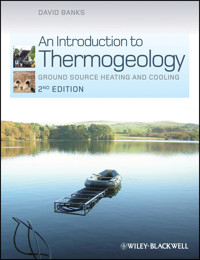
Main photo: Coils of heat exchange pipe can be installed in natural lakes. They can be mounted in a steel frame, rowed out, filled and sunk to the base of the lake. Photo by kind permission of Geowarmth Heat Pumps Ltd. of Newcastle-upon-Tyne.
Top inset photo: Staff of the Geological Survey of Norway carry out a thermal response test on a closed loop heat exchange borehole drilled into greenstone rocks in Trondheim. Photo by David Banks.
Bottom inset photo: An underground house in Matmata, Tunisia. The rocks store ‘coolth’ from winter and night-time, such that the underground is much cooler than the surface at the height of summer. Photo by David Banks.
Cover design by Edge Creative
About the Author
David BANKS was born in Bishop Auckland in 1961. He is a hydrogeologist with 26 years experience of investigating groundwater-related issues. He started his career with the Thames Water Authority in southern England, then moved across the North Sea to the Geological Survey of Norway, where he eventually headed the Section for Geochemistry and Hydrogeology. Since returning to the United Kingdom in 1998, he has worked as a consultant from a base in Chesterfield, sandwiched between the gritstone of the Peak District National Park and the abandoned mines of Britain’s largest coalfield. He has international experience from locations as diverse as Afghanistan, the Bolivian Altiplano, Somalia, Western Siberia, Darfur and Huddersfield. During the past 10 years, his attention has turned to the emerging science of thermogeology: he has worked closely with the ground source heat industry and has also enjoyed spells as a Senior Research Associate in Thermogeology at the University of Newcastle-upon-Tyne. Most recently, he was employed by Newcastle University to provide input to the European Union ‘GeoTrainet’ program of geothermal education.
In his spare time, Dave enjoys music. With his chum Bjørn Frengstad, he has formed almost one half of the sporadically active acoustic lo-fi stunt duo ‘The Sedatives’. They have murdered songs by their musical heroes (who include Jarvis Cocker, Benny Andersen, Richard Thompson and Katherine Williams) in a variety of seedy locations.
Reviews of ‘An Introduction to Thermogeology’
‘… it is seldom that one needs to use superlatives when talking about a book … this book should be a bible for all who would like to gain insight into the nature of the earth’s heat, and how we can exploit it in practice’.
Inga Sørensen, writing in Geologisk Nyt, Denmark, August 2009
Other books by the same author
With Bruce Misstear and Lewis Clark, Dave Banks has previously co-authored ‘Water Wells and Boreholes’, currently available from Wiley.
‘The book is fulsome. It is a complete counterbalance to the common, but naïve, notion that if you want a new water well “you just go out and get yourself a driller.” This book explains how to do it properly. … It is an important achievement. I expect that it will become a “Bible” that will be on the desk or in the field with every practical hydrogeologist …’.
David Ball, writing in the Geological Survey of Ireland Newsletter
‘… it far outshines most other volumes with which it might otherwise be compared. … I would recommend every aspiring and practising hydrogeologist to buy it and thumb it to pieces’.
Paul Younger, writing in the Quarterly Journal of Engineering Geology and Hydrogeology
Preface to the First Edition
In the late 1990s, I was working for the Norwegian Geological Survey’s Section for Hydrogeology and Geochemistry. Despite the Section being choc-a-bloc with brainy research scientists, one of my most innovative colleagues was an engineer who called me, on what seemed a weekly basis, brimming with enthusiasm for some wizard new idea. One day, he started telling me all about something called grunnvarme or ground source heat, which was, apparently, very big in Sweden. Initially, it seemed to me to be something akin to perpetual motion – space heating from Norwegian rock at 6°C? – and in violation of the second law of thermodynamics to boot. Nevertheless, he persuaded me that it really did have a sound physical basis. In fact, my chum went on to almost single-handedly sell the concept of ground source heat to a Norwegian market that was on the brink of an energy crisis. A subsequent dry summer that pulled the plug on Norway’s cheap hydroelectric supplies and sent prices soaring was the trigger that ground source heat needed to take off. So, firstly, a big thank you to Helge Skarphagen (for it was he!), who first got me interested in ground source heat.
On my return to England in 1998, I tried to bore anyone who gave the appearance of listening about the virtues of ground source heat (I was by no means the first to try this – John Sumner and Robin Curtis, among others, had been evangelists for the technology much earlier). It was not until around 2003, however, that interest in ground source heat was awakened in Britain and I was lucky enough to fall in with a group of entrepreneurs with an eye for turning it into a business. So, secondly, many thanks to GeoWarmth of Hexham (now based at Newcastle) for the pleasure of working with you, and especially to Dave Spearman, Jonathan Steven, Braid and Charlie Aitken, Nick Smith and John Withers.
Oh, and by the way, Jenny, I don’t know what you’ve been up to while I’ve been locked in the attic writing this book, but normal parental service will shortly be resumed!
David BanksChesterfield, Derbyshire, 2007
Preface to the Second Edition
This book is written for an international audience. It aims to aid professionals in conceptualising the ground – heat exchanger – building linkages at the heart of ground-coupled heat exchange systems. Forgive me, therefore, if I focus for a few moments on my own recent British experiences in this Preface.
At the time of writing the first edition of this book, the ground source heating and cooling industry in the United Kingdom was in its infancy and growing fast. Four years later, the profession is much larger but is still regrettably immature.
British ground source heat pump meetings abound with grey-suited salesmen (and they are invariably men) warning us to be on our guard against ‘cowboys’, who will drag our profession into disrepute by their ignorance. Quite who these ‘cowboys’ are is never fully explained … probably due to the fact that the speaker himself is a ‘cowboy’, as are most of the audience. The hard truth is that almost all ground source heat practitioners (with a few honourable exceptions) in the United Kingdom are relatively new to the science and are still learning fast. Indeed, I will myself admit to being just such a ‘cowboy’. But, hey, being a cowboy can be fun – cowboys are pioneers, blazing a trail in unknown terrain. Cowboys can be rough and ready and can make mistakes but, with time and experience, they will form the backbone of a new frontier community. Westward ho and wagons roll!
The UK ground source heat pump market is still reported to be the fastest growing in the world (Lund, 2010). However, I trust that the time is approaching when the cowboys are beginning to settle, to form professional communities and to get a real grasp of their tools and terrain. We should be reaching a stage where we are not merely building ground source heat systems that work, but ones that work really efficiently. At the time of writing, the industry is still reeling from the implications of a report by the Energy Saving Trust (2010), which found that the system performance factors of UK ground source heat pump systems were typically as low as between 2 and 3. Such low efficiencies risk not only that the system fails to save the owner any money in operational costs, but also that it ultimately releases more atmospheric CO2 than a conventional mains gas boiler. This is very bad news for the industry. The UK industry has, in response, forced out new standards designed to promote significantly more efficient systems (GSHPA, 2011; MIS, 2011a,b,c).
I feel that the time is ripe for a second edition of this book. This edition will not merely cover the thermophysics of subsurface heat transfer and the conceptualisation of a ground heat exchange system. It will also address many of the key issues involved in designing efficient systems: the impact of design loop temperatures and hydraulics, the impact of client pressure to cut capital costs, the influence of building (load side) heat delivery decisions and the importance of energy storage. It will attempt to stress the importance of considering system design, not merely in terms of thermogeological variables, but also in the light of your nation’s physical climate and energy/carbon economy.
David Banks
Acknowledgements
I would like to thank the following for taking the time to review the various chapters in the 1st Edition and for their invaluable comments:
Cat Oakley and Madeleine Metcalfe of Wiley-Blackwell Publishing
Professor Paul Younger of the University of Newcastle-upon-Tyne
Professor Keith Tovey of the University of East Anglia in Norwich
Karl Drage of Geothermal International in Coventry
Helge Skarphagen, formerly of the Norwegian Water Research Institute (NIVA), now with Gether AS in Oslo
James Dodds of Envireau Ltd in Draycott
Jonathan Steven and Charlie Aitken, formerly of Geowarmth Ltd, Hexham
Professor Göran Hellström of Lund Technical University, Sweden
Dr Simon Rees of De Montfort University, Leicester
Dr Robin Curtis, now with Mimer Energy Ltd in Falmouth
Marius Greaves of the Environment Agency of England and Wales
The lyrics from First & Second Law from At the Drop of Another Hat by Flanders & Swann © 1963 are reproduced in Chapter 4 by kind permission of the Estates of Michael Flanders & Donald Swann. The administrator of The Flanders & Swann Estates, Leon Berger ([email protected]) was good enough to facilitate this permission. Additionally, I would like to thank the London Canal Museum for sourcing historical photos of the ice trade, and would wholeheartedly recommend a visit to anyone who has a few hours to spend in the Kings Cross area of London and who wants to view a genuine ‘ice well’.
I am grateful to all those who have provided materials, case studies, inspiration, diagrams, photos and more – Pablo Fernández Alonso, Hannah Russell, Johan Claesson, Richard Freeborn of Kensa Engineering, Bjørn Frengstad of the fabulous ‘Sedatives’, the International Ground Source Heat Pump Association (IGSHPA), the Geotrainet team, Ben Lawson and Paul Younger of Newcastle University, John Lund and the Geo-Heat Centre in Oregon, Jim Martin, John Parker, Umberto Puppini of ESI Italia, Kevin Rafferty, Randi Kalskin Ramstad of Asplan VIAK, Igor Serëdkin, Chris Underwood of Northumbria University and many more. I’d like to thank John Vaughan of Chesterfield Borough Council, Doug Chapman of Annfield Plain, Les Gibson of Grindon Camping Barn and Lionel Hehir of the Hebburn Eco-Centre for permission to use their buildings as case studies. Janet Giles was heroic in assisting with administration and printing. Lastly, Ardal O’Hanlon has unwittingly provided me with the alter ego of Thermoman, which I have occasionally assumed while lecturing. While I have tried to contact all copyright holders of materials reproduced in this book, in one or two cases you have proved very elusive! If you are affected by any such omission, please do not hesitate to contact me, via Wiley, and we will do our utmost to ensure that the situation is rectified for any future editions of this book.
1
An Introduction
Nature has given us illimitable sources of prepared low-grade heat. Will human organisations cooperate to provide the machine to use nature’s gift?
John A. Sumner (1976)
Many of you will be familiar with the term geothermal energy. It probably conjures mental images of volcanoes or of power stations replete with clouds of steam, deep boreholes, whistling turbines and hot saline water. This book is not primarily about such geothermal energy, which is typically high temperature (or high enthalpy, in technospeak) energy and is accessible only at either specific geological locations or at very great depths. This book concerns the relatively new science of thermogeology. Thermogeology involves the study of so-called ground source heat: the mundane form of heat that is stored in the ground at normal temperatures. Ground source heat is much less glamorous than high-temperature geothermal energy, and its use in space heating is often invisible to those who are not ‘in the know’. It is hugely important, however, as it exists and is accessible everywhere. It genuinely offers an attractive and powerful means of delivering CO2-efficient space heating and cooling.
Let me offer the following definition of thermogeology:
Thermogeology is the study of the occurrence, movement and exploitation of low enthalpy heat in the relatively shallow geosphere.
By ‘relatively shallow’, we are typically talking of depths of down to 300 m or so. By ‘low enthalpy’, we are usually considering temperatures of less than 40°C.1
1.1 Who should read this book?
This book is designed as an introductory text for the following audience:
graduate and postgraduate level students;
civil and geotechnical engineers;
buildings services and heating, ventilation and air conditioning (HVAC) engineers who are new to ground source heat;
applied geologists, especially hydrogeologists;
architects;
planners and regulators;
energy consultants.
1.2 What will this book do and not do?
This book is not a comprehensive manual for designing ground source heating and cooling systems for buildings: it is rather intended to introduce the reader to the concept of thermogeology. It is also meant to ensure that architects and engineers are aware that there is an important geological dimension to ground heat exchange schemes. The book aims to cultivate awareness of the possibilities that the geosphere offers for space heating and cooling and also of the limitations that constrain the applications of ground heat exchange. It aims to equip the reader with a conceptual model of how the ground functions as a heat reservoir and to make him or her aware of the important parameters that will influence the design of systems utilising this reservoir.
While this book will introduce you to design of ground source heat systems and even enable you to contribute to the design process, it is important to realise that a sustainable and successful design needs the integrated skills of a number of sectors:
The thermogeologist
The architect, who must ensure that the building is designed to be heated using the relatively low-temperature heating fluids (and cooled by relatively high-temperature chilled media) that are produced efficiently by most ground source heat pump/heat exchange schemes.
The buildings services/HVAC engineer, who must implement the design and must design hydraulically efficient collector and distribution networks, thus ensuring that the potential energetic benefits of ground heat exchange systems are not frittered away in pumping costs.
The electromechanical and electronic engineer, who will be needed to install the heat pump and associated control systems
The pipe welder and the driller, who will be responsible for installing thermally efficient, environmentally sound and non-leaky ground heat exchangers.
The owner, who needs to appreciate that an efficient ground heat exchange system must be operated in a wholly different way to a conventional gas boiler (e.g. ground source heat pumps often run at much lower output temperatures than a gas boiler and will therefore be less thermally responsive).
If you are a geologist, you must realise that you are not equipped to design the infrastructure that delivers heat or cooling to a building. If you are an HVAC engineer, you should acknowledge that a geologist can shed light on the ‘black hole’ that is your ground source heat borehole or trench. In other words, you need to talk to each other and work together! For those who wish to delve into the hugely important ‘grey area’ where geology interfaces in detail with buildings engineering, to the extent of consideration of pipe materials and diameters, manifolds and heat exchangers, I recommend that you consult one of several excellent manuals or software packages available. In particular, I would name the following:
the manual of Kavanaugh and Rafferty (1997) – despite its insistence on using such unfamiliar units as Btu ft
−1
°F
−1
, so beloved of our American cousins;
the set of manuals issued by the International Ground Source Heating Association (IGSHPA) – IGSHPA (1988), Bose (1989), Eckhart (1991), Jones (1995), Hiller (2000), and IGSHPA (2007);
the recent book by Ochsner (2008a);
the newly developed Geotrainet (2011) manual, which has a specifically European perspective and has been written by some of the continent’s foremost thermophysicists, thermogeologists and HVAC engineers;
the German Engineers’ Association standards (VDI, 2000, 2001a,b, 2004, 2008);
numerous excellent booklets aimed at different national user communities, such as that of the Energy Saving Trust (2007).
1.3 Why should you read this book?
You should read this book because thermogeology is important for the survival of planet Earth! Although specialists may argue about the magnitude of climate change ascribable to greenhouse gases, there is a broad consensus (IPCC, 2007) that the continued emission of fossil carbon (in the form of CO2) to our atmosphere has the potential to detrimentally alter our planet’s climate and ecology. Protocols negotiated via international conferences, such as those at Rio de Janeiro (the so-called Earth Summit) in 1992 and at Kyoto in 1997, have attempted to commit nations to dramatically reducing their emissions of greenhouse gases [carbon dioxide, methane, nitrous oxide, sulphur hexafluoride, hydrofluorocarbons (HFCs) and perfluorocarbons (PFCs)] during the next decades.
Even if you do not believe in the concept of anthropogenic climate change, recent geopolitical events should have convinced us that it is unwise to be wholly dependent on fossil fuel resources located in unstable parts of the world or within nations whose interests may not coincide with ours. Demand for fossil fuels is increasingly outstripping supply: the result of this is the rise in oil prices over the last decade. This price hike is truly shocking, not least because most people seem so unconcerned by it. A mere 10 years ago, in 1999, developers of a new international oil pipeline were worrying that the investment would become uneconomic if the crude oil price fell below $15 USD per barrel. At the time of writing, Brent crude is some $105 per barrel, and peaked in 2008 at over $140 (Figure 1.1). The increasingly efficient use of the fuel resources we do have access to, and the promotion of local energy sources, must be to our long-term benefit.
Figure 1.1 Spot prices for Brent Crude Oil in the period 1987–2010 (USD per barrel).
Based on the data from the US Energy Information Administration (EIA).
I would not dare to argue that the usage of ground source heat alone will allow us to meet all these objectives. Indeed, many doubt that we will be able to adequately reduce fossil carbon emissions soon enough to significantly brake the effects of global warming. If we are to make an appreciable impact on net fossil carbon emissions, however, we will undoubtedly need to consider a wide variety of strategies, including the following:
I will argue, however, that utilisation of ground source heat allows us to significantly address issues (1) and (2). Application of ground source heat pumps (see Chapter 4) allows us to use electrical energy highly efficiently to transport renewable environmental energy into our homes (Box 1.1).
If the environmental or macroeconomic arguments don’t sway you, try this one for size: Because the regulatory framework in my country is forcing me to install energy-efficient technologies! The Kyoto Protocol is gradually being translated into European and national legislation, such as the British Buildings Regulations, which not only require highly thermally efficient buildings, but also low-carbon space heating and cooling technologies. Local planning authorities may demand a certain percentage of ‘renewable energy’ before a new development can be permitted. Ground source heating or cooling may offer an architect a means of satisfying ever more stringent building regulations. It may assist a developer in getting into the good books of the local planning committee.
Finally, the most powerful argument of all: Because you can make money from ground source heat. You may be an entrepreneur who has spotted the subsidies, grants and tax breaks that are available to those who install ground source heating schemes. You may be a consultant wanting to offer a new service to a client. You may be a drilling contractor – it is worth mentioning that, in Norway and the United Kingdom, drillers are reporting that they are now earning more from drilling ground source heat boreholes than from their traditional business of drilling water wells. You may be a property developer who has sat down and looked cool and hard at the economics of ground source heat, compared it with conventional systems and concluded that the former makes not only environmental sense, but also economic sense.
1.4 Thermogeology and hydrogeology
You don’t have to be a hydrogeologist to study thermogeology, but it certainly helps. A practical hydrogeologist often tries to exploit the earth’s store of groundwater by drilling wells and using some kind of pump to raise the water to the surface where it can be used. A thermogeologist exploits the earth’s heat reservoir by drilling boreholes and using a ground source heat pump to raise the temperature of the heat to a useful level. The analogy does not stop here, however. There is a direct mathematical analogy between groundwater flow and subsurface heat flow.
We all know that water, left to its own devices, flows downhill or from areas of high pressure to low pressure. Strictly speaking, we say that water flows from locations of high head to areas of low head (Box 1.2). Head is a mathematical concept which combines both pressure and elevation into a single value. Similarly, we all know that heat tends to flow from hot objects to cold objects. In fact, a formula, known as Fourier’s law, was named after the French physicist Joseph Fourier. It permits us to quantify the heat flow conducted through a block of a given material (Figure 1.2):
(1.1)
where
Q
= flow of heat in joules per second, which equals watts (J s
−1
= W),
λ
= thermal conductivity of the material (W m
−1
K
−1
),
A
= cross-sectional area of the block of material under consideration (m
2
),
θ
= temperature (°C or K),
x
= distance coordinate in the direction of decreasing temperature (note that heat flows in the direction of decreasing temperature: hence the negative sign in the equation),
= temperature gradient (K m
−1
).
Figure 1.2 The principle of Fourier’s law. Consider an insulated bar of material of cross-sectional area 1 m2 and length 10 m. If one end is kept at 20°C and the other end at 10°C, the temperature gradient is 10 K per 10 m, or 1 K m−1. Fourier’s law predicts that heat will be conducted from the warm end to the cool end at a rate of λ J s−1, where λ is the thermal conductivity of the material (in W m−1 K−1). We assume that no heat is lost by convection or radiation.
The hydrogeologists have a similar law, Darcy’s law, which describes the flow of water through a block of porous material, such as sand:
(1.2)
where
Z
= flow of water (m
3
s
−1
),
K
= hydraulic conductivity of the material (m s
−1
), often referred to as the permeability of the material,
A
= cross-sectional area of the block of material under consideration (m
2
),
h
= head (m),
x
= distance coordinate in the direction of decreasing head (m),
= head gradient (dimensionless).
A hydrogeologist is interested in quantifying the properties of the ground to ascertain whether it is a favourable target for drilling a water well (Misstear et al., 2006). Two properties are of relevance. Firstly, the permeability (or hydraulic conductivity) is an intrinsic property of the rock or sediment that describes how good that material is at allowing groundwater to flow through it. Secondly, the storage coefficient describes how much groundwater is released from pore spaces or fractures in a unit volume of rock, for a 1 m decline in groundwater head. A body of rock that has sufficient groundwater storage and sufficient permeability to permit economic abstraction of groundwater is called an aquifer (from the Latin ‘water’ + ‘bearing’).
In thermogeology, we again deal with two parameters describing how good a body of rock is at storing and conducting heat. These are the volumetric heat capacity (SVC) and the thermal conductivity (λ). The former describes how much heat is released from a unit volume of rock as a result of a 1 K decline in temperature, while the latter is defined by Fourier’s law (Equation 1.1). We could define an aestifer as a body of rock with adequate thermal conductivity and volumetric heat capacity to permit the economic extraction of heat (from the Latin aestus, meaning ‘heat’ or ‘summer’).2 In reality, however, all rocks can be economically exploited (depending on the scale of the system required – see Chapter 4; Box 1.3) for their heat content, rendering the definition rather superfluous.
Table 1.1 summarises the key analogies between thermogeology and hydrogeology, to which we will return later in the book.
Table 1.1 The key analogies between the sciences of hydrogeology and thermogeology (see Banks, 2009a). Note that θo = average natural undisturbed temperature of an aestifer, T = transmissivity, t = time, s = drawdown and W( ) is the well function (see Theis, 1935).
Hydrogeology
Thermogeology
What are we studying?
Groundwater flow
Subsurface heat flow
Key physical law
Darcy’s law
Fourier’s law (conduction only)
Flow
Z
= groundwater flow (m
3
s
−1
)
Q
= conductive heat flow = (J s
−1
or W)
q
= heat flow per metre of borehole (W m
−1
)
Property of conduction
K
= hydraulic conductivity (m s
−1
)
λ
= thermal conductivity (W m
−1
K
−1
)
Measure of potential energy
h
= groundwater head (m)
θ
= temperature (°C or K)
Measure of storage
S
= groundwater storage (related to porosity)
S
VC
or
S
C
= specific heat capacity (J m
−3
K
−1
or J kg
−1
K
−1
)
Exploitable unit of rock
Aquifer (Lat.
aqua
: water)
Aestifer (Lat.
aestus
: heat)
Transient radial flow
Theis equation
Carslaw’s equation
Tool of exploitation
Well and pump
Borehole or trench and heat pump
Measure of well/borehole efficiency
Well loss =
CZ
2
where
C
is a constant
Borehole thermal loss =
R
b
q
where
R
b
= borehole thermal resistance
Notes
1 Although in conventional geothermal science, anything up to around 90°C is still considered ‘low enthalpy’!
2 The word aestifer may sound like a very artificial concoction – but it has an ancient pedigree (Banks, 2009a). Virgil (in the Georgics, Liber II) and Marcus Cicero (in Aratea) used the term aestifer astronomically to describe (respectively) the dog-star Sirius and the constellation Cancer as the harbingers of summer’s heat. Lucretius used the word in around 60 BC in his work “De Rerum Natura” to describe the heat-bearing nature of the sun’s radiation (Possanza 2001).
2
Geothermal Energy
It has pressed on my mind, that essential principles of Thermo-dynamics have been overlooked by … geologists.
William Thomson, Lord Kelvin (1862)
2.1 Geothermal Energy and Ground Source Heat
Let us clear up this business of ‘geothermics’ once and for all, because high-temperature geothermal energy will not be covered later in this book. We have already stated that, in the context of this publication, we will tend to use the terms geothermal energy and geothermics to describe the high-temperature energy that
is derived from the heat flux from the earth’s deep interior;
one finds either in very deep boreholes or in certain specific locations in the earth’s crust (or both).
However, the European Union has recently announced that shallow ground source heat is also classed as geothermal energy. The EU Renewable Energy Directive 2009/28/EC states that
‘geothermal energy’ means energy stored in the form of heat beneath the surface of solid earth.
At the risk of incurring the wrath of the European Commissioners and of riling specialists in the field of geothermics, I am going to use the terms ground source heat and thermogeology in this book to describe the low-enthalpy heat that
occurs ubiquitously at ‘normal’ temperatures in the relatively shallow subsurface;
may contain a component of genuine geothermal energy from the deep-earth heat flux, but will usually be dominated by solar energy that has been absorbed and stored in the subsurface.
Let me explain my reasoning. I have selected the term thermogeology because I believe that the practical utilisation of ground source heat has reached a stage where it has developed a distinct theoretical substructure. Thermogeology is a highly suitable word for this theoretical framework because it invites an analogy with the science of hydrogeology. Hydrogeology is the study of the occurrence, movement and exploitation of water in the geosphere (in other words, the study of groundwater). The comparison appears fortuitous, but once we start looking more closely, the analogy is rigorous and the two sciences enjoy pleasingly parallel theoretical frameworks (see Table 1.1).
2.2 Lord Kelvin’s Conducting, Cooling Earth
Since deep mining commenced in the sixteenth and seventeenth centuries, it was known that the earth became warmer with increasing depth, while in 1740, the first geothermometric measurements were taken by de Gensanne in a French mine (Prestwich, 1885; Dickson and Fanelli, 2004). In other words, it gradually became clear that there is a geothermal gradient. Fourier’s law tells us that, if there is a geothermal gradient and if rocks have some finite ability to conduct heat, then the earth must be conducting heat from its interior to its exterior:
(2.1)
where Q = heat flow (W), A = cross-sectional area (m2), θ = temperature (°C or K), z = depth coordinate (m) and λ = thermal conductivity (W m−1 K−1) of rocks.
From here it is a short leap to the deduction that the earth is losing heat and cooling down. It is exactly this chain of logic that William Thomson (later Lord Kelvin – Box 2.1) used in the middle of the nineteenth century to deduce the age of the earth, staking his claim to be the world’s first thermogeologist (Thomson, 1864, 1868). At that time, Thomson and many other geologists suspected that the earth had been born as a globe of molten rock and had subsequently cooled. They believed that the observed geothermal gradient was due to the residual heat in the earth’s interior gradually leaking away into space through a solid lithosphere. As heat was lost, the thickness of the lithosphere increased at the expense of the molten interior. Thomson combined Fourier’s law with the one-dimensional equation for heat diffusion by conduction (which we will meet again in Chapter 3):
(2.2)
where z = depth below the earth’s surface (m), ∂θ/∂z = geothermal gradient, SVC = specific volumetric heat capacity of rocks (J m−3 K−1) and t = time (s).
Thomson tried to work out the age at which the earth’s crust had formed, by making assumptions about the initial temperature of the earth’s interior (around 7000°F hotter than the current surface temperature, or somewhat over 4100 K; Thomson, 1864; Ingersoll et al., 1954; Lienhard and Lienhard, 2006) and a reasonable estimate of the thermal diffusivity of rocks. In 1862, he was able to conclude that the age of the earth, that is, the time it would take to cool down to the current observed temperature and geothermal gradient, was somewhere between 20 and 400 million years (he later homed in on 100 million years, and eventually settled on an age at the younger end of the range; Lewis, 2000).
We will not worry about the mathematics here, but combining Equations 2.1 and 2.2, followed by integration, yields the following expression (Ingersoll et al., 1954; Clark, 2006):
(2.3)
where ψ is the current geothermal gradient near the surface, tearth is the age of the earth’s crust (in seconds), θs is the surface temperature and θi is the temperature of the earth’s molten interior. You can try the calculation yourself by choosing ‘guesstimates’ of input values (see Table 3.1 for typical values of λ and SVC, and try a value of 0.02 K m−1 for ψ).
Thomson’s estimate placed him at odds with conservative Christians, who accepted a young earth, based on tendentious genealogical calculations from the Bible. It also won him little popularity with some contemporary geologists and biologists, who thought that the lower of Thomson’s age estimates was rather short to account for the observed stratigraphy of the earth and the evolution of life. Thomson’s estimate ultimately proved to be a gross underestimate: we currently reckon the earth to be around 4.5 billion years old. As a result, Thomson is sometimes ridiculed by modern geologists. But his calculations were fundamentally correct, given the knowledge and conceptual model he had at the time. We now know that the earth’s interior is kept hot by the continuous decay of radionuclides, chiefly isotopes of uranium (238U and 235U), potassium (40K) and thorium (232Th); hence, it cools far slower than Thomson’s prediction. But Thomson could not know this: radioactivity was only discovered by Antoine Henri Becquerel in 1896, and radioactive elements were only isolated by Marie and Pierre Curie in 1902.
2.3 Geothermal Gradient, Heat Flux and the Structure of the Earth
Thomson assumed, not unreasonably, that the transport of heat through the earth’s lithosphere was dominated by conduction, and that it was spatially homogeneous. In other words, he assumed that the geothermal gradient and heat flux were uniform over the earth’s surface. In the later part of the nineteenth century, workers such as Joseph Prestwich and J.D. Everett (and other colleagues, including my thermogeological predecessor at the University of Newcastle, George A.L. Lebour) focussed on quantifying the magnitude of the gradient from measurements in English coal mines, Cornish tin mines and drilled boreholes (Everett et al., 1876, 1877, 1880, 1882; Everett, 1882; Prestwich, 1886). Indeed, Prestwich (1885) deduced a value of 0.037°C m−1 from determinations in coal mines and a value of 0.042°C m−1 from the Cornish mines. In fact, we now know that geothermal gradient varies considerably between different locations, although typical values are in the range of 2–3.5°C per 100 m (0.02–0.035 K m−1). The typical geothermal heat flux is of the order 60–100 mW m−2, with a global average estimated at 87 mW m−2 (Pollack et al., 1993; Dickson and Fanelli, 2004). Using Fourier’s law (see above), we can try these values for size to derive a typical thermal conductivity of the earth’s subsurface of
It has also become clear that the earth has a somewhat more complicated internal structure than Kelvin’s conceptual model presupposed. In terms of geochemistry and mineralogy, the earth’s structure can be considered to comprise (Figure 2.1)
Figure 2.1 Schematic diagram of the structure of the earth, showing the percentage of geogenic heat derived from the core, mantle and crust (numbers adjacent to arrows),
compared with the volume of these three portions of the earth.
The figure also shows the typical structure of the lithosphere in continental and oceanic plates.
The oceanic crust is wholly different from the crust beneath the continents. The former is very thin (only some 5–8 km) and is predominantly composed of basic minerals and rocks (e.g. gabbro, dolerite and basalt). Continental crust is somewhat thicker (15–50 km, and even more under mountain belts; Smith, 1981) and less dense than oceanic crust. It is geochemically more acidic and ‘sialic’ (i.e. rich in silicon and aluminium) and contains minerals such as quartz and feldspar, which are the familiar constituents of the granites, gneisses and sedimentary rocks that we encounter during our land-based geology field trips.
The earth’s radius is about 6370 km. Thus, its circumference is around 40 000 km and its surface area is around 510 million km2 (5 × 10¹⁴ m2). As the average geothermal heat flux from the earth is known, it can be estimated that the total heat flow from the earth is around 44 TW (Dickson and Fanelli, 2004). The proportions of geogenic heat flux from the core, mantle and crust of the earth are shown in Figure 2.1. The heat derived from the core is small, relative to the core’s volume. This is due to the core being composed largely of metallic iron and nickel, impoverished in the heat-generating radioactive nuclides. The crust (and especially the continental crust) is responsible for more than its volumetrically ‘fair’ share of heat production, at around 19%, being relatively rich in radioactive uranium, potassium and thorium minerals.
2.4 Internal Heat Generation in the Crust
Wheildon and Rollin (1986) pointed out that the earth’s geothermal gradient changes with depth, due to radiogenic heat generation within the crust itself. If Å is the heat production per unit volume of the earth’s crust (W m−3) and q is the geothermal heat flux, then
(2.4)
The second term on the right-hand side relates to heat transport by convection, where SVCf is the volumetric heat capacity of the convecting fluid (e.g. groundwater, gas or magma) and VD is its vertical fluid flux rate (positive upwards). The third term on the right-hand side represents the change in heat stored in the rock with time, where SVC relates to the volumetric heat capacity of the rock. Thus, if convectional heat transfer is negligible and if we consider a steady-state situation:
(2.5)
We have already encountered Fourier’s law (Equation 2.1), which relates heat flow to geothermal gradient, with the caveat that the geothermal gradient may vary with depth due to internal production of heat. We now also have Equation 2.5, which is a form of Poisson’s equation that relates the change in average geothermal gradient to internal heat production. This sounds temptingly simple, but we should also remember that internal heat production will be depth dependent! In fact, Å will typically decrease with increasing depth, as the crust becomes less sialic in nature and with a lesser content of radioactive minerals.
Equation 2.4 predicts that we would expect the highest geothermal heat fluxes in regions with high radiogenic heat production in the upper crust or with strong upward convection of hot fluids from depth. For example, if we consider Figure 3.10 (showing the geothermal heat flux in the United Kingdom), the highest heat fluxes are from areas underlain by granites (south-west England and Weardale). In the granitic terrain of Devon and Cornwall (south-west England), internal radiogenic heat production (Å) reaches 5 µW m−3, while heat fluxes (q) in excess of 100 mW m−2 are observed. Other anomalies, such as those in central England (around the Peak District), are more likely to be the result of deep convection of groundwater (see Brassington, 2007). According to Busby et al. (2011), the average geothermal gradient below onshore Britain is 0.028 K m−1.
2.5 The Convecting Earth?
While Kelvin’s conceptual model involved a static conducting globe, we now know (thanks to the plate tectonic paradigm shift of the 1960s) that the earth is not a rigid sphere. Over long periods of geological time and at the temperature and pressure conditions prevailing in the earth’s mantle, we can envisage rocks behaving more like fluids than solids. It is widely believed by many geologists that the earth’s mantle, at some scale, is subject to convection processes. Put very simply, just as a saucepan full of milk, heated from below, will begin to form roiling convection cells, the earth’s interior is in constant, slow fluid motion.
We can think of the earth’s tectonic plates as a kind of stiff, low-density ‘scum’ (or lithosphere) of rock floating on a deeper, fluidly deforming asthenosphere. The boundary between the lithosphere and asthenosphere does not coincide with the crust/mantle boundary (or moho). Rather, the lithosphere comprises the crust and a rigid portion of the underlying mantle, while the asthenosphere lies wholly in the mantle (Figure 2.1). Below the oceanic crust, the lithosphere may be around 80–120 km thick [although at mid-oceanic ridges (Figure 2.2), it may only be several kilometres thick]. Below continents, the lithosphere is believed to be considerably thicker, exceeding 200 km in places.
Figure 2.2 A simplified cross section of the earth’s lithosphere showing both divergent (top) and convergent (bottom) plate margins. The rising, partially molten asthenosphere and the thinning of both the crust and the lithosphere at oceanic ridges result in a strongly elevated geothermal gradient and volcanic activity. At subduction zones, the presence of water in the descending oceanic lithospheric slab, coupled with prevailing temperature and pressure conditions, gives rise to partial melting along the slab. This creates bodies of magma that rise through the overlying lithosphere and eventually give rise to localised volcanism and geothermal fields in the island groups or mountain ranges located above the subduction zone.
It is widely believed that the motion of the lithosphere’s tectonic plates is in some way coupled to convection cells within the mantle/asthenosphere. Tectonic plates move away from each other at mid-ocean ridges, where the lithosphere is thin and the asthenosphere rises and diverges. At subduction zones and compressive plate margins, chunks of lithosphere override each other (Figure 2.2). In fairness, most geologists agree that there are a number of ‘driving forces’ behind the motion of tectonic plates, including gravitational forces acting on descending slabs of lithosphere at subduction zones. Furthermore, it is also recognised that parts of the lower crust also undergo significant fluid deformation on large scales (Westaway et al., 2002). Thus, mantle convection is, at best, only part of a complex picture.
Far from being a uniform, gently cooling globe, the earth is a heterogeneous (at least in its upper portions), convecting sphere. The outer shell of the earth is composed of materials of varying thermal properties and is in slow, constant motion. Volcanic and seismic activities are concentrated along tectonic plate margins (Figure 2.3). Moreover, the geothermal heat flux at these margins can average 300 mW m−2 (Boyle, 2004), and it should be no surprise that the earth’s major geothermal resources are also concentrated along these zones.
Figure 2.3 Simplified plate tectonic map of the world, showing locations of active volcanoes as dots. These tend to fall along plate boundaries. Public domain material produced by theUnited States Geological Survey (USGS)/Cascades Volcano Observatory and accessed fromhttp://vulcan.wr.usgs.gov.
2.6 Geothermal Anomalies
In most locations on earth, direct use of true geothermal energy is not an especially attractive option. With a geothermal gradient of 0.025°C m−1, we would need to drill 1.4 km to reach a temperature of 45°C (which can be regarded as necessary for low-temperature space heating). Alternatively, we could look at things another way: to utilise sustainably the earth’s geothermal heat flux to heat a small house, with a peak heat demand of 10 kW, we would need to capture the entire flux (say, 87 mW m−2) over an area of 115 000 m2 (11.5 ha). Both a 1.4-km-deep hole and an 11.5-ha heat-capture field per house are rather unrealistic propositions for the average householder!
Fortunately, the earth’s geothermal heat flux and temperature gradient are not uniformly distributed, and there do exist anomalous areas of the earth’s surface where the heat flux is much larger than average and/or we encounter high temperatures at shallow depth. We can call these anomalies potential geothermal fields, and they can be due to a variety of geological factors.
High-temperature geothermal fields are usually related to plate tectonic features (see Figure 2.3). They typically occur at one of three tectonic locations and are often associated with current or historic volcanism:




