


Erhalten Sie Zugang zu diesem und mehr als 300000 Büchern ab EUR 5,99 monatlich.
- Herausgeber: Saqi Books
- Kategorie: Gesellschafts- und Liebesromane
- Serie: Saqi BookShelf
- Sprache: Englisch
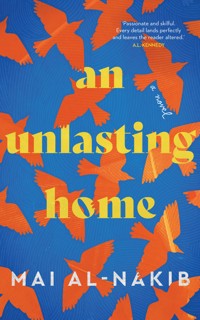
Sara is a philosophy professor at Kuwait University. Her relationship with Kuwait is complicated; it is a country she recognises less and less. Yet since her return from the States eleven years earlier, a certain inertia has kept her there. When she is accused of blasphemy, which carries with it the threat of execution, Sara realises she must reconcile her feelings and her place in the world once and for all. Awaiting trial, Sara retraces the past, intent on examining the lives of the women who made her. She conjures forth her grandmothers - beautiful and stubborn Yasmine, who marries the son of the Pasha of Basra and lives to regret it, and Lulwa, born poor in Kuwait and later swept off to India by her wealthy merchant husband. An Unlasting Home brings to life the triumphs and failures of three generations of Arab women. At once intimate and sweeping, personal and political, it is an unforgettable family portrait and a spellbinding epic tale.
Sie lesen das E-Book in den Legimi-Apps auf:
Seitenzahl: 497
Veröffentlichungsjahr: 2023
Das E-Book (TTS) können Sie hören im Abo „Legimi Premium” in Legimi-Apps auf:
Ähnliche




















AN UNLASTING HOME
MAI AL-NAKIB was born in Kuwait and spent the first six years of her life in London; Edinburgh; and St. Louis, Missouri. She holds a Ph.D. in English from Brown University and is an associate professor of English and comparative literature at Kuwait University. Her short-story collection, The Hidden Light of Objects, won the Edinburgh International Book Festival’s First Book Award in 2014. Her work has appeared in various publications, including Ninth Letter, The First Line, After the Pause, and World Literature Today. She lives in Kuwait.
www.maialnakib.com
“So fresh and unsettling that it will enchant you from the first page and linger for days after reading. . . . Deftly written.”
Los Angeles Review of Books
“A poignant and profound novel . . . Mai Al-Nakib writes with grace and intelligence.”
Selma Dabbagh, author of Out of It
“Deeply enchanting, at times suspenseful, An Unlasting Home is filled with tales of women’s lives and their intersection with the often volatile and unpredictable currents of nations, war, and political history. Mai Al-Nakib’s book kept me entranced to the last page.”
Diana Abu-Jaber, author ofFencing with the King and Crescent
“Spellbinding. An Unlasting Home splits open time and leaps across continents. Mai Al-Nakib creates the sort of characters we carry forward into our hearts and lives. I absolutely loved this book.”
A. Manette Ansay, New YorkTimesbestselling author of Blue Water
“Shimmering with poetic prose and as pressingly real as the white heat of August in Baghdad, this poignant debut will keep you in its thrall.”
Juhea Kim, author of Beasts of a Little Land
“Mai Al-Nakib lyrically explores themes of homeland, tradition and agency as she relates the stories of generations of Arab women across Kuwait, the US, Iraq, India and Lebanon.”
Ms. Magazine
“An ambitious family epic with a historical sweep, an elegy to grandmothers and mothers who were forced from their original homes by personal or political circumstances in the Middle East to build nests elsewhere.”
World Literature Today
“Stories-within-stories is a classic Middle Eastern format with roots much deeper than The Arabian Nights. [An Unlasting Home] marries these traditions and implodes them.”
Guernica
“Refreshing and eye-opening.”
Electric Literature
SAQI BOOKS
26 Westbourne Grove London W2 5RH
www.saqibooks.com
Published in Great Britain 2023 by Saqi Books
Published by arrangement with HarperCollins Publishers.
Copyright © 2023 by Mai Al-Nakib
Mai Al-Nakib has asserted her right under the Copyright, Designs and Patents Right Act, 1988, to be identified as the author of this work. All rights reserved.
This is a work of fiction. Names, characters, places, and incidents are products of the author’s imagination or are used fictitiously and are not to be construed as real. Any resemblance to actual events, locales, organizations, or persons, living or dead, is entirely coincidental.
This book is sold subject to the condition that it shall not, by way of trade or otherwise, be lent, resold, hired out, or otherwise circulated without the publisher’s prior consent in any form of binding or cover other than that in which it is published and without a similar condition including this condition being imposed on the subsequent purchaser.
A full CIP record for this book is available from the British Library.
ISBN 978 0 86356 927 2
eISBN 978 0 86356 937 1
Printed and bound in Great Britain by Clays Ltd, Elcograf S.p.A
For the women who made me
And yet they are in us, these peoplelong since passed away, as a disposition,as a load weighing on our destinies, asa murmur in the blood and as a gesturethat rises up out of the depths of time.
RILKE
Sara
I open my eyes to a bloodred sky. I submitted my grades a few days ago; now I have three months to think and write. Karl comes in July. I visit Karim in August. But today, under the indifferent rust of a desert storm, it’s just Maria and me.
Still in my pajamas, I skip down the stairs to the kitchen. Its walnut cabinets and Formica counters are worn, nearly thirty-six years in use, but the ochre fridge and stove gleam under Maria’s care. Maria stands guard over the warming milk, daring it to froth over. She cracks three cardamom pods with her teeth, as she always does, and tosses them into the pan.
“Gross, Maria!” I tease, as I always do.
She spins around and cackles at me, reaches out as if to pull my hair. I wrap my arms around the back of her shoulders and kiss her on the cheek. I may be forty-one, but my days in the Surra house with Maria make me feel ten.
After breakfast, Maria chats on the phone with one of her daughters, and I go up to my parents’ bedroom. I sit at my father’s desk, which faces the long window looking out on a garden wall pink with bougainvillea. At this desk my father wrote articles for prestigious medical journals, keeping himself current with the literature. I’ve changed nothing here. Not the enormous four-poster bed that never quite fit the seventies vibe of the house. Not the avocado-green walls that remind me of hospitals. Not the shelves stuffed with decades of The New England Journal of Medicine and my mother’s copies of Fanon and Arendt. I write at my father’s desk late into evening, but I spend every night in my childhood bed.
Around noon I smell cumin and coriander. Maria is making something special. This will upset Aasif, who will ask whether his food isn’t good enough that Maria must cook also? I’ll reassure him, as usual: “Your food is famous all over Kuwait. One little plate of bhajia won’t change that. It makes Maria feel useful. You can understand, no?” Aasif will snort, but the swollen vein on his forehead will deflate. Maria will cross her eyes at me behind his back, and calm will return to the kitchen.
I head downstairs for lunch, and Lola the cat follows. She’s more Maria’s than mine, but she enjoys the warmth of my lap. As soon as she sees me, Maria announces, “Josie’s getting a raise!”
“At last!”
“She had to wait. Kuwaitis first.”
“I know. It’s not fair. I’m so happy for Josie. You’re a good mother, Maria.”
She smiles, but I catch the fleeting wince. I hold my breath, and it passes.
I finish off her samosas. We drink our tea with extra sugar, then Maria heads to her room to nap. I go back up to my father’s desk, this time with an idea to write an essay on what teaching philosophy at the primary level in Kuwaiti public schools might achieve. In the thirteen years prior to their arrival at university, the capacity of young people to think is liquidated. They take everything literally. Supplementing the religious curriculum with an early introduction to philosophy could, I will argue, change that.
About an hour into my work, the doorbell rings. I’m surprised. We aren’t used to afternoon intrusions.
Aasif, groggy from his nap, knocks on my open door a few minutes later. “Two police outside, Sara.”
I slip on my flip-flops and grab a shirt to wear over my tank top. The public municipality probably needs me to move my car so that it can dig up the sidewalk for new water or sewage pipes.
Outside, the sky is still red. Two men stand a few steps below the front gate. “Duktora Sara Tarek Al-Ameed?” one of them asks.
I nod and smile reflexively. “That’s me.”
“You’re under arrest for blasphemy. Please go inside and get what you need for a few nights in jail. We’ll wait.” My face must convey a total lack of comprehension because he repeats what he’s said more slowly: “You are under arrest for blasphemy by order of the recent amendment to Article 111 of the Penal Code of the State of Kuwait. Please put a few things into a clear plastic bag and come with us.”
I consider anyone I might know with some connection to the police, someone who would pull a stunt like this. “You must be kidding!” I say after a minute or two. “Who put you up to this?” I can think of no one.
“Duktora, this is no joke. Go inside, please, prepare your belongings, and come back out.” He sounds impatient this time.
Suddenly I feel detached, floating upward. My pulse is not racing. My breathing remains steady. Aasif fidgets behind me, slamming me back to earth. “Aasif, say nothing to Maria. Tell her I had to go to Bahrain to meet someone for work, that I’ll be back tomorrow or in a few days.”
“I will.” His eyes reflect the fear I cannot feel.
“Please make sure she eats. And change Lola’s litter? Maria can’t manage.”
He nods.
“Don’t forget Bebe Mitu.”
“I won’t. Don’t worry, Sara.”
I rush to my room, stuff a few things into a Ziploc, and call a colleague whose father is a civil rights lawyer.
“Hanan, there are two policemen outside saying I’m being arrested for blasphemy. I don’t understand what they’re talking about.”
She groans. “It’s the new law.”
“What law?” I haven’t paid attention to any laws, new or old. Unlike my mother, I’m not politically inclined. My palms start to sweat. “What do I do? Do I go with them?”
“Go with them, but don’t say anything. Take your phone with you, and text your location when you get there. If you can’t, it’s okay. We’ll find you.”
Muhannad Al-Baatin, Hanan’s father, my new lawyer, is standing in front of the building—a black-brick monstrosity in the middle of Kuwait City—when the police pull up. He is tall and wide as an elephant. Mine is not the first blasphemy case, it seems, so he knows where to find me. I’m in the habit of flipping through the daily papers, so how I missed this development, I’m not sure. But if I’m honest, I’ve kept myself removed for so long, my ignorance is no great mystery.
Mr. Al-Baatin booms instructions at me as the gray officers, diminished in the face of my lawyer’s presence, lead me up the stairs and through the glass doors. “Don’t answer any questions! A student recorded one of your lectures. A member of parliament has raised a case. Sara, pay attention to what I’m saying! Not a word, do you hear me?” I have a hard time following any of it, but I hold on to his last words: “You’ll be out tomorrow morning.”
The small, filthy cell in the women’s section of the building is beautiful in its way, covered with words in many languages. Arabic, Urdu, Tagalog, Malayalam, French, Hindi, English. The three walls, the low ceiling, the floor, even the toilet—every inch of space etched with words. Messages from one woman to another or to someone far away.
I try to recollect the faces of all the students I taught during the spring semester. Three all-girls classes, twenty students per class, sixty students total. I think of them sitting in the circle I make them arrange themselves into so that we can discuss things more equally. It doesn’t quite work the way it did at Berkeley, but I persist, hoping the circle will make them brave. My accuser had to be in my eight-o’clock Intro to Phil class. A freshman offended to learn not everyone believes the same truth. I go around the circle in my mind, trying to pinpoint faces, to remember names. The girls in their hijab and niqab blend together. It’s bigoted of me to think so, but they’re hard to tell apart. I can’t single anyone out.
I give up on my class and turn to the walls of the cell. Poems, laments, prayers to God, cries for mothers. Please, Ma, save me. I feel cradled by thousands of writing hands, their fear blending with mine, outsiders in a closed country. They were here before me. How many were deported home? I have nowhere to be deported to. And yet, their words of longing lull me, allowing me to drift into pockets of sleep.
Mr. Al-Baatin comes to collect me the next morning. I sign some sort of pledge and am released on my own recognizance. He drives me home and stays for tea. The dainty love seat gives off dust the instant he sits on it; the formal sala has been neglected for months.
“A recording was made by one of your students,” Mr. Al-Baatin tells me. “On the recording you were heard stating that God is dead. The student handed the recording to the most conservative member of parliament. The Salafi MP, on behalf of the student, has lodged a complaint against you. The public prosecution has filed a case. You are being accused of blasphemy under the new law designating it a capital crime.” He pauses. “Thankfully the law has provisions. You may be allowed to retract before the trial even begins. But if you are found guilty—and I assure you, that would be a highly improbable outcome—execution is not guaranteed.” My blood freezes. “Even if all appeals are overturned, you should be allowed to retract your ‘blasphemous statement’ before the final judge and that could influence the punishment.” He makes little curly signs in the air with his forefingers for scare quotes. Derrida made the sign for scare quotes exactly the same way in a lecture he gave at Berkeley. Derrida and Berkeley are deserts apart from Mr. Al-Baatin and Kuwait, but unexpectedly in this gesture they aren’t.
I focus on Mr. Al-Baatin’s statements. I don’t like the sound of the words should and could.
“In that case, the sentence would likely be commuted to five years in prison and a ten-thousand-dinar fine.”
I don’t like the sound of the word likely.
He pauses again, an elephant with its eyes shut. “In the meantime, as the case proceeds—and these cases can go on for years—you are not permitted to leave the country. You are free to work, and you will be paid. Apart from travel, you can do whatever you please.” Mr. Al-Baatin winks at me incongruously. I stare back in shock as he continues. “Within the bounds of the law.”
I have been living with this accusation for seven days. A week like a lifetime.
Maria doesn’t know. It’ll kill her, with her heart of stents and scars. I tell Aasif and beg him not to share the news. Aasif, a man of integrity, will remain chup chaap. He closes his eyes and tilts his chin upward, hides the newspapers from Maria, my face plastered on the front pages.
Unable to sleep, I’ve been holding vigil with Bebe Mitu beside his cage on the landing of the stairs. Bebe Mitu— Mama Lulwa’s African gray parrot—keeps a trace of my grandmother alive. She brought Bebe Mitu back from India almost sixty years ago. Mama Lulwa never wanted to return to Kuwait, but she didn’t have a choice. Nobody made me come back, and now I couldn’t leave if I wanted to. So here I am—unlikely caretaker of an ancient parrot, accidental collector of fading traces—stuck in place.
Lulwa
One August morning in 1924, Lulwa woke to the chirps of thirsty sparrows and warblers lined along the low parapet surrounding the sateh. Lulwa, her brother, and two sisters, like most of the townsfolk of old Kuwait, slept on the flat roof of their mudbrick home during the summer months to catch the sea breeze.
Lulwa rolled her bedding, tied it with a pink ribbon that had slipped out of the basket of a visiting seamstress. She tiptoed over her brother and sisters. The heat would wake them soon enough. She hoisted the bedroll on her hipbone and hauled it down the narrow stairs leading to the central courtyard.
Her mother, Sheikha, had completed her fajer prayers but remained seated on her threadbare mat in a corner of the liwan. She often sat this way after morning prayers, still as sea stone. Lulwa wrapped her thin arms around her mother’s waist, inhaling yesterday’s trace of dihin ‘oud.
Sheikha stiffened. “You’re too old for all this, Lulwa.”
Lulwa tightened her grip. She was a few weeks into fifteen, slender but strong.
Sheikha felt like she was being punished for the news she was about to break. At thirteen, she herself had been forced to marry a twenty-seven-year-old stranger. Sheikha’s father accepted the proposal because he had mistaken the pompous, bisht-wearing Qais Qais Al-Talib for a successful merchant. The man was not known in Kuwait Town, but Sheikha’s father could not afford to reject the generous dowry he offered. The amount promised to buy him and his sons out of debt. Neither Sheikha nor her father ever saw a paisa of that promised dowry.
Growing up, Sheikha rarely saw her father and brothers. Nine months of the year, they were out at sea, on the boums and baghlas of wealthy merchants, trading along the eastern coast of Africa or the western coast of India. Even during the three months of monsoon, when Sheikha’s father and brothers were back in Kuwait, they were out pearling. At the end of a summer combing oyster beds, the divers would return to shore, legs scored with cuts, ribs visible for wives and children to count. Like most of the divers and sailors of Kuwait, Sheikha’s father was poor, in debt all his life, relying on advances from his nokhada to sustain his family.
Sheikha was the youngest of four. Her eldest brother, Abdullah, was her favorite. In the few days he was back from sea, he whittled small dhows out of wood for his little sister to play with. He carved intricate figures of boys and girls, Salukis and hamour. She watched his fingers as he worked, captivated by his descriptions of the leopards of Zanzibar, the monkeys of India, and how the color of the sea could switch from the palest streak of blue to swathes of black in an instant. He described the great bellied sail, a swan swooping through silvered water. Sheikha would close her eyes and imagine the fantastical colors and animals her brother described, the sounds of chattering monkeys and whittling wood one and the same.
Abdullah’s body looked like the teakwood of the ships he sailed from the bustling port of Kuwait Town, prized timber collected along the Malabar Coast. He was sleek and golden brown, every inch of him taut and strong as a wire. His skin showed early signs of the leather it would have become after a decade more of sun and sea.
It was a foolish accident, the kind that made even seasoned sailors shake their heads. Like his father and so many men of Kuwait, Abdullah was a diver. He could stay underwater longer than most, a full two minutes, and he had a special knack for bringing up more oysters than the other divers every time. He was a favorite among the crew, his rich baritone leading them as they sang the bahri together. His water-soaked eyes would twinkle as he teased the younger divers, urging them on with promises of wealth.
Everyone believed he was setting another record. Abdullah’s hauler did not feel the weak tug or notice the ropes dancing like yellow snakes in azure blue. The rope of the net basket had looped around his neck, and the weight of the oysters, thumping against his spine, choked him to death.
The delicate purple rings around her brother’s neck were the first thing Sheikha noticed as the sailors carried his body over the threshold and placed it in the middle of the courtyard. She would always remember how careful they had been with Abdullah. Her mother’s long wail filled the lanes of the fireej and brought the neighborhood women to their door to help ease in another the pain known to them all. Sheikha forgot most of what happened after that, but she never forgot what it felt like to love a man and lose him.
Abdullah drowned in 1899, when Sheikha was ten and he was twenty-seven, her husband’s age when they married. She had hoped there would be some magic in the coincidence of numbers. There wasn’t. Sheikha’s husband, Qais, had the eccentric proclivities of the wealthy minus the wealth. He kept an owl in the house and spoke to it in undecipherable code. He placed a circle of stones around their mattress every night before sleep and refused to let Sheikha off once the stones were in position, not to comfort her bawling babies, not to relieve herself. Qais stopped speaking to anyone but the owl after five o’clock in the evening. Twice a week, he would shake his adolescent wife awake at precisely three in the morning, hold down her head so she could scarcely breathe, and rip from her what he believed was owed him.
By the time she was twenty, Sheikha had given birth to her fourth and final baby. A few months later, early one dawn after Qais had rolled off her torn body, something inside her had bled out in garnet clots. She thought she might die, but she didn’t, and afterward she could no longer become pregnant. That, at least, was a relief. Qais and his ways had come between Sheikha and her babies. She could feel nothing for them, despair over her own fate smothering any shred of tenderness. The three eldest had absorbed her rejection and kept to themselves, like wounded foxes in the desert. But Lulwa was different. No matter how hard Sheikha pushed the child away, Lulwa came back, trying to force her into the shape of a mother she could never be.
Sheikha’s heart did not budge in response to her daughter’s arms around her that morning. She was going to sell Lulwa off to the son of a rich merchant, a merchant who, unlike Qais Qais Al-Talib, was known throughout Kuwait and far beyond. Qais had no interest in the children, so Sheikha could do as she pleased. The merchant’s wife had come to ask for her daughter’s hand a few days ago. Sheikha couldn’t understand why this family that could choose any of the suitable daughters of rich merchant families like their own would choose Lulwa. But the woman was adamant, and her insistence had made Sheikha bold.
“I will accept your proposal on one condition. Your family must pay me one thousand rupees. This amount will be in addition to any muqaddam you choose to pay the girl.”
The woman frowned.
“And neither my husband nor my daughter can know of this,” Sheikha added.
The woman sniffed the air around her in what Sheikha believed to be scorn, but she did not refuse.
“Go prepare our tea and bring it here, Lulwa. I have something to tell you.” Lulwa was used to her mother’s stern commands, her father’s frosty indifference.
Lulwa drew water from the cistern at the center of the courtyard. During the dry summer months, the cistern was filled with fresh water purchased from the local kandari. Lulwa heated the water along with a few teaspoons of tea leaves in a tin kettle on a charcoal duwah kept in a room off the courtyard. Once the tea had boiled for five minutes, she poured the brew into two istikans and sat at her mother’s feet.
“In one week’s time, you will marry the youngest son of Khalifa Al-Mustafa. You are a lucky young woman. Who knows why they’ve chosen you, but they have, and we’re in no position to question. They don’t want a big fuss. A small ceremony with the mullah and you’re off.”
Sheikha’s voice was a jagged shell, but Lulwa let out a shriek of delight. She knew exactly who Khalifa Al-Mustafa’s youngest son was. His name was Mubarak. He was the boy who would linger in the dhow yard at the water’s edge with boys much less wealthy than himself. Lulwa had seen her brother, Ahmed, talking to him as she and her sisters washed their calico dresses on the nig‘a, the stone breakwaters. Ahmed had waved at them, and they had waved back, giggling because it was not entirely proper. They were astonished to see the boy with their brother lift his hand to wave at them too, and this time they turned away. It was one thing for their brother to wave at them in public, quite another for a stranger to follow suit. But the unknown boy could not have missed them pinching each other under their thobes or the small smiles curling the edges of their heart-shaped mouths.
That night on the sateh, the sisters probed Ahmed for details.
“What’s his name?” Sumaiyya, the oldest, asked.
“What does he do?” Hussa, the middle one, cut in.
“Is he married?” Lulwa added before Ahmed had had a chance to answer the other two.
“Mubarak Khalifa Al-Mustafa. He lives in India. And no, he’s not married.” Mubarak and his parents were in town for the month of August to visit family. His father’s trade was based in India, and that was where they spent most of the year. He was studying something called English literature at Aligarh Muslim University. Lulwa repeated the word in her head. Aligarh . . . Aligarh. It sounded like a prayer for rain.
After Mubarak’s first wave, every time the girls went down to the beach to wash soiled clothes, he would be there, and he would wave at them even if their brother was not around. Lulwa began to wave back. A small flick of the wrist at first, her arm at her side, an almost imperceptible flap of a moth’s wing. Then, with her elbow at a right angle, a stiff back and forth. And finally, one auspicious morning, her arm raised above her head, a wave for all to see.
In the hours after midnight, the day after Lulwa’s open wave, Mubarak wrote on his father’s newly whitewashed wall:
THE THREE DAUGHTERS OF QAIS QAISAL-TALIB ARE MADAMAAT!
He chose that word, an Arabicization of madam, because he thought no one would understand it. He was not likening the Al-Talib sisters to port town bebes. Madams were lively creatures full of light. A madam was what he wanted to marry, not a girl covered in black, incapable of embracing the world beyond her sheltered fort.
Mubarak was too young to consider how his words might tarnish the girls’ reputations. Luckily, his father, Khalifa, stepping out for a walk in the hours before the August sun took over, saw the defacement of his otherwise pristine wall before anyone else in town had the chance. Khalifa marched straight to Mubarak’s room, knowing this reckless whimsy could only be his youngest son’s, like his insistence on English literature, his wandering through jungles, his frequent commingling with those beneath his class. Mubarak was fast asleep when his father burst through his bedroom door, shouting, “It must have been you who wrote it!”
Mubarak sat straight up and was instantly alert, ready to declare what he had been rehearsing for days. “Yes, Yuba, I wrote it. And I mean to marry the youngest one. Lulwa will be my madam.”
His father put his hands on his son’s shoulders and shook him. “These girls are not the daughters of merchants, ya Mubarak! Their family has no connection to India. How do you know she will leave her family?” Khalifa Al-Mustafa was one of the most successful merchants in Kuwait. He owned a fleet of ships ranging from a massive old baghla, one of the last to sail from Kuwait, to more boums, sambouks, and jalbouts than anyone could count. Like most wealthy Kuwaiti merchants, he owned vast date plantations in Basra, which supplied the primary cargo that enabled the rest of his trade down the east and west coasts of the Indian Ocean. Also, like his father before him, Khalifa had been exceptionally lucky at pearling. The Al-Mustafa oyster harvests always brought in the most coveted pearls. One of the reasons the family had settled in India was to expand their already formidable trade interests to include jewels.
Mubarak thought about Lulwa’s wave and said, “She’ll come.”
And she did.
Everyone in town could see it was that rare thing. The two of them, fifteen and seventeen, held hands as they walked along the twilit shore. Sumaiyya, Hussa, and Ahmed formed a ring around their sister and her young man. They were making plans, conspiring to move to India with them, away from their parents. When they were younger, the neighbors would remark over the happy band of siblings, so unlike their dour parents. To survive their mother and father, the four of them had had to stick tight. Letting Lulwa go was tolerable only because they knew Mubarak could be trusted. “I have three older brothers and one younger sister,” Mubarak proclaimed. “Once they set eyes on Lulu, they’ll all want their share of the lovely Al-Talib madamaat and”—he turned to give Ahmed a sharp salute—“our fair sir!”
Mubarak’s mother, Zaineb, visited their home every day before the milcheh with bolts of hand-printed silks and seamstresses in her wake. She draped Lulwa’s neck with an intricate pearl necklace, loaded her wrists with heavy gold bracelets studded with rubies. When she learned that Lulwa’s ears hadn’t been pierced, she paid the neighborhood kandari to deliver a small block of ice, numbed the girl’s lobes, and expertly pushed through a needle she had sterilized with the flame of a candle. She fitted Lulwa’s ears with tiny gold hoops decorated with turquoise beads, promising that as soon as her ears healed, she would have dangling earrings to match the ornaments around her neck and wrists.
Zaineb’s ease with Lulwa—her hands on parts of Lulwa’s body, her wiping of bloody earlobes, her tight embrace of the girl upon entering or leaving the house—unnerved Sheikha. She could not comprehend how this woman, a stranger to her daughter, could touch her, chirp with her over some shared observation, gather her into her arms like she belonged to her. Zaineb strode into Sheikha’s humble home like she owned it, brought with her the optimism Sheikha’s children had always suspected existed. Sheikha watched her daughter wrap her skinny arms around Zaineb’s waist as she had done to her only days earlier. Unlike Sheikha, Zaineb did not stiffen. Zaineb hugged the girl back.
Sheikha had felt jealousy before. She remembered at eight seeing her mother rub her brother Abdullah’s sore legs and feeling her own legs turn to ice. The jealousy she felt now was similar. It was directed not toward Zaineb, but toward her own daughter. Her legs froze as she watched her girl laughing with the woman. Her jealousy thickened as she thought about Lulwa in the boy’s arms, his young body carved and lithe. She pictured Lulwa’s hands on Mubarak’s chest and abdomen. She imagined them on their first night, fumbling for that novel fulfillment. Lulwa laughed with glee in the middle of the courtyard, surrounded by a pouf of gold-threaded silks and pearls like the ones Abdullah had died in the process of collecting. Sheikha resented her daughter, and she hated Mubarak, this boy with a starred future.
The siblings were convinced they would be together again soon, so seeing Lulwa off to India on the Al-Mustafa family’s baghla did not feel like goodbye, more like the start of an adventure. They presented their sister with small gifts, talismans from the place she was leaving behind: a bottle of shells, a piece of cerulean sea glass, the tiniest pearl. Lulwa promised to send them wondrous things from India, objects none of them could imagine: peacock feathers, inlaid rosewood boxes, ivory combs.
As the ship prepared to embark, the family lined up along the shore for a final glimpse of their departing girl. The siblings waved at each other. The three were too far down to see Lulwa’s runnel of tears. Mubarak clasped her hand in his, squeezing it tight. She squeezed back, grateful for this boy, not yet a man, on whom she knew she could depend. What neither of them noticed in the hurly-burly of heaved oars and pulled ropes were Sheikha’s slow-burning eyes.
Yasmine
Majid told Yasmine he loved her a week after her father died, in April 1933. “I will love you,” he whispered, “forever.” They stepped barefoot into a stream in the Saida hills, the air ringing with bulbul. Yasmine’s mother was grief-stricken enough to allow her daughter to go on a picnic with a group of youngsters, boys included. It was not far from home, and Yousef would be there to guard his sister’s honor. But Yousef, distracted by pretty girls, neglected his fraternal duty. Majid promised Yasmine he would marry her as soon as she graduated from high school in a month and a half. She swelled with pride and forgot her dead father. She was sixteen.
Hussein Suleiman’s heart attack had come without warning. He was forty years old. Unlike other fathers in the conservative city of old Saida, Hussein had insisted his daughter enroll in the Sidon Girls’ School, established by American missionaries in 1862. He was not irreligious, but he believed in reason and saw no contradiction between praying five times a day and educating his only daughter in the ways of the West.
By the time Yasmine started attending the Sidon Girls’ School, the curriculum had shifted from home economics and childcare to academic subjects, and the language of instruction had switched from Arabic to English. The villagers chafed at these changes, but nothing bothered them more than the Christianity that would no doubt rub off on Hussein’s daughter. Each villager had his or her own vivid account of how the daughter of one relative or another boarding at SGS had converted to the dreaded faith. “That could be your daughter, Hussein! English first, then the Bible, and then, overnight, Jesus Christ her Lord and Savior!”
As the trusted friend and secretary of Hikmet Bey, kaimakam of the Ottoman Empire in Saida, Jaffa, and Baqubah, Hussein Suleiman was often far from home. But when his neighbors managed to catch hold of him to share their avalanche of conversion stories, he would smile and shake his head. Hussein was aware that cases of conversion from Islam to Christianity were far rarer than conversions in the other direction. His daughter had been well-instructed in the Quran by her mother, his Turkish wife, Yeliz, daughter of Hikmet Bey’s cousin. Hussein felt secure in the hold of their faith.
That afternoon at the picnic, after his proposal, Majid asked Yasmine what she wanted him to be. “I want you to be an architect,” she replied without hesitation. What she knew of architecture came from her exposure to Roman ruins and crumbling Crusader castles dotting the landscape. She had listened to her teachers tell tales of brave Crusaders spreading the gospel in her homeland hundreds of years ago, just as the missionaries were continuing to do. What stirred Yasmine was not the bravery of those God-fearing soldiers, but the romance of the castles they had left behind, from the Sea Castle to the Castle of Saint Louis. She imagined herself the occupant of a castle, a secure turret all her own.
“I have to go home,” Yasmine said, after she told Majid what she wanted him to become. “I have to study. I have to think about my essay.”
“Your exams, your essay competition, two months from now they won’t count for anything. Don’t you understand, Yasmine? I’ll take care of you. After the wedding we’ll move to Beirut, study together at university. You can major in Arabic literature,” he said, “and write to your heart’s content.”
She stuck her fingers in her ears, blocking his extravagant promises. “I have to go home.”
Yasmine spent the last month before graduation studying for her final exams and preparing for the nationwide essay competition. If she won the competition, she would receive a scholarship to the American University of Beirut, which Majid attended. Majid didn’t need a scholarship. His family was rich. If her father hadn’t died, Yasmine might not have had to fret over money. But it turned out that her father had been in enough debt to leave nothing behind for her education.
Yasmine did not doubt Majid’s proposal, but she kept it to herself. She continued to study for her final exams like they were her only way out. Yasmine had always been a star student. She had learned Arabic by reciting the Quran to her mother at an age when most children were still struggling to speak. It had come easily to Yasmine, much easier than it ever had to her poor mother, forced to live in a language not her own.
Yeliz had been taught Arabic by a tutor in Istanbul, a wrinkled Syrian woman who allowed the young girl to light her rolled cigarettes. This ill-advised ritual had left Yeliz with a lifelong predilection for tobacco, a fondness she indulged until the end of her days. In addition to Arabic, Yeliz also had been taught to play oud by a talented musician who visited the family home three times a week. He taught music to the children of those with aspirations to wealth, families more regular with tuition payments than the ancestrally rich. Yeliz’s Arabic instruction and oud lessons made her feel like a courtesan in a sultan’s palace. She wasn’t sure what her parents were preparing her for.
She found out one cloudy afternoon in 1915. Gray skies threatened to pour down a river. Swallows, usually filling the skies with dance, had vanished. The children of the house were on edge; they knew their mother would shortly order them to scamper through the rooms with clay pots, placing them to catch leaks from loose wooden window frames. But on this rain-threatened afternoon, Yeliz’s mother was unperturbed. She had ordered Yeliz to dress smart for esteemed guests, not to put on the worn dress she normally did for catching leaks and drips. Hikmet Bey was coming.
Hikmet Bey was only a few years older than his cousin, Yeliz’s father, but he was, as Yeliz’s mother constantly reminded her husband, far more accomplished and ambitious. Hikmet Bey was well-placed in the behemoth Ottoman administration. To Yeliz’s parents, his position appeared grand, and given the turbulence of the last few decades, it seemed miraculous to them that Hikmet Bey not only had managed to cheat death, but, even more awe-inspiring, had maintained a respectable position despite revolutions, coups, and wars. They weren’t sure what it was that his responsibilities entailed. They knew it had something to do with the management of Arabs. Now their empire was involved in a war whose outcome was unknown. In the gamble of political intrigue, Hikmet Bey had squeaked through in one piece. On account of this alone, Yeliz’s parents were impressed.
Hikmet Bey arrived on time, a handsome young man at his side. The stranger had light gray eyes, out of keeping with his dark hair. He was awkward and angular. The bey—who donned a red fez and waxed his imposing black moustache upward like one of the Three Pashas—summoned Yeliz. He informed her that she would be traveling with him to Saida, and upon their arrival, she would marry this fine young man. Yeliz, who had been staring at the tiled floor until the bey spoke, looked up at him in disbelief, then glanced over at her parents. They did not appear surprised. Yeliz felt both betrayed and hotly thrilled. Her parents had their hands full with her six younger siblings. Yeliz was seventeen and ready to leave home. She would never see her family again.
Yeliz had taught her daughter, Yasmine, to be as self-sufficient as was possible for a girl in Lebanon in the early decades of the twentieth century. As it turned out, the shy gray-eyed man she was forced to marry wanted the same things for their daughter. He had been a good man, kind and hardworking. He wrote remarkable letters to Yeliz when he was away, thick with descriptions of glassy deserts, gruff nomads, sparkling constellations in the night sky. Now he was dead, and his older brother Hassan was ordering his foreigner sister-in-law to remain in the house, refusing to allow her to take her children and return to Istanbul. She resented her brother-in-law’s order, but she wasn’t sure she wanted to leave in any case. After eighteen years away, Istanbul was no longer home.
Yeliz was a skilled seamstress and could earn what was necessary for her family to live on as well as to send her son to college. But she recognized that it was her daughter, not her son, who deserved to go. School had always been a struggle for Yousef. He had a roving eye, beguiled by all things shiny and pretty. It would not be acceptable for her to send Yasmine to university over Yousef, but Yeliz predicted her son would fail, wasting her hard-earned savings. She hoped Yasmine would marry a man not in debt, who would take care of her and make her happy. It was for this that she had allowed Yasmine to go on that picnic. She held her breath for her daughter, for herself.
For three weeks Yasmine concentrated only on her studies. Years later, she thought her unswerving commitment might have been her way of mourning her father. Her mother kept her prying uncle away, and Yousef stayed out of the house most of the day, giving Yasmine the quiet she needed.
She had been judged the best student of Arabic composition of all the girls in her graduating class, and now she would be competing against the other top female fourth-year secondary students in Lebanon. The topic for the next stage in the competition had been given to her the day after the first results: What do you want to do after you graduate and why? Most of the girls Yasmine knew—and, she was certain, all the girls in all the schools across Lebanon who hadn’t won—wanted to be housewives. She planted the bottoms of her feet against the cold mosaic tiles of her bedroom floor and remembered the cool water between her toes a few weeks earlier. Majid’s proposal. She wanted that with him, maybe. A wife, a mother, a string of children like amber beads. But she wanted more than that, too.
She won best in the region.
There would be no advance notice of theme for the final essay. She would be competing with five other girls. The principal of her school informed her that SGS would happily welcome her back: “If you win the scholarship to AUB, Yasmine, we’ll hire you here once you complete your degree. You can be our new Arabic teacher.” It was this she wanted, maybe. The very thing she had written about in the second essay. To write and to teach and to be, above all, independent, beholden to no one’s debts nor death.
While she waited for the date of the last essay, she passed her finals. She was valedictorian of her class. She wrote her speech, which bloomed with predictable enthusiasms. Her uncle Hassan, when he heard about Yasmine’s upcoming public speech, had shouted, “No daughter of mine will speak onstage, head uncovered.” Yasmine had shouted back, “I’m not your daughter,” which had earned her a slap. Her own father had never raised a hand against her.
Her mother promised Yasmine she would give her speech and would walk onstage to collect her diploma. Yeliz would divert her brother-in-law’s attention with a lie about someone ready to pay back money owed. “Your fat, greedy uncle won’t put two and two together.” The man had always been jealous of his brother, gray-eyed Hussein, friend of beys, husband of the exotic Yeliz.
As Yasmine sat waiting in the echoing hall for the final essay question, she thought about the five other candidates scattered in halls like this one all across Lebanon. What made them special? She felt herself to be special. It was her cleverness, her ability to be decisive. But it was also her creamy skin and rosy cheeks and the physical effect she had on strangers. She was not especially tall, but she was shaped like an Egyptian film star. Her straight black hair swung down her back. Her rare gray eyes, like her father’s, were haunting. She was arrogant sometimes, she knew. This was a flaw she worked on, tried to hide.
She could feel the rough wood of the chair against the backs of her knees, and she thought about what her father’s death was going to mean for her mother, for herself, and for her wayward brother. The proctor walked into the large hall where her graduation would be held the following week. She tore open the brown envelope, placed the sheet with the question on it facedown on Yasmine’s desk, handed her ten sheets of foolscap paper and a sharp pencil. Yasmine had one hour to complete the essay.
She won best in Lebanon.
She was the only girl in her graduating class that year to walk up onstage three times: first, to pick up her award for best Arabic essay written by a girl in Lebanon; next, to make her speech as class valedictorian; and, lastly, to collect her high school diploma. The diploma was made of leather with her name embossed in gold and, under it, the year, 1933. It would always be Yasmine’s most prized possession.
Yasmine’s mother and Yousef were in the second row. Majid and his parents were there too, for his sister Ihsan, also in Yasmine’s graduating class. After the ceremony, Ihsan pulled Yasmine by the hand to meet her mother. Madame Majida wore emerald drop earrings and a cream chiffon dress with a matching cape. Her hair was pulled back in a devastating chignon. Ihsan smiled knowingly at her mother. “Mama, this is Yasmine.”
Yasmine could sense Majid hovering behind her. Yasmine beamed at Madame Majida, curtsied, and came forward to kiss her. Madame Majida glared down at Yasmine with the hazel eyes of a lizard. She did not bend to receive Yasmine’s kiss, did not nod in acknowledgment or say a word. Yasmine was humiliated in front of her friends, who knew about Majid; in front of Ihsan; and in front of Majid, the boy who had proposed to her but who had failed to mention his mother. Yasmine spun around to look for him, still confident in his devotion. He wasn’t there. Her nostrils flared, and her fingertips tingled. She turned back to face his mother, bit down on her lower lip, tasted blood, and said, “Madame Majida, it’s a pleasure to meet you. Congratulations on Ihsan’s graduation.”
Madame Majida blinked her reptilian eyes in haughty acknowledgment or cold disregard. Yasmine thrust out her chin. Saying goodbye to no one, she made her way to the exit, face on fire.
Yasmine would remember that day two ways: with pride and with fury. She marched home against the wind, her hair funneling like a tornado. She burst into the house and slammed the door behind her. Her mother, who had arrived only moments earlier, screamed. Yasmine, feet planted, hands on hips, announced: “I have a plan.”
Two days before her father died, Yasmine had secretly applied for a teaching job in Baghdad. A notice in a local paper was advertising for qualified female teachers from Palestine, Syria, and Lebanon to teach primary- and secondary-school girls in Iraq. Yasmine wasn’t sure what had made her send in an application. There had been no hint of her father’s impending death. She was busy preparing for her exams, confident of their outcome and her likely acceptance at AUB. She had no credentials to speak of, only the promise of a diploma from SGS in a couple of months’ time. She had had no sensible reason to apply for that teaching position. She did it because her acceptance would be another accomplishment to add to a collection that would come to mean so little, much sooner than she would have believed.
Yasmine had heard back from the school in Baghdad a few days before her graduation that the job was hers if she wanted it. Yasmine knew she could not set foot in Beirut now, not after the scene with Madame Majida. She would not be marrying Majid, and she could not imagine attending AUB while he was there, too. She would forfeit her newly won scholarship, would burn every bridge, leave everyone behind, exactly as her mother had been forced to do. But no one was forcing Yasmine. She would show them what she was made of, and they would all live to regret it. She didn’t see it as running away, tail between her legs. She saw it as a triumphant leave-taking, karama intact, the departure of a princess soon to be a queen. Someone else would build her castle.
It was unthinkable for any young girl in Saida to travel alone beyond the borders of Lebanon, as inconceivable as a girl choosing her own husband. “I’ve decided to go to Iraq to teach Arabic literature to primary-school students,” Yasmine informed her mother. “I will live in a boardinghouse for women. Don’t try to stop me.”
Yeliz wouldn’t have bothered, recognizing her own stubbornness in Yasmine’s steely gaze. And Yasmine’s uncle—who would have killed her before letting her go, who had stolen even the tiniest crumb of inheritance left to them—that man died of a convenient stroke before he heard of Yasmine’s plan. His family blamed Yeliz’s evil eye.
As Yasmine prepared for her departure, she learned that Madame Majida had whisked Ihsan and Majid off to Europe the day after graduation. Surrounded by the splendor of Europe, Majid would no doubt forget Yasmine, forget their imagined life together. Yasmine gritted her teeth and continued to pack.
She left Lebanon at the end of August on a bus—NAIRN EASTERN TRANSPORT co. painted on the side—with a group of young women from Beirut, accepted to teach at various schools dotted across Iraq. She rested the side of her head against the hot glass and sighed. How wrong she had been in that final essay: What makes you happy and why? She had been judged correct. She had won. But she was wrong. The dusty road opened before her, and twelve hours later, somewhere between Baqubah and Baghdad, Yasmine turned seventeen, alone and without ceremony.
Sara
Eight days since my arrest and Aasif still hides the papers, although by the fifth day my face no longer makes the front pages. The choking fear from that night in jail has dissipated, replaced by numbness and an intermittent vertigo. I sit at my father’s desk, books and papers everywhere, and try to write. It looks as if nothing has changed, but something has, and I don’t know what to do about it.
The name of the girl who made the recording has not been disclosed to Mr. Al-Baatin. “The court wants to protect her identity because she’s not yet twenty-one,” he explains over the phone. “I’ve submitted a request for her name to be released to me on condition of preserving her privacy. I believe it will be approved in a week or two.” Knowing her name won’t make any difference to me or the case. She’s interchangeable, one of many. This battalion of girls, my students, following in the footsteps of their conservative parents and their religious teachers, are closing in. In the rare moments I can bring myself to think about her, the unknown girl, I’m filled with a rage so annihilating, I throw up. She started it, I want to scream. Her.
Mom used to instruct Karim and me: If someone hits you, hit them back. Not exactly the lesson in playground ethics we were being taught at the American School of Kuwait, but there would be no turning the other cheek for Noura’s kids. We were to stand up for ourselves. In one breath she would bring up South Africa and Palestine and Malcolm X, giving us lessons in global inequality and the function of power. Karim and I would roll our eyes behind her back. Write it down, you two, she would say, ignoring us. I want you to remember you got it from me.
Karim and I understood as teenagers, maybe even earlier, that Kuwait wasn’t for us. Things weren’t bad then. Looking back on it, we came of age in golden times. But with the unsullied vision of youth, we just knew. My brother cut ties with a severity I couldn’t muster. When Mom died, eleven and a half years ago, I faltered. I came back.
As a kid I believed that in the ways that counted, I was American. When my mother told the story of how we might have stayed in the States if it weren’t for my uncle’s call in the middle of the night, my teeth would twinge with regret. When she recounted how she had boarded a plane from St. Louis, where my father was completing his residency, a few weeks before my delivery—defying my father, fooling the airlines—because she wanted me to be born in the same country as my brother, I would thump my hands against my head. Everything could have been different. I could have been whole instead of split down the middle.
Nine months out of the year, Karim and I attended a school that was as American as any in the U.S. American teachers, American curriculum, mostly American kids. We celebrated Halloween and Christmas and Easter. We played baseball and basketball. We spoke English all the time, loathed Arabic and religion class. We watched American TV shows and coveted American food.
Summer months we spent in Orange County, California, in a three-bedroom condo with a view of a man-made lake. Dad would join us for one month in August, unable to leave his patients in Kuwait any longer than that. In California, nobody cared where we were from. Hardly anyone had ever heard of Kuwait. When “near Iraq” drew blank stares, my mother started naming states. “Illinois. We’re from Kuwait, Illinois.” Or, “Kuwait, Florida. You should visit, but avoid hurricane season.” No one challenged her. My mother decried American ignorance of global geography, but I was elated. For three months we could be from Kuwait, Illinois, as American as funnel cakes and corn dogs.
I would weep on the plane from California to Kuwait, anticipating the seismic shift that would rock me. At Mama Lulwa’s Thursday lunches, Karim and I were made fun of by our maternal cousins for speaking Arabic with an accent. Our aunts and uncles would tsk-tsk our parents for not pushing us into Kuwaiti society. Meanwhile we would steal away to our dead grandfather’s study, inhaling the odor of stale pipe tobacco, scanning Baba Mubarak’s meticulously arranged bookshelves. We would sit on one of his teak benches, breathlessly dissecting the impossible story our cousins repeated about how Mama Lulwa had been kidnapped by her own mother. Or we would read together in silence, ignoring the commotion behind the door.
The weather outside has been dusty since my arrest, varied shades of red and orange and beige. It’s stifling and gives me an excuse to stay indoors. Sometimes I think the dust in Kuwait addles our brains, clouding perception and choking hope. Lola has been keeping her distance, curling up on a warm patch of carpet rather than on my lap. My lack of movement must seem odd to her. When I head down for lunch, she follows, but not too closely. Bebe Mitu, in contrast, squawks and calls all morning. Sometimes it’s Mama Lulwa’s voice I hear, other times Baba Mubarak’s, or my mother’s. This afternoon it’s my own voice he uses to ask, “What’s on the agenda, Sara? What’s on the agenda?”
“I made ghee chapatis today to go with Aasif’s potatoes and peas,” Maria confesses. “He can’t be upset with me for that.” She laughs as I tear off an edge of chapati and stuff it into my mouth. “I’m going to spend one extra night at Josie’s this weekend. We’re going to celebrate her promotion. I’ll leave tomorrow afternoon. You’ll be okay?”
The chapati stops in my throat. It’s almost the weekend already. I had forgotten Maria would be going to her daughter’s. Her family might know something. That they haven’t mentioned anything to her over the phone already is a small miracle. I can’t let her find out that way. I have to tell her myself immediately, but instead I reply, “I’ll be okay. I’ll do some work. I’ll swim. Do you have anything planned in this stinking weather?”
“Dust! Dust! It should be raining during monsoon season.” Even after decades in Kuwait, monsoon season to Maria still means rain. “Will you go to the bookstore?”
“Maybe. I don’t know. Not many customers anymore.”
“Sad, nah? Your poor maa put everything into it.”
She had, and now there was almost nothing left to show for it. Before my arrest, I would spend a few hours every evening at Curiosity Bookshop, cocooned by my mother’s shelves of books. Since the accusation, I haven’t opened the shop at all. I doubt anyone will stop by, mainly because most of my remaining customers have gone for the summer, but also, I think, for fear. My case is scary; people will want to keep away from the bookshop and me.
“You rest now, Sara. Stop writing all the time. Nap, and tonight we’ll watch Jerry Lewis.”
I let out a slow breath. I believe I’m protecting her by not telling her, but there’s more to it than that.
I have my first appointment with Mr. Al-Baatin since the day of my release at around six in the evening. (I tell Maria he’s a colleague from work.) He has promised to visit once a week to keep me updated. He’ll call if there’s anything urgent, and I’m to call him any time of day or night if I start to lose my nerve. When he arrives he makes his way to the love seat again like it belongs to him. I make a wager with myself: if the love seat survives Mr. Al-Baatin, I will survive this case.
There isn’t much to report. Various petitions, including one to dismiss my case altogether, have been filed and are in process. Mr. Al-Baatin has been trying to get the travel ban lifted, but there haven’t been any developments on that front. If I’m allowed to travel, will I try to flee? I’m not sure. I suspect the judge or prosecutor or whoever lifts such bans will assume yes. I’m certain, despite Mr. Al-Baatin’s optimism, it won’t be revoked.
He leans back, and the seat creaks. “I knew your mother. She was a troublemaker like you. Smuggling Salman Rushdie in a suitcase. The Satanic Verses, no less.” He chortles, his hands resting neatly on his rolling belly.
The way he puts it makes me smile. I remember Mom purchasing twenty copies of The Satanic Verses on one of her visits to California after Kuwait’s liberation from Iraq, but I don’t remember her getting into trouble over it. I was used to her smuggling in copies of controversial books for Curiosity Bookshop. Customs was more focused on confiscating booze than banned books; I’m surprised she got caught. “What happened?”
“She signed a notarized Declaration and Undertaking




