


17,99 €
Mehr erfahren.
- Herausgeber: John Wiley & Sons
- Kategorie: Wissenschaft und neue Technologien
- Sprache: Englisch
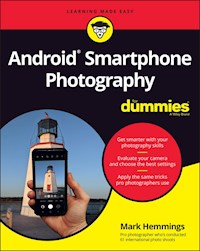
Wait--you took that amazing picture? Taking a photo is as simple as point and click. Taking a good photo takes a bit more know-how, and Android Smartphone Photography For Dummies is your quick-and-easy guide. No matter what model of Android phone you have, this book teaches you to produce high-quality images using the powerhouse camera you carry in your pocket every day. You'll learn the photography techniques pros use, like how to recognize beautiful outdoor lightning, how to capture moving subjects, and how to make stuff look good. Whatever kind of photos you want to take, this book will help you identify the gear and the apps you need for stunning results. With Dummies as your friendly instructor, you'll be wowing your friends and family before you know it. * Explore your phone's camera, including little-known advanced features that will make a big difference in your images * Figure out how to edit your pictures, correct lighting imbalances, apply neat filters, remove blemishes, and more * Learn the basic principles of photography and apply your knowledge to outdoor photography, action shots, and still life * Plus: capture video, organize your images, share photos online, choose a phone tripod, and protect your camera from the elements Dummies makes it easy for Android users of all skill levels to morph into masterful image-makers.
Sie lesen das E-Book in den Legimi-Apps auf:
Seitenzahl: 314
Veröffentlichungsjahr: 2021
Ähnliche


















Android® Smartphone Photography For Dummies®
Published by: John Wiley & Sons, Inc., 111 River Street, Hoboken, NJ 07030-5774, www.wiley.com
Copyright © 2022 by John Wiley & Sons, Inc., Hoboken, New Jersey
Published simultaneously in Canada
No part of this publication may be reproduced, stored in a retrieval system or transmitted in any form or by any means, electronic, mechanical, photocopying, recording, scanning or otherwise, except as permitted under Sections 107 or 108 of the 1976 United States Copyright Act, without the prior written permission of the Publisher. Requests to the Publisher for permission should be addressed to the Permissions Department, John Wiley & Sons, Inc., 111 River Street, Hoboken, NJ 07030, (201) 748-6011, fax (201) 748-6008, or online at http://www.wiley.com/go/permissions.
Trademarks: Wiley, For Dummies, the Dummies Man logo, Dummies.com, Making Everything Easier, and related trade dress are trademarks or registered trademarks of John Wiley & Sons, Inc. and may not be used without written permission. All other trademarks are the property of their respective owners. John Wiley & Sons, Inc. is not associated with any product or vendor mentioned in this book.
LIMIT OF LIABILITY/DISCLAIMER OF WARRANTY: WHILE THE PUBLISHER AND AUTHOR HAVE USED THEIR BEST EFFORTS IN PREPARING THIS WORK, THEY MAKE NO REPRESENTATIONS OR WARRANTIES WITH RESPECT TO THE ACCURACY OR COMPLETENESS OF THE CONTENTS OF THIS WORK AND SPECIFICALLY DISCLAIM ALL WARRANTIES, INCLUDING WITHOUT LIMITATION ANY IMPLIED WARRANTIES OF MERCHANTABILITY OR FITNESS FOR A PARTICULAR PURPOSE. NO WARRANTY MAY BE CREATED OR EXTENDED BY SALES REPRESENTATIVES, WRITTEN SALES MATERIALS OR PROMOTIONAL STATEMENTS FOR THIS WORK. THE FACT THAT AN ORGANIZATION, WEBSITE, OR PRODUCT IS REFERRED TO IN THIS WORK AS A CITATION AND/OR POTENTIAL SOURCE OF FURTHER INFORMATION DOES NOT MEAN THAT THE PUBLISHER AND AUTHOR ENDORSE THE INFORMATION OR SERVICES THE ORGANIZATION, WEBSITE, OR PRODUCT MAY PROVIDE OR RECOMMENDATIONS IT MAY MAKE. THIS WORK IS SOLD WITH THE UNDERSTANDING THAT THE PUBLISHER IS NOT ENGAGED IN RENDERING PROFESSIONAL SERVICES. THE ADVICE AND STRATEGIES CONTAINED HEREIN MAY NOT BE SUITABLE FOR YOUR SITUATION. YOU SHOULD CONSULT WITH A SPECIALIST WHERE APPROPRIATE. FURTHER, READERS SHOULD BE AWARE THAT WEBSITES LISTED IN THIS WORK MAY HAVE CHANGED OR DISAPPEARED BETWEEN WHEN THIS WORK WAS WRITTEN AND WHEN IT IS READ. NEITHER THE PUBLISHER NOR AUTHOR SHALL BE LIABLE FOR ANY LOSS OF PROFIT OR ANY OTHER COMMERCIAL DAMAGES, INCLUDING BUT NOT LIMITED TO SPECIAL, INCIDENTAL, CONSEQUENTIAL, OR OTHER DAMAGES.
For general information on our other products and services, please contact our Customer Care Department within the U.S. at 877-762-2974, outside the U.S. at 317-572-3993, or fax 317-572-4002. For technical support, please visit https://hub.wiley.com/community/support/dummies.
Wiley publishes in a variety of print and electronic formats and by print-on-demand. Some material included with standard print versions of this book may not be included in e-books or in print-on-demand. If this book refers to media such as a CD or DVD that is not included in the version you purchased, you may download this material at http://booksupport.wiley.com. For more information about Wiley products, visit www.wiley.com.
Library of Congress Control Number: 2021947170
ISBN: 978-1-119-82490-9 (pbk); ISBN: 978-1-119-82491-6 (ePDF); ISBN: 978-1-119-82492-3 (ePub)
Android® Smartphone Photography For Dummies®
To view this book's Cheat Sheet, simply go to www.dummies.com and search for “Android Smartphone Photography For Dummies Cheat Sheet” in the Search box.
Table of Contents
Cover
Title Page
Copyright
Introduction
About This Book
Foolish Assumptions
Icons Used in This Book
Beyond the Book
Where to Go from Here
Part 1: Using Your Camera Straight out of the Box
Chapter 1: Introducing Android Smartphone Photography
Becoming Familiar with Your Android Camera
Taking a Look Around the Camera App
Taking a Picture
Viewing Your Photo
Editing Your Photo
Sharing Your Photo
Chapter 2: Taking an In-Depth Tour of Your Camera
Holding Your Phone Properly for Steady Photos
Using Different Ways to Open Your Camera
Zooming In to Your Subject
Capturing Selfies with and without Background Blur
Understanding When to Use (and Not to Use) the Camera Flash
Photographing with the Camera Timer for Sharp Photos
Chapter 3: Altering Your Camera’s Settings and Storing Your Photos
Opening and Activating Google Photos
Choosing Storage Options for Your Photos
Being Mindful of Cellular Data Over-Usage
Allowing Your Camera to Track Your Location
Chapter 4: Taking a Deep Dive into the Camera App
Preparing to Take Selfies
Taking Selfies
Considering Alternate Aspect Ratios
Creating Panorama Photos
Part 2: Having Fun with the Fundamentals of Photographic Genres
Chapter 5: Capturing the Perfect Landscape Photograph
Camera Considerations: Levels and Exposure
Lighting Considerations
Gear Considerations
Photography Tips for Your Next Outing
Chapter 6: Shooting Sports Photography
Camera Considerations: Using Burst Mode to Capture Motion
Gear Considerations
Lighting Considerations
Photography Tips for Dynamic Sports Photos
Chapter 7: Saving Memories through Family and Individual Portraiture
Camera Considerations: Portrait Mode and Lenses
Gear Considerations: Editing Tools for Better Compositions
Lighting Considerations
Photography Tips for Your Next Portrait Session
Chapter 8: Photographing During Your Travels and Vacations
Camera Considerations: Multiple Lenses and Exposure
Gear Considerations
Lighting Considerations
Photography Tips for Your Next Trip
Chapter 9: Creating Dynamic Still Life and Product Photography
Camera Considerations: Creating Background Blur
Gear Considerations
Lighting Considerations
Creating Beautiful Still Life Photos
Chapter 10: Taking It to the Streets: Photographing Strangers
Camera Considerations: Choosing Lenses and Locations
Gear Considerations
Lighting Considerations
Tips for Your Next Street Photography Session
Part 3: Editing, Organizing, and Sharing Your Photos
Chapter 11: Editing with the Google Photos App
Using the Google Photos App Editing Tools
Applying Filters
Cropping a Photo
Editing Your Photography
Editing Your Portrait Photos
Chapter 12: Organizing and Sharing Your Photos Like a Pro
Understanding Post-Production Workflows
Deleting Unwanted Photos
Favoriting Photos with the Star icon
Mastering Album Organization
Exploring the Search Tools
Sharing Your Photo Albums
Part 4: The Part of Tens
Chapter 13: Ten Android Apps to Further Your Skills
Adobe Photoshop Express
Adobe Photoshop Camera
Photo365
Foodie
Prisma Photo Editor
Facetune2
Canva
VSCO
TouchRetouch
PhotoScan
Chapter 14: Ten Tips for Creating Stunning Videos
Accessing the Video Camera
Properly Holding Your Camera for Videos
Trimming the Length of Your Video Clip
Reducing Video Shakiness
Exporting a Still Frame
Cropping Your Video
Adjusting Your Video
Applying Filters to Your Video
Capturing Video Clips with Slow Motion
Creating Time Lapse Video Clips
Chapter 15: Ten Extra Google Photos Features
Viewing the Memories Carousel
Watching Creations
Creating Auto Panoramas
Adding a Partner Account
Marking Up Your Photo
Accessing Your Metadata
Searching with Google Lens
Buying Photo Books
Creating Screenshots
Clearing the Clutter
Index
About the Author
Advertisement Page
Connect with Dummies
End User License Agreement
List of Tables
Chapter 4
TABLE 4-1 Aspect Ratio Options Available in Most Android Cameras
Chapter 11
TABLE 11-1 Pros and Cons of Save or Save as Copy
List of Illustrations
Chapter 1
FIGURE 1-1: The single-lens Google Pixel 4a.
FIGURE 1-2: The dual-lens Xiaomi wide-angle and telephoto lenses.
FIGURE 1-3: The Sony Experia 5 II with its triple-lens camera combination.
FIGURE 1-4: The impressive quad-lens Samsung S21 Ultra 5G.
FIGURE 1-5: The view from the four types of lenses on the Samsung S21 Ultra 5G....
FIGURE 1-6: The Motorola Moto G7 Play smartphone Camera app appearance.
FIGURE 1-7: The Google Pixel 4a smartphone camera app appearance.
FIGURE 1-8: The Samsung S21 Ultra 5G smartphone Camera app appearance.
FIGURE 1-9: A typical Google Pixel home screen with the Camera app icon.
FIGURE 1-10: The Camera app icon within the apps page.
FIGURE 1-11: Tap the shutter button to take a photo.
FIGURE 1-12: All your photos are stored in the Google Photos app.
FIGURE 1-13: Your recent photos are in the Today collection of the Photos app.
FIGURE 1-14: Your photo review screen.
FIGURE 1-15: Using the pinch-to-zoom technique to see greater photo detail.
FIGURE 1-16: Tap the editing icon to edit your photo.
FIGURE 1-17: Tap Enhance for an automatic adjustment of your photo.
FIGURE 1-18: Tap Save when done with your photo editing.
FIGURE 1-19: Tap the Share icon to open the Share Photo screen.
FIGURE 1-20: The Share Photo screen has many photo sharing options such as send...
Chapter 2
FIGURE 2-1: Arms fully outstretched potentially causes camera shake.
FIGURE 2-2: Bring your camera closer to your core for steadier photographs.
FIGURE 2-3: Rest your arms on a stable platform for shake-free images.
FIGURE 2-4: A stable horizontal grip.
FIGURE 2-5: A stable vertical grip.
FIGURE 2-6: Double-click the power button to quickly open the camera.
FIGURE 2-7: Motorola’s Twist Gesture is a quick way to open either the selfie o...
FIGURE 2-8: Use the Google Pixel’s “Hey Google, take a picture” voice command.
FIGURE 2-9: A zoom lens on a Nikon DSLR camera.
FIGURE 2-10: Choose any scene such as this café to practice using digital zoom....
FIGURE 2-11: More zoom is possible with the increased distance between the thum...
FIGURE 2-12: With the maximum digital zoom you can see small far-off objects ap...
FIGURE 2-13: The four lenses of the Samsung S21 Ultra 5G.
FIGURE 2-14: The selfie camera screen appearance from a Google Pixel 4a.
FIGURE 2-15: The Portrait mode creates a pleasing background blur behind you.
FIGURE 2-16: The flash icon set to the on position.
FIGURE 2-17: No flash used for this photo.
FIGURE 2-18: Flash used for this photo.
FIGURE 2-19: The selfie camera’s method for illuminating faces.
FIGURE 2-20: Camera timer options in a Motorola camera.
FIGURE 2-21: Camera timer options in a Samsung camera.
FIGURE 2-22: Using a small tripod is a great way to stabilize your landscape ph...
Chapter 3
FIGURE 3-1: Tap Google Services.
FIGURE 3-2: Sign in to your Google Account.
FIGURE 3-3: Tap Back Up to Google Drive, and tap Accept.
FIGURE 3-4: The Google Services main page.
FIGURE 3-5: Tap Google Photos.
FIGURE 3-6: Tap the Back Up & Sync button.
FIGURE 3-7: Tap Confirm when done.
FIGURE 3-8: The Google Photos app.
FIGURE 3-9: Choose between Original Quality or High Quality.
FIGURE 3-10: Choose the Library section within the Google Photos app and tap Ut...
FIGURE 3-11: Tap Free Up Space in the Organize Your Library section.
FIGURE 3-12: Tap the blue colored Free Up icon at the bottom of the screen.
FIGURE 3-13: Tap the Done button.
FIGURE 3-14: The main Google Photos page, with Photos on Device removed.
FIGURE 3-15: Select the media you want to archive and tap the three-dot icon at...
FIGURE 3-16: Tap Move to Archive.
FIGURE 3-17: View all your archived photos from the Archive album.
FIGURE 3-18: Select the media that you want to download to your computer.
FIGURE 3-19: For faster selecting of full-day photo shoots, select the date ico...
FIGURE 3-20: Tap the three-dot icon at the top right of the screen.
FIGURE 3-21: Tap Download.
FIGURE 3-22: For Mac users the photos are in your Downloads folder.
FIGURE 3-23: Make sure that the Use Wi-Fi Only button is active.
FIGURE 3-24: Tap Mobile Data Usage
(
some devices say Cell Data Usage).
FIGURE 3-25: If all button icons are gray, the options are turned off.
FIGURE 3-26: When your chosen buttons are turned on for data backup, they turn ...
FIGURE 3-27: Choose one of three options based on your privacy comfort level.
Chapter 4
FIGURE 4-1: Backgrounds should look appealing but not pull attention away from ...
FIGURE 4-2: Face a large window for indoor selfies.
FIGURE 4-3: A telescopic selfie stick by Anker.
FIGURE 4-4: The Osmo Mobile 3 gimble stabilizer powered up ready to take a self...
FIGURE 4-5: Portrait mode creates a soft background blur behind your head for p...
FIGURE 4-6: An example of the blur slider set to the maximum amount of backgrou...
FIGURE 4-7: Face Beauty Auto and Manual options for some Motorola devices on An...
FIGURE 4-8: An example of moderate skin smoothening on a Samsung device.
FIGURE 4-9: The Studio effect replicates the lighting style of a photo studio e...
FIGURE 4-10: High-Key Mono offers a black-and-white portrait with a light or co...
FIGURE 4-11: Low-Key Mono is a combination of a dark or black background and a ...
FIGURE 4-12: Backdrop adds a solid color to your selfie background, like a gree...
FIGURE 4-13: Color Point keeps the selfie color but makes the background black ...
FIGURE 4-14: Look for the Live Filter icon, often within a camera section calle...
FIGURE 4-15: The Alpaca Live Filter in use.
FIGURE 4-16: The normal selfie camera view meant for one person.
FIGURE 4-17: The wider zoomed out view perfect for two people.
FIGURE 4-18: The standard 4:3 horizontal aspect ratio (left); 3:4 v...
FIGURE 4-19: The 16:9 horizontal aspect ratio (left); 9:16 vertical...
FIGURE 4-20: The 3:2 horizontal aspect ratio (left); 2:3 vertical a...
FIGURE 4-21: The 1:1 square aspect ratio.
FIGURE 4-22: Panoramic photos are longer than a standard horizontal photo.
FIGURE 4-23: Tap Panorama to begin the panorama photo capture process.
FIGURE 4-24: Tap the shutter button, which starts the panorama photo capture.
FIGURE 4-25: As you move your camera horizontally, the panorama starts to recor...
FIGURE 4-26: When you’re ready to stop the panorama, tap the shutter button.
FIGURE 4-27: The final result, a panorama from a Google Pixel 4a.
FIGURE 4-28: A vertical panoramic photographed in an Eastern Canadian fishing v...
Chapter 5
FIGURE 5-1: Landscape photographs are often difficult to photograph completely ...
FIGURE 5-2: Within your camera settings, tap Leveler (or similar wording).
FIGURE 5-3: The level tool shows how many degrees you need to rotate for a perf...
FIGURE 5-4: This landscape photo exhibits blown-out highlights, and should be u...
FIGURE 5-5: Press anywhere on the screen and scroll the slider to adjust exposu...
FIGURE 5-6: With an underexposed reshoot the highlights on the clouds are no lo...
FIGURE 5-7: An example of
blue hour
, which occurs before sunrise and after suns...
FIGURE 5-8: An example of
golden hour
which occurs after sunrise and before sun...
FIGURE 5-9: Google shows your local sunrise and sunset times plus other useful ...
FIGURE 5-10: A lightweight travel tripod with a smartphone holder is perfect fo...
FIGURE 5-11: A smartphone tripod holder is adjustable to fit most device sizes....
FIGURE 5-12: Many newer Android cameras have some form of night mode that allow...
FIGURE 5-13: By using a tripod with night mode, this brightened photo looks a l...
FIGURE 5-14: A standard wide-angle lens view, included with all Android cameras...
FIGURE 5-15: The telephoto lens view makes distant landscape objects appear lar...
FIGURE 5-16: Examples of Motorola, Google, and Samsung gridline activation butt...
FIGURE 5-17: Four examples of placing your primary subject on the four intersec...
FIGURE 5-18: An example of water, land, and sky each occupying a horizontal thi...
FIGURE 5-19: The “L” shaped composition includes a strong vertical and horizont...
FIGURE 5-20: If possible, place the primary and secondary subjects on Rule of T...
Chapter 6
FIGURE 6-1: For most Android cameras, press and hold the shutter button down fo...
FIGURE 6-2: Many Samsung cameras require a shutter button slide to the right to...
FIGURE 6-3: Many Google Pixel cameras create a video clip when holding the shut...
FIGURE 6-4: After your burst photo capture, you can choose your favorite photo ...
FIGURE 6-5: You can set your selected best photo as the key photo, or have all ...
FIGURE 6-6: Some smartphone cases are built tough for hard impacts and also hav...
FIGURE 6-7: Extend your phone’s battery life in the cold with a battery pack.
FIGURE 6-8: Photographing into the setting sun can often result in the sun look...
FIGURE 6-9: Photograph the sun as it just hits the horizon for a more accurate ...
FIGURE 6-10: Photograph the same kayak or canoe scene just as the sun dips belo...
FIGURE 6-11: Change your position so that the sun is hitting your back when pho...
FIGURE 6-12: For late model Android cameras, you can place your subject between...
FIGURE 6-13: Cool blueish color tones go well with warm yellow/orange/red color...
FIGURE 6-14: If your sport is aggressive in nature, try harsh direct sunlight t...
FIGURE 6-15: Portrait mode background blur makes athletes look even better!
FIGURE 6-16: It’s sometimes more appealing to have more space in front of the a...
FIGURE 6-17: Vehicles such as sailboats also benefit from entering
into
the pic...
FIGURE 6-18: Look for curved sections of the road for any road racing photograp...
FIGURE 6-19: Choose any visually strong objects such as trees to frame your ath...
FIGURE 6-20: For a sense of scale and artistry, use a lot of empty, negative sp...
Chapter 7
FIGURE 7-1: A standard family photo without Portrait mode background blur is be...
FIGURE 7-2: Portrait mode is perfect for family photos and portraits when the s...
FIGURE 7-3: Distortion is quite visible for portraits using an ultra-wide-angle...
FIGURE 7-4: Distortion is mildly visible for portraits using a standard wide-an...
FIGURE 7-5: No distortion is visible for portraits using a telephoto lens.
FIGURE 7-6: An example of a great family photo but with too many distractions.
FIGURE 7-7: A cropped vertical photo with far fewer distractions.
FIGURE 7-8: A cropped horizontal photo with far fewer distractions.
FIGURE 7-9: An example of mixed electric light colors that may result in unflat...
FIGURE 7-10: To reduce the overpowering brightness of the sky, position yoursel...
FIGURE 7-11: Place your group between you and strong sunlight to create silhoue...
FIGURE 7-12: A photo of my shadow that I took while walking past a building.
FIGURE 7-13: With cropping and black-and-white conversion I created a fine art ...
FIGURE 7-14: Choose overcast days and/or shady areas for family or pet portrait...
FIGURE 7-15: Choose overcast days and/or shady areas for family portraits.
FIGURE 7-16: An example of a standard eye-level portrait.
FIGURE 7-17: An example of a portrait where the photographer is lower than the ...
FIGURE 7-18: Take many exploration-type photos as each image will have a differ...
FIGURE 7-19: Watch out for items in the background that appear to be coming out...
FIGURE 7-20: To show landscape
scale
, compose your friends or family members so...
FIGURE 7-21: Artistic portrait documenting a family member’s appreciation of ga...
FIGURE 7-22: Your Android is remarkably good at taking close-up photos.
FIGURE 7-23: Mirrored elevators and your smartphone in a pocket allow for hands...
FIGURE 7-24: Place food where you want to photograph your pet.
FIGURE 7-25: When done eating, your pet may be more inclined to cooperate withi...
Chapter 8
FIGURE 8-1: A standard wide-angle lens from a Samsung S21 Ultra smartphone.
FIGURE 8-2: A super-telephoto second shot of the same scene as Figure 8-1, whic...
FIGURE 8-3: Practice changing the exposure quickly prior to your vacation photo...
FIGURE 8-4: It’s very easy to lose or damage your smartphone when doing water o...
FIGURE 8-5: An example of a waterproof smartphone pouch.
FIGURE 8-6: A DSLR photographer using a travel tripod early in the morning.
FIGURE 8-7: An Android photo taken with a tripod for maximum sharpness in low l...
FIGURE 8-8: When you are between the sun and the subject you’re photographing, ...
FIGURE 8-9: Back light occurs when the subject is between the sun and your came...
FIGURE 8-10: Side lighting is often created by low sunlight that hits the right...
FIGURE 8-11: A visual example of how the sun hits the boat’s other side at a 45...
FIGURE 8-12: Diagonal light shows off the surface texture of your subject matte...
FIGURE 8-13: When possible, photograph diagonally lit scenes into the sun inste...
FIGURE 8-14: A diagram showing low sunlight shining on buildings at 45-degrees,...
FIGURE 8-15: An example of golden hour light 30 minutes prior to sunset.
FIGURE 8-16: An example of blue hour light 30 minutes after sunset.
FIGURE 8-17: Lens flares usually show up when including the sun in your composi...
FIGURE 8-18: The clouds blocked the sunlight on the lower trees section.
FIGURE 8-19: A break in the clouds allowed for the lower section of trees to be...
FIGURE 8-20: A horizontal travel photo with plenty of empty space for graphic d...
FIGURE 8-21: A vertical version of the photo, also with space for text.
FIGURE 8-22: S-curves lead your viewer’s eyes through your photo.
FIGURE 8-23: S-curves can have sharp edges as well as soft curves.
FIGURE 8-24: A cityscape composition that is made of up of a lot of geometric s...
FIGURE 8-25: Triangles and other angles overlaid to help visualize how geometri...
FIGURE 8-26: Help local establishments by posting reviews when you’re travellin...
FIGURE 8-27: For fun, consider creating a collection of travel photos that look...
Chapter 9
FIGURE 9-1: A decent product photo, but the background isn’t the best.
FIGURE 9-2: Portrait mode blurs the background and visually accentuates the sub...
FIGURE 9-3: Background blur by using a super-telephoto lens and by getting clos...
FIGURE 9-4: Look for backgrounds that are visually compelling but don’t distrac...
FIGURE 9-5: Position your product for the best looking natural light.
FIGURE 9-6: A tabletop tripod supporting an Android phone for sharp still life ...
FIGURE 9-7: The small size of the tabletop tripod.
FIGURE 9-8: The tabletop tripod folded up.
FIGURE 9-9: Cowboy boots positioned for slight-angled raking light coming from ...
FIGURE 9-10: The close-up photo of the stitching, accentuated by raking light.
FIGURE 9-11: For dramatic front lighting, place flower arrangements in a ray of...
FIGURE 9-12: The photographic result of front lighting by placing the flowers w...
FIGURE 9-13: Side lighting through a window is perfect for food product photogr...
FIGURE 9-14: Side lighting through windows works for almost any product or stil...
FIGURE 9-15: Product photography with shaped light due to blocking parts of the...
FIGURE 9-16: Photograph building exteriors at dawn or dusk when the interior an...
FIGURE 9-17: An interior scene that has a perfect light brightness balance betw...
FIGURE 9-18: Position your background such that the door or window is perfectly...
FIGURE 9-19: Touch your camera lens to the windowpane glass to avoid window ref...
FIGURE 9-20: Photograph plated food from an aerial perspective.
Chapter 10
FIGURE 10-1: A wide-angle lens allows the viewer to appreciate both the subject...
FIGURE 10-2: Choosing a telephoto lens instead of a wide-angle lens is often he...
FIGURE 10-3: Position yourself angled toward a dynamic background.
FIGURE 10-4: Take a lot of photos of people passing by so you have multiple opt...
FIGURE 10-5: Our chosen photo based on the neon sign, selected from a collectio...
FIGURE 10-6: The Wotancraft nylon canvas waist pack/sling pouch, perfect for st...
FIGURE 10-7: A collection of street photography related gear.
FIGURE 10-8: Look for an alleyway with direct angled sunlight shining onto the ...
FIGURE 10-9: If available on your Android, turn off Auto HDR within camera sett...
FIGURE 10-10: Recompose your scene.
FIGURE 10-11: Reduce the exposure by pressing the screen and then adjusting the...
FIGURE 10-12: Within the Google Photos app select your favorite photo out of th...
FIGURE 10-13: The final photo after the Burst mode selection process.
FIGURE 10-14: The chosen street photo converted to black and white, a tradition...
FIGURE 10-15: Use arrows in your compositions to add narrative and story-tellin...
FIGURE 10-16: When possible, compose so that your subject travels through the p...
FIGURE 10-17: Convert your color street photo to black and white if the lightin...
FIGURE 10-18: Look for design-based backgrounds for street photography, making ...
FIGURE 10-19: Capture mundane scenes, expecting them to have cultural and event...
FIGURE 10-20: Plan your compositions so that the subject is in shadow and use a...
Chapter 11
FIGURE 11-1: Three of the primary filters the Google Photos app offers.
FIGURE 11-2: Some filters allow for the Save option, while others have a Save C...
FIGURE 11-3: The copied snowboard and ski photo has more saturated colors becau...
FIGURE 11-4: Choose Filters as soon as you’re within the Edit section.
FIGURE 11-5: The Vivid filter with its extra (but realistic) color vibrancy.
FIGURE 11-6: The West filter with its brightened shadows and slight blueish ton...
FIGURE 11-7: The Palma filter adds a bit of contrast and warm tones to your pho...
FIGURE 11-8: The Metro filter with its blueish color tone.
FIGURE 11-9: The Eiffel filter with its all-purpose medium contrast black and w...
FIGURE 11-10: The Blush filter with its slight pinkish hue.
FIGURE 11-11: Modena is a matte filter, where shadow areas are brightened with ...
FIGURE 11-12: The Reel filter boosts both contrast and color saturation.
FIGURE 11-13: The Vogue filter is a lower-contrast black-and-white filter great...
FIGURE 11-14: The Ollie filter is a cool blueish toned matte filter.
FIGURE 11-15: The Bazaar filter has very high color saturation with a slight ad...
FIGURE 11-16: The Alpaca filter has a very slight matte look, plus a bit of cya...
FIGURE 11-17: The Vista filter is the highest contrast black and white filter w...
FIGURE 11-18: A crooked photo that can be straightened using the Auto Straighte...
FIGURE 11-19: Tap the Auto button at the bottom left of the screen.
FIGURE 11-20: The blue Auto button shows that the Auto Straightening tool has d...
FIGURE 11-21: Your crooked photo should now be straight.
FIGURE 11-22: Within the Crop tool slide one of the corner crop vertically or h...
FIGURE 11-23: A cropped photo showing only the most important elements.
FIGURE 11-24: Place your finger on 0°.
FIGURE 11-25: Scroll left or right with your finger to rotate to your liking.
FIGURE 11-26: The photo is now rotated, and this example is at -40°.
FIGURE 11-27: Within the Crop section, tap the Aspect Ratio icon.
FIGURE 11-28: The aspect ratio preset crop options.
FIGURE 11-29: Square creates a square shaped crop for your photo.
FIGURE 11-30: 3:2 horizontal or 2:3 vertical is one of the most popular aspect ...
FIGURE 11-31: Tap Flip to Landscape to change the orientation of the aspect rat...
FIGURE 11-32: When flipped to landscape, the vertical photo is now editable wit...
FIGURE 11-33: Tap the Rotate 90° icon to initiate a rotation.
FIGURE 11-34: Tap the Rotate 90° icon twice for a full 180° rotation that flips...
FIGURE 11-35: In this photo the hotel wall edges appear to be falling inward in...
FIGURE 11-36: With a skew adjustment the building’s architectural lines are now...
FIGURE 11-37: Tap the Skew tool icon to initiate the straightening of vertical ...
FIGURE 11-38: The added red line illustrates how you line up the white skew lin...
FIGURE 11-39: When you see the result of your skew, tap Save to quit or Reset t...
FIGURE 11-40: Photographing from a lower perspective looking up, it looks like ...
FIGURE 11-41: When photographing a building from a lower perspective, alter the...
FIGURE 11-42: The corrected photo with architecturally straight vertical lines....
FIGURE 11-43: Access your manual editing tools by tapping Adjust.
FIGURE 11-44: The Brightness tool is a quick but basic way to make your photo d...
FIGURE 11-45: The Contrast tool can make your bright areas brighter, and your d...
FIGURE 11-46: HDR reduces overall contrast but still retains a sharp, punchy lo...
FIGURE 11-47: The White Point tool adjusts only the lightest areas of your phot...
FIGURE 11-48: The Highlights tool is a less aggressive version of the White Poi...
FIGURE 11-49: The Black Point tool is a more aggressive version of the Shadows ...
FIGURE 11-50: The Vignette tool adds a gradually increasing dark border around ...
FIGURE 11-51: Tap the Portrait button within the Suggestions section of your ed...
FIGURE 11-52: Tap the B&W portrait button within the Suggestions section of you...
FIGURE 11-53: Tap the Adjust icon for any Portrait mode photo.
FIGURE 11-54: Tap the Blur icon, place the white circle on the face, and scroll...
FIGURE 11-55: Tap on the Depth icon for a Portrait mode photo created with a mu...
FIGURE 11-56: Only the background is in focus when you place the white circle o...
FIGURE 11-57: Tap the Colour Focus icon to make the background black and white ...
FIGURE 11-58: Tap a background section that has a unique color, and that color ...
FIGURE 11-59: Place the little white circle on the left or right side of the fa...
Chapter 12
FIGURE 12-1: Within the Albums view, tap the photo you want to delete.
FIGURE 12-2: Tap the Delete trash can icon to delete your photo.
FIGURE 12-3: Tap Allow to delete the chosen photo.
FIGURE 12-4: Within the Library section, tap the Bin trash can icon.
FIGURE 12-5: Tap the photo that you mistakenly deleted.
FIGURE 12-6: Tap the Restore icon at the bottom right of the screen.
FIGURE 12-7: Tap Allow (or other affirmative wording) to restore the photo.
FIGURE 12-8: Tap the star icon at the top right of the screen.
FIGURE 12-9: Tap Favorites within the Google Photos app Library section.
FIGURE 12-10: Your starred photos are all within the Favorites folder.
FIGURE 12-11: The Photos section contains all of your photos; the Library secti...
FIGURE 12-12: Select a number of photos that you would like grouped into a phot...
FIGURE 12-13: In the Create section, tap Album.
FIGURE 12-14: Type a descriptive name for your newly created album.
FIGURE 12-15: A photo album that contains a group of similar images.
FIGURE 12-16: Your photo albums are located within the Library section of the G...
FIGURE 12-17: Select the photo that you want removed from your album and then t...
FIGURE 12-18: Tap Remove from Album.
FIGURE 12-19: The album now no longer includes the photo you removed.
FIGURE 12-20: All the Search tools are accessible by tapping the Search icon.
FIGURE 12-21: The People section contains automatically created photo albums of...
FIGURE 12-22: A People album contains photos of a certain person, such as yours...
FIGURE 12-23: To deactivate Face Grouping, tap the little blue button.
FIGURE 12-24: Find all the photos you’ve taken in one place in a group that’s a...
FIGURE 12-25: The Things section automatically arranges the subjects of your ph...
FIGURE 12-26: The Your Activity section gives you access to your favorite and m...
FIGURE 12-27: The Categories and Creations section helps you quickly search for...
FIGURE 12-28: Within the Library section, tap an album that you want to share.
FIGURE 12-29: Tap the Share icon.
FIGURE 12-30: Get a link to your album by tapping the Gmail or Get Link icons.
Chapter 13
FIGURE 13-1: The Adobe Photoshop Express app has many social media aspect ratio...
FIGURE 13-2: The Adobe Photoshop Express app is a camera that helps you see you...
FIGURE 13-3: The Learn Photo365 app gives you subjects and topics to photograph...
FIGURE 13-4: Foodie is an app that specializes in filters that make plated food...
FIGURE 13-5: The Prisma app is really good at converting your photos to painter...
FIGURE 13-6: The Facetune2 app is very good as smoothening skin for portraits a...
FIGURE 13-7: The Canva app is perfect for creating promotional material using y...
FIGURE 13-8: The VSCO app has many editing features but is really well-known fo...
FIGURE 13-9: The TouchRetouch app is one of the best apps for removing power li...
FIGURE 13-10: The PhotoScan app helps you digitize your old family prints.
Chapter 14
FIGURE 14-1: Tap Video to access the video camera, which is often located next ...
FIGURE 14-2: If possible, kneel and rest your elbow on your leg for added video...
FIGURE 14-3: Slide the left video handle to the right and choose a new video cl...
FIGURE 14-4: Slide the video clip handle from far right to the left to trim the...
FIGURE 14-5: The end-trimming stops at a key point of the video that has an int...
FIGURE 14-6: Most Android video cameras have a shake-reduction stabilizer tool....
FIGURE 14-7: By using video clip handles or by tapping within the timeline, loc...
FIGURE 14-8: You can edit your exported still photos.
FIGURE 14-9: Initiate the Crop tool when your video is slightly uneven.
FIGURE 14-10: Scroll the adjustment slider left or right to level your video.
FIGURE 14-11: The Adjust tools help you with color, tonal, contrast, and other ...
FIGURE 14-12: Use any filter that you like to add drama to your video clips. I ...
FIGURE 14-13: Tap the Slow Motion icon to record video clips with a very slow a...
Chapter 15
FIGURE 15-1: The Memories carousel contains recently highlighted photos and vid...
FIGURE 15-2: A Creation is a stylized photo or special memory that Google Photo...
FIGURE 15-3: Take a number of photos of a scene with a slight left to right, or...
FIGURE 15-4: Your Panorama photo suggestion is within the Utilities section, an...
FIGURE 15-5: Share some or all your photos with a friend using the Partner Acco...
FIGURE 15-6: Use the Markup tool to add text notes and basic pen drawings to an...
FIGURE 15-7: To access your photo’s metadata swipe upward or tap the More (thre...
FIGURE 15-8: The photo metadata contains a lot of useful information about the ...
FIGURE 15-9: Tap Lens at the bottom of your photo review screen.
FIGURE 15-10: Google Lens shows results similar to the subject matter in your o...
FIGURE 15-11: Within the Library section, the Google Photos app can print books...
FIGURE 15-12: To create a screenshot, press and hold the power and volume down ...
FIGURE 15-13: The Clearing the Clutter tool helps you to archive non-essential ...
Guide
Cover
Title Page
Copyright
Table of Contents
Begin Reading
Index
About the Author
Pages
iii
iv
1
2
3
4
5
6
7
8
9
10
11
12
13
14
15
16
17
18
19
20
21
22
23
24
25
26
27
28
29
30
31
32
33
34
35
36
37
38
39
40
41
42
43
44
45
46
47
48
49
50
51
52
53
54
55
56
57
58
59
60
61
62
63
64
65
66
67
68
69
70
71
72
73
74
75
76
77
78
79
80
81
82
83
84
85
86
87
88
89
90
91
92
93
94
95
96
97
98
99
100
101
102
103
104
105
106
107
108
109
110
111
112
113
114
115
116
117
118
119
120
121
122
123
124
125
126
127
128
129
130
131
132
133
134
135
136
137
138
141
142
143
144
145
146
147
148
149
150
151
152
153
154
155
156
157
158
159
160
161
163
164
165
166
167
168
169
170
171
172
173
174
175
176
177
178
179
181
182
183
184
185
186
187
188
189
190
191
192
193
194
195
196
197
199
200
201
202
203
204
205
206
207
208
209
210
211
212
213
214
215
216
217
218
219
220
221
222
223
224
225
226
227
228
229
230
231
232
233
234
235
236
237
238
239
241
242
243
244
245
246
247
248
249
250
251
252
253
254
255
256
257
258
259
260
261
263
264
265
266
267
268
269
270
271
272
273
274
275
277
278
279
280
281
282
283
284
285
286
287
288
289
290
291
292
293
294
295
296
297
298
299
300
301
302
303
304
305
306
307
308
309
310
311
313
315
316




