


Erhalten Sie Zugang zu diesem und mehr als 300000 Büchern ab EUR 5,99 monatlich.
- Herausgeber: Parthian Books
- Kategorie: Gesellschafts- und Liebesromane
- Sprache: Englisch
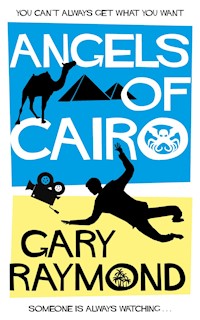
Lewis has written a script. Eighty pages in ten days. Hardly slept... He taps the bag on his shoulder with a delicate fingertip like it's a hot kettle. Cliff is then given ten minutes on the problem with Lewis's printer. Then the history of problems with his printer. Then problems with printers more generally... Robert Clifford is in Cairo to present his latest film for a festival prize. It has taken seven gruelling years of his life to make and is definitely NOT a film about his mother. But his moment in the spotlight is not quite as he scripted. There are rumours the jury could be influenced. Nobody can lay their hands on a copy of the film. And even his girlfriend thinks it's about his mother. Cliff's producer has not turned up but sent his nephew Lewis Proudfoot instead. Lewis has a script of his own to sell and is determined that everyone should hear about it. Then a meeting is arranged with a group of the festival organiser's friends, who may or may not be revolutionaries... Angels of Cairo is a fast-moving, acerbic comedy told over a single day but capturing a lifetime of angst and self-doubt.
Sie lesen das E-Book in den Legimi-Apps auf:
Seitenzahl: 210
Veröffentlichungsjahr: 2021
Das E-Book (TTS) können Sie hören im Abo „Legimi Premium” in Legimi-Apps auf:
Ähnliche


















Contents
About the Author
Title Page
Introduction
Angels of Cairo
Acknowledgements
Parthian Fiction 1
Parthian Fiction 2
Parthian Fiction 3
Parthian Fiction 4
Copyright
Gary Raymond is a novelist, critic, editor and broadcaster. He is the author of two other novels, The Golden Orphans and For Those Who Come After, as well as a non-fiction book, How Love Actually Ruined Christmas. He has edited a wide range of fiction and non-fiction books, from short story anthologies to political memoir. As a critic he has been seen in the pages of The Guardian and The Daily Telegraph and heard on BBC Radio Four’s Front Row and Radio 3’s Sunday Morning Show. Since 2018, he has presented The Review Show for BBC Radio Wales, and since 2012 has been editor of Wales Arts Review.
Angels of Cairo
Gary Raymond
The following all took place on January 24th 2019, when Donald J. Trump was in the White House and a global pandemic that could claim the lives of millions of people was still only a predicted reality in the minds of the world’s leading virologists and climate scientists.
The wheels of the porter trolley skate along the poolside flagstones outside the window of the ground-floor hotel room with the rhythm of a rollercoaster lift chain, and with every clip-clack clip-clack clip-clack Cliff’s heart tightens as if he’s nearing the drop. His fingers dig into the leather of the armrests, his eyes widen and whiten. Even though the sound fades as the trolley passes, to Cliff it stops dead, and his heart skips a beat. What’s next? The wind in his hair? The screaming of his fellow riders? This isn’t him. Anxiety. Fear. He’s known hate before, but not fear. You think you know it, until you do, then you realise you hadn’t known it at all.
How long can fear can keep him in the room?
The chair is soft, but not too soft; the temperature is cool but not cold. Hotel air. Frigid and still. No noise but for the trolley wheels, and they’re gone now. He has kept the curtains closed. His suitcase remains unopened on top of the counter, his carry-on flung onto the tightly wrapped bed, the widest bed he’s ever seen. Wider than it is long. All seven dwarves could have slept in it, side by side. If Cliff had been sharing it with someone, which he won’t be, he would not have known they were there. He sits with his hands on his knees. The chair is the perfect size, height, width, depth, for this rigid pose to be comfortable.
The silence. It surrounds him like milk.
Cliff thinks of the flight. It already feels like a memory of a film, from a film, a sequence of well-cut scenes. Get in late, get out early.
The cabin is half-empty. Night flight. The white noise of the engine. All that recycled air, the egg farts and onion burps. Bodies stretch along unpurchased seats, heads on those small white synthetic pillows that have the texture of paramedic compresses for roadside trauma that Cliff always used to say were designed to remind you that you don’t have a real pillow. Memory torture, he called it. Out the window, beneath, in the blackness, sometimes cities appear like leaves fallen onto a lightbox, a silent reminder on a gigantic scale that one day Mother Nature wants all this back.
Lewis is in the seat in front, his face lit by his tablet. Cliff’s eyes keep flicking over to him, just to make sure he hasn’t moved. The fear then was just a fizz, a rumble. It was denied any more life than that. Just a metallic taste at the back of the throat, like the aroma of old developing fluid he’s used a few times when experimenting with film for a dream sequence he’d wanted to shoot. His dog had drunk some and threw up pink sick onto the kitchen floor.
Cliff gets up ‒ his legs are stiff, airport-tired ‒ and he walks to the bathroom to take a piss, moving slowly, stiffly, across the buffered marble floor patterned like nougat. His phone pings. It comes out of the air like a bubble popping in heated liquid. Sammeh. I trust you arrived safely. It’s true; the logistics of the journey had been flawless.
Cliff ruffles his hair.
He’s been overreacting.
Whatever went wrong, it was not as bad as it felt at the time. It’s just a blip, he mumbles to himself. It cannot be as bad as all that. You’re just tired.
He looks at himself in the bathroom mirror, his skin sallow in the plastic light. You’re Bob Clifford. Robert Clifford. Little Bobby Clifford. And you have work to do here.
He leans on the counter with heavy shoulders. He flicks on the shower, pulls off his T-shirt and kicks off his slacks. Lewis is no-one to be frightened of.It has taken Cliff years to get his movie made; long hard years of stand-offs, compromises, tears, perspiration, and specks of blood. His mother had died during that time and his chest cavity had absorbed it like a bell jar. Marie said she worried about him. She said it often. A kiss, the type that showed her he was thankful she was his girlfriend. Partner. Life-partner. What were they calling themselves now? This glorious union. They called each other different things depending on who they were talking to. Girlfriend. Fiancée. But they didn’t have a ring. Without the ring it’s just another word. A level up, but still just semantics. Cliff felt she talked to him like a girlfriend would. It’s your funeral. That sort of thing. Not the wifely tone warning him of his responsibilities to the sanctity of their union, to an institution. A kiss, the type that landed on his forehead and smelled of morning coffee. I worry about you. A good few seconds looking into her glistening green eyes, and then her phone would buzz and she’d lean back against the kitchen counter. But the film was good. Marie had admitted as much. And he knew it. He knew others knew it. People said they liked it and he recognised sincerity when it was offered to him. He spent enough time with bad actors to know when he was being played. And now he’s in Cairo, invited to present for consideration for the festival prize. Invited. The bubble broached. All those wrong turns, those curious avenues. The invitation began: Dear Mr Robert Clifford. Bobby now only to Marie, and she could have that. Childhood friends still called him Cliff. But it would be good to know who was calling after him in the street. He had made the right choice going for Robert in the credits.
A few days after the invitation came the call from Preston asking Cliff to take Lewis with him to Cairo. Cliff had been introduced to Lewis at a party. Lewis was mid-twenties, didn’t blink, the look of a man, as Cliff’s dad would have put it, who was always waiting to be called upon. Cliff hadn’t given him a second thought. At least didn’t give him much thought beyond when others mentioned him. Have you met Preston’s nephew? It was always said over drinks.
Lewis talked as if he was reciting something. Something half-remembered. That was Cliff’s memory of him.
“Why do you want me to take your nephew to Cairo?”
What possible answer could there be?
But Cliff knew what the answer was going to be.
“He wants to get into the movie business. He likes those Japanese comics. Introduce him to some people. Look after him. He struggles. Babysit.”
Preston spoke in cascading rhythms, rhythms that did a job of alluring, of convincing.
Although not to everyone.
What was it Marie said about him?
“He talks in diarrhiffic waterfalls.”
Was that even a word?
Cliff wasn’t happy from the off. He told Marie he wasn’t happy.
“Babysit. He said that. Exactly that.”
“Tell him no.”
“I wish I could. I’m not out of the woods yet with this film.”
The kiss to the forehead, the smell of coffee.
“At some point you have to cut this loose and ask yourself what kind of artist you want to be,” Marie said.
There was never any question about Lewis going with him. That’s what Preston got for his half-a-million-quid investment in the movie. Continual affirmatives. Cliff and Lewis connect at Heathrow.
Lewis fixes Cliff with eyes that in another context may have suggested they needed rescuing from something. Lewis looks uncomfortable in a crowd. He has narrow shoulders, no waist; his hair falls scruffily forward, a shake of salt and pepper at the temples slightly throwing off his youth. Cliff is immediately reminded of meeting Lewis at that party. They’d shared a moment of silent awkwardness similar to this one, only that time Cliff was half-drunk and the DJ was playing Soulwax. Now, though, Cliff is sober, and the only music is airline staff giving instructions to people who can’t work the automated check-in screens. It’s a busy morning, but the throngs seem to be concentrated in funnels of queues. There is a great deal of unused space. Cliff has an eye for unused space that often kept him awake at night when he was making his film. He had, he admitted, become obsessed with trimming things, making everything leaner. It was how he got the thing made. He’s still thinking this way. His mind has yet to switch off from the filmmaking process, and it’s morphed from maker to promoter without so much as the raising of a glass of champagne. That happened, surely – of course it did. Champagne was raised. Marie invited some friends over, but they didn’t know why they’d come – they thought perhaps she was going to announce she and Cliff were expecting a baby or something, and when she said Cliff had finished his film the anti-climax reverberated around the house like a sonic boom. Cliff didn’t register it. He probably even smiled and accepted some congratulations. But even at that moment, as the thin flute of bubbles was lofted into the air, he was concerning himself with how all this work must not be for nothing. Promotion. Get it seen. The work is not over. Not over. Not over. He could see in Marie’s eyes that she could see in his eyes that he wasn’t fully present. At some point she would wonder if he was having a breakdown. He’d decided a long time ago to wait until she brought it up before he’d worry about whether she was on to something or not.
Lewis is a few people ahead of Cliff in the queue. That’s how they meet. Face to face at the bend of the conga.
“It’s good to see you again,” says Cliff, and he holds out his hand, but the queue shuffles on and Lewis, with an awkward half-smile, moves past the outstretched hand, looking at it as if it’s a prize he’s missing out on.
Cliff puts his hand back in his pocket like he’s clasping an IOU.
The queue shuffles on further. They meet again five minutes or so later.
Lewis says nothing.
“We’ve met before,” Cliff says. “I don’t know if you remember?”
It seems strange he wouldn’t remember. It seems strange he wouldn’t have been reminded, even. Preston would have mentioned they’d met before, wouldn’t he? But Lewis’s eyes are giving nothing back. If anything, he looks slightly scared. “It was at a party. Gina Forbes’s. Her exhibition launch. At the Tech. The afterparty. I think Rhona introduced us. Rhona Brooks.”
Still scared-looking.
“You don’t remember?” Cliff is beginning to doubt himself.
The queue shuffles and they are parted again.
How long ago was that exhibition? Eighteen months ago? Three rooms, one with a DJ, one with a bar, four pieces hanging in each room. Gina was a photographer. As far as Cliff could tell, the photographs were extreme close-ups of buttocks, suggestions of crevices, cellulite giving way to the perfect smoothness of sand dunes. The fact the exhibition was titled “Unseeing the Lectures of Literature” did nothing to enlighten him. It was a stormy night, and Lewis wore a long black trench coat, and his earring hoop glistened off the glitterball.
Rhona, who had introduced Lewis to Cliff, gave one of her short sharp hand-offs.
“This is Lewis. This is Bob Clifford. He made a documentary a couple of years ago. I saw it.”
She slid away.
“I’ve made more than just one documentary,” Cliff said. “More than just one film.”
Those beady eyes. Lewis sipped at his plastic-stemmed wine cup like his mouth was drawn on.
Cliff went on for some time about his films before Lewis said anything at all.
The queue has them back facing each other.
“Rhona Brooks introduced us,” Cliff says. “You told me about your band.”
Lewis seems to be thinking, as if, finally, he’s giving this some thought. “The photographs of breasts,” he says. “Yes, I recall. They were quite amusing.”
A quaint moment, given what is to come.
Lewis is at the front of the queue now, and he is ushered to the check-in desk. As he walks over to it, he looks back at Cliff with pliant eyes.
An awkward, harmless start.After check-in, and Lewis has waited for Cliff in one of the unused spaces to the side, there is a shift. A shift in tone, in atmosphere, in attitude – it’s not so easy to pinpoint what the shift is, but Cliff detects it. Nervousness. Is Lewis a nervous flyer? Cliff had flown with a few over the years, most of whom had dealt with it by self-medicating. Booze. Pills. Lewis looks unsure in his nervousness. So, Cliff decides to set his controls to avuncular. Cliff is the elder, by at least a decade – probably more – the man of experience. And now it’s just the two of them, no other queue-attendees eavesdropping. A simple question. It seems innocuous. Did you get to the airport okay? Something like that.Cliff catches himself in the moment, shower water proving only a superficial cleanse. He pushes soapsuds out of his eyes with his knuckles. How long has he been in there? What happened in Heathrow? And after that, at security? And in the Food Hall, getting lunch in the café? And at the gate, as they queued for boarding? The five-hour flight? Immigration? Baggage claim? In the car, the car sent to pick them up? At hotel check-in? In the elevator? At the doors to their adjacent rooms? Cliff was damaged. Physically.
The flood, the deluge, the barrage, the onslaught, the artillery fire of a sophisticated weapons system.
Lewis’s voice had been unstoppable. It burned the landscape of Cliff’s psyche like a slow-moving river of battery acid, stripping everything to its skeletal essence.
At first, Cliff was blindsided. He didn’t realise what was happening. He’d been good enough, in avuncular mode, to allow Lewis the conversational space to express himself. Lewis was the nervous younger of the two, so if he wanted to talk – if he wanted to talk a lot – then Cliff would give him the stage. But even then, you might expect gaps, pauses, inhalations. It was extraordinary how Lewis kept going, how he sucked the air out of the ground between them. It was paranormal.
The shower water runs over Cliff’s head, the glass blades of water protecting him, encasing him in his own thoughts. The bathroom is a warming amber womb. Cliff is coming back to life.
He remembers looking out from the mezzanine over the shops and food courts. Lewis had gone to try and withdraw some Egyptian money from the ATM. He returns. Cliff watches him approach daintily. Lewis walks on his toes, as if a giant has him by the waist. His brow is furrowed.
“No luck?” says Cliff.
The shower water now sounds like rain, that harmonious rain, the cleansing rain. Cliff can’t remember – can’t summon up the memory, more like – of what happened next. But it was that moment, after the ATM, when Cliff began to realise Lewis would not stop.
The flight might have killed him had he and Lewis not had the space to sit apart. Lewis goes to the Manga on his tablet. He is focussed intensely on it. Cliff leans his head back in the seat and steadies his breathing. After a while – and this is denial in action – Cliff takes a book out of his carry-on and loses himself in it. But when the plane lands and they stand, stooping to alight, Lewis takes up where he had left off when the flight left the tarmac in London. He had paused. Five hours before. And now he restarted. Mid-sentence.
Cliff looks at himself in the bathroom mirror, towel around his waist, dripping, pale, and he thinks about the shelling of allied trenches in World War One. Later, he would think of Japanese prisoner-of-war camps.
There’s another message from Sammeh.
The car will pick Cliff and Lewis up from the hotel after breakfast to take them to the festival site. Cliff messages back. How long is the car journey?
Cliff sinks back into the soft chair, in the towel and those small white hotel sandals. He feels better now. Half-human. What had Lewis been talking about all those hours? The voice. Clean and clear. It had public schoolboy intonations, the straight lines with nods at international colour. There were some inconsistent long vowels and what Cliff soon decided were intentionally obtuse mispronunciations of everyday words. Byudiful instead of Beautiful. Nelson Mandela a cousin to the mandolin. The Tok of a tik-tok for Tokyo. Lewis’s speech became an atonal language that Cliff’s brain, used to the dips and bends of the sophisticated conversationalists of his acquaintance group, could not, ultimately, comprehend. Shellshock. There was nothing to pick from the blown-out soil of his mind. There he is again, returning to the trenches.
Lewis has written a script. Eighty pages in ten days. Hardly slept. But he wanted it done in time for Cairo. He intends to pitch it. He’s printed it off. He taps the bag on his shoulder with a delicate fingertip like it’s a hot kettle. Cliff is then given ten minutes on the problem with Lewis’s printer. Then the history of problems with his printer. Then problems with printers more generally. Lewis is not afraid of the cliché. Lewis hadn’t had such problems when growing up in Germany. There are no printer problems in Germany. That topic exhausted, on to the plot of his script. Heavily influenced by Manga and H.P. Lovecraft, but essentially a coming-of-age story; Lewis doesn’t trust the term bildungsroman and when Cliff says the word here, Lewis goes ten minutes on why it’s inappropriate. A coming-of-age story of the daughter of a diamond mine owner in Guinea, Africa. He says Guinea, Africa, like Americans say Paris, Texas. The movie opens with the collapse of the mine and ends with tentacular sea monsters in the desert. Along the way is civil war, a tea party, and a telepathic orangutan named Professor Profondeurs.
Routine next.
Lewis walks Cliff through his writing routine, although Cliff isn’t quite sure why. Lewis seems to go into some semi-trance when regaling. He glares at Cliff when he’s speaking, unblinking, as if they are the only two persons in the world, of which only one of them is a sentient being capable of thought and movement. Whenever Cliff manages to break the stream and offer a few words, Lewis gently recoils, his eyes drop and he pinches the skin on the back of his hands until Cliff stops, one or two five-word sentences later, and Lewis recharges, his eyes lock, and the monologue continues. The routine, Lewis’s routine, as if Cliff has asked, and as if Cliff is an onlooker, a fan, not someone who has written ten scripts, made three documentaries, won an award at an international festival in India, and now has directed a feature, this feature. It’s why they’re both going to Cairo. It’s why Lewis is going to Cairo. When the waitress brings them coffee in the Heathrow Food Hall café, Cliff feels the urge to reach out and grab her hand, plead for his rescue. So, by the time the plane is taxiing for take-off, and Lewis is exploring his own relationship with caffeine in a winding free-form verbal essay on the subject, Cliff has surrendered.Marie would not have approved.
So, Lewis doesn’t observe the same societal norms as what you’re used to. Maybe he can teach you a thing or two. You could do with new perspectives. Get involved. Experience other people’s lives.
It’s easy to imagine her comments. But she doesn’t get it.
Lewis goes on.
Cliff is soon hoping for visions of Marie’s admonishments to rescue him from bleaker things.
He thinks of standing alone in a blizzard.
He thinks of Father Karras’s mother coming up out of the subway in The Exorcist.
He thinks of drowning. Gurgle gurgle.
He thinks of the blood coming from the elevator shaft in The Shining.
He thinks of mobile phones causing brain cancer.
Of 5G causing pandemics.
The frequency of Lewis’s voice, unwavering, scalpel-like slicing off the top of Cliff’s head with a hairline incision and pressing rusted nuts and bolts into his brain like it’s putty.
Marie would have scowled.
Please scowl, Marie.
The fact is, she just doesn’t understand. Nobody does, nobody would, nobody will. When this is over, Cliff will be like a soldier coming home from war, isolated from his loved ones by trauma.With Marie’s voice in his head, Cliff dresses, bravely, convinced Lewis was an apparition, the whole thing intensified by the peculiar, heightened dreaminess of travel. How would Shakespeare have explained it away? Bad fish? A stuck grape pip? It was stress, the fatigue, the expectation of Cliff having his movie not just seen, but judged. It must have got to him.At breakfast, Lewis talks.
He talks about his food, about his breakfast habits at home, about his home, about his mornings and his thoughts on the idea of breakfast in general, and things he’s read about the history of breakfasts. He shares a flat above a veterinary surgery. He talks about how he used to help out there, but they eventually had to let him go no hard feelings business was slow cutbacks, and now it’s slightly awkward as he still sees them every day particularly when he’s taking the bins out as they share a side alleyway described in detail but he tries to be philosophical about the patterns of human interacting and what those patterns say about us as people.
My God, thinks Cliff. His flatmate. His flatmate must be deaf. Or dead. Or a priest. Or all three: a deaf dead priest. Or more likely his flatmate is just a supersized bag of animal feed propped up in the corner of the room with a face drawn on it with a Sharpie, like a craft version of Norman Bates’s mother.
All this, and they haven’t even eaten yet.
There is a trans-continental buffet, typical of these grand five-star hotels. Cliff watches as Lewis passes the fried rice, the aubergines, the fruits, the kofte and falafel, and hovers around the baked beans and beef sausages. Cliff has put a tablespoon of each basin onto his plate. It is a muddled tapestry of awkward culinary companions. When on holiday with Marie, he used to pile his plate like this to make her laugh and roll her eyes, but he grew to like the mix. Lewis eyes up the plate. Cliff has piled it conspicuously high. He is treasuring this quiet time at the buffet. Lewis asks if falafel is a breakfast food, really?
“If it’s here, it must be.”
Lewis then gives up the most terrifying sentence yet.
“I’m a vegan.”
Cliff feels his heart grow hard.
“So, you can eat falafel,” Cliff says, pointing at it with his fork. “But not the beef sausages.”
Mmmmmmmmmmmmmmmm.
This noise Lewis makes is loud, as if he’s trying to reach the cheap seats. It’s high-pitched, like something from the BBC Radiophonic Workshop. He tilts his head. He takes the tongs, puts one falafel ball on his plate. Tilts his head again. Replaces the ball onto the buffet basin. He makes the noise again. Tilts his head. Puts the falafel back on his plate. Cliff moves away, moves on, and looks back to see Lewis finally put the ball of falafel back onto the buffet. Lewis also moves on, back to the baked beans, but Cliff sees him looking back over his shoulder to the falafel. There’s every chance this drama has a few more Acts to play out before it concludes.
Cliff sees a chance for a quiet few minutes eating alone.
From the table he sees a waiter go up to Lewis. Looks like he wants to help, but Lewis goes rigid. Cliff wonders if he should intercede. But he stays seated, washes down a mouthful of falafel, beans, and scrambled egg with some black coffee. There is nodding between the waiter and Lewis. Lewis comes back to the table and puts his plate down. It has some beans, some green leaves, and some couscous. The two men look across at each other for a minute.
“Everything okay, Lewis?”
“The man is going to bring me an omelette,” Lewis says.




