


32,39 €
Mehr erfahren.
- Herausgeber: Packt Publishing
- Kategorie: Wissenschaft und neue Technologien
- Sprache: Englisch
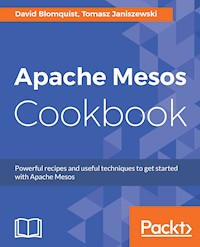
Over 50 recipes on the core features of Apache Mesos and running big data frameworks in Mesos
About This Book
- Learn to install and configure Mesos to suit the needs of your organization
- Follow step-by-step instructions to deploy application frameworks on top of Mesos, saving you many hours of research and trial and error
- Use this practical guide packed with powerful recipes to implement Mesos and easily integrate it with other application frameworks
Who This Book Is For
This book is for system administrators, engineers, and big data programmers. Basic experience with big data technologies such as Hadoop or Spark would be useful but is not essential. A working knowledge of Apache Mesos is expected.
What You Will Learn
- Set up Mesos on different operating systems
- Use the Marathon and Chronos frameworks to manage multiple applications
- Work with Mesos and Docker
- Integrate Mesos with Spark and other big data frameworks
- Use networking features in Mesos for effective communication between containers
- Configure Mesos for high availability using Zookeeper
- Secure your Mesos clusters with SASL and Authorization ACLs
- Solve everyday problems and discover the best practices
In Detail
Apache Mesos is open source cluster sharing and management software. Deploying and managing scalable applications in large-scale clustered environments can be difficult, but Apache Mesos makes it easier with efficient resource isolation and sharing across application frameworks.
The goal of this book is to guide you through the practical implementation of the Mesos core along with a number of Mesos supported frameworks. You will begin by installing Mesos and then learn how to configure clusters and maintain them. You will also see how to deploy a cluster in a production environment with high availability using Zookeeper.
Next, you will get to grips with using Mesos, Marathon, and Docker to build and deploy a PaaS. You will see how to schedule jobs with Chronos. We'll demonstrate how to integrate Mesos with big data frameworks such as Spark, Hadoop, and Storm. Practical solutions backed with clear examples will also show you how to deploy elastic big data jobs.
You will find out how to deploy a scalable continuous integration and delivery system on Mesos with Jenkins. Finally, you will configure and deploy a highly scalable distributed search engine with ElasticSearch.
Throughout the course of this book, you will get to know tips and tricks along with best practices to follow when working with Mesos.
Style and approach
This step-by-step guide is packed with powerful recipes on using Apache Mesos and shows its integration with containers and big data frameworks.
Sie lesen das E-Book in den Legimi-Apps auf:
Seitenzahl: 128
Veröffentlichungsjahr: 2017
Ähnliche



















BIRMINGHAM - MUMBAI
< html PUBLIC "-//W3C//DTD HTML 4.0 Transitional//EN" "http://www.w3.org/TR/REC-html40/loose.dtd">
Apache Mesos Cookbook
Copyright © 2017 Packt Publishing
All rights reserved. No part of this book may be reproduced, stored in a retrieval system, or transmitted in any form or by any means, without the prior written permission of the publisher, except in the case of brief quotations embedded in critical articles or reviews.
Every effort has been made in the preparation of this book to ensure the accuracy of the information presented. However, the information contained in this book is sold without warranty, either express or implied. Neither the authors, nor Packt Publishing, and its dealers and distributors will be held liable for any damages caused or alleged to be caused directly or indirectly by this book.
Packt Publishing has endeavored to provide trademark information about all of the companies and products mentioned in this book by the appropriate use of capitals. However, Packt Publishing cannot guarantee the accuracy of this information.
First published: July 2017
Production reference: 1310717
ISBN 978-1-78588-462-7
www.packtpub.com
Credits
Authors
David Blomquist
Tomasz Janiszewski
Copy Editor
Safis Editing
Reviewer
Radoslaw Gruchalski
Project Coordinator
Kinjal Bari
Commissioning Editor
Kunal Parikh
Proofreader
Safis Editing
Acquisition Editor
Meeta Rajani
Indexer
Pratik Shirodkar
Content Development Editor
Mamata Walkar
Graphics
Kirk D'penha
Technical Editor
Varsha Shivhare
Production Coordinator
Shantanu Zagade
About the Authors
David Blomquist has worked with computer technology for almost 30 years. He studied electrical engineering at Arizona State University and chemical engineering at the University of Texas. David is currently the president and CTO of Tentra, a systems integration company. When he is not wrangling large-scale container deployments into well behaved PaaS herds, he can be found skiing or hiking, while patiently waiting for the next ski season to begin.
Tomasz Janiszewski is a software engineer who is passionate about distributed systems. He believes in free and open source philosophy and occasionally contributes to projects on GitHub. He actively participates in the Mesos community and spreads his knowledge on mailing lists and StackOverflow. He is involved in Marathon development and building PaaS on top of Mesos and Marathon.
About the Reviewer
Radoslaw Gruchalski is a software engineer specializing in distributed systems. With over 17 years' commercial experience, 5 of which have been exclusively in the IoT and big data processing landscape, he currently focuses on helping his clients in the area of design, architecture, and the implementation of distributed, fault-tolerant platforms for cloud, hybrid, and on-premise deployments. His hands-on experience with the design, architectural, implementation, and operational aspects of the SMACK stack, together with his deep understanding of what it takes to deploy distributed systems, makes him an invaluable asset to have in your team.
www.PacktPub.com
For support files and downloads related to your book, please visit www.PacktPub.com. Did you know that Packt offers eBook versions of every book published, with PDF and ePub files available? You can upgrade to the eBook version at www.PacktPub.com and as a print book customer, you are entitled to a discount on the eBook copy. Get in touch with us at [email protected] for more details. At www.PacktPub.com, you can also read a collection of free technical articles, sign up for a range of free newsletters and receive exclusive discounts and offers on Packt books and eBooks.
https://www.packtpub.com/mapt Get the most in-demand software skills with Mapt. Mapt gives you full access to all Packt books and video courses, as well as industry-leading tools to help you plan your personal development and advance your career.
Why subscribe?
Fully searchable across every book published by Packt
Copy and paste, print, and bookmark content
On demand and accessible via a web browser
Customer Feedback
Thanks for purchasing this Packt book. At Packt, quality is at the heart of our editorial process. To help us improve, please leave us an honest review on this book's Amazon page at https://www.amazon.com/dp/178588462X.
If you'd like to join our team of regular reviewers, you can email us at [email protected]. We award our regular reviewers with free eBooks and videos in exchange for their valuable feedback. Help us be relentless in improving our products!
Table of Contents
Preface
What this book covers
What you need for this book
Who this book is for
Sections
Getting ready
How to do it…
How it works…
There's more…
See also
Conventions
Reader feedback
Customer support
Downloading the example code
Downloading the color images of this book
Errata
Piracy
Questions
Getting Started with Apache Mesos
Introduction
Installing Mesos on Ubuntu 16.04 from packages
Getting ready
How to do it...
How it works...
See also
Installing Mesos on Ubuntu 14.04 from packages
Getting ready
How to do it...
How it works...
See also
Installing Mesos on CentOS 7 and RHEL 7 from packages
Getting ready
How to do it...
How it works...
See also
Preparing Ubuntu 16.04 for a Mesos installation from source code
Getting ready
How to do it...
How it works...
Preparing Ubuntu 14.04 for a Mesos installation from source code
Getting ready
How to do it...
How it works...
Preparing OS X (Yosemite and El Capitan) for a Mesos Installation from source code
Getting ready
How to do it...
How it works...
Downloading, building, and installing the Mesos source code
Getting ready
How to do it...
How it works...
There's more...
Configuration tips
Build tips
Installation tips
Implementing High Availability with Apache ZooKeeper
Introduction
Configuring ZooKeeper installed from packages on Ubuntu 14.04, Ubuntu 16.04, CentOS 7, or RHEL 7
Getting ready
How to do it...
Configuring Mesos masters with ZooKeeper
Configuring Mesos agents with ZooKeeper
How it works...
There's more...
Configuring ZooKeeper on Ubuntu 14.04, 16.04, and OS X from source
Getting ready
How to do it...
Configuring Mesos masters with ZooKeeper
Configuring Mesos agents with ZooKeeper
How it works...
There's more...
Running and Maintaining Mesos
Introduction
Logging and debugging
Getting ready
How to do it...
How it works...
Monitoring
Getting ready
How to do it...
How it works...
See also
Setting attributes for agents
How to do it...
How it works...
Defining roles and resources
How to do it...
How it works...
There's more...
Dynamic reservations
Persistent volumes
Oversubscription
How to do it...
How it works...
See also
Controlling permissions using access control lists
Getting ready
How to do it...
How it works...
Agent authentication
Getting ready
How to do it...
Master
Agent
Marathon
How it works...
Encryption SSL
Getting ready
How to do it...
How it works...
Upgrading Mesos
How to do it...
How it works...
Understanding the Scheduler API
Introduction
Installing Protobuf
Getting ready
How to do it...
How it works...
Registering frameworks
How to do it...
How it works...
Handling events
How to do it...
How it works...
Declining offers
How to do it...
How it works...
Scheduling tasks
How to do it...
How it works...
Acknowledging task updates
How to do it...
How it works...
Killing tasks
How to do it...
How it works...
State persistence
How to do it...
How it works...
Reconciliation
How to do it...
How it works...
Managing Containers
Introduction
Enabling the Mesos containerizer
Getting ready
How to do it...
How it works...
Enabling POSIX isolators
Getting ready
How to do it....
How it works...
Enabling the POSIX disk isolator
Getting ready
How to do it...
How it works...
Configuring the shared filesystem isolator
Getting ready
How to do it...
How it works...
Configuring cgroup isolators
Getting ready
How to do it...
How it works...
Configuring the port mapping network isolator
Getting ready
How to do it...
How it works...
Configuring Docker image support for the Mesos containerizer
Getting ready
How to do it...
How it works...
Using the Docker containerizer
Getting ready
How to do it...
How it works...
Running an image from a private repository
Getting ready
How to do it...
How it works...
Using container network interface
Getting ready
How to do it...
How it works...
Monitoring containers with Sysdig
Getting ready
How to do it...
How it works...
Deploying PaaS with Marathon
Introduction
Installing and configuring Marathon
Getting ready
How to do it...
How it works...
Monitoring Marathon
Getting ready
How to do it...
How it works...
Launching an application
Getting ready
How to do it...
How it works...
Launching a Docker container
Getting ready
How to do it...
How it works...
Setting up the discovery service
Getting ready
How to do it...
How it works...
Enabling SSL
Getting ready
How to do it...
How it works...
Enabling basic access authentication
Getting ready
How to do it...
How it works...
Using a custom authentication plugin
Getting ready
How to do it...
How it works...
Tuning Marathon
Getting ready
How to do it...
How it works...
Job Scheduling with Metronome
Introduction
Installing and configuring Metronome
How to do it...
How it works...
Monitoring Metronome
How to do it...
How it works...
Scheduling jobs
How to do it...
How it works...
Continuous Integration with Jenkins
Introduction
Building the Jenkins Mesos plugin
Getting ready
How to do it...
How it works...
Installing Jenkins
How to do it...
Enabling the Jenkins Mesos plugin
Getting ready
How to do it...
Preface
Apache Mesos was the first open source cluster manager to handle workloads in a distributed environment through dynamic resource sharing and isolation. It is great for deploying and managing applications in large-scale cluster environments.
Since its inception, Mesos has been under constant development and it is one of the most mature, robust and stable cluster managers in both the open source and commercial software worlds.
This guide is packed with powerful recipes for using Apache Mesos and its integration with containers and frameworks.
What this book covers
Chapter 1, Getting Started with Apache Mesos, provides instructions for installing Mesos on several different operating systems.
Chapter 2, Implementing High Availability with Apache ZooKeeper, teaches you how to install Apache Zookeeper and configure it with Mesos to create a multi-master, highly available Mesos cluster.
Chapter 3, Running and Maintaining Mesos, describes the components of a running Mesos cluster and shows you how to configure them.
Chapter 4, Understanding the Scheduler API, first teaches you about frameworks and how they interact with Mesos, then proceeds to show you how to develop a simple framework.
Chapter 5, Managing Containers, shows you how to deploy and manage containerizers in Mesos.
Chapter 6, Deploying PaaS with Marathon, demonstrates how to install and configure Marathon and other tools required to set up a private PaaS.
Chapter 7, Job Scheduling with Metronome, shows you how to run a cron service on Mesos.
Chapter 8, Continuous Integration with Jenkins, teaches you how to run a highly scalable Jenkins continuous integration and continuous delivery system on Mesos.
What you need for this book
We recommend one server or virtual machine installed with Ubuntu 14.04 as a development environment for following most of the recipes in this book. To test the high availability recipes in Chapter 2, Implementing High Availability with Apache ZooKeepera minimum of six servers or virtual machines is required. Chapters 1, Getting Started with Apache Mesosand Chapter 2, Implementing High Availability with Apache ZooKeeperwill guide you through installing and configuring Mesos and ZooKeeper on multiple operating systems but we recommend mastering the recipes in chapters 3 – 8 on Ubuntu 14.04 before adapting them for other supported operating systems.
Who this book is for
This book is for systems administrators, engineers, and programmers who are interested in using Mesos. Basic experience with distributed systems and cluster management would be helpful but is not essential. A working knowledge of the Linux operating system is expected.
Sections
In this book, you will find several headings that appear frequently (Getting ready, How to do it…, How it works…, There's more…, and See also). To give clear instructions on how to complete a recipe, we use these sections as follows:
Getting ready
This section tells you what to expect in the recipe, and describes how to set up any software or any preliminary settings required for the recipe.
How to do it…
This section contains the steps required to follow the recipe.
How it works…
This section usually consists of a detailed explanation of what happened in the previous section.
There's more…
This section consists of additional information about the recipe in order to make the reader more knowledgeable about the recipe.
See also
This section provides helpful links to other useful information for the recipe.
Conventions
In this book, you will find a number of text styles that distinguish between different kinds of information. Here are some examples of these styles and an explanation of their meaning.
Code words in text, database table names, folder names, filenames, file extensions, pathnames, dummy URLs, user input, and Twitter handles are shown as follows: " By default, Marathon logs to stdout and syslog."
A block of code is set as follows:
cat <<EOF > /etc/systemd/system/traefik.service[Unit]Description=TraefikWants=network-online.targetAfter=network.target network-online.target[Service]Restart=on-failureExecStart=/usr/bin/traefik[Install]WantedBy=multi-user.targetEOF
Any command-line input or output is written as follows:
curl -k https://localhost:8443/ping
New terms and important words are shown in bold. Words that you see on the screen, for example, in menus or dialog boxes, appear in the text like this: " You should also be able to see Marathon listed as a framework in the Mesos UIFrameworkstab."




