


10,79 €
Mehr erfahren.
- Herausgeber: Muswell Press
- Kategorie: Gesellschafts- und Liebesromane
- Sprache: Englisch
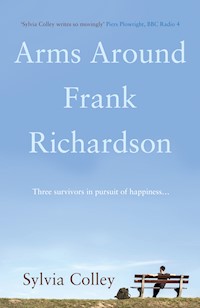
The impact of traumatic childhood experience reverberates into the grown-up world of Frank, Alice and Henry – children from three families suffering the fall-out from their early life. Frank, a working-class boy abused by his step-father, Alice, physically disabled and frustrated, Henry, the less clever son of wealthy ambitious parents. From a rundown estate in Eastleigh, a small town in Darlington and an affluent Cotswold home, each character grapples with the life fate has handed them. Until by chance they all come together in adulthood, the repercussions are explosive. Spanning 30 years the scope of this novel is ambitious and the writing beautifully honed. Character and sense of place are masterfully achieved.
Das E-Book können Sie in Legimi-Apps oder einer beliebigen App lesen, die das folgende Format unterstützen:
Veröffentlichungsjahr: 2022
Ähnliche




















ARMS AROUND FRANK RICHARDSON
Sylvia Colley
To my grandchildren Harrison and Juliet
Contents
Prologue
In the evening he came to her with the pebbles in a jar. She was so pleased to see him.
‘Look,’ he said, and shook the pebbles into her hand and she laughed. ‘Wonderful, aren’t they? They were mine when I was little. I found them by the sea. And when you lick them! Look!’ She put out her tongue to wet a pebble and it gleamed like liquid in the light.
‘They’re jewels,’ he said, ‘for my box.’
‘Do you want a swing now?’ she asked, but he didn’t, and disappeared somewhere out of sight. She wandered through the garden to the tree where Henry had hung the swing and limply sat and swung, enjoying the warmth, before returning to the side of the house, where she found him lying on the grass with the pebble stuck in his throat.
Now, in the same wicker chair, she was leaning forward clasping around her middle, holding in the shock, imprisoned by the memories of the dream.
Then she heard Frank calling, ‘Alice! What are you doing? Supper’s ready.’
Heard his footsteps slow and long, crunching the path behind her. ‘Everyone’s waiting.’
And there he was, holding out his hand, lifting up her stick, which was balanced on the table.
‘What’s wrong? Are you not well? Is it your leg again?’ 2
She took his hand as she licked tears from her lips and shook her head. ‘It’s just … that dream. Suddenly, out of nowhere.’
‘Come on now, Alice.’
‘But why, Frank? Why now?’
She took his arm; he carried her stick and they walked back up the path together.
1965–1969
Frank
It was a thin, straggly Christmas tree, crooked in its plastic bucket. There were lights, small and flashing, and silver foil and baubles he had put on the tree with the help of Kitty, who could only reach the lower branches: she was four; he was seven and tall for his age.
There were presents: badly wrapped – but the red paper was enticing. The parcels crinkled and crackled irresistibly. Mum and Dad were drinking in the kitchen. Shouting. Kitty was in bed already. It was late and Frank was forgotten.
He sat fingering a parcel with his name scribbled across it: fingered at a corner, rubbed the thin paper into a hole, worried the edges wider and wider. He was absorbed with excitement, with curiosity. That was when his father opened the door; saw him and swore. That was when he picked him up by one arm and one leg and threw him across the room and his head caught the edge of the open door. He heard Mum screaming. ‘Stop it, Pete. It’s Christmas, for Christ’s sake.’ That’s when his father swung his arm and sent Mum falling into the passageway; that was when he hit him over the head, kicked him, pulled him up by his school jumper and hurled him into the parcels. Frank hit the tree: it crashed over. Mum had run upstairs. He heard her shout to Kitty. Dad ran after her. Frank heard him kicking the bathroom door. ‘Come out here, you bitch.’ That was when his Dad fetched the kitchen knife and waited with it in his hands: waited, sitting at the bottom of the stairs.
Frank was rigid, like stone. His head was bleeding, the blood running into his eyes. He shut his eyes, disappearing into himself, seeing the flashing lights behind his eyeballs: on-off, on-off. Then he heard Dad groaning, that horrible animal noise, and knew he was asleep. He felt the fear sickness creeping into his stomach. Then Mum came with Kitty and they went, all three, creeping and shaking to Aunty Phil’s house. That was when they called the police who came, their blue lights flashing, and found his Dad asleep at the bottom of the stairs: the knife still in his hands.
A layer of dirty water sprawled across the middle of the playground. Two dinner ladies dragged out a small boy who had been kicking and splashing as if at the seaside and then put some red cones either side of the puddle to keep the children away. It had stopped raining, but it was grey, and the air was heavy with cold moisture. Frank watched water dripping off a gutter at one end of the school building He was standing on the edge of the playground, his arms tightly folded and his fists clenched under his armpits.
From where he stood, he could see into the infant-school playground and watched Kitty as she played skipping with a group of girls. He could hear her shrieks. How could she so happy? It was all so strange. They had only moved to a new house and come to this new school two weeks ago. Yet Kitty seemed quite settled. For him it was the constant pain in his stomach, the heavy ache, like a lump which wouldn’t go away, however tightly he folded his arms. And then there was this horrible stinging all over his body and his tongue felt stiff and leathery, like a cat’s. All he could do was to hold himself together and keep very still. Try to disappear; didn’t want to be noticed: if they looked at him, they would know that Dad was in prison.
Mum had said he’d gone so that Dad could get over his drink problem, but when the social worker took him to visit that time, it seemed like a prison with the clinking of keys and all those gates and thick metal doors locking behind them, banging and echoing off the stone floors one after the other. But nobody actually said, and he was too frightened to ask. Never asked, ‘Is Dad in prison?’
He was the only one who seemed to understand that really all this was his fault, Dad being in prison; he shouldn’t have opened that parcel because he knew what Dad was like when he’d been drinking.
He hadn’t wanted to visit, but they said Dad missed him and wanted to see him, so he should go and cheer him up. He asked, ‘Can Kitty come too?’ But Mum said she was too young. Mum kept saying things like, ‘And I’ll tell you one thing, he’s never coming back here. Never, Frankie, not setting a foot. The police won’t let him anyway, so that’s that. So not to worry, Frankie.’ But he wanted Dad to come home. He wanted him back. But he couldn’t say.
He was nervous and he wet the bed the night before the visit and they had had to stop the coach so he could go to the toilet, but his pants were already damp, and he could smell himself.
He didn’t recognise Dad straight away: he’d shaved off his moustache; his fair hair was shorter, and he looked young. He looked nice, like when he was happy. But Frank was shy and couldn’t look at him. Not really look. He wanted Kitty there, not this social worker.
In the prison they had to sit the other side of the table and keep their hands on the top all the time. There were other people visiting and men in uniforms, who Dad called scouts, standing at either end of the lines, watching, making sure they didn’t touch each other.
Dad seemed to be having a good time there. Seemed to be enjoying himself. He was doing carpentry – a doll’s house for Kitty, a table for home. He had wanted a multi-storey car park for his cars. But, beyond anything he could think, dream of, Dad had sent him a bike for his birthday. He treasured that bike above everything; it showed Dad loved him after all. Dad thought about him. The bike and Dad seemed to go together … in a good way.
Now Dad was leaning towards the social worker, smiling that smile. She was grinning, too. Sonia! He hated Sonia, always interfering in their lives. And he could tell she didn’t really care about them; it was just a job. He didn’t want to look at Dad and Sonia and so he watched the other visitors, the other men behind the tables, the woman further down who was crying.
‘I’ll be home soon, son.’
Standing now in the dripping, unfamiliar playground, Frank wished he could have said something to Dad. Tell him that he still got top marks in maths, that he was trying hard. But there never seemed to be the right moment to say anything. And there’d not been the right moment then to say he was sorry about the parcel. That he loved him.
He dreamed how he would make everything all right again when Dad did come home. He thought how Dad would get a good job and they could all live together and Mum would laugh. That’s what he had dreamed, as they sat in the bus on their way home from the prison.
But it had all gone wrong, because when Dad did get out, he started drinking again and one night he came to the house, their old house, when he wasn’t supposed to, and Mum wouldn’t open the door to him, so he broke the downstairs windows. Mum ran upstairs with Kitty and Frank had just stood rigid in the front room among the shattered glass. Someone must have called the police because they came again and took Dad away. He clenched his fists under his arms. Mum should have let Dad in; she should have.
And now there was some court order and the social worker had made them move here, to a different house and different school where Dad couldn’t find them. But he couldn’t bear the thought of Dad being all by himself.
Now, instead of Aunty Phil, they had Mr and Mrs Griffiths for neighbours. She smiled a lot and called everyone ‘love’. She made Mum cups of tea and gave Kitty orangeade and biscuits.
Her name was Ruby. She said to Mum, ‘Call me Ruby, Lynn.’
Mr Griffiths was a postman, so he was off early every morning on his bike. But he was home before they got back from school and always in his shed. Frank walked slowly past their gate so he could look and see into the shed when the door was open. Mr Griffiths was like Dad, in the way of doing carpentry. He wore an old, leather-looking apron and a cap on his head. Frank wanted to go into the shed, to look at the tools, to watch him working. He wondered what sort of things he made. He wanted to be like Dad. He wanted to do carpentry too.
Just yesterday, after school, he stopped by the gate and watched as Mr Griffiths seemed to be turning a chunk of wood on a machine that spun round. He was holding something like a knife to shape the wood as it turned. Frank opened the gate and walked up the path to the shed door and stood there, watching the wood chippings spin onto the floor at Mr Griffiths’ feet. Then Mr Griffiths turned off a switch and the machine slowly came to a stop, and Mr Griffiths twisted round to see him standing there, adjusting the cap on his head as he took off his goggles. ‘My pride and joy, this lathe,’ he said, and patted the machine. ‘I got it second-hand some years ago and look what it can do. How old are you, lad?’
‘Nearly eleven.’
‘Never too young to start learning. You’ll do. Come round on Saturday and I’ll show you how it works. OK, lad?’
‘I’d like to do carpentry,’ he remembered saying.
He was looking forward to that. And Mum was happy in the new house. She painted her nails red and wore her skirts short. She’d taken up with an old boyfriend, Carl, who was spooky. Scary. And it was a shock to see Mum with someone else. It wasn’t nice and he’d started wetting the bed again.
A teacher whose name he didn’t know came out into the middle of the playground and lifted her arm up and down as she rang a brass bell. Everyone stood still and waited until she called each class to line up. But he was already standing still. When his class was called, he moved into the line and followed as they walked back into the school. He noticed the water was still dripping off the gutter.
He didn’t want to stare. He didn’t want to look. But the design of the entwined snakes, which twisted around the back of Carl’s neck and down his arms until the fangs shot along the top of his hands like blue veins, haunted him: the inky blue snakes slithering down his thin white arms.
He was always there. Carl. And his battered blue Ford Cortina straddled their path and patch of grass in the front. Sometimes Carl went off in it but never said where he was going. He was on benefits, that’s all Frank knew. Like Mum. She was on benefits and kids’ allowance. She collected it from the post office every Friday. Then she bought loads of fags, a bottle of vodka and cans of beer. She even bought them sweets and they had sausages and chips from the fish and chip shop. Fridays were usually good days, but other days … Sometimes Mum stayed in bed with a headache and depression and then Frank would fetch her pills and make her tea. Carl hated it if she was in bed when he came in. ‘Get up, you lazy cow,’ he’d shout and then they’d fool around on the bed and Mum would laugh and they’d start drinking.
Carl touched Mum a lot. He saw. Saw his hands and dirty nails and the snake’s fangs near to Mum, touching her, feeling her like an animal and he crunched inside. If Carl caught Frank’s disgust, he’d get up from the kitchen table and thump him one. ‘What you looking at then? Cunt.’ And then go back to Mum and make her giggle. He had this crooked smile that hovered between a twitch and a grin. But when he was angry his narrow eyes became slits and the mouth spat out dirty things. Fists clenched, shoulders rounded, hunched, neck strained forward with veins pulsing. You could see the veins. Then Mum would leave the house and go out if she could. If she could get away. Then Frank would get the punch and the kick instead. But Mum always came home and Carl might slap her face, but mostly they would laugh and drink and pop pills and go all sleepy and soft and lie back on the bed or the sofa with their eyes closed.
Frank knew it was drugs. Carl got the drugs. Somehow.
Carl was small and thin with hair tied back in a ponytail He wore tight jeans that made him feel his crotch all the time and had this swaggering walk. Cool like a cowboy. He wants to be like a cowboy, Frank thought. And then, stupid, Carl put on a woolly hat, which he pulled over his ears when he went out. It was green with black dots all over and long tassels that hung down each side. Stupid. Dad would never wear anything so stupid. Sometimes Frank wanted to laugh out loud.
But it was Kitty that was worse. So much worse, you couldn’t say how much worse. You couldn’t say to anyone because you wouldn’t know what to say exactly. Just that Carl was creepy with Kitty. Gave her sweets and sat her on his knee even though she’d try to pull away. Sat her on his knee and ran his hands up and down her legs. Kitty would try to laugh, try to make it into a joke, make some excuse, before pulling away if she could, and Carl would laugh and hang onto her just long enough. Just long enough to let her know he could do it anytime he wanted.
Then Carl wanted to be part of her bath time. He shut out Frank, shouting he was too old to bath with Kitty now. He pulled the bolt across the door. One evening Frank banged on the door. It wasn’t right, something not right. It was whispery and quiet with just the odd splash of water. It didn’t sound like a proper bath time.
Afterwards Kitty always ran out of the bathroom with a funny kind of laugh. It was the laugh of playing tag when you are afraid of being caught. Just a game, but a bit of a scary game. Frank would watch her closely, but she ignored him, seemed silly and distant at first, and then she would sit on the sofa close to him sucking her thumb. And he was too frightened to ask her anything. But inside he was sickening, shaking. Perhaps he could be like Dad and take the kitchen knife. If Carl touched him with his horrible white hands and dirty nails. If Carl had secrets with Kitty. When he was especially anxious that there was something wicked happening, a grown-up thing, dirty, that you couldn’t control, that might capture you too, he’d take out his bike, his precious bike that Dad had given him, and he’d cycle all around on the pavements because, ‘Keep to the pavement, son,’ Dad had said. Up streets he didn’t really know. On and on. The air cleansing. He was away, away, from everything. Faster and faster. On his bike.
The only time he felt really safe, felt Kitty was safe, was when they were at school and even then sometimes Carl would try to keep Kitty at home, pretending she had a cold. But Mum didn’t want that. Mum wanted them away at school. She wanted Carl to herself. Mum loved Carl the best. Even though Frank was the one who made her tea and fetched her pills and ran to the shops for her fags when she’d run out. She seemed bewitched. That was the word. Bewitched. But couldn’t she see what was happening? Couldn’t she know? At night, he bit his pillow to smother his groaning sobs of helplessness. Everything was wrong and he wanted Dad, no matter what he’d done. Wanted his own Dad. Dad would soon sort out Carl. Carl was a weedy thing compared with Dad. And he screamed into his pillow.
*
He stood rigid, squeezing himself into the corner of Mr Griffiths’ shed, listening, as Carl brought down the iron crowbar onto his bike. The metallic thuds echoed in his head, electrocuting raw nerve endings; he felt the twisting of the spokes and the buckling of the wheels, the cracking and splintering of the frame. Blow after blow and the bike folding in on itself, broken, smashed, finished, and his body heaved with rage and terror. Kitty felt his body throb. She was kneeling among the powdery sawdust and clinging to one of his legs and he stood there, stiff in the shadows, breathing the smooth, sweet scent of Mr Griffiths’ linseed oil.
It was dusk outside the shed, and the light from the broken street lamp flickered through the window, mottled with sawdust and flakes of woodchips. The creamy flakes and dust clung to their clothes and hair. Kitty was shaking; she was only wearing her cotton pyjamas. Frank knelt down beside her and put his arms round her. Listening. Mum’s voice. Calling for them. Then speaking to Carl. His voice, shouting, laughing. He swore and the door banged shut. And then opened again and Mum crying again and muttering voices and footsteps and then the door shut. Mum shouting, ‘Carl, Carl.’ She was crying. Then nothing. Silence.
They’d been watching Animal Magic sitting on the sofa together, when they heard the back door open and his voice. Kitty had fled upstairs but Frank remained fixed and still, concentrating on the screen. Mum had gone out to get some fags.
‘Where is she?’ He came into the room, a can of lager already in his hand. Frank shrugged.
‘Answer me, you little cunt.’
‘Gone to get fags.’
‘Gone to get fags,’ Carl minced his voice in imitation. And then shouting, repeated. ‘Gone to get fags, has she?’ Then landed one on the side of his head, knocking him sideways, but he recovered his stillness, stubbornly refusing to show his fear. It angered Carl. ‘Turn that bloody thing off.’
He hesitated. Carl was not his father to tell him what to do, to come into their lives, their family and tell them what to do. Dad, he prayed, please come home.
‘Where’s that little Kit?’ Then, ‘Gone upstairs, has she?’ His Adam’s apple bulged as he swallowed down the last of his beer. ‘Right then! Time to pay that Kit a visit. I’ll read her another story.’ And he laughed, that laugh.
It was the way he said it, the look. Something you couldn’t explain, but something was terribly wrong. Something was not right, not nice. It was the same feeling as he’d had before, but this evening the revulsion, the panic was strong enough to drive him upstairs to Kitty. Now he didn’t want to remember Carl on her bed, hand under the covers, her lying unnatural, stiff, like at the doctor’s. He didn’t know, couldn’t stop to think. Just hurled himself at Carl. And Kitty ran. Carl swore, knocked him down. Called him ‘little cunt’ and then went out for his bike. Frank found Kitty hiding behind the bathroom door and they had run here, through the gap in the fence, into Mr Griffiths’ shed. And he knew they could never go back.
‘I’ll knock on the door in a minute.’ He stood up in the shadows. He was twelve, old enough. Old enough to look after Kitty. Ever since Dad had gone and Mum had taken up with Carl, he’d looked after Kitty, protecting her, as far as he could, from the drunken blows, which came without warning, from Mum’s mood swings, which were just as violent and unexpected. It was almost as if nothing had changed, yet it was worse, dark and hopeless. One thing only had changed. He, Frank, who had driven his father away, knew he was not to blame for Carl.
Suddenly the shed filled with a moving beam, a searchlight, and they heard the familiar cough and choke of Carl’s car. The light moved away with the car.
‘I’m going now,’ he said. ‘Come on, Kitty. Stand up.’
She had stopped crying and was just shaking. Frank put his nose against the grubby window. Their driveway was empty. ‘He’s gone.’ He opened the shed door and pushed Kitty out. Then, with his arm around her shoulders, they ran to the Griffiths’ back door. The light was on in the kitchen, but the blind was down and they couldn’t see if they were there. Frank banged on the door with the flat of his hand. Kitty’s teeth were chattering now. He banged again and tried the handle. The door was locked. Then they heard Mr Griffiths’ voice shouting, ‘Coming, coming.’ They saw his shadow behind the blind and heard the scrape of the bolt. The door opened. Mr Griffiths stood there, Mrs Griffiths behind, holding two dinner plates. She was in her dressing gown and slippers.
‘Now what? Now what? Where the hell you been? In my shed. You’re covered.’
Mrs Griffiths came closer. She was shaking her head.
Mr Griffiths stood away from the door. Frank pushed Kitty in first. And shut the door behind him. He pushed the bolt across. Terrified.
Specks of wood shaving and dust spotted their patched lino and he bent to pick it up, the flecks of dust, sweeping them into his hand.
‘Leave that. Leave that now, forget it. I’ll get the pan. Leave it and come here.’ Mrs Griffiths put down the plates in the sink and sat down at the table, weary for them, weary eyes for all their trouble. She sighed. ‘You’re frozen. They’re frozen, Stan. I’ll get a cardie for her.’
Mr Griffiths moved them away from the door and checked the lock. ‘What you young buggers up to, then? In trouble again?’
‘Can we stay?’
‘Stay? Stay where?’
‘Stay here.’
‘You can’t do that.’
‘But we can’t go back.’ He watched an ant running along a crack in the lino.
‘Why ever not? You have to. It’s where you live Why ever not?’
Frank tried to think. What could he say that they’d not heard a dozen times before? No one would believe him. They would think it must be his fault. It must be his fault. He couldn’t say about Carl. He couldn’t say what he thought he knew. What could he say exactly? After all, it was just this horrible feeling he had, which he couldn’t put into words. It would sound silly. They would laugh at him, think him dirty. He couldn’t look at Mr Griffiths, couldn’t meet his eyes. He was ashamed.
Kitty had stopped crying and was sitting on Mrs Griffiths’ lap, digging her hand into the biscuit tin, picking out a broken piece of chocolate biscuit. Mrs Griffiths laughed. ‘Guess who eats all the chocolate ones?’ she said, but she was looking at Mr Griffiths and her eyes were worried although she was laughing. Frank saw that her eyes said things.
‘Let them stay a bit,’ she said. ‘Go and see what’s up, Stan. They can watch some telly for a bit.’
Frank followed her into the front room. She had Kitty by the hand and moved a paper off the sofa so they could both sit down. It was cosy there and safe and Frank wanted to cry, but he fixed his eyes on the telly. He wanted so much for everything to be all right.
There was a draught when the kitchen door opened. Frank wondered about the ant, if Mr Griffiths had trodden on it by mistake. He got up and went into the kitchen. No one seemed to notice. The ant had gone. He stood, stupidly doing nothing, just standing, staring at the blind hanging across the back door. He lifted it up and tried to see around the corner to his front door. What would Mr Griffiths be saying to Mum? She had been drinking, he was sure of that. She was probably lying on the bed, her hand over her eyes. That’s what she did when she had a headache. So often he had fetched a glass of water and the tablets for her. She had so many tablets for her headaches. That’s what she said. He was trying to picture her smiling and happy, when the door opened with a bang and Mr Griffiths pushed past him as if he were very angry.
‘Get the ambulance, Ruby. Dial nine-nine-nine. Something’s wrong.’
Frank ran through the open door and squeezed himself back through the hole in the fence. It was damp with night dew and his shoes let in the wet from the long grass. Their front door was open and he could see the light through gaps in the curtains.
‘Mum,’ he called. ‘Mum!’
She was splayed out on the sofa. Legs apart and one arm hanging down the side. Her mouth was open and there was spit in the corners. He could smell the vomit, the nicotine and the gin. The smells whirled around his head and eyes. The bottle of pills he’d brought for her was on her lap, open, empty. He picked up a round, pink pill from the floor and put it carefully in the bottle. ‘Aren’t you well, Mum? Mum?’ He pushed her hair out of her eyes. ‘Sorry, Mum. I didn’t mean to upset you.’
It was the same social worker who had taken him to see Dad in prison, the one who had moved them to this new house, the one who visited after Mum died, Sonia Marsh, but they always called her ‘miss’, like at school. Only Mum had called her Sonny, which was her nickname. Mum had been quite friendly with her and then called her a silly bitch when she had gone. He looked at her now and thought, Silly bitch. Silly bitch. She wore a short skirt above her knees and white pop socks. She had fat legs with a large brown mole on her thigh, which showed whenever she twisted in her chair. Silly bitch. Silly bitch. She looked tired and seemed to pick up on his feelings of anger and despair. She sat at Mr and Mrs Griffiths’ kitchen table. Kitty was sitting on Mrs Griffiths’ lap, head on her shoulder and sucking her thumb as usual. Too old to still be doing that. Mr Griffiths stood with his back to the sink his arms folded. Frank sat on the other chair at the table. It creaked when he moved and so he tried to keep still, but it was difficult because his legs felt all tingly and he had to keep wiggling his foot up and down, up and down.
‘Your nan moved to Scotland, what – seven years ago?’ she was saying.
There were some papers on the table, which she kept going through, as if looking for something she couldn’t find. Time and again she riffled through them. Then there were moments of silence and his chair creaked.
She looked up. ‘There isn’t anyone else.’ She seemed to be talking to her herself. She looked at Mrs Griffiths. ‘I’ll be contacting their grandmother,’ she hesitated and turned again to one of the papers. ‘Mrs Kincaid. I don’t know if this is her current address. Is your Nan still living at 60 Dryden Road, do you know, Frank?’ He didn’t know. He hadn’t seen Nan for years, could barely remember what she looked like, but she’d quarrelled with Mum. Over the drinking. He shook his head.
The woman sighed. ‘Well, I’ll do my best. She’s the obvious person to have you now – if she will.’
He heard the words down a long tunnel. Kitty was asleep, still with her thumb in her mouth. Mr Griffiths shifted his position. Frank’s foot rocked up, down, up, down, faster and faster.
‘I’m sorry, Frank,’ she was saying, ‘you won’t be able to be together. But it won’t be long if your nan will have you. Otherwise we’ll find you both a nice family. Don’t worry,’ she added, rather feebly.
But something swished up and through Frank: he was becoming his father – angry, violent. He jumped up from the table and ran to Kitty. ‘No!’ he was shouting. ‘No. I won’t. I won’t. You can’t make us. We want to stay here.’
Mr Griffiths had come across to him, put his arm round him, but Frank shook it off. Then seeing the faces, still and staring around, seeing the hopelessness, he returned to the table, put his head into his arms, closed his eyes and held his breath. He wanted to die.
It was Kitty screaming that made him draw breath. Suddenly everything seemed to be moving, everyone talking. He couldn’t hear the words, or focus clearly on the faces, just the turmoil. Sonia was getting up, picking up the papers, a frightened, helpless look on her face. Her short skirt was creased across her stomach. Then Mrs Griffiths was speaking. He heard her, not at once but suddenly, a little later: ‘Can’t they stay here until things are settled?’
Frank’s yearning was too great, his control gone. He knelt by Mrs Griffiths, his head in her lap and sobbed. ‘Please can we stay?’
Alice
She was an erratic red dot: up, down, up and down across the expanse of wet sand. She skipped awkwardly, lopsidedly, the canvas shoe leaving a faint print, the heavy leather boot a deeper, darker hole; and all the time her voice piping and trilling; all the time, shouting against the wind, against the air-spitting rain; against the heavy breathing of the sea as it swelled and retreated. At times like this, when she was so happy, she never allowed her thin little legs, now frosted with goose bumps, nor her limp to deter her; the shortened leg was nothing more than an inconvenience. At this very moment she didn’t care. She wanted to take armfuls of the bruised, swollen clouds, wanted to eat the granulated seed-heads of sand that squelched under her feet: somehow take it into herself. For her, the beach was bathed in magical purple lights and there was a life of endless breathing and movement. She couldn’t explain. She had a thirst – a thirst that couldn’t be quenched by drinks, just the inexplicable need to be part of everything, to do something with it; to say something about it, to share it, whatever it was.
And then at the edge of the jetty, where the foam fingered onto the sand, she saw the pebbles, shiny like syrup and rolling like liquid: shifting, jostling, reflecting the moving sky. She wanted to drink the liquid pebbles and she shrieked as she tumbled them into her plastic bucket. She had already dropped her spade.
‘Be careful, Alice. Don’t get wet. Don’t get wet. Go and get her, Lawrence.’
But she had turned, shouting something they couldn’t hear and, hopping, skipping, cantered back to them, holding high the bucket, her red plastic mac luminous in the cold. ‘I’m thirsty. Look at these pebbles. I want to eat them.’
‘Let me see.’ Her da took the bucket.
‘Show me too,’ Ma said. ‘Very nice. Look at all the colours.’
They were sitting among the long, tough grasses. Alice watched them move like water: like waves, darkening, lightening, first one way and then the other. It was cold but the windbreak helped.
‘Please can we buy a house here. Please. So I can find pebbles every day. And look, there are boats. Da! You could have a boat. Not just motorbikes.’
‘Are you cold, pet?’ Ma asked. ‘Pity about the weather.’
‘But the kids are enjoying themselves. Look at Alistair. Look at him, Dot.’
Alistair was nine and concentrating on a complicated structure, always the same: a helter-skelter for ping-pong balls. He was quiet and absorbed as he patted the sand, as he forged a series of ‘rabbit holes’ for the balls. When he returned for his tea, he walked, solemnly, thoughtfully; he was a sturdy, dark-haired boy.
Although they had many days out to the seaside, it was this outing she always remembered.
When they got home to the bungalow, small and cream-coloured, two lattice windows either side of the front door; inside, brown and smelling of plants and dust and stale tobacco, she put her pebbles in a saucer of water to keep them shiny and placed them on the windowsill in the sitting room because it was sunnier there; she wanted to watch them change colour with the day, with the light, with the sky.
‘Did you hear what she said about the clouds? Said they looked like big bruises. Did you hear that, Lawrence? I don’t know how she could have thought of that, do you? For a child of six. What made you think of that, Alice?’ And Alice had dissolved into rivers of giggles, looking up and exposing a missing tooth that the fairies had given her sixpence for.
For days she had struggled with her crayons: trying to get to the heart of the sea and clouds that day. What surprised them was her unexpected and unusual seriousness, her quiet hours of struggle. But her pictures were never right. One day she sobbed with frustration and disappointment. Had they been right, had they satisfied the thirst, she may never have become a painter, never have gone to art school; never met Henry.
‘You’ve got more clouds than sea, Alice. Very purple and dark. Would you like a paint box if we go to the shops? Anything to keep you quiet!’
It was the beginning.
The three of them sat round the kitchen table, Da with his two allotment friends, Reg and Dennis; thick winter jackets, hats still on, scarves loosened and gloves stuffed into the tops of boots, which leaned awkwardly against each other, like drunken friends, on the mat inside the kitchen door. The air was foggy with the steam from the kettle and the smoke from Reg’s pipe. Drops made rivers down the clouded window. It was warm and muggy and the men clasped the blue-and-white mugs in red, cold hands.
The allotments ran along the back of the bungalows and all three had been out this Saturday to dig up leeks from the frozen ground and pick sprouts for the Christmas lunch. They sat round the kitchen table in silence, sucking up the tea and grunting. Through the open kitchen door Alice squealed and coughed in turn. Giggles turned into rasping wheezes and breathless coughs.
Reg scowled. ‘She’s got that asthma again, then?’
Lawrence pushed a strand of damp dark hair out of his eyes. ‘It’s that kitten. Makes her cough, man, but nothing will stop her. She loves that thing better than anything.’
Dennis moved his stockinged feet under the table and shook his head.
‘We should probably have been stronger, but what could you do? Comes home from school, late of course, so Dot is worried sick again, and there she stands with that Jo, the Wilkinson girl, and the kitten wrapped up like a baby. Alice just decided on her own. Went back to their place after school and said we wouldn’t mind. Said she knew for sure we really wouldn’t’ mind. What could you do? Dot gave her a ticking-off, but she’s hopeless over that child.’
Reg was still frowning. ‘Won’t do her any harm, surely.’
There was another shriek from the hallway and then the thumps of unbalanced, breathless running, followed by another bout of coughing.
‘Alice!’
She appeared in the doorway, the kitten jumping at a conker on a piece of string, her face scarlet with the coughing, but even before the choking had subsided, her face had broken into a wide and impish smile. Her green eyes gleamed with naughtiness and her lips turned up at the corners into such a smile it made them smile with her.
Reg stretched out his arm. ‘Come here, Pixie, show me this kitten, then. What’s its name? Come on, then.’
She bent to pick up the kitten; held it out towards him. ‘Pebbles. She’s naughty little Pebbles, aren’t you?’
Reg pulled Alice towards him and put his arm round her. ‘Pebbles, aye?’
‘Like my pebbles. She’s like them with all these patches. Like my ones in the saucer. Didn’t we, Da. Didn’t we think so?’
She looked at Lawrence and then burst out laughing, doubling her body into Reg’s lap. Then the coughing began, and he patted her back as she lifted a scarlet face towards him. The kitten had escaped into the hall.
She pulled away and limped after her. ‘I’ll show you.’
‘You should put that blasted pipe out, Reg. When she’s around.’ Dennis leaned towards him with a whisper. He pulled off the woollen hat he only wore on the allotments and rubbed the bobbles between his swollen fingers. His thin, sandy hair stood up in spikes, caught by the hat as he took it off, opened the back door and knocked out his pipe against the wall. He fingered the tips of the fir tree propped up against the window. ‘That tree’s grown a bit since last year, Lawrence. How much more digging up will it take?’ He shut the door against the bitter air.
The sun had fallen low behind the allotments and threw long shadows across the gardens. The sky was reddening and gave the frost a strange pinkish glow in the dusk.
Lawrence turned towards the window. Outside the branches scratched against the glass.
Then they heard the shout of anguish and Alice sobbing loudly outside the door.
‘What now?’ Lawrence widened the door to see her and she stood there whining into the kitten’s fur.
‘What is it, Alice, for heaven’s sake, what is it now?’
Her head hung low and she shook with the sobs.
‘Where are my pebbles? My pebbles have gone. They’re not there anymore. Ma’s thrown them away.’ She wailed even more loudly, and the men stared helplessly.
‘Don’t be silly, Alice. Ma wouldn’t have at all, you know that. Come here. Don’t be silly. She only put them away for now, for Christmas with all the cards and things. Stop crying and look in that drawer.’ Alice looked up. Silent. Watched as Da fished the bag of pebbles from the kitchen drawer. He held them up.
Dennis sighed and slumped back in his chair. ‘There now, you see. What a fuss.’
She took the bag and, opening it, held it out for them all to see.
‘See! Look! I told you. Browny, white and blackish. Yellowy, just like Pebbles is.’ She stared at their faces and burst out laughing.
‘Reet now! And we’ve got summet to show you now. Look there.’ Reg pointed to the window and the branches of the Christmas tree.
‘The Christmas tree!’
‘Yes.’ The men grinned.
‘Is it last year’s? I liked it last year, Da.’
He nodded.
‘Can we put it up now? Can I put the fairy on the top? You promised.
1972–1974
Alice
Ma had said, ‘Come on now, Alice, don’t be silly. You know you need it.’
But it was too late, for she had flung her stick across the hallway and it landed with a crack against Alistair’s bedroom door. She watched it fall onto the carpet and then threw herself against the front door, half sobbing, half laughing. Muffled words. ‘I don’t want to be a barometer.’
Now she sat on the playground seat and watched girls from her class looking at her sideways, nudging, giving a laugh and then moving off; boys kicking a ball around. Younger girls lined up to jump over a rope. ‘My mother said that I never should play with a gypsy in the wood. If I did, she’d sure to say …’ She added to herself, ‘… naughty little girl to disobey. One, two, three, OUT.’ Then the next one had a go and it started all over again. She sat and watched. Jason, who had left his group of boys, was shouting, grinning and coming towards her. ‘Give us your stick, Alice. Go on.’
She held on as hard as she could but he ripped it out of her hands with, ‘You’re a cripple,’ fading into the playground noise. She watched him hold up the stick, swing it round as the others, whooping with excitement, ran to it like a magnet. She watched as Jason and Martin each held an end, while the others clung on behind, like a tug of war. There were more on Martin’s end because he had more friends than Jason. With hands around waists, they held on and spun faster and faster, screaming until one let go and they all fell in heaps to the ground and the stick struck and bounced and rolled to a stop. Alice laughed then. The stick was always a source of fun; it had their names scratched and scrawled all over the wooden surface, as if it were a leg plaster. She watched Jason strolling away from trouble rather deceitfully as Miss Jennings appeared from nowhere. I thought he liked me, she thought.
Miss Jennings was not amused. She picked up Isabel, who was now crying with a graze, so Alice stopped laughing as Miss Jennings approached with Isabel in one hand and the stick in the other.
‘Alice. I think we’ve had this conversation before, haven’t we? This is not a toy.’ She handed her the stick. As they moved off, Isabel spat in a whisper, ‘Spastic.’
‘Go to hell.’
Isabel whined. ‘Miss Jennings, Alice said go to hell.’
They stopped abruptly. ‘Did you, Alice – tell Isabel to go to hell?’
‘She said spastic to me first.’
‘Did you, Isabel? Did you say that to Alice?’
‘No’
‘You did, Isabel.’
‘I didn’t.’
‘She did.’
‘Right!’ said Miss Jennings. ‘I think we’ll have a little talk about this. Both go in and wait in the classroom.’
Alice sat at her table, waiting. Isabel stood by Miss Jennings’s desk, eyeing Alice with spite and then every so often turning her back.
It was Alistair who had told her to say, ‘Go to hell.’ ‘If any of the kids tease you about your limp,’ he said, ‘don’t let them see you upset, just tell them to go to hell.’




