


Erhalten Sie Zugang zu diesem und mehr als 300000 Büchern ab EUR 5,99 monatlich.
- Herausgeber: Lolli Editions
- Kategorie: Gesellschafts- und Liebesromane
- Sprache: Englisch
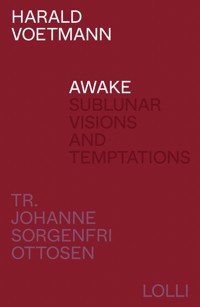
Harald Voetmann's eye-opening English debut, Awake, is the first book of his erudite and grotesque trilogy about humankind's inhuman will to conquer nature In a shuttered bedroom in ancient Italy, the sleepless Pliny the Elder lies in bed obsessively dictating new chapters of his Natural History to his slave Diocles. Wheezing, imperious, and prone to nosebleeds, Pliny doesn't believe in spending his evenings in repose. No – to be awake is to be alive. There's no time to waste if he is to classify every element of the natural world in a single work. By day, Pliny the Elder carries out his civic duties and gives the occasional disastrous public reading. But despite his astonishing ambition to catalogue everything from precious metals to the moon, Pliny the Elder still takes pleasure in the common rose. After rushing to an erupting Mount Vesuvius, Pliny perishes in the ash, and his nephew, Pliny the Younger, becomes custodian of his life's work. But where Pliny the Elder saw starlight, Pliny the Younger only sees fireflies. In masterfully honed prose, Voetmann brings the formidable Pliny the Elder (and his pompous nephew) to life. Awake is a comic delight about one of history's great minds and the not-so-great human body it was housed in. Praise for Awake Reading Voetmann's books makes me feel so alive. His voice is like no other, his hold on his material masterful. You will never read anything like Awake – a hardcore, pulsating portrait of a first century Roman weirdo. A wonderful and unpleasant treasure – Olga Ravn Vivid, earthy, by turns hilarious, gross, and tragic, but always powerfully engaging. Reading and rereading this book remains a rare pleasure – Susanna Nied No one else can describe ancient life with such beauty and humour, while never sparing you from the gross and terrifying pain of being human – Naja Marie Aidt With a scholar's knowledge and a poet's playfulness, Harald Voetmann brings us into the mind and times of its protagonist, Pliny the Elder. Visceral and lyrical, entertaining and provoking, it evokes a dazzling world on the brink of destruction, resounding with our own conflicted age – Sjón This is an interesting book. The writing is beautiful. A fine translation by J.S. Ottosen – Patti Smith HARALD VOETMANN (b. 1978) was nominated for the Nordic Council Literature Prize and has written novels, short stories, poetry and a monograph on the Roman poet Sulpicia. He also translates classical Latin literature, notably Petronius and Juvenal. Awakeis the first in his series of three historical novels: the second centers on the sixteenth-century Danish astronomer Tycho Brahe, and the final book introduces the eleventh-century German mystic Othlo of St. Emmeram. JOHANNE SORGENFRI OTTOSEN is a Danish translator. She currently lives in Copenhagen where she also works as an illustrator and literary editor.
Sie lesen das E-Book in den Legimi-Apps auf:
Seitenzahl: 127
Veröffentlichungsjahr: 2022
Das E-Book (TTS) können Sie hören im Abo „Legimi Premium” in Legimi-Apps auf:
Ähnliche



















The only certainty is that nothing is certain, and that there is nothing more miserable or more proud than man.
– Pliny the Elder
AWAKE
PRAISE FOR AWAKE
‘Reading Voetmann’s books makes me feel so alive. His voice is like no other, his hold on his material masterful. You will never read anything like Awake – a hardcore, pulsating portrait of a first century Roman weirdo. A wonderful and unpleasant treasure.’
– Olga Ravn
‘No one else can describe ancient life with such beauty and humour, while never sparing you from the gross and terrifying pain of being human.’
– Naja Marie Aidt
‘With a scholar’s knowledge and a poet’s playfulness, Harald Voetmann brings us into the mind and times of its protagonist, Pliny the Elder. Visceral and lyrical, entertaining and provoking, it evokes a dazzling world on the brink of destruction, resounding with our own conflicted age.’
– Sjón
‘Vivid, earthy, by turns hilarious, gross, and tragic, but always powerfully engaging. Reading and rereading this book remains a rare pleasure.’
– Susanna Nied
‘Awake is original, piercing, and richly exhilarating. Voetmann’s text is a sharp reminder of how powerfully and succinctly well-chosen words can create a world, render experiences, and express thoughts – in short, transport us, to places and in ways we could not have imagined.’
– Harper’s
‘A slim novel of ideas, seemingly turning its back on the present, or rather illuminating from within a turn that leads to the very history of European mentality.’
– Svenska Dagbladet
‘A flawless and sparkling little monument to human life.’
– Information
1
It is the same to me where I begin for I shall go back there again.
– Parmenides of Elea
It is the same to me where I begin for I shall go back there again. I shall go back to where I began. To the finding, in this case. I shall return to the finding that it is of no relevance where we begin. Though it must be said that this particular beginning – the moment when we first noted that we can begin anywhere, in turn granting each beginning its own irrelevance, yes, its very own – is more striking than others after all because it springs from a truth despite landing in falsehood. When I return to the point where we established the irrelevance of beginnings, the point is no longer a beginning. It is no longer subjected to the irrelevance of beginnings, but to the more general irrelevance of the whole, which naturally includes the point of beginning itself, which thereby loses all, or part, of its distinction. Wherefrom holds no more meaning than whereto, wherefore, where. ‘To,’ indeed, ‘to’ is the purest expression of irrelevance – to all this I shall return. Look around. There’s room here, and opportunity, you need only crane your neck to see what’s on offer. What it all comes down to is glimpsing something worth craning your neck for. Preferably far enough that if the head were severed from the outstretched and so proffered neck, there would be ample time to marvel at it spinning toward the desired object. The animals here refuse to let my body sleep off the wine and my work suffers for it. At dawn, the cocks on the mountainside crow, then the cocks by the coast respond, and soon after the birds initiate their trilling in the sky before, worst of all, the dogs launch into rabid barking. By noon, I am too drained to continue my work. I will have a bite of bread, perhaps an egg, then at least no cock will hatch from it, and drink the day’s first cup of wine. Otherwise, any attempt at sleep is futile. At about this point, human noises intrude. All human acts can be sorted into three groups: work, play, and sex. Apart from that there is only rest, which includes any revitalisation of the body such as bathing and supping, but rest, as we know, is not an act. Upon further scrutiny, we may narrow down the three categories. Play is training and education, and a child’s play is, in large measure, serious. Play is labour too. Sex can be either play or labour depending on the participant’s role and reasons for taking part, but as we have eliminated the category of play, there is only one option left. Sexual activity can only be defined as a kind of labour, and all participants would do well to strive for the superior work ethic of the slaves who know they must endure it. You won’t hear them cursing and fuming and acting out while others are trying to nap – trouble springs from the perceived masters of the situation who trust that their ejaculation, under the right circumstances, is for pleasure, never realising that their urge is but slavery imposed on them. I shall come back to this. Presently, we are left with one category that encompasses all human activity not counting the body’s revitalisation. That category is labour. The body rests in preparation for labour, and rest can hereby be considered an activity in and of itself, which is to say part of the activity since only one activity, labour, exists. As labour goes, rest is no more passive than whatever else we are made to endure, i.e. toiling at the grain mill, or being mounted by one’s owner. Let the toiler take solace in the fact that the world only has one ruler, and tyrants and cutthroats are governed by it too. And by this force, the cock crows, the prick throbs, the dog barks. I don’t know this despot’s name, but I curse it day in and day out. I rarely get my afternoon nap, even after drinking wine. Instead, I toss and turn for hours, and, once roused, only wine can lift the headache of prior consumption. By evening, I don’t always succeed in making meaningful conversation. When I arrived in this town, my reputation for wisdom gained abroad preceded me. The reputation still holds, though it is wearing thin. Now, right now, as I was dictating this, a bird shat on my hand. My cue, perhaps. Perhaps some authority is attempting to impart how meaningless it is to curse it. But why would it bother? Better to establish irrelevance and classify it incessantly until your tissue has hornified from inside out, than to curse and fume. From this point on, you may be considered wise, though don’t get overexcited. The bird’s dropping is yellow and thin with a dense white lump at the centre, which, upon closer inspection, will probably turn out to contain a sort of kernel. A seed. By way of a bird’s behind, a berry has ejaculated on me. But the seed has fallen on barren ground. My hand will not sprout. My hand shall not make anything sprout.
The little houses and tombs by the coast are indistinguishable from up here on the mountainside. Little, red-tiled blocks all. The necropolis lies closer to the sea whereas the living have settled on the slopes. For that reason alone, I can tell them apart. Each morning, the fishermen pass through the city of the dead with their nets. And the children scramble by, naked, on their way to bathe in the sea. At night, a few come out to make bonfires for their dead, and the beggars stand by to partake of the sacrifice along with the basest of whores, those who sleep in the houses of the dead by day and come out at dusk to mate with the living for a slab of the deads’ food. I can’t sleep off the wine for all the shrieking animals between the small, dense olive trees on the slope. Tonight, it was the dogs. The black bitch who roams the hills with her extensive litter, the offspring of at least two fathers by the looks of them, howled louder than I could stand. I sent Hermeros out with an oar to chase her away. His arm was bleeding when he returned, she’d sunk her teeth deep in him. He said the bitch had been howling over a pup crushed by the children with their clubs, and now she wouldn’t be chased off. Pound as he might with his oar, in her grief she took the beating but refused to let him shove her down the slope and away from the remains of her pup. Hermeros looks pleased as he writes this, as if putting his name in writing has now absolved him of all mortality. When I arrived here by ship, the first sight I encountered was the necropolis, the town’s face. Stelas inscribed with the names of those who couldn’t come to greet me. By each stela, a signpost warns not to defecate near this tomb, that ghosts and furies and fiends of the underworld will surely beleaguer the one who parts his cheeks and ejects the modest portion of death stored in his guts among the dead. The innards of the dead are different, crawling with life for as long as it survives. The only sacrifice I will ask for myself is the death amassed throughout the day. Bequeath it to my grave, with my compliments, if you wish. The hiss of the cicadas is in the air. I’ve come to drink and impress the crowd, not to think, that’s impossible, nothing will come of it. Thought separates the living from the dead. All life is bred in the heat of the earth under the dense olive trees. Death is cold, it’s the result of thought, one might regard it as the sigil of experience. One should never end an address to other people, written or spoken, with allusions to death. It’s implicit, it makes itself known once the mouth has shut. It ought to be enough to point out the trivial and let its opposite speak. The more chatter about trifles, the more violent the contrast. Through speech, death bemoans its lack of trivialities. Infernal cicadas, i.e.
2
Voices
Quotes from Pliny the Elder’s Naturalis Historia
Pliny the Elder
Pliny the Younger
Diocles, a slave
Quote, Naturalis Historia by Pliny the Elder
I simply wish to remind the reader that I am in a rush to describe the world in detail.
Scene I
Plinius has a nosebleed. He’s lying on his back in bed, staring into the dark. Diocles stuffs his nostrils with wool soaked in rose oil. Plinius breathes heavily, his throat wheezes at each inhalation. The light is too dim to reach the ceiling. Diocles wipes his oiled fingers against his tunic and returns to the desk with the lamp, the tablets and the stylus. Punic beeswax is superior, snorts Plinius, and the stylus scratches in the tablet’s wax, which is inferior; dingy and grimy, worn by countless smudgings. Diocles has taught his scribing hand to listen, only fragments of the world catch his mind. In the gloom, it’s impossible to gauge how high the ceiling is. To Plinius, it feels as though it heaves above him with the rhythm of his troubled breathing. He is lying flat on his back with a pillow supporting his neck. His hands rest to either side. On the matter of beeswax, one must pursue the deepest yellow colour, the kind that smells most intensely honeyed, he says. The final syllable of each sentence is extracted and rounded perfectly, transforming slowly into a moan. Painfully and peepingly, the world is wrung from Plinius’ fat neck in the dark. Now he lifts his left hand and puts his palm against the wall, which is cool and smooth and perfectly motionless.
Quote, Naturalis Historia
The sun’s rising and setting leave no doubt that our orb-shaped world rotates in an eternal circuit, and at inconceivable speed, completing each trip within twenty four hours. I can hardly guess whether the whirr of so great a mass transcends the faculty of human hearing, nor do I know, by Hercules, if the stars that are swept along and revolve in their own orbits produce a timbre, and if so, whether it is a harmony of indescribable beauty. To us who live inside it, the world appears to glide in silence day and night.
Pliny the Elder




