


Erhalten Sie Zugang zu diesem und mehr als 300000 Büchern ab EUR 5,99 monatlich.
- Herausgeber: Wilton Square
- Kategorie: Gesellschafts- und Liebesromane
- Sprache: Englisch
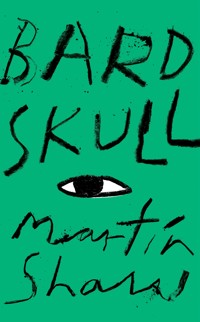
Bardskull is the record of three journeys made by Martin Shaw, the celebrated storyteller and interpreter of myth, in the year before he turned fifty. It is unlike anything he has written before. This is not a book about myth or narrative; rather, it is a sequence of incantations, a series of battles. Each of the three journeys sees Shaw walk alone into a Dartmoor forest and wait. What arrive are stories – fragments of myth that he has carried within him for decades: the deep history of Dartmoor itself; the lives of distant family members; Arthurian legend; and tales from India, Persia, Lapland, the Caucasus and Siberia. But these stories and their tellers don't arrive as the bearers of solace or easy wisdom. As with all quests, Shaw is entering a domain of traps and tests. Bardskull can be read as a fable, as memoir, as auto-fiction or as an attempt to undomesticate myth. It is a magnificent, unclassifiable work of the imagination.
Sie lesen das E-Book in den Legimi-Apps auf:
Seitenzahl: 411
Veröffentlichungsjahr: 2025
Das E-Book (TTS) können Sie hören im Abo „Legimi Premium” in Legimi-Apps auf:
Ähnliche



















BY THE SAME AUTHOR
The Five Fathoms
Poems of Lorca: Courting the Dawn (with Stephan Harding)
Cinderbiter: Celtic Poems (with Tony Hoagland)
A Branch from the Lightning Tree
Snowy Tower
Scatterlings
The Night Wages
Wolf Milk
Courting the Wild Twin
Wolferland
All Those Barbarians
Red Bead Woman
Smoke Hole
A Hut at the Edge of the Village (as editor)
Tristan & Isolde
Stag Cult
CONTENTS
By the Same Author
Preface
Part One – Bardskull
Part Two – Pixillation
Part Three – Wolferland
Part Four – Unriddling
Part Five – The Falcon Hath Borne My Love Away
Sources
A Note on the Author
Copyright
The uproar in your hand I could never have predicted. Never corralled, sweet-talked or defended myself against. I walked out one summer morning and barely ceased till St George’s Day of the next year. These three accounts come from a place, Holne Chase, on Dartmoor in the far west of Britain. At the end of this account I find I have fallen into a devastation of love.
It would be chicanery to tell you this has been crafted for your pleasure. It hasn’t. It would be a fiction to tell you I have absolute purchase on the encounter. When I dare pick the book up it seems at times like an extended incantation, at others a series of battles. It often frightens me.
These are words from the rough, from the stomp. Things hurtled through me, old things. I am not the same.
part one
bardskull
And I tell you this
The slaughterhouse of language did not begin here. It did not begin in the cider bar of Newton Abbot where we fill our jaws with smoky, flat, stultifying vats of the stuff. Tony of Scorriton says you can’t trust cider without some cow shit in it, scudding around at the bottom of the glass. A mystery swirl, an incant of grass and gut, a little gamble on health and safety.
Percentages are for blow-ins. Grockles.
No. We commit to distention. To the apple-madness. We fucking commit. Bloaters all, alive in the moonlight, scampering about, hitting things.
No. It wasn’t us that killed the speech. The holy hoofprint of the rough word still thwacks about in the gob of Dan from the woodyard, fists like hams but nimble as a wren when cradling a seedling. Words crackle around him like weird, wet light, and it’s your own theory-addled sickness if you can’t see it.
Numbskull
Nanskull
Dadskull
Bardskull
When I was small and at the new big school I got pulled out of class. I was in the wrong group. I was with the smarts and I was not a smart. I was taken to the belly of the school to my people. They smelt bad, like clothes left in the washer. There was a boy permanently in the cupboard with his tiny, pale cock out, in case someone – anyone – would come in and give it a tug.
This was the Numbskull I got put into. I crawled deep down into its fontanelle, and into the brainmuck, and not much was meant to happen thereafter. I was meant to stay there.
Never got more than 13% in maths. Percentages again.
Some great threat had been avoided, when I was plucked out of the room filled with light and windows.
Nanskull is in the forest round the cottage where I am I am I am going to tell you about secretive things that happen in it. It’s a time for telling secrets.
Nanskull is my granny, Monica, walking the dog in the woods, fifty years before I ambled in. Monica’s mind is adrift in death-woe. Of course it is. A husband is gone, first or second, I can’t remember. Grief is a thing so deep even a white person can make a song-line from it. Granny’s lines are spindle-thin now, like a frost about to meet the sun. I can only just make them out. But Nanskull is the first of us here. Before me, or Dad or anyone. So let’s begin there. I see her on the night-lawn, coins spilling from each sleeve, telling us to spend the fucking money. You can’t spend it over here, she says, no matter how much you tip.
Nanskull will speak to Numbskull across the owl court of my garden. I listen with the black ram in one hand, the knife in the other.
Here at the gate of the dead.
She speaks as deep as Tiresias, old Irish words.
Last night the dog was howling for you
The snipe was calling for you
Through the branches and bleak marsh.
You are the sorrowed secret of the woods
And may you be without mate
Till you find me again.
When I go to the well of loneliness
I sit quietly and comb through
All my trouble.
I behold the world but
I do not
Behold my man.
He has an amber look
To his hair.
Then Monica is gone into the woods again, calling for her dogs, calling for her son, calling for her husband.
When my dad is seventeen, she will die.
Dadskull is the skull of an almost-orphan. Night walker, pushing his hands out into the black, endlessly walking, since I was a little boy living near the sea waiting for him to come home so I could fall asleep. He is eating dark as he walks, body fattening with the calorific encounter of numinous night. It wasn’t food that made him big, it was the dark. He is learning languages from ancient places to one day become a vicar but he will not become a vicar he will become a preacher, much better, jostling his curation of words out away from the Celtic west to the Saxon east.
Crowland
Yaxley
Whaplode
Maybe as far as Long Sutton
Dadskull is nested up in his solitary haunt throwing twigs at Holland, but in some way he is always glancing west. Teachers tried to make Dadskull kill words, and he manfully tried, but they erupt at the worst-possible fantastic times. He wears a badge that says I AM SPARTACUS. This is what makes him a wonder, a Hermian articulator of messages from his florid, unfashionable, magnificent dead. Dadskull is glancing west again.
In the last century an old Indian man told me a secret. The kind from South Dakota not Delhi. He told me this thing. He told me myth could maintain the health of the world, but when we forget these very special stories everything goes a little crazy. He told me I had to keep remembering.
He said the old stories released a kind of oxygen. People would gather around the tales. And that I had to make a life from this. I never saw him again but I did what he said. I track these very special stories. They are like jaguar teeth in a Dorset copse, or tundra snow in Brighton, rare. Keep remembering.
But I do forget, of course I do. I can barely remember to feed the cats, let alone the earth. But enough of that. Enough of the excuses.
I am going to take a walk now, and you are going to come with me. We are headed to a place I am almost afraid to think about, a place I know well. We are going to walk the river and the forests around my cottage, here on the southern flank of Dartmoor. If I am lucky I am in the middle of my life and I am in an enjambment of loss and fatigue. So I go walkabout. See what comes.
When the Saxons stood on Dartmoor they gave a name to its original people.
Wealas
Foreigners
For hundreds of years afterwards Dartmoor people were called:
Wraytors
Strange Men
The moor makes odd, dark people with odd, dark, magical minds.
It is that kind of place. Barbaric. Better left well alone.
I’m by the water
The current on the river Durius is low but fast-moving, there is spray like beer froth every few yards, and rocks gesturing pugnaciously below, rocks that look all the living world like rusty, boozy barrels. I will squat like an escaped prisoner and slurp all that darling ale up, all of it, every crazeling gobful. I will drink the whole river up. All of it, the tributaries and snaky little streams too. I will deny the salmon and the trout and the otter. I will block out the sun for the swift and the toad.
I defy you to look at a river and not see your fast-escaping life.
At the same moment I am fetishising my dotage, I hear the wood pigeon, the very oldest sound in my archival boom-box of memory. As I am stretched on the rack of first sounds and last thoughts I am sat at an old oak table gazing across the river at a lightning tree. It is long and slim and white, as white as a larch, the shaman-tree of Siberia. It is dignified and introverted amongst the old-growth oaks.
If you have a book called River by Ted Hughes this is where the cover photo was taken. Right down a track at the bottom of my garden.
Ted fished because he wanted CONTACT
In darkness he wanted the tug of line, the prehistoric oomph of the hunt, to draw all blood-truth of the moor into his nervous system. Tyger, tyger, burning bright.
Lascaux erotics, the rest is just skittish chicken shit.
But in the cover photo you don’t see the little oak table I sit at now.
This is the table I take women to when it is time for us to part. Not like Bluebeard, not macabre, just a man becoming less freakishly available. I don’t want to nest anymore. That was another time.
So she and I will look at the slim white tree together, and she will say it or I will say it and it will end.
But today there is a man standing on the other side of the river, under the pale tree.
I think it’s Mark, my old painting teacher, or maybe my grandfather Alec.
Regal, white-haired old guy.
I call over, smirk: Are you an archetype?
—STUPID.
You ever use that word again in my direction I will thin you right out.
That is depleted language, you stuttering little peasant. I will tell you what I am.
Listen hard, Wealas.
I am the Myrddin. Your Merlin.
Merlinus Sylvestris Merlinus Caledonius
That’s me, waving at you there.
Well, the string-bean, barely fed
bit of you that can still see me.
You grub.
You are pixellated,
pathetically out of focus,
your prayers stay your side of the river.
Me, I had the old powers. I GLOWED.
I made mandate from dirt:
I hexed up wisdom and laws
from the thistle-grass of South Wales.
I just wrenched them out of the earth,
mucky clods of magic.
I was the shit-kicker.
This is not quite my patch, but near.
Wales.
Just a day’s ride or a splash-bath from here.
To get to you, my blurry boy of the Durius,I swam
your Bray, your Ashburn, your Meavy,
your Mardle, your Thrushel, your Lyd,
your Warfleet, your Torridge.
Good rivers all, but wrung
me out, the amount of effluent
I drank sloughed off the fields.
I puked it up outside
Taunton services.
Rest of the time I was a horse thief.
Gallop gallop gallop
I stole apples from your garden.
All the time you were talking to your
dead granny, I stole your apples.
Make your head crooked so I can tell you things.
You should know I have a sister, one who is still loyal.
She follows my bone-white trail, my moon over the water; my
dream-beckoning.
It is her time now.
This is who I am and what I did.
There is little still water on Dartmoor so
LET THE FLOW COMETH
I will go to every single miserable hump of hill in every stretch of Broken Britain and ring every bloody underground bell until Arthur, Bors, Galahad, the lot of them, rupture the soil and clean the politics from this whole enclosure. My enclosure, the matter of Britain.
And I ask you, Wealas,
Where’s my sister?
This is meant to be her age.
And like that, he is gone.
The bards underwent a frozening you see.
How we see them is not what they became. Whatever scrub or bush you grew from, it infected your dialect, so if you had a gift for jabber, your place couldn’t help but speak through you. As natural to you as breasts or beard, cunt or cock.
Merlin is one of this earlier variety.
But the bardic schools started to bleach it out. They got you scrubbed and spanked and speaking in a fixed way, with fixed stars. Nothing like what we think: writhing Astral Weeks-esque nature-people wandering back from stone circles with their heads on fire.
Nope.
Maybe the Romans did it: that the schools needed to unify a strong, tribal voice against the sheer organisational chops of empire. But whatever happened, it didn’t regroup. You could pluck verse from five hundred years apart and there’s only a hint of inflection to tell them apart. Shoddy, boring.
A frozening.
Not an emerging, a bearing witness, a rupturing. That was from some earlier time, the time that Merlin knew about. My head hurts from talking to him.
I keep walking the river.
It was strange, watching the magus talk across the water. I mean he really was a shit-kicker.
Yes, he was Merlin, but it was pretty bloody clear this was not fucking Gandalf.
And I bet all his prophecies came true. They had that wretched tang of truth in them. Too much truth overwhelms. Never popular, prophets.
We are passing a place I like to swim, opposite the entrance to three old tin mines. Every tin mine has a dragon in it, say Dartmoor people, and I only really have the rocks to visit one of these regularly. I’m not looking that way now, I keep looking over to the river, and over to the other bank.
I bump into two men on my side, fishing.
One is a rumpus, a gurgle of champers; one is measured, enduring.
Dafydd and Finegas. A lover and a hermit.
And why are you not on the other side of the scrying bowl, the other side of the waters, like Merlin?
The one with toffee in his pockets and a bucket of booze at his thigh pipes up
—Dafydd, pleased to meet you. Dafydd ap Gwilym. It’s a matter of station. Gradation. Me and Finegas, we lived. We lived like you do. Got caught up in poetry and women and the sauce, but Merlin was a god walking all along really. He’s thin-skinned, like Jesus, and he belongs on the other side of the Durius.
But us, here, we are smaller players. We get time off, and when we do, we like to fish for poems.
—Finegas, pleased to meet you likewise. I spent seven years by the river Boyne, waiting for a poem to come in the shape of a salmon. But on the day it came, my servant cooked it, pricked his finger and took its juices into him. There was no malice in him, it was a thing that was meant. He was a good lad.
My servant had desires, but he always followed the deepest one: the search for wisdom. He would bed in under birch and by fawn, but he never stopped looking. So it was right he would be gifted.
He had given himself fully to the service of my hut: he carried water and kept the fire; he cut dry rushes for the floor. He was taught the rules of metre, the cunning scope of words, and the high calling for a clean, brave mind.
Every day his questions continued to leap
from the green waves of his thinking:
‘How does the salmon get wisdom into his flesh?’
Not hard to answer, I told him.
Overhanging a secret pool
there is a hazel tree.
Its ripe nuts drop from tree to pool,
and the salmon eats them.
Flushed, the boy spoke:
‘Could we not just track the sacred hazel,
and eat them ourselves?’
Such a tree could be discovered only
by eating the nuts;
those very nuts that can only be found
by eating the salmon.
He writhed, then wrestled out his patience.
They must wait for the salmon.
This was the salmon I caught and he consumed.
When it was done, a great tranquility
swept into me.
It was quite a battle with that fish, I said.
‘Did it give good account for its life?’
It did, but that is not the battle I speak of.
We cleaned up and made fire, drank tea, and under the stars the boy became Finn MacCool.
We three sit breathing in a happy-sad way as salmon quietly pass their rods.
Dafydd sups his cider and speaks
—I’m here because I’m on the run.
Even now, I’m on the run, and I died in the fourteenth century. Lover man. Born in Ceredigion, gold on my fingers, booze in my cup. In love with the Troubadours, I was, till the Black Death noticed me and walked me out round the back of the barn.
Dafydd has the puff in him now, and starts to wave his arms like a slow windmill, Finegas, twinkling, urges him on, and Dafydd starts to recite. Oh the glory, the banging glory of the man in flight, even without his harp he is alight.
I’ve caused hard anger to erupt,
Because I’m a thief of secret love.
She is the memory of high summer.
She glanced at me and me at her – we traded glances,
The foam-white girl shuddered into my heart,
Like a round arrow flies through a sheaf of dry stubble.
My breast, my care, my body,
It didn’t stand a chance.
This girl is the gem of Wales.
And I will be a heart-wrecked Welshman
With not an acre to my name
If this gets out.
At this Finegas laughs and clumps his shoulder. Now they are speaking in Gaelic and Welsh and I don’t know what’s going on.
To add up you speak in English
To speak of love you speak in Welsh
That’s what I heard.
I reluctantly pick myself up and carry on walking. I can hear them chat over my shoulder for several minutes, I turn back and they are there, then not.
When they are not, the most woeful, unexpected sadness comes to me and I cry a bit.
tredan uriglast elþeodigra
Of those fearful of the unfamiliar
Do not look at the tree ridge where I look down on the man talking across the river to the marvellous
Do not look
I look. I look at him.
glomen gied ond gumman snyttro
The wise man learns many songs and plays them on the harp
He would be one like that, I think.
In the middle of watching stories I am being watched. There is something up there, on the ridge, looking at me. No, it’s not what you think it is, it’s not Death, at least not especially. No more than usual. But there’s something up there. It seems to be talking to itself, but the words are mangled. I just can’t make them out.
When I was Numbskull I always thought someone was watching me. This watcher would leap benignly from behind a bush and inform me I came from another family, far away, and I had to leave, immediately, for some kind of sea voyage. It was all terribly important, and both they and I would require cloaks to pull the adventure off.
Then you get older and you realise that no one’s eyes are on you most of the time. You’re not even in focus to the general public, just a kind of nervy blur. So finally, today, I am being witnessed. Isn’t this what I’ve been waiting for? It doesn’t seem so intoxicating now. This is not Jack in the Green, or Gerónimo, or a giggling Dalai Lama, this is some guy on a horse speaking backwards words to himself.
I don’t have time for this.
One thing I have learnt in forty-eight years is that there are certain things we need to turn our head away from. And I turn my head away from you. We don’t have to see everything that is out there to see. So I choose to not see you. You are a-blinded to me.
Horseman pass by.
The river is stiller now, and shallower. My friend Richard remembers a time when maybe only minutes would pass before a salmon made an appearance, a good seven pounder, but now they go out to sea and don’t come back. The river is becoming an acid bath with so much crap sluicing off the fields.
I take a little fly, a little bait, and bury it like a totem in the sandy mud by the river. That the great, mysterious, disappearing salmon would return. Not so I could catch them, but so I could praise them. And in their absence, that’s all I have left.
I sit. The family I was born into are getting older. We stand at the lip of the falls together, clinging. Every now and then one of us slips over, and we see them disappear into the vertical foam.
Little pine boxes sailing away.
The indignity that the world continues without us. The indignity.
In ancient Devon you lived to be remembered, that you so gutted life it had no choice but to ruefully remember you. You made it sore and resentful. You had it.
Can you so gut the world with your presence that you leave a scar?
Once that would have sounded romantic to me, now it sounds fucking awful.
The Dumnonian way is to be buried with wheels, to have a pit – a pit chucked full of treasure, a brocade of lovers saying weighty things about your generosity and a grief-party that lasts for years. No one sobers up, but bemoans the ludicrousness of continued existence in the absence of your wayward bloody sweetness.
I am walking and wondering if I still have the stomach for that.
Winter Nose
Spring Nose
Summer Nose
Autumn Nose
My summer nose is smelling autumn. Exactly in the middle of August, autumn is bustling in, five, six weeks early. There’s more rain about to land in the next twenty hours than in a usual month. Only three weeks ago I stood gabbling in Watkins Books in Cecil Court off Charing Cross Road on the hottest recorded day in London’s existence. Men were stripping to their pants on the Tube, babies shrieked, I had to buy a new set of clothes before my reading I was so drenched. Furnace.
And now I have to cut my summer nose off with a Stanley, and replace it with my autumn. Ahead of time, before it had its full use. It has not smelled enough suntan lotion, barbecue, sizzling hot sand, or the slippery, summering wet between a woman’s legs. Not the woodsmoke just yet, I petition you, not the wet weather gear.
Spinney me a little more gooseberry, haywain love in the lowing afternoon. I know about the frosts, and the scurrying animal hedges and the spiderwebs of soon-come-September. I know about that. My heat is not this longing for summer bloom – that may indeed help. My heat is a combustible issue.
Splendiferous heat, not inferno, and with a dry, cool wind, I charm you into the valley, this secret valley, secret stretch of Durius.
Bards would have seen this stuff coming, surely? Read the change in the movement of horses, or the marbled leylines of glutinous fat displayed on a goat’s guts. Had a full, twelve-month report on the first day of winter, delivered by a gangly arrangement of seaweed on a Tintagel rock. I think so. Definitely.
I am circling back on good Finegas, the hermit and his servant.
You see I have a story of that boy Finn when he was known as Deimne, before he was really, truly Finn.
Deimne had fallen in with young bards on the road. They spoke a glad chatter, and for such a wilded and lone boy as he it was a dizzying proposition to be amongst them. These sheltered him amongst their lively banter. These were lads with a plumage, a strut, a true north of verbosity, sixty thousand lines of verse to be battered into them before their study was done. They would have many florid turns of tongue for what the day presented.
Ah, but these were scholars not masters. In the high branches you can’t always see the brown bear that comes to shake the tree.
From out of the bushes came a bandit who slaughtered the lot in a second.
The only one left standing was Deimne. When the robber man heard of Deimne’s parentage he wept hard. The highwayman was right-hand man of his father, before the captain’s slaughter and betrayal. His father was high man of the Fianna, warriors and poetic elite.
Some will tell you the robber they call Fiacull was the end of the boy’s bardic education.
That is horseshit. It was a deepening. Fiacull was the dark-eyed teacher.
Fiacull took the boy to his home, a dismal swamp, not one japey-joke within it, and pummelled the ornamentation out of him. He showed him what complexity of eloquence could sound like.
He trained the boy to swim the swamp with a dagger between his teeth.
When the boy was ready he showed him his Spiteful Spear – the Birgha. This spear was wrapped in a cloak and tied down, so deadly was its aim. What it aimed at, it hit.
So to become a poet, you need to be tutored by a bandit as well as a hermit.
You carry the most woeful spear that everyone knows you have but you almost never use it.
That’s what gives you your nose for autumn.
This was not a falling away from the path, this was the path.
It’s that stink-spear that would save not just the boy’s life, but the deep culture of Ireland, down the way a bit.
The rain is a-slosh now, the river gobbling, slobbering it all up. The silver sheet of vertical flicker against the gleaming clumps of holly.
I am surrounded by the vast, peaceful crying of the world, like a veil, a magical muffle. It is announcer of unique privacy, rivalled only by snow.
I am gleeful at this turn, sheltering under birch with berry-big slops onto my lap. Mulch me dear torrent. Sweep me up in your disclosure, corral me in your enclosure, fumigate my static, wash away my pixellated soul.
I am past the old sign that says HOTEL GUESTS GO NO FURTHER in red paint on white board, nailed high.
I do go further, I absolutely do go further, slipping on the shiny shingle, watching the river pick an even wackier time signature for its propulsion. I climb the bank, no little thing in the scudding bales of wind that have joined in the party. The bracken is high as a man, heather delicate and purple, young oaks looking scrubbed for baptism by wonderful wetness with an Arthurian fog creepy-crawly coming in. I am high above the river now, likely death-high if I fell, on an unsettling crag. I trip bad into a ridge of lichen and granite, instantly and utterly soaked. Every piece of wood or root I reach for crumbles in my hands. This is
EAGLE ROCK
I seem to have my hands full here. I gradually, agonisingly crawl out of the enjambment. Levi’s stuck to me, smeared with delicious smelling muck. I flake out on the sodden grasses, too breathless to care about the wet, already so marked, mangled and mashed as I am.
An eagle is watching me.
At the very top of a tree at Eagle Rock is an eagle. Biggest I ever saw.
At the bottom of the tree is a sow.
The eagle is tearing rotten meat with its beak and claws
Then dropping it through the branches to the sow.
The sow is gnashing on the rancid flesh
In the rain, on Eagle Rock.
Ah, I know what this is here, this arrangement, this constellation. I know a little bit. This is like an old Welsh tale of a man who became an eagle and how his uncle sung him back to his original shape. So I sing the words:
Beside a river an old oak grows,
Sheltered from cold wind that blows
I know I do not tell a lie –
The man Llew rests there on high.
Cocking his head, the eagle
drops from the high branches to the middle.
There is an oak on an upland best,
Wet with rain an eagle nest,
May his hardships soon be o’er
And Llew restored to us once more.
Again the eagle drops down now to the lowest branches.
For the final time, I sing:
Grows an oak upon a steep
Where an eagle his home does keep;
If I do not speak falsely,
Llew will come on to my knee.
The eagle alights on my knee.
With a small cut of rowan branch,
I stroke the back of the eagle’s head,
shape-lurching from bird back into Llew,
scrappily awake, deep flustered,
naked and blue-skinned on the August turf.
And I am scrappily awake and gasping at this impossibility.
Numbskull made me not an eagle but a sow, a grumbling sow.
That was the totem, down at the bottom of the school building. They served us all rotten meat; choice cuts were for the top floor. Our eyes grew smaller, piggy, red, distrustful, down in the dark. I sat next to a boy who had fallen off the back of a motorbike when he was between little school and big school. He got changed by it. And fuck, we mocked him. We mocked him and mocked him and mocked him. Would have taken fists, pinches and slaps to him, but he was too gently big. And he, the best of us. That was a sin of mine, right there.
Llew had much bigger, weirder misfortune than my scraps.
He was a man under enchantment, in a complexity of enchantments actually. He fell in love with a woman created of flowers who fell in love with someone else and why shouldn’t they, and then became an eagle when the woman of flowers and her new love tried to finish him off. And she became an owl that hoots in my woods, just to be clear.
But because I knew that little song he is an eagle no longer. And I think he will be taking a leaf out of Merlin’s book when it comes to revenge. Conflict resolution has not hit mythology just yet, ho ho.
The sow is still here for some reason. Hasn’t magicked itself off. Lots of acorn mush to slobber, and the last green cuts of meat scattered amongst the roots of the oak. I watch its fat, sleek shape munching, tense, in case it poof! disappears into the ether. But it doesn’t. It watches me with titchy, dulled eyes, and waddles over the lumpy turf.
It knocks me out for an hour or so.
How much bad meat did I consume? When did I become sow? My leg is bleeding where the eagle laid his claw. Eagles have such great names:
Wind Witherer
Vedrfolnir
Drien
Aetos Dios
The old bards used to fancy themselves as eagles, something magnificent. That they would
GO TO THEIR DEATH WITH ABUNDANCE OF HONOURS
They would not ‘become nothing’, get cremated and scattered, hush-please-don’t-make-a-fuss. No. They would electrify their people with the measure of their achievement, brand their village with white-gold rings and hunting dogs and fires that never went out. They would leave everyone plump and drunk, all the better, and their pomp, thwack and psychic liveliness lived always on as the secret word in continuing good fortune, their name the inner structure of the abundant, happy village spell.
But we have a visitor about to throw his helmet in the ring, blow the whole thing up.
Achilles, eagle supreme, standing talking to us right now, says it’s all unutterable horseshit.
—Listen, tiny dicks.
Sooner live like a slave to a poor man than be King of the Dead.
Your reputation will serve you not a jot down there.
Achilles, in this very specific, very particular moment, reminds me of my mum.
I know we are moving fast here. But this mad jumble is where I live. I abide in a place where a Greek hero will resemble my mother at the same moment magical sows from Welsh myth glower through the rain. So it is. This is that much-fetishised word, imagination. Maybe more than just imagination, maybe an imaginalia, a coven of ghost, animal, human and elemental thinking. There are so few handrails when we really get into the spirit-forest, so few. All the furies just bang into one another.
So back to Mother.
She would clink glasses with Achilles, and look askance at the ruin of Merlin. Abundance of honours is something utterly personal to her. Not dished out by general or headmaster, but in the quiet of the day by the holy maker, for things that no one else ever sees.
Sometimes people ask me if I have a conscience, and what does it look like?
I tell them it’s five foot two, has white hair, a lovely face, great energy and a certainty of position. This conscience, forged in both the power of feminine voice and feminine silence, is distrustful of centralised power and too much officiousness. If Dadskull opened the road of Sun to me, Mumskull opened the road of Moon.
And she is pointing now, across the waters, at a woman on a horse. She’s telling me to pay attention.
A woman comes canter, canter, canter. Gliding across the shallow river, a woman who can live on both banks. She rides a pale horse, large and formal, and is dressed in golden silk.
Rhiannon.
I slide down the bank like a breathy idiot to hear her story.
There was this boy I liked. Pwyll.
He was macho, but not too much. Bright, but not too much. But the thing I really liked was that he’d been in the Otherworld. For a year and a day he’d swapped places with a chief over there. That’s something. Those kinds of men are different, when they’ve been touched in that way. And he hadn’t gone entirely into himself, like some do, he remained a leader.
So one day I trotted past him on my horse, as he lounged about on a hill with his cronies. So blue the sky. But he didn’t look at the sky after he saw me.
I would make him beg to fall under the hooves of my horse.
Plead to have my weight on him. And I wanted his weight on me, his big brutish mass. Yum.
Not recognising me, a rider was sent to try and talk. But no matter the strain and skill of the beast, it could never quite catch me. I made sure I always seemed to glide, never breaking to a gallop. Just a frittering of my fith-fath, pollen of my little magics.
I don’t like it when kings send their servants.
The rider returned to the tump and the teasing men. The next was just like the first, till finally our man Pwyll himself elected to come. ‘This is clearly between God and me. Bring me my horse and my spurs.’
Even Pwyll, with his skill and his horse’s nimble leaps, could not compete. He rasped a request to me:
‘Maiden, in the name of the man you love the most, please wait for me.’
That got my attention. That had some swing to it.
‘Of course, happily. You may have made things easier for your horse if you’d asked some time back!’
I waited for the exhausted chief, drew back my headdress and fixed my true gaze on him. Strong gaze. Remember me, remember me, I am thinking. Remember me like a cum-cry and the Christmas feast and the best birthday you ever had.
Remember me like the heron lifting her wings over silver, Celtic rivers.
‘Lady. Lady – where have you come from, where are you going?’
‘Well, going about my business. And I am happy to see you.’
‘My welcome to you,’ spoke Pwyll. He seemed to mean it too.
Pwyll of the scars, Pwyll of the hunt, Pwyll of the shape-leap, Pwyll of the grey ford, big Pwyll looked quite undone. Giddy.
My heart was beating a thump.
‘What’s the business, may I ask?’
‘My main purpose was for us to meet.’
‘That’s the best business I ever heard of,’ he said. ‘Would you tell me your name?’
‘Rhiannon. I am Rhiannon, daughter of Hyfaidd Hen. Given to be wedded to a man against my will. Because of my love for you, I do not want him. So I come to find out your answer on the matter.’
I liked what he said in reply:
‘These words can be tested by God:
if all women and maidens were made
available to me, it is
you that I would choose.’
My lad. God, he means it. He means it.
‘Good. Good. Well, before I am given to another,
arrange a meeting with me.
Claim me. As I am claiming you.
A year from tonight there will be a feast
prepared in the court of my father.
Lord, do not forget your promise.’
And with that, I turned and left. But I knew from the flush of his cheek that my warmth remained. I was told from that moment on, Pwyll would not be drawn on the subject of me, not even to his closest. Some things are just too sweet to share. But he thought of me in his bed, and I of him. He said I was Queen of the Wild Horses and that was it. I will take that title.
The year was up, a year during which I crafted my imaginings diligently. My man arrived, resplendent, at the court of Hyfaidd, with no fewer than ninety men in his retinue. Something immense was about to occur. The arrangement of the hall was this: Hyfaidd Hen at the centre, Pwyll on one side, me on the other, and then each according to rank and honour. A just hierarchy, from a time when such things existed, and will again.
This is when it goes off. Kicks off. Wild rumpus.
Some time into the feast, a young lad entered the hall. I knew him. Despite his youth he had weight, presence even. Tall, auburn-haired, silk across his shoulders, a pout. He sauntered his way to the high end of the hall, and addressed Pwyll. I could just tell what a clever little prick he was. Needed a slap.
‘Lord. My business here is with you. I have a favour to ask.’
Generosity, the key to a real leader.
And a key to their derailment.
The words came almost in slow motion, I wanted to cram them back into my beloved’s mouth.
‘Whatever you request, as long as I have it, it is yours.’
I gasped, and a mare galloped a lonely valley.
‘Why, why did you respond so?’ I hissed.
‘Well, he has,’ piped the boy, ‘and the gentry have heard it. My request, oh big-hearted Pwyll, is for the woman you wish to marry, and her provisions too.’ Wide smirk, the hint of a bow.
The man Pwyll sunk into horror. As deep as Cheddar Gorge, as bleak as winter on Cadair Idris. He was without speech. I, not so.
‘This is the boy they wished me to marry. Gwawl, son of Clud, a powerful man, of heft and ambition, drunk with followers. Godlike. And now you must give me to his son, or risk disgrace.’
Pwyll stirred from his bleak shore.
‘I can’t do this. I can’t. I can’t.’
I drew him close. ‘He asks for my provision: this feast. That is not in your power to provide. I will give it to him, every chop, pudding, fruit and wine. He and his entourage will be sick with luxury. Little heroes, they will think themselves. Titans. Pats on the back. I will then arrange a meeting, in a year’s time, to sleep with him. At that time you will hide out in the orchard with ninety-nine men, and I will give you a bag to bring. In the feasting, as he gazes over at the acres he thinks he is soon to plough, stagger in as a beggar. Call him on his own game. Generosity. And ask for nothing but this little bag to be filled with food. Such a small act. But if all the meat of Dyfed were to be placed in it, it would not be filled.
He will be sure to enquire on its appetite, and tell him that only an extremely powerful, nay, virile, nobleman could tread the food down in the bag, so it would cease its chomping. I will see to it that he parades such vanity as to clamber in. When he comes, turn the bag over so he is head over heels, tie up the neck, call your men of the orchard with your horn, and let them descend, descend with their fierce faces.’
Gwawl called the high table again, flushed now with his success.
‘I need a reply.’
‘As much as it is in my power to supply, so you shall have.’
A roar from the gleeful warriors.
Outfoxed the big man.
But not me.
A year later the meeting took place. The secret troupe stood steady under the apple bough, and Pwyll made good show as a beggar. Stinking, bloodied rags, a mess. A request for a bag of food, nothing less. Ah, but the bag was hungry. Starving even. A hundred years without so much as a crumb.
Gwawl bellowed: ‘What is wrong with the bag? Our provisions are being gulped!’
Pwyll crooned, respectfully, ‘It requires a firm and noble man to step into the bag, push the food down further and say, Enough has been put in here.’
At this, for a second, I gently touched the arm of the boy. ‘My man. My bull. Get up quickly.’
A rush of blood. He leapt blissful into the bag. Bag was tipped, tied, and horn blown. From the place of the apples the men came. As each entered, each man struck a firm blow to the bag. Ninety-nine resolute, breathless blows.
‘What’s in the bag?’
‘A badger. A badger in the bag.’
At this, a voice croaked up from the swill. ‘Lord, this game of badger in the bag will soon kill me. I beg you. Slaughtering me like this is not how I should die.’
And this was how the pup saved his own life. He scampered from the hall and if you put your ear to the ground you will hear him scampering still.
From then on, we were grand to our people, Rhiannon and Pwyll. At the court in Arberth we presided over a huge range of guests, none of whom left without ring, brooch or wealthy stone. All felt confirmed, raised up in our presence, witnessed. That was the true gift we tried to give.
But after three years, visitors started to steal little glances at my belly. Still trim, no jut of a male heir. A dangerous situation. A group of noblemen had enough political heft to summon Pwyll, to Preseli in Dyfed. And there did they press him to take another wife, for the sake of the kingdom. They were clear that the honeymoon was over. He’d spill secondhand the news to me.
But Pwyll fought for our love, and gained another year till the council would meet again and only then would he accede to the wider good. And in that year I did indeed begin a lovely turn of shape. Goodness, magic, and the witch-mother were what my baby suckled on, there in the warm byre of my womb.
But strange strange strange
On the night of the birth – a boy –
six women stayed up
watching over me and the babe
Six women fell asleep before the cock crowed
Six women greasy with fear
when they saw that my baby
had been
spirited away.
They knew it was their own deaths they were facing. And not swift.
Some awful thought shook the women – like a possession – and they daubed my sleeping face with the blood of pups, and when I woke, they screamed and moaned that I had destroyed my own son, wrestling him from them.
Sisterhood, eh?
Many times I offered them pardon for truth-telling, but so queasy were they that they gripped to the shrillness of their fiction. Rat-a-tat-tat. For the rest of their days they would have an ear for the battering on the door, the arrival of the king’s men. Their sleep would be thin.
Stories like that have traction, are hard to conceal. The nobles brought the full weight of the law down on the back of heartbroken Pwyll, but still he refused to divorce me. But what was the truth of it all?
His grief made him blurry. He lost discernment in his wretched anxiety. Lost connection with the Otherworld. With me, his wife. With himself. After counsel with learned people, I decided to accept punishment, rather than the drawn-out scrap with six treacherous bitches.
The punishment? To sit by the mounting block outside the gate to Arberth, and tell my story to anyone I thought may not know it. And to carry guests to court if they so desired it. Few did. But there I sat, through sleet and snow, holding in my mouth a story that never was.
Holding in my mouth a story that never was.
Seven years was the decree. At the end of the day I would trudge back to court. At night I would stand by my window.
I cast my humours into the dark.
With my arms outstretched,
equine energies worked tirelessly for me.
In Gwent
Teyrnon Twrf Liant
was lord, and in
his house lived
a mystery.
He had a mare that every May Eve would give birth, an elegant animal, unrivalled. But the foal would always immediately disappear. Finally, roused through conversation with his wife, he brought the horse indoors and armed himself as the foal was born. There it shuddered, a spring wonder, a budding leaf, a green wave in the bay. Even as he walked over to test its weight, a vast claw shot through the window and grabbed the babe by its mane. Teyrnon was ready and gave one cutting blow down on the arm. Part of the arm, and the foal, slid down the wall of his house, the tiny horse safe. Outside, the darkness was shudder-shake with the scream of the beast and the lord staggered through the door to finish it, but could not make out a form in the black.
When he returned to the doorway
he found a bundle,
a Moses, a Taliesin,
there in the candlelight
A swaddling of brocaded silk,
a summering field of golden curls,
strong arms, chubby and waving,
a cub reaching hard for life’s pap
Though they could not help but love this spring arrival, as word passed from travellers of my situation, suspicion grew in the couple as to the boy’s parentage. And he carried my own character: by four years old he was negotiating with stable boys to water the horses. He couldn’t stay away from them. In the end, they gave the lad the very horse that had been born the night he had been found.
They tell me he and his wife turned it endlessly round in their conversations and concluded:
‘If we send the boy home we will receive three things: the gratitude of Rhiannon for being released from her fiction and punishment; thanks from Pwyll for raising the boy; and finally, if he has conscience, he will be our foster son and provide for us.’
They agreed to take him to us, blew the candle on the decision, went to bed.
When they arrived at the gate of Arberth, I offered to carry them to the court. Such was my muscle by then I could have done it. But of course, no one wished it. Soon the tables were being gold-plated with food and drink, the embers stirred and great logs lain on their coals. I was back from my daily sojourn at the gate, and Pwyll just returned from a circuit of Dyfed. When we saw the three visitors, we batted other business aside to get to the travellers’ story.
There was no shred, no follicle, no thin strand of doubt that this was our son. It was truth. A kind of truth that breaks the fear-spell, ruptures that imposter spleen to throat. Teyrnon raised himself and gave good story of the whole affair – the magic of May Eve, the foal, the black arm, the babe wrapped in silk.
And each word of the story worked on the skin and the flesh and the bone of me, and scoured all possible confusion from Pwyll’s heart. It did. Stories can do that you know.
We would weave those broken years back together. Sing the old grief song onto poetry’s hazels. It would be a kingdom renewed.
I gave the name of Pryderi to our son. My boy of the horse-blood and the May Eve.
Pryderi
who ruled the seven districts
of Dyfed, who conquered the
three cantrefs of Ystrad Tywi,
and the four cantrefs of Ceredigion –
the seven cantrefs of Seisyllwch.
Seven years holding a story in my mouth that wasn’t true.
And I ask you, where is Merlin’s sister?
This is supposed to be her age.
I am realising that badger in the bag is a station of the cross, a temple of disorientation, a shamanic spanking. Never saw that. Took her words to make it clear.
This is likely not the moment to be telling Rhiannon that Merlin’s sister was probably ‘made up’ by an overworked Geoffrey of Monmouth, author of the Vita Merlini




