


Erhalten Sie Zugang zu diesem und mehr als 300000 Büchern ab EUR 5,99 monatlich.
- Herausgeber: Nick Hern Books
- Kategorie: Poesie und Drama
- Serie: NHB Modern Plays
- Sprache: Englisch
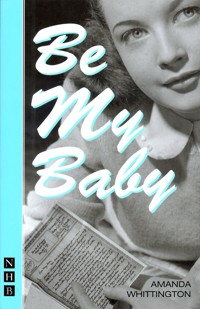
A poignant drama about attitudes to teenage pregnancy in 1960s Britain. Mary Adams, aged 19, is unmarried and seven months pregnant. Forcibly sent to a Mother-and-Baby Home in the north of England by a mother intent on keeping up appearances, Mary – along with the other girls in the home – has to cope with both the shame and the dawning realisation that she will have to give the baby up for adoption whether she likes it or not. Despite this – and an overbearing matron – the girls' youthful effervescence keeps breaking through as they sing along to the girl-group songs of the period. Amanda Whittington's hugely touching play Be My Baby was first performed by Soho Theatre Company at the Pleasance Theatre, London, in 1998. This edition of Be My Baby includes new scenes added for several successful revivals of the play.
Sie lesen das E-Book in den Legimi-Apps auf:
Seitenzahl: 63
Veröffentlichungsjahr: 2014
Das E-Book (TTS) können Sie hören im Abo „Legimi Premium” in Legimi-Apps auf:
Ähnliche





Amanda Whittington
BE MY BABY
NICK HERN BOOKS Londonwww.nickhernbooks.co.uk
Contents
Title Page
Introduction
Original Production
Characters
Be My Baby
Appendix
About the Author
Copyright and Performing Rights Information
Introduction
Be My Baby was commissioned by Soho Theatre in 1997 and started life as the present-day story of a mother’s reunion with her adopted, grown-up child. Starting work on the play, I was immediately faced with questions about the mother’s past. Was she unmarried? Who did she tell about the pregnancy? And where did she go to have the baby?
Perhaps she had been packed off to one of the Church-run maternity homes that were active in the 1960s? I set out to look for some background information. Not surprisingly, I found no Official History of Unmarried Mother and Baby Homes. What I did discover were many ‘first-person’ accounts of such places in books and documentaries on adoption.
The sixties weren’t swinging for these young women. They spoke of being sent away like criminals, to live out their pregnancy in secrecy and shame. The more I learned about these homes, the more I knew it was a world I wanted to explore. Hoping Soho Theatre wouldn’t mind a few small changes, I took the middle-aged mother of my story back to where it all began. She became nineteen-year-old Mary Adams – pregnant, unmarried and wanting only to keep her baby. The play sets out to discover why she can’t.
Setting Be My Baby in 1964 also gave the chance to include some fantastic ‘girl-group’ music by The Shangri-La’s, The Dixie Cups and the Ronettes. These three-minute pop dramas seemed to perfectly capture the passionate innocence of the play’s characters – and gave an uplifting soundtrack to what becomes a pretty dark tale.
I am extremely grateful to the birth mothers and adoptees who spoke to me about their lives. Be My Baby is not the story of one person or place. It draws on the many accounts I have heard and read over three years of working on the play. During this time, I was surprised by the number of people who told me they or someone close to them had been touched by adoption. Many families, it seems, have their story to tell – and who knows how many more still keep the secret? I hope that in some way, Be My Baby speaks for them.
I would like to thank Abigail Morris and Paul Sirett of Soho Theatre for their guidance, encouragement and belief in the play. It would not have been written without them. Be My Baby is dedicated to my parents, who have always been there for me.
Amanda Whittington
Be My Baby was first presented by Soho Theatre Company at the Pleasance Theatre, London, on 10 November 1998, directed by Abigail Morris and designed by Jonathan Fensom, with the following cast:
MARY
Kaye Wragg
QUEENIE
Lucy Speed
DOLORES
Naomi Radcliffe
NORMA
Anna Madeley
MATRON
Eleanor Bron
MRS ADAMS
Diana Quick
The production was revived, supported by the Peter Woolf Trust, at Soho Theatre, London, on 18 May 2000, with the following cast:
MARY
Katie Blake
QUEENIE
Lucy Speed
DOLORES
Naomi Radcliffe
NORMA
Joanne Froggatt
MATRON
Christine Moore
MRS ADAMS
Karen Lewis
The production was toured in Autumn 2002, with the following cast:
MARY
Amy Phillips
QUEENIE
Kirsty Bushell
DOLORES
Julia Haworth
NORMA
Lisa Ellis
MATRON
Joanna McCallum
MRS ADAMS
Stephanie Jacob
Be My Baby has subsequently been revived at Salisbury Playhouse (director Raz Shaw), Oldham Coliseum (director Natalie Wilson) and Hull Truck Theatre (director Gareth Tudor Price), all in 2004. The play has been widely performed by amateur theatre companies and in schools and colleges.
Characters
MARY, aged nineteen; seven months pregnant
DOLORES, aged seventeen; three months pregnant
QUEENIE, aged twenty; four months pregnant
NORMA, aged twenty; eight months pregnant
MATRON, Head of St Saviour’s
MRS ADAMS, Mary’s mother
Be My Baby takes place over two months in 1964. It is set in St Saviour’s, a Church of England-run mother and baby home in the North of England. St Saviour’s takes in unmarried mothers during their pregnancy and accommodates them until their child is born and given up for adoption.
The austerity of St Saviour’s is best suggested by a minimal set comprising two single beds for the dormitory (with a door), a small table and two chairs for Matron’s study.
Featured singles are ‘Be My Baby’ by The Ronettes, ‘Chapel of Love’ by The Dixie Cups, ‘Past Present & Future’ by The Shangri-La’s and ‘So Young’ by The Ronettes. More ‘girl-groups’ songs of the early sixties can be played between scenes.
Scene One
MARY’s bedroom/MATRON’s study. From a Dansette record player comes the opening bars of ‘Be My Baby’ by The Ronettes. Beside the record player is an open suitcase belonging to MARY ADAMS, who sits listening to the record, dressed in her Sunday best. Enter MRS ADAMS, her equally well-turned-out mother. MRS ADAMS packs a pile of clothes into MARY’s suitcase and closes it.
Enter MATRON, beginning another day at St Saviour’s. MATRON checks her hair in the mirror, sits at her desk, opens a file and starts to read.
MRS ADAMS takes the needle off the record and closes the lid. We hear the voices of QUEENIE, DOLORES and NORMA, singing the final chorus to ‘All Things Bright and Beautiful’. MARY and MRS ADAMS button up their coats as the girls start to pray.
QUEENIE, DOLORES, NORMA. Almighty God; we give thee humble thanks for that thou hast vouchsafed to deliver Teresa thy servant from the great pain and peril of childbirth.
As an afterthought, MRS ADAMS puts MARY’s teddy bear into her handbag and picks up the suitcase. MARY takes a last look at the Dansette.
Grant, we beseech thee most merciful Father that she, through thy help, may both faithfully live and walk according to thy will, in this life present; and also may be partaker of everlasting glory in the life to come; through Jesus Christ our Lord …
MARY picks up the Dansette and follows MRS ADAMS.
Amen.
MARY and MRS ADAMS arrive at MATRON’s study.
Scene Two
Study. MRS ADAMS sits opposite MATRON. MARY stands by her side.
MATRON. So her condition came to light …
MRS ADAMS. Yesterday, Matron.
MATRON. And she was last unwell …
MRS ADAMS. September.
MATRON. Seven months?
MRS ADAMS. She let out her clothes and took Mother for a fool.
MATRON. Has your doctor verified?
MRS ADAMS. There wasn’t time.
MATRON. May I take his details …
MRS ADAMS. Why?
MATRON. To send for her notes.
MRS ADAMS. But he bowls with her father.
MATRON. Who hasn’t been told?
MRS ADAMS. And won’t be, with respect. He’s put her on a pedestal, you see.
MATRON. You know why you’re here, Mary?
MARY. Yes, Matron.
MATRON. Then you know what you’ve done?
MRS ADAMS. She knows far too much in my book.
MATRON takes notes as MARY replies.
MATRON. Full name?
MARY. Mary Elizabeth Adams.
MATRON. Date of birth?
MARY. I’m not sure, exactly. I haven’t seen the doctor.
MATRON. Your birthday.
MRS ADAMS. Pay attention, Mary.
MARY. I’m sorry. March the first, 1945.
MATRON. Hair brown, eyes …
MRS ADAMS. Green.
MATRON. Height?
MARY. Erm …
MATRON. Five foot three or thereabouts. Church of England?
MRS ADAMS. Christened and confirmed.
MATRON. Education?
MRS ADAMS. Grammar-school girl.
MATRON. Employment?
MRS ADAMS. Trustees Savings Bank. Junior Cashier.
MATRON. Illness or conditions?
MRS ADAMS. Just the usual childhood ailments.




