


19,99 €
Mehr erfahren.
- Herausgeber: John Wiley & Sons
- Kategorie: Wissenschaft und neue Technologien
- Sprache: Englisch
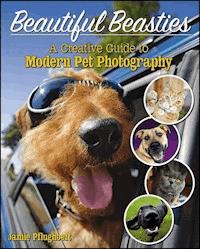
The book pet lovers have been waiting for: professional advice on pet photography Every pet parent knows how difficult it is to get that calendar-quality photo of a beloved cat or dog. This guide to pet photography is long overdue! Pet lovers will find terrific tips to help them capture their pets? personalities in photos, while professional photographers who want to extend their business opportunities will value advice on the unique challenges of working with animals and creating the portraits their clients want. * With pet owners comprising more than 62 percent of Americans, there is an eager amateur market for a book that reveals how to get great photos of those furry family members * Zeroes in on pet photography as a growing specialty among professional photographers, and this book offers advice for creating great pet portraits as well as tips on working with animals and their owners * Explains how to capture expressions, avoid spooky eyes, edit for better images, work with multiple animals, and much more As the first serious guide to pet photography on the market, Beautiful Beasties has what pet parents and professional photographers need to capture memorable pet photos.
Sie lesen das E-Book in den Legimi-Apps auf:
Seitenzahl: 568
Veröffentlichungsjahr: 2012
Ähnliche



















Beautiful BeastiesA Creative Guide to Modern Pet Photography
Published byJohn Wiley & Sons, Inc. 10475 Crosspoint Boulevard
Indianapolis, IN 46256www.wiley.com
Copyright © 2012 by John Wiley & Sons, Inc., Indianapolis, Indiana
Published simultaneously in Canada
ISBN: 978-1-118-23520-1
Manufactured in the United States of America
10 9 8 7 6 5 4 3 2 1
No part of this publication may be reproduced, stored in a retrieval system or transmitted in any form or by any means, electronic, mechanical, photocopying, recording, scanning or otherwise, except as permitted under Sections 107 or 108 of the 1976 United States Copyright Act, without either the prior written permission of the Publisher, or authorization through payment of the appropriate per-copy fee to the Copyright Clearance Center, 222 Rosewood Drive, Danvers, MA 01923, (978) 750-8400, fax (978) 646-8600. Requests to the Publisher for permission should be addressed to the Permissions Department, John Wiley & Sons, Inc., 111 River Street, Hoboken, NJ 07030, 201-748-6011, fax 201-748-6008, or online at http://www.wiley.com/go/permissions.
Limit of Liability/Disclaimer of Warranty: The publisher and the author make no representations or warranties with respect to the accuracy or completeness of the contents of this work and specifically disclaim all warranties, including without limitation warranties of fitness for a particular purpose. No warranty may be created or extended by sales or promotional materials. The advice and strategies contained herein may not be suitable for every situation. This work is sold with the understanding that the publisher is not engaged in rendering legal, accounting, or other professional services. If professional assistance is required, the services of a competent professional person should be sought. Neither the publisher nor the author shall be liable for damages arising herefrom. The fact that an organization or Web site is referred to in this work as a citation and/or a potential source of further information does not mean that the author or the publisher endorses the information the organization of Web site may provide or recommendations it may make. Further, readers should be aware that Internet Web sites listed in this work may have changed or disappeared between when this work was written and when it is read.
For general information on our other products and services or to obtain technical support, please contact our Customer Care Department within the U.S. at (877) 762-2974, outside the U.S. at (317) 572-3993 or fax (317) 572-4002.
Wiley publishes in a variety of print and electronic formats and by print-on-demand. Some material included with standard print versions of this book may not be included in e-books or in print-on-demand. If this book refers to media such as a CD or DVD that is not included in the version you purchased, you may download this material at http://booksupport.wiley.com. For more information about Wiley products, visit www.wiley.com.
Library of Congress Control Number: 2010941220
Trademarks: Wiley and the Wiley logo are trademarks or registered trademarks of John Wiley & Sons, Inc. and/or its affiliates. All other trademarks are the property of their respective owners. John Wiley & Sons, Inc. is not associated with any product or vendor mentioned in this book.
Credits
Acquisitions Editor
Courtney Allen
Project Editor
Dianne Russell, Octal Publishing, Inc.
Technical Editor
Alan Hess
Copyeditor
Bob Russell, Octal Publishing, Inc.
Editorial Director
Robyn Siesky
Business Manager
Amy Knies
Senior Marketing Manager
Sandy Smith
Vice President and Executive Group Publisher
Richard Swadley
Vice President and Executive Publisher
Barry Pruett
Proofreading
Octal Publishing, Inc.
About the Author
Born to an artist mom, in a family of animal lovers, one could argue that pet photographer Jamie Pflughoeft’s path was predestined. A self-professed dog fanatic, Jamie became passionate about photographing pets in 1999 after seeing never-ending camera-worthy moments happen in front of her while working as a dog walker and pet sitter. She attended the University of Washington as an adult student studying animal behavior as part of her psychology major, Jamie was able to take the knowledge she gleaned from her university classes and apply it to her photo shoots with animals. Jamie graduated shortly after September 11, 2001, into what was a poor job market in which she was competing against Ph.D. holders for entry-level positions, a friend recommended that she turn her pet photography hobby into a business. “Is that even a job?” Jamie asked. After a little bit of research, a six-week business training class, some homemade business cards, a $500 loan and a switch from a film camera to a digital camera, in July of 2003, Jamie’s business, Cowbelly Pet Photography, was born. Jamie established the business to meet a growing need of pet owners to have high quality photos captured of their pets for posterity.
Since the inception of Cowbelly Pet Photography, Jamie has worked with over 500 private clients and has provided commercial and editorial photography for several large companies and magazines. Editorial clients include The Bark Magazine, Modern Dog Magazine, Cesar’s Way Magazine, and CityDog Magazine. Some of her commercial clients include Purina, Wal-Mart, Nutro, PetSafe, ABC Studios, AAA, Signature DNA Unleashed, Pinnacle, and more.
Along with blogging on topics such as photography, digital editing, business, dog-friendly travel, and more, Jamie has taught 14 workshops to over 150 budding pet photographers in cities around the United States, with plans to teach internationally starting in 2013. Jamie has developed a large following on Twitter, Facebook, and the Cowbelly blog, and sold out a Master Class at WPPI in 2011. She is largely considered one of the foremost leaders in the pet-photography industry.
When not photographing dogs in Washington and California, you can find Jamie with her beloved Lab-mix pooch, Fergie, by her side, enjoying all that the Emerald City has to offer.
Like the dogs she photographs, Jamie believes life is best lived playing, sleeping, eating, loving, daydreaming, having regular adventures and being sure to feel plenty of joy every single day. “A Picture is Worth a Thousand Woofs”™!
You can connect with Jamie on Twitter at @cowbelly; on Facebook at her page for pet photographers, www.facebook.com/BeautifulBeastiesByCowbelly; or her website for pet photographers, www.beautifulbeasties.com. You can see more of her work on her portfolio site at www.cowbelly.com, which she tries to update as frequently as possible with photos of cute, funny animals just being awesome.
By the way, the name Pflughoeft (pronounced “flew-hoff”—you’re welcome) is of German origin. It is used as a nickname for farmers.
Jamie and her dog, Fergie.
Acknowledgments
I would like to thank Bill and Nat of Photo Lab Pet Photography for providing input on the cover design as well as the information about twentieth-century photographers who captured pets. A big thank you to Moira McLaughlin of Dog Art Today for also providing information on twentieth-century photographers who trained their lenses on animals.
To Courtney Allen, my editor at Wiley, for believing in me enough to take on this project, inviting me to write for you, and for being so patient with me during the process. Thank you for understanding my bizarre notions about human energy fields affecting electronics. (I’m still waiting to hear the story about the Mexican food and the microwave!)
Thank you Alan Hess, my technical editor, for understanding and sympathizing with my ongoing software and computer issues, and for challenging me to be a better, more technical photographer. I learned a lot while writing this book, and it was largely because of you! To Bob Russell, of Octal Publishing, Inc., who copyedited the book, thanks for straightening out the fragments and untwisting some of the more abstract language! Thank you to Dianne Russell (also at Octal) for making me bust out loud laughing in the middle of the night many times during our review phase. Your comments had me cracking up, and it was such a nice reprieve from my software issues.
Thank you to the many Cowbelly Pet Photography clients with whom I’ve worked over the years, for entrusting me with the honor of creating memories of your beloved animals. Working with you and your pets is the best part of my job, and I wouldn’t have a business were it not for you.
To my many fans and colleagues on the Cowbelly blog, Facebook fan page, and beyond, thank you for entrusting me as your guide and teacher. I will always feel humbled that you look up to me as a leader, because the way I see it, “I’m just a girl.”
To Denis and Robin’s late pooch, Scout, thank you for being my muse for this book, and reminding me during the most challenging time in the process of just why I do what I do. The photo of you in your booties and red vest with your mom holding you touched my heart right at the moment it needed touching the most, and you made me realize a profound purpose behind writing this book.
To my mom, who I felt was looking down over me during the process, saying “you can do it kid,” and who always believed in me, no matter what I did. I know you never got to finish your own book before you left us, but hopefully, now you can enjoy being a published author vicariously through me. I love you and miss you, and I hope I made you proud.
Thank you to my incredible father, Larry, for coming over every weekend to mow my lawn, bring me food, and check on me to make sure I was still alive. You are the best Papabear any girl could ever wish for.
Thank you to my super-sweet sister Michelle, for listening to me drone on and on about work and book stuff; for smiling and nodding your head politely when I knew you had stopped listening long ago. Those epic chats were like food for my soul, and your support of me during the process was invaluable.
And last, but certainly not least, to my furry girl, Fergie. I have no words to express the impact you have had on my life. You are the true love of my life, and every day I get to spend with you is an absolute gift. I love you with everything I have and everything I am.
This book is dedicated to my mother, without whom I would not be an animal lover, an artist, a teacher, a nature lover, a business owner, a photographer, a writer, a student, an adventurer, or a compassionate and loving person who finds pure joy in the simple things in life. Thank you immensely for all of these gifts that you gave me, for your unwavering support of me and my business, and for always accepting and loving me for who I am. I love you with everything I have and I miss you every day.
This book is for you, Mom.
Introduction
I’ll never forget the day that started my journey on the path of pet photography. The year was 2000, and I was working part time as a dog walker and pet sitter while finishing my animal psychology degree at the University of Washington in Seattle. The place was a pet-sitting client’s house. I was sitting on the carpeted floor in a hallway with their giant, ancient, goofy mutt and frisky young kitty. This unlikely pair were playing, and cuddling, and teasing, and loving each other, and I watched silently in awe of their special relationship. “Man, I wish I had a camera,” I said out loud under my breath, feeling a familiar and characteristic urge to create things that I had felt since I was born. I wanted to create visual memories of the interplay between the dog and cat. I wanted to capture for all eternity, this special moment caught between two creatures that could not have been more opposite; to pay tribute to the relationship they shared, and be able to show people what I had witnessed. I wanted to capture the expressions, the emotion, and the personality of these two animals. Ultimately, it was as simple as just wanting to document what I saw and share it with others.
I ran home and returned with my old, full-manual Pentax P3 film camera that I learned how to use in the sole photography class I took in high school in 1989. I loaded it up with some black-and-white film and started what was to be the beginning of a surprising and rewarding career.
Shortly after my impromptu photo shoot, the big ’ol mutt passed away, and to say that the photos that I captured of him were meaningful to the dog’s owner would be an understatement. In those simple moments, in that hallway in the dying light of a summer afternoon, I was able to capture a moment in time that was forever lost when the dog passed on. What I gave to its owners was a profound and powerful gift: a gift that I now have the incredible honor of sharing with clients, friends, and family every time I go to “work.”
My hope is that by reading this book, you too can learn to develop the skills to offer that same gift. A gift that will bring you more joy and more of a sense of meaning and reward than you could have ever imagined. It’s a gift that literally changes people’s lives. To some, it might seem to be “just a dog” or “just a cat,” but to those of us who deeply, truly love the animals with which we share our lives and our homes, great photos of our furry family members are beyond any meaning that one can put into words.
Although I was excited about my newly chosen métier, within a few years of starting my little pet photography business, I felt quite alone in the world. Pet photography as a business was still in its infancy. I had no educational resources or anywhere to turn for knowledge about photography as it applied to domestic animals. Sure, there were some books for consumers on how to take cute pet photos, and forums filled with cheesy, horribly lit pictures of kittens and puppies in baskets with fake flowers in front of muslin backgrounds, but there was nothing for the aspiring pet-photography professional wanting to do more polished, contemporary work. No workshops, no PDF guides, no comprehensive manuals, no forums or networks. So I continued to trudge along on my own, learning how to position my body and my camera in relation to the animal, figuring out to hold treats in my hand, and determining what pet owners wanted and what they liked for shots. I began to understand how to use my knowledge of animal behavior in a shoot to capture ever-more interesting images, and then eventually, I figured how to price those images and other products so that pet owners could and would buy them. I found ways to market my business, discovered creative locations in which to feature pets, established the best kinds of lenses to use during the session, and on, and on, and on. I did all this without a guide, without someone holding my hand and showing me how it was done. It was tough, and I learned it all the hard way. In some respects, I am grateful for that hard road; in others I wish it had been far easier.
Since I started my business in 2003, pet photography has not only become a popular form of photography, but a very viable business model, as well. No matter where you are in your journey, my hope for you through this book is to be that guide, that person holding your hand, showing you how it’s done: a good friend answering your questions and helping you out along the way. In fact, you even “ask” me questions (you’ll see them in quotes) throughout the book. My hope is to provide you with the knowledge that I was desperate for when I started; knowledge that has accumulated from an all-encompassing love of photographing pets.
Pet photography is still a nascent industry, and that makes it challenging in many ways. There is still so much to be learned. But it’s exciting at the same time. It’s a time when photographers who point their lenses at dogs and cats and horses and birds and frogs can pave new paths and truly help shape an industry that is still in its youth.
Pet photography for me goes so far beyond taking cute photos of pets. In psychology, there is a term called “flow,” which is used to describe when a person is feeling their happiest: when everything seems to just flow. For some people, it’s gardening, for others it’s playing music, for me it’s pet photography. I get lost in it. It gets me out of my head. It enables me to create and express the love I have for these amazing creatures that grace the space in front of my lens. And the fact that the owners of these special animals are moved by the images is just icing on an incredibly large and delicious cake.
If someone had told me back in early 2003, that someday I would run a successful business photographing dogs and cats and sharing my passion with other photographers, I would have looked at them, rolled my eyes and said, “Yeah, right.” Even though it took a lot of hard work to get where I am today, I still feel supremely lucky. Lucky that I get to be paid for something I am so passionate about, including turning around and sharing that passion with others. It’s a privilege for which I am eternally, deeply, profoundly grateful. Thank you for allowing me to share my passion with you. I hope that you find this book to be a rich resource of information and knowledge for you that you can return to and use again and again.
Getting the Most Out of This Book
First, you might be asking yourself, “Who is this book intended for?” I wrote this book for passionate hobbyists and professional pet photographers alike; those with a little technical knowledge and a lot of desire to make great photos of your own pets or those belonging to clients. My goal is for this book to be just as valuable for the professional pet photographer as it is for those practicing pet photography as a hobby.
Chapter 1 provides an overview of the history of pet photography and the modern day influencers. If you are super passionate about pet photography and are either involved in the industry as a professional or hope to make it a career, you’ll enjoy taking a read through this, and you’ll probably learn something new about the industry.
If you already have all of the equipment you need and are happy with how it performs, with no plans to upgrade, you can skip over Chapter 2, which covers the equipment you need to do a great job capturing pet photos. You might want to take a read through the lens section, nonetheless, because it provides some detailed information on the advantages and disadvantages of using certain lenses for pet photography. If you are a casual shooter, never fear, I talk about “prosumer” (translation: affordable) cameras that will get the job done, and I explain that you don’t need fancy gear to create beautiful images.
Chapter 3 delves into how to work with animals from a behavioral standpoint and instructs you as to what to look for when it comes to desirable appearances for various animals. It also explains how to avoid capturing photos of them when they aren’t at their happiest or most relaxed, regardless of the type of animal. I also look at the unique challenges of photographing your own pets, and how best to approach this for optimal results.
Chapter 4 goes over your pre-shoot inventory; the process and steps you should take prior to each shoot to ensure that each shoot goes smoothly. Along with this, I go over the importance of using shot lists, and give you examples of how to creatively develop a shot list and define goals for each shoot.
Regardless of your level of experience, and especially if you have minimal experience with the technical aspect of photography, you should read through Chapter 5, and then re-read and re-read it again. One thing that is very important to keep in mind is this:
The quality of your results can be directly measured by the breadth and depth of your knowledge of the technical workings of photography.
In other words, the less you know about how aperture, shutter speed, and ISO settings work, the harder it will be to produce quality results. Sure, you can pop your camera into Auto mode or a preset program, but it will be a lot harder to produce professional-looking images that way. Knowing how cameras work from a technical standpoint opens up doors so that you can be more creative and confidently handle lighting and situational challenges. Although I have been photographing pets for more than 12 years, I learned some new information just writing this section, so I hope the technical information I share helps you see the left-brained stuff in a whole new light.
Chapter 6 addresses lighting; from natural light sources to auxiliary lighting, including flash and studio lights, plus all of the accompanying accessories. I present the pros and cons of each type of lighting, and give you examples of when to use each type. I also show you what to avoid when it comes to lighting and give you tips on how to light difficult situations and avoid the lighting PET-peeves.
The fun really begins with Chapters 7 through 10, in which we delve into the creative aspects of pet photography, and learn how to allow your personality and those of your subjects to really shine through your work, both while you are photographing them and during image post-processing. You will also learn how to handle the many challenges that can arise when photographing pets, including the dreaded “black dog/white dog” issues. Chapter 7 includes tons of eye-candy, and gives you more ideas on how and where to photograph a pet than you will be able to do in a lifetime. Chapters 7 and 9 both lay out lists of pet photography “don’ts,” which are compendiums of things to avoid, both while shooting and in post-processing. These are the mistakes many new pet photographers make that should be avoided. In chapter 10, I give you tips on how to define and develop your own style (I call this “Photodogstyle”), and how to edit your photos to match your style. I also show you how and where to find inspiration for your work.
Lastly, Chapters 11 and 12 are designed for the professional and are filled with business information that you need to know in order to make your passion profitable. There is information on how to build your portfolio for those who are still working on developing saleable skills; expenses that show you how much you can expect to invest in your business now and into the future; information on pricing and branding and marketing; and a detailed list of the top-five biggest keys to success. With the technical, creative and business information in this book, you should have all you need to make your business flourish.
Be sure to read the captions under each photo in the book, as oftentimes I include information that tells you how or why I got the shot.
The technical information under most of the images in the book includes the camera settings and the lenses I used, which I think can be very helpful in understanding how a photographer created an image. (You’re welcome, ha!)
There are exercises at the end of each chapter, and I recommend that you set aside time each week to do each of these exercises because they are all designed to help you improve on your skills and learn and grow experientially.
You can access online bonus content at the following web address:
www.beautifulbeasties.com/books
Here, you can find useful information about photography-related resources as well as a great synopsis on the characteristics and behavioral traits of many common (and not-so-common) dog breeds.
With all that said, young pet photographer, let’s get started! Happy reading!
The History of Pet Photography
The Backstory on Pet Photography
Photos of pets have been taken since the inception of the camera. The oldest known photograph of a dog is a daguerreotype of a white poodle titled Poodle with Bow, on Table, taken by an unknown photographer in the 1850s. A daguerreotype is a direct positive that’s made in the camera on a silvered copper plate. The process involves a long exposure time that makes our modern day shutter speeds of 1/1000 second and faster pale in comparison when it comes to time commitment. To take the shot surely must have required one very patient photographer or one heavily sedated dog—or both. This piece sold at Sotheby’s for $8,125 in 2009.
The first photo of a dog, created by an unknown photographer in the 1850s.
Since then, both technology and the relationship between humans and their animals have evolved dramatically. As domestic animals have continued to become more and more entrenched in our everyday lives, our cameras have spent more and more time focusing in their direction.
In the 1950s, Elliott Erwitt, a French-born American photographer, came onto the scene and captured photos of people with their pets on the streets of New York City, focusing much of his work on dogs. Perhaps the most iconic photo Erwitt created was a black-and-white image titled New York City, 1974. The photo is of a miniscule Chihuahua standing next to its high-heeled owner, flanked on the other side by the legs of a mountainous Great Dane. All the viewer can see are the legs from the knees down of the woman and the Great Dane, and the little sweater-clad Chihuahua on the right. It’s a humorous look at the relationship between man and beast, and an ironic and unusual capture on the part of Erwitt.
Along with Erwitt, many other twentieth-century photographers aimed their lenses at domestic animals. William Wegman became known for his humorous portraits of Weimaraners in unlikely scenarios. Ilse Bing included dogs in her portraits, including the photo of a Terrier next to a shadow of the photographer in Self Portrait with Stacatto, New York. Robin Schwartz has photographed dogs as pets and strays; canines inform a large part of her work. Eadweard Muybridge’s work, a photo series of race dogs in motion titled Animal locomotion: an electro-photographic investigation of consecutive phases of animal movements, 1872–1885, was groundbreaking for its time and became a study in its own right. And famed photographer Irving Penn was known to include dogs in his portraits of humans.
It wasn’t until the 1990s that pet photography became a career unto itself. It was during this time that a small cadre of photographers decided to specialize in pets as a niche, photographing more for private clients and everyday pet owners rather than for gallery shows and artistic projects, as their predecessors did.
This “new” old-school breed of pet photographers became well known in the 1990s. Their ranks include Jim Dratfield, who became famous for his romantic, traditional sepia photos in New York City; Deborah Samuel, recognized for her moody, abstract black-and-white shots of dogs in her books ; Kim Levin for her emotive and candid work of both dogs and cats in books such as ; Amanda Jones for her now iconic, highly influential, clean, modern studio shots on white backdrops; and Rachel McKenna ( Hale) for her endearing commercial photography of kittens and puppies. Other notables from the 1990s include Joe and Healy Grisham, and Bruce Weber. Before I started my business in 2003, I looked up to and highly admired the aforementioned photographers; they were taking the time and care to capture my favorite creatures and publish books of their photos. Those books lined my bookshelves and provided me with inspiration when I made the move from hobbyist to professional.
Lesen Sie weiter in der vollständigen Ausgabe!
Lesen Sie weiter in der vollständigen Ausgabe!
Lesen Sie weiter in der vollständigen Ausgabe!
Lesen Sie weiter in der vollständigen Ausgabe!
Lesen Sie weiter in der vollständigen Ausgabe!
Lesen Sie weiter in der vollständigen Ausgabe!
Lesen Sie weiter in der vollständigen Ausgabe!
Lesen Sie weiter in der vollständigen Ausgabe!
Lesen Sie weiter in der vollständigen Ausgabe!
Lesen Sie weiter in der vollständigen Ausgabe!
Lesen Sie weiter in der vollständigen Ausgabe!
Lesen Sie weiter in der vollständigen Ausgabe!
Lesen Sie weiter in der vollständigen Ausgabe!
Lesen Sie weiter in der vollständigen Ausgabe!




