


Erhalten Sie Zugang zu diesem und mehr als 300000 Büchern ab EUR 5,99 monatlich.
- Herausgeber: Allen & Unwin
- Kategorie: Gesellschafts- und Liebesromane
- Sprache: Englisch
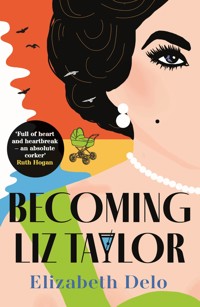
'An accomplished and memorable debut full of heart and heartbreak - an absolute corker for reading groups!' Ruth Hogan, bestselling author of The Keeper of Lost Things Val, a widow living in Weston-super-Mare, spends lonely evenings dressing up as the movie star Elizabeth Taylor. It seems to be a way of coping with the loss and sadness she has experienced in her life. One day, when Val sees a pram left unattended on the seafront, on a whim she kicks off the brake and walks away with it... Set in the present and the 1970s, BECOMING LIZ TAYLOR is a vivid and touching depiction of love, loss and bereavement - thought-provoking, moving fiction for fans of Rachel Joyce, Emma Healey and Ruth Hogan. ****Shortlisted for the debut novel prize at the 'Festival du Premier Roman' in Chambéry.***
Sie lesen das E-Book in den Legimi-Apps auf:
Seitenzahl: 419
Veröffentlichungsjahr: 2023
Das E-Book (TTS) können Sie hören im Abo „Legimi Premium” in Legimi-Apps auf:
Sammlungen
Ähnliche




















Elizabeth Delo trained as a teacher and has worked in schools in London, Birmingham, Paris and Somerset. After writing fiction in her spare time for many years, Elizabeth took a break from teaching to do a Masters degree in Creative Writing at Bath Spa University, graduating with Distinction. She runs creative writing classes and has worked as a freelance editor.
Elizabeth has a degree in French from Goldsmiths in London. She has travelled in Europe, Asia and the United States, but always returns to her beloved France. She loves cities, cinema and dance.
She lives in Somerset with her husband and has three children.
Published in hardback and trade paperback in Great Britain in 2023 by Allen & Unwin, an imprint of Atlantic Books Ltd.
Copyright © Liz Harvey, 2023
The moral right of Liz Harvey to be identified as the author of this work has been asserted by her in accordance with the Copyright, Designs and Patents Act of 1988.
All rights reserved. No part of this publication may be reproduced, stored in a retrieval system, or transmitted in any form or by any means, electronic, mechanical, photocopying, recording, or otherwise, without the prior permission of both the copyright owner and the above publisher of this book.
This novel is entirely a work of fiction. The names, characters and incidents portrayed in it are the work of the author’s imagination. Any resemblance to actual persons, living or dead, events or localities, is entirely coincidental.
10 9 8 7 6 5 4 3 2 1
A CIP catalogue record for this book is available from the British Library.
Hardback ISBN: 978 1 83895 805 3
Trade paperback ISBN: 978 1 83895 806 0
E-book ISBN: 978 1 83895 807 7
Typeset in Sabon by Avon DataSet Ltd, Alcester, Warwickshire
Printed in Great Britain
Allen & Unwin
An imprint of Atlantic Books Ltd
Ormond House
26–27 Boswell Street
London
WC1N 3JZ
www.atlantic-books.co.uk
In loving memory ofPatricia Palmer
ONE
It was probably safe to dress up now. No one came to the house at this time of night. No one really came at all. Val went upstairs, took off her day clothes and stood at the wardrobe in her slip. She ran her fingers across all her purple dresses, selected one and laid it on the bed. She changed her underwear, put on her conical bra. It was hard to find them now, those bras. They were all the thing in the fifties, and they gave women a lovely silhouette. That pointed bosom, that nipped-in waist like an inverted triangle. Val’s waist was far from that after two babies and now the spread of her seventy-two years, but the bra still lifted and separated, which she found pleasing. She pulled the dress over her head and zipped it up at the side, then sat on her bedspread and rolled the nylon stockings up her legs. She always put gloves on to do this – it saved snagging, especially with the 10 denier she insisted on buying. They were so fine they could ladder easily if they weren’t treated with care. She did this part slowly, easing the stockings over her toes and then using the flat of her palms to unroll them up her leg. It felt as though she was being slowly coated in silk. She squeezed her feet into a pair of stilettos which she kept in a shoebox in the wardrobe. There. She admired herself in the full-length mirror. She put her hands on her hips and stood with one knee slightly bent, just how Elizabeth Taylor posed in that white bathing suit in Suddenly, Last Summer. She slid her fur coat from its hanger and eased it on, then pulled it around her and twisted this way and that. The coat caught the light and moved like molten bronze.
She sat at her dressing table and smeared coral on her thin lips. They weren’t as full as Elizabeth’s – Miss Taylor had a real sultry pout. Val’s lips were thin now. They looked more like a crack in the wall. She was sure they had been plumper when she was young. Age seemed to thin a person’s lips, made it look as though they were grimacing even when they wanted to look chirpy. Val followed the arches of her brows with the kohl pencil until they were thick and dark and perfectly symmetrical. Then she twisted the beauty spot onto her cheek. The photograph leaning against the mirror had been taken in Elizabeth’s heyday in 1962. Her face was in profile; she was looking at something off to her left. Val liked to think Richard had appeared in the doorway just as the picture was being taken. But it might just as easily have been a photo shoot, the photographer saying, ‘This way, Miss Taylor!’ ‘Ooh yes, move your head the other way!’ ‘That’s it – turn your body towards the camera!’ How exciting it all must have been. Anyway, the picture helped Val get the position of her spot just right: mid-low on the right cheek. Mind, she’d drawn it on so many times she probably didn’t need it anymore. But she liked it there on the dressing table. She liked the glamour of it.
She held onto the banister rail as she went downstairs, side-stepping in her heels. Sometimes when she did this, she would imagine she was at the Oscars, making her way to the podium to accept Best Actress Award for BUtterfield 8.
In the kitchen she made a coddled egg and ate it sitting at the table next to the wall. She lit a cigarette. She didn’t smoke, but liked the elegance of the Bakelite holder resting in the V of her gloved fingers. The smoke hung in the room in layers of blue.
From the front room she heard the ticking intro of Countdown, that hypnotic metronome, calling Britain’s elderly to pick up their pens. Val sat in her armchair in front of the television, crossed her ankles and angled her knees to one side. She liked to sit like a lady. She scribbled capital letters onto her little pad, mouthed the beginnings of words, explored consonants on her tongue. Sometimes she got the conundrums even when the contestants didn’t. You just had to keep staring at the letters along the bottom of the screen.
When the programme had finished, she turned off the television. She sat in the quiet room looking at the ornaments on the mantelpiece. The Portmeirion bud vase she’d brought back from her honeymoon in Wales; the copper box where she kept the matches for the gas fire; the perpetual desk calendar. Every day she turned the tiny wheel on the calendar so that the metal plates flipped over to show the right day, date and month. At either end of the fireplace stood her Staffordshire china dogs, a wedding present from Len’s parents. She still remembered the excitement of when she’d taken them out of the box the day Len carried her over the threshold. Such a grown-up thing to receive. She still dusted them every day and put them back on the same spot, positioning their haughty faces to look proudly over her front room. For a while she watched the torsion pendulum under the glass dome of the anniversary clock on the mantelpiece. Len had bought them the clock to mark their fifth anniversary. The four gold balls on the pendulum rotated left, rotated right, and then back again, smooth and precise, as if dancing a polite minuet. A single oscillation took exactly eight seconds. Sometimes Val found herself spending full minutes contemplating the mechanism spinning gently back and forth, back and forth.
Elizabeth evenings usually made Val feel better. The silk lining of the fur coat gliding up her bare arms, a dainty puff of face powder, a sparkling fake rock on her finger; it calmed her. In the quiet of her terraced house and hidden away from the world, the burden of being Val was lifted, and for a time she could pretend she lived a more glamorous life, one that brimmed with diamonds and adventure in Bel Air, Los Angeles. The loss she still dragged around from day to day fell away, and for a few short hours she was able to forget. Dressed as Elizabeth, she could almost be happy.
When Val woke in the morning, she found she’d been crying again. She took a tissue from the quilted box on the bedside table and wiped her eyes. Five decades since she lost Duncan and Len, yet still she dreamed about them. The dreams were a brief, blissful return to those happy days with her husband and son, until she was confronted on waking by the terrible reality yet again. Strange how she still felt the shock of it. How could it be possible still to be in the grip of grief all these years later? They say sorrow eases with time, but Val felt it got harder. Every year that passed pulled her further away from the two people she’d loved more than all the world.
She was due at the hairdresser at ten. Although she kept her more elaborate clothes and make-up for the evenings, she still enjoyed putting on a bit of glamour. Having her hair done was an occasion, and she clipped some sparklies onto her earlobes and put on her favourite dress. It was dusky mauve with fabric buttons down the front and a matching belt which threaded through a loop on either side of the waist. The petticoats underneath gave the skirt a fullness which made it float as she walked. Val pulled her raincoat over the dress, closed her front door, and stepped out onto the pavement.
The sky was charcoal grey, and a light rain was falling steadily. Val tilted her umbrella in the direction of the wind as she walked towards the main road. She and Len had bought the house on Palmer Street just before they were married. It was halfway along a Victorian terrace, three streets back from the seafront. Two symmetrical rows of houses on either side of the street converged at a point at the end, like the orthogonal lines on a perspective drawing. There were no bay windows or front gardens – the windows ran flush against the front wall and the doors gave straight out onto the pavement. Val always thought this made the street look tidy. She’d been proud to live in Palmer Street when they’d first moved in, but the area had changed since those early days. Now, it was rather down at heel. The butcher, haberdasher and department stores on Meadow Street had been replaced by charity shops and stores where everything cost a pound. The grocer on the corner was now a tattoo parlour. Regent Street had become a dirty artery of amusement arcades and takeaways, the shop windows permanently grubby from the crawling traffic.
Val crossed Alexandra Parade and walked along Walliscote Road. This street was grander, lined with imposing Victorian villas. Grey-stoned, with cream stucco surrounds to both bay windows, top and bottom. Most of the buildings were still whole houses, their front gardens tidy with slate chippings and bay trees behind the low walls, smart front doors and expensive drapes at the windows. Roof gables were finished with intricate carvings and ornate finials. The dark morning meant that lights were on in some of the sitting rooms, and crystal chandeliers sprinkled glittery light across pale walls. Further along the street some of the buildings had been converted into flats, but even these were large and well-heeled. Val glanced down into basements where spotlights lit up kitchens like cruise ships. They had shiny marble-topped islands and fridges like wardrobes. Everything seemed bigger than it needed to be. Even the wine glasses on the draining boards were as big as soup bowls. Val had always hoped she and Len would eventually live somewhere like this. When the children were born, she used to walk past the semi-detached villas on the grand streets that curved away from the seafront, wondering if they’d ever be able to afford one, thinking they’d soon need an extra bedroom, a bigger garden. One or two of the roads had French names: ‘Montpelier’, ‘Boulevard’. Now, there would have been an address to be proud of. Of course, she hadn’t needed to move in the end. They didn’t need the extra room after all.
She crossed the road at Clifton Street and walked beside the crenelated stone wall along the edge of Clarence Park. Leaves scratched along the tarmac paths in the park. The bite in the breeze was a reminder of the end of summer.
From under the hairdresser’s hood dryer, Val looked at her reflection in the mirror. She smoothed her index fingers across her cheeks, pulling the skin taut. For those few seconds she could almost be a young woman again, all the creases gone. But when she let go, the skin puckered back into place and the bags under her eyes reappeared. Her resemblance was closer to Elizabeth Taylor’s later years now, she thought, when she’d become a garish presence on the chat show circuit, rather than the glamorous star of her early movies. Even Liz became grotesque in the end. Val once read about a speech she’d given at a charity fundraising event in Santa Monica, where she’d apologised to her fans for ageing. Under the dryer, Val repeated Miss Taylor’s words quietly in a faux-American accent: ‘I’m sorry I’ve gotten old,’ she said.
Outside, on the pavement, people were walking past the salon, busy coming and going. What had everyone got to do all the time? No one’s got time to think anymore. A tall man with a ginger beard carried a little girl of three or four on his shoulders, clasping her ankles in his big hands. He bent his knees to exaggerate each footstep, making the child bounce up in the air and giggle with glee that was all of her. Be glad of what you’ve got, thought Val. Treasure these times. Treasure the times when you can tuck them up all cosy and safe.
She was pleased with her hair. The firm set meant the rolls would keep their volume, and the colour was just what she’d asked for. She’d gone a bit darker. ‘Cleopatra Black’, she’d described it to the hairdresser. As she left the salon, she took another glance in the mirror. When she stepped out onto the pavement, she imagined a line of flashbulbs and she smiled, held her head to one side and then the other, her neck extended. With its mille-feuille layers of lace petticoat, she loved how her dress moved forward and back as she walked off towards the seafront, like a bride walking up the aisle.
It was colder along the front. The wind came in sudden gusts from the Bristol Channel, the cries of seagulls hysterical or mournful depending which way the wind caught them. Val watched a gull flap across the sand and settle on the low wall between the pavement and the beach. Up close, she’d always found the size of them astonishing. Len used to joke that gulls were the gangsters of the bird world. ‘If they were human, they’d carry flick knives, and would use them too if you looked at them in the wrong way,’ he’d say. As she passed, Val eyed the bird’s malevolent stare. The tide was out – the sea somewhere out there across the flats, so far away it was hard to imagine it was there at all. The sand was the colour of rain. Lights on the Grand Pier flashed dismally, but there wouldn’t have been many pleasure seekers today. The bright red of the helter-skelter at the end of the pier stood out against the grey sky. The roller coaster was still. Those carriages would sit up there on the rails until next summer. A tourist train trundled along the promenade, carrying a few local people to save the long walk from town.
Up ahead on Beach Lawns, next to the ugly sprawl of Pirate Adventureland, the Weston Eye, an observation wheel carrying thirty caged viewing pods, revolved slowly. It was a recent addition to the seafront, promising spectacular views over the whole sweep of the bay. Val had promised herself a ride one of these days. Having lived in Weston all her life, she would love to see the view from up there, the pattern of the streets from above. She’d like to try and spot her own house among the rooftops. Perhaps on a warmer day she’d come down to the front and do it. Although, it wouldn’t be much fun on her own. It was the sort of thing you did with somebody else. On the pavement underneath the wheel, she felt its heavy rotation and heard its mechanical whine, its clicks and creaks.
A pram was parked next to the ticket kiosk at the foot of the wheel. It was angled so that Val was able to look in as she approached. The baby was asleep, its head to the side, its tiny mittened fists up by its ears. The yellow waffle blanket with its wide satin hem was identical to the one she’d had for Duncan. It took her right back. Val looked around. The baby appeared to be all on its own. There was a man in the ticket kiosk talking on his phone, his back to the window. There was no sign of a mother. No sign of anyone. If Val had looked up, she might have noticed that one of the wheel’s pods was occupied. If she’d listened, she might have heard the giggles of a child above her head, and the sing-song ‘wheeee’ of a woman.
Val didn’t think about it. She didn’t even break her stride. She kicked the brake off the pram and pushed it as if she did it every day. Her palms wrapped around the contours of the handle, fitted into the grooves in the blue plastic as if it were made for her hands. She picked up her pace. Walked faster than she had for thirty years. Her heart thudded. Left right left right, the swift rhythm of her steps like an organist’s pedals. She passed the amusement arcade, all its electronic noise hanging in the doorway. Left right. Faster. A man in a leather bomber jacket hurried past with his head down, a tabloid rag under his arm. The baby slept. Val’s fingers gripped tighter. She looked through the handle of the pram and saw her feet walking and walking. She felt her heartbeat. She felt her pulse in her arms. She glanced behind her. The big wheel was far away now. The pavement was empty, save for an old couple in bobble hats sitting on a bench staring out to sea.
TWO
In Brighton, Rafe unlocked the door of the charity shop and carried in the bin bags that had been left outside. No matter how many signs you put in the window, people still dumped their unwanted possessions in the doorway when the shop was shut. He piled the bags up out the back to sort through later. For now, he wanted to finish the window.
The look he was aiming for was ‘Autumn Celebration’. In the last few days, he’d been through the rails, picking out clothes in autumnal hues – oranges and reds and russets and browns. He didn’t like Hallowe’en – it was way too American for his tastes – and so his display would simply be a celebration of autumn, full of brown leaves and apples and ears of wheat. He’d drawn a template, cut horse chestnut leaves from sugar paper, and stuck them around the edges of the window. He passed the steam iron over the long orange 70s dress he’d chosen for the mannequin. Holding the darts on the bodice between his fingers, he ironed each one into a sharp pleat. He pulled the dress over the mannequin’s head and arranged it, gathering the fabric at the waist, and fixing it at the back with safety pins. Then he draped a length of gold organza over its shoulder, twisting it gently so that it fell to the floor in soft folds. He covered the silk in little paper leaves, fixing each one in place with double-sided tape. He liked how the pleats in the fabric looked like the autumn wind making the leaves scurry and dance. From a hanger on the wall Rafe chose a scarf with a blackberry and bramble design and tied it around the mannequin’s head. He hung a green leather bag from its shoulder and slipped a pair of flat red pumps onto its stiff feet. On a small wooden step ladder he’d found out the back, he placed bowls of conkers and sheaves of wheat and grasses from the florist, tied with green velvet ribbon. He scattered more conkers and leaves around the mannequin’s feet. Rafe stood out on the pavement and studied the finished display and smiled. He’d always had a flair for window design. Jim had always got Rafe to do their windows in the gallery. ‘You’ve got such an eye for it,’ he used to say. Rafe wondered whether Jim would still appreciate the artistic skill of his windows if he saw this one. Alright, it was a charity shop not a gallery, but there was still a professionalism to it, a finesse.
In their art gallery, it was Jim who had been the salesman, Jim whose charisma had bounced off the walls. Jim was one of those larger-than-life men: plump, six foot three with a rich, deep voice that meant everyone listened. One of the ‘characters’ of Kemp Town, he knew the whole street and it knew him. Jim was interested in everyone and everything. He was the life and soul; he was a force of nature. He was also the love of Rafe’s life.
They were together for over twenty years. They had set up the Kemp Town Gallery, along with a shop on Portobello Road and a stall at Spitalfields market, sharing their time between all three. After their break-up though, Rafe found the fast pace of London overwhelming. Crowds frightened him. More than once he’d had a panic attack on the Tube. Soon after that disastrous party, Jim had taken over the London shop and Rafe hadn’t set foot in the capital since.
The door rattled open, and a teenage girl came in. She scouted around the shop.
‘Can I help you?’ Rafe said.
‘I’m looking for some gloves. Like, posh ones, you know?’
Rafe took her over to the formal wear and pulled out a tub of accessories from under the rail. The girl rummaged through it, pulling out various gloves and matching them up. She found a pair of black opera gloves and tried them on, pushing her fingers into each of the tight spaces, then rolling them up the length of her slender arms. She brought them over to the counter to pay.
‘What’s the occasion?’ Rafe asked.
‘They’re for my prom,’ the girl said.
Rafe smiled. School proms seemed to be all the thing these days. They certainly hadn’t had proms in Weston-super-Mare in the 1980s.
He carried the bin bags from the back of the shop to the counter and started to sort through the donations. The condition of some items people left had shocked him at first. Split seams, grubby bras, shirts stained yellow at the armpits, soiled underwear. He had once found a used sanitary towel still stuck into a pair of pants. Nothing fazed him nowadays. Anything unwashed he just put in a pile to run through the machine out the back. He seemed to be able to keep the shop in far better order than he could his own flat.
Most of what came in was decent however, and some of it was exceptional. Sometimes the quality that came out of those sacks made him gasp. He often knew it was good even before he pulled it out. The feel of the fabric, the weight of it, the stitching on the seams and hem. A particularly well-tailored jacket, or an expensive shirt. A ball gown. Sometimes he’d discover the most exquisite finishing – a beaded bodice, a diamanté neckline, some particularly rich embroidery. Formal wear he always found thrilling. He would hold up each piece of clothing, inspect it in the light from the shop window and wonder about its history. Every garment told a story. Where had a tuxedo suit and cummerbund been bought? By whom and for what occasion? A wedding, perhaps, or an exciting date. Maybe it had been a reluctant purchase for a function the wearer would rather not attend. Every garment had history, bought by someone somewhere, loved, then put at the back of a wardrobe until eventually given away.
He lifted another bin bag onto the counter. It was heavy, and from the way the weight was distributed, it felt like a single garment. He untied the knot and reached inside. The black plastic bag fell to the floor as he pulled out the coat. It was knee-length, had three-quarter sleeves and a Peter Pan collar. Mid-brown fur with faint horizontal dark-chocolate stripes. It must be mink. Rafe ran his palm over the front of the coat; held the seal-sleek pelt to his face, inhaling old musk and a thousand cigarettes. It smelled of parties. It reminded him of his mother.
THREE
Val turned away from the seafront onto Alexandra Parade. Her heart still thumped; her feet continued to propel her forward. She couldn’t have explained what she had just done, or why. There was something about the way the baby was lying, with its head to the side, its little fists up next to its ears. Something about the satin hem on its waffle blanket. Whatever it was, when she turned the corner into Palmer Street with her pram, fifty years suddenly dropped away.
For a time, it was as if she was floating above the pavement, watching from outside of herself. The revving of an engine at the garage on the corner, teenagers scootering down the middle of the street, the caw of the seagulls – they were distant sounds, outside the cocoon that encased her and the baby. There was only the rhythm of her feet on the pavement; her hands clenching the plastic mouldings of the handle. There was only the child lying asleep, like a cherub. She looked at each front door as she passed, anticipating a neighbour stepping out. Someone who knew she wouldn’t normally be pushing a baby. Before she reached her house, she saw the Polish taxi driver from the end of the street pulling his front door shut and turning to walk along the pavement towards her. Would he recognise her as the woman from Number 76? The woman he’d never seen before with a pram? He glanced up as he passed, gave her a nod, then carried on walking with his hands stuffed in the pockets of his anorak.
Val stopped outside her house and rummaged in her handbag for the key. Now that the pram was here, outside her front door, the sight of it shocked her. She looked back in the direction of the seafront and began to panic. You’ve got time, she said to herself. You could turn around and take it back and claim something about a misunderstanding. What would you say, though? What would you say? She couldn’t think of anything she could say. Then she considered for a moment and felt calmer. Don’t forget, she said to herself. Don’t forget the baby had been left on its own. There was no one else in sight. Clearly, it’d been left for someone to find.
‘Who’s this scrumptious bundle, then?’ Caroline stepped out from the house next door, making Val jar in horror. She wore fuchsia lipstick and turquoise tassel earrings that were clipped on so tightly her lobes were red. Her perfume smelled like boiled sweets.
‘I didn’t know you had a grandchild, Val,’ she said, wrapping her hand around the side of the handle and bending in so that she filled the entire space under the hood. Val looked down at Caroline’s dyed-blond hair, swept into a side ponytail. They weren’t close as neighbours; they only knew bits about each other. Caroline had recently turned forty (the party had thumped through Val’s wall for most of the night); she had two children but they both lived away. She had half a dozen cleaning jobs. She was a nice enough girl, but it wasn’t the same as back when Suki lived next door, when all the children were little, all in and out of each other’s houses. When Val first moved to Palmer Street, she’d known all the neighbours. So much more of life was lived outside. People walked everywhere rather than scuttling out of their houses straight into their cars. Val couldn’t even remember cars lining the street like they did now. The garden gates at the back of the houses were all left open and the children barrelled up and down the passageway. Lines of washing, paddling pools, Lego on the paving slabs, cap guns and roller skates. Tonka toys in sandpits made from wooden pallets. You knew everyone then; you lived each other’s ups and downs. Rafe was always in next door with Suki’s kids, especially after Duncan and Len. Val didn’t know what she would have done without Suki and the way she’d helped her through the hell of losing one and then the other. She’d been a good friend all those years. Last Val heard, when she bumped into Suki’s daughter Becky at the doctor’s surgery, was that Suki had met a man on the internet and was living in Shrewsbury. Becky had even given her the address, which Val had written into the little embroidered book she kept in her handbag. She’d meant to get in touch but hadn’t found the nerve. She wouldn’t have been able to think of anything interesting to say. It sounded as though Suki had an exciting new life now.
‘Boy or a girl?’ Caroline straightened up and looked Val in the eye, waiting for an answer.
Val hesitated. It hadn’t occurred to her what it might be.
‘Oh, um . . . it’s a boy.’ How nice that would be, she thought to herself.
‘Your son’s little one, is it?’ Caroline looked back into the pram, smiling at the baby. Val tried to remember what she’d told Caroline about Rafe. Was it conceivable she would have a grandchild? Perhaps it was better to say she was childminding for someone. Who? Who?
‘Yes, my son’s,’ Val said, unable to think of something plausible.
‘I can’t wait to be a grandma,’ Caroline said. ‘All the fun, but you get to hand them back, don’t you?’
‘Exactly!’ said Val, still trying to find her door key.
‘It won’t be long for me,’ Caroline went on. ‘My Leanne’s pregnant with her first. She sent me the photo of her scan yesterday. Here, let me show you.’ She zipped open her shoulder bag, pulled out her phone and held it out to Val. On the screen was a constellation of the baby inside the womb. ‘Zoom in on it, Val, and tell me if you can see what I can see. I’m sure that’s a little winkie there,’ she said, pointing. ‘I said that to Leanne, but she won’t have it.’ Caroline thrust the phone into Val’s hand. ‘Zoom in on it,’ she said again. Val didn’t know what ‘zoom’ meant. She stared at it, wishing Caroline would take the thing off her.
‘Like this, look,’ Caroline said, moving her finger and thumb on the screen and making the picture larger.
‘Oh, I don’t know how to do that,’ Val said. ‘I don’t have one of these.’
‘What, you don’t have a mobile?’ Caroline said. She turned from the phone and looked at Val, stunned.
Val shook her head. ‘I’ve just got the phone in the hall,’ she said.
Caroline was enlarging the photo again. ‘What d’you reckon, Val? Is that a willy or what?’
Val peered at the screen. She wished Caroline would leave her alone. ‘It’s hard to say,’ she said. ‘It could just as easily be his finger, couldn’t it?’
‘Ah! You said “his!” You’ve called it, Val,’ Caroline said, zipping the phone back into her bag. ‘That’s one of those slips of the tongue, isn’t it? I’m gonna tell Leanne.’
Val smiled along, although she ached to get inside her house.
‘Oh. Just to say,’ Caroline said, getting in her car. ‘It’s Sylvia’s birthday tomorrow. Ninety! Some of us are going to pop round in the afternoon. About three. Just for an hour or so. Cut her cake with her, you know.’ Sylvia lived on the other side of Caroline. ‘You’re welcome to come. Bring the baby!’
Val smiled and watched Caroline drive off towards the dog leg kink at the end of the street. She pushed open her front door and lifted the wheels of the pram carefully over the threshold, then pressed the brake down with her foot. The baby was still asleep. Val stared at the pram in the quiet hallway. For a moment it seemed monstrous, taking up all the space like that. The thick plastic handle, the lime-green checked pattern, the hi-tech system of buttons and levers, it was incongruous next to Val’s wall plates and collection of ballerina figurines on the windowsill. But then she looked at the child, its head turned to the side, the soft contours of its face, and it felt right. Suddenly, unexpectedly, there was a baby again in the house, half a century since the last one.
Val hurried upstairs. It was hard to pack, not knowing how long she’d be away. A week? A month? Far longer than that? She puffed out a sigh, looked around the bedroom. Think. She knelt next to the ottoman where she kept all her baby things and lifted the lid. Under the photos and Rafe’s school reports she found Duncan’s old rattle and his stuffed giraffe. She opened a wooden box which contained all of Rafe’s milk teeth; the plastic clamps from her babies’ umbilical cords; the wrist bands they had worn in the hospital. In a small envelope she’d kept the curls from Rafe’s first haircut. Of course, there were no lockets of hair or kiss curls of Duncan’s, but she’d kept the sleepsuit she’d found him in that morning. She’d folded it in tissue paper, double-wrapped in plastic bags, hoping it would preserve his smell. She looked towards the doorway. She didn’t have much time, but she couldn’t resist opening the bags, unfastening the ribbon around the tissue paper and holding the suit to her nose. She breathed in. Was it still there, the scent of her baby? Was it there? It was so faint it was barely there at all. Maybe she only imagined the smell of him now. It had been fifty years after all. She parcelled it up again and laid it carefully back in the ottoman. She found what she was looking for: nappy pins. She’d even kept some terry towelling nappies, all neatly folded. Proper nappies they were, in those days.
She pulled her suitcase down from the top of the wardrobe. It was a heavy, cumbersome thing with a hand-stitched trim and metal clasps. Val lay it open on the bed. She put the baby items inside, along with her polyester trousers, a couple of jumpers, four of her purple dresses and a nightie. Then she rummaged in the chest of drawers for her conical bra. She folded a lace negligée into the case along with her silk dressing gown and her satin peep-toe mules. They had kitten heels, and plastic straps decorated with pale-pink feathers. Her ‘fluffies’, she called them. She pulled her fur coat from the wardrobe and held it up in front of her, wondering, then slid it from its hanger and folded it on top of the rest of the clothes. Wherever she ended up, she might still be able to watch the television of an evening in a bit of fifties glamour. Even with a baby to look after, she had standards.
Into her vanity bag she put her powder puff, a bottle of L’Air du Temps, the kohl pencil for the arches of her brows and the beauty spot on her cheek. Next to the portrait of Elizabeth Taylor on her dressing table there was another photograph. It showed Val on the promenade near the pier, her hand on Duncan’s pram and Rafe behind her on the sea wall in shorts, socks and sandals. He had his arms out wide, holding his bucket and spade aloft, a smile as wide as Marine Lake. He would have been four years and three months old. Val could probably say the exact number of days, too, if pushed. It was the only photograph ever taken of her with both her boys. She picked it up and peered into her own eyes. If only you’d known, she thought. Keep him safe, that little mite in the pram. She clutched the photo to her chest, just for a moment, then tucked it into the elasticated pocket of the case, along with the one of Elizabeth. She pressed the clasps on the suitcase, fastening it with a clunk.
Her savings were under the sateen lining of a hat box in the cupboard in Rafe’s old room. Most of the notes were new fifties and twenties but some were old currency – obsolete ten-pound notes from the seventies and eighties. Even a couple of postal orders she’d never cashed. She should have paid them in years ago, but it was probably too late now. Still, when she counted the money, it amounted to nearly three and a half thousand pounds. Enough, surely, to get themselves established somewhere if that’s what was needed.
Down in the hall, the baby began to splutter. The first choked coughs of a cry. Val stood for a moment looking over the banister, trying to think. The sight of the pram was startling. She felt her stomach turn over. What had she done? The baby was beginning to wail as she bumped the case downstairs.
‘Keep calm, Val,’ she said to herself.
The baby’s cries echoed round the walls.
‘Shhhh, the whole street will hear you,’ she said to the child. She tried to make her voice sing-song, but she heard its crack of alarm.
She pulled back the yellow blanket and lifted the baby out. ‘Shhhh, dearie,’ she said, and she held its little body to hers and pressed it close. Such a natural fit, as if the years had fallen away. For a moment, there was only the physical. The weight of the child, the position of Val’s hands – one under its bottom, one on the back of its head. She closed her eyes at the ache of it. Her body found its own sway. She turned her face and put her nose against its cardigan and breathed it in. As she exhaled, she let out a sound. ‘Oh.’ She did it again. Breathed in slowly. Held it. Let it out. ‘Oh.’
The baby was becoming distressed now, its cries long and loud.
‘Come now, little one,’ Val said. ‘Hungry? Let’s see what we’ve got.’
Holding the child with one hand, she unzipped the tartan bag that was hanging from the handle of the pram. Linen squares, disposable nappies, a teething ring – she rummaged around until she found what she was hoping for. She unscrewed the lid of the bottle and breathed in the sweet, malted smell of formula milk. She put it in the microwave and soothed the baby while the bottle rotated behind the glass, and then she shook some drops onto her hand to check the temperature. She wondered whether she should delay the feed until after they’d left Weston. Who knows how long they had? Her shoulders tensed at the thought of a knock at the door. But you can’t ignore cries of hunger. She sat the baby on her lap, its head against her breast. The crying stopped immediately, replaced by huge thirsty sucks. As the baby settled into the feed it made tiny, contented sounds. Its eyes stared up at her, big as two brown conkers. All Val’s stress from taking the pram, the fear that had spread up through her back as she’d pushed it home, all now fell away, and there was just her and this little human in her kitchen, already connected. ‘You’d been deserted, little one,’ she said, lost in the baby’s gaze. ‘It’s OK though. You’re safe now. Mama will look after you.’
The baby’s eyes were tipsy with milk. It would be due a nappy change soon, but she didn’t want to unsettle it now. The nappy didn’t feel too full. Anyway, it was probably best to get on the road. She laid the baby on the couch while she attempted to dismantle the pram. It seemed such a complicated contraption with all those levers and clips. She pressed buttons, pulled at catches on the frame, but she couldn’t get anything to budge. She felt herself begin to panic.
‘Just stay calm,’ she said aloud. ‘There must be a way.’
She looked underneath the body of the pram, her heart racing, and tried another lever. Somehow this time she managed to release the carrycot from the chassis. Once it was off, it was easy to collapse the frame. Val opened the front door a little and peered out. The couple across the road were coming out of their house. They looked up at Val standing there on her doorstep. She smiled quickly, then closed the door again and peered through the net curtain until they got into their car and drove away.
Her own car was parked on the road outside the house. She rarely drove. Most of the time she walked, or if she was going up to Worle she normally took the bus. Up until four years ago she still had Len’s old Morris Marina. It had broken her heart to get rid of that car. All the fun family times they’d had in it – trips to Bristol Zoo, picnics on the Quantock Hills. Len had picked her up from the hospital in that Marina; she’d brought both her babies home in it. The engine had begun to splutter however, and there was rust in the wheel arches, and the man in the garage said it was beyond repair. Eighty quid he’d given her for it. She watched the scrap metal lorry tow it away, knowing that the memories of that car were far more valuable than the cash in the pocket of her pinny. She’d wanted to replace it with a new Marina, but apparently they didn’t make them anymore. She wished Len had been around to help her choose a new model. She didn’t know the first thing about cars. In the end the man in the garage found her a little red Peugeot which he said was a ‘good little runabout’. In four years, she’d barely driven two hundred miles in it. The thought of the journey ahead – wherever she was going – filled her with fear. But she couldn’t think about that now. She had to press on.
It was a bit of a fiddle to get the pram chassis into the boot, but she managed. The bag and suitcase had to go on the back seat. It was only a small car, but if Val slid the front passenger seat right back the carrycot part of the pram just fitted, wedged between the seat and the dashboard. In her day they just used to put the carrycot on the back seat, but she wasn’t sure that was allowed now. The seatbelt stretched around the carrycot just far enough to be able to clip it in. It looked safe and couldn’t slide forward wedged up like that against the dashboard. When she had more time, Val would work out how to fasten it properly. Before setting off, she rooted through the big books at the bottom of the display cabinet in the front room until she found Len’s AA Road Atlas of the British Isles. The cover said it was from 1974. Hopefully, wherever she was going, most of the roads would be the same as they were then. She threw the map on the back seat of the car, lay the baby in the carrycot, and pulled away from Palmer Street.
FOUR
At five o’clock Rafe locked the shop and set off through Kemp Town. The sky was darkening, and a breeze blew up through the streets from the sea, but it was mild for October. The businesses along St James’ Street were packing up for the day. In the window of the butcher’s shop, Rafe watched a man with fat red fingers gather up piles of sausages to take back to the fridge. Pools of pale-red blood puddled on metal trays. In Kemp Town garage, an engine was being over-revved, and the tang of exhaust fumes hung in the open gateway. A blue neon light in the shape of a mouth beamed a fluorescent smile from the wall of the orthodontist surgery. Two large white poodles stepped from the door of the dog grooming parlour, curls piled on top of their heads like little judges’ wigs, tails preened like topiary. They were followed onto the pavement by a woman in her twenties in a scarlet puffer jacket and crimson nails an inch long. She clipped along the pavement in high-heeled ankle boots, holding the dogs, one in each hand, on leopard-print leads. Gay anthems shrieked from a pub doorway. Christ, thought Rafe. The in-your-face kitsch of Brighton’s gay scene irritated him. Did it all have to be so fucking tasteless? He paused briefly to study the window of Kemp Town Bookshop, felt suddenly starving and decided to call into the Doorstep on the way home to pick up one of their fat baguettes. He tried not to buy food out as a rule, but he could eat half now and save the other half for his dinner tonight.
He pushed open the door. The cafe was full of the clatter of coffee beans being blitzed in the grinder; the violent bash of an espresso filter against the waste box; the bright babble of conversation; nutty tones of Americanos and flat whites; the sweet tang of caramel syrups. The leftover baguettes had been placed at the front of the display cabinet under the counter. Rafe walked towards it, peering to see whether there was still a Prawn Marie Rose on granary.
Then he froze. Jim was sitting to his right, on an orange velvet sofa along the window. He was squashed up against a man in a grey houndstooth suit and shouty designer glasses. Rafe’s heart hit his throat. They were looking at something on Jim’s phone, thighs touching. Rafe saw the big mug on the table in front of Jim; knew he would have ordered ‘a latte but in a mug not a glass, thanks’. The man in the suit was leaning into Jim, and they were both laughing at something on the phone. Jim flicked his thumb across the screen, then said something that caused them both to explode. That great big barrelling laugh. Rafe was suddenly back at Florence Road. Saturday breakfasts in bed with papers and cats; Sunday lunches in Sussex pubs. Walks at Cuckmere Haven, at Portslade, at Beachy Head. Even on the night of the party, Rafe remembered that laugh coming from the sitting room, being the host with the most. Trying to impress Lucas.
‘What would David Niven do?’ he’d heard him bellow. It was one of Jim’s favourite sayings back in the Florence Road days. ‘Pour a stiff Martini and slip one to the lady!’ he roared, reaching for the decanter like he was Jay bloody Gatsby himself.
Those lavish, extravagant parties. The exotic people that came. Models, actors, photographers Jim knew from fashion shoots. Champagne cocktails, the odd line of cocaine chopped out on the mirrored coffee table they’d bought in Fitzrovia for obscene money. It all stopped after that stupid argument.
Rafe stood halfway between the door and the counter. The grind of the coffee machine, the quiet chatter of people sitting at tables, the scrape of chair legs on the wooden floor, all of it faded into the background. Rafe felt hot panic prickle up his back. If he turned to go, it would look obvious. If he bought a sandwich . . . How could he possibly buy a sandwich? All he could do was stand still, aware of the presence of his former lover; a presence that was always as big as the room, aware of that rich voice, that gargantuan laugh. Aware of him with another man. All over another man.
Rafe glanced across at them, tried to assess whether he could sneak back out onto the road unseen. He didn’t care how it looked to the baristas behind the counter, the dozens of people sitting at the bistro tables and on the sofas. He just didn’t want Jim to see him. He was unprepared; caught completely off guard. And suddenly aware of his appearance. His Diesel jeans were a decade old, and his corduroy jacket was grubby and stained. His hair had got longer and greyer; it kept falling in his face, making him look wild and unkempt. He needed a bloody shave.




