


2,99 €
Mehr erfahren.
- Herausgeber: Editorial Autores de Argentina
- Kategorie: Ratgeber
- Sprache: Englisch
Freedom does not mean absence of coaction, which on the other hand is impossible for the limited human being (evidently through the elemental economic and material conditions). Freedom is referred to the responsibility that makes of autonomy a critizable authority. Therefore, justification is included in freedom and is born of the committed rationality of human being (who iconoclastically is able to eclypse manipulations and servility-)- In this sense, the democracy and utopia of freedom are mutually grounded if one does not understand utopia as an ideology or dogma to be applied over the person or the society. The opposition determinism-freedom should be overcome, hence, through a pragmatic attitude allowing freedom for individual and social creativity.
Das E-Book können Sie in Legimi-Apps oder einer beliebigen App lesen, die das folgende Format unterstützen:
Seitenzahl: 96
Veröffentlichungsjahr: 2021
Ähnliche
















LUISA AURORA VIVIANA
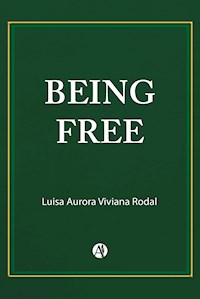
Being Free
Rodal, Luisa Aurora VivianaBeing Free / Luisa Aurora Viviana Rodal. - 1a ed. - Ciudad Autónoma de Buenos Aires : Autores de Argentina, 2021.
Libro digital, EPUB
Archivo Digital: descarga y online
ISBN 978-987-87-2111-8
1. Ensayo Filosófico. I. Título.CDD 199.82
EDITORIAL AUTORES DE [email protected]
Queda hecho el depósito que establece la LEY 11.723Impreso en Argentina – Printed in Argentina
This essay is a homage to Gabriel Vahanian and a recognition to Syracuse University and Prof. Richard B. Pilgrim.
Herman Hesse says in Siddharta: “Most men are like a dry leaf, which hovers and turns in the air, sways down to the ground. Others, few, are like fixed stars, which go their own precise course, and there is wind that touches them, they have within themselves their law and their path”.
John Steven Gregor sustains that auto determination, autonomy and self empowerment distinguish freedom and hence they include a social commitment. I share this recognizes that he pragmatically makes effective what he believes.
BEING FREE
Prologue
Capitalism is equivalent to profit, not to liberty (and I do not intend to persuade anybody that its opposed may be1. Freedom belongs to the cultural tradition of Occident which interprets humanity as the being which will chooses a destiny.
Different from whim, extravagance, or abuse, freedom springs of justified decisions (through moral, norm, scientific knowledge). Liberty is not born erratically from arbitrariness. It is a cultural good that allows the spontaneity of the person with just conscience. It means a problem that concerned humanity since ever y in all civilizations.
Principally, it has been answered through the mythological religious system, but in Occident it acquires in an especial way a relationship with responsibility and justification (partly because of the notional influence of Jewish Law and partly due to the roman legal culture). Therefore, the idea of justification runs through the contemporary epistemological and sociological contemporary areas proper to the technological society, showing a mentality that surpasses the secularizing phenomenon with its own modality.
Liberty is relative to responsibility, which claims for justification, itself referring to the truth. Ultimately, the ethical theme of freedom drives us to the warrant of free will and, as justification in the legal scope, it drives to the last reality of facts (be them public or belonging to the privacy of the acting I). I mean that the justification that lies to a responsible freedom presents itself in facts (the experience that Hume made the fountain of knowledge). That is to say that the issue of liberty, referring itself to its justification, drives toward the question of truth of a responsible action. This last problem (if freedom is responsible and justified), questions about where are the grounds of the truth of justification. In the form of an inquiry, how may one know about the foundations on which the truth of justification lies?; will one decide favouring the facts and the disposable experience or will the private sphere of each conscience (unattainable through empirical methods)?
Through what I stated, I wish to express that the theme of liberty is not, without more, an issue that ends in itself, but that it is tightly related with the idea of justification. This determines the limit of arbitrariness (from despotism of dictatorships up to the unscrupulous manipulation of the Capitalist profit).
Freedom does not correspond itself with the absence of responsibility, being the ethic the centre from which the no coercion may be grounded. The opposed to liberty is not determinism (which signifies its contradictory) but the blind irrational force in the execution of power.
It is believed that Capitalism is synonym of freedom and that Socialism of people welfare. Noting is more illusory as this extrapolation of problems that are essentially ethical to a economic, sociological or political ideology
Introduction
Be it as the authority of dogma (free creation, fall and transforming soteriology for a world without necessities), be it as the parallel scientific evolutive statement (from a hominid to a possible future complete human being through the improvement of the species), the utopian story seems to re stablish the trust in the limited concept of freedom (restricted by the limit of others freedom, Stuart Mill2). In this way, the human attempt of utopia leans on mythical tales o natural histories to weaken itself as ethical will (iconoclast; that is to say, without images or configurations which exempt from the work of exercising humanity).
Beyond these imaginative explications of an expected human progress, Kant and Habermas propose the opening to a freedom and democracy grounded in a formal idealism (without material contents which determine and coerce the moral act). Indeed, freedom and democracy show themselves through justification and responsibility. I wish to say with this that freedom is note merely the absence of constriction which limit is the neighbours one.
Especially Habermas points out the foundation of freedom; that is to say, the responsible and justified autonomy. Though the problem of conceptualizing freedom does not appear as an specific theme in Habermas, his preoccupation for a consensual rational democracy, which overcomes the deviations of forces that make it impracticable, it is a central issue of his thought.
Because of this, and with the end of explaining my comprehension about what must be understood by freedom, I shall expose some of his reflexions. But, formerly I wish to allow myself to state some of its characteristics.
It is a reiterated definition the one of human being as a finite one. Thus, freedom is especially fenced by material aspects. According to Platonian School, we find ourselves in a bodily jail. But I would not thematize thus the idea of limitation. I would notice that the physical and economic situation shows that there is no freedom without limit. And this is the most evident starting point for any reflection about it.
From the sloth of a freedom that does not strive it self to decide in a responsible way up to a magnified will believing that one may do whatever one wills considering only others freedom as limit, the spectrum is pitiful. It is not the case that there is a plus, a less and a certain equilibrium (as if it were a question of weighing materials). Freedom exists always if there is human justification and responsibility. How is it possible, then, that one be author, autonomous, independent without taking over of the action?
There are so vital questions that risk toward the limit determinant and final human situations. Pragmatically contemplated, these questions must be not discussed; better, disquisitions about them should be avoided. That is to say, the practical negative to the critique of principal convictions in certain moments, I think, must be considered as essential.
But, it must be considered that I do not refer to an attitude derived from the dogmatic, blind and ideological affirmation of presumably unquestionable issues. I think about fundamental concepts (as liberty, democracy, peace) that event though they include their questionability (in the way of inquiring) as critical dialogue, it is not possible erasing them from culture inasmuch as they are central goods of humanity.
Because of this, tolerance is the specific virtue pf humanity (proper to politics and human relations which include freedom of expression and of conscience). Tolerance is the unique area of freedom, the atmosphere without which it is impossible to exercise liberty. It is noteworthy that there is no freedom without tolerance, nor tolerance without justification and responsibility.
So, the rational discursive consensus of free democracy requires intrinsically of tolerance in the aspiration for the search of truth (Karl Popper3).
Therefore, the lack of agreement and the necessity of keeping apart before a destructive discourse of fundamentals patterns are motivated in the intolerance itself of a violent discourse and, even more, in the absence of a sincere search for the critical approximation to truth.
Popper speaks about three ethical principles in the approximation to truth: fallibility (the critical consideration of possible errors), the discursive rationality, the truth as regulative ideal of discourse. In this sense, Popper (remembering Voltaire, warns that tolerance is a necessary consequence of our weakness and possibility of error4.
Through what I said I wish to highlight that freedom shows as its most important enemy the fanatism, the intellectual irresponsibility, the absence of justification, the blind arbitrariness of dogmatism. The adversary of freedom is intolerance that blocks the questioning of the given for and by the creation of grounded possibilities which innovate. Fanatism and dogmatics do not allow iconoclasm and utopia, but nourish ideologies if not unquestionable, at least unquestioned.
The autonomy that freedom involves (which means a “taking over” of the action) is distinguished because all these from the arbitrariness. Already Augustine differentiated the free will (arbitrary) opposing it to the true and full liberty or libertas. Without any intention of appealing to theological concepts, I think it is of common sense not to identify the arbitrary will of free will with the responsible (justifiable) one.
Because of what has been said, the theme of justification is not superfluous.
In this Introduction I shall explicate central notions of the philosophy of Jurgen Habermas que influence in the theme of freedom. The following chapters shall expose the idea of justification in different areas (religious, scientific, legal, philosophic).The conclusion will dedicate itself to the conceptual consequences of the analysis of liberty from the perspective of justification and responsibility.
A Tuscarora (Native Americans) proverb says: “man has responsibility, not power”. Indeed, the power of freedom is responsibility itself, not the force of the arbitrariness. Differently from the inclusion in the randomness or in a natural determinism, the authority or possibility of an action that takes over and justifies the sense of being free is responsibility. The justification of the creative wish and with authority (or, remembering Kant, the freedom which involves another kind of causality different from the material one; that is to say, the causality of spontaneity or self-determination) implies an specific scope which cannot be identified with natural necessity nor with its opposed, mere chance. Free action may thus be expressed as the proper joy of personal achievement, foreign to the toil of loosing oneself in the anonymity and the thingness that the lack of freedom entails (or the indecision regarding making it effective in a creative life). Or, in Kierkegaardian term, the authenticity which freedom allows contrasts the existential despair.
According to Habermas, “only responsible persons can behave rationally”5. Only responsibility permits a rational autonomous conduct. For this, it is necessary that the actions be oriented intersubjectively recognizing critical pretensions of validity6. This is so because the possibility of the inter-subjective recognition of critizable and critical claims about the validity of rational statements is constitutive of our rationality (“the possibility of intersubjetive recognition of critizable validity claims is constitutive for their rationality”7). This is evident in the justificative force of cultural values,}}.
Because of what has been said, Habermas states that the rationality inherent in the communicative practice tends to an ideal accord through agreements based in justified reasons8. The argumentation is, then, a court of appeal, a critical judgement that corresponds itself with the critical task9. This justification task improves the arguments10 through the cooperative search of truth11.




