


1,99 €
Mehr erfahren.
- Herausgeber: Blagoy Kiroff
- Kategorie: Geisteswissenschaft
- Sprache: Englisch
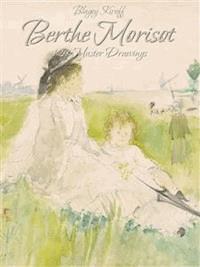
Berthe Morisot was French artist, member of the circle of painters in Paris who became known as the Impressionists. She was described by Gustave Geffroy as one of "les trois grandes dames" of Impressionism alongside Marie Bracquemond and Mary Cassatt. She formed a close friendship with Manet, who became her brother-in-law, and she served as model for several of his paintings. The two greatly influenced each other's artistic development. Her own later work inclined toward pure Impressionism in its rendering of light, while retaining an unusual smoothness of brushwork. Morisot painted what she experienced on a daily basis. Her paintings reflect the 19th-century cultural restrictions of her class and gender. She avoided urban and street scenes as well as the nude figure and, like her fellow female Impressionist Mary Cassatt, focused on domestic life and portraits in which she could use family and personal friends as models. Her works also include drawings, pastels and watercolors.
Das E-Book können Sie in Legimi-Apps oder einer beliebigen App lesen, die das folgende Format unterstützen:
Veröffentlichungsjahr: 2015
Ähnliche

Berthe Morisot:
129 Master Drawings
By Blagoy Kiroff
––––––––
First Edition
*****
Berthe Morisot: 129 Master Drawings
*****
Copyright © 2015 by Blagoy Kiroff
Table of Contents
Title Page
Copyright Page
Foreword
Drawings, Pastels, Watercolours
Foreword
Berthe Morisot was French painter and printmaker, member of the circle of painters in Paris who became known as the Impressionists. She was described by Gustave Geffroy in 1894 as one of "les trois grandes dames" of Impressionism alongside Marie Bracquemond and Mary Cassatt. Morisot painted what she experienced on a daily basis. Her paintings reflect the 19th-century cultural restrictions of her class and gender. She avoided urban and street scenes as well as the nude figure and, like her fellow female Impressionist Mary Cassatt, focused on domestic life and portraits in which she could use family and personal friends as models. Her works also include landscapes, portraits, garden settings and boating scenes.
As the child of upper middle-class parents, she was expected to be a skilled amateur artist and was thus given appropriate schooling. In 1857 she attended drawing lessons with Geoffroy-Alphonse Chocarne (active 1838-1857), but in 1858 she and her sister Edma left to study under Joseph-Benoit Guichard, a pupil of Ingres and Delacroix. In the same year they registered as copyists in the Louvre, copying Veronese and Rubens. The sisters were introduced to Jean-Baptiste-Camille Corot in 1861 and took advice from him and subsequently from his pupil, Achille-Francois Oudinot (1820-1891). Through these artists they became familiar with current debates on naturalism and began to work en plein air, painting at Pontoise, Normandy and Brittany.
She formed a close friendship with Manet, who became her brother-in-law, and she served as model for several of his best-known paintings. The two greatly influenced each other's artistic development. Her own later work inclined toward pure Impressionism in its rendering of light, while retaining an unusual smoothness of brushwork. Her paintings formed an important addition to all but one Impressionist exhibition from 1874 through 1885. Her most notable works, including Young Woman at the Dance (1880; Paris) and La Toilette (Art Institute, Chicago), are painted in clear, luminous colours. Her early subject matter included landscapes and marine scenes; later she most frequently painted tranquil portraits of mothers and children.
Morisot's works have been particularly popular in the United States, and many important works are in American collections.
Drawings, Pastels, Watercolours
Jardin De Cimiez
1889, Pastel on paper
Detail
La Flageolet
Colored crayon and pencil on paper
Detail
Charly Thomas
1893, Pastel on paper
Detail
Study For The Picking Apples
Pencil on paper mounted on board




