


2,99 €
Mehr erfahren.
- Herausgeber: By Blagoy Kiroff
- Kategorie: Geisteswissenschaft
- Sprache: Englisch
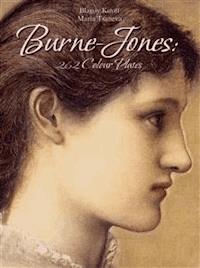
Sir Edward Burne-Jones was the greatest of the second generation Pre-Raphaelites. Burne-Jones's aim in art is best given in some of his own words, written to a friend:"I mean by a picture a beautiful, romantic dream of something that never was, never will be - in a light better than any light that ever shone - in a land no one can define or remember, only desire - and the forms divinely beautiful - and then I wake up, with the waking of Brynhild."He considered that art should be valued as an object of beauty engendering a sensual response, rather than for the story or moral implicit in the subject matter. In many ways this was antithetical to the ideals of Ruskin and the early Pre-Raphaelites. Insofar as this was directed against the lack of realism in his pictures, it was beside the point. The earth, the sky, the rocks, the trees, the men and women of Burne-Jones are not those of this world; but they are themselves a world, consistent with itself, and having therefore its own reality. Yet it is a dreamer always whose nature penetrates these works.
Das E-Book können Sie in Legimi-Apps oder einer beliebigen App lesen, die das folgende Format unterstützen:
Veröffentlichungsjahr: 2015
Ähnliche


Burne-Jones:
262 Colour Plates
By Blagoy Kiroff and Maria Tsaneva
––––––––
First Edition
*****
Burne-Jones: Colour Plates
*****
Copyright © 2015 Blagoy Kiroff
Copyright © 2015 Maria Tsaneva
Table of Contents
Title Page
Copyright Page
Foreword
Paintings
Drawings, Pastels and Watercolours
Foreword
Sir Edward Burne-Jones was the greatest of the second generation Pre-Raphaelites. He was born in Bennetts Hill in central Birmingham the 28th August 1833. His mother died within a week of his birth, and his distressed father was unable to physically touch his son as a result. He was brought up by a rather severe Low Church housekeeper. From an early age, therefore, Burne-Jones created his own dream world, to make up for his bleak and unhappy personal circumstances. This dream world lasted all his life, and in his paintings. He attended King Edwardian's Grammar School in Birmingham, where he was a successful pupil academically, and in his last year was head boy. He also attended art classes. Edward Jones, as he then was, became a devout Christian.
He went to Exeter College at the University of Oxford in 1853, and his intention was to take Holy Orders. Here he met his lifelong friend William Morris. Here they first heard of the Pre-Raphaelite Brotherhood. They jointly developed a fascination with Arthurian legend. Edward Jones became an agnostic, and art replaced religion in his life. Jones did not stay to take a degree.
In London in the mid 1850s he met his artistic hero Rossetti, who became his mentor, and they were friends until Rossetti's death in 1882. He also met Holman Hunt. Jones then moved to London, sharing rooms with Morris. He assisted Rossetti in the creation of the unsuccessful mural at the Oxford Union. In 1860 Jones married Georgiana MacDonald, one of the remarkable Macdonald sisters. Another sister married Edward Poynter, a further sister married the ironmaster Alfred Baldwin and was the mother of the Prime Minister Stanley Baldwin, and yet another sister was the mother of Rudyard Kipling.
Edward Jones acquired the extra surname Burne to differentiate himself from the legions of Jones's who painted.
Edward Burne-Jones was a nervous highly-strung individual. He combined a monkish asceticism, a mystical love of ancient legend, and a naughty sense of humour. He had a classical artistic characteristic of suffering nervous collapse after the completion of a major work. Georgiana, or Georgie as she was known, was, as well as his wife, the mother he never had, and the manager of his life. They had two children who survived childhood, a son Phillip, and a daughter Margaret. William Morris founded his famous company, Morris, Marshall, Faulkener and Co in 1861.
Jones worked as designer of stained glass church windows for the company, virtually to the end of his life. In the early 1860s he made his first visit to Italy. In the mid 1860s, he started to gain a reputation as a painter, and to sell some pictures.
In the 1870s Burne-Jones became gradually more successful, though his patrons were a closed circle of wealthy and sophisticated people. He became friendly with the aristocratic artist George Howard, Earl of Carlisle, who produced some excellent drawings of him. His shyness and reluctance to exhibit publicly, however, still meant he was unknown to the wider public.
In 1877, Burne-Jones was persuaded to exhibit at the Grosvenor Gallery, and virtually overnight became a famous painter. In the 1880s, he even outshone Millais and Leighton, being regarded as British greatest living artists.
In the 1890s his health declined, and the death of William Morris in 1896 was a crushing blow. He had been created a baronet in 1894, but was unhappy about accepting the honour.
Burne-Jones died suddenly at his house at Rottingdean in 1898.
Burne-Jones's aim in art is best given in some of his own words, written to a friend:
"I mean by a picture a beautiful, romantic dream of something that never was, never will be - in a light better than any light that ever shone - in a land no one can define or remember, only desire - and the forms divinely beautiful - and then I wake up, with the waking of Brynhild."
He considered that art should be valued as an object of beauty engendering a sensual response, rather than for the story or moral implicit in the subject matter. In many ways this was antithetical to the ideals of Ruskin and the early Pre-Raphaelites. Insofar as this was directed against the lack of realism in his pictures, it was beside the point. The earth, the sky, the rocks, the trees, the men and women of Burne-Jones are not those of this world; but they are themselves a world, consistent with itself, and having therefore its own reality. Yet it is a dreamer always whose nature penetrates these works.
Lesen Sie weiter in der vollständigen Ausgabe!
Lesen Sie weiter in der vollständigen Ausgabe!




