


2,49 €
Mehr erfahren.
- Herausgeber: Blagoy Kiroff
- Kategorie: Geisteswissenschaft
- Sprache: Englisch
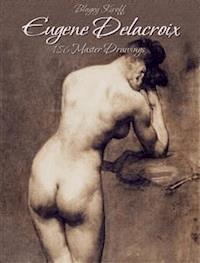
Eugene Delacroix was the greatest French painter of the Romantic Movement. Delacroix's output was enormous. After his death his executors found more than 9,000 paintings, pastels, and drawings in his studio and he prided himself on the speed at which he worked, declaring 'If you are not skilful enough to sketch a man falling out of a window during the time it takes him to get from the fifth storey to the ground, then you will never be able to produce monumental work.' Among great painters he was also one of the finest writers on art. He was a voluminous letter writer and kept a journal from 1822 to 1824 and again from 1847 until his death - a marvelously rich source of information and opinion on his life and times. His influence, particularly through his use of color, was prodigious, inspiring Renoir, Seurat, and van Gogh among others. Van Gogh wrote about him: 'Only Rembrandt and Delacroix could paint the face of Christ.'
Das E-Book können Sie in Legimi-Apps oder einer beliebigen App lesen, die das folgende Format unterstützen:
Veröffentlichungsjahr: 2015
Ähnliche


Eugene Delacroix:
186 Master Drawings
By Blagoy Kiroff
––––––––
First Edition
*****
Eugene Delacroix: 186 Master Drawings
*****
Copyright © 2015 by Blagoy Kiroff
Table of Contents
Title Page
Copyright Page
Foreword
Drawings and Watercolors
Foreword
––––––––
Eugene Delacroix was the greatest French painter of the Romantic Movement. He was the son of a politician, Charles Delacroix, but there is some evidence to indicate that his real father was the diplomat Talleyrand, a friend of the family. His mother, Victoire Oeben, came of a family of notable craftsmen and designers.
In 1816 Delacroix entered the studio of Pierre Guerin, who had earlier taught Gericault. His basic artistic education was obtained, however, by copying Old Masters at the Louvre, where he delighted in Rubens and the Venetian School. He met Bonington in the Louvre and was introduced by him to English watercolor painting. Constable's Hay Wain, exhibited in the 1824 Salon, also made a great impression on him and in 1825 he spent some months in England, admiring in particular Gainsborough, Lawrence, Etty, and Wilkie. In the Salon of 1822 he had his first public success with The Barque of Dante (Louvre, Paris). It was bought by the State, as was The Massacre at Chios (Louvre) two years later, ensuring the success of his career. Gros called this painting 'the massacre of painting', but Baudelaire wrote that it was a terrifying hymn in honour of doom and irremediable suffering.
In 1832 Delacroix visited Morocco in the entourage of the Comte de Mornay and there acquired a fund of rich and exotic visual imagery which he exploited to the full in his later work (Sultan of Morocco, 1845). From the late 1830s his style and technique underwent a change. In place of luminous glazes and contrasted values he began to use a personal technique of vibrating adjacent tones and colour effects in a manner of which Watteau had been a master, making colour enter into the structure of the picture to an extent which had not previously been attempted. In spite of being hailed as the leader of the Romantic Movement, his predilection for exotic and emotionally charged subject-matter, and his open enmity with Ingres, Delacroix always claimed allegiance to the classical tradition and for his large works followed the traditional course of making numerous preparatory drawings.
In his later career he became one of the most distinguished monumental mural painters in the history of French art. His public commissions included decorations in several major buildings in Paris: Palais Bourbon (Salon du roi); of the Luxembourg Palace (1841-46); and three paintings in the Chapelle des Anges of S. Sulpice (1853-61). In the last of these, his Jacob and the Angel and Heliodorus Expelled from the Temple are among the maturest expressions of his decorative richness of color and grandiose structural integration. Baudelaire said of him that he was the only artist who 'in our faithless generation conceived religious pictures' and van Gogh wrote: 'Only Rembrandt and Delacroix could paint the face of Christ.'
Delacroix's output was enormous. After his death his executors found more than 9,000 paintings, pastels, and drawings in his studio and he prided himself on the speed at which he worked, declaring 'If you are not skilful enough to sketch a man falling out of a window during the time it takes him to get from the fifth storey to the ground, then you will never be able to produce monumental work.' Among great painters he was also one of the finest writers on art. He was a voluminous letter writer and kept a journal from 1822 to 1824 and again from 1847 until his death - a marvelously rich source of information and opinion on his life and times. His influence, particularly through his use of color, was prodigious, inspiring Renoir, Seurat, and van Gogh among others. Delacroix's studio in Paris is now a museum devoted to his life and work, but the Louvre has the finest collection of his paintings.
Lesen Sie weiter in der vollständigen Ausgabe!




