


9,99 €
Mehr erfahren.
- Herausgeber: Atlantic Books
- Kategorie: Gesellschafts- und Liebesromane
- Sprache: Englisch
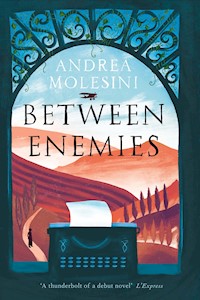
November 1917. When Austrian forces advance into Northern Italy, the aristocratic Spada family find their estate requisitioned by enemy soldiers. A cruel act of violence against a group of local village girls sparks their desire for revenge. The whole family - from the eccentric grandparents to the secretive servants - have their own ideas about how to fight the enemy, but their courage is soon put to the test and it seems that some are willing to compromise. Seventeen-year-old Paolo Spada, the youngest member of the family, is forced to bear witness as his once proud family succumbs to acts of love and hate, jealousy and betrayal.
Das E-Book können Sie in Legimi-Apps oder einer beliebigen App lesen, die das folgende Format unterstützen:
Veröffentlichungsjahr: 2015
Ähnliche




















Contents
Prelude
Part One
One
Two
Three
Four
Five
Six
Seven
Eight
Nine
Ten
Eleven
Twelve
Thirteen
Part Two
Fourteen
Fifteen
Sixteen
Seventeen
Eighteen
Nineteen
Twenty
Twenty-One
Twenty-Two
Twenty-Three
Twenty-Four
Twenty-Five
Twenty-Six
Twenty-Seven
Twenty-Eight
Twenty-Nine
Part Three
Thirty
Thirty-One
Thirty-Two
Thirty-Three
Thirty-Four
Thirty-Five
Thirty-Six
Thirty-Seven
Thirty-Eight
Thirty-Nine
Forty
Forty-One
Forty-Two
Forty-Three
Forty-Four
Forty-Five
Forty-Six
Coda
Note
Prelude
Friday 9 November 1917
He loomed up out of the night. And for an instant there was nothing to distinguish him from it. Then a glint, a reflection from the lantern the woman was holding up close to the horse’s nose, attested to a monocle. The man addressed the woman in impeccable Italian, flawed only by certain gutturals that revealed his German mother tongue. There was something fierce and splendid in that face bathed in the swaying lamplight, as if the stars and the dust were met together there.
‘I’ll call the mistress,’ said Teresa, concealing the fear she habitually felt at the doings of the gentry. She lowered the lantern, and darkness once more swallowed up the captain and his horse.
A torch, then a second and a third, cast shadows beneath the vaults of the portico. Teresa hugged her shawl to her breast to repress a shudder. In the road outside the gate came other torches, the squeaking of cartwheels, soldiers’ voices, the headlights of a lorry, the heavy silence of mules in the icy drizzle. As she closed the oaken shutters behind her Teresa noticed I was watching her, crouched beside the window in the hall. She put a finger to her lips and grunted her annoyance in my face.
Aunt Maria was still up, in a black dress, the collar fastened with an ivory pin. She was at the window watching the army as it filled the piazza, where the light of fires now outshone that of the headlights. As we came in she turned towards the door.
‘Madam, madam, ma—’
‘Don’t panic, Teresa, leave it to me. Go and tell the horseman that I’ll be down in a moment.’
The cook left the room with lowered eyes, dragging her feet, the lantern dangling beside her knees. With a slight movement of her eyes my aunt told me to go out with her. Stock still in the saddle, the captain watched the coming and going of the troops without so much as the flicker of an eyelid, attentive only on keeping his horse under the stone arches of the portico. His distant immobility issued orders that everyone – officers, men and mules – seemed to grasp without hesitation.
‘The mistress…’ Teresa gave a cough. ‘The mistress says she’s coming.’
She took a step backwards to distance the smell of horse. The men were unloading the mules and machine guns under the shelter of the arcade, kicking aside the rakes and shovels leant against the wall. The cook gave a groan that expressed all the scorn she felt: those tools were humble and dear to her, faithful dogs driven away by wolves. Their army-issue spades broke down one door after another and in the soldiers went with their heavy packs, emptying cupboards and smashing things; and their voices were an uncouth hubbub of harsh syllables. One of them, his helmet covered with sopping wet leaves, drove his chugging motorbike right into the dining room and pulled up a metre from the oak table.
Aunt Maria went outside.
‘Herr Captain.’
The captain gave a soldierly salute, without a smile.
‘Captain Korpium,’ he said. ‘There are eighteen of us, counting officers and batmen. We shall be lodging here.’ He took his monocle from his pocket. ‘If you think you are unable to fit us in,’ he added, inserting the lens between eyebrow and cheekbone, ‘you will be obliged to leave the house.’ His voice was calm and cold. Each syllable sounded detached from all the others, as if his thought required all those tiny pauses to get itself organized.
Half a dozen motorcycles roared in through the gate. The captain’s horse shook its head.
‘You may be a great warrior,’ said my aunt, ‘but you are certainly no gentleman.’
‘My non-commissioned officers will sleep at the inn in the piazza, the officers in the Villa, and the men in the nearby houses. We will erect tents in your grounds, as well as a camp kitchen.’ He readjusted his monocle between eyebrow and reddened cheekbone. ‘Maybe tomorrow we shall cross the Piave and nothing here will be as it was before.’
‘Maybe,’ said my aunt, adding to herself under her breath, ‘Or perhaps the war will have the flesh off your bones.’
The captain dug in his spurs and turned towards the mules still streaming in and the soldiers lit by the lanterns of the non-commissioned officers yelling out orders.
I heard the distant barking of a dog. Then another, with a cavernous voice. Then came a rifle shot, then a second, and far away a third. The stench of the mules had crept into the dining room. The soldiers were smashing up tables and chairs to light the fires with. They made way, however, for the two women who walked bolt upright in front of me; and one of the men, flaxen-haired, his eyes bulging like a toad’s, actually stood to attention.
‘In the midst of this tragedy’, murmured my aunt, ‘there is a touch of the ridiculous.’
‘A mouse’s bum is better mannered than them,’ said Teresa. ‘These boys didn’t even have mothers.’
‘The war will see them off tomorrow. Tell Renato to keep his eyes peeled. You and Loretta will sleep upstairs with me. Put two palliasses on the floor: we’ll barricade ourselves in my bedroom. Paolo, you will sleep with your grandfather.’ She turned to give Teresa a straight look. ‘Have you hidden the copper?’
‘Just as you ordered, madam.’
‘Very good.’ There was no trace of emotion in my aunt’s voice. Her nerves were steady, her mind cool: the cook had to understand who to take orders from. ‘Guns are mere trifles, but this rabble doesn’t know it.’ She paused for a moment to give Teresa time to work that out and get the message. ‘We’ll get the better of them.’
The cook lifted the lantern high above the time-worn steps.
Part One
One
GRANDMA’S THIRD PARAMOUR HAD SUCH BIG FEET THAT he could not be considered intelligent. He was not altogether stupid, for he knew how to hang about with elegance and steadfastness, but owing to the size of his feet there had not been a great deal of care left over for his head. Grandpa Gugliemo, who boasted a number of mistresses, said that that fellow – he never called his rival by name – only ever opened his mouth to emit hot air: ‘Fools like to parade their folly, and there’s no better medium for it than words.’
Grandpa liked to pigeonhole everything. He used to pigeonhole away while chewing a cigar and wearing the air of a sailor who had sailed the seven seas, though in fact he had an aversion to water, the stuff in the washbasin being no exception. An ironclad liberal, he poked fun at Grandma’s mildly Socialist sympathies: ‘Put three of your lot in a room together and half an hour later you’ll get four different opinions.’ He spent hours each day writing a novel which he never finished, but according to Grandma he hadn’t even written a line of: ‘It’s a sham, to keep away boors and children.’ No one, however, dared set foot in the Thinking Den, the little room where Grandpa spent almost all day, except when it rained; because then he would go out walking alone, without an umbrella, in the felt hat with the tattered brim. He was a Buddhist, though he didn’t know much about Buddha. But his knew his cards and his history, and used to write letters to the Gazzettino, which were never published because they were full of abuse about the city councillors of Venice: all ‘stinking sons of brainless priests’, in his opinion.
Grandma, on the contrary, fizzled about everything. If it was a case of spending half a lira she would say ‘Better not’, and that ‘Better not’ came a couple of dozen times a day. Despite her seventy years she held herself erect and tall, she was strong and handsome, a white-haired panther of a woman. Her bathroom was a poem: bedecked with beige, ochre, black and flesh-coloured enema bags. There were two or three of them on every arm of the enamelled clothes hanger, whereas pyjamas and knickers were relegated to a green chest of drawers, on which sat a Murano glass bowl containing a dozen strings of artificial pearls and glass beads. The enema bags, in their days of glory, were as many as sixteen, with their different-sized rubber nozzles for ¼, ½, ¾ and a whole litre. The bags were rounded, pear- or pumpkin- or melon-shaped, and made of oilcloth. Reflected in the white tiles, the opaque rubber tubes looked like the tentacles of sea creatures with hooked beaks.
The three servants – Teresa, her daughter Loretta, and Renato – did the work of six. Loretta, twenty years old, was a buxom lass with cross-eyes which she kept lowered, though when she did turn them on you, you knew they hated you, that they couldn’t do otherwise. Renato had one leg slightly shorter than the other, so he limped. He was my favourite, and knew how to do everything, how to fish in the river with harpoon and knife, and also how to pluck a chicken ready for Teresa’s stewpot. And she herself, Teresa, was a prodigy. Ugly beyond belief, she bore her fifty years well, was as strong as a mule and no less obstinate. On the contrary Aunt Maria – Donna Maria to outsiders – was fine-looking, the victim of a haughty manner which both fascinated men and kept them at a distance. She was courted with circumspection by even the boldest and most passionate spirits: not a light cross to bear.
And then there was Giulia. Giulia was a lovely, crazy redhead and a mass of freckles. She had fled from Venice on account of a scandal no one dared talk about, but quite a few in town would spit on the ground as she passed, and there was no shortage of bigots who would cross themselves to ward off Pape Satán. She was six years older than me and when I caught sight of her, even at a distance, I blushed. She wasn’t in a madhouse because she was a Candiani, and gentlefolk – at least in those days – did not end up inside. Indeed they were not even mad: simply eccentric. A gentleman was a kleptomaniac, not a thief, and a lady was a nymphomaniac, never a whore.
That night of November the ninth, when the Germans took over my room, I went to sleep up in the loft, a long room nine metres by five, with four dormer windows and such low larch-wood beams that I had to mind my head. There Grandpa and I shared a palliasse dumped straight on the attic floorboards, splintery as they were, whereas Grandma was allowed to stay in her own bedroom.
The defeat of the Italian army was an ignominy that each and every enemy soldier cast in our teeth. I was then seventeen, going on eighteen, and to see the enemy lording it in my own home was excruciating. Those born in 1899 were already in the trenches, and in a few months’ time it would be my turn.
‘In a little while they’ll be in Rome to free the pope, so they say. Well, there’s honour among thieves, say I.’ Grandpa considered the priests only a step – and a rather small one at that – above tax collectors. ‘Those ugly customers in skirts have as much imagination as a turkey, but the cunning of a fox and a snake combined. They are the great pestilence of creation, worse than Job’s boils…See here, Buddha doesn’t have priests,’ and he looked me straight in the eye, something he rarely did since I lost my parents. ‘Or if he does they are not Austriophiles.’ He spat into the palm of his hand, which he wiped on his enormous handkerchief.
I was fond of Grandpa. He abandoned his nightcap only at about ten in the morning, and even then unwillingly. That night, however, he had to manage without it. A private and a corporal had tied him to a chair, and while one jabbed his rifle butt into his breastbone and the other tickled his throat with the point of his bayonet, they had tried to force him to say where the family jewellery was hidden. It was lucky that Grandma, unbeknownst to him, had managed to hide the most precious things – along with a handful of gold sovereigns – in the bag of one of her enemas: objects too humble, and too closely associated with faeces, to tickle the appetite of the predators.
‘I am concerned for Maria…Of course, if there’s anyone who can put a scare into a German it’s her,’ said Grandpa, flopping down on the palliasse. The dry maize leaves of the stuffing crunched beneath his weight. He gazed up at the beams with moist eyes, but he didn’t want me to sense his fear: our lives, our property, everything was at the mercy of the enemy. ‘War and loot are the only faithful married couple,’ he said.
I lay down beside him. Grandpa was really fond of my aunt: ‘She’s a woman of grace and initiative,’ he would say. She was the daughter of his brother who had gone down in the wreck of the Empress of Ireland in May 1914, along with his wife and my own parents, during the voyage which everyone in the family called the Great Disaster. Since then she had been entrusted with the running of the Villa, perhaps because my education was seen to, albeit with fitful zeal, by my grandmother. ‘Have you ever looked closely into your aunt’s eyes? So green, and as firm as two stones. D’you know what sailors say? They say that when the water turns green the storm engulfs you.’ Grandpa had never been to sea, but his talk was full of nautical slang and sea-captains’ oaths: ‘steady as you go’, ‘splice the mainbrace’, ‘if I catch you at it I’ll hang you from the yardarm’; though this last one had been banished from his discourse ever since, immediately following the Great Disaster, he had asked me to address him with the familiar tu.
Everyone had become very kind to me after the sinking of the Empress, and I had made the most of it. The best part was that I had not suffered, at least not as much as might be expected. My parents were practically strangers to me. They had sent me to boarding school to relieve themselves of a burden, or – to be more charitable – because they thought that a father and mother are unsuited to the task of educating their children. My school was run by the Dominicans, and the good Fathers considered physical fitness at least as important as that of the soul, regarding which they were, amazingly enough, inclined to admit a certain degree of ignorance.
On that fatal day the headmaster – an authority on St Dominic de Guzmán, who to us boys seemed a hundred years old because of his snow-white beard and his stoop – sent to fetch me. His study, lined with large leather-bound books, measured about three paces by four, in which the smell of mould, paper, ink, armpits and grappa struggled for dominance. He looked up from the manuscript he was consulting, gave me a square look with great blue eyes further enlarged by his lenses, and said, ‘Sit down, young man.’ He made no preambles and did not soften the blow with any rigmarole about eternal life. He spoke firmly, without a pause.
I made no pretence at feeling sad. ‘I won’t miss them,’ I said.
He blinked, then gave me a stern look. ‘There are things one comes to understand only with time,’ he said before burying his nose in his manuscript again. Perhaps he didn’t even hear me leave the room, but those words of his stayed with me. He was right, the blow came later; the wound opened little by little, and little by little it healed.
Grandpa didn’t take his eyes off me.
‘So what happens now, Grandpa?’
‘Now, laddie,’ (as he liked to call me) ‘we keep our mouths shut and let them loot us. This lot wouldn’t think twice about skinning us alive. Have you heard what they do with the farmhands? Make them stand up against the wall and then throw buckets of water all round the house in search of their copper cauldrons and other treasures. Where the soil is freshly dug the water sinks in at once.’ He smiled, because he smiled when he was afraid. ‘Two kilos of copper can buy a pig…but I put my trust in your grandmother. She told me where she’d hidden the artificial jewellery, making out that it was the good stuff. They won’t find the real stuff even if they dig up the whole garden.’ He heaved a sigh. ‘Luckily they’ll be leaving tomorrow.’
‘But then . . . our front line! Do you think it won’t even hold along the Piave?’
‘The war is lost, laddie.’
Donna Maria didn’t get a wink of sleep. She told me so the next morning. It wasn’t fear, for in her mind there was simply no room for fear. She was afraid neither for herself nor for us. ‘These jackals have other things to keep them busy, but if they reach Venice there’ll be no end to the looting. And now they are here, in my garden, in my rooms, in my kitchen, and they’re digging the latrine in the soil which is the resting place of my mother and of yours.’ It wasn’t true. Teutonic efficiency had not yet envisaged drain fields, but my aunt had a meticulous imagination, thirsty for details, and especially the most disagreeable.
In the dead of night she had heard a horse neighing. The sound came from the portico. The neighing of horses always gave her gooseflesh because she loved horses. She had seen them dragging the last of the rearguard’s carts; she had seen them refusing the bit, tossing their heads, digging in their hoofs when they passed by the corpses of mules with their thighs slashed open by the bayonets of hungry infantrymen. ‘They have a sense of foreboding at the death of one of their own kind, just as we do ourselves.’ It was so unjust that they were made to suffer. ‘It is men who make war; animals have nothing to do with it. And then…maybe they are closer to God…they are so simple…so direct.’
At about three in the morning Donna Maria had got up, taking care not to wake Teresa who was sleeping at the foot of her bed. She went to the window. There were bonfires everywhere. The troops were unloading huge crates marked with the arms of the House of Savoy: the municipal warehouse had only partly burnt down. She saw the captain on horseback among the tents. The ground-floor windows were aglow with the yellow light of paraffin lamps. All of a sudden she felt she was being watched. She turned. Loretta was standing only a metre away, stock still, her long, long hair dangling and her eyes fixed on her. ‘What’s the matter?’
The servant lowered her eyes.
‘They won’t harm us,’ said Donna Maria softly. ‘They’ll take it out on the Villa, and with the farmhands’ houses, but nothing will happen to us. Go back to bed.’ And back Loretta went to her palliasse, which emitted a crunch of dried leaves.
Grandpa’s was a laughing face even when he was sad. Not even he slept a wink, but he pulled his sheet right up to his moustache and made a gentle pretence at snoring. I watched him in the darkness. Grandpa’s moustache was a bristly rake, the tips of which attempted a risky handlebar effect. It was a sign of his contrariness, his wish to poke fun at the conventions which his plump chin, carefully shaved, paid homage to. I was amused by his childish eccentricities, partly because they constantly irritated Grandma, who would retaliate by inviting the Third Paramour to dinner.
The doors were no longer banging, the German voices sounded more sleepy, as did the noise of the boots, of the hoofs and even of the motorbikes.
I listened to my thoughts buzzing around in the muddle of somnolence. Big thoughts, about faraway things, sufficiently intangible as to not make me feel responsible. I thought of the rout of our Second Army more than of the occupation of the Villa; I thought of the ceaseless stream of peasants and infantrymen, the carts of the poor and the motor cars of the generals, of the wounded men abandoned in the ditches. I had never seen so many eyes ravaged by terror. The eyes of women with bundles slung round their necks: lifeless bundles and whimpering bundles. I would never have believed that the pain of a whole people in flight, a people to whom until then I had not been aware of belonging, could have affected me so deeply as to become mine, a pain of my own. There was no believing in what the generals Cadorna, Capello or the Official Gazettes said, but in pain, yes there was. It was like a massive boulder on my breast. The voices of the barbarians rang in my ears, those abrupt orders, the squeal of brakes, the thud of packs dumped down on stone. Images of stamping men and mules, and doors smashed in. My lips were parched, my tongue a piece of bark. I was a fly in an upside-down tumbler, twisting and turning on the mattress, dashing myself against the glass.
Two
RENATO LIT HIS PIPE WITH A PIECE OF BURNING STRAW and his face vanished into the smoke, from which there first emerged his long, sharp nose, then his pale eyes. He had arrived to act as steward at the Villa in mid-October, with references from a Tuscan marquis, an old friend of Grandma’s. Although maintaining a proper distance, the very heart of authority, my aunt didn’t manage to conceal her liking for this lame giant with his one metre ninety and over a hundred kilos.
‘What are they doing with those big tubs?’
‘Looking for copper. They think we’re simpletons like the farmhands, who bury the stuff near their houses. Your grandfather told them about some valuables and now they’re hunting for the bits and bobs. They’re methodical, but not very astute.’ His voice was of a sombre baritone, yet each syllable came out clear and clean. He was very observant, and uncommonly intelligent, so it was not easy to think of him as a servant. And then his vocabulary was too precise and extensive. Grandpa and Aunt Maria said he was a true Tuscan, but there was something else about him I couldn’t put my finger on, and that perplexed me: he was too clear-minded, too sure of himself.
‘Did they threaten you?’
‘I gave them a couple of things of small importance, the mandolin and the big copper cauldron from the cowshed, which I’d hidden under the straw to make them think they were more valuable than they are. They stuck a barrel right between my eyes. I put on a show of reluctance at first, but didn’t overdo it. You don’t get yourself killed to save your employer’s possessions.’
‘They don’t look so ferocious today.’
Renato disappeared behind the smoke again. I liked the shape of his pipe, with a four-inch-long almost vertical mouthpiece and a blackened brier bowl. ‘The ones who left here this morning had a nasty look to them,’ he said. ‘And tomorrow we’ll know whether, as rivers go, the Piave turns out a better barrier than the Tagliamento was.’
‘Grandpa says the war is already lost.’
He looked me straight in the eye. I looked at the ground. ‘Italy is feminine,’ he said, raising his voice a little, ‘whereas Germany is masculine. Where women are concerned,’ he added, almost in a whisper, ‘you can never tell. We have lost one army, but if the rest of our forces rally…The front is far shorter now, and we could prove a tough nut to crack.’
I turned towards the gate, where there was a sudden hubbub. I made out the silhouette of Giulia, who was hugging some dangling object to herself, something the two sentries were trying to wrest from her hands. ‘I’ll go and see…’
‘You will do nothing of the sort. Donna Giulia is quite able to fend for herself.’
His tone conveyed an order, not a piece of advice.
‘Better to leave the women to it. And that one doesn’t speak much, but when she does, it’s fireworks.’ He chewed on his pipe-stem. ‘Poor sentries,’ he added, fanning the smoke away with his big, horny right hand. His eyes were smiling. I realized that he guessed what I felt for Giulia, and I blushed again. ‘You see? She’s already got out of it.’
I went to meet Giulia. She had the sun behind her and it took me a while to make out what it was she was holding. A gasmask, one of those with a snout. ‘Hello,’ I said, suppressing my excitement.
Giulia held up the gasmask to hide a rather crafty grin. The snout hung down onto her swelling breasts, which even her padded jacket barely restrained. The two glass eyepieces made her look like a giant insect, and the pot at the end of the snout added a Martian touch. ‘I picked it up for half a bucketful of carobs. This German wanted a kiss and I slipped him the carobs. Even horses don’t like them much.’ She laughed, and taking the mask from her face released a swarm of freckles.
‘A bit macabre, your headdress.’
‘I think it suits me. You told me yesterday that my eyes are too blue. With this I’ve got eyes like a hornet.’
‘Come on, let’s go indoors. Too many soldiers here.’
Out of the corner of my eye I caught a glimpse of Renato following a sergeant towards the wood with a shovel over his shoulder.
‘Let’s hope they’re not making him dig his own grave,’ said Giulia.
‘They’re going to dig a trench further off, in case the wind blows this way. These toff officers have delicate noses,’ said Teresa as she stood aside to let us in. It took a little while for my eyes to adjust to the darkness of the kitchen. There were five men round the fireplace, one of them Italian, a prisoner. They looked at me unseeingly. They were blotto. One of them, his tunic unbuttoned, was stirring polenta over a sparkling blaze. Without weapons on their belts they had a cheery look, as if the war had gone away along with the officers who had left at dawn.
With the staring eyes of famished men the soldiers gazed at Giulia as she made her way between the blackened pillars. To take the edge off my agitation I took a deep breath of the odour of mould and polenta. The Italian gave us a sketchy greeting, while the others looked away, pretending a sudden interest in the cauldron. In them I no longer felt the arrogance of the marauders of last evening, but more the embarrassment of uninvited guests, prisoners of a foreign language, almost regretful at being unable to exchange courtesies. Bavarians or Prussians as they might be, their firesides at home couldn’t be all that different from ours, and their employers must have had kitchens no less spacious than this one. Giulia went through into the drawing room, and I followed her.
‘Is it German, that pendant of yours?’
‘No. It was on the corpse of a bersagliere officer. Would you rather have a rag doll?’
I wasn’t interested in what she said, but only in her voice. Giulia was chaos personified, an irresistible force. Grandpa had described her as the crupper of a horse, the shudder it gives, the lash of its tail on a horsefly. But she was far, far more than that: she was beautiful, she was ablaze. She regarded me with the hauteur of one who, knowing herself desired, strives not to reproach the unrequited lover.
‘I must see your grandmother. At once!’
‘She’s been shut up in her room ever since…this lot arrived.’
‘They’ve kidnapped some girls. Over at the church. And knocked out the priest.’
‘How do you know?’
‘What I know I know.’
‘Go upstairs then. Try knocking.’
I was left alone in the dark room. They had carried off the carpets and nearly all the chairs were smashed. The pianola had vanished. The great oak table was still there, and on it two filthy mattresses which made me think of the kidnapped girls and what it said in the Corriere about the iniquities committed by the Huns in Belgium. I had never really wanted to believe it, even if at the inn they spoke of certain details…
I left by the back door, wound my scarf around my neck and buttoned up my overcoat. I took the path that goes up to the little temple. It wasn’t far, but it took me almost ten minutes. I saw Renato digging the latrine along with a German soldier and an Italian prisoner with his neck swathed in grey, bloodstained bandages. I exchanged a glance with the steward and almost unwittingly turned to look at the church, one whole side of which adjoined the rear of our porticoed barchessa. Six or seven soldiers were sitting round the apse, chewing on pipe-stems. From their helmets I realized they were prisoners too. If they were outside the church, it meant that the story about the girls was true. I looked up at the bell tower, and made out the bell in its belfry. Whenever anything extraordinary happened, it was that bell that first spoke of it. I wondered how soon the value of its metal would rob us of it, leaving Refrontolo without its ancient voice.
I noticed they were digging a second latrine right up against the wall of our cemetery. ‘Aunt won’t like that,’ I said to myself as I walked on. Muffled by distance, the din of the artillery sounded like the rhythmic hooting of ships’ foghorns. Every cloud, be it large or small, left its dark shadow on the empty plain. Nearly everyone had fled the village. But not the peasants. All they had was that patch of land, three farm animals and four chairs: how could they possibly leave them? Of people of any standing in the village only the priest was left, apart from a few with their heads not screwed on properly, such as the Third Paramour, who was not the type to become a refugee. His feet were big enough, but his pockets were not deep.
Only one cow was left in our cowshed, because the Germans had taken the other two off to a nearby farmhouse; but the milk of that one cow, which Loretta milked at dawn, was enough for us.
More noise from the big guns. It came from over Montello way. I sat down on the empty altar in the middle of the little round temple, so tiny that when I stretched my arms my fingertips brushed the pillars. The sun was paling in a sky growing greyer by the moment. The air was heavy with the odour of stabling and sweaty clothes. And also that smell like iron filings that even today – more then ten years later – makes me think of the war. The roads were choked with refugees then and I learnt to recognize the stench of iron and piss that got right into your throat, tasting of sweat, and terror, and rags clogged with excrement.
I lit a cigarette and tried to think about nothing.
The darkness was as dense as the breath of cattle. There was no one in the streets. The windows were all shuttered up. Only from the church windows filtered some wan and ominous light. The drizzle had intensified the smell of mule dung. The Villa was almost empty, and my grandparents didn’t even have supper. Aunt Maria and I ate in a corner of her room, where the frescoed ceiling depicted a jungle with huge red ibises and water buffalo. Among the tangle of boughs there was also a little temple that was perhaps Hindu, in the shadow of which were two Barbary apes and a blue parrot. Loretta served us a dish of rice, with a few drops of olive oil from a jug which Teresa at once went and hid behind the dresser, where a brick had been removed to make a secret hiding place.
A sudden din of engines and crunching gravel brought us to our feet. Motorbikes. Then two, three, four lorries. The rain was rebounding on the window sill. I watched an orderly file of lorries drive into the grounds. ‘They’re a different sort from yesterday’s. No mules, no bicycles,’ I said.
‘Germany here on our doorstep, whoever would have thought it?’ My aunt’s voice betrayed more anger than sorrow. Then the noise of the rain came crashing against the windowpanes, drowning even the roar of the engines.
Three
THE MEDALLION CLINKED AGAINST THE DOG’S COLLAR. IT was a messenger dog belonging to the Imperial Army, a sheepdog with the tips of its ears folded down, part Alsatian and part retriever. Giulia, sitting under the magnolia tree with her gasmask in her lap, stretched out a hand. ‘It’s a medallion with a picture of the Madonna,’ she said.
I leant down and took hold of the medallion as the dog raised its nose. I read the inscription: ‘To Luisa, for her First Communion, 9 May 1908’. I looked over at the sentries standing guard at the gate. ‘What bastards! How dare they hang it round the neck of a dog.’
‘They’ve got guns.’
‘How many are there in the church?’
‘What does it matter? There’s nothing we can do.’ At that moment the dog, alarmed by a rifle shot, darted away. Giulia dropped the mask.
One of the two sentries at the gate fell to the ground. The other unslung his rifle, dropped to one knee and fired twice at a window on the other side of the road.
The fire was returned from the window.
‘Let’s get out of here,’ said Giulia. We ran back into the Villa and up the stairs, two at a time. We entered the loft without knocking, and crowded in close to Grandpa, already at one of the dormer windows.
‘That must be Rocca. The fellow who works at Pancrazio’s. They’ve got one of his nieces in the church.’
‘What can we do?’ said Giulia and Grandpa in unison.
A platoon of infantrymen was surrounding the house across the way; a few of them broke down the door.
Another shot, then one more. Then silence.
Five minutes passed, or perhaps ten. Then we watched as the soldiers, led by a dark-haired lieutenant, emerged with their rifle butts thrust into the ribs of two old men with their hands up, and an old woman not just bent but crippled.
The officer barked two orders. The prisoners were pushed under the portico of our barchetta. One soldier forced them to sit against the wall while another started kicking the younger man, who looked about sixty. The old woman hobbled out and stopped right in front of the officer.
‘This has nothing to do with the kidnapped girls,’ said Grandpa, turning away from the window. ‘I bet that if one were to prick her belly with a pin a barrel of grappa would spurt out.’ He chuckled. ‘If that German has them shot there’ll be three corpses ready for bottling, but if he decides to hang them the old girl will get away with it. Just wait and see.’
Grandpa was right. The lieutenant was partial to the noose, and the woman was spared. ‘You’ll find they leave them hanging there in full view,’ said Grandpa. ‘Shootings are soon forgotten, but the bodies of hanged men…There’s no more explicit threat.’
The trial lasted a bare minute or two. Just enough time for the young officer to bark out three orders and draw up his small troop at the edge of the street that a little further on widened into a little piazza. The old dame was escorted into the inn where the non-commissioned officers were lodged, even though some said she too had fired with a revolver towards the great magnolia tree in our grounds. The soldier was not seriously wounded, and that evening I saw him on a camp bed by the drawing-room fire, surrounded by his mates, who were laughing and handing him one glass of wine after another.
It was a hanging without ceremony. Almost no one spoke up in their defence. Only the innkeeper said that they were drunk on his grappa, that they certainly didn’t know what they were doing, that the guns were only shotguns that wouldn’t really hurt anyone, and that they didn’t deserve to die.
The officer listened, silent and motionless, and when mine host had finished he saluted him, clicking his heels as though the man before him was a general. The innkeeper went back inside with dragging feet and a hung head, and the troops burst out laughing, every man jack of them. Then the officer shouted one single brief word and all fell silent. Men, women, donkeys, everything.
It may be that, drunk as they were, they died without realizing it. The soldier who tied the knot did not show them the noose. No one murmured pious fibs into their ears. They remained there hanging, their breeches sodden with urine, until evening. And until darkness fell no one crossed the piazza, where the lime-tree branches creaked without ceasing in the Sirocco wind.
That night we held a family conference. Grandma called us into the only room where she was sure of not being disturbed, her own bedroom. She was wearing a blue dress and high heels. At her neck she wore a black lace frill and in her ears two artificial sapphires that competed with her eyes for blueness. Grandpa, with ill-groomed moustache, was seated beside her on the bed, clasping an old issue of the Touring Club magazine with a picture of a column of Alpine troops and mules heavily laden with Talmone chocolate. I stood next to my aunt, who was sitting by the chest of drawers containing Grandma’s underwear, priceless possessions that only Teresa was authorized to iron and replace. Although not ‘family’, the steward was standing at the door – his enormous hands clasped behind his back, his felt jacket buttoned up to the neck, and his feet apart – as if to say, with his embarrassingly huge bulk, that no one was setting foot in here, not even if they mobilized the whole Alpenkorps. I think it was the first time I had seen him without his pipe.
‘I have called you here to explain to you how we must behave from now on,’ said Grandma almost in an undertone. ‘Between these people and us I want there to be a barrier of tight lips and sour looks. After what has happened we cannot behave otherwise. We will put at their disposal whatever they would take in any case, which means to say everything – except our dignity. And this we will defend by maintaining a scornful silence. The village is virtually deserted, and the remaining old people cannot and must not attempt foolish actions like today’s. To get oneself hanged is downright stupid.’ She gave each of us in turn a straight look, and time for it to sink in. ‘Do nothing rash.’ And Grandma looked at me, just me. ‘We will have as little contact as possible with the enemy. Signor Manca,’ and she nodded towards the steward at the door, as she smoothed out the folds of her skirt with her bony fingers, ‘has offered to act as our ears and my voice, talking to the farmhands and referring to me alone, every day, as to what is going on. We have to be careful and circumspect.’
All eyes turned towards Renato. All except those of Aunt Maria, who stared fixedly at some spot on the wall. The fact that the steward was there at all was already strange, but this investiture by Grandma bordered on the astonishing. ‘Our ears and my voice,’ is what she had said. I couldn’t believe it. I noticed that Grandpa looked saddened; not surprised, just saddened. He kept his eyes low, fixed on that old copy of the Touring Club magazine until it slipped from his fingers and ended up on the carpet.
Grandpa didn’t take to Renato. ‘That fellow doesn’t say much and looks around him too much,’ he told me a few days after the steward’s arrival. ‘I bet my moustache that he could have the shoes off me while I was walking in the rain, and I wouldn’t know it until my feet were sopping.’ The truth is that it was Grandma and Aunt Maria who had a liking for that giant; it was they who had decided to employ him, despite the fact that the references from that Tuscan marquis were, according to Grandpa, rather nebulous.
A heavy blow shook the door, once, twice, three times. A curt order in German. Renato undid the bolt and Aunt Maria went to stand at his side. The door creaked open. The soldier said something to my aunt which I didn’t understand. The steward stood aside and she followed the soldier down the stairs.
‘We mustn’t show any curiosity,’ said Grandma. ‘Paolo, catch up with your aunt and pretend you’ve got something to tell her. She’ll like to have you close by.’
Grandpa looked at me with great sad-dog eyes, and leant down to retrieve the crumpled magazine with the mules and their loads of Talmone. ‘Run along, then,’ he said.
There was a great coming and going in the garden. Swarms of troops with mud-spattered boots and uniforms, their faces drawn with exhaustion. I went to the gate. No one took the least notice of me. Aunt Maria was standing between the two sentries guarding the entrance, who were rigidly at attention. The captain, upright in the saddle, screwed in his monocle and brought his right hand up to his temple, as stiff as an iron wing.
‘Captain Korpium,’ said my aunt.
The captain, with a twitch of irritation, ejected the monocle.
‘Madame, your river Piave was not favourable to us, but I am still in one piece. I dare say you are not pleased.’ He pronounced the Italian vowels with a studied precision that endowed them with a roundness hard to credit in the mouth of a foreigner. The hard edge of his voice struggled with a warmth diminished, perhaps banished, by the brutality of war.
‘Captain, have you had me summoned just to let me know you are still alive?’
‘I want you to enter the church immediately after me…Fetch the girls out: they will need to hear a woman’s voice. Call your maids, give me five minutes and not a second longer, then enter.’
He turned his horse with gentle pressure of the heels, and went off at a walk.
Aunt Maria turned swiftly to me. ‘Call Teresa and Loretta. Quick!’
But they were both there already, as well as Renato.
‘Renato, we won’t need you at the moment.’
The steward nodded. I noticed that Loretta was trying to catch his eye. Teresa gave her a diambarne de l’ostia accompanied by a snort.
Teresa never took the name of the devil in vain, but preferred to use that nickname lest she should inadvertently conjure him up.
I too started off towards the church, and Aunt Maria made no attempt to stop me. Teresa’s looks were black as a thundercloud.
And the hoofs of the bay horse climbing the church steps were like the crackle of thunder that follows the lightning. Like drums out of rhythm, as if the trident of hell itself, fallen from the hand of Lucifer, were tumbling step by step down a rocky stairway.
The captain shouted an order. Two privates and a sergeant forced the church door, which opened with a grinding of metal. The church within was almost as bright as daylight. I sidled in behind a pillar. There were candles everywhere, on the pews and on the altars. The bay reared up, and the captain drew his sabre. I saw the girls clinging tightly to each other, five of them, sitting on the steps of the high altar. They were naked. Four soldiers got to their feet in various places. I heard the sound of a wine fiasco rolling about. The captain’s horse approached the tallest and burliest of the men, whose jacket was open and chest bared as he held out his hands to ward off the blow. The flat of the blade struck him on the head. There was a sharp cry. It didn’t come from the soldier, who crumpled to the ground, but from the girls. The fallen man tried to struggle to his feet, but his legs folded beneath him and he fell again, face down as if he had a broken back. I saw another two men get up in different parts of the church. They quickly formed a group, reached the high altar and stood shakily in line at attention.
The captain walked his horse round among the overturned pews, extinguished a cluster of candles at one swipe, and drew up with his horse’s nose almost in the soldiers’ faces. The girls were all gazing silently towards the door. The captain uttered a few words which I didn’t understand. The men might have been made of wax, like candles gradually melting. I watched them leave in Indian file, completely mute, heads hanging; a squad resigned to an ancient tradition of discipline and death. The struck man lay still. The captain rode over him, the horse taking a long step to avoid the body. In came my aunt with the two servants. Spotting me, she said, ‘See to Don Lorenzo. Look in the tower.’
I found the priest bound to the circular staircase of the bell tower. I pulled out the piece of rag he was gagged with. He said not a word, but panted like a thirsty dog. He avoided my eyes. It took me a good three minutes, maybe more, to untie all the knots. When I had finished he gripped my shoulders with both hands and croaked something, of which I only understood the word ‘water’. I realized that the poor man had not had a drop to drink for two days. With me supporting him we tottered round the forecourt, he with his cassock encrusted with urine. The sacristy door was ajar, the lock smashed. In we went and I led him to the locker where the pump was. I have never seen anyone drink as he did. Then he put his bald head under the icy water and kept it there, motionless, while I pumped the handle.
Yellowish trickles ran down into his collar and down his cassock. He raised his head and heaved a heavy sigh.
‘Don Lorenzo…Will you be all right?’
He turned his small eyes on me. ‘Those girls…The godless bastard Huns!’ he whispered in the distracted tones of pious old dames telling their beads. ‘And in the Lord’s house!’ he added with effort. ‘Under the very eyes of the Blessed Virgin! But He’ – pointing up towards the mould-blotched ceiling – ‘He sees all and He provides.’
‘If it’s any consolation to you, Father, I think their captain also sees and provides. One of the Huns is laid out in the middle of the church with his head split open.’
Don Lorenzo wrinkled his ‘alopecic pate’, as Grandpa liked to call it, and hurled in my face a mephitic blast of syllables: ‘Don’t be insolent!’
I followed him into the church. The candles were guttering out. With the help of Teresa and Loretta, my aunt had taken the girls away. I felt something warm on my fingers. It was a dog’s tongue.
‘All these candles, these tiny flames…Do you hear their voices too?’ The priest clutched my arm so hard it hurt. ‘What happened here…’ He fell silent for a moment. Then: ‘A legion of angels will destroy them utterly,’ he added, his eyes fixed on the ground. And he sat down heavily on the altar steps.
The dog, an army Alsatian, started licking his folded hands. It was then that I noticed Don Lorenzo’s eyes were welling with tears. I left the church on tiptoe, as if I were disturbing a dying man. A weary sadness took possession of me, as when one thinks of a friend who has died, of how unjust his absence is, of the voice we shall never hear again, of how he left us without any reason in the world.




