


Erhalten Sie Zugang zu diesem und mehr als 300000 Büchern ab EUR 5,99 monatlich.
- Herausgeber: Oldcastle Books
- Kategorie: Poesie und Drama
- Sprache: Englisch
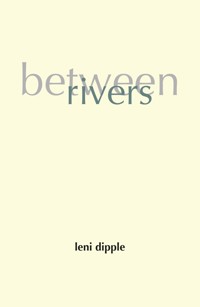
In this volume, Leni Dipple explores how poetry might be represented in a range of contexts, cutting across cultures and languages. An esoteric collection designed for the serious reader of poetry, Between Rivers forms a simultaneously intricate and epic narrative inspired by the epistolary of Dipple's grandfather and the work of Rainer Maria Rilke. This collection travels across time and continents, seeking its language and its roots, making connections, making sense of the present out of the past. Words are lifted from their origins, held to the light, and replanted in an eclectic and vibrant range of poems, synthesising Dipple's many journeys and charged with a personal vitality.
Sie lesen das E-Book in den Legimi-Apps auf:
Seitenzahl: 45
Veröffentlichungsjahr: 2014
Das E-Book (TTS) können Sie hören im Abo „Legimi Premium” in Legimi-Apps auf:
Ähnliche






About the Author
Leni Dipple has presented her poetry in a variety of contexts and places. A graduate in Portuguese and Brazilian studies with French (King’s College, London) she has taken part in the Casa dos Poetas festivals in Silves, Portugal, as well as founding the Au Pas des Troubadours events in south west France.
As Treasurer of Toddington Poetry Society, she organized programmes, some of which explored poetry in film and in translation. Thanks to a Year of the Artist award in 2001, she worked with the Filmstock festival producers and John Hegley, to create a multi-media poetry event in the Arndale Shopping Centre, Luton. She has also written for BBC Radio 3, resulting in a programme about her late husband’s business Mole Jazz.
Since moving to south west France she hosts ‘wwoofers’ (wwoof.fr) from all parts of the globe who come to learn about organic horticulture. In 2011 she presented a paper at the IFOAM Congress in South Korea on the role of the poet in organic agriculture and will be attending the next Congress this year in Istanbul.
Between Rivers is her first full volume of poetry.
Critical Acclaim for Leni Dipple
‘Concise and sharp, complex and shot through with images of cultural and personal history’ - Ellen Phethean, poet and founder of Diamond Twig Press
‘Tender, affectionate lyricism’ - John Mole, Poet in the City’s poet in residence
‘This is a strong, assured and often complex poetry which - commanding the reader’s attention - embeds her image-incarnated thoughts in our minds: the test of true poetry, its afterlife’ - Anthony Rudolf - Author, poet and Fellow of the Royal Society of Literature
for Siân and Corinne
‘Porque nasci entre espelhos
tenho pressa
de encontrar-me face a face’
from ‘Os Espelhos’ 1966–1967
Helder Macedo
CONTENTS
I
Life Palette
lollipop
under glass
FATHER/land
playground
left-handed
ignition
Pointer
‘Frelater’
therapy
The Ballad of Zé and Marie
walking through amsterdam
II
Maas/Meuse/Muse
origin
diaspora
Oma
The nurseryman’s daughter
The Dutch and Dentists
for Serge Gainsbourg
Perspective with Matisse
Meditation for M. on a Self-Portrait
White Lilac
Madonna del Parto
Nightrain
The Avenue at Middelharnis
Brotherhood
III
Free Association with Raging Bull
vinyl bandage
Anatomy of Loss
Time has come
IV
birth day (in mesopotamia)
UR
fugitive
History of a Lost Umbrella
Notes to the poems
Acknowledgements
About Us
Copyright
Preface
‘to found new land from which men and women may speak’
Nearly all of these poems were written over an intense period spanning twelve years during which I struggled to learn my craft, find my voice and a self which had been overlaid with the suffocating culture of patriarchy in the calvinist Holland of my father. He was born in 1914 on the island of OverFlakkee, south of Rotterdam. By 1917 his mother had died of tuberculosis and his father, Jacob Koert, had re-married to Sara Gnirrep. She was a young independent woman who already held the position of matron in a hospital in Rotterdam. In a series of letters written to her by my grandfather during their brief courtship, I caught a glimpse of who he was and of his hopes for this second marriage. He had wanted an equal partnership with a modern woman who had already found an identity outside of marriage. He had taken the first steps to leave farming, the traditional occupation of his ancestors, and had gone into partnership to open a sugar beet factory on the island. Nonetheless, he was also the first farmer on OverFlakkee to use nitrate fertiliser to improve yields. A fact which probably contributed to his premature death of stomach cancer at the age of 51, in 1926.
When I started out on this journey, I too, was at a crossroads in my life and I looked to various guides for direction and spiritual support. I was reading Rilke and came across the stellar correspondence, Letters: Summer 1926, between himself, Marina Tsvetaeva and Boris Pasternak. These three voices all informed my writing at that time and I was struck by the parallel between my passion for the Portuguese language (Fernando Pessoa’s poetry in particular) and Rilke’s passion for all things Russian, which he felt to be crucial in the making of himself as a poet. It was only later that I realised the life spans of Rilke and my grandfather mirrored one another. Dante’s journey also, spoke urgently to me at the outset of this quest. I too was lost in the dark woods of my middle years.
At the time of writing the poem ‘origin’ I had been struggling to re-define who I was as a wife, mother and perhaps, a poet; to attempt a new weave between these roles. I remember very well mentally addressing myself to the grandfather I had never met, but who had established a presence in my imagination through his letters to the woman I came to know as my ‘Oma’, my Dutch grandmother. From that point my journey became multi-layered in that I began to explore the physical and the metaphorical aspects of my roots. I discovered the house where my father was born on the delta of OverFlakee. The young couple living there spoke frankly to me about the very insular culture and the in-breeding which had resulted. How, being aware of this danger, they had independently left the island to seek new horizons, only to meet by chance in a discotheque in Utrecht. They had already fallen in love when they discovered shared family bloodlines which effectively vetoed their having children.




