


25,99 €
Mehr erfahren.
- Herausgeber: John Wiley & Sons
- Kategorie: Wissenschaft und neue Technologien
- Sprache: Englisch
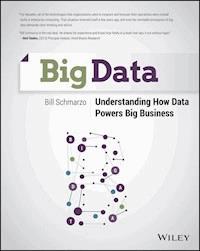
Leverage big data to add value to your business Social media analytics, web-tracking, and other technologies help companies acquire and handle massive amounts of data to better understand their customers, products, competition, and markets. Armed with the insights from big data, companies can improve customer experience and products, add value, and increase return on investment. The tricky part for busy IT professionals and executives is how to get this done, and that's where this practical book comes in. Big Data: Understanding How Data Powers Big Business is a complete how-to guide to leveraging big data to drive business value. Full of practical techniques, real-world examples, and hands-on exercises, this book explores the technologies involved, as well as how to find areas of the organization that can take full advantage of big data. * Shows how to decompose current business strategies in order to link big data initiatives to the organization's value creation processes * Explores different value creation processes and models * Explains issues surrounding operationalizing big data, including organizational structures, education challenges, and new big data-related roles * Provides methodology worksheets and exercises so readers can apply techniques * Includes real-world examples from a variety of organizations leveraging big data Big Data: Understanding How Data Powers Big Business is written by one of Big Data's preeminent experts, William Schmarzo. Don't miss his invaluable insights and advice.
Sie lesen das E-Book in den Legimi-Apps auf:
Seitenzahl: 313
Veröffentlichungsjahr: 2013
Ähnliche


















Table of Contents
Introduction
Chapter 1: The Big Data Business Opportunity
The Business Transformation Imperative
The Big Data Business Model Maturity Index
Big Data Business Model Maturity Observations
Summary
Chapter 2: Big Data History Lesson
Consumer Package Goods and Retail Industry Pre-1988
Lessons Learned and Applicability to Today's Big Data Movement
Summary
Chapter 3: Business Impact of Big Data
Big Data Impacts: The Questions Business Users Can Answer
Managing Using the Right Metrics
Data Monetization Opportunities
Summary
Chapter 4: Organizational Impact of Big Data
Data Analytics Lifecycle
Data Scientist Roles and Responsibilities
New Organizational Roles
Liberating Organizational Creativity
Summary
Chapter 5: Understanding Decision Theory
Business Intelligence Challenge
The Death of Why
Big Data User Interface Ramifications
The Human Challenge of Decision Making
Summary
Chapter 6: Creating the Big Data Strategy
The Big Data Strategy Document
Starbucks Big Data Strategy Document Example
San Francisco Giants Big Data Strategy Document Example
Summary
Chapter 7: Understanding Your Value Creation Process
Understanding the Big Data Value Creation Drivers
Michael Porter's Valuation Creation Models
Summary
Chapter 8: Big Data User Experience Ramifications
The Unintelligent User Experience
Understanding the Key Decisions to Build a Relevant User Experience
Using Big Data Analytics to Improve Customer Engagement
Uncovering and Leveraging Customer Insights
Big Data Can Power a New Customer Experience
Summary
Chapter 9: Identifying Big Data Use Cases
The Big Data Envisioning Process
The Prioritization Process
Using User Experience Mockups to Fuel the Envisioning Process
Summary
Chapter 10: Solution Engineering
The Solution Engineering Process
Solution Engineering Tomorrow's Business Solutions
Reading an Annual Report
Summary
Chapter 11: Big Data Architectural Ramifications
Big Data: Time for a New Data Architecture
Introducing Big Data Technologies
Bringing Big Data into the Traditional Data Warehouse World
Summary
Chapter 12: Launching Your Big Data Journey
Explosive Data Growth Drives Business Opportunities
Traditional Technologies and Approaches Are Insufficient
The Big Data Business Model Maturity Index
Driving Business and IT Stakeholder Collaboration
Operationalizing Big Data Insights
Big Data Powers the Value Creation Process
Summary
Chapter 13: Call to Action
Identify Your Organization's Key Business Initiatives
Start with Business and IT Stakeholder Collaboration
Formalize Your Envisioning Process
Leverage Mockups to Fuel the Creative Process
Understand Your Technology and Architectural Options
Build off Your Existing Internal Business Processes
Uncover New Monetization Opportunities
Understand the Organizational Ramifications
Introduction
Big data is today's technology hot topic. Such technology hot topics come around every four to five years and become the “must have” technologies that will lead organizations to the promised land—the “silver bullet” that solves all of our technology deficiencies and woes. Organizations fight through the confusion and hyperbole that radiate from vendors and analysts alike to grasp what the technology can and cannot do. In some cases, they successfully integrate the technology into the organization's technology landscape—technologies such as relational databases, Enterprise Resource Planning (ERP), client-server architectures, Customer Relationship Management (CRM), data warehousing, e-commerce, Business Intelligence (BI), and open source software.
However, big data feels different, maybe because at its heart big data is not about technology as much as it's about business transformation—transforming the organization from a retrospective, batch, data constrained, monitor the business environment into a predictive, real-time, data hungry, optimize the business environment. Big data isn't about business parity or deploying the same technologies in order to be like everyone else. Instead, big data is about leveraging the unique and actionable insights gleaned about your customers, products, and operations to rewire your value creation processes, optimize your key business initiatives, and uncover new monetization opportunities. Big data is about making money, and that's what this book addresses—how to leverage those unique and actionable insights about your customers, products, and operations to make money.
This book approaches the big data business opportunities from a pragmatic, hands-on perspective. There aren't a lot of theories here, but instead lots of practical advice, techniques, methodologies, downloadable worksheets, and many examples I've gained over the years from working with some of the world's leading organizations. As you work your way through this book, you will do and learn the following:
Educate your organization on a common definition of big data and leverage the Big Data Business Model Maturity Index to communicate to your organization the specific business areas where big data can deliver meaningful business value (Chapter 1).
Review a history lesson about a previous big data event and determine what parts of it you can apply to your current and future big data opportunities (Chapter 2).
Learn a process for leveraging your existing business processes to identify the “right” metrics against which to focus your big data initiative in order to drive business success (Chapter 3).
Examine some recommendations and learnings for creating a highly efficient and effective organizational structure to support your big data initiative, including the integration of new roles—like the data science and user experience teams, and new Chief Data Office and Chief Analytics Officer roles—into your existing data and analysis organizations (Chapter 4).
Review some common human decision making traps and deficiencies, contemplate the ramifications of the “death of why,” and understand how to deliver actionable insights that counter these human decision-making flaws (Chapter 5).
Learn a methodology for breaking down, or functionally “decomposing,” your organization's business strategy and key business initiatives into its key business value drivers, critical success factors, and the supporting data, analysis, and technology requirements (Chapter 6).
Dive deeply into the big data Masters of Business Administration (MBA) by applying the big data business value drivers—underleveraged transactional data, new unstructured data sources, real-time data access, and predictive analytics—against value creation models such as Michael Porter's Five Forces Analysis and Value Chain Analysis to envision where and how big data can optimize your organization's key business processes and uncover new monetization opportunities (Chapter 7).
Understand how the customer and product insights gleaned from new sources of customer behavioral and product usage data, coupled with advanced analytics, can power a more compelling, relevant, and profitable customer experience (Chapter 8).
Learn an envisioning methodology—the Vision Workshop—that drives collaboration between business and IT stakeholders to envision what's possible with big data, uncover examples of how big data can impact key business processes, and ensure agreement on the big data desired end-state and critical success factors (Chapter 9).
Learn a process for pulling together all of the techniques, methodologies, tools, and worksheets around a process for identifying, architecting, and delivering big data-enabled business solutions and applications (Chapter 10).
Review key big data technologies (Hadoop, MapReduce, Hive, etc.) and analytic developments (R, Mahout, MADlib, etc.) that are enabling new data management and advanced analytics approaches, and explore the impact these technologies could have on your existing data warehouse and business intelligence environments (Chapter 11).
Summarize the big data best practices, approaches, and value creation techniques into the Big Data Storymap—a single image that encapsulates the key points and approaches for delivering on the promise of big data to optimize your value creation processes and uncover new monetization opportunities (Chapter 12).
Conclude by reviewing a series of “calls to action” that will guide you and your organization on your big data journey—from education and awareness, to the identification of where and how to start your big data journey, and through the development and deployment of big data-enabled business solutions and applications (Chapter 13).
We will also provide materials for download on
www.wiley.com/go/bigdataforbusiness
, including the different envisioning worksheets, the Big Data Storymap, and a training presentation that corresponds with the materials discussed in this book.
The beauty of being in the data and analytics business is that we are only a new technology innovation away from our next big data experience. First, there was point-of-sale, call detail, and credit card data that provided an earlier big data opportunity for consumer packaged goods, retail, financial services, and telecommunications companies. Then web click data powered the online commerce and digital media industries. Now social media, mobile apps, and sensor-based data are fueling today's current big data craze in all industries—both business-to-consumer and business-to-business. And there's always more to come! Data from newer technologies, such as wearable computing, facial recognition, DNA mapping, and virtual reality, will unleash yet another round of big data-driven value creation opportunities.
The organizations that not only survive, but also thrive, during these data upheavals are those that embrace data and analytics as a core organizational capability. These organizations develop an insatiable appetite for data, treating it as an asset to be hoarded, not a business cost to be avoided. Such organizations manage analytics as intellectual property to be captured, nurtured, and sometimes even legally protected.
This book is for just such organizations. It provides a guide containing techniques, tools, and methodologies for feeding that insatiable appetite for data, to build comprehensive data management and analytics capabilities, and to make the necessary organizational adjustments and investments to leverage insights about your customers, products, and operations to optimize key business processes and uncover new monetization opportunities.
Chapter 1
The Big Data Business Opportunity
Every now and then, new sources of data emerge that hold the potential to transform how organizations drive, or derive, business value. In the 1980s, we saw point-of-sale (POS) scanner data change the balance of power between consumer package goods (CPG) manufacturers like Procter & Gamble, Unilever, Frito Lay, and Kraft—and retailers like Walmart, Tesco, and Vons. The advent of detailed sources of data about product sales, soon coupled with customer loyalty data, provided retailers with unique insights about product sales, customer buying patterns, and overall market trends that previously were not available to any player in the CPG-to-retail value chain. The new data sources literally changed the business models of many companies.
Then in the late 1990s, web clicks became the new knowledge currency, enabling online merchants to gain significant competitive advantage over their brick-and-mortar counterparts. The detailed insights buried in the web logs gave online merchants new insights into product sales and customer purchase behaviors, and gave online retailers the ability to manipulate the user experience to influence (through capabilities like recommendation engines) customers' purchase choices and the contents of their electronic shopping carts. Again, companies had to change their business models to survive.
Today, we are in the midst of yet another data-driven business revolution. New sources of social media, mobile, and sensor or machine-generated data hold the potential to rewire an organization's value creation processes. Social media data provide insights into customer interests, passions, affiliations, and associations that can be used to optimize your customer engagement processes (from customer acquisition, activation, maturation, up-sell/cross-sell, retention, through advocacy development). Machine or sensor-generated data provide real-time data feeds at the most granular level of detail that enable predictive maintenance, product performance recommendations, and network optimization. In addition, mobile devices enable location-based insights and drive real-time customer engagement that allow brick-and-mortar retailers to compete directly with online retailers in providing an improved, more engaging customer shopping experience.
Lesen Sie weiter in der vollständigen Ausgabe!
Lesen Sie weiter in der vollständigen Ausgabe!
Lesen Sie weiter in der vollständigen Ausgabe!
Lesen Sie weiter in der vollständigen Ausgabe!
Lesen Sie weiter in der vollständigen Ausgabe!
Lesen Sie weiter in der vollständigen Ausgabe!
Lesen Sie weiter in der vollständigen Ausgabe!
Lesen Sie weiter in der vollständigen Ausgabe!
Lesen Sie weiter in der vollständigen Ausgabe!
Lesen Sie weiter in der vollständigen Ausgabe!
Lesen Sie weiter in der vollständigen Ausgabe!
Lesen Sie weiter in der vollständigen Ausgabe!
Lesen Sie weiter in der vollständigen Ausgabe!
Lesen Sie weiter in der vollständigen Ausgabe!
Lesen Sie weiter in der vollständigen Ausgabe!
Lesen Sie weiter in der vollständigen Ausgabe!
Lesen Sie weiter in der vollständigen Ausgabe!
Lesen Sie weiter in der vollständigen Ausgabe!
Lesen Sie weiter in der vollständigen Ausgabe!




