


2,82 €
Mehr erfahren.
- Herausgeber: Wildside Press
- Sprache: Englisch
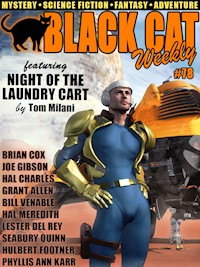
Our 78th issue features another lineup sure to please. We have an original mystery by Tom Milani (thanks to Acquiring Editor Michael Bracken). Acquiring Editor Barb Goffman has selected a great mystery by Brian Cox. Our other two Acquiring Editors, Cynthia Ward and Darrell Schweitzer, are still on break, but we hope they will be back soon.
I’ve balanced out the mystery side of this issue with a Sexton Blake story and a Hulbert Footner novel. For the fantasy side, we have three tales: a Frostflower & Thorn short story from Phyllis Ann Karr, a Jules de Grandin occult detective story from Seabury Quinn, and a ghostly tale by Grant Allen. On the third side, we have three science fiction stories—tales by Joe Bigson, Bill Venable, and Lester del Rey. Fun stuff. I hope you enjoy it.
Here’s this issue’s lineup:
Mysteries / Suspense / Adventure:
“Night of the Laundry Cart,” by Tom Milani [Michael Bracken Presents short story] “A Valentine by the Numbers,” by Hal Charles [Solve-It-Yourself Mystery] “The Frozen Fiske.” by Brian Cox [Barb Goffman Presents short story] “The White Mouse,” by Hal Meredith [Sexton Blake novelet] Cap’n Sue, by Hulbert Footner [novel]
Fantasy & Science Fiction:
“A Night at Two Inns.” by Phyllis Ann Karr [Frostflower & Thorn short story] “Pallinghurst Barrow,” by Grant Allen [novelet] “The Man Who Cast No Shadow,” by Seabury Quinn [Jules de Grandin novelet] “I Like You, Too—” by Joe Gibson [short story] “If At First,” by Bill Venable [short story] “Moon-Blind,” by Lester del Rey [short story]
Sie lesen das E-Book in den Legimi-Apps auf:
Seitenzahl: 702
Veröffentlichungsjahr: 2023
Ähnliche

















Table of Contents
COPYRIGHT INFORMATION
THE CAT’S MEOW
TEAM BLACK CAT
NIGHT OF THE LAUNDRY CART, by Tom Milani
A VALENTINE BY THE NUMBERS, by Hal Charles
THE FROZEN FISKE, by BRIAN COX
THE WHITE MOUSE, by Hal Meredith
CHAPTER 1
CHAPTER 2
CHAPTER 3
CAP’N SUE, by Hulbert Footner
INTRODUCTION
CHAPTER 1
CHAPTER 2
CHAPTER 3
CHAPTER 4
CHAPTER 5
CHAPTER 6
CHAPTER 7
CHAPTER 8
CHAPTER 9
CHAPTER 10
CHAPTER 11
CHAPTER 12
CHAPTER 13
CHAPTER 14
CHAPTER 15
CHAPTER 16
CHAPTER 17
CHAPTER 18
CHAPTER 19
CHAPTER 20
CHAPTER 21
CHAPTER 22
CHAPTER 23
CHAPTER 24
CHAPTER 25
CHAPTER 26
CHAPTER 27
CHAPTER 28
CHAPTER 29
CHAPTER 30
CHAPTER 31
CHAPTER 32
CHAPTER 33
CHAPTER 34
CHAPTER 35
CHAPTER 36
A NIGHT AT TWO INNS, by Phyllis Ann Karr
PALLINGHURST BARROW, by Grant Allen
CHAPTER 1
CHAPTER 2
CHAPTER 3
CHAPTER 4
CHAPTER 5
THE MAN WHO CAST NO SHADOW, by Seabury Quinn
CHAPTER 1
CHAPTER 2
“I LIKE YOU, TOO—” by Joe Gibson
IF AT FIRST, by Bill Venable
MOON-BLIND, by Lester del Rey
COPYRIGHT INFORMATION
Copyright © 2023 by Wildside Press LLC.
Published by Wildside Press, LLC.
wildsidepress.com | bcmystery.com
*
“Night of the Laundry Cart” is copyright © 2023 by Tom Milani and appears here for the first time.
“A Valentine by the Numbers” is copyright © 2022 by Hal Blythe and Charlie Sweet. Reprinted by permission of the authors.
“The Frozen Fiske” is copyright © 2016 by Brian Cox. Originally published in Alfred Hitchcock’s Mystery Magazine, September 2016. Reprinted by permission of the author.
“The White Mouse,” by Hal Meredith, was originally published anonymously in Answers, May 15, 1909.
Cap’n Sue, by Hulbert Footner, was originally published in 1927.
“A Night at Two Inns” is copyright © 1985 by Phyllis Ann Karr. Originally published in Sword and Sorceress II, ed. by Marion Zimmer Bradley. Reprinted by permission of the author.
“Pallinghurst Barrow,” by Grant Allen, was originally published in the Illustrated London News, Christmas Number, 1892.
“The Man Who Cast No Shadow,” by Seabury Quinn, was originally published in Weird Tales, February 1927.
“I Like You, Too—” by Joe Gibson was originally published in Thrilling Wonder Stories, October 1948.
“If At First,” by Bill Venable, was originally published in Thrilling Wonder Stories, Winter 1954.
“Moon-Blind,” by Lester del Rey, was originally published in Space Science Fiction, Sept. 1952,under the pseudonym “Erik van Lihn.” Reprinted by permission of the author’s estate.
THE CAT’S MEOW
Welcome to Black Cat Weekly.
A few days ago (as I write this), a Clarkesworld Magazine made national news by closing to submissions because of a deluge of AI-written submissions. (Clarkesworld promptly closed to submissions.) “The world is ending!” cry editors. “500 computer-written submissions! It’s too much! We simply can’t have computers writing fiction!”
How silly. Personally, I don’t care if a computer writes a short story. If it’s a great story, it should be published no matter how it came to be. The problem is, without any creative spark involved, AI-written fiction is simply not of publishable quality…yet. I’m sure someday computers will be able to churn out competent fiction to order. But, based on my own tests of the various AI-writing tools, computers aren’t anywhere near that point right now. The stories are synoptic and feel like something a gradeschooler would turn in for a creative writing assignment. Just not good enough by even minimal editorial standards.
But in 5 or 10 years, I’m sure they will be able to “fake it” well enough to reach minimal publishability standards. And when that day comes, we’ll see a glorious explosion of niche content. Mysteries with toy poodles as detectives, set on Mars, in the 25th century? Why not! Sherlock Holmes and H.G. Wells teaming up as pro wrestlers in 1910 Brooklyn, NY? Of course! Albino alligators in dirigibles fighting Nazis in World War II? Perfect! Whatever your mind can imagine, a computer will be able to write it…and get it done in minutes. It will be the Golden Age of Specialized Storytelling. Think of all the Star Trek fan fiction… Or sequels to favorite novels… Or the Tom Swift/Hardy Boys teamup adventures…
For mass audiences, though, I think human storytellers are going to be employed for a long time to come. The ability to think outside the (computer) box will always keep human-written tales more interesting that rehashed and recycled plots, based on computer analysis of half a million novels.
But I’m willing to be proved wrong. It’s the quality of the story that matters most in the long run—at least to me. But I don’t think I’m wrong.
* * * *
Speaking of quality storytelling, our 78th issue features another lineup sure to please. We have an original mystery by Tom Milani (thanks to Acquiring Editor Michael Bracken). Acquiring Editor Barb Goffman has selected a great mystery by Brian Cox. Our other two Acquiring Editors, Cynthia Ward and Darrell Schweitzer, are still on break, but we hope they will be back soon.
I’ve balanced out the mystery side of this issue with a Sexton Blake story and a Hulbert Footner novel. For the fantasy side, we have three tales: a Frostflower & Thorn short story from Phyllis Ann Karr, a Jules de Grandin occult detective story from Seabury Quinn, and a ghostly tale by Grant Allen. On the third side, we have three science fiction stories—tales by Joe Bigson, Bill Venable, and Lester del Rey. Fun stuff. I hope you enjoy it.
Our cover is by the incredibly talented Luca Olesti.
Here’s this issue’s lineup:
Mysteries / Suspense / Adventure:
“Night of the Laundry Cart,” by Tom Milani [Michael Bracken Presents short story]
“A Valentine by the Numbers,” by Hal Charles [Solve-It-Yourself Mystery]
“The Frozen Fiske.” by Brian Cox [Barb Goffman Presents short story]
“The White Mouse,” by Hal Meredith [Sexton Blake novelet]
Cap’n Sue, by Hulbert Footner [novel]
Fantasy & Science Fiction:
“A Night at Two Inns.” by Phyllis Ann Karr [Frostflower & Thorn short story]
“Pallinghurst Barrow,” by Grant Allen [novelet]
“The Man Who Cast No Shadow,” by Seabury Quinn [Jules de Grandin novelet]
“I Like You, Too—” by Joe Gibson [short story]
“If At First,” by Bill Venable [short story]
“Moon-Blind,” by Lester del Rey [short story]
Until next time, happy reading!
—John Betancourt
Editor, Black Cat Weekly
TEAM BLACK CAT
EDITOR
John Betancourt
ASSOCIATE EDITORS
Barb Goffman
Michael Bracken
Paul Di Filippo
Darrell Schweitzer
Cynthia M. Ward
PRODUCTION
Sam Hogan
Karl Wurf
NIGHT OF THE LAUNDRY CART,by Tom Milani
(with apologies to Chrétien de Troyes)
Nick Melvin liked hanging out with Guinevere between sets. She was a curvy girl with a baby-talk voice and the bluest eyes he’d ever seen. Before he had to go back on stage, she scrawled her phone number on the wall next to their table using lipstick the color of the Days of Future Passed album. It was a record he had been listening to a lot lately, particularly when he was missing Marie or angry at her, the two emotions alternating with such frequency they had become one—angry-missing or missing-angry—he could never decide which.
He had been standing at the table, and now he took the stool Guinevere—he guessed her name was as real as her phone number—had just vacated. He spun a napkin with his finger, the edges darkening from the damp on the table.
“That’s the number she gave you?”
J.B.—Jill Bademagu, owner of Gorre’s and the last name no one could pronounce—nodded at the wall, her expression half contempt, half pity.
“It’s not like I haven’t played it a thousand times,” he said. “Jenny” was a second-set staple of the Lancers, the band he’d founded, second set being that point in the night when Gorre’s customers had enough liquor in them, they would sing along to the chorus but not so much they’d try to sing the verses as well.
J.B. smirked. “Got to give her points for creativity, I guess.”
Mel tipped his beer toward her. “I guess.”
She went back behind the bar, and he finished his beer in silence. When it was time for the Lancers’ next set to begin, Mel balled up the napkin and shot it into the wastebasket on the other side of the bar.
“Nothing but net,” he said. “And the crowd goes wild.” Not this crowd, he thought.
* * * *
Artie was tired of Gwen’s running around. Sure, he was older, and Gwen had needs, needs he couldn’t always satisfy, at least not until the blue pill kicked in, so he tried to understand. But a scruffy guitar player? A jazz drummer, sure, he could see the attraction there. Or even the lead singer. Girls were always hot for those guys, going all the way back to Sinatra, Elvis, Jim Morrison, Bon Jovi. The band didn’t matter. All it took was a strong jaw, smoldering eyes, and “insouciance”—that was the word Gwen used one time. Even after he looked it up, he didn’t get it. If he stopped paying attention to her, she got right in his face, telling him he didn’t care about her blah, blah, blah, and yet she thought those singers were hot stuff because they were so unattainable.
He didn’t know how much more he could take. He arrived at Gorre’s between the Lancers’ sets. The room was so downscale he couldn’t believe Gwen would even step foot inside. Artie sat at a round table in the corner. The waiter mumbled an introduction, and Artie couldn’t tell if he said Gawain or Dwayne or something else.
“I’ll have an old fashioned,” Artie said. Gawain or Dwayne looked at him like he had an eye in the middle of his forehead. But what did he expect? The kid had round things in his earlobes you could hang a sport coat from, and his hair was the color of an oil slick.
“Bring me a beer,” Artie said.
When the kid started reciting the beer menu—like Artie cared—he said, “Just give me whatever’s the lightest one.”
“We have a blonde ale.”
Artie didn’t know if the kid was yanking his chain, but Gwen was blond—carpet and drapes—so he told the kid that sounded good.
He settled in with his beer as the Lancers returned to the stage. They looked like they were cast from dirtbag central. Skinny jeans, long hair, pale skin. The lead guitarist came up last. Cleaner cut than the others and not as pale either. Artie still didn’t see what was so special about the guy.
Until he started with “Something,” that Paul McCartney song Sinatra had covered. Guy had a good voice, and he sang it straight. Artie had to give him credit. But then he had to go ruin it by playing a lick and shouting “Hey!”
The people at the other tables cheered. Artie guessed this was a song the crowd knew. To Artie, it sounded like a bunch of noise, lyrics he couldn’t pick out. When the band came to the chorus, everyone in Gorre’s was singing along. As he listened, he couldn’t believe it. He squeezed his glass so hard he thought it would break. Gwen’s number—they were singing Gwen’s phone number like she’d shared it with everyone.
By the time the song ended he decided he was going to teach that guitarist the facts of life. You don’t go messing with another guy’s girl—not if you know what’s good for you—and you definitely don’t brag about it to a bunch of drunks like it’s a joke you’re all in on.
* * * *
Mel stepped out the back door. A service road ran behind the strip mall Gorre’s anchored. A dumpster stood to his right, whatever was inside starting to ripen. To his left was a rolling laundry cart belonging to the Suds and Duds that anchored the other end of the shopping center.
He’d begun smoking after Marie left him, but only on nights when he had a gig. Their problems began with his name, he thought. Until he met her, he’d been Nick or sometimes Nicky—J.B. used to call him that. But when he introduced himself to Marie at the bar, she said, “You don’t look like a Nick. Let’s call you Mel.” Much to the amusement of J.B. and the other customers. From then on, he was Mel. For a while, he even liked it, but once Marie left him, it was just another reminder of what he’d lost.
The back door opened, and Mel turned. An older guy stood in the doorway. He wore a navy sport coat, white dress shirt unbuttoned halfway to his waist, and tan slacks. Definitely not the typical Gorre’s customer.
“Hey, you,” the man said.
Another belligerent drunk, Mel thought. He tossed his cigarette and ground it under his boot.
“Bet you think you’re smart,” the man started.
“Ten bucks,” Mel said.
Now the man looked like he was trying to do long division in his head. Mel waited. The man took two steps toward him. “Stay away from my girl,” he said, punctuating each word by jabbing Mel in the chest.
He slapped the man’s hand down. “I don’t know what you’re talking about. You’ve got the wrong guy and the wrong bar.”
The man shook his head. “Ah, sorry. My mistake.”
Mel turned away. Was a few minutes of peace between sets really too much to ask?
“One more thing,” the man said.
Mel sighed and faced him. The last thing he remembered was the man’s head coming toward his own and a sound like two billiard balls colliding.
* * * *
Artie had a good laugh at the kid, who he’d folded up in the laundry basket under some sheets. He wished Gwen were here to see it. He went back inside. A guy he recognized as the band’s drummer ran up to him.
“Have you seen Mel? We’re about to go on.”
“He’s all washed up.” Artie couldn’t help laughing at his own joke. The drummer didn’t get it, but what else was new?
“You know you’re bleeding?” The guy pointed at Artie’s forehead.
Artie touched his face, and his fingers came away sticky with blood. Guess he hit the guy harder than he thought. Served him right. But by the time he made it back to his table, he didn’t feel so good. Must have been something he ate—except he didn’t remember ordering any food.
On stage, the band members were looking at each other and shrugging their shoulders. A table full of girls started chanting, “We want Mel. We want Mel.” The lady everyone called J.B. opened the back door and shook her head at the band.
Artie couldn’t figure out what that was all about, but when the drummer pointed at him, he knew it was time to leave.
* * * *
Mel felt himself moving, almost as if he were floating. He heard voices that sounded like they were far away, and he smelled bleach. When he opened his eyes and couldn’t see anything, he flailed. As he pushed the sheets covering him away, he and a dwarf holding onto the laundry cart yelled at the same time.
Soon the cart was surrounded by women who appeared to be trying not to laugh and mostly failing. They spoke to each other in Spanish, and Mel picked out the words cabeza and loco. He grabbed the sides of the cart and tried to pull himself up, but he and the cart wobbled so much he sank into the sheets again.
Lulled by the rumbling of the dryers, Mel closed his eyes, only to open them when he felt the cart tipping forward. He found himself on his hands and knees, the sheets tangled across his back like a saddle. Now the women weren’t even trying to hide their laughter.
As Mel staggered to his feet, the women in the laundromat backed away. The dwarf stood his ground.
“What are you doing sleeping in my cart?” he asked, his jaw jutting, his hands on his hips.
Mel tried to think.
“We were between sets,” he started.
Now the dwarf began pointing at Mel, hopping from one foot to the other. “You play with the Lancers.” He turned to the women. “He’s their lead guitarist.” He faced Mel. “I love your version of ‘Jenny.’”
“More than the man who head-butted me,” Mel said to himself, as his memory of the old guy telling him to stay away from his girl finally surfaced.
The dwarf became serious again. “Why were you in my cart?”
“Unsatisfied customer,” Mel said.
The dwarf shrugged. “It happens.”
* * * *
“Artie, I can’t believe you did that.”
Gwen’s face was red, and her eyes had narrowed. It wasn’t the reaction he’d been hoping for.
“I wanted to prove how much I love you, doll.”
“Don’t call me ‘doll.’ Mel and I are just friends.”
“Just friends? Is that why he was singing your phone number? Everyone in the place was singing along with him.” Artie stopped when he saw Gwen’s jaw drop. He knew he’d given her something to think about—how it wasn’t right for a guy to be blabbing a girl’s phone number to the whole world. Now her lips were quivering, and Artie realized she was about to cry. He held his arms open, waiting for her to fall into them.
Instead, she doubled over, laughing. “Is that why—is that what you thought—that the Lancers—”
Artie shifted his feet, not getting the joke. “Stop that, stop laughing at me.”
She straightened up and snorted, her face filled with contempt. “You are such a loser, Artie.”
That was the last straw, so Artie slapped her. It was the first time he’d ever laid a hand on Gwen, but a guy had his limits. At least it stopped her laughing, but he worried it had been a mistake.
“I’m sorry, doll—baby. I shouldn’t have hit you, but you got me all riled up, laughing like that.”
“That’s okay, Artie. I know you didn’t mean it.”
Gwen smiled at him, but it didn’t reach her eyes.
* * * *
“He’s an idiot,” Gwen said. “Sorry about the bump on your head.”
Mel touched the swelling, which had yet to go down. He wasn’t much of a fighter, but he was still embarrassed at being ambushed by an old man.
“What did you tell him about me?” he asked.
“That we were friends. He thought you were insulting me by singing my phone number.”
Mel’s head spun. Her phone number was real. “Wait, what? He thinks I wrote that song? About you?”
“Like I said, he’s not the sharpest knife in the drawer.”
Playing in bars as long as he had, Mel had seen his share of stupid. But this was taking it to another level.
“Did you explain that the song came out in 1981?”
“He slapped me before I had the chance to.”
Mel was thinking it was about time he made his move when he saw Marie walking toward him. She was usually a jeans-and-T-shirt girl, which suited Mel fine, but tonight she was wearing a sleeveless top and a skirt—with flounces. He guessed his surprise must have shown because Gwen turned to see who he was looking at.
“She’s pretty,” Gwen said. “Someone you know?”
“That’s my ex,” he said.
“Did you leave her, or did she leave you?”
“I—” Mel started.
“Kidding. There’s no way you’d leave her.”
Mel wondered if there were a woman alive who couldn’t read his mind.
“Hey, Mel,” Marie said.
“Hi,” he said.
Marie smiled and looked from him to Gwen. “Aren’t you going to introduce me?”
Mel sighed. “Marie, this is my friend Gwen. Gwen, Marie.”
“So, you’re the one who broke his heart,” Gwen said.
“And I suppose you’re going to fix it,” Marie said.
“Maybe,” Gwen said.
Mel asked himself if they knew he was still standing there. Then, because things weren’t weird enough, the dwarf walked into the bar. But “walk” wasn’t the right word. He sauntered as if he owned the place.
“I just came to check up on you,” the dwarf said.
“What happened?” Marie asked.
“He got knocked into a laundry cart,” the dwarf said.
“By my soon-to-be-ex-boyfriend,” Gwen said.
“Please don’t laugh,” Mel said, but he was too late.
When Marie could speak again, she said, “I’m sorry, but you have to admit—”
“He found you?” Gwen nodded at the dwarf.
The dwarf pointed at Mel. “I came to retrieve the cart, and when I brought it back to the laundromat, he rose from the bottom like Lazarus. Scared me to death.”
“He works at the Suds and Duds,” Mel started, though by this point he realized his presence was unnecessary to the conversation.
“I own the Suds and Duds,” the dwarf said, puffing out his chest and somehow growing two inches taller.
“You own it?” Gwen said.
“Hector Ruiz, at your service.”
He took Gwen’s hand and kissed it. Mel could have sworn she tittered.
* * * *
Artie didn’t know how things had gone so far south so fast. One minute he had a beautiful girl on his arm, the next he thought he was defending her honor, only to have her laugh at him.
And then he’d slapped her.
They’d had their ups and downs before, but at least there were feelings behind them. Now, she looked at him like she didn’t care one way or another what happened. That had to change. There was no way he would let her run off with some two-bit musician who didn’t have the chops to shine Frank’s shoes.
He hired a locksmith to install a deadbolt on his bedroom door, one keyed from both sides. The guy tried to tell him that violated all kinds of fire regulations, but Artie asked him if fifty bucks was enough to make him forget the code for once.
It was.
Artie figured he’d wait for Gwen to go to bed, then lock her in for the night. It was a master suite, so it wasn’t like she’d be needing anything. He’d go to Gorre’s and take care of that smart-ass guitarist and anyone who got in his way. As long as she didn’t wake up, Gwen wouldn’t even know that he’d left. But just to be on the safe side, he’d take her phone with him. And if she asked about the deadbolts, he’d tell her he was worried about her safety because of all the break-ins in the neighborhood.
He found a postcard with the Lancers’ schedule in Gwen’s purse. Most of the dates were on weekends, but this week the Lancers played on Thursday, which was perfect because Gwen said she’d be coming over then.
The last thing was he needed a gun. But that was going to be easy. His friend Kay sold handguns on the side and owed Artie for fixing him up with his sister, even if it didn’t exactly work out. Forty stitches had left a nasty scar that Kay’s beard couldn’t hide, but Artie told him chicks dug those, so it wasn’t that big a deal.
He figured he’d stick the gun in the skinny guitarist’s face when he came out to smoke, and together they’d walk to Artie’s car. He’d make the kid drive to Logres Salvage Yard, where he’d dispose of him in one of the cars waiting to be crushed.
* * * *
Hector waved at Mel when he was in the middle of the “Free Bird” solo. Mel wasn’t a fan of the song—he always made the drummer take the vocals—but the guitar part let him strut his stuff. So, he figured Hector was just into Skynyrd, until he saw him pointing at a table where Marie was sitting.
Mel closed his eyes and tried to lose himself in his playing, tried to ride the patrons’ energy. But this early, the crowd was sparse and uninterested in his guitar-hero pyrotechnics. When he opened his eyes, Hector was standing a few feet from the stage, arms crossed, staring at Mel. He supposed his solo had passed its expiration date, so he nodded at the drummer and abruptly ended the song.
“We’ll be back after a short break,” he said, placing his guitar in its stand. He stepped off the stage.
“That was excessive,” Hector said.
Great, another critic, Mel thought. He followed him to the table where Marie sat. Tonight, she had on jeans, and underneath her ruffled top she was wearing a push-up bra. Her lips bright with lipstick, her eyes dark with mascara, she seemed happy to see him. It occurred to Mel that she might want to get back together, but given how clueless he usually was, he didn’t trust his feelings.
Still, he figured there was no harm in stating the obvious. “You look great, Marie.”
She rolled her eyes. “Could you have dragged that solo out any longer?”
“It’s about Gwen,” Hector said.
“What about her?”
“She’s locked in Artie’s bedroom,” Marie said.
“The boyfriend?” Mel asked.
“Soon-to-be-ex,” Hector said.
“Why doesn’t she just leave?” Mel asked.
“What part of ‘locked in’ don’t you understand?” Marie said.
“It’s a deadbolt that’s keyed on both sides,” Hector said.
“That’s against code,” Mel said.
“Artie must have paid off the locksmith,” Hector said. “Either that, or he wasn’t union.”
Marie slapped the table, and Mel and Hector jumped. “Could we focus here? We can debate building codes later.”
“She’s got a point,” Hector said. “Artie’s on his way to kill you.”
“What did I do?”
“He thinks Gwen’s planning to run off with you,” Marie said.
“He took her phone,” Hector said.
“How do you know all this?” Mel asked.
“I knew Artie was bad news, so I gave Gwen a burner phone, told her to call me anytime.”
Mel sighed.
“You didn’t have a chance with her anyway,” Marie said.
Mel wondered if he ever needed to speak again.
“We have to rescue Gwen,” Hector said.
“I’m in the middle of a show,” Mel said.
Hector and Marie glared at him.
“I think your career will survive,” she finally said.
“What do you propose?” Mel asked.
Hector and Marie leaned toward him, their heads almost touching. When they finished talking, Mel thought it was the craziest plan he’d ever heard. He was about to tell them he wanted no part of it when Marie’s hand found his thigh.
* * * *
Artie liked the look of the hot little number standing at the far side of the stage by the back door. Nice makeup, and her jeans were painted on. She’d tied her shirt at her breastbone so that her flat stomach showed, and above that, zowie. Two melons, ripe for picking. She seemed to be checking him out more than she was the dirtbags on stage. Which only said she had good taste.
Artie figured if he could get her talking before the band ended its set, maybe he could have something on the side for nights when Gwen wasn’t in the mood. He loved Gwen’s curves, but the way she liked to eat—he didn’t know, he might have to speak to her about that. Not this one. There wasn’t an ounce of fat on her.
He walked toward the girl without taking his eyes off her. Once she saw him coming, she smiled.
“Hey, doll,” he said.
“Hey, yourself.”
Artie thought her perfume was like ambrosia. He nodded at the stage. “You like the band?”
She shrugged. “They’re okay.”
“My name’s Artie.” He held out his hand.
“Marie.” She gave his hand a good squeeze.
“Nice to meet you, Marie. Can I buy you a drink?”
“I’d love an old fashioned, but the idiots at the bar don’t know how to make one.”
Where have you been all my life? Artie thought. “There are other places,” he started. “What kind of music do you like?”
“I grew up listening to Sinatra, Dean Martin, Perry Como—my father was into those guys.” She went on to name a few big bands, telling him how she’d been a military brat and that her father’s music had been the one constant in her life.
Artie thought this was too good to be true, until she put a hand on his chest and said, “Am I talking too much? I’m sorry, when I get nervous, I just talk so much—”
Artie leaned in and kissed her. The way she responded, it was like electricity went through his whole body, and he hadn’t even taken one of the blue pills.
When they pulled apart, she said, “You’re a good kisser, Artie. Not many guys know how to kiss.”
“I do more than kiss.”
She let herself fall against the door, her eyes half-shut. “Do you, Artie?”
Something had changed in her expression. A challenge was there now, but it was one he was up for. She looked left and right, before grabbing his hand and pulling him outside.
The laundry cart he’d thrown the guitarist into was still there. She took his arms and spun him so that he was facing the door.
“You move fast, doll.”
She stood close to him. “I want a real man, Artie. I’m tired of boys. Show me what kind of man you are.”
He grabbed a handful of her hair and pushed her to her knees. “Open wide.”
Before he could get his zipper down, something rustled behind him. He looked over his shoulder, and the littlest man he’d ever seen popped up from the laundry cart like a prairie dog.
By the time his brain registered the taser the dwarf was holding, it was too late. Two darts buzzed into his back, and his body jerked as if doing the St. Vitus dance.
When his eyes could focus again, he was on the ground, and the lead guitarist was going through his pockets.
He held up Artie’s revolver. “Naughty, naughty,” he said.
Artie was going to tell him what he could do with the gun, when he saw the barrel swinging toward his head.
* * * *
Marie sat next to Mel on his couch. They were watching the local news. A reporter standing in front of a gas station a few miles from the Suds and Duds pressed a hand to her earpiece before speaking.
“A man wearing only a bedsheet was found wandering past the Gas ’N’ Go late this evening. Police said the man, Arthur ‘King’ Mazilli, claimed to have been assaulted by a dwarf wielding a taser. Mazilli, who is a convicted felon, had an unloaded revolver in his possession that police believe was used in a recent murder. He is currently being held without bond at the county detention center. Back to you, John.”
Mel muted the sound. Marie punched his arm. “Our plan worked.”
It had. Artie’s clothes, wallet, and bullets were in a dumpster on the other side of town. Swaddling him in a sheet was Hector’s idea.
“You know the police will follow up,” Mel said.
“Hector will deny everything and have witnesses to back him up. Artie came gift-wrapped to the cops—why would they look him in the mouth?”
Mel shook his head. He was still running on adrenaline. After he’d cold-cocked Artie, he and Hector had stripped him while Marie got her Subaru. The rear seat was folded down, and he and Hector wrapped Artie in a sheet and shoved him inside. Hector pocketed Artie’s keys, telling Mel and Marie he was going to get Gwen.
The entire time Marie was driving, Mel watched the back seat to make sure Artie was still breathing and not trying to get out. Marie finally told him to chill. She parked behind the Gas ’N’ Go, and Mel pulled Artie from the car. Awake now, and struggling with the sheet, Artie took a swing at Mel. He ducked and jumped into the car. Marie stomped on the gas, and they rounded the building. She skidded to a stop by the cashier’s window.
“What are you doing?” Mel said.
She banged on the horn. “Hey,” she yelled at the cashier. “There’s a guy wearing nothing but a sheet running around out here.”
The clerk looked bored, until Marie pointed at Artie, who’d managed to extricate the revolver from the folds of the sheet. The clerk ducked from the window as Marie sped off.
Marie punched his arm again. “We did it.”
Hector got the girl, Marie was back, at least for now, and the only person in jail was Artie. Mel figured that qualified as a happy ending.
“Do you think you could call me Nick?” he asked.
Marie took his face in her hands and smiled.
“Not a chance,” she said, and kissed him.
ABOUT THE AUTHOR
Tom Milani’s story “A Hard Night in Hamburg” appeared in Groovy Gumshoes: Private Eyes in the Psychedelic Sixties, published by Down and Out Books and edited by Michael Bracken, in April 2022. A retired technical editor, Tom lives in Alexandria, Virginia, with his wife, glass sculptor Alison Sigethy.
A VALENTINE BY THE NUMBERS,by Hal Charles
“Talk about making a girl feel at home,” said Elke Johannson as she looked at the brightly colored card on her student lounge desk. Noticing the three round pieces of chocolate lined up below the card, she scooped it up and read the message inside: GLAD YOU SAILED INTO MY LIFE. The card was unsigned.
Since Elke had arrived in the states, courtesy of an exchange program with her university in Oslo, everybody had treated her like one of the gang. She never dreamed, however, when she described to her fellow grad students the Norwegian tradition of gifting one’s Valentine with an anonymous card signed only with a number of dots representing the number of letters in the sender’s name that she would actually receive such a card. According to tradition, if she could guess his name, the sender would owe her a chocolate egg to celebrate the day.
“Looks like you have a secret admirer,” said Joyce Collins, Elke’s roommate and best friend, grabbing the card. “But where are the dots? How are you supposed to figure out who sent you this lovely message?”
Elke glanced at the desk. “I guess my admirer signed his name with candy instead of ink.”
“Three pieces,” mused Joyce. “Whom do we know with such a short first name?”
A bit disappointed that the “signature” eliminated Brad Simmons, the somewhat bashful guy in her study group, Elke said, “There’s Pat Billings.” Pat was the hunky student all the girls had crushes on. “I see him almost every day on my way to the library, and he always smiles and says hi.”
“Forget it, girl,” said Joyce. “Mr. Muscles broke a lot of hearts last weekend when he gave Tammy Clinton an engagement ring.”
“Oh,” said Elke.
“Don’t forget Mel Abrams,” said Joyce with a sly grin. “Didn’t he invite you for coffee last week? A girl could do worse than the president of one of the biggest fraternities on campus.”
“Mel spent our entire time together trying to talk me into letting him copy my lecture notes from American History,” said Elke. “When he had no luck, he even stuck me with the check. I think his intentions were anything but romantic.”
Elke scanned the large room where all the grad students in her department gathered between classes. Anyone could have placed the card and candy on her desk. But a three-letter name—that eliminated most of the eligible males.
“We have to get going to class pretty soon,” said Joyce, interrupting Elke’s thoughts. “Identifying your admirer will have to wait till after we visit Medieval England.”
Elke laid the card on her desk. “What about Art Flemming?” she said as they headed for the door. “I sat across from him at lunch yesterday, and it seemed he wanted to ask me something.”
“Unless Art has broken it off with Nora Amburgy,” Joyce said, “I don’t think he would dare send a Valentine card to anyone other than her.”
As the two friends exited the lounge, Joyce said, her eyes suddenly sparkling as if she had just discovered fire, “Do any of the guys go by three-letter nicknames?”
Elke thought for a second. “I don’t think so.”
A deflated Joyce shook her head. “Why couldn’t your mystery man have just signed his name?”
Elke smiled. “The puzzle makes the identification ‘sweeter.’”
The friends shared a laugh as they entered the classroom. For the next hour Elke’s mind was more focused on her modern-day admirer than any of the medieval knights discussed by the professor.
When Elke and Joyce returned to the lounge, they saw a tall, slender figure standing near Elke’s desk.
“Dexter Elam?” blurted out Joyce. “No way.”
“Dexter,” said Elke as she approached the desk.
Turning, the breaded grad student said, “Elke, I have a confession to make.”
“Yes?”
“I walked by your desk earlier this morning.”
“And?”
“I couldn’t resist picking up one of the pieces of chocolate. I hope you can forgive me.”
Elke’s face brightened. “Dexter, treat yourself to another piece. I’ll be enjoying a delicious chocolate egg before the day is over.”
SOLUTION
Dexter’s confession told Elke that originally there were FOUR “dots” under the card. When she confronted Brad Simmons, he produced a large milk chocolate egg and an even bigger smile for his Valentine.
The Barb Goffman Presents series showcasesthe best in modern mystery and crime stories,
personally selected by one of the most acclaimed
short stories authors and editors in the mystery
field, Barb Goffman, for Black Cat Weekly.
THE FROZEN FISKE,by BRIAN COX
When they were of an age when any future still seemed possible, Alan and Gene talked of moving to the Yukon. The romance of vast wilderness enticed them away from the confines of concrete, out of the reach of frustrated fathers and distracted mothers, and into a world of Kodiak bears, snowshoes, dogsleds, salmon runs, and perilous mountain ranges. The boys collected topographical maps of Alaska and made lists of necessary equipment and sketched plans while walking to school or while wandering patches of woods that speckled the county.
Alan said they could pan for gold, and they practiced for hours some days in a shallow bend of the Fiske River, using pie pans sneaked from home.
One winter afternoon when they were thirteen, they stood on the bank of the Fiske under the Pershing Parkway overpass. Traffic rushed above them with a rhythmic thump and thrum. The sky was low, the clouds a thick swollen gray smoke. A new layer of snow stretched a hundred yards across the river, untouched but for a few small animal and bird tracks. The river ran on away from the two friends east and west like a wide white ribbon.
A sense of isolation held Alan and Gene silent as they considered the river.
“Wanna cross?” asked Alan after a bit.
“Sure,” said Gene, very much unsure. “Is it frozen?”
“It should be.”
“What if it’s not?”
Alan laughed. “That would suck.”
“Hold on to me,” said Gene as he extended a foot out onto the snow-covered ice. Alan took his friend’s hand and sought secure footing.
“You got me?”
“I got you.”
“Don’t let go, man.”
“I won’t.”
“I’m serious.”
“I won’t.”
Gene poked his boot through the snow, probing until he felt ice, then shifting his weight to test the ice’s strength. He listened for the first creak of cracking. He transferred his full weight onto the ice.
“I think it’s okay,” he said.
The two boys moved out onto the river. They walked as if not to stir a sleeping baby, each foot pushed ahead so their balance was never fully committed forward. Gene counted each step.
“If you fall in, put your arms straight out,” he told Alan.
“That’s for quicksand,” said Alan.
“Same idea,” said Gene.
A hundred deliberate paces brought them to the middle of the river.
“The point of no return,” said Alan.
The wind whirled around them. Snow dust sprayed their bare faces and spiraled up into the steel supports of the overpass. Whenever the ice made a sound like a board splintering, they tensed still and waited for the shiver to pass before taking another step, and then, while being careful not to break their concentration or disturb their balance, they would release a short laugh as if they had been foolish to be terrified that the ice might betray them by giving way. If either boy had been alone, he would have turned back long before. They continued on only because neither could bear the shame of acknowledging fear before the other.
When they were within twenty yards of the far shore, the temptation to bolt for the bank was powerful, but they resisted, holding to the cautious cadence that had served them well so far. At last, they were over and threw themselves onto snow-covered ground, their legs jittery with released tension. They rolled over on their backs and howled.
“We could have died,” crowed Gene with delight.
* * * *
Alan’s phone call three hours before dawn one day in April was the first time Gene had heard from his childhood friend in years. He knew from Alan’s parents, though, that Alan had moved back north months before from Florida, where he’d lived for a decade with one friend or distant relative after another, mostly working as a telemarketer and always trying to seal some get-rich-quick deal that he boasted would bring in millions. He’d chased a percentage as an ineffective promoter of nascent talentless bands and played the middleman looking to sell defunct gold mines or dry oil fields. For a while after his move to Florida, whenever he and Gene talked it seemed that a promising deal with a record label or foreign investment company had always just fallen through, and Gene would wire Alan money to help him meet rent or pay a utility bill. In time, Gene had stopped taking his calls.
After high school, Gene had lucked into a job with the printer where his uncle was a pressman. Alan had tried to talk him out of it.
“What about Alaska?” Alan asked.
“Come on, man, be serious. We’re not going to Alaska.”
“That’s what we always talked about.”
“We were kids.”
Gene started out working the overnight shift as a floor boy and then became a pressman and over the years rose to operations manager. He married and had two daughters and a chocolate lab and a tri-level with a walkout patio. He mowed the lawn in sandals on summer Saturdays and had date nights with his wife and picked the kids up from swim or soccer practice. He’d purchased ten wooded acres that bordered the Fiske along the north edge of the county with the plan of building there in a few years and on random Sundays walked the property with his wife to consider possible views.
In those years of progressive stability for Gene, Alan worked as a bank teller, a cab driver, and a campus security guard, drove an ice cream truck, packed orders for a book distributor, and washed trucks, all while pursuing the one big deal with a percentage that would make him rich overnight. There were stretches of time between jobs when he didn’t have a car and at least once when he did have a car and was living out of its backseat. Gene eventually heard Alan’s parents had stopped giving him money and finally had changed the locks to prevent him from sneaking in some nights to crash in their basement.
Friends occasionally wondered if Alan had a drug habit or was maybe mentally ill, but Gene always said he didn’t think so. It was just Alan’s impatience with incremental progress; he was always angling to skip traditional steps to success in order to secure wealth with one great swing, and he associated with people equally dysfunctional who fed his delusion that dramatic good fortune was imminent.
When Alan and Gene met for drinks or a ball game, they increasingly had less to talk about in the present and their conversation would drift to the past, to weekend wanderings and afternoon adventures in the woods and, inevitably, to crossing the frozen Fiske.
Once, Alan mentioned he was looking for a different place to live. His roommate was a methhead, he said, and was trying to cook the stuff in their kitchen. Alan was sure the guy was going to blow the place up. He needed to get out. Gene understood what his friend was hoping. He had wondered before at odd times that if he had somehow kept Alan closer after high school perhaps he wouldn’t have wound up so misguided and itinerant. But it was too late for that now. Gene couldn’t have Alan live in his home, not with his wife and children there, not even for a short span because Gene knew better than to believe Alan would ever decide to leave on his own. He would stay until Gene was forced to make him get out. So he suggested Alan call a social-services agency and paid for the next round of beers.
Later that night Gene said, “Man, you’ve got to get things together. Quit chasing pipe dreams. We’re almost forty, for chrissake. Live life in order.”
Not long after that, Alan left for Florida. The distance between the two friends became geographical as well.
When Alan phoned early that April morning, Gene sat up in bed next to his wife.
“Alan?” he asked in a fog. “What’s wrong?”
“I’m sorry, buddy,” said Alan, “but I got no one else to call.”
* * * *
The streets winding back around to the complex were silent in the predawn. Headlights flashed past from cars traveling the interstate that marked the eastern border of the clump of one-level attached condos. From over a shabby hedgerow freckled with snagged fast food bags that fluttered in the breeze, the red neon sign of a liquor store created a glaring luminescence in the cracked parking lot where Gene waited in his Ford pickup for Alan to appear.
Gene jolted at a rap on the window. A woman wearing a drab purple halter top and cutoffs smiled at him with lips painted the color of a pomegranate seed. Her lusterless hair was piled atop her head, and her face was coated in thick layers of foundation.
“You looking for a date?” she asked through the window.
Gene shook his head. “Just waiting for a friend.”
“Honey, I’ll be your friend.”
“That’s okay,” he said, waving. “Thanks.”
With a pout she turned away, and Gene checked the door locks.
Through the hedge, a skinny old man stumbled, hefting two plastic grocery bags. In the red glow from the liquor sign, Gene could see the man was shirtless, his weak chest caved and his bony shoulders slumped from the weight he struggled to carry. He weaved across the lot, stopped once to adjust his grip, and then continued down the sidewalk and out of sight.
A door opened in the condo across from Gene, and Alan stepped out, hauling two collapsing cardboard boxes and a laundry bag. Gene got out to help Alan put his belongings in the truck bed.
“Thanks for coming to get me,” said Alan.
“Let’s just go,” said Gene.
* * * *
What happened, said Alan, slamming the dashboard with an open hand, was that the moron hooked up with a street whore who just wanted his disability check. She told the guy she didn’t trust Alan, and that night she and Alan had gotten into it.
“Look,” said Alan.
He showed Gene where the bitch had scratched his cheek. Then the old jackass had started waving around a goddamn gun and ordered Alan to get out.
“Why are you having anything to do with these people?” asked Gene.
It wasn’t clear to him where Alan had met the guy who owned the condo or how he’d arranged to move in with him. Alan said he was an old disabled vet and an alcoholic, living off disability and Social Security. Alan had helped him manage his money, shopped for groceries, cleaned and cooked, and kept track of his medications in exchange for a small bedroom.
“She’s not going to do all that,” scoffed Alan. “The jackass.”
Alan pressed his hand to his forehead. He didn’t know what he was going to do or where he was going to go. He’d gotten a job on the floor of an aluminum fabrication plant, but that didn’t start until the coming week and he had no cash until then.
Gene drove to a cheap motel and paid for two nights.
“I’ll get it back to you,” said Alan, the boxes and laundry bag at his feet.
“Don’t worry about it,” said Gene, nodding goodbye to the apathetic attendant behind the double-plate-glass window. “That’s what friends are for, right?”
Gene wondered about that later, driving home. Was that what friends were for? He wasn’t sure he’d done enough. He imagined Alan ending up homeless in another five or ten years, out of options and opportunity, wandering city streets the way they had wandered woods when they were kids. It was a very real future for his childhood friend, Gene was sure, and he wondered about the degree of his obligation.
Gene checked up on Alan the next day after work, taking him spare bedding, groceries, some not-cheap beer. And though Alan said he was all set, he accepted it. He ranted more about the old man who’d kicked him out of the condo. Gene was reminded of the time when they were fifteen and were arrested for shoplifting because Alan had tried to sneak out of a convenience store with a six-pack of Stroh’s under his coat. Alan berated the clerk for insisting with a gun barrel that they wait for the police even after Alan had handed back the beer. He blamed the clerk for their arrest. Even now when they recalled the incident as one more youthful adventure, Alan would raise his voice in accusatory outrage.
“He treated us like criminals,” he’d shout, and Gene would shake his head and roll his eyes.
“Right, right,” Gene’d say. “Nothing’s ever your fault.”
“That was not my fault. That clerk was an asshole.”
In the motel room, Alan handed Gene one of the beers and with a grimace said he had a big favor to ask. He needed Gene to drive him back to the condo. He’d forgotten a manila envelope that had all his personal papers like his birth certificate and social security card, that sort of thing, and he needed to retrieve it. Gene groaned, but then it got worse. Alan thought it would be best to go after midnight because the old man and the whore would be gone by then for at least several hours. He knew where the old man kept a key to the condo hidden by the complex dumpster.
“Jesus, Alan,” said Gene.
“I know, I know. I wouldn’t ask except I really need that stuff.”
Gene drank beer, staring down at dirty clothes clumped beside the bed, trying to decide what he should do. This is how it would be, he recognized—what he had feared for a long time. Having Alan in his life would be helping him out of one screwup after another, one bad decision after another, one impulsive act after another. But Gene’s cynicism was followed by a another thought he’d carried for years about the onus of friendship: maybe if he’d worked harder to keep Alan closer, influenced him more, every now and then given him gentle guidance, maybe the screwups and bad decisions and impulsive acts wouldn’t have been so recurring. Maybe now was the chance to redeem that failure. Maybe he could still move Alan toward a more favored future. Why not? It was possible, wasn’t it?
“All right,” Gene said, finishing the beer in a final draft. “But then you need to be done with these people, man. I’m telling you, they are bad news.”
* * * *
The “U” in the red liquor sign was dark. Only two of the parking lot lights worked, creating cones of a weak yellow haze on the cracked sidewalk. Gene had parked his truck in the black shadows on the far side of the dumpster. Alan had said he’d be two minutes. It’d been six. Gene tapped the steering wheel with a finger and tried to stop thinking he’d made a mistake.
“Stupid, stupid, stupid,” he muttered, tapping.
Another minute ticked over on the digital dashboard clock when from around the corner an older man Gene did not recognize appeared and made his way to the condo door Alan had closed behind him minutes earlier. He walked with a limp and twice laughed into the air and shook his head as if he’d heard something funny. Gene stopped tapping as the man drew a key from his pocket to open the door and entered the condo. The door closed, a light turned on, and Gene waited, his tapping finger poised over the steering wheel.
A muffled shout and then a banging came out of the condo and across the darkness. There was more yelling, and then Gene saw the door open and Alan, clutching a brown satchel, was trying to escape from the old man, who succeeded in pulling Alan by his hair back into the condo.
“Gene!” shouted Alan before he disappeared from the doorway.
Gene waited, expecting Alan to make it to the door again and break for the truck, but when it had been too long and he hadn’t appeared, Gene smacked the steering wheel.
“Damnit,” he said before getting out of the truck and running across the lot to the condo. From the door he could hear the two men fighting in back, shoving into walls and knocking into furniture. The room smelled of cigarette smoke and fried food and warm beer. Gene called Alan’s name as he moved to the sound of the fighting. He came upon them in a small bedroom, tussling over the satchel. When the old man saw Gene, he let go the bag and reached under a pillow and withdrew a gun.
“Jesus,” shouted Alan, and Gene yelled “hey!” as he jumped without thinking to grab the gun. There was a sharp pop that hurt Gene’s ears, and he fell with the man on the bed and wrestled and grunted and smelled stagnant whiskey on the old man’s hot breath and felt the hard gun against his own ribs, and he got his hand on it and wrenched it back just before there was another close pop and the old man’s resistance vanished the way a light blinks off. Gene collapsed on top of him, breathing hard and wild, as an enraged mad howl erupted from somewhere behind them, and Gene rolled over and in a spasm of panic and fear fired a wild shot, and a woman with thick red lipstick and her hair piled atop her head fell over in the doorway, her head smacking a half-open dresser drawer before hitting the floor.
All the shouting and screeching stopped.
Gene slid off the bed, tense and twitching for the next attack, but the room was quiet enough that he could hear the crackle of the mattress as it recovered from his weight. The old man didn’t move or make a sound where he was curled on the bed as if he were spooning a spirit. The woman’s mouth was fixed in a red-stained sneer, her eyes staring without purpose. Gene tried to think, but he could only bend over to retch. When the nausea passed, he stepped out of the room and saw Alan hunched on the floor in the hallway, the leather satchel held loosely in his lap.
“Alan, come on,” Gene said, reaching down for his friend. “We gotta go.”
Alan’s head bobbed up and then rolled to the side as if he were dozing on a train. He coughed and mumbled.
“What?” said Gene, still hearing echoes. “Come on. We gotta go.”
He leaned over, put an arm around Alan’s waist and lifted him to his feet.
“We gotta go.”
* * * *
Gene drove, his mind flashing with nearly incomprehensible images and chaotic speculation. Had anyone seen them? He didn’t think so. Crap, he still had the gun. Maybe that was good. The parking lot was still empty when they crossed to the truck. How could no one have seen them? Someone probably saw the truck, wrote the license plate down. Should he get rid of the truck? Where? How would he get to work? God, the way her upper lip was pulled back. They’d find his fingerprints. His DNA. Oh, crap, his DNA! He should call the cops. He couldn’t. He needed to think. He needed to think. Think.
He’d already passed the hospital’s entrance to the emergency room once. It hadn’t been until they were getting in the truck that he understood Alan had been shot, though he wasn’t sure where. Blood saturated the bottom of Alan’s shirt. Gene, too, had blood on his shirt and pants and on his hands. Smears of blood were on the steering wheel and door handles and dashboard.
“Christ, Alan,” Gene said. “Oh, Jesus.”
“I messed up,” Alan said, slumping against the passenger door, his hands limp and open on his thighs.
“You’re shot,” Gene told him.
“I messed up.”
Alan hadn’t spoken since. His faint breathing was flecked with fluid. He coughed for a bit and then stopped. Gene called his name, shook his shoulder, but he didn’t respond.
Gene had driven straight to the hospital, but as the ER entrance approached he was overcome with a sense that he wasn’t ready and he drove on. He didn’t know yet what to say. How had this happened? How? This wasn’t him. How would he explain this to his wife? The police would arrest him for murder, for chrissake. This wasn’t him. He slapped the steering wheel and rocked as he tried to still his mind. He exhaled, struggling to play out scenarios of possible courses of action. Every option would devastate everything he’d built in his life.
“Goddamn you,” he yelled at the unconscious Alan. “I was just trying to help.”
He looked at his friend, the way his shoulders limply shook with each jar from the road.
“Alan?”
There was no breathing. Gene waited, but there was no breathing.
“Alan?”
He yanked his shoulder. “Alan?”
* * * *
Gene turned off his headlights and took the dirt access road. Light from the high moon filtered down through the trees, weak but sufficient as if rays from a failing flashlight. He drove deeper onto the property where he’d planned to build a home someday, headed the truck toward the Fiske. His mind was finally at rest.
When he broke out of the stand of woods, he angled off the road and across a field of Indian grass. He stopped when he neared the riverbank and got out. He breathed deeply once and could smell churned earth and the river’s tang. The tree line was bright and defined in the moonlight. He eased Alan’s body from the cab of the truck and carried him, staggering with the weight, to the river’s edge. He laid Alan down on the bank and sat beside him, a hand on Alan’s shoulder. He sat there with his eyes closed and his head tilted back for a bit, imagining the wilds of Alaska. And then he removed his shoes and socks and waded into the rushing Fiske and cupped his hands and brought cold river water to his face. He scrubbed the dried blood from his hands and later dunked his head to flush out the fog.
He knew what he needed to do, but for a while longer at least he would just stay there with the river rushing past him, carrying everything away.
ABOUT THE AUTHOR
Brian Cox is a newspaper editor in Detroit, who in another lifetime was the managing editor of Alfred Hitchcock’s Mystery Magazine under Cathleen Jordan. He’s received a variety of journalism awards and has published a range of short stories. His short story “The Surrogate Initiative” was selected for Houghton Mifflin’s




