


8,39 €
Mehr erfahren.
- Herausgeber: Periscope
- Kategorie: Gesellschafts- und Liebesromane
- Sprache: Englisch
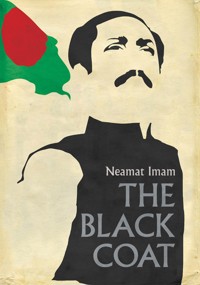
In the aftermath of Bangladesh's bloody war of independence in 1971, as thousands of migrants from the countryside flood the capital, journalist Khaleque Biswas begins to feel the stirrings of disillusionment. The revolutionary spirit that had filled the air and united the people under the leadership of Sheikh Mujib, the "Father of the Nation", seems to be dissipating. The government's response to the crisis is inadequate, and the country's slow slide into political corruption seems inevitable. Uncompromising and undiplomatic, Khaleque soon loses his job. Then Nur Hussain turns up: a simple young man from a remote village, his welfare has been entrusted to Khaleque by a passing acquaintance. Unable to turn Nur away, Khaleque sets out to secure him a job, but discovers that the placid fellow has no skills whatsoever, nor much ambition. He seems adept only at impersonating Sheikh Mujib, to whom he bears some resemblance. When the masses begin flocking to him, the authorities take notice - with shocking results. Neamat Imam's debut is an intense tale told by a born storyteller, animated by humour as dark as the iconic outerwear that gives the novel its title. The tortured origins of modern Bangladesh are brought to life vividly, and provide a poignant backdrop to a central drama that Dostoyevsky and Kafka would have applauded.
Das E-Book können Sie in Legimi-Apps oder einer beliebigen App lesen, die das folgende Format unterstützen:
Veröffentlichungsjahr: 2015
Ähnliche




















The Black Coat
First published in Great Britain in 2015 by
Periscope
An imprint of Garnet Publishing Limited
8 Southern Court, South Street
Reading RG1 4QS
www.periscopebooks.co.uk
www.facebook.com/periscopebooks
www.twitter.com/periscopebooks
www.instagram.com/periscope_books
www.pinterest.com/periscope
Copyright © Neamat Imam, 2015
The right of Neamat Imam to be identified as the author of this work has been asserted by him in accordance with the Copyright, Designs and Patents Act of 1988.
All rights reserved. No part of this publication may be reproduced, stored in or introduced into a retrieval system or transmitted in any form or by any means (electronic, mechanical, photocopying, recording or otherwise) without the prior written permission of the publisher, except for the quotation of brief passages in reviews.
ISBN 9781859640517
A CIP catalogue record for this book is available from the British Library.
This book has been typeset using Periscope UK, a font created specially for this imprint.
Typeset bySamantha Barden
Jacket design by James Nunn: www.jamesnunn.co.uk
Printed and bound in Lebanon by International Press:
In the happiness of his subjects lies the king’s happiness, in their welfare his welfare. He shall not consider as good only that which pleases him but treat as beneficial to him whatever pleases his subjects.
Kautilya, Arthashastra (Fourth century bce)
Prologue
Wednesday, 17 March. Hundreds, thousands, of my countrymen are on the road today. They are marching towards the city’s central public square, where the Awami League – Sheikh Mujib’s party – has organized a massive, open-air ceremony on the anniversary of his birth. The Awami League-run government, which has declared Sheikh Mujib ‘Father of the Bengali Nation’, has deployed an extravagant number of security personnel to maintain order. They are guarding local street corners, nearby motorway intersections and strategically important rooftops, and stopping vehicles to look for dangerous items. Hundreds of party workers are assisting them; they carry rods, pipes, batons and bamboo sticks, and apply them regularly to anyone who appears to be unruly or suspicious. Dozens of loudspeakers mounted on electricity poles announce the arrival of national leaders and intellectuals, as well as acclaimed singers and musicians who will perform after the speeches.
As I sit at the stairs of the Shaheed Minar and look at the posters, festoons and banners I think back on a different time. I hear a distinctively trenchant voice: ‘You have betrayed us! You have betrayed us!’ It was thirty-five years ago. He was a part of my soul: a brilliant man, an immaculate heart.
BOOK ONE
1At the Front, Not at the Front
In 1971 I was a staff writer with The Freedom Fighter, a weekly paper published in the old part of the city of Dhaka during the Bangladesh Liberation War. It printed reports on the progress of the Mukti Bahini, known as the ‘Freedom Fighters’, against Pakistani military assaults. A broadsheet of only four pages, it quickly became a hit with readers because of its inspiring writing. Lutfuzzaman Babul, its editor and publisher, said it was regularly smuggled into Bengali refugee camps in various Indian territories, where the Mukti Bahini received guerrilla training before moving to the front. He added that members of the Bangladesh government-in-exile based in India read every word of it. In the absence of Sheikh Mujib, the leader of the liberation struggle imprisoned in West Pakistan for treason, it was considered one of the most important nationalist voices in the country.
I believed him. I believed in the vision of the paper. That’s why, although it was published by a small media company with limited and irregular income, I decided to stick with it. Sometimes I wanted to grab a rifle and go to the front, but Lutfuzzaman Babul said I was already at the front: reporting such a primitive war was not an easy task, it was a fight in itself. He was sure The Freedom Fighter would accomplish more than killing a bunch of Pakistani soldiers could; it would redefine the entire ruling class of Pakistan by rousing its conscience against genocide. He told me to write with passion, to fill my columns with love for our people, so that every Bangladeshi, upon reading my words, would be imbued with an enormous sense of patriotism.
In all my articles, I attacked and insulted the Pakistani rulers present and past. I ridiculed them, invented stories about them, misspelled their names and designations to make them seem eccentric and trivial. They were cockroaches. Tikka Khan, the army commander in East Pakistan, should be massaged with fourteen spices and marinated for three nights before being roasted for hungry dogs on Pakistan’s national holiday. We published the Pakistani flag with a Nazi swastika in place of the traditional crescent and star; superimposed mammoth, bloody, terrorizing horns on the head of Pakistan’s President Yahya Khan. Using emotionally charged language, I narrated how Pakistanis had jumped upon us like beasts with sharp claws and would not give up until they had sucked the last drops of our blood and turned our country into a wasteland.
In article after article, I wrote against those who collaborated with Pakistan and smuggled out valuable security intelligence. ‘Hang Them Twice’, I titled one of my articles, which argued that these traitors should be hanged along with our enemies because of their misdeeds, then hanged again for betraying us while being a part of us. Bangladesh would never forgive them, I said; they were not sons of our Motherland, they were aliens, Bedouins, Jews, agents of the CIA. They were the damned, awaiting severe punishment for their actions in the people’s court. When the country was free, we would find them; we would find all those zombies even if they hid under the rubble, in the bed of the silent seas, above the clouds and in the shadow of Iqbal, and hang them one by one in public squares. Traitors! We would dance in their blood.
I specifically criticized the poet Iqbal because Pakistanis regarded him as their wisest man. They called him Allama, ‘the Scholar’. He dreamt of a unified homeland for all Muslims in the Subcontinent, thus opposing the concept of the separation of Bangladesh from Pakistan. By speaking of an integrated Pakistan, he only wanted to immortalize Bangladesh as West Pakistan’s peaceful colony. I wrote that although I knew even Gandhi had sung his song Saare jahan se achchha – ‘Better than the Entire World’ – to express his love for the Subcontinent. Iqbal died long before British rule came to an end; nonetheless, I attacked him as if he were alive today, alive and well and advising Pakistan’s generals on homeland integration affairs, sitting in some fortified palace inside the Karachi cantonment. Because he was their precious poet, we needed to bully him the way they bullied our precious leader Sheikh Mujib.
In September 1971, Lutfuzzaman Babul called a meeting in his office. We gathered around his table, all eleven reporters, proofreaders and administrators. From four thousand copies in April, the circulation of the paper had grown to twelve thousand in six months; four pages had become eight. He told us there would be no scarcity of investment to take the paper to the next level once the country was liberated. By the ‘next level’, he meant to give it an institutional shape, to make it a real business venture so that all its employees would have a permanent job in the new country. It would not be surprising if Sheikh Mujib’s government wanted to acquire it as its communications department. In that case, we would all automatically be turned into public servants. We loved our country, and becoming public servants was the best thing that could happen to us. Lutfuzzaman Babul advised us to redouble our efforts in inspiring our people to kill Pakistani forces wherever they were found. Kill, kill, kill – that was the message. Kill them. Eat them alive.
We published a victory issue of the paper following Pakistan’s surrender on 16 December 1971, ending the nine-month war. Including supplements, it was sixteen pages. We printed patriotic poems and stories, pictures of children running down the street waving flags, female students at Dhaka University singing ‘Our Country Has Plenty of Grain and Riches’. Noted intellectuals contributed essays on the themes of nationalism and the Bengali psyche, the evolution of Bengali cultural tradition and the history of the Bengali renaissance in the twentieth century. A professor analyzed ideas of rebellion in our folk literature.
But the main attraction was the photograph of a smiling Sheikh Mujib, wearing a heap of garlands around his neck. The article that followed praised him for his determination, conscientiousness and towering social influence. He was one leader who stated ardently that he did not want to become Prime Minister of Pakistan, and instead wanted to see Bangladesh set free. We printed details of his political career along with several pages of pictures.
Sheikh Mujib was more popular with Bangladeshis than the Prophet Muhammad; he was supported by people of all religions and creeds. On 10 January 1972, he returned to Dhaka to form a government after being released from Pakistani custody. ‘There is not another leader like him in the world,’ people said. ‘There won’t be another leader like him in the future.’ A new cabinet was sworn in immediately. Military and border security forces, police and other institutions were created and organized as quickly and as adequately as possible. Mass graves were discovered in different parts of the country. The buried were exhumed and reburied. Roads were cleared. Pakistani tanks, armoured vehicles, personnel carriers, ambulances, helicopters and supply trucks – burned-out, blood-spattered and broken – were removed from the streets. Offices and marketplaces hoisted new flags. Educational institutes and courts opened. Government documents published in Urdu, the language of Pakistan, and Urdu–Bengali dictionaries were gathered together and set ablaze in the national park. Mukti Bahini members returned from the front, wept for their deceased fellow fighters, got married and joined in victory parades in every city. The smell of loss gradually began to fade.
Sheikh Mujib delivered a special message to The Freedom Fighter shortly after he came to power. He was such a busy person; the whole country was waiting for his instructions; Soviet General Secretary Brezhnev was waiting to meet him; British Foreign Secretary Sir Alec Douglas-Home was also waiting. But he made time to take pen in hand, to write a few lines on his newly printed letterhead in his most direct language: ‘My brothers,’ he wrote, ‘the enemy is gone. It is your country now. Forget your differences. Transform your hate into action. Build this nation. Joy Bangla.’
That message was recognition of our hard work, Lutfuzzaman Babul said. It was an inspiration for us as well as for every man and woman in the country. Now that the country was free, he did not speak about TheFreedom Fighter becoming the government’s mouthpiece. I knew him; I had no doubt he believed a paper must be free even in a free country – particularly in a free country.
2Assessing the Ash
It was now time to take a good look at the country, to record the scope of the devastation. It was time to find those who were still alive and to mourn the ones who were lost forever. The wounded and injured needed care. Those who had lost everything needed help to heal their pain. There were the stressed, the psychologically traumatized and the homeless, who needed a moment of calm. But above all, and despite all this, we needed to celebrate the heroism of our people.
I went from district to district, village to village, to understand how individuals had coped with the horrors of the war and how they now felt about living in a liberated country. I spoke with hundreds of people who had been displaced, who had lived in slums for months, but now expected something better. I submitted my reports with analysis and photographs; they were duly printed.
Sometimes it happened that I spent hour upon hour speaking with freedom fighters who had gone to the front. I wanted to know what had motivated them so elementally that they had not feared for their lives. It was an old question, but I asked it every time as if it were new. Every person faced that question in his own way, in his own time, and every person must have his own answer. I wanted to know what their answers were.
They all believed in the leadership of Sheikh Mujib. They believed that if the country was not free now, under his direction, it would never be free. Some said they did not go to war for the country; they went for him. They did not know what they were doing; he said they must go, and they did. One old man, whom I met aboard a ferry on the Padma, gave me an absolute answer: ‘If he calls upon you, you can’t just say no, or say you’re afraid to die. It is impossible. Are you an animal? Is there no shame in you? You say: “I’m here and I’m ready.” You say: “I am grateful that I live in Bangladesh and that I live during the time of war.” You thank Sheikh Mujib for seeking your help.’ He asked me if I had gone to the front. I had not, I replied, suddenly unprepared. His sharp, penetrating eyes filled with overwhelming contempt. ‘I don’t speak to you,’ he said as he slowly moved to the other end of the ferry, holding firmly onto his underarm crutches. ‘Whoever you are, you’re not a Bengali; you’re not Sheikh Mujib’s man. I don’t speak to you.’
Some of them gave me beaten rice and cups of milk to recover my energy; some invited me to join them for a lunch of pumpkin curry and roti. During these meals, I tired them with my relentless curiosity and they baffled me with the details of their narratives. They wanted to speak, most of them, and while speaking they became immensely excited, as if they were still at the front, still in the war with .303s on their shoulders, crossing mountains and submerged rice fields.
In Mymensingh, I met a middle-aged gentleman who introduced himself simply as ‘the Commander’. He had an excellent sense of geography. He drew a small map in the yard with a stick and gave me a visual description of where they had fought, where they had faced the most horrendous resistance and where they had swum a raging river on a stormy night to rescue their fallen comrades. He told me he had heard the voice of Sheikh Mujib in the fall of the waves and in the sound of the thunder; that had helped him overcome his fear during the battle.
It was obviously an exaggeration. I looked at the Commander. He was a strong man with short hair, a cobra tattoo on his back and a clean-shaven face, wearing heavily aromatic aftershave – quite the opposite of the sort of bearded village elder with a Qur’an clutched to his chest, who might believe in superstition. I left the yard, confused and lost, and stood on the path facing the open south. One of the Commander’s disciples followed me there. He said he knew I did not believe the Commander, but it did not matter now because the war was over. He said he had also heard Sheikh Mujib’s voice several times during the war. ‘You may not believe me either, but you may believe in God. At this moment I can only tell you that if you believe in God you must believe in Sheikh Mujib.’
In early 1973 I was assigned to visit Gangasagar in Akhaura, to write a piece on Mostafa Kamal. He was a martyr of the war. When he and his fellow fighters came under heavy attack from the Pakistan Air Force, he decided to give his men the opportunity to escape. Pakistani soldiers shot him, then bayoneted him to death.
Raihan Talukder, whose brother Wahab Talukder had also been killed in the Gangasagar assault, offered me a bed for the night in his hut. With an eight-hour return journey before me, I decided to accept his hospitality. He took me around the village, introducing me to his neighbours respectfully. ‘Khaleque Biswas, eminent journalist from Dhaka,’ he told people, ‘and very close to Sheikh Mujib.’ I did not know what prompted him to introduce me like that; probably he thought everyone interested in history and politics and living in the capital was close to Sheikh Mujib. I remained silent. If the invisible presence of the prime minister made my life easier in a remote village, who was I to complain? In the evening, I worked on my report by the light of a hurricane lamp. Raihan Talukder went to sleep in the inner room, but got up every few minutes to enquire whether or not I needed another glass of water or perhaps a cup of tea, or if the hurricane lamp had enough kerosene and finally, if he should tell me the stories of Gangasagar once again to make sure I had all the necessary information for my assignment.
I asked him if he was aware that the Bangladesh Army was preparing to decorate Mostafa Kamal with the title Bir Sreshtha. ‘Are they?’ he said. I asked if he knew what that title meant. He looked at me with wonder.
‘Mostafa Kamal is one of the seven great heroes of our Liberation War,’ I explained. ‘Bir Sreshtha is the army’s highest recognition of bravery.’ Still, it did not seem to make much sense to him.
‘There are more than seven great heroes in the Gangasagar area alone,’ he said. ‘What about those who died with him? Did they die any less than he?’
I realized it would not be easy to make a philosophical point about death and heroism to him. Telling him that there were levels of valour and that there were many kinds of good deaths, even if all of them happened in the same place at the same moment, triggered by the same hazard, would end in futility: he had already accepted death as the Great Leveller. The simple solution was to ask him if he thought there were differences between himself and Sheikh Mujib, though both of them loved our country. There were, he said immediately; many. ‘What kind of a question is that?’ I knew that would be his only response.
‘Sheikh Mujib is not an average human being like us,’ I said; ‘he is special, superior and incomparable. The same way, there is something special about Mostafa Kamal that separates him from other martyrs.’ Raihan Talukder accepted my point thoughtfully.
After he left, I put out the hurricane lamp and tried to visualize the very moment when Mostafa Kamal had decided to take charge of the situation. I wanted to enter his heart. I wanted to be a blood cell in his veins, to see what his eyes had seen in that enormous chaos. I wanted to experience how a simple moment – a moment in a small village of horror and ferocity – had defined a whole life and made everything else insignificant. I wanted to imagine I was him, a non-commissioned soldier, telling my comrades that I was their protector, their most dependable and dynamic guardian angel; I could bargain with death and successfully deny or postpone or defy it for them. Then I wanted to see how my end crept up on me, inch by inch, following my decision: a decision that he had taken for me, a decision that I had taken for him.
I woke up early and walked dreamily to the spot where Mostafa Kamal was killed. It must have been the place itself that had influenced him to take his decision, an influence he could not ignore. I walked around with my shoes soaked in the dew, and filled my chest with cold, translucent air. I walked from side to side, corner to corner, stepping on my footprints, looking around, looking for something I did not know existed but hoped would explain to me the very heart of the place. I found nothing. It was a place of nothing; it had been a place of nothing, for everyone, today and yesterday, and it would be a place of nothing for centuries: that was what I understood. I was not Mostafa Kamal, I thought then, to satisfy myself. I did not have his eyes to see, his heart to feel, his moral stature to commit to serving the life force. Whatever I would see or feel would be mine, completely mine, not his. I felt a small vibration in my fingers, a mild increase in my heartbeat, and my footsteps became slower and more lethargic and finally stopped. That was mine, I knew. It was not vast, definitely not as immense and overwhelming as Mostafa Kamal’s feeling, but it gave me something.
The sun came out, making the surroundings luscious and flamboyant. Raihan Talukder joined me. I asked him what time of day it had been when Mostafa Kamal was killed – whether it was a morning like this, or a dark, cloudy day, or an evening retiring fast into night. He did not answer, as if it was no longer necessary to know what time of day it had been. Mostafa Kamal would have made the same decision no matter what. Raihan Talukder sat at the foot of a bamboo clump; I sat beside him, and we looked at the field before us as if something was happening there: the past was unravelling, and Mostafa Kamal was advancing towards the very moment of his non-existence like an oyster creates a pearl, little by little.
Back in Dhaka, I examined the entire Liberation War from Mostafa Kamal’s perspective. I considered his final moment as a long moment that lasted nine months, the entire course of the war. I believed it could last longer, until eternity if need be, until all the dictators in the world fell and all discrimination came to an end. Together Mostafa Kamal and his fellow fighters made one large moment of truth. Their eyes did not see, their nerves did not feel, their rational faculties did not function, but their human spirit worked without fail. By engaging with that moment, they knew they were serving the most valuable and inevitable cause in human history: the cause of freedom.
I posted a copy of the article to Raihan Talukder. I was grateful to him for his hospitality and friendship, I wrote in a note. The first-hand information he had provided was absolutely invaluable. If he ever came to Dhaka, even for a day, he must see me; it would be a pleasure to buy him a cup of tea.
Life moved on. I did not hear back from him immediately; nor did I bother to send him another letter, because I had new stories to focus on, new assignments to complete. Until one morning a young man appeared at my door and gave me a letter.
3Nur Hussain
Raihan Talukder had received my message, the letter said, and everything was well in Gangasagar. Strangers came there almost every week looking for their lost ones. They walked where the battle had taken place, sat in the tea stalls, asked villagers about the dead, if they had been of a certain skin colour, age, body shape and height, if they had left anything behind: letters, shoes, clothes, combs, spectacles, handkerchiefs, wallets, rings. They gathered at the graveyard, prayed for the unidentified valiant fighters, then left with tears in their eyes. Some of them returned again and again; they brought fish heads, cow shank soup, sweet fried rice balls, green chillies, ripe palm fruits and scallions for the villagers, invited them to their houses and attempted to create lasting bonds with them. Sometimes journalists came; they came from different newspapers, radio and TV channels, sometimes from as far as the Indian city of Kolkata. They took pictures, interviewed villagers and bought goat’s-milk yogurt before leaving. It was encouraging to see that Gangasagar had drawn the attention of so many good people from across the region.
But fame had not made life any easier for the village’s inhabitants. Raihan Talukder used the rest of the letter to introduce to me one Nur Hussain, its bearer, who desperately needed employment. Raihan Talukder described him as a ‘loyal, patient, sociable and diligent young man’; he believed that among all his acquaintances, only I was in a position to help Nur Hussain find suitable employment. In the last passage, he also gave hints about what that suitable employment might be. Nur Hussain could serve in a responsible position in the government, he wrote. The nation-building process was painstaking and challenging; the government needed honest, dedicated people to work in its various departments; there would be many positions in the newly created ministries for which Nur Hussain would be fit. He would work with devotion; I would never have cause to regret helping him out.
I removed all the old newspapers from my storeroom and placed a single cot there for Nur Hussain. I gave him a mat, a bedsheet, a pillow and a pillowcase. In the village, people slept on hogla mats or mats of jute fibres or rough, wooden floorboards. Their pillows were often greasy and stank, filled with cotton compressed by years of use and moisture. I had seen people use bricks as pillows and straw blankets as quilts. By comparison, I made comfortable arrangements for him. There were mosquitoes, hundreds of them, but I never spoke about this. From my bed inside a net, I frequently heard Nur Hussain slapping them. ‘He’ll get used to them,’ I said to myself as I closed my eyes. ‘He’ll have to. A person can accept anything and everything when he faces the question of survival.’
Dhaka was not an easy place to conquer. I told him this in our first serious conversation, a day after his arrival, when I thought he had recovered from his trip. Dhaka had too much going on, too many people involved in too many things at the same time. But he shouldn’t worry; the city had a strange capacity to accommodate anyone from any background. He, too, would settle in. At least he had a roof over his head, which many newcomers did not. He would eat with me, stay with me and, in due course, would have enough money of his own to rent a flat as big as mine, if not bigger.
Gradually, I learned that he had no transferable or marketable skills. Skills were the currency in the new labour market, in which employers looked for more than knowledge and credentials. He could not speak standard Bengali, let alone English. He never browsed the newspapers I brought home with me every day, not even the sports pages or the entertainment advertisements. He was just not interested. Raihan Talukder had said he was a fast learner. I did not understand what he meant by that. In the evening I made Nur Hussain tea and asked what level of schooling he had had.
‘Please don’t feel embarrassed by my asking this,’ I said. ‘I need to know exactly what you can do, so that I can find something that will suit you.’
‘Fifth class,’ he said, then sat for some time with eyes cast downward, perhaps wondering if it was actually fifth class.
‘That’s great,’ I said, quietly, though I felt uncomfortable. ‘I know loads of people who have never been to school, but they are raising their families like everybody else.’ Then I asked if he knew how to stitch clothes, lay bricks, work with wood or iron; if he knew bicycle mechanics, welding, plumbing, digging, scaffolding … anything. He did not. All I understood was that he could sleep all day and all night without ever asking for food. When I invited him to dinner, he ate silently, and ate only what I put on his plate. He was shy, introverted, principally a useless human being in a city of four million human beings.
It was not easy to approach someone about a job for one who had lived all his life in his father’s bamboo shed without caring to fix or learn or earn anything. He might be intelligent with goats, know their body language, grazing and foraging strategies and reproductive cycles, but there were no goats in the city. Here, people had to deal with people – hard, solid, rubbish, despicable people with very low or no self-esteem. They must know how to give commands or how to live under constant commands without whining all the time. Nur Hussain gave me a serious headache. I had no idea how he would fit into the highly competitive and ambitious culture of city life.
Just to give him the impression that I was looking for a job for him, one day I told him we had an opening for a staff reporter position at The Freedom Fighter. The salary was good, the job was interesting, and, most importantly, he would meet many political and business leaders as part of his professional duties, which might open further career opportunities. If recruited, he would travel to remote corners of the country, to the hills and borders, to collect information, to investigate favouritism, conspiracies, poisonings, murders and mass killings, to report on various developmental activities, to interview people in a range of different circumstances for human-interest stories, to build reliable contacts, to collect facts on developing incidents … and the paper would pay all his expenses. Wouldn’t he want to enjoy such an exclusive opportunity?
It was an honourable job, too, I said with emphasis, mimicking my editor Lutfuzzaman Babul; but I immediately added that it might not be ethical for me to recommend his name, because he did not have a proper education or the technical knowledge for the job. Writing a report is an art, I explained. One has to begin with a clear idea about the purpose of the report and end it with an equally clear point of view. Understanding the difference between mundane and significant points is one of the guiding factors.
Besides, he was not well informed about what had happened to our country in the past few years, I said, as if I had known him all my life. He had seen the assault on Gangasagar; after the war he might also have seen the evidence of atrocities committed by Pakistani soldiers in the surrounding twenty villages. But did the war begin in Gangasagar? No. Did it end there? Absolutely not. That meant many more causes and decisions were associated with it. Until he could explain them one by one, his knowledge of the war was limited, and his analysis of it irrelevant and dangerous.
By contrast, a journalist with TheFreedom Fighter knew what the war was about. He knew its typology, its ambiguous complexity. He knew when a difficult time was approaching, raising its horns like an angry bull. He remembered at all times which minister said what, what Sheikh Mujib’s six-point demands were, where they were written and declared, who the British attorney was who helped get him out of the Agartala Conspiracy Case, which song George Harrison sang at Madison Square Garden in New York in support of Bangladesh. I also pointed out that Nur Hussain was not aware of what was happening at the moment. He did not know, for example, who Dr Kamal was, even though Dr Kamal was engaged in writing a full, workable and acceptable constitution for the country.
It was not his fault, I finally said. He lived in the countryside, where people survived on agriculture, traditional neighbourly goodwill, religious values and ethics, happy to know of only ordinary matters; the rules of political engagement, statesmanship and diplomacy did not apply there. They did not watch TV, listen to BBC broadcasts, read newspaper editorials or attend weekly discussion programmes at the National Museum on aspects of our cultural life. I did not expect him to be well-prepared for a profession he had never heard of.
Another day I said I had a friend who needed a locksmith: not a prestigious job like being a newspaper reporter, and the payment was probably meagre too, the working hours odd and longer, but good enough to begin with. I asked him if he had seen those black, electroplated 300-gram keyless pin-controlled locks hanging from the doors of banks. It was the technology of the future. Who would want to carry a set of rusty keys if they could do without them? He said he had never seen a bank, and that the only lock he had ever seen was the one used to protect their cow from thieves. That would be a small, nineteenth-century solid padlock with an iron key made in India. The key must turn 180 degrees to undo the hook. Those locks were out of fashion now. Thieves knew too much about them.
I gave him a concise description of the steel Taiwanese locks that had three columns of digits from zero to nine with almost unlimited resettable combinations, perfect for home, business, garage, school or post office. From my cupboard, I brought mine out. ‘How strong do you think it is?’ I asked. ‘You think you can unlock it with a piece of wire? There is no hole to slip a wire into it. There is no way you can tamper with it or damage it.’ He gazed at it for at least thirty seconds. ‘Hold it, here,’ I said, and gave it to him. The country was developing fast, I told him as he played with the digits, and every locksmith must know how to operate new locks that provided maximum security and protection if they wanted to remain employed in the future.
4An Embarrassment and a Dream
His prospects looked grim. I did not know what to do. Telling him I was busy, I spent two days without speaking to him. I kept a newspaper on the dining table and read it again and again while we ate. Then I went to my room and closed my door.
I could not ask him to leave. That would be too embarrassing, considering the fact that in my mind I had always believed I was an immensely powerful person. More importantly, it would be a social crime. It would destroy my reputation with Raihan Talukder. He would think I had let him down. You’re an educated person, he would say, how could you do something like that? If you yourself were not enough, couldn’t you talk to Sheikh Mujib? Nur Hussain had to leave of his own accord. I could only make things so complicated and confusing for him that he would give up and say goodbye.
Today or tomorrow, he was going to accept that Gangasagar was not only an easier and better place for him to live, but that it had also been a gross mistake to leave it for Dhaka. Perhaps one day he would understand why I had failed him, and would be able to forgive me.
Two more weeks passed. He did not appear unhappy or distressed. Instead, I noticed, he had adjusted to the wild attacks of the mosquitoes and the untarnished solitude of the flat, as if he was on a pilgrimage and would accept any hardship. The only change was that he was more silent now, more detached and more preoccupied with himself. When it rained, he sat at the window the whole day, leaning against the wall. He coughed a few times as the humid air entered his nostrils and grew slightly frightened when thunder struck nearby. Then once again that awful silence, his eyes upon the rain. I gave him one of my woollen hand-knitted pullovers. He accepted it without a word, wore it over his T-shirt, crossed his hands and looked at me with gratitude. Then, stretching his neck, he watched me as I tidied the living room – but he never rose to help me, not even when I struggled to lift the sofa to clean underneath it. Probably he did not want to do anything that I might consider foolish, insane or disturbing, or he had noticed the sharp anger I had to hide day after day. I was angry not because of my failure to find him a job, but because he was there every moment to remind me of that failure. ‘He has no right to embarrass me like this,’ I kept telling myself. ‘Why on earth did Raihan Talukder send him to me? I would never have accepted his hospitality if I’d had the faintest idea this would happen.’
The only option I could think of was to engage him as my caretaker. I did not need a caretaker; in fact, I hated the concept of enslaving someone to secure my own comfort. That was obvious exploitation. But he needed me. If enslaving him protected his existence, I should happily go for it. I decided that he would cook for me, sweep the house, wash my clothes, go to the grocer and guard the door in my absence. If there was time, he would collect water from the market when tap water was unavailable. His compensation would be regular meals, clothing and lodging. I asked him if he wanted to do it, if he really wanted to do it. ‘I won’t be unhappy if you don’t do anything for me,’ I said. ‘If you find it condescending, that is okay, I’ll understand. Many people value dignity over comfort. I consider that a sign of character and strength. I just wanted to help.’
He nodded. He would like to begin right away, he said.
One or two evenings he chopped onions, washed the dishes and proved himself disqualified. He was absent-minded. He was not hygienic. He did not know how to peel potatoes or handle a knife safely while cutting through the spine of a three-inch freshwater fish.
Did I want to see blood on my floor?
Absolutely not.
On one of those nights, as I was lying on my cold, moonlit bed, tired from trying to think of someone who could employ Nur Hussain in a temporary but real job, I dreamt of Sepoy Mostafa Kamal. I dreamt I was a young boy, younger than Nur Hussain, in Gangasagar, just outside Raihan Talukder’s house, and that I was watching Mostafa Kamal fight against the mighty Pakistani military. Hiding behind a high mound of earth, soaking in my sweat, trembling with fear and anger, I saw how fiercely he chased the enemy with his machine gun. The colour of the sky changed from white to grey, darkness fell in the surrounding rice fields, the wind brought rain, stars shone and sank in the morning lights; but the battle continued. It continued for seventeen hours, and for seventeen hours I observed him from my hiding place.
‘I see you,’ he said to me between chases. ‘Don’t stay here, go away, go away; leave this place. Fighting is not fun; it favours nobody; it wants everything – your body, your mind, your heart. Go away right now. There are just too many of them; they are in the sky, in the water, on the land; they’ve taken hostage the whole universe. Hear that noise, that striking, brutal, monstrous noise, ruthlessly echoing in ten directions? That is from a twin-barrelled, self-loading mortar; soon the whole area will be covered with a dense white smoke spiralling to the sky. Through that smoke they will come like ravenous beasts, searching for prey and glory and meaning. But I will not give up; I will not let them steal even a drop of water or a small leaf from this land. They will not touch any of our flowers, our fish, our beautiful evenings, our songs and waterfalls. You stay away, go to a safer place, find yourself something to eat, sleep well; there will be fights for you too, many of them, after this fight. Fights never end.’
I stood up, shouting through the smoke: ‘I can’t leave you alone! I’ve to learn fighting; I’ve to learn it watching you. Let me stay here, please; let me know what blood is when it is warm, what hate is when it is good, what endurance is when it is indispensable.’
‘You make me happy, kid; you make this war more inevitable and pleasing than it has been; you make this gun fire by itself. But staying here won’t do you any good. This is my fight; it was mine long before I was born, before my mother uttered her very first word. Let me win it or die. Here they come. Close your eyes.’
I stayed. I did not close my eyes. I saw the destruction. I saw the elation of the human devils as they stood before him, pointing their weapons at him.
After he was bayoneted, and the earth became red with blood and then black, the air smelled of sulphur and the military left, laughing like hyenas, spitting in his face, feeding his testicles to hungry crows, I took him in my arms, wept for several hours and carried him to the nearest deserted char land, where I buried him in the sand. It is useless writing an epitaph on the grave. The sands do not remember for long. There are heavy dust storms, which irritate the ground, sweep away sea crabs and their skeletons and fill every snake hole. Frequently, tidal waves come. But I wrote his name. I wrote his name in letters twelve yards long, perhaps expecting someone from the sky to look after him.
It was not a complicated dream. Its suggestions were also not complicated. I believed that the war in 1971 had happened for me and for me alone. It happened to boost my spirit, to keep me rational, to make me responsible. Mostafa Kamal died only for me. He became history, so that I would know exactly how important it was to remain motivated. I believed it was my turn now: I must do for Nur Hussain what Mostafa Kamal had done for the country. I felt ashamed of myself for not looking for a job for him.
So I began.




