


Erhalten Sie Zugang zu diesem und mehr als 300000 Büchern ab EUR 5,99 monatlich.
- Herausgeber: Istros Books
- Kategorie: Gesellschafts- und Liebesromane
- Sprache: Englisch
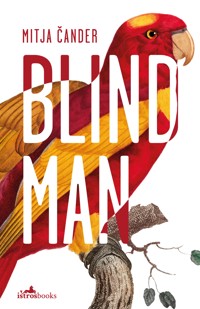
The main character and narrator of Blind Man is a successful book editor and critic with severely impaired vison, although he has never had much to do with the visually impaired community and doesn't really feel like he is one of them. But when he is offered a chance to enter the world of politics, he is "blinded" by the lure of power, and this easy-going, level-headed husband and soon-to-be father gradually turns into a self-absorbed careerist. Author Mitja Čander, without pontificating and with a measured dose of humour, paints a critical, unsparing portrait of a small European country and through it a convincing satire on the psychological state of contemporary European society. What, or who, do we still believe in today, and who should we trust? Politicians, apparatchiks, the media? Speeches laden with buzzwords and grandiose promises break down the flimsy façade, as the protagonist's own insecurity suggests that things are not always what they seem. In the end, social blindness is worse than any physical impairment, and worst of all is to be blinded by your own ego.
Sie lesen das E-Book in den Legimi-Apps auf:
Seitenzahl: 314
Veröffentlichungsjahr: 2021
Das E-Book (TTS) können Sie hören im Abo „Legimi Premium” in Legimi-Apps auf:
Ähnliche



















Table of Contents
Imprint
In Lieu of Footnotes
Dedication
1
2
3
4
5
6
7
8
9
10
11
12
13
14
15
16
17
18
19
20
21
22
23
24
25
26
27
28
29
30
31
32
33
34
35
36
The Author
The Translator
Mitja Čander
Blind Man
Translated from the Slovene by Rawley Grau
First published in 2021 by Istros Books(in collaboration with Beletrina Academic Press)London, United Kingdomwww.istrosbooks.com
Originally published in Slovene as Slepec by Založba Litera, 2019
© Mitja Čander, 2021
The right of Mitja Čander to be identified as the author of this work has been asserted in accordance with the Copyright, Designs and Patents Act, 1988.
Translation and introductory note © Rawley Grau, 2021
Cover design and typesetting: Davor Pukljak | www.frontispis.hr
ISBN:978-1-912545-93-3 (Print version)978-1-912545-94-0 (eBook)
This Book is part of the EU co-funded project “Reading the Heart of Europe” in partnership with Beletrina Academic Press | www.beletrina.si
The European Commission support for the production of this publication does not constitute an endorsement of the contents which reflects the views only of the authors, and the Commission cannot be held responsible for any use which may be made of the information contained therein.
In Lieu of Footnotes
Mitja Čander’s Blind Man, originally published in 2019, is set in Slovenia’s recent (pre-pandemic) past, and Slovenia itself – its past and, quite explicitly, its future – is one of the novel’s themes. Or we could say, perhaps more accurately, that Slovenia provides the specific backdrop and material for an exploration of more general themes, plotted along the axes of the personal, cultural and political, as the visually impaired narrator, outwardly confident yet inwardly unsure of himself, feels his way through life. At the start of the novel, he is a successful book editor (as Čander himself is), but soon, despite his own misgivings, he finds himself drafted into politics. As he tells us his story, he often reflects on his past – his school days, his time as a semi-professional chess player, his university years and so on – which spans Slovenia’s transition from a constituent republic in socialist Yugoslavia to independence in 1991 and full membership in the European Union in 2004.
Consequently, the reader encounters a number of incidental references to historical and cultural phenomena that, while very familiar to Slovenes, may be a little puzzling to readers of this translation. Of course, the discovery of the unfamiliar is one of the challenges and delights of reading translated works. Rather than employ footnotes, which could be distracting, I have chosen to provide this preliminary explanatory note so readers may feel somewhat better informed as they step into the narrator’s world. Alternatively, they may prefer to skip this note altogether and take the more obscure references in stride. These fall into three basic categories: Slovene political history, Slovene culture (broadly understood) and literary references.
The first group appears as the narrator’s recounts his life in socialist Yugoslavia. He recalls, for example, how as a schoolboy he was interviewed by the president of the Association for the Blind and Visually Impaired, who asked him if he was active in the Pioneer Youth Group. Founded in 1942 and modelled on a similar organization in the Soviet Union, the Union of Pioneers of Yugoslavia sought to instil socialist civic values in schoolchildren (ages seven to fifteen), particularly values associated with the Communist-led Partisan movement during the Second World War and, first and foremost, love and admiration for Marshal Josip Broz Tito (1892–1980), the leader of Yugoslavia. The boy proudly responds that he and his fellow Pioneers are putting together a project to commemorate the National Liberation Struggle – the term used in Yugoslavia for the Partisans’ antifascist campaign to overthrow the occupying forces and their domestic collaborators.
Much later in the novel, the narrator relates his first ‘political’ involvement: in his eighth year of school he served as the president of the school’s ‘cell’ of the League of Socialist Youth, the youth wing of the Yugoslav Communist Party. This would have been in the late 1980s, when the Slovene branch of the League took positions that radically departed from those of the national organization, including support for civil society movements and alternative culture (notably, women’s rights, LGBT rights, the peace movement and punk culture), freedom of the press, the right of workers to strike and greater democratization. The magazine published by the Slovene League of Socialist Youth, Mladina (Youth), stepped up its criticism of both local and federal authorities, including, among other things, attacking the Yugoslav People’s Army. This led, in the spring of 1988, to the arrest, trial and imprisonment of four Slovene journalists (including Janez Janša, who would later become a highly controversial right-wing politician and three-time prime minister of the country), precipitating what the narrator describes as ‘that hot summer, when people were protesting in front of the military prison in the capital in support of the political prisoners’. These events marked the beginning of ‘the Slovene Spring’, as Slovenia’s intellectuals and political leaders moved ever more decisively towards a complete break with Belgrade and the establishment of a liberal parliamentary democracy. In April 1990, the first multi-party elections were held, and in a referendum in December of that year nearly 90 per cent of Slovene voters supported independence from Yugoslavia. This was officially declared on 25 June 1991 – a day marked every year as Statehood Day (which is mentioned later in the novel).
In the meantime, the Slovene League of Socialist Youth transformed itself into the Liberal Democratic Party, which soon became ‘the country’s largest party’ (as the narrator explains in a different chapter) and, apart from a few months in the year 2000, dominated parliament from 1992 to 2004, after which it essentially disintegrated. This was followed by ‘a period of alliances formed from all possible corners’, resulting in a succession of short-lived governments based on more or less fragile coalitions.
The second category of possibly unfamiliar references are connected with Slovene culture and cultural symbols.
Early in the novel, the narrator delivers a talk to a group of ‘blind intellectuals’, in which he puts forward the standard thesis that, for Slovenes, ‘the role of nation-building was assumed by culture’, and by literary culture in particular (‘the culture connected with our unique language’). Asserting that Slovene poets can ‘stand side by side with the world’s greatest’, he declares: ‘Prešeren is our Dante, our Petrarch, our Pushkin!’ Here he refers to the very fine Romantic poet France Prešeren (1800–1849), who is celebrated, and indeed mythologized, as Slovenia’s ‘greatest poet’ and ‘the father of Slovene literature’: streets and squares throughout the country are named in his honour (including Ljubljana’s main square), his image has been engraved on Slovene banknotes and euro coins, and the words of the national anthem are taken from his poem ‘A Toast’ (Zdravljica). The narrator then adds his own twist to the hackneyed ‘nation-building’ idea with the observation that Slovenes, having achieved independence, were ‘finally able to openly despise our poets, poetry, and art in general, that entire freak show of inebriated lunatics who think they’re superior to everyone else’. Nevertheless, he says, they have not dispensed with culture altogether ‘and even have a public holiday devoted to it’. This national celebration of Slovene culture, on 8 February, is called, unsurprisingly, Prešeren Day and marks (perhaps surprisingly) the anniversary of the poet’s death. Each year, in conjunction with this holiday, the national Prešeren Awards are presented for the finest works in literature, theatre, music, the visual arts and architecture, among other creative fields.
But if Prešeren has come to represent the summit of Slovenia’s cultural achievement, then an actual summit, the triple-peaked Mount Triglav, which at an elevation of 2,864 metres, is the country’s highest mountain, has long been the symbol of the Slovene nation as a whole. During the Second World War, the mountain’s stylized silhouette served as the symbol of the Liberation Front – the Slovene Partisan movement – whose members wore triple-peaked caps known as triglavke, and after the war it became the central motif on the coat of arms of the Socialist Republic of Slovenia. Since 1991, Triglav appears on the coat of arms of independent Slovenia and, therefore, on the national flag. In Blind Man, we first encounter the mountain as a trophy (a large-scale crystal replica of ‘a cheap souvenir’) being handed out to deserving tourist agents. Triglav’s image, in fact, makes several appearances in the novel – as a kind of leitmotif – almost always in bizarre settings.
At one point, for example, the narrator views a biennial of contemporary art in which Mount Triglav appears in two separate artworks, each of which prompts yet other cultural references. The curator’s explanation of the first work, a Triglav-shaped sculpture, inspires the narrator to blurt out a famous line by the Slovene avant-garde poet Srečko Kosovel (1904–1926): ‘Dung is gold.’ The second reference is less exalted: an artist/baker has made biscuits in various shapes, one of which is Triglav’s famous silhouette (‘He couldn’t help but reference it,’ the curator says). When the narrator’s friend samples one of these Triglav biscuits, she starts singing a little ditty about a young boy’s anatomy. Readers might find it difficult to imagine, but this song – ‘Martin’s Little Willy’ (Martinov lulček) by Andrej Šifrer – was a hit among Slovene schoolchildren in the 1980s, perhaps because it assured boys that their manhood would eventually grow ‘as big as Triglav’.
Another childhood (pop) cultural reference that may need clarifying is Whisk the Dwarf (Palček Smuk), a cartoon the narrator recalls enjoying as a boy, despite the ‘real frustration’ caused by his poor eyesight. Produced by Czechoslovak Television in the 1970s and 1980s (as Rákosníček, or ‘Little Reedman’) and dubbed into Slovene, this extremely popular cartoon follows the adventures of an irascible dwarf who lives in a tree house next to a pond that causes him endless trouble. Interestingly, one of the episodes is called ‘How Whisk the Dwarf Mixed All the Waters’, which may have inspired the idea for the so-called Slovene Water pond that is proposed in the latter part of the novel.
If the narrator’s talk on culture to the blind intellectuals makes any clear point at all, it is that there is a strong connection between Slovene creativity and drinking, and, indeed, a steady stream of alcohol flows through this novel. Several indigenous products are mentioned specifically. The narrator and his wife toast her pregnancy(!) with teran, a heavy dark wine made from grapes grown on the terra rossa of the Karst Plateau in south-western Slovenia; one of the narrator’s grandfathers quenches his thirst and aids his digestion with cviček, a blend of white and red grapes produced in the Dolenjska region, in the south-east; much less enticing is the ‘poisonous’ home-made šmarnica that people drank regularly in the area where the narrator grew up – until 2018, this white wine was not allowed to be sold commercially as it was believed to contain a dangerous amount of methanol, which could cause blindness and mental illness. Another drink the narrator remembers his neighbours imbibing is the ‘mysterious’, and very strong, Hare’s Blood brandy (zajčja kri), made from blaufränkisch wine and pear schnapps, which has been commercially produced in the Štajerska region, in eastern Slovenia, since the fall of communism.
The third category of references that may require explanation are connected with literature.
The reader will notice that the narrator rarely uses proper names for people and places. The city of Ljubljana, for example, is mentioned by name exactly once; otherwise, it is simply ‘the capital’; meanwhile, another town in which much of the novel takes place is referred to only as ‘the old city’. The narrator’s own name never appears (his friends tend to call him ‘mate’), nor does the name of his wife; another significant character is always referred to as ‘my former classmate’, while yet others are designated solely by their positions (‘the prime minister’, ‘the secretary general’), occupations (‘the curator’, ‘the sociologist’, ‘the bookseller’) or reputations (‘Slovenia’s greatest singer-songwriter’). So it is a bit surprising when the narrator makes an explicit, if only passing, reference (we could almost say he’s namedropping) to the Slovene poet Tomaž Šalamun (1941–2014), who died just a few years before the novel was published. Šalamun’s brilliant, absurdist verse won him international acclaim, and here he receives a somewhat absurdist mention: we are told that, in the building where the narrator used to party as a student, ‘there was a tramp living over the loo in the corridor who used to hang out with Tomaž Šalamun’. Perhaps this calling-by-name should be taken as an oblique tribute – or it may be meant to discourage readers from thinking that Šalamun is the unnamed, recently departed ‘great poet’ and ‘contemporary giant’ whom the narrator boasts to the blind intellectuals of having gone carousing with shortly before he died.
Another, perhaps intentionally enigmatic, literary reference – this time from world literature – occurs late in the novel when the narrator discusses money with his colleagues in the quasi-governmental project he oversees. Having recently been promised funds from the local meat factory, he muses in an internal monologue: ‘At the sight of all those gold and silver coins on the bedspread, the butcher and butcheress of Rue Pirouette immediately mated. Cupids and sausages.’ The reference is to a scene from Émile Zola’s The Belly of Paris (Le Ventre de Paris, 1878), in which Lisa, who has found a hidden treasure, brings the butcher Quenu to her bedroom one afternoon and pours ‘a shower of gold and silver coins’ onto her bed. After counting the money, ‘they began to discuss their future, their marriage, without ever having talked about love. The money seemed to loosen their tongues.’ (Émile Zola, The Belly of Paris, translated by Mark Kurlansky, Modern Library, New York, 2009, pp. 53–54.)
Finally, I should say a word about the poem that appears at the end of Chapter 26, although this is a literary reference that may not require much explanation. The narrator receives a telephone call from a poet he has recently met. ‘Have you got a minute for Cavafy?’ the man asks. He then reads him a poem by the great early-twentieth-century Alexandrian poet C. P. Cavafy (1863–1933). I have translated the poem not from Cavafy’s Greek (a language I do not know), but from the Slovene version by Veno Taufer, which appears in the original publication.
Although, as I said, the reader may prefer to dive right into the narrative (not unlike Whisk and his pond), I think that knowing something of the background of these various historical, cultural and literary references before we encounter them can only enrich our reading experience and help us to more fully appreciate the novel’s comic angle.
Rawley Grau
Ljubljana, 8 February 2021
A Brief Note on Pronunciation
C, c - tz (as in pizza)
Č, č - ch (as in church)
J, j - y (as in yellow or boy)
Š, š - sh (as in dish)
Ž, ž - zh (the sound of s in pleasure or vision)
I am grateful to everyonewho inspired or in some other wayhelped me with my work, especially Maja, my wife.Were it not for our long and interesting conversations about mywriting, this would be a much more stilted, slipshod text.
I dedicate this book to my parents,Natalija and Marjan.
1
The play was over. The curtain was about to fall. My wife and I grabbed our coats and left the theatre box in a hurry. At the blast of light in the corridor, I stood for a moment to collect myself, then headed for the exit. I hated the swarm after a premiere.
‘Hello, my blind colleague!’
I jumped back and bumped into my wife, who was right behind me. She didn’t say a word but just drew in a breath; she was used to my unintended collisions. I didn’t have any blind colleagues. Generally speaking, I avoided blind people. I wanted nothing to do with them. Like the normal majority. I wanted to pretend that I hadn’t heard the man. But it was too late.
‘The blind can smell the blind even here, among the crème de la crème! Aren’t we lucky!’ the man in the big glasses sniggered. Then, sensing my discomfort, he paused. ‘Oh, I am sorry!’ he said in a deep, booming voice. ‘I do beg your pardon!’
I was in no mood for such jokes. I didn’t even consider myself blind. I could see – not very well, perhaps; in fact, not well at all – but I could see. There’s an enormous difference between something and nothing. A vast gulf between darkness and light.
Lowering his voice a little, the man introduced himself as the president of the Section for Blind and Visually Impaired Intellectuals at the Association of the Blind and Visually Impaired. He wished to take this opportunity to invite me personally to be a special guest at one of their meetings. I noticed the woman next to him giving me a friendly smile. Aha! I thought. She’s the one who got me into this. She pointed me out to him. I heard applause from the auditorium.
‘I’m really crunched for time right now. Later, maybe,’ I almost shouted as I tried to push my way out, but the blind intellectual managed to grab my arm.
‘If you don’t mind!’ Now he, too, was shouting. ‘If you don’t mind! I understand your reluctance, but we’re made of the same cloth, you and I!’
They were still clapping in the auditorium, enthusiastically, almost like the old times. The blind intellectual brought his cheek next to mine, so close I could feel his breath.
‘Things appear even worse close up, my esteemed colleague, worse than you might think! The Association is actually just your basic load of crap. Nothing but a struggle for power and privilege! The blind people at the Association show no mercy, dear colleague – they’ll claw each other to death over a single morsel. They don’t give a damn! Except for their own arses. Let everything stay the same for all eternity! Let the blind all remain simpletons – that way they’re more easily manipulated! Propose some new idea and everyone ruthlessly attacks you. I’m part of the deep opposition, you know. They never listen, but I mess with them anyway. I won’t be bought with some expense account.’
The applause finally died down. It was our last chance to get out of here, I thought.
‘We’re in a hurry,’ I stammered and tried to wrench my arm from his grip. ‘I’m sorry, but we really have to go—’
The man was unperturbed.
‘A moment, please! Some of us are different, you know. We’re trying to change things, although it only creates problems for us. Come and support us! You’re an admired cultural figure.’
‘Maybe. Call me.’
I heard the doors of the auditorium open. I yanked my arm away and, free of his grip at last, bolted towards the exit. Not until I was standing in the cold air outside the Slovene National Theatre was I able to breathe again. I had escaped by a hair.
2
At my primary school we once had a visit from the president of the Association of the Blind and Visually Impaired; he was a prematurely retired army officer who had lost his eyesight in the performance of his duty, and even the principal was a bundle of nerves. He was gesticulating wildly and smiling broadly at our visitor, on the chance that he might just be able to see or in some other way sense something. But the officer ignored his obsequiousness. He settled himself calmly into the principal’s armchair, set down his white cane, and signalled to his host to leave the two of us alone. For a while he was silent, but then he said:
‘So?’
‘Excuse me?’ I asked uncertainly.
The officer again said nothing, so I started defending myself.
‘I’m doing fine. I get excellent marks. I can’t see the board – well, I do see something, a shape now and then, but not enough to read anything. But that’s not a problem – really, it’s not – in the upper levels the teachers mostly read out what they’ve written anyway. And my classmates help me, even during class. They tell me what’s on the board – they whisper it so we don’t disturb anyone. If it’s something more complicated, they’ll copy it out for me to read later. We all get along very well. I help them, too. With homework and studying for tests. At the end of the year, I usually get awards for diligence and unselfish aid to others.’
‘Are you active in the Pioneer Youth Group?’
‘Of course,’ I said eagerly. ‘I’m our division delegate so I go to the organizational meetings once a week. Right now we’re doing a project to commemorate the National Liberation Struggle. We discuss social issues, we collect used paper—’
‘They tell me you play chess,’ he interrupted. ‘Chess is ideal for blind people. We could have a game – that is, if you don’t mind playing an amateur.’
‘Gladly,’ I replied.
Chess was my speciality, and I was sure I’d do well.
Reaching into his briefcase, the officer pulled out a box with a chess set made especially for the blind, with pieces that pegged into sunken white squares and raised black squares. Blind players found their way around the board by touch. I despised such chess sets. I played regular chess. My sight was good enough to play even rapid chess well. I had difficulty finding the holes and pegging the pieces into the wood. For me, blind people’s chess was not just slow; it was difficult to see – with those fat pieces crowding the board, you could easily overlook something and find yourself in trouble even against a weaker opponent. I took the game with the officer very seriously. I will never give in, I thought, never. I sensed there was a lot more at stake here. I had found my own way of surviving in a normal school and didn’t want to go anywhere else. I was careful enough not to be dragged into pointless quarrels, and my skin was thick enough that small barbs no longer hurt me. It had not taken me long to get most of my teachers and schoolmates on my side. My high marks and good behaviour had dispelled whatever insecurity the teachers may have felt about this ‘special needs’ child. And my schoolmates were not too resentful about my high marks and good relations with the teachers – quite the opposite: only a very few of them refused to help this blind A-student who, despite his academic success, remained humble and never put on airs and graces but, if anything, thought himself less than the others. I am not a problem, I repeated to myself as I pegged the pieces into the holes. No way am I going to an institution.
‘So why don’t you use an adapted chess set?’ the officer barked at me when he soon started losing on the perforated chessboard.
‘I don’t need to. I see well enough.’
‘Do you use a magnifying glass for reading?’
‘I don’t need that either.’
‘Audiobooks from our library?’
‘Don’t need them… Thanks, though.’
Offended, he fell silent and played on. As he made his last moves, he screwed up his face to indicate that he was really just taking pity on me.
When I checkmated him, he said, as if to underscore his generosity: ‘I will make you a present of this chess set. It would be great if you gave it a try. You’re only just beginning your chess career.’
The thought of being forced to parade around tournaments with a special chess set for the blind repulsed me. Although it was true that blind people participated in sighted competitions, they did it more for the fun than as serious chess players.
At home, when I told my parents about the visitor at school, my mother hissed, ‘That bastard! He’ll only cause trouble.’ But my father told her, ‘Let it go. It’s no big deal,’ and proceeded with great interest to examine the chess set for the blind. The kitchen was usually a place of endless conversation, but now it was filled with silence – a silence resonant with my parents’ fear, the old fear, which had first appeared when I was born. There had been water in my lungs and I had had to spend several days in an incubator, where I was given 100 per cent oxygen. ‘Be glad he’s alive,’ the old doctor had said, although he couldn’t rule out that I might have some cognitive disorder. ‘It’s his eyes,’ the eye specialist said later, ‘just his eyes; no mental disability.’ But the fear did not abate; only now it was the fear that I would be completely blind. ‘He won’t go blind,’ the young doctor assured my parents when, at age five, I spent a week in the hospital being tested. ‘The optic nerve is damaged,’ he said, ‘but the condition is stable. There will be some danger when he reaches adolescence, but don’t worry, he’ll make good progress.’ This statement kindled the hope that I would be able to attend an ordinary school, that I could live at home, that we would all remain together, and that I would have a future – a hope that did not die away even when my ophthalmologist initiated the bureaucratic procedure that such circumstances required. So began the process of classification, which in cases like mine usually ended with the child being sent to a special school for the blind somewhere far away. My parents’ fear was fused with anger and relentlessness, until eventually my classification became stuck in the drawer of one of my mother’s acquaintances, who just happened to be the person who decided these things. So I was enrolled in a school for normal children. In my third or fourth year there, the ophthalmologist announced that we had succeeded. ‘The boy has adapted extremely well,’ he said.
The blind army officer never came near me again; his chess set, too, soon disappeared somewhere.
3
Thanks to the automatic system of the old days, I had been registered as a member of the Association of the Blind and Visually Impaired more or less since birth, but never until now had I visited their headquarters. A sharp beeping noise went off in the old house; it was so irritating that I covered my ears and stood frozen in the doorway. Fortunately, a woman quickly appeared and switched off the unpleasant noise; she then escorted me to a room on the first floor where the blind intellectuals were meeting.
‘Welcome to home turf!’ their president boisterously greeted me.
The polite handshakes that followed included none of that waving of arms which, like all normal people, I expected from the blind. Words and gestures – everything happened precisely when it was supposed to. A group of entirely ordinary people – mostly men but some women, too – were seated around a long oval table. Two or three wore dark glasses, and there were a few white canes leaning against the wall.
The president of the blind intellectuals was in no hurry to start the formal part of the meeting. He merrily recounted an incident that had taken place a few days earlier, when he nearly ran his bicycle into a young mother pushing a baby buggy. In shock from the fright, she yelled at him: ‘What are you, blind or something?’ ‘That’s right, young lady, I am,’ the seasoned cyclist had replied, and now, among his own people, he was reaping cheers, as well as a colleague’s taunt: ‘My eyesight’s worse than yours but I’ve never harmed any girl!’ I soon realized that everyone here must ride a bicycle, except for those with the dark glasses and canes, although for all I knew maybe they did, too. As for myself, it had never occurred to me to ride a bike into the chaos of street traffic. I had only ever ridden one as a child. My cycling career ended at the close of my eighth year of school, when I had a bloody tumble on one of our suburban streets. While my mother was screaming at me – Was I trying to kill myself? – my father hid the bike somewhere I wouldn’t find it. Actually, everything had been decided four years earlier, when, although I passed the written part of the cycling safety test, neither my parents nor my teachers allowed me to take the practical part.
The thunderous voices in the big conference room at the head-quarters of the Association of the Blind and Visually Impaired promised a jovial meeting. I was already thinking this would be it, a free-flowing chat instead of my prepared talk, when the president abruptly called for order and began the official proceedings.
‘My fellow blind people, the time has come! We are gathered here tonight to listen to some wise thoughts about Slovene culture and its importance in our everyday lives. It is my great honour to welcome an outstanding colleague, a literary editor of many years, who is showing all of society the great things we blind people can achieve. Everybody knows that we have the voices of nightingales. But that we can burrow our way through piles of books – well, dear friends, that’s something else altogether!’
It’s true that many are surprised when I tell them that, despite my bad eyesight, I have a professional career in the book trade. In fact, my choice was quite logical. If, like other children, I had spent a lot of time sitting in front of the television, I would probably never have become a bookworm. We watch television from an appropriate distance, my parents would tell me; it gives off radiation, which is particularly dangerous for the eyes. In my imagination, the television set became almost like an atom bomb. My problem, however, was that from an appropriate distance I saw nothing, or next to nothing, just colours bleeding into each other and changes in the light; for the most part, I could only listen to TV. So watching the news was easiest, sports much harder, and cartoons were a real frustration. Every so often, I would slip closer to the screen to see a goal being scored – at such euphoric moments my father barely noticed me – or to watch that cartoon where Whisk the Dwarf dives into his pond beyond the Nine Mountains and disappears. If I lingered even a moment too long in front of the set, someone would soon say something to me, and at once I would meekly retreat behind the invisible line. It all seemed fairly hopeless. But then one day my grandfather allowed me to watch an entire ski competition up close, only about eight inches from the screen, and even closer when it got exciting. I watched from the right side of the set – only my left eye is of any real use – while my grandad watched at an angle from the left so my head didn’t obstruct his view too much. Grandma soon uncovered our conspiracy, but grandad’s reasoning won the day: since their TV was only black-and-white, there wasn’t as much radiation, and, anyway, it was a special occasion: the great Matti Nykänen was jumping. I promised to move my chair further back during the break, which was enough to placate her that first time. From then on, I watched all the critical sports events up close – from football, basketball, and skiing to track and field and boxing. Unlike my grandma and grandad, my nan and my gramps – my other set of grandparents – had a colour TV, so in their living room watching up close was strictly forbidden. After a while though, my nan permitted me to watch half an hour of Tom and Jerry on one of the Austrian channels. Similarly, every day around two o’clock, until I started going to school, she would give me a piece of chocolate, not too big and not too little; it was the most dependable thing in my life. My parents eventually caught on to these deceptions, but for a long time we all pretended that nothing was happening.
It wasn’t until I was thirteen or fourteen that I had the urge to watch television close up in my own home and not just at my grandparents’ houses. ‘You’re ruining your health!’ my parents would nag whenever I did this, but they were powerless against my teenage rebellion. By then, however, I was more addicted to books and would often read late into the night. ‘Don’t wear yourself out,’ my father lectured. Sometimes he even switched off the ceiling light in my bedroom, to protect me from the artificial illumination. But that didn’t stop me. I used a torch to read under the covers or switched on the bedside lamp, which had a soft glow that was less noticeable through the transom window above my door. There was no going back. My fate as a passionate reader was sealed.
I cleared my throat and looked at the people around the table.On such occasions I always said the same thing.
‘Until recently,’ I began, ‘we Slovenes did not have our own country. Which meant we did not have our own army, currency, diplomats, football team, or, indeed, anything that goes with having your own country. Under such circumstances, the role of nation-building was assumed by culture. Whenever we talked about the nation, we were talking about culture, and above all, about the culture connected with our unique language. If God is just, we believed, he will judge us by our poets, who can stand side by side with the world’s greatest. Prešeren is our Dante, our Petrarch, our Pushkin! But while we glorified our dead poets, the living ones mostly got on our nerves, with all their boozing and grumbling. So when the country of Slovenia was born, we were finally able to openly despise our poets, poetry, and art in general, that entire freak show of inebriated lunatics who think they’re superior to everyone else… Now we have everything the great nations have. It’s true that, out of decorum, we didn’t do away with culture, and we even have a public holiday devoted to it, but simple common sense tells us that it’s all irrelevant and what’s really important is dealing with social issues—’
‘That’s rather harsh,’ the president broke in.
‘Well, maybe I’m exaggerating. Not everyone is indifferent – some people do understand that without culture there can be no—’
‘We get it, we get it. But it’s true that we arty types really do a fine job of mucking around!’ he said with a big laugh.
He started reminiscing about his younger days, when he was studying painting, but because of his failing eyesight he was gradually giving it all up and instead would go boozing in the pubs near the academy. Once he and his mates had even been out boozing with the great poet himself – although back then, of course, he was not yet the great poet. And who would have imagined that one day he would be? Although he did have promise. But who didn’t back then?
At this point I jumped in and started crowing about how, just a few months before the death of that contemporary giant, I too had been out boozing with him. Then I added importantly: ‘He even told me the name of the person who, many years ago on some Dalmatian island, had screwed his then-wife while he himself was snoozing away, pleasantly drunk, after lunch. And less than two months after he died, this same man invited me to speak at a symposium dedicated to the great man’s poetry!’
We all laughed like idiots. Blind people aren’t so bad after all. I was a bit embarrassed that it had taken me so long to realize this.
4
I was awakened by the furious ringing of my mobile, mixed with drilling from one of the floors above me. It was the president of the blind intellectuals calling to thank me, effusively, for a splendid evening. He paused a moment, and I thought he was about to say goodbye, when he said in a confidential tone: ‘I have something for you!’
‘You don’t owe me anything. I enjoy taking part in such events.’
‘Have you ever considered the allowance?’
‘What allowance?’
‘The allowance you’re entitled to as a person with a disability!’
The hammer drill was again boring into reinforced concrete, and its thunder drowned out his words. It was like a cluster bomb going off in my brain.
‘Good God, no! No thanks! Not even my parents ever sought help from the state!’
‘I understand. Those were crazy times – the less you had to deal with the system, the better off you were. But things are different today.The care and assistance allowance is your right.’
‘What sort of allowance?
‘Care and assistance. You get two or three hundred euros a month, depending on the extent of your disability.’
‘Care and assistance?’




