


23,99 €
Mehr erfahren.
- Herausgeber: John Wiley & Sons
- Kategorie: Wissenschaft und neue Technologien
- Sprache: Englisch
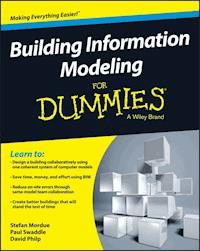
Everything you need to make the most of building information modeling
If you're looking to get involved in the world of BIM, but don't quite know where to start, Building Information Modeling For Dummies is your one-stop guide to collaborative building using one coherent system of computer models rather than as separate sets of drawings. Inside, you'll find an easy-to-follow introduction to BIM and hands-on guidance for understanding drivers for change, the benefits of BIM, requirements you need to get started, and where BIM is headed.
The future of BIM is bright—it provides the industry with an increased understanding of predictability, improved efficiency, integration and coordination, less waste, and better value and quality. Additionally, the use of BIM goes beyond the planning and design phase of the project, extending throughout the building life cycle and supporting processes, including cost management, construction management, project management, and facility operation. Now heavily adopted in the U.S., Hong Kong, India, Singapore, France, Canada, and countless other countries, BIM is set to become a mandatory practice in building work in the UK, and this friendly guide gives you everything you need to make sense of it—fast.
- Demonstrates how BIM saves time and waste on site
- Shows you how the information generated from BIM leads to fewer errors on site
- Explains how BIM is based on data sets that describe objects virtually, mimicking the way they'll be handled physically in the real world
- Helps you grasp how the integration of BIM allows every stage of the life cycle to work together without data or process conflict
Written by a team of well-known experts, this friendly, hands-on guide gets you up and running with BIM fast.
Sie lesen das E-Book in den Legimi-Apps auf:
Seitenzahl: 633
Veröffentlichungsjahr: 2015
Ähnliche



















Building Information Modeling For Dummies®
Published by: John Wiley & Sons, Ltd., The Atrium, Southern Gate, Chichester, www.wiley.com
This edition first published 2016
© 2016 John Wiley & Sons, Ltd, Chichester, West Sussex.
Registered office
John Wiley & Sons Ltd, The Atrium, Southern Gate, Chichester, West Sussex, PO19 8SQ, United Kingdom
For details of our global editorial offices, for customer services and for information about how to apply for permission to reuse the copyright material in this book please see our website at www.wiley.com.
All rights reserved. No part of this publication may be reproduced, stored in a retrieval system, or transmitted, in any form or by any means, electronic, mechanical, photocopying, recording or otherwise, except as permitted by the UK Copyright, Designs and Patents Act 1988, without the prior permission of the publisher.
Wiley publishes in a variety of print and electronic formats and by print-on-demand. Some material included with standard print versions of this book may not be included in e-books or in print-on-demand. If this book refers to media such as a CD or DVD that is not included in the version you purchased, you may download this material at http://booksupport.wiley.com. For more information about Wiley products, visit www.wiley.com.
Designations used by companies to distinguish their products are often claimed as trademarks. All brand names and product names used in this book are trade names, service marks, trademarks or registered trademarks of their respective owners. The publisher is not associated with any product or vendor mentioned in this book.
LIMIT OF LIABILITY/DISCLAIMER OF WARRANTY: WHILE THE PUBLISHER AND AUTHOR HAVE USED THEIR BEST EFFORTS IN PREPARING THIS BOOK, THEY MAKE NO REPRESENTATIONS OR WARRANTIES WITH THE RESPECT TO THE ACCURACY OR COMPLETENESS OF THE CONTENTS OF THIS BOOK AND SPECIFICALLY DISCLAIM ANY IMPLIED WARRANTIES OF MERCHANTABILITY OR FITNESS FOR A PARTICULAR PURPOSE. IT IS SOLD ON THE UNDERSTANDING THAT THE PUBLISHER IS NOT ENGAGED IN RENDERING PROFESSIONAL SERVICES AND NEITHER THE PUBLISHER NOR THE AUTHOR SHALL BE LIABLE FOR DAMAGES ARISING HEREFROM. IF PROFESSIONAL ADVICE OR OTHER EXPERT ASSISTANCE IS REQUIRED, THE SERVICES OF A COMPETENT PROFESSIONAL SHOULD BE SOUGHT.
For general information on our other products and services, please contact our Customer Care Department within the U.S. at 877-762-2974, outside the U.S. at (001) 317-572-3993, or fax 317-572-4002. For technical support, please visit www.wiley.com/techsupport.
For technical support, please visit www.wiley.com/techsupport.
A catalogue record for this book is available from the British Library.
Library of Congress Control Number: 2015950110
ISBN 978-1-119-06005-5 (hardback/paperback) ISBN 978-1-119-06007-9 (ebk)
ISBN 978-1-119-06008-6 (ebk)
Building Information Modeling For Dummies®
Visit www.dummies.com/cheatsheet/bim to view this book's cheat sheet.
Table of Contents
Cover
Introduction
About This Book
Foolish Assumptions
Icons Used in This Book
Beyond the Book
Where to Go from Here
Part I: Getting Started with Building Information Modeling
Chapter 1: Defining Building Information Modeling (BIM)
Explaining BIM in Plain Terms
Examining the A-B-Cs of BIM
Understanding the Requirements for BIM
Considering BIM Plans and Strategies
Measuring the Real-World Benefits of BIM
Encouraging BIM in Your Workplace
Chapter 2: Explaining the Building Part of BIM: It’s Not Just Buildings
Understanding What Building Means
Seeing How BIM Can Help You
Looking at Infrastructure and BIM
Developing Building Processes and BIM
Chapter 3: Examining the Information Part of BIM
Comprehending What Information Means
Realizing That Information Is the Heart of BIM
Maintaining Information in the Model
Chapter 4: Discussing the Modeling Part of BIM (and Management Too)
Grasping What Modeling Means
Confirming BIM Is a Process
Managing the Model: Federate to Collaborate
Chapter 5: Grasping the Fundamentals and Understanding What BIM Is
Figuring Out the Why of BIM
Shaping Cooperation and Shared Information
Transforming Information and Communication
Presenting All the Incentives of BIM
Part II: Creating the Foundations for BIM
Chapter 6: Looking at the Digital World Around You
Targeting Technology
Identifying the Need for Change
Defining Your Requirements
Selecting BIM Tools
Chapter 7: Preparing the Foundations for BIM
Progressing through the Levels of Maturity
Providing the Right Structure
Preparing for BIM Technology
Chapter 8: Setting Up a Collaborative BIM Workflow
Getting the Lowdown on Collaboration
Modeling in the Parametric Domain
Making Life Easier with Digital Information Management
Singing Off the Same Hymn Sheet: Information Exchange
Part III: Understanding BIM Requirements and Developing BIM Processes
Chapter 9: Mandating BIM in the UK and across the Globe
Interpreting the Requirements
Leading BIM in the United States
Growing BIM Standards Internationally
Keeping Up to Date
Chapter 10: Standardizing the Modeling of BIM Objects
Figuring Out What BIM Objects Are
Obtaining BIM Objects through Object Libraries
Recognizing BIM Objects
Supporting Standardization
Enabling Interoperability
Chapter 11: Collaborating through BIM Requirements
Running through Open Standards
Steering the Industry toward IFC
Reviewing the Key Standards
Coordinating Information
Chapter 12: Encouraging BIM in Your Office or On-Site
Adopting BIM as a People-led Process
Encouraging BIM Champions
Changing Hearts and Minds
Training and Supporting Everyone
Chapter 13: Developing BIM Plans and Strategies
Getting Started with Your BIM Strategy
Setting Up a BIM Business Case
Combining Information into a BIM Execution Plan
Modeling Your Plan after Successful BIM Processes
Chapter 14: Considering the Issues that BIM Presents
Managing Change in Your Business
Clarifying the Legal Implications of BIM
Ensuring Your Business Thrives with BIM: Engineering Collaboration
Part IV: Measuring the Real-World Benefits of BIM
Chapter 15: Evaluating BIM Benefits and Investment
Arriving at a Digital Understanding of Construction
Calculating the Savings
Separating Reality from the BIM Wash
Chapter 16: Using BIM On-Site and BIM for Health and Safety
Examining Contractor-Led Project Teams: Planning for Quality
Requiring BIM Use On-Site
Reducing Risks On-Site: BIM for Health and Safety
Chapter 17: Identifying All the Users of BIM
Anticipating the Information You Need
Identifying the Right Information for Initial Users
Building Digitally
Strengthening the Contractor Supply Chain
Managing Built Assets
Part V: Exploring the Future of BIM
Chapter 18: Building the Future of Construction
Seeing Trends and Looking Ahead
Surveying the Construction Landscape: Overcoming the Status Quo
Disrupting an Old-Fashioned Industry
Approaching a New Era of Procurement
Chapter 19: Eyeing the Possibilities: The Future of BIM
Thinking about Collaboration
Building Digitally
Strengthening Your BIM Foundations
Preparing Yourself for the Future of BIM
Chapter 20: Forecasting How New Technology Will Drive BIM
Providing a Digital Catalyst
Revolutionizing Construction with Big Data
Connecting Everything Together: The Internet of Things
Part VI: The Part of Tens
Chapter 21: Ten Types of BIM Tools, Software, and Platforms to Consider
BIM Authoring Tools/Platform
BIM Analysis Tools
Specification Tools
File-Sharing and Collaboration Tools
Construction Management Tools
Model Viewers and Checkers
Quantity Takeoff and Estimating Tools
Shop Drawing and Fabrication Tools
Facility Management
Administration Tools
Chapter 22: Ten of the Best BIM Resources
Using Social Media
Watching Videos
Attending Trade Shows and Events
Reading Blog Posts
Perusing Publications and Journals
Tapping into the Government
Signing Up for Software User Groups
Joining Associations and Forums
Visiting Virtual BIM Libraries
Heading to Summer School
Chapter 23: Ten (or So) Myth-Busting Questions and Answers
Isn’t BIM Just Trendy CAD?
Is BIM Just for Big Companies, Skyscrapers, and Government Projects?
Is BIM a Fad and a Recent Technology Development?
Isn’t BIM Expensive?
Does BIM Adoption Affect Productivity?
How Detailed Does the Geometry Need to Be?
Do Clients Know What to Do with All the Data?
Do the Design and Construction Teams Only Benefit BIM?
Do You Need to Push the Detailed Design Forward in the Program?
Appendix A: Glossary
Appendix B: Your Handy BIM Checklist
Appendix C: Examining BIM and Education
Getting Up to Speed with BIM
Understanding Collaboration
Teaching BIM
Highlighting Great BIM Teachers
About the Authors
Cheat Sheet
Advertisement Page
Connect with Dummies
End User License Agreement
Guide
Cover
Table of Contents
Begin Reading
Pages
i
ii
v
vi
vii
viii
ix
x
xi
xii
xiii
xiv
1
2
3
4
5
6
7
8
9
10
11
12
13
14
15
16
17
18
19
20
21
22
23
24
25
26
27
28
29
30
31
32
33
34
35
36
37
38
39
40
41
42
43
44
45
46
47
48
49
50
51
52
53
54
55
56
57
58
59
60
61
62
63
64
65
66
67
69
70
71
72
73
74
75
76
77
78
79
80
81
82
83
84
85
86
87
89
90
91
92
93
94
95
96
97
98
99
100
101
102
103
105
106
107
108
109
110
111
112
113
114
115
116
117
118
119
121
122
123
124
125
126
127
128
129
130
131
132
133
134
135
136
137
138
139
140
141
142
143
144
145
146
147
149
150
151
152
153
154
155
156
157
158
159
160
161
162
163
164
165
166
167
168
169
171
172
173
174
175
176
177
178
179
180
181
182
183
184
185
186
187
188
189
190
191
192
193
194
195
196
197
198
199
200
201
203
204
205
206
207
208
209
210
211
212
213
214
215
216
217
218
219
220
221
222
223
224
225
226
227
228
229
230
231
232
233
234
235
236
237
238
239
240
241
242
243
244
245
246
247
248
249
250
251
252
253
254
255
256
257
258
259
260
261
262
263
264
265
266
267
268
269
270
271
272
273
274
275
276
277
278
279
280
281
282
283
284
285
286
287
288
289
290
291
292
293
294
295
296
297
298
299
300
301
303
304
305
306
307
308
309
310
311
312
313
314
315
316
317
318
319
321
322
323
324
325
326
327
328
329
330
331
332
333
334
335
336
337
338
339
340
341
342
343
344
345
346
347
349
350
351
352
353
355
356
357
358
359
360
361
363
364
365
366
367
368
389
390
391
392
393
394
Introduction
Perhaps you keep hearing about Building Information Modeling (BIM) and want to work out what all the fuss is about. You may be a complete beginner in digital design and construction, looking for the basics. You may be a confident CAD user who wants to understand what BIM brings to the party. Or maybe you’re already very experienced in implementing BIM processes and you’re just interested in what we have to say in Building Information Modeling (BIM) For Dummies. We understand that you could be at various stages of knowledge and levels of experience. BIM is a process and it needs people like you to fuel it.
BIM isn’t just a buzzword. It’s actually been around for a long time, but the foundations to make it really work weren’t in place before now. We’ve seen BIM generate new efficiencies and new challenges too, and we’ve also seen how construction is hit hard by global economic recession. Our aim is to give you the push you need to start, accelerate, or maximize your use of BIM. It’s our great pleasure to guide you through your BIM implementation journey.
About This Book
More than likely, you’ve encountered a lot of conflicting, overly complicated, and unhelpful content about BIM online and in print. We intend to make Building Information Modeling (BIM) For Dummies different, cutting through all the noise and providing you with the clear advice and practical guidance that you need to make BIM a success in your job, whatever your level may be. Think of this book as a reference guide that addresses just what you need to know about BIM.
For the purposes of this book, we want to make it clear that we use the terms model and BIM to mean quite different things. Throughout the book we refer to BIM only as the concept of information modeling for buildings. We use terms like 3D CAD, 3D model, and geometric/geometry model interchangeably.
We structure this book to start with the basic concepts and ideas. We then gradually introduce more complicated, detailed, or supplementary content. Within this book, you may note that some web addresses break across two lines of text. If you’re reading this book in print and want to visit one of these sites, simply key in the web address exactly as it’s noted in the text, pretending that the line break doesn’t exist. If you’re reading it as an e-book, then you can just click the web address and the page will open in your default Internet browser.
One thing we should note is that we’re all based in the UK, and that’s where our expertise comes from, but we’ve tried wherever we can to balance this with a US perspective throughout and a global reference where relevant.
BIM is such a fast-moving target that during the writing process things shifted and new documents were released. We focus on pointing out the most current versions of guidelines and protocols that we reference at the time of writing.
Foolish Assumptions
Now, in order to write a practical guide to BIM and not just another boring textbook, we make some assumptions about you, our dear reader. Those assumptions are as follows:
You have some knowledge of the construction industry, probably in a professional capacity, in design, contracting, or surveying.
You’re a student, a client, or the owner of a building from a totally different industry, but you want to have a better grasp of a typical construction project, including the contractual relationships and expected information exchanges.
You work for a company that has an interest in incorporating BIM into your processes and workflows.
You don’t need to know how to use CAD software in order to gain insight from this book, because we think the software platforms are only one part of BIM and that model technicians are just one role in many BIM responsibilities.
You also don’t need to have any project management background. We explain the majority of management concepts throughout the book, but you may find understanding how to implement BIM processes easier if you’ve run jobs or managed a project team.
Icons Used in This Book
We include icons in the left-hand margins that highlight particular parts of the text you may want to remember or pay close attention to. Those icons include the following:
This icon is practical, giving you extra information about how to do something or how to save time in larger tasks.
Remember icons highlight snippets of the book that you should commit to memory. Think of them like those bright sticky notes you may have on your desk.
Try to always read text with a warning icon. With this icon, we point out some pitfalls so that you can avoid BIM disasters, and we also emphasize actions you should take to prevent running into problems.
We flag the more technical information with this icon so that you know which parts are extra to the core content. You don’t have to read these bits to put the rest of the book into practice, although you may find this information interesting.
This icon points out supplemental information online at www.dummies.com/extras/bim.
Beyond the Book
With your purchase of Building Information Modeling (BIM) For Dummies in print or e-book form, you have access to more exclusive information online. From great checklists on BIM processes to quick practical articles, you can find so many helpful pointers at www.dummies.com/extras/bim.
In addition, every For Dummies book includes a Cheat Sheet with handy information that you may want to consult on a regular basis. You can access the Cheat Sheet at www.dummies.com/cheatsheet/bim.
Where to Go from Here
Every For Dummies is modular, which means that you don’t have to read it in order from cover to cover. If you’re new to the world of BIM, we recommend that you start with Part I because it provides lots of the getting-started information that forms the foundations of BIM implementation. If you have a basic foundation of BIM, you can focus on Chapters 5, 6, or 7.
If you have the time, we suggest that you do read this book from cover to cover to get a complete overview of BIM and the reality of its implementation. You can see the overall picture when you’re able to finally step back and benefit from the wealth of specific knowledge in this book.
If you’re confident that you know all about the basics, you can jump into any part by going directly to it. For example, if your area of interest is the BIM mandates and protocols around the world, you can head straight over to Chapter 9. Alternatively, if you’re looking into the legal aspects of BIM, you can flip to Chapter 14. If you’re not sure where to start, consult the table of contents or index for a topic that interests you and then start reading.
Part I
Getting Started with Building Information Modeling
Go to www.dummies.com for bonus information about BIM and most any other topic that interests you.
In this part …
Find out how to explain what BIM is in a really simple way and understand what you really need for BIM implementation.
Appreciate that BIM isn’t just for buildings, but suitable for all kinds of infrastructure projects too, and look at examples of how more efficient processes are impacting the industry.
Make it easy to interrogate your project data by filling the model full of structured information, which other project team members can use for a variety of different uses and applications.
Use the right modeling tools to develop accurate 3D object information and see the benefits of detailed modeling.
Set up a common understanding of what BIM is for and agree on the fundamentals of BIM with your colleagues and project teams.
Chapter 1
Defining Building Information Modeling (BIM)
In This Chapter
Exploring what BIM actually is
Comprehending how BIM can help you
Explaining the BIM plans and strategies you need to be successful
Getting excited about BIM and encouraging others
The construction industry has been doing things the same way for thousands of years. Concrete is poured and set, bricks are stacked on top of bricks, and systems for heating and water are designed around corners and over multiple floors. For way too long, the construction industry has done a lot of these processes in isolation. At its worst, the construction industry brings some people involved in the construction of an asset like a building or a bridge onto the project just in time for their part, and the project team has to work around decisions or redo work, often on-site and under pressure of project deadlines.
Even in some of the most collaborative schemes, communication between different teams still has a long way to go, and the other users of building data and outputs, like clients and facility managers, are sometimes the last to know. The quality and quantity of data they receive on a project can vary wildly. What you need is a way to involve the entire project team earlier and coordinate all the project information in clear and accessible forms.
If only a combination of processes and technology existed that provided the framework to improve communication and data exchange across the construction industry, no matter how large or complicated projects may be. Well, interestingly enough, you’re in luck. This chapter serves as your jumping-off point to that very process: Building Information Modeling, commonly shortened to BIM.
Lesen Sie weiter in der vollständigen Ausgabe!
Lesen Sie weiter in der vollständigen Ausgabe!
Lesen Sie weiter in der vollständigen Ausgabe!
Lesen Sie weiter in der vollständigen Ausgabe!
Lesen Sie weiter in der vollständigen Ausgabe!
Lesen Sie weiter in der vollständigen Ausgabe!
Lesen Sie weiter in der vollständigen Ausgabe!
Lesen Sie weiter in der vollständigen Ausgabe!
Lesen Sie weiter in der vollständigen Ausgabe!
Lesen Sie weiter in der vollständigen Ausgabe!
Lesen Sie weiter in der vollständigen Ausgabe!
Lesen Sie weiter in der vollständigen Ausgabe!
Lesen Sie weiter in der vollständigen Ausgabe!
Lesen Sie weiter in der vollständigen Ausgabe!
Lesen Sie weiter in der vollständigen Ausgabe!
Lesen Sie weiter in der vollständigen Ausgabe!
Lesen Sie weiter in der vollständigen Ausgabe!
Lesen Sie weiter in der vollständigen Ausgabe!
Lesen Sie weiter in der vollständigen Ausgabe!
Lesen Sie weiter in der vollständigen Ausgabe!
Lesen Sie weiter in der vollständigen Ausgabe!
Lesen Sie weiter in der vollständigen Ausgabe!
Lesen Sie weiter in der vollständigen Ausgabe!
Lesen Sie weiter in der vollständigen Ausgabe!
Lesen Sie weiter in der vollständigen Ausgabe!
Lesen Sie weiter in der vollständigen Ausgabe!
Lesen Sie weiter in der vollständigen Ausgabe!
Lesen Sie weiter in der vollständigen Ausgabe!
Lesen Sie weiter in der vollständigen Ausgabe!
Lesen Sie weiter in der vollständigen Ausgabe!
Lesen Sie weiter in der vollständigen Ausgabe!
Lesen Sie weiter in der vollständigen Ausgabe!
Lesen Sie weiter in der vollständigen Ausgabe!
Lesen Sie weiter in der vollständigen Ausgabe!
Lesen Sie weiter in der vollständigen Ausgabe!




