


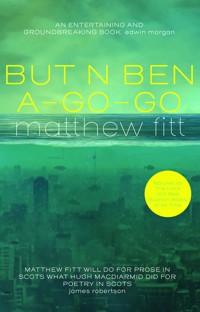
8,39 €
Mehr erfahren.
- Herausgeber: Luath Press
- Kategorie: Fantasy und Science-Fiction
- Sprache: Englisch
Written entirely in Scots, this is a science fiction novel set in a future where the Scottish Highlands are the only unsubmerged area of Britain. With strong characters and a gripping plot, the well-defined settings create an atmosphere of paranoia and danger. The exciting denouement has a surprising twist and is set on Schiehallion. The introduction includes a section on how to read the Scots in this book, Matthew has made the spelling as straightforward as possible for a population used to English spelling conventions.
Das E-Book können Sie in Legimi-Apps oder einer beliebigen App lesen, die das folgende Format unterstützen:
Seitenzahl: 373
Veröffentlichungsjahr: 2020
Ähnliche














MATTHEW FITT was born in Dundee in 1968. He graduated from Edinburgh University in 1990 and, between 1995 and 1997, held the Brownsbank Fellowship, residing alongside ghosts and wallydugs at the former home of Hugh MacDiarmid. Author of the scandalous ‘Kate O’Shanter’s Tale’, his poetry and short stories have been published widely. But n Ben A-Go-Go is his first novel. He lives in the south of Scotland with his wife Mirka.
‘after a bit – not a very long bit – I was plunged into the particular language of this book just as I’m plunged into that of Chandler or Asimov… you can read this novel because it’s very well-written, and it also tells a good story.’W N HERBERT, SCOTLAND ON SUNDAY
‘The most talked about book in the Scottish publishing world… a springboard for inventiveness… if you can’t get hold of a copy, mug somebody’MARK STEPHEN, SCOTTISH CONNECTION, BBC RADIO SCOTLAND
‘not a traditional rustic tale… I could understand quite a lot of that!’SUE MACGREGOR; ‘the last man who tried anything like this was Hugh MacDiarmid’MICHAEL FRY, TODAY PROGRAMME, BBC RADIO 4
‘going where no man has gone before’STEPHEN NAYSMITH, SUNDAY HERALD
‘will wean young Scots off reading Harry Potter’RODDY MARTINE, DAILY MAIL
‘will undoubtedly change attitudes to the language’TOM SHIELDS, THE HERALD
‘Fitt’s Scots… has a unique ability to dance off the page and ring in the ear. The book is worth the initial effort and the story itself is imaginative and exciting’MICHAEL RUSSELL, THE HERALD
‘For no onlie is this an inventive an a whittery tale which brawly serves its linguistic subtext, it could yet become a matrix fur a new generation o scrievers… Matthew Fitt taks the leid intae gleg an fremmit territories an his energetic audacity is tae be welcomed’CARL MACDOUGALL, THE HERALD
‘a bit of a cracker. I have no Scots… and tend to avoid books with long passages in dialect. But I can, with occasional hiccups, read Fitt’s offering and am doing so with much enjoyment. He has found the key, which is to eschew linguistic pedantry in favour of linguistic vigour. To hear him reading aloud at the book launch, giving the Scots language a modern literary voice without selfconsciousness or pretentiousness, was a mesmerising experience... Luath Press is barking up the right one. The most effective way to revive the language is to support the imaginations of Scottish authors. Let’s hope Fitt has started a trend.’KATIE GRANT, THE TIMES
‘a robust Lowland Scots collides sparkily with a grim vision of Scotland in 2090’JIM GILCHRIST, THE SCOTMAN
‘a lively, vibrant and sparky style that brings out the best in the plot and with diamond-sharp description and gutsy, full-flavoured dialogue… a good strong story with an intriguing plot and inventive ideas’HELEN BROWN, DUNDEE COURIER
‘it’s a hugely entertaining story... if his novel is anything to go by, Scots really is alive and kicking’ALEX SALMOND, NEWS OF THE WORLD
‘After an initial shock, readers of this sprightly and imaginative tale will begin to relish its verbal impetus, where a standard Lallans, laced with bits of Dundonian and Aberdonian, is stretched and skelped to meet the demands of cyberjannies and virtual hoorhooses. Eurobawbees, rooburgers, mutant kelpies, and titanic blooters from supertyphoons make sure that the Scottish peninsula is no more parochial than its language. I recommend an entertaining and ground-breaking book’EDWIN MORGAN
‘Matthew Fitt’s instinctive use of Scots is spellbinding. This is an assured novel of real inventiveness. Be prepared to boldly go...’ELLIE MCDONALD
‘Easier to read than Shakespeare, and twice the fun’DES DILLON
First Hardback Edition 2000
First Paperback Edition 2001
This Edition 2020
The paper used in this book is recyclable. It is made from low chlorine pulps produced in a low energy, low emission manner from renewable forests.
The publisher acknowledges subsidy from
towards the publication of the first hardback edition of this book.
Printed and bound by
Ashford Colour Press, Gosport
Typeset in Sabon and Rotis Sans
© Matthew Fitt
eISBN: 978-1-912387-84-7
for Mirka
THANKS TO: James Robertson, Susan Rennie and Gavin MacDougall. Also Alison Fitt, Bill White, Duncan Glen, Gordon Liddle, Stuart McHardy, Billy Kay, Bryan Fletcher, Mike Cullen, Dr S. Shimi, Ann and Angus Matheson, and Gerald Baird.
Contents
How to read But n Ben A-Go-Go
But n Ben A-Go-Go – a Road Map
CHAPTER 1 Nadia
CHAPTER 2 Sair Heid City
CHAPTER 3 Inverdisney
CHAPTER 4 Java 5
CHAPTER 5 Senga
CHAPTER 6 Prag
CHAPTER 7 Favela Copenhagen
CHAPTER 8 17
CHAPTER 9 Dumfries
CHAPTER 10 Bonnie Lemon’s
CHAPTER 11 Elvis
CHAPTER 12 Vermont
CHAPTER 13 Haven
CHAPTER 14 Craw
CHAPTER 15 Lichty Nichts
CHAPTER 16 Skagerrak
CHAPTER 17 The Cages
CHAPTER 18 Kelpie
CHAPTER 19 Tokyo Rose
CHAPTER 20 Gleann na Marbh
CHAPTER 21 But n Ben A-Go-Go
CHAPTER 22 Café o the Twa Suns
CHAPTER 23 Kist
How to read But n Ben A-Go-Go
Spoken Scots is all around us. This thousand-year-old cousin of modern English pervades our conversation and colours our day-to-day life. We encounter spoken Scots at school, at work, in the pub and in the home. Whether you speak Scots yourself or just prefer to listen, you do not need to go far to hear about folk who are either scunnered, bonnie, greetin, crabbit, mawkit, hackit, gled, fou, canny, couthie or deid.
Nurses, teachers, labourers, lawyers, farmers, accountants, MSPs; Gail Porter, Marti Pellow, Jack Vettriano, Sir Alex Ferguson – anyone whose lugs are in working order knows that Scots is spoken in all walks of life. Some contend that it is the language of the gutter and that it has no place in our society. Others hold it to be a national language with as strong a claim to exist as any culture’s native tongue. Most of us simply use it as a means of communication and never think any more about it. But whatever our relationship to the Mither Tongue, we all at some point in our lives have used or heard some measure of spoken Scots.
Examples of written Scots in our culture, however, are much less commonplace. We have a fascinating (but generally ignored) medieval literary tradition which boasts a canon of epic and lyric poetry, all set down in awe-inspiring Scots. Throughout this century, anthologies and small-circulation magazines have sporadically appeared showcasing new Scots writers’ work. And every now and then letters pop up in the press bemoaning this issue or that in spiky indignant Scots prose. Although many speak the language, declaim in it fluently and with great imagination, very few people ever use Scots when they write.
This is nobody’s blame. We are not taught how to spell the words so naturally reproduced in everyday speech. We receive neither formal training nor official encouragement to write the way we talk. Somewhere down the line – from the complete culture of the medieval court to our present linguistic situation – there has been some fundamental dislocation of the written form of Scots from its spoken manifestations.
And yet, in spite of this, a variety of written Scots continues to push its neb to the surface. A newly-decorated house on Burial Brae in Ainster, Fife warned away passers-by with the words ‘Weet Pent’. In quite separate parts of the country, a building site, a housing benefits office and a science staffroom in a school advised visitors where they were going with a plate that read ‘Wey Oot’. A flooring company advertised in the pages of a glossy magazine with the craftily-worded slogan ‘Fabulous Flair’. An airline recently asked travellers who fly to the States via London instead of direct from Glasgow ‘Are ye aff yer heid?’. And pub names regularly reflect the idiom of those drinking at the bar. ‘The Wee Thackit’ in Carluke, ‘The Sheep’s Heid’ in Edinburgh and ‘The Twa Tams’ in Perth are just a small swatch of the many that spring to mind.
In the main, however, such examples are few and far between. Something prevents us from committing to paper words which we have known how to say since childhood. And if there are barriers to people writing Scots, similar obstacles may exist when it comes to reading it.
But n Ben A-Go-Go is a seventy-thousand-word novel written entirely in Scots and set in the future. This unusual combination makes this piece of writing different from what the reader may be used to but, after a few brief tips on how to read the Scots prose, But n Ben A-Go-Go should be easily accessible to anyone.
Unlike other Scots pieces, this novel has no glossary, no ready-reckoner at the back of the book to turn to when the going gets tough. Such mini-dictionaries are distracting and often laborious. In addition, they can sometimes be seen as an apology for the Scots words in the text, as if the language was unable to speak for itself. But n Ben A-Go-Go challenges the reader to wake up his or her own active and passive knowledge of the Mither Tongue and to read Scots unaided, without the stabilisers of a Scots-to-English word leet.
The reader will notice very quickly that the bulk of the words in But n Ben A-Go-Go are common Scots words, used a million times a day in ordinary Scottish conversation. Who does not know or recognise sair, strang, heid, glower, dinnae, boak, guddle, glaikit, sleekit and stramash? Some readers may suffer a mild brain-ache from the novelty of seeing, for the first time, Scots words written down on the printed page but, after a few pages, such symptoms should quickly pass.
Once comfortable with the sight of familiar neebors like bairn, stoor, ken, pauchle and clart in the official environs of a book, the reader might experience some slight cultural turbulence when these same common words are presented in what is perhaps an unorthodox way. Bairnish, stoorless, unkennable, ootpauchle and declarted are maybe not part of everyday Scottish vocabulary but their basic components certainly are and, for the purposes of this novel, will be easy to understand.
Harder to assimilate are the many neologisms at work in But n Ben A-Go-Go. There are no doubt very few cyberjannies taking orders from clartmaisters or doctors operating germsookers or folk struggling home with their messages in plastipokes in Fraserburgh, Dunfermline or Ayr but the reader will remember that the backdrop to this story is a future world where the creation of new words is not unusual.
If a neologism’s meaning is not immediately obvious, the reader should be able to resort to the context of the sentence or paragraph. Incendicowp, for instance, is a neologism on which some readers may stumble. But taken within its context, incendicowp should present no great difficulty.
Wi his free haun, Paolo rugged open the hatch o the Omega’s incendicowp an flung the peerie bonsai rose intae the furnace’s fiery gub.
‘Hatch’, ‘flung’ and, in particular, ‘furnace’ and ‘fiery’ are all on hand to help with incendicowp. The context offers the reader a ready short-cut to understanding the futuristic Scots terminology.
Similarly, when the novel’s vocabulary strays outwith the range of common Scots, the reader has the fallback of context to quickly divine more unusual Scots meanings.
He should hae kent the chip wid yaise abuse tae revive him fae the Ingang. Try tae flyte him back tae life. An enjoy it, tae.
Here the word flyte (which means ‘to scold’ or ‘to make a verbal attack’) is explained by the word ‘abuse’. In this next example –
The first fortnicht efter her Kistin, the pad had fizzed wi coherent words an unraivelled syntax.
– ‘coherent’ is present in the context to assist with comprehension of unraivelled, which means ‘not confused’ or ‘clear’.
But n Ben A-Go-Go may seem at first sight a real handful but careful planning ensures that the Scots prose is easy on the eye and, with a minimum of effort, readily understood.
Latinate English words and straightforward English spellings are in place to sharpen the selection of Scots words, the majority of which is derived from the general vocabulary of modern Lowland Scotland.
And it is intended that the reader can use the context of a sentence as a handy codebreaker for any difficult words.
Once the initial culture-shock – of seeing words your granny liked tae use and your mither tellt ye no tae use in the unusual setting of a modern novel set in the future – subsides, the reader should be able to relax and enjoy the story.
But n Ben A-Go-Go – a Road Map
The year is 2090. Global flooding has left almost all of the Scottish peninsula under water. The descendants of those who survived God’s Flood in 2039 live in a community of floating island cities known collectively as Port. Each floating city (or Parish) is attached by steel cables to the sea-bed seven hundred metres below at what used to be the town of Greenock.
There are twenty seven Parishes, the population of which is split 60/40 between albinos and melanos. The melanos can take the constant fifty-degree temperatures; the albinos, however, fear the burning sun and carry cancer kits.
As well as the dangerous climate, Port citizens must live with the deadly disease Sangue de Verde. A highly infectious strain of HIV, Sangue de Verde (or Senga) has created a society where virtual sex has replaced intimate physical contact. Senga’s victims are kept out of circulation in a giant hospital warehouse in sealed capsules called Kists.
The only land-mass free of water is the former Highlands (now the Drylands) which is separated from Port by a 200km stretch of sea known as the Irish Skagerrak. The Drylands are the summits and slopes of those mountains high enough to be left untouched by the spectacular rise in the world’s sea-level. They appear as a series of islands and land bridges and are inhabited by wild mutant animals (Kelpies) and cells of tough rebel American tourists.
Inverdisney Timeshare Penitentiary is a maximum-security prison complex located in the northern Drylands on top of Cúl Mor in the region of the now-submerged Inverpolaidh Nature Reserve. But n Ben A-Go-Go, the scene of the novel’s climax, is a luxury villa built on the summit of the mountain Schiehallion, a mere forty kilometre swim from the extinct tourist mecca, Pitlochry.
At several points in the story, certain characters leave the RealTime world and venture into cyberspace. VINE is the name of this alternative electronic universe. VINE is both a communications network and an infinite series of virtual environments full of data vaults, famous tourist sites and bad-tempered Dundonian microchips.
Paolo Broon, the novel’s hero, must traverse VINE, Port and the Drylands to discover the truth about his family’s past in order to free his life-partner, Nadia MacIntyre, from the grip of the merciless virus, Senga.
CHAPTER 1
Nadia
kist 624 imbeki med 3:07pm
Moarnan.
No sure if it’s moarnan. Canna hear the porters. The young ane wi the bonnie voice, chantin his wey roon. An his gaffer shoutin on him tae wheesht. Thae twa isna in yet. Stull on the Rail. Gantin owre their papers. Creeshin doon the hair. Haun in atween their legs.
Oot.
Hinna felt the surge, tae. Thon wee electric skirl kickin throu the grid as the day current comes on. Juist enough pouer tae bile a kettle or run a stoorsooker alang the dreels. The porters an the lawyers dinna feel it. No wi their raybans an their Senga-suits on. But in here, wi nae nicht an nae gloaman tae guide ye throu the oors, thon imperceptible pre-programmed surge is as lood an as shill as a cock craw.
Oot.
Where ma bonnie laddie? Where is he? He wis doon in the catacombs the last time. Awa doon unner the dreels, reddin a stookie for burnin. Yet the soon fae his lips seepit up intil me. The tune wis peerie but the dirl o it raxit throu the slabs o steel an plastic. I grat masel tae a standstill. Thon laddie’s sweetness maks me sair.
Sair.
Declan. I widnae cry him Declan. Seumas is a fine name. Rare an strang. But he’s no a Seumas. I dinna ken whit like he is. Never seen him, tho he’ll have mair than likely keekit in at me. Whiles, he’s a gret braw-shoodered warrior. Finbar or Myles. Or mibbe he’s somethin closer tae hame. A gawsie tangle-haired Lanarkshire boy. Rab. Graham. Geordie. I dinna ken. He aye dauners intae ma heid syne slups awa, like a thief.
Thief.
A saft job like this. The wee limmer maun be weel conneckit. A fozie commissar for a faither. A shamgabbit cooncillor keepin his greetin-faced wean oot o the Fusiliers. The richt side o the Eastern Front. Zowie. Star. Loola. Amethyst. Cairtin aroon the glaikit christian name his yuppie parents come up wi on the doonward skite o a honeymoon slab o E. Puir wee tink. I will cry him Pavel.
Pavel.
There. Feel it. The ghaist o a tremmle dinnlin throu the kist. That the day current clickin in. A body growes shairp in here. Accustomed tae the dark. Tuned intae the hertbeat o the place. When a nurse gangs past, I can hear the tubes an scalpels chinkin on her tray. When the heid virologist maks a tour o the kists, I can jalouse fae the fitsteps hou mony gawkers an professional glowerers he’s brocht wi him. I can tell fae the shift in the current if there’s a licht needin chynged doon the dreel. I ken, tae, fae the jangle o electricity, when a kist has been switched aff.
Aff.
This kist is ma lug.
Pavel.
That Pavel nou. Linkin throu the compound, chantin awa tae himsel. This time o the moarnan. The laverocks an the gulls. They’ll be cheepin an chitterin in the Parish squares. An the sun rivin the palms an the dreepin brainches o the sauchs. Lovers still cooried thegither in their beds the last warm oor afore work. Maun be a rare Port day oot there if young Pavel’s awready singin. Either that or he’s got a click. A lumber. Some lassie he met last nicht. He’ll no have tellt her whit he does yet.
This kist is ma lug.
He’s awa doon the dreel. Pavel is wearin his saft shuin the day. His sang is fent. Fenter. Flittin awa fae me like the days o ma first life. Wheesht. The vibration o him is gane.
Wheesht.
Listen tae yirsel. Slaverin owre a laddie. Dinnae even ken if it’s a laddie. Micht be a humphy-backit auld man or a breistless wee lassie. Doesnae even hae tae be human. Yin o thae service robots wid mak that noise. An me slabberin at the mooth like a dug or a teenager. Senga maun be sleepin. Allouin me ma thochts tae masel for a wee while. But Senga will wauken soon enough. When Senga’s hungert. Puir wee tyke.
Pavel.
Whit dae ye dae, Pavel? Whit’s yir job, like? See ma faither. An ma twa brithers. They’re awa at the Urals. Stobb. That’s ma brither. No much aulder than yirsel. He’s a cyber pilot. An Bonnie. That’s ma ither brither. He’s a sniper wi the Reid Berets. Owre the lines, intil Carpathia. Whit dae you dae, Pavel? Whit regiment ye in? Ye on leave the nou? Is yir uniform at hame? Laddies in uniform is braw. I aye near pish masel when I see a Reid Beret swankin doon the street. Come on, Pavel. Tell us. Whit dae ye dae?
Ay, Pavel. On ye go. Tell us.
Ah dinnae.
Pavel.
Ah dinnae want tae.
Ya wee feartie. Tell them whit ye dae when ye whustle yir bonnie tunes.
My name is Pavel an ah toom the keech pokes o the deid.
Och, Pavel.
CHAPTER 2
Sair Heid City
PAOLO STEVENSON BROON’S GENETIC code wis a direct haun-medoon fae his maternal grandfaither, Stevenson Klog.
The Klog faimlie pool wis a bree o grippie east coast insurance men an born again presbyterian fishwifes, lowsed by the lord fae prozac, sex an involuntary hame shoppin. Grandfaither Klog never bosied or beardied him when he wis wee but gart him staun in foostie cupboards in his sterile widower’s apartments whenever Paolo bairnishly havered Klog’s deid wife’s name.
Glowerin numbly throu the keek panel o Omega Kist 624 up on Gallery 1083 on the fifth anniversary fae the day his life pairtner Nadia wis Kisted, Paolo had nae choice but tae acknowledge his thrawn pedigree. The langer he gowked at the recumbent figure ahint the reekit gless panel, the mair he felt the Klog cauldness tichten roon his hert. As he watched fae the view gate in the Rigo Imbeki Medical Center high up on Montrose Parish, the threid-thin voice o his grandfaither kittled in his mind, an Paolo, yince mair, when confrontit by the weariest sicht imaginable tae him, foond himsel patently unable tae greet.
Nadia MacIntyre lay stane still inside her Omega Kist. Her body wis happed tae the chin in funereal white an smoored unner an inhuman wab o IV an colostomy tubes. Her visible skin wis as peeliewally as papyrus an her kenmerk taigled blonde hair kaimed oot in a trig coiffure on the faem pillae ahint her heid. She appeared snod in her peacefu berth but her facial muscles, contortit by municipal beauticians intae an expression o glaikit serenity, couldna mask the untholeable agony in ben.
Paolo pit a nieve against the Omega Unit’s ooter waw an watched as his calloused haun slippit doon the bevelled surface. The Kist stood a guid twa fit abinn his ain six an raxed at least fowre tae his left an richt. Its exterior – a mass-wrocht, faux-ivory shell – wis merked wi radiation tags an a mix-mash o Sangue de Verde decals. Aside the smoked-gless keek panel, a quartet o info screens wis inbiggit tae the Omega Kist’s face. Three o them joogled data anent Nadia’s vital signs; the fourth wis the thocht pad, a screen which translated an Omega detainee’s thochts intae words an picturs as lang as they were able. Nadia’s thocht pad wis a clear unblenkin ee o blue that had no been puggled wi information for three year echteen month.
Paolo’s ile-stoor resistant bitts squealed on the ceramic flair as he stepped back an glowered west alang Gallery 1083. It wis a summer Sunday forenoon the clatty end o January an the mile lang visitors’ corridor wis toom. A singil lawyer an her lycra-leggit secretary intromittit the silence, shooglin past on a courtesy electric caur. An indie-pouered germsooker jinked inconspicuously in an oot o Paolo’s personal space, dichtin up microscopic clart as it drapped aff his body.
A quarter mile doon, the wersh blinterin sun forced itsel in throu the UV filter gless at the corridor heid, illuminatin the faces an keek panels o the first fufty Omegas. An as he skellied intae the white bleeze, a troop o droid surveillance puggies advanced in heelstergowdie formation alang the corridor roof, skited by owre his heid an wi a clatter o metallic cleuks, skittered awa eastwards doon the shaddowy vennel. The toomness o the visitors’ corridor offered Paolo nae bield fae the buildin’s oorie atmosphere; Gallery 1083 wis an eerie airt wi or wioot passengers.
Fae a Jeremiah Menzies plastipoke, he extracted the peerie pink heid an widd-broon stem o a bonsai rose. Technically he kent it wis really a miniature rose but, since it wis Japanese hydroponics that wrocht them, awbody nouadays cried them bonsais. Haudin the tottie flouer in a big nieve, he awkwardly shawed it at the keek panel. The rose’s birkie complexion daunced on the tinted gless but ben the Omega Kist’s scoored white chaumer, Nadia’s een didna flicher. The doo-coloured petals, tremmlin in Paolo’s haun, lowsed a soor, sweet guff that stang his memory. Nadia in a bloomarine dress on Himalaya 3. Nadia wi a gless o absinthe at Telfer’s Grill on Ayr. Nadia in her corporate lawyer’s goun on the steps ootside the Attorney Fiscal’s Chambers. Paolo’s left ee stertit tae yeuk unnaiturally but the inherent Klog crabbitness heezed itsel oot o his sowel in time tae smoor ony rogue aizles o sentiment.
He touched a fingir tae his broo as he felt the first paik o the day gowp throu his heid. The flouer’s bonniness minded him o cantier times but the rose itsel wis mingin wi sweir connotations. His strang hauns absently nevelled the stem til the sap ran oot. Even fae ahint the Kist’s metre-thick waws, Nadia MacIntyre had tried tae mak a bauchle o him. His puir mind couldna reckon her. He wis unable even nou tae jalouse how a couthie passionate lowe like hers could emit sic cruel gleeds.
Nadia’s thocht screen had no ayewis been toom. The first fortnicht efter her Kistin, the pad had fizzed wi coherent words an unraivelled syntax. Nadia had nae will an she needit her solicitor tae scrieve yin til her. She battered oot instructions via her thocht pad tae a hunner different agencies twinty-fowre oors a day. Her finances were in a guddle. They’d tae sell her hooses. Her sister wis tae hae her mither’s rings. She didna want her cousins on Hub tae hear owre the satellite; a lawyer wid hae tae flee there an tell them tae their pus.
Altho Paolo admired her steely canniness in the face o Sangue de Verde, he kent aw Nadia wis daein wis jinkin the truth. When he speired her directly for the name, she replied ainlie wi fond but anodyne croodlin doos o affection an then efter fufteen days, wabbitness an delirium settled on her like twa hoodit craws. Nadia wis suddenly nae langer able tae mak words. Her gleg-gabbit commands on the owreloaded thocht screen dwyned tae a chitterin blue hiatus. Aw she could manage tae communicate by wis roch picturs, maist o them cryptic an unkennable. But Paolo weel unnerstood the import o the last pictur Nadia gart kythe on her screen. It wis a fuff o spite that had stobbed Paolo sair an whase significance dirled in his sowel even yet.
A wheen weeks efter their mairriage – Paolo wis echteen, Nadia seeven year aulder – they had daunered intae a multiplex museum an watched a movie thegither aboot Iva Toguri, a California-born Japanese quine the Americans miscawed a collaborator. The lass foond hersel fankled in yin o the big wars o the twintieth century – Paolo couldna mind exactly which ane – an efter the international stramash wis by, she wis tried for treason. When they left the pictur hoose, the twa o them were haein a bit cairry-on. ‘You’ll no be ma Tokyo Rose, will ye, Mrs Broon?’ Paolo had speired. ‘You’ll no betray me, eh?’
Paolo could still hear Nadia’s words as she turned awa fae him an hopscotched doon the street. ‘Paolo, naw. I willna ever betray you.’
He shut his een as the memory filtered throu his heid. Nadia had burnt oot the last o her brain cells steerin the pixels o her thocht pad intae the image o a bonsai rose. A Tokyo Rose. An on every ither visit he made tae her Kist, Nadia thrawnly projected this shilpit aff-reid 3D flouer ontae her thocht screen until month seeven when the pain finally extinguished her smeddum an she retreated intae hersel for the dark soonless fecht wi Sangue de Verde.
Paolo let a lang braith gruzzle oot atween his teeth. Nadia MacIntyre wis in Omega Kist 624 because she had liggit wi anither man. She had had auld-fashioned sex wi a stranger an alloued the Sangue de Verde smit, kent locally as Senga, intae her bluid. The doctors at Rigo Imbeki had dated the fatal hoochmagandie tae probably sometime efter Nadia an Paolo’s waddin. It wis nou five year tae the day since the Kistin an Paolo still didna ken the cairrier’s name. A shairp twang worked its wey throu the frontal lobe o his brain. The Mowdy inside him wis stertin tae nip. He moved awa fae the view windae an regairded the miniature flouer.
Tokyo Rose – a peerie pink blossom, an the lass that begunked her country. Sic a flouer had never passed fae his haun tae hers. He had never even seen yin afore she had gart ane bloom on her sterile thocht pad an altho the dunt fae Nadia’s sleckit punchline had stachered him, Paolo still thirled himsel tae its irony. He had brocht a bonsai rose wi him every week since her thocht pad licht went oot in the peeliewally hope it micht revive her. A fremmit, illhertit Nadia wis better than nae Nadia at aw. Forby, the flouer wis a ritual that chummed him throu the dark oors o a visit. He aften caucht himsel gowkin at the thocht screen, heezin it up tae skitter back online wi a rammy o pixels; but it never did. Nadia’s screen on this drum anniversary registered ainlie a dour unbroken blue. Paolo aye cairried the rose tae her in a poke or happed inside his jaiket. He didna want the world tae ken he brocht a flouer. The joke maun remain in hiddlins atween him an her alane. Wi his free haun, Paolo rugged open the hatch on the Omega’s incendicowp an flung the peerie bonsai rose intae the furnace’s fiery gub.
An icon on the Kist front pleeped, merkin the quarter oor. He had a coupon-tae-coupon conference wi Aga Dunblane, Nadia’s Bluid Lawyer, in the Medical Center’s elevator bar. It wis time tae pou himsel awa. He skelped some imaginary stoor aff the chist o his cyberjanny’s tunic an boued doon tae tie an retie the lace on his left bitt. Then wi a final blank gowk at Nadia throu the Kist panel, he turned an linkit back alang the corridor, leain ony ootward face o emotion oxidisin amang the midden o esses in the Kist’s cowp furnace.
He didna want tae bide lang in Gallery 1083. As he broostled toward the licht at the corridor heid, he tried no tae look at the Kists bolted tae the waw on baith sides o him. But, still an uncanny, the detainees’ daith-white visages soomed up at him throu the gallery’s semi-gloaman, sklentin fae aw airts intae the neuks o his een. He smertened his step, worryin insteid aboot the meetin wi Nadia’s lawyer. The legal profession didna steer their bahookies fae their caller-conditioned office suites athoot there bein a heid tae nip, a scone tae steal or somethin sair tae be said. Paolo hoped he had misreckoned whit he thocht Aga Dunblane wis comin tae tell him but, wi pessimism a channerin worm deep in the faimlie psyche, he had awready redd himsel up tae hear the worst.
He won oot the corridor an gratefully chapped the panel at the elevator yett. Efter a lang three-minute wait, the button bizzed wi licht, a dour ethereal chime bummed the elevator’s arrival an the yett doors rowed open. Paolo stepped in.
The Rigo Imbeki Medical Center wisna alloued windaes. Peerie portholes covered the twa-thoosan-storey muckle-structure, admittin peen stobs o licht intae the tichtly regimented galleries. Port couldna dree Sangue de Verde tae skail accidentally fae its purpose-biggit hame. Aw o its citizens cairried the dormant Mowdy smit in their breists an yin micro-guff o Senga wid ignite a Green Bluid pandemic that wid chow its wey throu Port in less than hauf a day. The Imbeki Medical Center had tae be completely blooter-resistant tae the region’s rauchle hurricanes an typhoons.
The ainlie naitural licht at Imbeki wis in the Center’s fowre elevator bars. Each bar wis a lang corridor o gless an steel that ran the length o each o the buildin’s fowre sides an took a hauf-oor tae sclimm tap tae bottom past the thoosan flairs stappit wi Kists. The bars were therapy bothies for the Center’s ermy o day-visitors. Citizens visibly needit alcohol on the wey in tae lown their nerves an mak dowf their senses. An efter the painful dook intae theirs an their loved yins’ sowels, they sat like divers in the decompression chaumer o the bar sookin scotch an tequila afore rejinin their lives on the ootside.
Paolo breenged across the parquet flair an took a seat at the windae. A young waitress dichtin glesses at the bar an a bus-boy gaitherin creeshie ashets fae a table nearby goavied owre at him but Paolo didna try tae catch their ee. He didna want a drink. He wid need a clear heid tae face Aga Dunblane. Insteid he glegly scanned the lang bar. The siller an bleck Rennie Mackintosh-graithed elevator wis toom, the bleeze-bricht sun sklentin aff the restaurant’s roond formica tables. The lawyer hadna yet arrived. Paolo felt the flair judder unner his fit an the elevator continued its soonless ponderous ascent. Imbeki wis the maist muckle buildin on Montrose an he dirled his fingirs restlessly on the table tap as the kenspeckle skyline o Port gradually unfaulded a thoosan twa hunner fit ablow.
Across the skinklin blue watter, Inverness Parish kythed throu the tropical haar like a golem. Its boardwalks, weather bastles an hunner-metre-high metal hull sheened alang its bow side as Saul blintered doon on the Parish fae the west; Inverness’s famous onyx an granite spires stood mirk in shadda. Owre the bay tae the east, Siller City’s muckle cloodkittlers on Glasgow Parish stood, a forest o silhouettes, against the white het sky. Then Paolo let his een flit west again tae Kelso Parish whase ootline wis guddled unner a heavy plype o rain, an then up aheid tae Falkirk Parish burlin itsel in the centre o Port’s twinty-seeven floatin cities. A jet liner, probably fae Uralgrad or mibbe Karakoram City, wis skitterin tae a stap on the tarmac at Falkirk’s John MacLean Int’l Airport. Paolo glisked owre tae the bar tae check if Aga Dunblane had arrived – she hadnae – then returned his glower tae the brain-pugglin panorama o Parishes an ocean spreid oot afore him.
The sea, thocht Paolo, wis unusually canty the day. He shiddered as he keeked doon intae the azure hauchs an meedows that separated the Parishes. The Atlantic wis baith freend an ragabash tae the three million people o Port. It brocht them muckle wealth. Port biggit the walliest, maist socht-efter transport ships in the Western Hemisphere. The sea wis a trade brig tae Hub, New Appalachia an ither maritime settlements in the Dry East. But while Port bairns studied the weys tae maister the Atlantic, they were learned tae fear it, tae. Nane o Paolo’s generation had been alive tae thole God’s Flood.
Fufty year langsyne in November 2039, when a sub-antarctic volcano had biled owre an rived in twae the surface o Moont Erebus an the Ross Ice Shelf, the unjeeled watter had raired intil the Suddron Ocean. The volume Ross lowsed on the world’s seas whummled whit remained fae the American pampas an drooned the African plains fae the Cape tae Senegal.
Maist island cities at yon time were quarter-feenished hulks roostin on scaffoldin aside state capitals. The World Bank had gret loudly for their construction efter the Lomonosov Rig at the North Pole had cowped three year afore Ross, inundatin Bangladesh, Holland an the lands o the Mississippi basin. But the island cities’ price tag flegged multi-national budgets in Frankfurt an New York an when parliaments jaloused that Lomonosov wid dae nae mair herm than wipe oot a puckle coastal nations, they sned the flow o siller.
Howanever, they were soon jiggin tae a different tune as they watched Antarctica faw aff the satellite map an then witnessed on their boardroom TVs watters fae an icefield the size o China come rattlin across the globe. As the radge weather sent shock tsunamis skitin throu cities an continental plains sookin millions o citizens doon unner the dark drumly watter, the unco guid an the unco sweir were scartin an scrammlin their wey ontae the hauf-biggit island cities. When the gurlie oceans finally settled, the lave o the world population, flung thegither on shooglie tin cans, had nae option but tae rowe up their sleeves an commence the darg o biggin up their ain individual island toun.
Port, the maist northerly settlement in a triangle o maritime cantons wi Europoort in the sooth an Berlinhaven in the east, had tholed God’s Flood – an the subsequent decade o wud tropical storms as the world’s climate bubbled an fizzed – athoot muckle loss. Port’s cities, officially cried Parishes, had jowed an sweeled successfully hauf a century on the roch North Atlantic, thirled firmly at the sea flair wi seeven-hunner-metre-lang alloy cables tae the drooned burgh o Greenock. This winter wis riftin fou o anniversaries. Paolo glowered absently at his hame city, the metal walkweys an gless skyscarters hotterin in the het sun. The sea soomed calm an still atween the muckle metallic Parish hulks, signallin its undauntit presence wi chitterin flashes o blue.
The clock on the Evelyn Glennie Music Faculty bummed five efter the oor. Aga Dunblane wis late. She had redd the conference for eleeven o’clock but Paolo widna greet if she didna shaw her face the day. By the end o their video blether twa oors syne that moarnan, he had awready jaloused her sweir agenda. The eeriness o Nadia’s anniversary wis compacted by mair practical maitters. Spike an Alaska were a globally-kent law firm an Aga Dunblane wis their shairpest lawyer. Her ain husband had liggit fufteen year in an Omega Kist afore Aga ID’d the cairrier an neutralised the sleekit virus that had thirled him there. Paolo had retained her tae warsle the hoodies on behalf o his undeid wife because Aga Dunblane pit her hert an cleuks intae every Sangue de Verde case she took on.
Aga wis the best but her professional smeddum didna come cheap. Nadia had sliddered intae a coma athoot giein her Jock Doe a name. Aga needit the Jock Doe’s name afore she could tak Nadia’s case onywhere near a DNA trial judge. Spike an Alaska had initiated a search for Nadia’s JD which had rummled throu seeventeen population centres on aw three continents wi a puckle aff-road expeditions, nane provin onythin ither than feckless. Thegither wi Aga’s ain undeemous legal fees, the cost o cawin doon Nadia’s Jock Doe had langsyne hirpled oot o control.
Paolo seched inwardly. Athoot the cairrier’s identity, Spike an Alaska couldna stert proceedins for the vital swatch o DNA that wid lowse Nadia fae her pain. They couldna stumour the disease athoot it. Five year had slittered past. Aga’s team still had nae name an Nadia’s Aquabank Trust Fund wis nearhaun sookit dry. Paolo, a low-rankin cyberjanny at Clart Central, had nae siller himsel tae finance the battalions o smit polis, bluid symmelers an legal secretaries Spike an Alaska had contracts wi tae smoke oot the bam that had brocht doon on his sweethert Nadia the lang dark nicht o Sangue de Verde.
He wis aboot tae speir VINE for Aga Dunblane’s location when his VINE tattoo crawed. The tattoo – a silicon communications screen organically dichted at burth ontae the skin o his richt airm – jibbled intae life wi text, audio an the gloomy hi-resolution gub o McCloud, his supervisor doon at Clart Central.
‘Visitin yir stookie, Broon?’ Heid-bummer for eleeven sillerheavy onParish cleanin contracts, McCloud’s desk wis ironically a midden o cappuccino cartons an rooburger pokes. ‘How is she, son? Nae change?’
Paolo swallaed. His clart maister’s mingin rhetoric didna sting him ony mair. He maintained an implacable glower as he spoke intae the body screen hotterin on his airm. ‘Whit’s wrang wi your face, McCloud?’
‘It’s no hygienic, Broon. You’re never awa fae thae Cages. You need tae git oot mair. Catch some rays.’ McCloud’s albino coupon, which hadna seen sunlicht itsel for twinty year, breenged up tae the VINE camera, exposin a rash o unpicked plooks. The slang word ‘Cages’ aye made Paolo boak. ‘Never you mind, greek boy. Your pal Lars Fergussen hasnae shown up for his shift. Apparently, his heid’s no very weel the day. Oor screens tell us that he’s aboot tae dae a homicide owre on Lauder Boulevard. Ony ideas?’
Paolo ran his tongue owre a sneck in ane o his molars. He couldna be fashed wi McCloud the nou. Aga wid be here ony minute. He needit time tae redd up his mind. If he got the richt words oot in the richt wey, she micht no be sae professionally cauld. She had been throu it hersel. She wid unnerstaun. He wid speir her for mair time. A week mibbe. A lot o stoor could be sifted in a week.
‘Job Description Reminder Time, greek boy.’ The voice fae the tattoo girned up at him. ‘McCloud – that’s me - sits in here an eats hissel tae daith.’ McCloud snottily flung a yak wishbane across his clatty desk. ‘Cyberjannny Broon, third cless – that’s you – gits his fingir oot an cleans up somebody else’s midden. Mibbe a politician’s left this yin. Could be it belangs a commissar or five ster general, eh. Mibbe even it’s mines. But the day your midden’s name is Lars Fergussen. Sae tak the first funicular doon tae Favela Copenhagen an dae some guid auld-fashioned honest jannyin.’
‘Haud on tae Shift 5. He maist likely juist forgot,’ Paolo replied, wantin tae stem the burn o foostie patter piddlin oot the clart maister’s shamgabbit mooth. ‘Or whit aboot Jansen? Ah’ll oxter Fergussen in later. The daftie’s juist forgot whit day o the week it is. Git Jansen in insteid.’
‘Jansen’s chitterin the teeth oot o his heid in a detox poke on Falkirk. Couldna wipe his ain neb.’ McCloud’s yella molars slubbered across the bottom o the screen as he spoke. ‘No a bonnie attitude, greek boy. Ah’m juist no hearin the richt level o enthusiasm aff ye here. Mind you’re a skip an a lowp fae a trip tae Submarnock. A man wi your history has tae caw awfie canny. Even ten year efter it, Happy Day is a peel the Lord Presidents are still no able tae swallae.’
Paolo had heard it aw afore. Submarnock wis a murderer’s jyle thirled tae the drooned landward o whit yaised tae be Ayrshire seeven hunner metre ablow the sea surface. An Happy Day Paolo didna even want tae think aboot. Howanever, he widna mind a free dab at McCloud’s creeshie coupon, see if he couldna burst it.
Oot the corner o his ee, he sensed the elevator doors at the far end o the bar squatterin open. ‘Ah’ll deal wi Lars, McCloud. Juist git me some back up this time. An gie me Deep Access tae VINE. Fergussen micht go ben.’
‘Ben. Greek boy wants tae go ‘ben’. A cyberpauchler like you. Wi your faimlie’s track record. You’d disappear in twa ticks. You’d skite in an never come back. Dae you no remember? We dinna trust you. You’re no alloued Deep Access until the end o your naitural life. Surface contact is aw, that’s whit the judge tellt ye.’ McCloud pawed at a rooburger an orrily bit intae the meat piece. ‘An back-up? Nae joy, china. Aw polis is affParish. The Ceilidh is haein its annual awards swallae the nicht on Paisley an guess whit? You’re no invitit. Looks like ye’re on yir ain again, greek boy. The wey you like it.’
‘Ah’m no Greek,’ gurred Paolo crabbitly as he flexed the muscles on his foreairm. McCloud’s image flichered on the tattoo screen, then deed. A voice fae the bar made Paolo turn his heid. Aga Dunblane, reekin o corporate pouer in a flame-reid business suit, had juist ordered hersel a vodka cooler. She waggled an emeraldhappit haun but Paolo didna wave back. His bluid had gane cauld an his hert had stertit tae shidder. They needit Aga.
The sole haven for Nadia fae Senga could ainlie be raxed by a swatch o the unnamed cairrier’s DNA. Athoot a Bluid Lawyer, it wid be pechin hard work trackin the DNA himsel. The thocht skelped throu his heid that he an Nadia were aboot tae be cowped intae a loch fou o sherks, an, alang wi the thocht, a stobbin pain dinnled a second at the centre o his broo. He automatically checked his jaiket for his week’s supply o Mowdy peels, wrappin his fingirs tichtly roon the aluminium canister in his pocket. The feel o cool metal smoored the panic in his hert. He wid tak ane efter Aga left. He heezed a smile ontae his face in welcome but didna lowse his grup on the tin. When roozed by stress, the sleepin Mowdy virus lowsed terrible bousterous migraines intae the citizen’s nervous system. MDZ peels sawed the pain. If Paolo’s heid wis this sair at hauf twelve, he wid need mair than yin taiblet tae see him throu tae dusk.
Aga Dunblane wis third generation Libyan. She liked tae cleed her sonsie melano skin wi couture an dezaina claes. She owned a Dryland dacha on Carn Dearg an anither ane on Mount Keen. The coffee-hoose claiks, somewey inevitably, cried her a man nipper an the legal sweetiewifes had langsyne pit the word oot that she wis a peyed-up baw thrappler but Paolo had never let ony fashionable havers clart his judgement o her. The siller hadna deaved her hatred for Sangue de Verde an he trusted implicitly Aga’s orry, carnaptious intellect. Paolo hoped Aga had brocht thae qualities wi her the day.
She pauchled elegantly alang the elevator bar an stapped in front o Paolo, a metre echty in Gumani heels. She looked at him cannily throu her dark Saharan een. ‘Mr Broon,’ she said, clearin a dry hoast fae her thrapple. ‘Mr Broon, we, at Spike an Alaska, are hert sair that your life pairtner lies here in Rigo Imbeki.’




