


1,99 €
Niedrigster Preis in 30 Tagen: 1,99 €
Niedrigster Preis in 30 Tagen: 1,99 €
Mehr erfahren.
- Herausgeber: DigiCat
- Kategorie: Lebensstil
- Sprache: Englisch
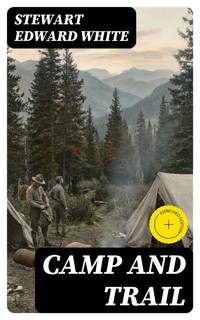
In "Camp and Trail," Stewart Edward White immerses readers in the rugged yet enchanting landscapes of the American wilderness, merging vivid descriptions and personal experiences into an engaging narrative. Written in the early 20th century, the book reflects the burgeoning interest in outdoor recreation and nature appreciation, prevalent during the Progressive Era. White's eloquent prose balances poetic observation with a pragmatic approach to camping and trekking, offering insights into the physicality of outdoor life while capturing the spiritual connection between humans and nature. Each chapter explores the interplay between adventure and introspection, making it a significant contribution to American nature writing. Stewart Edward White, an influential author of wilderness literature, was deeply inspired by his own extensive travels and explorations in the West. His background as an adventurer and his exploration of Native American cultures informed his perspective and narrative style. His passion for the outdoors and his ability to articulate the challenges and beauty of wilderness life led him to write "Camp and Trail," encouraging others to appreciate and engage with the natural world. Recommended for nature lovers, outdoor enthusiasts, and anyone seeking a profound connection to the wilderness, "Camp and Trail" serves as both a practical guide and an intimate reflection on life in the wild. White's ability to evoke the sights and sounds of the forest captivates readers, making this book a timeless classic for those yearning for adventure and tranquility. In this enriched edition, we have carefully created added value for your reading experience: - A succinct Introduction situates the work's timeless appeal and themes. - The Synopsis outlines the central plot, highlighting key developments without spoiling critical twists. - A detailed Historical Context immerses you in the era's events and influences that shaped the writing. - A thorough Analysis dissects symbols, motifs, and character arcs to unearth underlying meanings. - Reflection questions prompt you to engage personally with the work's messages, connecting them to modern life. - Hand‐picked Memorable Quotes shine a spotlight on moments of literary brilliance. - Interactive footnotes clarify unusual references, historical allusions, and archaic phrases for an effortless, more informed read.
Das E-Book können Sie in Legimi-Apps oder einer beliebigen App lesen, die das folgende Format unterstützen:
Veröffentlichungsjahr: 2022
Ähnliche



















Camp and Trail
Table of Contents
Introduction
Camp and Trail asks how far skill and fellowship can carry people when the impersonal wilderness insists on its own terms. Stewart Edward White builds this idea into a narrative that values competence without bravado and wonder without sentimentality. The book’s energy lies in the precise rhythms of travel, the careful making and breaking of camp, and the steady testing of judgment when weather, terrain, and fatigue push back. Without leaning on melodrama, White keeps the stakes real: safety, cohesion, and the dignity of doing things well. The result is an invitation to measure oneself against an environment that neither flatters nor forgives.
Situated firmly in the early twentieth century, Camp and Trail belongs to the tradition of American outdoor adventure writing that White helped to shape. It unfolds in backcountry camps and along the kinds of rough trails that demand planning as much as courage, and it privileges firsthand observation over ornament. The publication era matters: this is a time when mechanized convenience was spreading, yet vast stretches of country were still experienced at a walking pace. White’s book emerges from that hinge moment, translating lived field practice into narrative while resisting both nostalgia and technological triumphalism.
The premise is intentionally simple and therefore inexhaustible: a small party heads out, sets camp, and keeps moving, learning what each mile requires and what it refuses to permit. White’s prose is lucid and economical, attentive to physical detail without drowning in it. The tone is steady, calm when it can be, alert when it must be, and occasionally dry with understated humor. Readers encounter an itinerary shaped more by weather, light, and topography than by any imposed plot machinery. That restraint becomes the story’s quiet engine, letting the land’s demands and the travelers’ choices register with cumulative force.
One of the book’s lasting pleasures is its devotion to process. White gives space to the arts that make travel possible: choosing a campsite, handling tools, rationing time and energy, and reading signs that are invisible to the untrained. These passages never pose as a manual, yet they convey the logic behind each decision, showing how judgment is built from small, repeatable acts. The focus on method also foregrounds consequence; mistakes are not catastrophes by default, but they always carry a cost. In that balance between instruction and incident lies the book’s distinctive poise and its enduring credibility.
Beyond woodcraft, Camp and Trail concerns character under pressure. It traces how leadership circulates within a group, how trust is earned, and how patience becomes a form of strength. The wilderness is not romanticized as a benevolent tutor; rather, it is treated as an exacting standard against which motives, tempers, and habits are tested. The ethical dimension is understated yet present: attention to the land, restraint in taking from it, and respect for the work it requires. White’s people discover that efficiency and kindness are not at odds; the same discipline that keeps a party safe also makes it humane.
For contemporary readers, the book offers more than period charm. Its careful noticing models a kind of attention that modern life routinely scatters, and its emphasis on shared competence counters the solitary-hero myth. The pages speak to practical curiosity—the desire to know how things are done and why order matters when the margin for error is slim. They also register a form of environmental regard that feels current: stewardship expressed through preparedness, modesty, and limits. In an era of constant automation, White’s insistence on choosing, carrying, fixing, and cooperating confers dignity on work that is often hidden or outsourced.
Camp and Trail endures because it aligns storytelling with the real cadence of moving through the world on foot, asking readers to value patience, clarity, and care. It occupies a distinctive place in White’s broader outdoor writing, presenting a wilderness narrative grounded not in conquest but in conversation—with weather, terrain, tools, and companions. To approach it now is to enter a disciplined quiet, where decisions echo and small competences add up to safety and meaning. The book’s promise is unshowy but powerful: the journey will test you, and if you attend closely, it will also refine what you notice, what you value, and how you act.
Synopsis
Camp and Trail presents Stewart Edward White’s clear-eyed account of life in the open, written in the early twentieth century from his experience in North American wilderness travel. Blending instruction with narrative, he describes how ordinary people can go out under canvas and move through rough country with safety and comfort. The book’s guiding impulse is practicality: choose simple means, rely on tested methods, and cultivate judgment. Rather than romanticizing hardship, White treats camp routine as a learnable craft, organizing his material so readers follow the same sequence he used on trips—from planning, to the day’s march, to the quiet work that makes a temporary home.
White begins with preparation, arguing for careful choice of companions, a clear division of work, and a realistic estimate of what can be carried. He assesses clothing, bedding, tents, and cooking gear, always favoring durability and lightness over novelty. Provisions, he notes, should be simple, predictable, and easy to cook well. Where pack animals are used, he explains how to balance loads and protect backs; where travel is on foot, he stresses the discipline of trimming weight. These early chapters set the book’s tone: thrift without meanness, comfort without clutter, and readiness for a change in weather or plan.
From there, the book moves to the day’s travel: starting early, keeping a steady pace, and guarding against the small frictions that sap energy. White describes arranging the order of march, scouting uncertain stretches, and reading country by its water, timber, and contour. He offers ways to ford streams, manage steep pitches, and shift loads as conditions change. Throughout, he returns to the theme of method—tying on securely, keeping gear dry, and stopping to fix small faults before they become failures. The aim is not speed for its own sake, but a calm, economical rhythm that carries the party forward.
Camp routine receives equal attention. White explains picking a site with drainage, fuel, and shelter; pitching for wind; and arranging fire, kitchen, and sleeping quarters so movement is easy and safe. He gives simple cooking methods that yield reliable results, and he emphasizes sanitation and water care as the foundation of health in the field. Small habits—stowing tools, drying socks, banking a fire, laying out the morning—become the difference between comfort and discomfort. The camp, in his view, is a workshop as well as a refuge, and the discipline it teaches repays the traveler when weather or luck turns.
To keep the counsel grounded, White threads in field episodes that show principles under pressure. A misjudged crossing, a balky pack, or a sudden squall prompts a pause, a repair, or a change of route, and the lesson emerges without dramatics. Novices try methods, err, and try again; experienced hands show how to look, listen, and conserve strength. The running story is less about conquest than cooperation with place and circumstance. Even moments of sport or pursuit are framed as tests of patience, marksmanship, and restraint, linking skill at the firearm or rod to the larger craft of traveling well.
Beyond technique, the book reflects on conduct—toward companions, hired help, and the country itself. White argues for courtesy and steadiness as the glue of a successful party and for deference to the quiet knowledge of seasoned packers and woodsmen. He recommends taking only what can be used, leaving camps clean, and recognizing that wilderness travel depends on intact resources. These passages are not abstract lectures; they arise from the ordinary frictions of weather, fatigue, and judgment calls, and they resolve in rules of thumb a reader can retain. The result is an ethic of competence joined to modesty and care.
As the trip cycles from anticipation to routine and back to memory, White closes by showing how camp life clarifies values: food tastes better for work done, sleep follows order well kept, and scenery deepens when one has earned the miles. Camp and Trail thus serves both as a handbook and as a portrait of an outdoor culture at a formative moment in American recreation. Its specifics belong to its time, yet its counsel on simplicity, teamwork, and attention still travels. Readers come away equipped to plan, but also to notice, and to find in the trail a disciplined freedom.
Historical Context
Camp and Trail situates itself within the early twentieth-century boom in American outdoor literature, a field Stewart Edward White helped to define. Born in Grand Rapids, Michigan, in 1873, White earned a B.A. from the University of Michigan in 1895 and later an M.A. in 1903. He traveled widely in the North Woods and American West, and his journalism for magazines such as The Saturday Evening Post fed directly into books about woodcraft, mountains, and wilderness life. Drawing on firsthand expeditions and practical campcraft, his work addressed readers who were discovering recreational camping just as wild lands were being mapped, regulated, and celebrated.
The social setting for White’s audience emerged from late nineteenth‑century enthusiasm for organized excursions. After William H. H. Murray’s 1869 Adirondack guide sparked widespread interest, hiking and camping clubs multiplied, including the Appalachian Mountain Club (1876) and the Sierra Club (1892). New York created the Adirondack Park in 1892 and, under “Forever Wild” protections later embedded in the state constitution, treated the Forest Preserve as off‑limits to sale or logging. Periodicals such as Forest and Stream and Outing magazine promoted skills, destinations, and etiquette for city dwellers seeking seasonal escape. In this environment, narratives of camp routine, trail travel, and practical woodcraft resonated with novice and veteran outdoorspeople.
The Progressive Era’s conservation program deeply shaped expectations about wilderness use when White wrote. Under President Theodore Roosevelt (1901–1909) and forester Gifford Pinchot, the federal government expanded forest reserves and created the U.S. Forest Service in 1905 to manage public timber, watersheds, and grazing. The Antiquities Act of 1906 authorized presidents to proclaim national monuments, accelerating protection of scenic and archaeological sites. State game commissions standardized seasons and licenses, while the Lacey Act (1900) curbed interstate market hunting. Outdoor narratives from this period commonly balance enjoyment of backcountry freedom with respect for regulations and the emerging idea of scientific management.
White’s career also intersected with debates over timber and watershed policy. He had written influential logging novels set in Michigan—most notably The Blazed Trail (1902)—that depicted the industry’s practices and conflicts. Public concern over cutover lands and fire risk culminated in the Weeks Act of 1911, which authorized the federal purchase of eastern forestlands to protect navigable streams and create national forests. This shift from unregulated extraction to planned use formed the backdrop for many camping routes in the North and the Appalachians. Knowledge of logging roads, fire lines, and newly reserved tracts often framed access to remote lakes, ridges, and rivers.
Access to wild country was expanding rapidly thanks to railroads and commercial outfitters. Transcontinental and regional lines delivered travelers to gateways of the Rockies, Sierra Nevada, and northern forests; companies like the Great Northern promoted glacier and alpine scenery and later supported the creation of Glacier National Park in 1910. Urban outfitters, notably Abercrombie & Fitch (founded 1892), and mail‑order giants such as Sears, Roebuck supplied standardized tents, firearms, packs, and clothing. Improvements in lightweight cookware, canned foods, and printed topographic maps from the U.S. Geological Survey made longer trips feasible. Guides and packers formed local economies that served seasonal parties.
Print culture connected these experiences to a national readership. Forest and Stream, Field & Stream, and Outing commissioned first‑person sketches, gear reviews, and how‑to features, while general magazines like The Saturday Evening Post popularized adventurous travel narratives. Earlier woodcraft texts by “Nessmuk” (George W. Sears, Woodcraft, 1884) and Horace Kephart’s Camping and Woodcraft (1906) codified techniques that many readers brought into the field. White published across this ecosystem, blending instruction with vivid episodes. Advances in half‑tone illustration and portable cameras allowed publishers to reproduce camp scenes and trail photographs, further standardizing expectations about equipment, methods, and the aesthetics of wilderness trips.
Cultural ideals of the period valorized vigor, self‑reliance, and ethical restraint in the outdoors. Theodore Roosevelt’s 1899 “strenuous life” theme and the Boone and Crockett Club’s fair‑chase principles encouraged hunters and campers to cultivate skill while limiting waste. The Boy Scouts of America (founded 1910) and YMCA camping programs embedded trailcraft, map reading, and first aid into youth education, further normalizing organized trips under adult supervision. Within this framework, discussions of gear selection, fire safety, and observance of game laws signaled civic responsibility as much as personal competence. White’s prose participates in that ethos while emphasizing observation and measured adventure.
Within this matrix of recreation, regulation, and popular instruction, Camp and Trail reads as both document and guide to its moment. Its emphasis on logistics, camp order, and the pleasures of steady travel reflects a readership negotiating new access to public lands and new norms of conduct. The voice prizes accuracy in route‑finding and respect for seasons, while celebrating camaraderie, landscape, and wildlife observation more than conquest. By combining practical counsel with reflective description, White embodies the Progressive Era’s faith in competence and stewardship, offering an outdoor narrative that affirms emerging conservation ethics without losing the immediacy of camp life.




