


0,49 €
Niedrigster Preis in 30 Tagen: 1,99 €
Niedrigster Preis in 30 Tagen: 1,99 €
Mehr erfahren.
- Herausgeber: Booksell-Verlag
- Kategorie: Poesie und Drama
- Sprache: Englisch
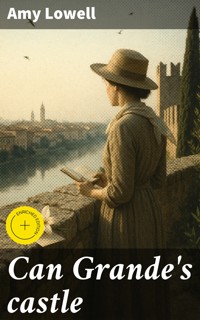
Amy Lowell's 'Can Grande's Castle' is a pivotal collection of free verse poems that showcases her mastery of Imagism'—a movement characterized by precision of imagery and clear, concise language. The work is infused with Lowell's deep appreciation for nature and her explorations of emotional landscapes, reflecting her innovative approach to poetic form in the early 20th century. The collection employs vivid imagery and sensory detail, prompting readers to engage intimately with the beauty and complexity of the world around them, while also offering profound insights into the human experience. As a prominent American poet of the early 1900s, Amy Lowell was a leading figure in the Imagist movement, advocating for a modern approach to poetry that emphasized clarity and emotional resonance. Her extensive travels in Europe and her exposure to various cultures significantly shaped her artistic perspective, allowing her to explore diverse themes in her work. Lowell's unique position as a female poet in a male-dominated literary landscape further fueled her desire to challenge conventional norms and assert her voice, which is vividly felt throughout this collection. 'Can Grande's Castle' is a compelling read for both enthusiasts of modern poetry and neophytes seeking to understand 20th-century literature. Lowell's lyrical brilliance and innovative style invite introspection and a renewed appreciation for the subtleties of nature and emotion. This collection is a testament to the enduring power of imagery in poetry and is highly recommended for anyone interested in the evolution of literary art. In this enriched edition, we have carefully created added value for your reading experience: - A succinct Introduction situates the work's timeless appeal and themes. - The Synopsis outlines the central plot, highlighting key developments without spoiling critical twists. - A detailed Historical Context immerses you in the era's events and influences that shaped the writing. - A thorough Analysis dissects symbols, motifs, and character arcs to unearth underlying meanings. - Reflection questions prompt you to engage personally with the work's messages, connecting them to modern life. - Hand‐picked Memorable Quotes shine a spotlight on moments of literary brilliance. - Interactive footnotes clarify unusual references, historical allusions, and archaic phrases for an effortless, more informed read.
Das E-Book können Sie in Legimi-Apps oder einer beliebigen App lesen, die das folgende Format unterstützen:
Veröffentlichungsjahr: 2022
Ähnliche

















Can Grande's castle
Table of Contents
Introduction
Amy Lowell’s Can Grande’s Castle explores how art carves durable chambers of feeling within the shifting architectures of history and power. It is a work that contemplates the way objects, buildings, and ceremonies outlast their makers, then gather new meanings as later eyes look on them. The title signals a fascination with courts, pageantry, and the social frames that shape artistic creation. What emerges is less a single story than a sustained meditation on seeing, remembering, and arranging experience, inviting readers to stand still long enough for images to disclose their secret geometries of emotion.
This is a poetry collection by Amy Lowell, an American poet associated with Imagism, first published in 1918. Its historical and cultural frame is wide, but the book’s title gestures toward medieval Verona and the famed patron Can Grande della Scala, evoking a world in which power and art meet. The genre is modernist lyric and narrative verse, at once sensuous and architectural. Reading it situates you in the early twentieth century, when poets experimented with free rhythms, precise imagery, and cross-cultural settings. The result is a work poised between historical resonance and the aesthetic innovations of its moment.
Can Grande’s Castle does not advance a single plot; instead, it offers a suite of long poems and sequences that stage richly textured scenes. The experience is immersive: one moves from chamber to chamber, encountering voices that speak, observe, and remember. Lowell marries the painterly clarity of Imagism with the dramatic energies of narrative poetry, producing tableaux that feel both immediate and layered. The mood ranges from ceremonious to intimate, from public spectacle to private reflection. Readers are guided not by events but by atmosphere and cadence, the sensuous pull of images that ask to be considered from multiple angles.
The voice is formal yet flexible, capable of crystalline description and broad architectural sweep. Lowell’s craft emphasizes precision—clean lines of image, tactile surfaces, and luminous color—while her rhythms expand and contract to match the scale of each scene. She blends lyric stillness with movement, giving the poems a cinematic turn without sacrificing musicality. Across the collection, the language favors clarity over ornament even as it accumulates opulence through pattern and recurrence. The result is a palpable sense of place and texture, as if the reader were tracing carvings on stone, feeling the coolness and weight of history under the palm.
Themes of patronage, spectacle, and cultural inheritance appear throughout, alongside questions about who frames art and to what ends. The poems often consider how cities become palimpsests, their surfaces written and rewritten by rulers, artists, and crowds. Lowell is drawn to thresholds—the border between private emotion and public ceremony, the moment when attention transforms an object into an emblem. Memory operates like architecture, with corridors that connect disparate rooms of experience. The collection thus probes the ethics of looking, the politics of display, and the consolations and distortions that occur when the past is curated for the present.
For contemporary readers, the book matters as an exploration of how beauty persists while contexts change. Published during the World War I era, it engages indirectly with fragility and endurance, suggesting that aesthetic form can both record and resist upheaval. It also offers a perspective on the circulation of cultural icons—how they travel, settle, and accrue meanings beyond their origins. As an American modernist examining European subjects, Lowell illuminates the pressures and privileges of working within inherited traditions, raising questions about ownership, influence, and the possibility of renewal. The poems invite contemplation rather than certainty, interrogating reverence without abandoning it.
Approach Can Grande’s Castle as you would a storied stronghold: pace yourself through its rooms, attune to echo and light, and let the drift from pageantry to intimacy guide your attention. The collection rewards rereading, as motifs recur and recombine to reveal new alignments of feeling and idea. Its pleasures lie in texture—the scrape of marble, the flare of metal, the hush before ceremony—and in the way voice and image assemble a contemplative space. Without resting on anecdote or revelation, the book builds an edifice of sensation and thought, inviting readers to inhabit the enduring chambers that art can make.
Synopsis (Selection)
Can Grande's Castle is a sequence of richly textured prose pieces by Amy Lowell that gather around the figure and milieu of a northern Italian lord’s court in the late medieval period. Rather than a single, linear story, the book unfolds as a cycle whose episodes are linked by setting, atmosphere, and recurring images. Lowell’s polyphonic prose layers visual detail, rhythm, and dialogue-like cadences to suggest the press of ceremony, politics, and art. The result is a portrait of a place and its energies: a castle alive with pageantry and administration, a city thrumming beyond its gates, and a culture negotiating the claims of power, beauty, and memory.
The opening establishes the castle as a living organism. Banners stir, courtyards ring with hoofbeats, fountains flicker in shaded cloisters, and the presence of the lord radiates through attendants and heralds. Without pausing for introductions, the text draws the reader into routines that feel both ritualized and urgent. Messengers arrive, petitions are presented, and the sequence defines its scale: stone walls, silks and steel, and the measured breathing of a household that governs. The first movement anchors the reader in a place where spectacle and purpose coincide, preparing the ground for the book’s oscillation between intimate rooms and the broad civic stage.
The perspective turns to the choreography of court life. Pages, stewards, and secretaries pass along decisions; musicians and readers provide entertainment that also folds into diplomacy; artisans display objects meant to impress and persuade. Lowell traces the channels by which influence moves: the private audience that precedes a public decree, the rumor that anticipates policy, the poem that reflects a patron’s ambitions. Names are secondary to function, keeping attention on the structures themselves. The narrative flow moves through layered scenes that reveal how art and governance intersect, how ceremony stabilizes authority, and how the castle’s rhythms synchronize with the needs of the city.
A martial current threads into the sequence as preparations and vigilance arise. Armor is inspected, squadrons assemble in the outer yard, and maps are studied beneath hanging lamps. The tone tightens without breaking the work’s measured cadence. Reports from neighboring territories enter, carried by riders whose dust and urgency counterbalance the castle’s polish. The pieces show power as labor: provisioning, negotiation, and the use of spectacle to maintain calm. Yet the focus remains descriptive rather than explanatory, emphasizing sensory impressions that outline a situation in flux. This section marks a turning point, foregrounding the tension between celebration and the possibility of conflict.
The gaze then extends beyond the walls to the city’s streets, bridges, and markets. Traders cross the river with bales and spices, guilds marshal for festivals, and craftsmen hammer patterns that echo the castle’s emblems. The chapters reflect civic life as a partner to courtly power, not merely its backdrop. Public ritual and private commerce interweave: processions pass shopfronts, bells measure labor and prayer, and the river binds neighborhoods like a steady refrain. By placing urban textures alongside court routines, the book frames a wider ecosystem whose vitality supports ceremony. The shift outward also offers contrast—voices multiply, scents mingle, and the scale of governance becomes visible.
The sequence broadens to adjacent centers of art and exchange, tracing lines of influence that run along roads and waterways. Envoys encounter workshops where metal glows and marble breathes; harbors and arcades mirror the castle’s desire for permanence in different materials. Here the writing heightens its attention to objects—statues, fabrics, instruments—treating them as repositories of intention and skill. This travel-like interlude expands the book’s map while reinforcing its core inquiry: how the visible shape of a culture conveys its forces. Though the settings vary, the tonal continuity holds, keeping the reader aware that each scene converses with the castle’s ideals and necessities.
Returning to the castle, the narrative gathers for a culminating display that unites earlier motifs. Tournaments, performances, and banquets unfurl in a meticulously timed sequence, each event reflecting a different face of authority: prowess, generosity, refinement. The orchestration of light, music, and movement illustrates how spectacle conducts emotion across a multitude, converting private craft into public meaning. Individuals appear as roles—rider, singer, herald—so the emphasis remains on the patterned whole. This climactic section underscores the book’s interest in ceremony as action: a calculated act of stability that also celebrates the artistry enabling it, while hinting at the fragile equilibrium such beauty sustains.
After the flourish, a quieter nocturne settles. Halls darken to pools of lamplight, banners fall still, and the river resumes its unadorned murmur. The writing narrows to footsteps in corridors, the fragrance of cooling stone, and the way memory lodges in spaces emptied of crowds. This pause allows earlier images to return—armor, tapestries, bridges—now seen as traces rather than instruments. The shift from public to inward registers the book’s cyclical rhythm: display followed by inventory, assertion followed by reflection. By placing silence after sound, the sequence emphasizes continuity without stasis, suggesting that the castle’s life proceeds through measured alternations.
The closing movement gathers the book’s central message: that power, art, and communal life continually shape one another, and that their artifacts hold the impress of those forces across time. Without resolving into a single moral, the work affirms how beauty functions as both ornament and instrument, how ceremony crystallizes purpose, and how cities and courts exchange energies. The finale leaves the castle poised within its landscape—river, road, and sky in balance—signaling endurance rather than triumph. In presenting a chain of scenes that build resonance instead of plot, Can Grande's Castle offers a structured meditation on culture as lived architecture.
Historical Context
Amy Lowell sets her sequence amid the signorial court of Cangrande I della Scala in Verona, chiefly between 1308 and 1329. The time is the high medieval phase of northern Italian city-states, when communes were yielding to one-man rule under powerful dynasties. Verona, straddling the Adige and the Alpine trade routes to Germany and the Adriatic, was a fortified, mercantile center whose civic rituals and martial culture framed politics and daily life. The setting extends across the Veneto and Lombardy, touching Vicenza, Padua, and Treviso, and is defined by imperial-papal rivalry, factional strife, and courtly magnificence. Lowell’s imagined chambers and streets mirror this precise geography and chronology.
The rise of the Scaligeri provides the political scaffold. Mastino I della Scala became captain of the people in 1262, inaugurating a dynasty that survived his assassination in 1277 to rule through Alberto I (1277–1301) and Alberto’s sons. Bartolomeo I governed Verona from 1301 to 1304, followed by Alboino I; in 1308 the young Cangrande was associated in rule and, after Alboino’s death in 1311, became sole lord until 1329. He centralized power through a court housed around the Piazza dei Signori and Santa Maria Antica. Lowell’s title evokes this signorial apparatus, using the image of the lord’s residence as a synecdoche for concentrated authority and ceremonial governance.
Guelf and Ghibelline factionalism structured politics. The Guelfs aligned with the papacy; the Ghibellines favored the Holy Roman Emperor. Florence’s Black Guelf coup in 1301, backed by Charles of Valois, expelled White Guelfs like Dante Alighieri in 1302. Across Lombardy and the Veneto, purges, confiscations, and vendettas uprooted elites, who sought refuge in sympathetic cities. Verona under the Scaligeri was a Ghibelline bastion, offering asylum to prominent exiles. Lowell’s scenes of tense banquets, whispered conspiracies, and shifting loyalties mirror the lived reality of factional polarization, illustrating how party labels governed marriage alliances, trade privileges, and the circulation of artists and intellectuals.
The Italian expedition of Emperor Henry VII of Luxembourg (1310–1313) reshaped regional alignments. Crossing the Alps in late 1310, Henry was crowned King of Italy at Milan in 1311 and besieged Guelph strongholds like Brescia. In 1311 he invested Cangrande as imperial vicar in Verona and Vicenza, strengthening Scaliger Ghibellinism. By 1312, Cangrande secured Vicenza from its Guelph leadership, consolidating a corridor eastward. Henry’s sudden death near Buonconvento in 1313 ended hopes of a stable imperial settlement, leaving ambitious signori to contest the vacuum. Lowell’s evocations of imperial embassies and ceremonial entries distill the precarious grandeur of a polity tethered to distant, transient imperial authority.
Cangrande’s campaigns against Padua and its Venetian-backed allies defined his reign. Between 1314 and 1328, he fought a shifting league of Padua, Treviso, Venice, and pro-Guelf cities, enduring wounds and setbacks yet pressing a relentless strategy. He repeatedly relieved and defended Vicenza, then forced Padua’s capitulation in 1328, temporarily displacing the Carraresi. In 1329 he entered Treviso, completing a chain of lordships across the Veneto. Four days later, on 22 July 1329, he died suddenly at Treviso, sparking rumors of poisoning that remain unproven. Lowell’s narrative attention to sieges, triumphal processions, and abrupt mortality reflects how conquest, spectacle, and fragile fortune defined Scaliger statecraft.
Dante’s exile intertwines politics and culture. After condemnation by Florence in 1302, Dante moved among northern courts, residing at Verona under Cangrande’s patronage circa 1312–1318 before dying in Ravenna in 1321. In Paradiso XVII, Dante praises a great Lombard lord widely identified as Cangrande; the contested Epistle to Cangrande presents the Paradiso and extols his virtues as imperial champion. This nexus of poetry and power animated Veronese court life. Lowell channels that milieu by staging encounters among patrons, poets, and envoys, showing how literary production depended on political shelter, and how rulers used artistic prestige and ceremonial magnificence to broadcast legitimacy amid civil strife.
Urban economy and civic display underwrote politics. Verona’s merchants profited from wool, leather, and spice trades funneled along Alpine routes and the Adige river. Public spaces such as the Piazza delle Erbe and Piazza dei Signori, the Palazzo del Podestà, and Santa Maria Antica structured governance and ritual. Nearby Padua’s Scrovegni Chapel (1303–1305), funded by banker Enrico Scrovegni and frescoed by Giotto, exemplified how wealth translated into visible piety and status across the region. The famed Scaliger tombs, begun in the 1330s, enshrine this ideology of glory. Lowell’s sensuous catalogues of fabrics, armor, and liturgy dramatize how commerce, art, and ceremony fused to sustain authority.
By dramatizing Cangrande’s court, the book critiques a political order grounded in factional exclusivity, militarized ambition, and patronage dependency. It exposes how civic splendor and processions masked coercion, confiscation, and the dispossession of exiles, while class divides separated armed nobles and merchant notables from artisans and the urban poor. The work highlights the precarity of subjects who navigated oaths to distant emperors and volatile signori, and the transactional nature of protection extended to artists and envoys. In rendering triumphs alongside rumors, betrayals, and sudden death, it interrogates the ethical costs of state-building and the instrumentalization of culture in fourteenth-century northern Italy.




