


Erhalten Sie Zugang zu diesem und mehr als 300000 Büchern ab EUR 5,99 monatlich.
- Herausgeber: epubli
- Kategorie: Gesellschafts- und Liebesromane
- Sprache: Englisch
Let yourself be carried away by the travelogue of a young woman who sets out to cross the Australian outback by bicycle. As a woman, she wants to make her way alone through one of the most hostile regions in the world. The story is based on a true event and is free of fiction. On her journey, she faces many obstacles. She camps alone in the wilderness and has to solve technical problems herself. Injuries and setbacks also complicate the adventure and call her goal into question. However, the athlete does not let herself be stopped, even though her doctors were convinced that she would never be able to ride a bike again. She suffers from a chronic pain disorder called CRPS (complex regional pain syndrome). It took years, but she fought her way back to life and onto her bike. Whether the demands of a tour lasting several months are possible with this condition and whether the pain will remain bearable is uncertain. This book is intended to encourage you to fight for your goals, no matter how hopeless some situations may seem!
Sie lesen das E-Book in den Legimi-Apps auf:
Seitenzahl: 348
Veröffentlichungsjahr: 2026
Das E-Book (TTS) können Sie hören im Abo „Legimi Premium” in Legimi-Apps auf:
Ähnliche



















Caroline Pasedach
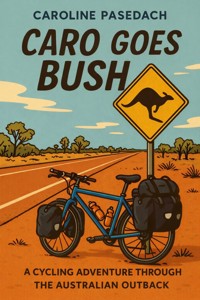
Caro goes bush
Caroline Pasedach
Caro goes bush
A cycling adventure through the Australian outback
Travelogue
Texts: © 2026 Copyright by Caroline Pasedach
Cover design: © 2026 Copyright by Caroline Pasedach
Publisher:
Dr. Caroline Anna Pasedach
Chr.-Kröwerath-Str. 136
67071 Ludwigshafen, Germany
Production: epubli – a service provided by neopubli GmbH,
Köpenicker Straße 154a, 10997 Berlin
Contact address in accordance with the EU Product Safety Regulation: [email protected]
Table of Contents
1. At the lowest point in life
2. Countdown
3. Packing list
4. Queensland Outback Queensland
5. Northern Territory
6. Western Australia
7. Closing remarks
1. At the lowest point in life
Fall
I saw stars. Suddenly everything went dark. What was going on here? I didn't know. It all happened so fast. Then I suddenly felt myself being pulled down. I fell down a slope on a steep meadow. The speed slowed down. There I was, lying on the grass. I realized that something was wrong with my right hand, very wrong indeed. I didn't need an X-ray to know that it was badly broken. I could tell. The pain was the worst I had ever felt. What had actually happened?
I was attending a seminar in Mayrhofen and a few of the participants wanted to go paragliding. Full of anticipation, we took the gondola up the mountain during our lunch break. The weather was unstable and the wind had changed direction. But we had experienced pilots with us and trusted their judgment.
Nevertheless, things went wrong. The pilot attached to the paraglider behind me told me to run. We ran. We took off, but the paraglider couldn't fully unfold because a gust of wind apparently came during the takeoff phase. In any case, we both crashed to the ground. I didn't know from what height. It could have been 20 cm or two meters, but it certainly wasn't very high.
But now I was standing there, in agony, just wishing it would stop. However, I didn't need a rescue helicopter because my injuries weren't life-threatening and I could walk.
I took the gondola down to the valley, called a colleague in the village who was already waiting with his car at the valley station and drove me to the nearest hospital.
Unfortunately, what I experienced there did not meet medical standards. I did not receive any pain relief, even though I asked for it. The X-ray showed a complex fracture of the forearm with fragmentation of the wrist. This was reduced using a splint and weights – still without analgesics. The pain was unbearable, I screamed. I had tears in my eyes and couldn't believe how brutal these doctors were!
As an anesthetist, I know how easy it is to provide adequate pain relief. I felt so helpless.
I could have sued the doctors, but that wouldn't have helped me now. Besides, I'm not a vengeful person. The irony of the story was that, because of the seminar, the village probably had more anesthesiologists than residents, but I didn't receive adequate pain management.
I have had many accidents and broken bones in my life, but this pain was unusually severe. Many years ago, I broke 16 bones at once during the Downhill World Cup race in Austria. Among other things, my thoracic spine was fractured nine times. I knew what pain was. But this was something on a whole different level. I am convinced that the pain syndrome manifested itself right from the start.
After this procedure, I was handed a box of ibuprofen. They couldn't be serious! As if that would help me now! I took the package, but I might as well have sucked on candy. Of course, it didn't relieve the slightest bit of pain.
Fortunately, a colleague got me stronger medication, which helped me get through the night.
Shattered right wrist and torn disc on the left
Immediately after the accident, I was suspected of having a pain syndrome. In the first CT scan, the radiologist said that I had a very high risk of developing CRPS, or complex regional pain syndrome.
The following weeks were awful. I could hardly sleep because of the pain and hoped every morning that it was all just a nightmare and that I would finally wake up. Despite adjusted pain medication, I was in severe pain. Nothing improved after the operation.
A few days after the procedure, I suddenly experienced severe shooting pains. The ulnar nerve had been damaged by the insertion of a screw. Fortunately, I didn't wait long and appropriate medication helped to control the nerve pain.
My fingers were stiff, even though they weren't injured. The swelling in my hand was so severe that I had to wait a long time before I could get a closed cast. My fingers turned blue and were cold.
When the cast was removed, all diagnostic criteria for CRPS were present, but the surgeons initially refused to acknowledge this. An emergency CT scan was performed, but no mechanical obstruction was found that could explain the limited mobility.
A few days after my cast was removed, a friend who is an anesthetist and pain therapist diagnosed me with CRPS. A few weeks later, I received professional support from a pain clinic. In the meantime, I started therapy on my own, following the guidelines.
My hand no longer felt like a part of me. It felt foreign. I was in constant severe pain and could hardly sleep. With the diagnosis came the fear that I might never be able to work again.
I had reached a point in my life where I was not doing well at all. I was severely overweight. The shift system at the clinic, with its many night shifts, had thrown me off balance. The night shifts left me without the energy to exercise. I was unhappy with myself, my body, and my life. And then came the CRPS diagnosis!
That's all I needed! The doctor didn't have to explain to me what CRPS, complex regional pain syndrome, was. I knew what it meant, and I was devastated! My right hand was useless. How could I, a right-handed person, continue my life without my right hand? I was an adventurer at heart! A life like before was unimaginable.
It was as if a part of me had died. I was told that I would never be able to ride a bike again. I loved everything to do with cycling, and now my life was supposed to be over?
Without cycling, my life would be missing its spice. I was alive, but I could no longer feel any joy.
Complex regional pain syndrome
Name: CRPS (complex regional pain syndrome) is a chronic condition. Previously, the terms “Sudeck's disease,” “sympathetic reflex dystrophy,” and “algoneurodystrophy” were used.
Cause: This is a pain syndrome with various triggers. It is usually triggered by an accident or surgery. An autoimmune disease is suspected, which leads to neurogenic dysregulation.
Risk factors: Women, severe injury, high pain intensity, other chronic pain, anxiety, depression, avoidance behavior.
Symptoms/complaints: Those affected complain of severe pain, swelling, circulatory disorders, and sensitivity disorders in the affected limb. Body perception and function are impaired.
Diagnosis: The diagnosis is based on clinical findings and is made using the Budapest criteria. These include disproportionate pain in combination with other complaints such as hypersensitivity, differences in skin temperature and color, increased sweating, swelling, movement disorders, and changes in nail or hair growth. In most cases, diagnosis is delayed. There is no laboratory marker that clearly indicates the disease. Bone changes may also be visible on X-rays or scintigraphy, but this is not always the case.
Treatment: Treatment is difficult and is based on intensive physical therapy and occupational therapy to restore function. In addition, psychological therapies help to reduce anxiety and avoidance behavior. There is usually a lack of scientific evidence that medication is effective. Anti-inflammatory drugs and painkillers are prescribed. Assistive devices are used to relieve strain during everyday activities. In selected cases, invasive therapies such as the implantation of nerve stimulators are used.
Prognosis: A complete cure is rare. 50% of those affected have permanent pain. One third of patients remain unable to work.
Help:
CRPS Network
Melanie Jeschke
Weiße Breite 24
37603 Holzminden, Germany
Phone: +49 (0)2563 915 340
E-Mail: [email protected]
A new beginning
I don't want to be crippled! I was devastated. I didn't want to live like this anymore! The pain was wearing me down. It was Christmas time when I received the diagnosis in black and white. My mood was at rock bottom. Death would have been a blessing at that point. I thought about taking my own life. Then this nightmare would be over immediately.
As a doctor, I was particularly familiar with the severe prognosis of this disease. I was aware that my view of this disease was distorted, but apart from that, the likelihood that I would ever be able to lead a carefree life again was slim.
But I wasn't depressed and I actually wanted to live! Sometimes you just have to reach for the stars! And so I made the decision to fight this disease and build a new life for myself. I gave myself a chance, because if you don't try, you've already lost. If I failed, I could still consider whether this was a life worth living. I had nothing left to lose anyway.
So many things had fallen out of balance. Since I was making slow progress with the therapies for my hand during the acute phase of my illness, I changed my diet at the same time. I was unhappy with my severe obesity and started a diet that focused on low-carbohydrate foods. However, such unbalanced diets are not healthy and are not recommended.
It is advisable to avoid highly processed foods such as ready-made products. In my opinion, they are the killers of humanity and responsible for many lifestyle diseases. But I do enjoy eating a burger from time to time. Prohibitions are not the solution. Strict diets often do not lead to long-term weight loss. You can and should consciously treat yourself to something.
The pounds came off very slowly. It took me almost five years to lose 50 kilograms / 100 pounds. But I never felt like I was missing anything.
I had declared war on CRPS. It wasn't going to get me down! I diligently went to physical therapy and occupational therapy. I found my personal pain threshold. It was a fine line between overdoing it and not doing enough. If I pushed myself too hard in therapy, the pain got worse. If I didn't challenge my hand enough, its function deteriorated. It was a tough and arduous journey. But things steadily improved.
Unfortunately, I suffered a torn tendon in my thumb, which required surgical intervention. However, as I was in an acute phase of inflammation, the operation had to be postponed.
Invasive surgery carries a high risk of relapse or worsening of the pain condition and should be avoided in cases of CRPS. After consulting with the doctors, however, we agreed that a second operation should be performed to restore the function of my thumb.
Despite perfect anesthesiological care before, during, and after the operation, unfortunately, there was a relapse. I had expected this and was ready to fight again!
The pain clinic confirmed the relapse of CRPS, which is why I quit my job at the clinic. I had worked with CRPS for months, but I was in pain when I had to move patients or write documents by hand. Based on my experience with the first flare-up, I knew that it would take months before I would be able to work again. I wanted to give my hand more time and thought about doing something else in the meantime.
I was offered the opportunity to undergo inpatient pain therapy, which I gratefully accepted. As a result, I regained almost complete function in my hand. In fact, I never had to undergo physical or occupational therapy for CRPS again after that.
Less than three weeks after completing my inpatient stay, I took a new job as a vaccination doctor at a newly opened vaccination center. This work was not as physically demanding and therefore just right for my hand.
Later on, I found a job as a ship's doctor with a german cruise ship company. The documentation was done on the computer and I mainly dealt with awake patients, so I was not physically challenged. In addition, I did not have to cook or run a household. This allowed my hand to recover slowly. Between assignments at sea, I worked as an anesthetist in various clinics through a temporary employment agency.
During treatment, I was told that I would never be able to ride a bike again. I was advised to find another sport or try a recumbent bike. However, a recumbent bike was not an option for me either, as it was unsuitable for my purposes. I enjoyed cycling races, especially 24-hour races, in which recumbent bikes are not permitted. I also wanted to travel outside Europe. However, it is not possible to take a recumbent bicycle on a plane because it exceeds the packing size.
Since cycling was out of the question at first, but I wanted to live out my thirst for adventure and the travel conditions after the coronavirus pandemic allowed it, I walked the Way of St. James.
I wanted to make peace with my new life and accept that I might never be able to ride a bike again. Over the course of five weeks, my hand improved significantly. I can't say exactly why that was. But I think the moderate exercise in the fresh air had an anti-inflammatory effect. Maybe some Camino magic helped too. Because miracles happen on the Camino de Santiago.
When I got home, I tried riding my mountain bike. It worked! I could tolerate the pain. And I wanted to ride my bike again so badly that I was willing to endure a certain amount of pain.
The problem was leaning on the handlebars. The best way for me to train was on the ergometer, because I could raise the handlebars so that there was less strain on my hands. This is still my preferred training method today.
I got on best with the mountain bike because it cushioned the bumps. The trekking bike also became an option because it had mountain bike tires. With CRPS, I was able to complete several multi-day tours, including two Alpine crossings.
I still have problems with road bikes, so unfortunately I can't go on longer tours with them. However, I hope that this is only a matter of time.
With the trekking bike, I was able to complete multi-day tours with little discomfort. In a test run, I rode through Texas for two weeks and now felt ready to plan a new adventure.
Australia
Perhaps Australia? Really? My last cycling trip took me through New Zealand, and it was incredibly beautiful. Since then, I had Australia in mind as a travel destination.
I opened Internet Explorer to gather information about a possible cycling trip through Australia. I read the first three lines of a travel guide for Australia. They warned about snakes and scorpions. I got scared and closed the program window right away. Australia was not for me! I should look for another trip.
A few weeks later, I searched the internet again, this time using different sources. Here, too, there were warnings about dangerous animals and climatic conditions. When traveling by bike, you have to camp in the wild. The thought made me shudder, and I rejected the plan again.
But Australia still wouldn't leave me alone. Would it be possible to cycle across Australia? I just had to dare to do it! I did some more research and found out that it was possible! It wouldn't be easy, and I would have to “jump through hoops.” I was afraid, but I couldn't let that deter me. I had to go for it anyway! Down Under, here I come!
But how could I protect myself from poisonous snakes? My fear came from uncertainty. The more I looked into the subject, the more confident I became. Animals don't normally attack humans without reason. They attack when they feel threatened. So I shouldn't give them any reason to do so. Respect nature, and it will respect you! A residual uncertainty remained, but that's always the case in life.
How can I escape the heat? Temperatures in Australia can reach over 50°C, which can be life-threatening when participating in sports. Timing was crucial here. Temperatures were moderate during the winter months. The weather in the north is tropical. There is no summer or winter there, only rainy and dry seasons. The Australian winter and dry season seem ideal for cycling. So I planned my tour for July and August.
The cycling guides recommended planning a route along the coast because of the better infrastructure. But anyone can do that! I wanted to go through the outback. I was convinced that I could master this challenge not only organizationally, but also physically.
Originally, I wanted to ride the Stuart Highway from Adelaide to Darwin. However, my friends didn't think that was a good idea. The State Department of Germany also issued an explicit warning against camping in the wild around Alice Springs, as there were sex offenders roaming freely there. Since I would have been forced to camp in the wilderness, it would be better to avoid the area around Alice Springs. I needed a new plan.
I have an acquaintance in Brisbane. That would be a great starting point! The route from Brisbane to Darwin was good! It led through the outback, but not via Alice Springs. Unfortunately, I wouldn't get to see Ayers Rock, but safety was more important to me.
Should I ride on side roads or on the highway? Side roads are obviously more pleasant for cycling. If I had a flat tire or got lost, it might be days before anyone came to my aid. Since my technical skills are limited to changing tires and inner tubes, I should probably stick to the highway. Here, I could always get help. If nothing else worked, I could ask campers to give me a ride.
The more I read about the subject, the stronger my determination to master this adventure became. Why do I want to ride through the outback? Because I can! Am I afraid? Yes, but I'm doing it anyway!
2. Countdown
Three days to go until departure. I was feeling a little queasy. It was this very trip that I had canceled three days before departure last year. No, I hadn't got cold feet.
My mother was seriously ill and died shortly after the planned departure date. In such a situation, I couldn't fly to the other end of the world. It was the right decision to cancel the trip.
I couldn't postpone the tour for a few months either, because I had work commitments on the one hand and had to take the climatic conditions into account on the other. In the north, it gets up to 50 degrees Celsius in the Australian summer. It would be suicide to be cycling at that time of year. That's why the only months I could consider were the cold months of July and August. So I waited a whole year and used the time to replan.
I am convinced that everything happens for a good reason. In the end, everything will be better!
During the extra year, I did a lot of research and found solutions that would allow me to achieve some of the goals that I had initially thought were unfeasible.
Last year, I wouldn't have known how to get to the Great Barrier Reef or Ayers Rock. The distances would have been far too great to cover by bike. But just because I'm traveling by bike doesn't mean I have to forego other modes of transportation. I could still take the bus or a rental car and turn rest days into adventure days. Looking back, before I left, I had no idea how unique Australia would be and that I would actually get to experience far more than I had dared to dream.
I made a list of my top five experiences that I definitely wanted to have:
Wild camping in the outback
Diving in the Great Barrier Reef
See Uluru from the air
Sleep in a swag (an Australian sleeping bag)
Drink beer in an outback pub
Another list included my top 5 Australian animals that I wanted to see:
Kangaroos
Crocodiles
Emus
Venomous snakes
Koalas
Suddenly, I had a brilliant idea and asked myself: Why not just write down my vacation experiences? I could turn it into a book! I knew it wouldn't be a bestseller. After all, I'm not J. K. Rowling, and my story won't be as fascinating as Harry Potter. But it's reality, not fiction.
I want to share my experiences, doubts, and fears. I want to show the highs and lows. In doing so, I let other people share in my experiences and encourage them to realize their dreams, even if they are scary.
I want to take readers on an adventure through Australia that is not your typical vacation. Last but not least, I want to encourage people with CRPS that more is possible than you think.
The final preparations were underway, and things were getting serious. A final ride on my touring bike boosted my confidence. I actually just wanted to ride around the block and test whether everything was working after the last repairs.
The brakes squealed for the first few meters. But I solved the problem myself, because I couldn't hope for help in the outback. In the end, all I had to do was tighten the quick release. Compared to my lightweight carbon road bike, the touring bike was very cumbersome to ride, and it was also twice as heavy. When I added the panniers, riding became very laborious.
I spontaneously extended the tour to Lindemannsruhe. I let rip on the downhill and made the road cyclists look old. In a previous life, I used to do downhill racing. Those days are long behind me, but on this descent, the downhill beast in me came out. Strava confirmed my assessment with my best time for this segment. It was also a good test to check out the new chainring. Unfortunately, I needed a new large chainring. However, my size was not available at such short notice, so I am now missing two teeth. But it would be enough for Australia. Test complete!
It was 30 degrees and I had neither water nor money with me. I actually only wanted to be out for ten minutes, but it turned into 2 ½ hours. It was a great test, during which I saw that I can manage without water, and it showed me that I'm ready for the outback.
After the test ride, it was time for a thorough scrub. Not a speck of dust was to be seen. The problem, however, was not the dust, but the soil. Like New Zealand, Australia has strict entry requirements. The equipment had to be free of soil to prevent the unintentional introduction of pathogens. This is usually strictly controlled upon entry. When I flew to New Zealand seven years ago, my tent hooks and tires were inspected for soil residue upon entry.
Since the bike was shiny, I packed it in a transport box. For this purpose, I use a cardboard box for flights with a different return airport. This can be disposed of after the outbound flight and reorganized in a bike shop before the return flight.
Qatar Airways will transport the bike at no additional charge, provided you do not check in any other bags. I put everything that didn't fit in my carry-on bag or wasn't allowed in it into the box with the bike. This meant that my checked baggage weighed 27 kg, exceeding the weight limit by 2 kg. I thought about it back and forth, but decided not to take anything out. I had spent weeks thinking about my equipment and there was nothing I could do without in good conscience. I would accept the extra charge from the airline.
I created the personal hashtag #Carogoesbush for social media. The idea came to me when I was reading a book about Australian slang. I thought it was perfect! “Going bush” is the Australian way of saying that you are leaving civilization behind and moving to the Australian desert.
I made a license plate with the hashtag for my bike. The hashtag would also look good on my cap. At first, I tried to do this with iron-on foil alone, but failed miserably.
Despite the limited time, I consulted a professional print shop. The result was impressive. I received a white cap with pink lettering for the pink helmet and a pink cap with white lettering for the rest of the time. I felt proud to now own personalized items.
But what if the plane didn't fly? The news was breaking the day before departure. Air traffic in Doha had come to a standstill. Iran had attacked US troops in Qatar. My flight with Qatar Airways was via Doha as a transfer airport. It was possible that the flight would not take place. Then the trip would have been over before it had even begun. The political situation was tense. The US went to war against Iran. I don't understand this war, even though I'm not a stupid person. But violence is never a solution.
I could only hope that I would arrive safely in Brisbane; the rest would fall into place. If I had had to book spontaneously with another airline, I would have done so. I was so close and would give anything!
Finally, the day of departure arrived. I was incredibly excited and very afraid that something might come up again. Who knew if there would be more rocket attacks? I really wanted to go to Australia and carry out my plan, which is why I was almost panicky about another cancellation.
My father drove me to the airport. Everything went smoothly there. Qatar was very helpful and accommodating with the bike. They even put “Fragile” stickers on the box. My bike had never been treated so well. I was optimistic. I honestly told them about the two extra kilos, but I didn't have to pay any extra. As long as the box didn't exceed a total weight of 30 kg, everything was fine.
The first flight to Doha went smoothly. However, I felt uneasy about staying in Doha. I was in a place where a rocket attack had taken place less than 48 hours earlier.
The second flight, which lasted 14 hours, passed more quickly than expected as I ate, slept, and watched movies, and I landed in Brisbane. My lucky streak continued: I picked up my bicyclee at the oversized baggage claim and proceeded to the biosecurity check. As in New Zealand, my coats and tent, including tent hooks, were inspected. The security officer was extremely satisfied with the cleanliness and my equipment was rated “spotless.” My entry was approved and I set foot on Australian soil.
I had made it! I was in Australia – and so was my bicycle. All my worries fell away! Now I could really get started! I felt an incredible sense of happiness, coupled with a great thirst for adventure.
My friend picked me up at the airport. It felt so good not to have to do everything on my own. The bike just about fit in his trunk, and he drove us to his apartment.
I had been here seven years ago, but this time everything was different. Back then, I had toyed with the idea of cycling across Australia, and now I was actually here! From the window of his apartment, you could admire the breathtaking skyline of Brisbane. I was living my dream! It was an excellent start.
I was in Brissie, as the inhabitants of Australia call their capital city of Queensland. Now nothing and no one could stop me! I was grateful that I had the opportunity to do what I wanted. Even though a wellness vacation was well within my budget, I wanted to go into the wilderness! If I had had one wish at that moment, it would have been a trip through the outback! I knew that I was in the right place at the right time.
View of the Brisbane skyline
3. Packing list
Trekking bike from Velotraum with front and rear luggage racks (already 7 years old) and 26-inch wheels, so that spare parts are available even abroad and the weight of the panniers is lower.
No hub dynamo: didn't really work for charging cell phones or power banks, so it was removed.
Schwalbe Marathon Mondial tires: A Marathon tire is always a good choice for puncture protection.
Ortlieb panniers: 2 large ones for the rear, 2 small ones for the front.
No handlebar bag: I found it very uncomfortable on this bike due to the high center of gravity.
Three bike bottles: with 1 l, 750 ml, and 500 ml capacities.
One spare tire Billy Bongers: A lightweight folding tire weighing only 500 g. A portable emergency solution in case a tire becomes unusable.
Two spare inner tubes: I usually only carried one, as I rarely get flats. This time, however, I decided to take two tubes, as I knew I would probably encounter thorns. I also didn't want to get stuck in the desert if I had a mechanical failure. I bought two more spare inner tubes in Mount Isa.
Lots of patches, tire levers, multitool, chain oil, cleaning cloths, manual air pump.
Three spare spokes for the front and three spare spokes for the rear.
Three sturdy cable ties and a repair kit for tent poles.
Sealant: Purchased locally in Cairns and recommended for Australia.
A compact gas stove from MSR and gas cartridge (purchased locally).
Four foldable water canisters (2 x 5 l, 2 x 2 l): It's better to plan for replacements, as two of mine broke. I bought a 10 l canister locally.
A water filter.
A foldable cooking pot, a foldable cup, plastic cutlery, a small towel, scissors, a salt/pepper shaker, dish soap, a kitchen knife, a flint, a lighter, and Ziploc bags.
A backpack stove: Not used and given away halfway through the trip.
Purchased locally: trekking food, mashed potatoes, dried onions, powdered milk, soy mince, oatmeal, granola bars, nuts.
2-person tent from MSR: compact, lightweight tent with extra space for bags inside, including tarp; weighs 1 kg in total.
Air mattress from Sea to Summit: ultra-lightweight with accompanying air pump
Down sleeping bag: with 600 fill power down, comfort temperature down to -1 degree Celsius, including thermal liner for cold nights in the south; in the north, the liner alone was usually sufficient as a sleeping bag
Camping chair from Helinox: weighs only 500 g, absolute luxury... is this already glamping?
Inflatable pillow
Sleeping mat: ultra-light foldable sleeping mat (250 g), as I was afraid that the thorns in the outback might puncture my air mattress.
Fly net for the head
Shampoo, conditioner, shower gel, insect repellent
First aid kit with emergency blanket, bandages, plasters, Steri-Strips, disinfectant wipes, and skin adhesive
Personal medication, including antibiotics for infections
Toothbrush and toothpaste
Deer tallow ointment, sunscreen, body lotion, hair ties, nail file, razor, face cream, cotton balls, panty liners, tampons, hairbrush, medium-sized towel, tweezers, nail polish, and nail polish remover
Helmet, buff, bike cap, sunglasses
Pink running vest with reflective stripes for good visibility on hot days
Rain jacket and softshell jacket: neon yellow with reflective stripes for good visibility
Long leggings, merino long-sleeved shirt, merino T-shirt, thin sweater, thin down jacket (purchased in Brisbane), short, quick-drying pants
Two pairs of cycling shorts, merino cycling jersey, 1 top, 3 sports bras, 2 pairs of underwear, 3 pairs of socks, compression stockings for the flight, flip-flops, baseball cap, ski underwear for cycling (purchased during the first week due to the cold), wool gloves and thermal gloves (purchased locally)
Technology: headphones, power bank, electronic compressor, Garmin satellite messenger, iPod Shuffle, small front and rear lights, headlamp, Garmin Forerunner watch, universal adapter plus charging cable
Baggage before departure
4. QueenslandOutback Queensland
Day 1: Final preparations
I was in Australia! Unbelievable! In the morning, I looked out of the window and admired the Brisbane skyline in daylight. It all had to be a dream!
I slept okay, considering the jet lag. The first thing I did was assemble my bike. I was so relieved when it was finished and ready to go.
There were a few other small things to take care of. I had to activate my SIM card. At first, I was frustrated because it wasn't working. I asked Google for help and then got it to work. I don't like dealing with technical things. The satellite messenger was also activated. With this device, I can make an emergency call from anywhere. In an emergency and without a network connection, it could save my life. Garmin took over two hours to install updates, so I had to do without my cell phone for the rest of the day.
My friend finished work earlier than planned, so we were able to do the necessary shopping together. I needed food and camping equipment. After the supermarket, we drove to a large outdoor store. There was no way I could take a gas cartridge on the plane, so I had to buy it locally. I had also already decided in Germany that it would be a good idea to have an extra sleeping mat, as I was afraid that the thorns in the outback might puncture my air mattress. As it was very cold, I also bought a thin down jacket.
Once everything was done and the day was still young, we went sightseeing. We took the ferry to the Modern Art Gallery, which exhibited some very impressive art objects.
My friend had a flight to Germany in the evening. So I drove him to the airport in his car. I quickly learned to drive on the left side of the road. The gearshift was particularly unfamiliar to me. I was relieved when I got back to the apartment safely.
It was very nice to have support on my first day. I am incredibly grateful to my friend for that. He was even interested in my bike box, so I didn't have to worry about disposing of it.
Day 2: Start of the adventure
After a pretty good night's sleep despite slight jet lag, I woke up early in the morning. I would have loved to jump straight on my bike. But it was still dark, and I also wanted to avoid rush hour traffic and set off a little later.
By waiting, I was even able to avoid a rain shower. With a temperature of 13 degrees Celsius, the day started off quite chilly.
When the time came, I closed the door behind me. Now there was no turning back! The adventure was about to begin! I was incredibly excited as I cycled the first few meters. The traffic was moderate and bike paths led me out of the busy metropolis at a leisurely pace.
Fast road cyclists passed me. As a touring cyclist, I was significantly slower, which was fine. After all, this wasn't about winning Strava trophies or crowns. It was about exploring a new continent and having fun cycling.
On the first day, I wanted to start with a short distance to get used to riding. Since I didn't plan to spend the whole day on my bicycle, I took a trip to a koala reserve.
The Lone Pine Koala Sanctuary was an incredible park where I was able to check off three of my “Big 5” wildlife species. The koalas were cute and quite active. They are very calm creatures and mainly nocturnal. They feed on eucalyptus leaves. With around 20 hours of sleep per day, they are even lazier than sloths, which only sleep 16 hours per day. Koalas have to conserve energy because eucalyptus provides very little energy.
Lone Pine Koala Sanctuary in Brisbane, Queensland
I also saw kangaroos and crocodiles. Not in the wild, but that was only the beginning of my trip! I was able to take selfies with the kangaroos and even photograph a dingo. I highly recommend this park.
After visiting the zoo, I booked accommodation for the night. The selection was limited, as there was no available rooms between 40 and 140 km. Since I was still in an urban area, I couldn't camp in the wild either. I decided to make it a really short day. I didn't need to cycle 140 km with over 2,000 meters of elevation gain up the Great Dividing Range.
I quickly booked a room on Airbnb in a quiet residential area. I was even allowed to park my bike in the garage. I was a little overwhelmed by the house rules. They explicitly described when the fan should be turned on and when the bathroom window should be opened. The rules seemed pedantic to me.
In the evening, I met the hostess. I immediately felt comfortable in her company because she was an extremely warm person. She was enthusiastic about my plans, gave me tips, and immediately followed me on Facebook.
I used the internet connection to book accommodation for the next three nights. I couldn't complain about the prices, the exchange rate was quite favorable for me, and I didn't have high expectations for the accommodations anyway. The distances were determined by the towns, and I preferred accommodation because it was still very cold at night and in the morning.
Distance traveled: to North Boval, 47 km, 583 m elevation gain
Day 3: Exciting navigation
It was cold! The tour started at an outside temperature of 9 °C. The Australian winter is currently colder than usual. But with my softshell jacket, it was quite bearable. I'm glad I didn't skimp on weight there.
When I set off, I forgot to start my Garmin watch. Damn! That meant the first five kilometers didn't count, because if it's not on Strava, it never happened. Oh well!
Since the highway was still very busy, I tried side roads. However, these were peppered with little surprises.
First, I was navigated over a bridge where I had to climb stairs. I searched desperately for alternatives, but there were none. A local even offered to help me. That was very nice, but I managed it on my own. I had carried the bags up separately from the bike. So the first obstacle was overcome.
Google Maps showed me a slightly shorter route than Organic Maps. I thought it would be a good idea to save a few kilometers, as it was going to be a long day. I was wrong. The route ended in a swamp. The mud became so thick that I couldn't ride any further and had to push the bike through the dirt. This was very difficult with the panniers. I was relieved when I finally had a paved road under my tires again. Google navigation had already failed me at this point.
Odyssey in the mud
While driving through the area, I was confused to see a dog driving a car. How could that be? Then I realized my mistake. In Australia, the steering wheel is on the other side. In fact, the dog was sitting in the passenger seat and not, as I had initially assumed, behind the wheel.
Most people greeted me: police officers, Greyhound bus drivers, horse riders, tractor drivers, and motorhome drivers. Even the residents waved from their verandas. Australia is known for its friendly people, and I got to experience that firsthand. I felt warmly welcomed.
Shortly before reaching my destination for the day, the road climbed steeply. The Great Dividing Range is aptly named. It separates the east coast from the Australian interior as a watershed. Several different mountain ranges stretch over a length of 3,500 kilometers, making it the third-longest mountain range in the world.
Although I was traveling incredibly slowly, I still won a Strava trophy. With Toowoomba, I had already reached the highest point of the trip. Toowoomba is the second-largest city in the Australian interior after Canberra.
I made it to the supermarket just before dark. I had rented a room at a campground, and as soon as I closed the door behind me, it started to rain. The room was equipped with air conditioning that could also be used for heating. I enjoyed the luxury of warm and dry accommodation.
Only the internet wasn't working properly, so I used my mobile data allowance for the most important uploads. Pointless surfing on the internet wasn't possible with mobile data. I didn't want to waste time on the internet anyway, so I read books on my Kindle app instead.
Distance traveled: to Toowoomba, 110 km, 1350 m elevation gain
Day 4: Cold and wet
It had rained all night, and it didn't look like the deluge was going to end anytime soon. After three cups of instant coffee, I started my day. The coffee powder was included in the room price, and this little luxury did me good.
Of course, I expected rain on the tour and pulled out all the stops. I put my rain jacket over my softshell jacket, both in neon yellow with reflective stripes.
When it got light, I ventured outside. I hadn't packed long pants or leg warmers because I hadn't expected it to be this cold. I wore the compression socks that I had actually only brought with me for the long-haul flight. It wasn't ideal, but there was nothing I could do about it at that moment.




