


56,99 €
Mehr erfahren.
- Herausgeber: John Wiley & Sons
- Kategorie: Wissenschaft und neue Technologien
- Sprache: Englisch
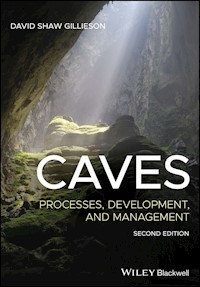
People have been interested in caves for a very long time. Our distant ancestors used them for shelter, as sources of water, and as places in which to conduct essential rituals. They adorned their walls with quite sophisticated artwork depicting both their existential and spiritual concerns. Caves feature in our mythology, they are used as places of worship in many cultures, and they are used throughout the world as places in which to store prized foodstuffs and wine. For at least two hundred years they have attracted scientists, artists, photographers, and recreational cavers. This book aims examines how caves form, the light they shed on past environments and climates, and the values, both environmental and cultural, that they provide to humanity.
This second edition of Caves: Processes, Development, and Management is a welcome revision of the author's earlier treatment released over twenty years ago. It has been updated, significantly expanded, and largely rewritten. The intervening years have seen a dramatic increase in karst and cave research globally, with significant advances in our understanding of fundamental processes, in our ability to extract proxy climatic and environmental data from cave deposits, and in our understanding of the breadth of cave values and as a result the complexity of their management needs. This new edition adopts a broad international perspective in the research examples used and the cited literature, and has actively sought out material from the tropical world and the southern continents, thus avoiding the European and North American bias frequently found in speleological publications.
Caves: Processes, Development, and Management, Second Edition, is organised into four sections. In the first section, contemporary processes of cave formation are examined. The second section of the book deals with past processes and their physical manifestation. In the third section, the use of caves by various organisms from bacteria to humans is explored. The final section of the book reviews our changing approaches to cave management and to catchment management on karst terrains. The book will be of use to anyone who is interested in caves and karst, or who wants to understand about cave formation, development, values and management.
Sie lesen das E-Book in den Legimi-Apps auf:
Seitenzahl: 923
Veröffentlichungsjahr: 2021
Ähnliche



















Table of Contents
Cover
Title Page
Copyright
Dedication
Preface and Acknowledgements
1 Introduction
1.1 Some Basic Propositions
1.2 Now the Details…
2 Caves and Karst
2.1 What Is a Cave?
2.2 What Is Karst?
2.3 Caves as Systems
2.4 Where Are the Deepest and Longest Caves?
References
3 Cave Hydrology
3.1 Basic Concepts in Karst Drainage Systems
3.2 Porosity and Permeability
3.3 Zonation of the Karst Drainage System
3.4 Defining the Catchment of a Cave
3.5 Analysis of Karst Drainage Systems
3.6 Structure and Function of Karst Drainage Systems
3.7 Karst Hydrology of the Mammoth Cave Plateau, Kentucky
References
4 Processes of Rock Dissolution
4.1 Introduction
4.2 Karst Rocks
4.3 Processes of Dissolution of Karst Rocks
4.4 Hydrothermal Solution of Limestone
4.5 Solution of Evaporites
4.6 Solution of Silicates in Meteoric Waters
4.7 Caves in Quaternary Limestone in Southern Australia
References
5 Speleogenesis
5.1 Classifying Cave Systems
5.2 Controls of Rock Structure on Cave Development
5.3 Meteoric Speleogenesis, Unconfined and Confined
5.4 Hypogene Speleogenesis
5.5 Flank Margin Speleogenesis
5.6 Caves Formed in Gypsum
5.7 Lava Tubes, Weathering Caves, and Pseudokarst
5.8 Life History and Antiquity of Caves
5.9 Geological Control and the World's Longest Cave
References
6 Cave Interior Deposits
6.1 Introduction
6.2 Carbonates
6.3 Controls over Carbonate Mineralogy
6.4 Other Cave Deposits Formed by Carbonate Minerals
6.5 Growth Rates of Speleothems
6.6 Important Non‐carbonate Minerals
6.7 Ice in Caves
6.8 Other Minerals
6.9 Cave Deposits of the Nullarbor Plain, Australia
References
7 Cave Sediments
7.1 Introduction
7.2 Clastic Sediment Types
7.3 Processes of Sedimentation
7.4 Sediment Transport and Particle Size
7.5 Diagenesis of Cave Sediments
7.6 Stratigraphy and its Interpretation
7.7 Provenance Studies
7.8 Cave Sediments and Environmental History at Zhoukoudian, China
References
8 Dating Cave Deposits
8.1 The Importance of Dating Cave Deposits
8.2 Dating Techniques and the Quaternary Timescale
8.3 Palaeomagnetism
8.4 Uranium Series; Uranium‐Thorium, Uranium‐Lead
8.5 Radiocarbon
8.6 Other Dating Methods: Cosmogenic Radionuclides, and Tephrochronology
8.7 Timing Glacial and Interglacial Events in New Zealand
References
9 Cave Deposits and Past Climates
9.1 Introduction
9.2 Oxygen Isotope Analysis
9.3 The Last Glacial‐Interglacial Temperature Record
9.4 Carbon Isotopes and Environmental Changes
9.5 Cyclone History in the Indo‐Pacific Region
9.6 Other Proxy Records (Trace Elements, Annual Laminae, Pollen, Lipid Biomarkers)
9.7 The Long Environmental History of the Nullarbor Plain, Australia
9.8 Some Speculations on the Future
References
10 Cave Ecology
10.1 Introduction
10.2 Classification of Cave Life and its Function
10.3 Adaptations and Modifications to Life in Darkness
10.4 Life Zones within Caves
10.5 The Cave as a Habitat
10.6 Energy Flows in Cave Ecosystems
10.7 Cave Microbiology
10.8 Origin and Dispersal of Cave‐Dwelling Animals
10.9 Threats to Cave Fauna
10.10 Conservation of Biological Diversity in Caves
10.11 Caves and Ecosystem Services
10.12 White Nose Syndrome
10.13 Unravelling the Secrets of the Carrai Bat Cave
References
11 Cave Archaeology
11.1 Introduction
11.2 Prehistoric Uses of Caves
11.3 Cave Faunas and Hominids
11.4 Cave Art in Context
11.5 Depositional Environments in Caves
11.6 Cave Deposits and Biological Conservation
11.7 Taphonomy of Cave Deposits
11.8 Archaeology of Liang Bua Cave, Flores (the Hobbit Cave)
References
12 Historic Uses of Caves
12.1 Introduction
12.2 Caves as Shelter
12.3 Caves as Sacred Spaces
12.4 Caves as Sources of Raw Materials
12.5 Cave Tourism
12.6 Cave Dwellings in Turkey
References
13 Cave Management
13.1 Introduction – Caves as Contested Spaces
13.2 Interpretation and Guide Training
13.3 Cave Lighting
13.4 Some Engineering Issues in Caves
13.5 Impacts of Visitors and Infrastructure on Show Caves
13.6 Radon Risk in Caves
13.7 Cave Cleaning and its Impacts
13.8 Impacts of Recreational Caving on Caves
13.9 Cave Rescue
13.10 Cave Inventories and Alternative Management Concepts
13.11 Rehabilitation and Restoration of Caves
13.12 Cave Classification and Management
13.13 Policy Approaches to Cave and Karst Protection
13.14 Management of the Gunung Mulu World Heritage Area, Sarawak, Malaysia
References
14 Catchment Management in Karst
14.1 Introduction
14.2 Basic Concepts in Karst Management
14.3 Defining Karst Catchments
14.4 Vegetation and Caves
14.5 Accelerated Soil Loss in Karst
14.6 Agricultural Impacts
14.7 Fire Management in Karst
14.8 Conservation Issues in Karst
14.9 Assessing Vulnerability in Karst Management
14.10 Understanding Disputes Over Cave and Karst Resources
14.11 The IUCN Guidelines for Cave and Karst Protection
References
15 Documentation of Caves
15.1 Geoheritage Assessment
15.2 Cave Mapping
15.3 Cave Photography
15.4 3D Scanning of Caves
15.5 Drones
15.6 Mapping World Heritage Caves in Gunung Mulu National Park, Malaysia
References
Glossary of Cave and Karst Terminology
Further Reading
Geographical Index
Subject Index
End User License Agreement
List of Tables
Chapter 2
Table 2.1 Karstic terrains and processes.
Table 2.2 Friars Hole Cave system, West Virginia (from Worthington 1984).
Table 2.3 The 20 deepest caves of the world (as of October 2019).
Table 2.4 The 20 longest caves of the world (as of October 2019).
Chapter 3
Table 3.1 Porosity types and karst aquifer properties.
Table 3.2 Zonation of the karst drainage system.
Table 3.3 Summary of some fluorescent dyes used in water tracing.
Table 3.4 Discharge characteristics for distinguishing spring flow types.
Chapter 4
Table 4.1 Classification of limestones.
Table 4.2 Classification based on the median grain size.
Table 4.3 Simplified processes of solution of carbonates.
Table 4.4 Total hardness measurements at Waitomo, New Zealand.
Chapter 5
Table 5.1 Classification of solutional caves.
Table 5.2 Deepest shafts of the world as of September 2019.
Chapter 6
Table 6.1 Modes of water motion and resulting speleothem shapes.
Table 6.2 Carbonate minerals commonly found in caves.
Table 6.3 Measured growth rates of speleothems.
Table 6.4 Secondary minerals in the Nullarbor caves (Australia).
Chapter 7
Table 7.1 Cave sediment types.
Table 7.2 Important syndepositional and postdepositional processes and agents...
Chapter 8
Table 8.1 Bighorn River (Wyoming, USA) incision rates based on cave sediment ...
Table 8.2 Cosmogenic nuclide concentrations, burial ages and erosion rates fr...
Chapter 9
Table 9.1 Temperature dependence of oxygen isotope enrichment in calcite.
Table 9.2 Age and pollen yield of Nullarbor speleothems.
Chapter 10
Table 10.1 Invertebrate orders with more than 50 stygobionts and troglobionts...
Table 10.2 Estimates of dissolved organic carbon from Organ Cave and Postojna...
Table 10.3 Water quality parameters and biodiversity indices for three pollut...
Chapter 11
Table 11.1 Some of the characteristics of active karst settings and passive k...
Table 11.2 Proposed correlation of fauna and environmental conditions at Nett...
Chapter 13
Table 13.1 Show caves numbers, visits, and economy.
Table 13.2 British cave radon survey results, 1989–1992.
Table 13.3 Radon measurements in some Australian caves.
Table 13.4 Minimal impact code for caving.
Table 13.5 Contrasting Paradigms for Protected Areas, from Phillips (2003).
Chapter 14
Table 14.1 Sources of water pollution in caves.
Table 14.2 Karst disturbance index main categories.
Table 14.3 Scoring of the layers for EPIK.
Table 14.4 The total score in the EPIK model is termed aquifer protection (Fp...
Table 14.5 Recorded agricultural and non‐agricultural impacts on British cave...
Chapter 15
Table 15.1 UIS survey standards.
Table 15.2 Point cloud processing software packages.
List of Illustrations
Chapter 2
Figure 2.1 Exploring a drained phreatic passage in Dan yr Ogof, Wales.
Figure 2.2 The Cares Gorge, Picos de Europa, Spain. A karst terrain with exp...
Figure 2.3 A hypothetical cave system showing the potential types of inputs ...
Figure 2.4 Stalagmites dated at 45000 years ago, capping mudflow deposits in...
Figure 2.5 Plan of the Friars Hole system, West Virginia, USA. Several caves...
Chapter 3
Figure 3.1 Stream passage in the Grotte Milandre, Switzerland.
Figure 3.2 Relationship between flow path length and angle between joint and...
Figure 3.3 In Atea Kananda, Papua New Guinea, the feature known as The Turbi...
Figure 3.4 Conceptual types of karst aquifers and their mixtures.
Figure 3.5 Conceptual scheme of the sensitivity of karst aquifers to disturb...
Figure 3.6 Longitudinal sections of flow paths in limestone cave conduits, i...
Figure 3.7 Improvements in cave diving technology have resulted in major adv...
Figure 3.8 The main passage of Gua Tempurung Cave, Malaysia, shows a fossil ...
Figure 3.9 Stream sink of the Baia River, Karius Range, the Southern Highlan...
Figure 3.10 Absorption and emission spectra of blue (Amino G acid), green (L...
Figure 3.11 Stream sink and spring flood hydrographs from Takaka Hill, New Z...
Figure 3.12 Interpretation of an idealised spring hydrograph and chemograph....
Figure 3.13 In Mamo Kananda, Papua New Guinea, the section of cave known as ...
Figure 3.14 Flood pulse generation and hydrograph forms resulting from flow ...
Figure 3.15 The karst spring of Longgong Dong (Dragon Palace Cave), Guizhou,...
Figure 3.16 Karst spring types in relation to the exponent α of the recessio...
Figure 3.17 Ten‐year spring hydrograph and chemograph from the Argens Spring...
Figure 3.18 Frequency distributions of conductivity of karst spring waters i...
Figure 3.19 Effects of variation in recharge, storage and flow types on the ...
Figure 3.20 Scheme of storages and flow linkages in a karst drainage system....
Figure 3.21 Flow paths in Parker Cave, Kentucky, USA, following rainfall eve...
Figure 3.22 The stream sink of the Tekin River Cave, Oksapmin, Papua New Gui...
Figure 3.23 Hydrology, potentiometric surface, and underground flow routes d...
Figure 3.24 A passage in Flint Ridge Cave, Kentucky, USA, showing phreatic p...
Figure 3.25 The evolution of knowledge about the Graham Springs karst basin,...
Figure 3.26 Turnhole Spring, close to the Green River baselevel in the Mammo...
Chapter 4
Figure 4.1 Global distribution of carbonate rocks. Carbonate karst category ...
Figure 4.2 Classification of carbonate rocks by relative proportions of calc...
Figure 4.3 Thinly bedded Tertiary limestone with stylolites at Punakaiki, Ne...
Figure 4.4 Massive fossiliferous micritic limestone with brachiopods and bre...
Figure 4.5 Major types of limestone.
Figure 4.6 Gently dipping Miocene limestone in the Muller Range, Papua New G...
Figure 4.7 Facies types for carbonate reefs, with an example from the Napier...
Figure 4.8 Reef talus limestone of Devonian age exposed in the walls of a fo...
Figure 4.9 Sea cliffs at the edge of the Nullarbor Plain, exposing Nullarbor...
Figure 4.10 Precambrian dolomite outcrop at the entrance doline of Nowranie ...
Figure 4.11 Equilibrium solubility of calcium carbonate in contact with air ...
Figure 4.12 The “mixing corrosion” principle: solubility of calcite with res...
Figure 4.13 The cascade of carbon dioxide through the vegetation, soil, and ...
Figure 4.14 Enlarged joints in the epikarst are exposed in marble quarry wal...
Figure 4.15 Dissolved calcium concentrations in the Riwaka karst, New Zealan...
Figure 4.16 Underground circulation of the sandstone karst of the Sima Aonde...
Figure 4.17 Sima Aonde on Auyantepui, Venezuela. Yellow circle indicates spr...
Figure 4.18 Karst areas of Australia. Map by K.G. Grimes.
Figure 4.19 Cross‐bedding in dune limestone 135 000 years old on south coast...
Figure 4.20 Features of syngenetic karst in a dune limestone result from sol...
Figure 4.21 Solution pipes in dune limestone of the Bridgewater Formation, C...
Figure 4.22 Collapse doline in dune limestone, Lake Cave, Leeuwin‐Naturalist...
Figure 4.23 Speleothems developed on rubble pile, Ngilgi Cave, Leeuwin‐Natur...
Figure 4.24 A linear stream cave (WI‐63) follows the contact between dune li...
Figure 4.25 Aerial photo showing mapped cave passages in the Jewel‐Easter an...
Chapter 5
Figure 5.1 Various types of karst and modes of origin of caves.
Figure 5.2 Proto‐caves along a bedding plane in Clearwater Cave, Sarawak, Ma...
Figure 5.3 Elliptical passage in Clearwater Cave (Malaysia) showing the cont...
Figure 5.4 Strong control of steeply inclined joints and bedding in Atea Kan...
Figure 5.5 Variation in passage shapes in relation to bedding and joint orie...
Figure 5.6 Joint guided shaft in Greftsprekka Cave, Gildeskal, Norway. The c...
Figure 5.7 The sheer size of Sarawak Chamber in Lubang Nasib Bagus (Good Luc...
Figure 5.8 Plan and section of Lubang Nasib Bagus (Good Luck Cave), Mulu, Sa...
Figure 5.9 Geological context of Sarawak Chamber (Mulu, Sarawak, Malaysia). ...
Figure 5.10 Development of cave conduits from a single input according to Ew...
Figure 5.11 The four‐state model differentiating the basic types of phreatic...
Figure 5.12 Wall notches in a section of Clearwater Cave, Sarawak, Malaysia,...
Figure 5.13 The abandoned phreatic tube of Selminum Tem, Papua New Guinea, i...
Figure 5.14 Common gradational features in phreatic caves: (a) isolated vado...
Figure 5.15 The geometry of successive caves in a multiphase system is affec...
Figure 5.16 The Lavani Valley, a polje in the Southern Highlands of Papua Ne...
Figure 5.17 Plan of the Siebenhengste‐Hohgant‐St Beatus‐Barenschacht system,...
Figure 5.18 Three‐dimensional view of the Siebenhengtse cave system (Switzer...
Figure 5.19 Major caves in the Ortobalagan Valley, Georgia. Red dots indicat...
Figure 5.20 Geological and hydrological cross‐section of the Arabika Massif,...
Figure 5.21 Profile of Krubera Cave, from Call of the Abyss project.
Figure 5.22 Gunung Mulu National Park with limestone massifs (Malaysia).
Figure 5.23 Evolution of the Mulu karst, Malaysia (Greyscale, showing tianke...
Figure 5.24 Fluvial solution notch in the wall of Clearwater Cave, Mulu, Mal...
Figure 5.25 Ghar‐e‐Ghala entrance and section, Zagros Mountains, Iran. Note ...
Figure 5.26 Conceptual representation of epigene (a) versus hypogene (b) spe...
Figure 5.27 Bullita Cave (Norther Territory, Australia) and its karrenfield....
Figure 5.28 Caves of the Pál Valley, Budapest, Hungary.
Figure 5.29 The usual suite of rising flow features, diagnostic of a hypogen...
Figure 5.30 The Champignons Cave, Provence, France, is an isolated chamber. ...
Figure 5.31 Shallow caves developed under caprock in syngenetic karst, West ...
Figure 5.32 Flank margin caves in Pleistocene dune limestone, Ravine des Cas...
Figure 5.33 Lirio Cave, Isle de Mona, Puertp Rico, USA. A: schematic of flan...
Figure 5.34 Plan of Optymistychna Cave, Ukraine. This 257 km long maze cave ...
Figure 5.35 Typical passage in Ozernaja gypsum maze cave, Ukraine.
Figure 5.36 Major passages in Mammoth Cave, Kentucky, USA, and their relatio...
Figure 5.37 Map of the Mammoth Cave System (USA) and its relation to the Gre...
Figure 5.38 Principal morphological types of passages in Mammoth Cave, Kentu...
Figure 5.39 Vadose canyon heavily modified by collapse processes at Dyer Ave...
Figure 5.40 Cleaveland Avenue in Lower Mammoth Cave, Kentucky, USA.
Figure 5.41 The main passage of Indian Cave, Mammoth Cave National Park, Ken...
Chapter 6
Figure 6.1 A massive speleothem column dwarfs the caver in Khan Hall, Kubla ...
Figure 6.2 Straw speleothems about 1 m long in Jewel Cave, Augusta, Western ...
Figure 6.3 Stalactites and columns reflected in a pool, Lake Cave, Margaret ...
Figure 6.4 Shawl formation 250 cm high in Junction Cave, Wombeyan, New South...
Figure 6.5 Massive stalagmites in the Hall of the Thirteen, Gouffre Berger, ...
Figure 6.6 Helictite formation in Barellan Cave, Jenolan, New South Wales, A...
Figure 6.7 Quill anthodites composed of aragonite in Shishkabob Cave, Mole C...
Figure 6.8 Effects of pCO
2
variation on the equilibrium solubility of calcit...
Figure 6.9 Cave coralloid formations in Resurrection Cave, Mount Etna, Queen...
Figure 6.10 Mixed calcite and gypsum stalagmite in Gua Tempurung, Malaysia....
Figure 6.11 Gypsum encrustations in Ozernaja Cave, Ukraine.
Figure 6.12 Ice Stalagmites in Lofthellir, Iceland.
Figure 6.13 Entrance chamber of Koonalda Cave, Nullarbor, Australia. Black f...
Figure 6.14 The main passage of Abrakurrie Cave, Nullarbor Plain, is typical...
Figure 6.15 Longitudinal sections and plans of some deep Nullarbor Plain cav...
Figure 6.16 Gypsum flowers in Easter Extension, Mullamullang Cave, Nullarbor...
Figure 6.17 Halite speleothems overgrowing gypsum, in turn overgrowing old c...
Figure 6.18 Stegamite in Gorringe Cave, Nullarbor, Australia.
Figure 6.19 Exsudation or salt wedging of cave ceiling, Webbs Cave, Nullarbo...
Figure 6.20 ‘Coffee and cream’ speleothem banks in Mullamullang Cave, Nullar...
Figure 6.21 Spring Passage in Old Homestead Cave, Nullarbor, Australia. A ty...
Chapter 7
Figure 7.1 Huge sand cone in Sand Cave, Naracoorte Caves, Australia.
Figure 7.2 Distribution of stress lines around natural cavities in limestone...
Figure 7.3 An abandoned river canyon in Selminum Tem, Papua New Guinea, has ...
Figure 7.4 The 50 m entrance shaft of Greftsprekka Cave, Norway, has been he...
Figure 7.5 Developmental phases of the Otoska Jama, a part of the Postojna c...
Figure 7.6 Processes affecting cave sediments through time. Cave sediments m...
Figure 7.7 Empirical relationships between mean particle diameter in mm, and...
Figure 7.8 Stratigraphy and particle size characteristics of cave sediments ...
Figure 7.9 A flowstone dated by uranium series methods at c. 50 000 years ag...
Figure 7.10 Pluvial sediments of the underground River Rak in Planinska Jama...
Figure 7.11 Scheme of fluvial cave sediment structures in relation to deposi...
Figure 7.12 Alternate bands of oxidised and reduced fine clay sediments fill...
Figure 7.13 Gypsum surface layers formed near a constriction in the passage,...
Figure 7.14 Main fossil site (Western section) viewed from the entrance of t...
Figure 7.15 Stratigraphy of archaeological deposits at Location 1, Zhoukoudi...
Figure 7.16 Exterior of the Pigeon Hall Cave, Zhoukoudian, China.
Figure 7.17 Main Western section at Location 1, Zhoukoudian, China. Stratigr...
Chapter 8
Figure 8.1 Daxiao Shan, a perched phreatic tunnel north of Longgong, Guizhou...
Figure 8.2 The Quaternary timescale and the effective range of comparative, ...
Figure 8.3 The magnetic polarity timescale and the record of normal and reve...
Figure 8.4 Schema of the geochemical pathways of uranium and thorium into ca...
Figure 8.5 The three principal decay series for uranium and thorium nuclides...
Figure 8.6 Graphical illustration of the
230
Th/
234
U dating method. Speleothe...
Figure 8.7 The effect of correction for initial
230
Th illustrated using a la...
Figure 8.8 (a) U‐Pb data for Nullarbor sample LBCM01 (‘M0‐1’) plotted using ...
Figure 8.9 Stalagmites throughout the Northern Hemisphere experienced change...
Figure 8.10 Excavation of organic‐rich entrance facies dating to the late Pl...
Figure 8.11 (a) Regional tropospheric
14
C curves for the period ad 1955–2001...
Figure 8.12 Topographic cross section showing position of Spence Cave in rel...
Figure 8.13 Plan and long section of Bulmer Caverns, northwest Nelson, New Z...
Figure 8.14 Location of Aurora‐Te Ana‐au Cave beneath the side of Lake Te An...
Figure 8.15 Lake Te Anau (New Zealand) with an incised valley of Tunnel Burn...
Figure 8.16 Projected long profile of Aurora‐Te Ana‐au Cave (New Zealand) fr...
Figure 8.17 Model of Aurora Cave (New Zealand) as a glaci‐fluvial sediment t...
Figure 8.18 Twin Falls in Aurora Cave, Fiordland, New Zealand.
Figure 8.19 Cross‐section showing interbedded glaciofluvial sediments and sp...
Figure 8.20 Comparison of Aurora Cave (New Zealand) speleothem growth stages...
Chapter 9
Figure 9.1 Longitudinal section through a stalagmite from Mimbi Cave, Kimber...
Figure 9.2 The Devils Hole (Nevada, USA)
δ
18
O
series from 160 to 4.5 ka...
Figure 9.3 The Soreq Cave (Israel)
δ
18
O
and
δ
13
C
composite record,...
Figure 9.4 Chinese speleothem
δ
18
O
records over the past 640 000 years,...
Figure 9.5
δ
18
O
c
and
δ
13
C
c
variations along the growth axis of a s...
Figure 9.6 Example of calibration of a speleothem proxy against climate; ann...
Figure 9.7 Transfer functions developed for stalagmites from northern Norway...
Figure 9.8 Range of
δ
13
C
values for different materials found in the na...
Figure 9.9 An active stalagmite from Fern Cave, Chillagoe, Queenland, Austra...
Figure 9.10 Comparisons of stalagmite layer thickness with wet season rainfa...
Figure 9.11 Annual
δ
18
O
‰ (vPDB) 1226–2003 CE for a speleothem from Chil...
Figure 9.12 Timing of tropical cyclone occurrences, high wet season rainfall...
Figure 9.13 Detrended
δ
18
O
‰ (vPDB) values to account for
δ
18
O
soil...
Figure 9.14 Comparison of changes in speleothem organic biomarkers, in this ...
Figure 9.15 Caves sampled for speleothem dates on the Nullarbor Plain. This ...
Figure 9.16 The distribution of Nullarbor (Australia) speleothem ages, plott...
Figure 9.17 Ancient speleothems in Witches Cave, Nullarbor Plain, Western Au...
Figure 9.18 Late Miocene, Pliocene, and Middle Pleistocene vegetation change...
Chapter 10
Figure 10.1 A comparison between surface and cave‐adapted forms in fish of t...
Figure 10.2 The upstream entrance of Deer Cave, Gunung Mulu NP, Sarawak, Mal...
Figure 10.3 Atmospheric environments and animal distributions in Bayliss Cav...
Figure 10.4 Energy sources, trophic levels, and principal organisms in a cav...
Figure 10.5 Tree roots provide an extra energy source and habitat in subtrop...
Figure 10.6 Simplified food web from a tropical cave system, showing links b...
Figure 10.7 An Amblypigid predator from Gua Tempurung, Malaysia. This “whip ...
Figure 10.8 The cave cricket Cavernotettix sp. from Australia shows the elon...
Figure 10.9 Simplified population pyramids for cave ecosystems with a single...
Figure 10.10 Schematic representation of the scale and extent of subterranea...
Figure 10.11 Schematic diagram of organic carbon flux in Organ Cave and the ...
Figure 10.12 Relationship between detritus or animal flux and discharge over...
Figure 10.13 Boxplot comparison of soil microbial communities under alkaline...
Figure 10.14 The cave‐adapted beetle Idacarabus troglodytes is endemic to th...
Figure 10.15 A new species of aquatic Syncarid (Psammaspides sp.) from Welli...
Figure 10.16 A closer view of the anterior of the aquatic Syncarid from Well...
Figure 10.17 The evening flight of hundreds of thousands of insectivorous wr...
Figure 10.18 Generalised presentation of an undisturbed karst ecosystem and ...
Figure 10.19 Effects of poor land‐use practices on ecosystem services in kar...
Figure 10.20 Distribution and annual spread of White‐nose syndrome in North ...
Figure 10.21 Bent‐winged bats (
Miniopterus schreibersii
) in flight in a cave...
Figure 10.22 Simplified food web of the guano pile ecosystem in Carrai Bat C...
Figure 10.23 In Carrai Bat Cave, Kemspey, New South Wales, Australia, there ...
Chapter 11
Figure 11.1 Broken stalagmite assemblage in Bruniquel Cave, France, created ...
Figure 11.2 Cartoon illustrating the geological and taphonomic context and d...
Figure 11.3 Map of the cave chamber showing the distribution of hominin foss...
Figure 11.4 Distribution of sites and possible migratory pathways for modern...
Figure 11.5 Age ranges for the presence of major hominin taxa (modern humans...
Figure 11.6 Personal ornaments and bone points from Denisova Cave, Siberia, ...
Figure 11.7 Wandjina figures in cave entrance, Leopold Range, Kimberleys, Au...
Figure 11.8 Chronology of parietal art at several French cave art sites.
Figure 11.9 Painted mammoth from Grotte de Bernifal, Dordogne, France. The a...
Figure 11.10 A frieze of animals from Bernifal Cave, Dordogne, France. The f...
Figure 11.11 Degree of fungal cover (expressed as a % of the total carcass c...
Figure 11.12 Plan and location of Liang Bua in Indonesia.
Figure 11.13 Looking to the northwest at the front of Liang Bua, Indonesia. ...
Figure 11.14 View of the rear of Liang Bua, Indonesia, taken from the northw...
Figure 11.15 Composite stratigraphy of Liang Bua (Indonesia) showing tephra ...
Figure 11.16 Illustration of the erosional surface and the locations of Homo...
Chapter 12
Figure 12.1 Modern cave house in Cotignac, France.
Figure 12.2 Marmels Castle, Grisons, Switzerland. This small keep was likely...
Figure 12.3 Patients at the TB sanatorium in Mammoth Cave, Kentucky, USA....
Figure 12.4 Taoist shrine in Kek Lok Tong Caves, Ipoh, Malaysia.
Figure 12.5 Shinto shrine in Futenma‐gu Cave, Okinawa, Japan.
Figure 12.6 Main temple chamber of Batu Caves, near Kuala Lumpur, Malaysia....
Figure 12.7 Entrance area of Niah Cave, Sarawak, Malaysia. Huts belong to sw...
Figure 12.8 Bamboo scaffolding used to reach swiftlet nests in Niah Cave, Sa...
Figure 12.9 Bamboo poles used to reach swiftlet nests in the roof of Niah Ca...
Figure 12.10 Plan of Olsen's Caves, central Queensland, Australia, drawn in ...
Figure 12.11 Extent of mining leases taken out by the Mount Etna Fertiliser ...
Figure 12.12 Cave spring at Lynchburg, Tennessee, USA, used for the manufact...
Figure 12.13 Jars of kimchi (fermented cabbage and chilli) stored for client...
Figure 12.14 Champagne maturing in a chalk cave near Rheims, France.
Figure 12.15 Ropeworks at Peak Cavern, Derbyshire, England. The near‐constan...
Figure 12.16 Map of the saltpetre deposits in Mammoth Cave, Kentucky, USA....
Figure 12.17 The Grotte de Bédeilhac, Pyrenees, France was used as an aircra...
Figure 12.18 (a) Lithograph of the Wellington caves from Mitchell (1838) (b)...
Figure 12.19 Tuff pinnacles capped by ignimbrite, Pasabagi, Turkey.
Figure 12.20 Cave houses excavated in tuff at Zelve, Turkey.
Figure 12.21 Iconoclastic images in a cave church, Göreme Open Air Museum, T...
Figure 12.22 Figurative images in a cave church, Ilhara Gorge, Turkey.
Figure 12.23 The old and the new juxtaposed, Göreme, Turkey.
Chapter 13
Figure 13.1 The trip cycle in visitor experience.
Figure 13.2 Walkways and other infrastructure are made of stainless steel in...
Figure 13.3 Construction of the Tumbling Creek Cave chute gate (Missouri, US...
Figure 13.4 Sample 24‐hour records of air temperature and relative humidity ...
Figure 13.5 Number of visitors producing an increase in temperature of more ...
Figure 13.6 Lampenflora growth on flowstones at Wombeyan Caves, New South Wa...
Figure 13.7 Re‐lighting of the Donna Cave, Chillagoe, Queensland, Australia....
Figure 13.8 Outline of Visitor Impact Management (VIM) process implemented a...
Figure 13.9 The range of effects and consequent impacts of human activities ...
Figure 13.10 Damage vs. time during the exploration and visitation phases of...
Figure 13.11 Practice vertical rescue in Jenolan Caves, New South Wales, Aus...
Figure 13.12 Gunung Mulu National Park (Sarawak, Malaysia) with limestone ma...
Figure 13.13 a The Pinnacles on Gunung Api b Upstream entrance of Deer Cave,...
Figure 13.14 Rugged limestone terrain on the edge of Hidden Valley, Gunung M...
Figure 13.15 a Stream incut in Clearwater Cave and b the Shower speleothem i...
Figure 13.16 a Sarawak Chamber in Gua Nasib Bagus Cave and b Speleothems in ...
Figure 13.17 a Entrance of Deer Cave and b a sunset flight of wrinkled‐lippe...
Chapter 14
Figure 14.1 Karst catchments, such as in this polygonal karst area at Waitom...
Figure 14.2 Mount Etna, a limestone hill in central Queensland, Australia wi...
Figure 14.3 Rocky desertification in the karst of Anshun region, Guizhou Pro...
Figure 14.4 Stripped limestone pavements with in washed soil in grikes, Inis...
Figure 14.5 Car bodies dumped in a doline, Naracoorte, South Australia.
Figure 14.6 Domestic rubbish is often dumped in cave entrances, and provides...
Figure 14.7 Brsnica polje in Slovenia with a seasonally flooded floor; in su...
Figure 14.8 Aerial photograph (a) and LIDAR image (b) of Brsnica polje in Sl...
Figure 14.9 The Sisters cenotes near Mount Gambier, South Australia. Many of...
Figure 14.10 Drain being excavated by hand in South East karst district c. 1...
Figure 14.11 The entrance of Earls Cave, Mount Gambier, South Australia, was...
Figure 14.12 Stone Forest (Shilin) Golf Couse near Kunming, China. This deve...
Figure 14.13 Collapse sinkhole formation in a golf course on karst, Branson,...
Figure 14.14 Spalling of limestone slope after fire at Chillagoe karst, nort...
Figure 14.15 Comparison of various vulnerability models as applied to a Slov...
Figure 14.16 Cover of Guidelines for Cave and Karst Protection. Photo of kar...
Chapter 15
Figure 15.1 Earliest known cave image – 2800 years ago, tablet made for Assy...
Figure 15.2 View of the Antiparos Cave, Naxos, Greece. Visit of the Marquis ...
Figure 15.3 Nagel's exploration of caves in Slovenia included the novel (and...
Figure 15.4 The Altar in Cathedral Cave at Wellington, New South Wales, Aust...
Figure 15.5 Mitchells' 1830 survey of Cathedral Cave, Wellington, New South ...
Figure 15.6 Union Internationale de Speleologie (UIS)standard cave mapping s...
Figure 15.7 Survex 3D plot of caves in Gunung Mulu National Park, Malaysia....
Figure 15.8 Integration of cave surveys with LIDAR terrain mapping at Skocja...
Figure 15.9 Integration of cave mapping (Postojnska jama and Planinska jama)...
Figure 15.10 The first cave photos of a chandelier in the Blue John mine, De...
Figure 15.11 Photographic equipment used in Mammoth Cave, Kentucky, USA, by ...
Figure 15.12 Two of Waldack's stereo views taken in Mammoth Cave, Kentucky, ...
Figure 15.13 Blanche Cave (South Australia, Australia), 1860, second roof wi...
Figure 15.14 Massive speleothems in Nettle Cave, Jenolan, Australia, May 188...
Figure 15.15 (a) Internal view of Cathedral Cave, Wellington, New South Wale...
Figure 15.16 Point cloud from 3D laser Plan scanning, Cathedral Cave, Wellin...
Figure 15.17 Plan and side elevation of Jenolan tourist caves, New South Wal...
Figure 15.18 (a) Mapping Koonalda Cave, South Australia, with the Zebedee 3D...
Figure 15.19 Plan of the caves of Gunung Mulu National Park, Malaysia, inclu...
Figure 15.20 Plan of Clearwater Cave system and caves of Gunong Benarat, Gun...
Figure 15.21 Comparison between the Deer and Green Caves system at Gunung Mu...
Guide
Cover
Table of Contents
Begin Reading
Pages
iii
iv
v
xiii
xiv
1
2
3
4
5
6
7
8
9
10
11
12
13
14
15
16
17
18
19
20
21
22
23
24
25
26
27
28
29
30
31
32
33
34
35
36
37
38
39
40
41
42
43
44
45
46
47
48
49
50
51
52
53
54
55
56
57
58
59
60
61
62
63
64
65
66
67
68
69
70
71
72
73
74
75
76
77
78
79
80
81
82
83
84
85
86
87
88
89
90
91
92
93
94
95
96
97
98
99
100
101
102
103
104
105
106
107
108
109
110
111
112
113
114
115
116
117
118
119
120
121
122
123
124
125
126
127
128
129
130
132
133
134
135
136
137
138
139
140
141
142
143
144
145
146
147
148
149
150
151
152
153
154
155
156
157
158
159
160
161
162
163
164
165
166
167
168
169
170
171
172
173
174
175
176
177
178
179
180
181
182
183
184
185
186
187
188
189
190
191
192
193
194
195
196
197
198
199
200
201
202
203
204
205
206
207
208
209
210
211
212
213
214
215
216
217
219
220
221
222
223
224
225
226
227
228
229
230
231
232
233
234
235
236
237
238
239
240
241
242
243
244
245
246
247
248
249
250
251
252
253
254
255
256
257
258
259
260
261
262
263
264
265
266
267
268
269
270
271
272
273
274
275
276
277
278
279
280
281
282
283
284
285
286
287
288
289
290
291
292
293
294
295
296
297
298
299
300
301
302
303
304
305
306
307
308
309
310
311
312
313
314
315
316
317
318
319
320
321
322
323
324
325
326
327
328
329
330
331
332
333
334
335
336
337
338
339
340
341
342
343
344
345
346
347
348
349
350
351
352
353
354
355
356
357
358
359
360
361
362
363
364
365
366
367
368
369
370
371
372
373
374
375
376
377
378
379
380
381
382
383
384
385
386
387
388
389
390
391
392
393
394
395
396
397
398
399
400
401
402
403
404
405
406
407
408
409
410
411
412
413
414
415
416
417
418
419
420
421
422
423
424
425
426
427
428
429
430
431
432
433
434
435
436
437
438
439
440
441
442
443
444
445
446
447
448
449
450
451
452
453
454
455
456
457
458
459
460
461
462
463
464
465
466
467
468
469
470
471
472
473
474
475
476
477
478
479
480
481
482
483
484
485
486
487
488
489
490
491
492
493
494
495
496
497
498
499
500
501
502
503
504
505
506
507
508
515
Caves: Processes, Development, and Management
David Shaw Gillieson
Second Edition
This second edition first published 2021
© 2021 John Wiley & Sons Ltd
Edition History
Blackwell Publishers Ltd (1e, 1996)
All rights reserved. No part of this publication may be reproduced, stored in a retrieval system, or transmitted, in any form or by any means, electronic, mechanical, photocopying, recording or otherwise, except as permitted by law. Advice on how to obtain permission to reuse material from this title is available at http://www.wiley.com/go/permissions.
The right of David Shaw Gillieson to be identified as the author of this work has been asserted in accordance with law.
Registered Offices
John Wiley & Sons, Inc., 111 River Street, Hoboken, NJ 07030, USA
John Wiley & Sons Ltd, The Atrium, Southern Gate, Chichester, West Sussex, PO19 8SQ, UK
Editorial Office
9600 Garsington Road, Oxford, OX4 2DQ, UK
For details of our global editorial offices, customer services, and more information about Wiley products visit us at www.wiley.com.
Wiley also publishes its books in a variety of electronic formats and by print‐on‐demand. Some content that appears in standard print versions of this book may not be available in other formats.
Limit of Liability/Disclaimer of Warranty
While the publisher and authors have used their best efforts in preparing this work, they make no representations or warranties with respect to the accuracy or completeness of the contents of this work and specifically disclaim all warranties, including without limitation any implied warranties of merchantability or fitness for a particular purpose. No warranty may be created or extended by sales representatives, written sales materials or promotional statements for this work. The fact that an organization, website, or product is referred to in this work as a citation and/or potential source of further information does not mean that the publisher and authors endorse the information or services the organization, website, or product may provide or recommendations it may make. This work is sold with the understanding that the publisher is not engaged in rendering professional services. The advice and strategies contained herein may not be suitable for your situation. You should consult with a specialist where appropriate. Further, readers should be aware that websites listed in this work may have changed or disappeared between when this work was written and when it is read. Neither the publisher nor authors shall be liable for any loss of profit or any other commercial damages, including but not limited to special, incidental, consequential, or other damages.
Library of Congress Cataloging‐in‐Publication Data
Names: Gillieson, David S., author.
Title: Caves : processes, development, and management / David Shaw Gillieson.
Description: Second edition. | Hoboken, NJ : Wiley‐Blackwell, 2021. | Includes bibliographical references and index.
Identifiers: LCCN 2020028479 (print) | LCCN 2020028480 (ebook) | ISBN 9781119455578 (paperback) | ISBN 9781119455592 (adobe pdf) | ISBN 9781119455622 (epub)
Subjects: LCSH: Caves.
Classification: LCC GB601 .G5 2021 (print) | LCC GB601 (ebook) | DDC 551.44/7–dc23
LC record available at https://lccn.loc.gov/2020028479
LC ebook record available at https://lccn.loc.gov/2020028480
Cover design: Wiley
Cover image: © Steven Bourne, used with permission
This book is dedicated to Gabriel Crowley, in thanks for her unfailing support.
Preface and Acknowledgements
We carry caves inside us:
The heart's dark chambers,
Water‐washed cavern of the womb,
Limestone pockets of the brain.
Adrienne Eberhard
Earth, Air, Water, Fire: A Love Poem in Four Elements
This is a substantial revision of my earlier book Caves: Processes, Development and Management, which was first published in 1996. It has been updated, significantly expanded, and largely rewritten. The first edition attempted to take a contextual and holistic approach to both the geomorphology and biology of caves, as part of wider karst landscapes, and as ecosystems. It also provided an overview of management issues – both above and below ground – that affect caves.
Over the last 20 years, there has been a dramatic increase in karst and cave research globally, with significant advances in our understanding of fundamental processes, in our ability to extract proxy climatic and environmental data from cave deposits, and in our understanding of the complexity of cave management. Today, scientists from many institutions across the planet are studying caves and the literature is vast in the English language alone. Where possible, I have tried to provide a very broad international perspective in the cited literature and the examples used. I have deliberately used many examples from the tropical world and the southern continents to counteract the bias to Europe and North America in the speleological bibliography.
I am deeply grateful to Jeremy Garnett for his considerable editorial skills, which greatly eased the production of this book, especially in the later stages. His attention to detail and good organization of a large volume of text and illustrative material made my life much easier. I am also greatly in debt to my wife Gabriel Crowley for her love and support, her perceptive editorial comments, and her sound advice when my computing skills proved inadequate. Finally, I wish to thank Rosie Hayden, Athira Menon and Mathangi Balasubramanian for their editorial skills and tolerance throughout the writing process.
I have been fortunate enough to visit many caves over the last 50 years; among the goodly band of international speleologists I must acknowledge my particular debt to the late Neil Anderson, Mike Bourke, Steve Bourne, John Brush, Brian and Sue Clarke, Marj Coggan, Gareth Davies, Derek Ford, Dave Gill, the late Ken Grimes, John Gunn, Steve Harris, Ernst Holland, Julia James, the late Joe Jennings, Andrej Krancj, Kevin Kiernan, the late Jill Landsberg, Lana Little, Andrej Mihevc, Armstrong Osborne, the late Jim Quinlan, Henry Shannon, Geary Schindel, Andy Spate, Mia Thurgate, Alan Warild, John Webb, Nick and Susan White, Paul Williams, Yuan Daoxian, and Nadja Zupan Hajna.
The following people kindly provided photographs to supplement my own: Andrew Baker, John Brush, Steve Bourne, Paul Caffyn, Neil Collinson, Gabriel Crowley, Gareth Davies, Stefan Eberhard, John Gunn, Chris Howes, Leonardo Piccini, Peter Serov, Lino Schmid, Moira Prati, Andy Spate, Tony White, and Paul Williams. Their individual contributions are acknowledged in the figure captions.
1Introduction
People have been interested in caves for a very long time. Our distant ancestors used them for shelter, as sources of water, and as places in which to conduct essential rituals. They adorned their walls with quite sophisticated artwork, at whose meaning we can only guess. Caves are featured in our mythology. They are used as places of worship in many cultures, and as places in which to store prized foodstuffs and wine throughout the world. Over the last 200 years, they have attracted scientists, artists, photographers, and recreational cavers. This book aims to provide a real understanding of how caves form, how they can inform our knowledge of past environments and climates, and the values – both environmental and cultural – that they provide to humanity.
1.1 Some Basic Propositions
This book is based around several propositions:
Firstly, that caves are a measure of the intensity and persistence of the karst (rock solution) process, and its interruption by other geomorphic processes. In limestone, as well as the continued efficiency of the solution process through time, cave development is affected by tectonic activity and sea‐level change. If the solution process has operated efficiently through time, then extensive caves will be found in a limestone massif. If that process has been severely interrupted by glaciation, aridity, or sea‐level change, then these processes will also be reflected in cave morphology. Thus, the extensive caves of the Nullarbor Plain in Australia formed as large phreatic tubes under increased rainfall intensity during the Pliocene. The progressive aridity of the Australian continent since that time changed the process regime, so that collapse aided by salt wedging has replaced solution as the dominant process. Deepening of the caves has been enhanced by sea‐level lowering in the Pleistocene, and today there are extensive flooded tunnels under the arid plain that have been explored by divers for up to 6 km. All these processes are reflected in cave morphology, and we now have the prospect of dating these events by analysing the calcite, gypsum, and halite formations found in the caves. In regions where climatic change has been minimal, such as the ever‐wet tropics, variation in cave development may reflect regional uplift patterns alone. In the karst towers of China, caves are found at various levels – right up to the summits – having been abandoned by their streams as the valleys have incised into rapidly rising terrain on the margins of the Tibetan plateau. A more extreme example is provided by the alpine caves of the Canadian Rockies, which hang hundreds of metres above the valley floors and have been abandoned as the cordillera has risen over geologic time. Finally, the fluctuations in sea level during the Quaternary have produced cave development well below present mean sea level, such as the Blue Holes of the Bahamas.
Secondly, that caves are a product of both surface and underground geomorphic processes. Solutes and sediments from the non‐karst catchment of a cave combine with karstic solutes and sediments; these may be homogenised and lose their identity, or may be deposited in discrete units, such as flood deposits. This is somewhat akin to the way in which the products of catchment processes are integrated within a lake basin and combine with processes in the water column and on the lake bottom to produce distinctive physical, chemical, and biological properties. Quaternary science can be applied to caves as well as lakes, and the caves provide us with an array of information about landscape processes on timescales, ranging from yesterday to millions of years.
Thirdly, that once these products of surface and underground processes enter the cave system, they are likely to be preserved with minimal alteration for thousands, perhaps even millions of years. In the near‐constant temperature and humidity of the cave, weathering processes are reduced in intensity compared with the surface environment. The normal deepening of valleys leads to incision within the cave, leaving deposits in abandoned higher‐level passages. These passages are out of the reach of all but the largest floods. The unctuous clays common in caves have a great deal of resistance to erosion: so, once deposited, it is very difficult to erode cave sediments. Caves can be regarded as natural museums in which evidence of past climate, past geomorphic processes, past vegetation, past animals, and past people will be found by those who are persistent and know how to read the pages of earth history displayed before them. Caves have become increasingly important as sources of proxy records of the changes in atmospheric conditions over long time periods – tens to hundreds of thousands of years – and today rival ice cores in the quality of the information that can be gained. Isotopic analyses coupled with radiometric dating techniques can provide records of annual variation in temperature and other environmental parameters, while cryptotephra and pollen that reflect unique environmental conditions can be extracted from individual growth layers in a stalagmite.
Fourthly, the unusual ecosystems in caves have attracted the interest of biologists and ecologists for over a hundred years. Deprivation of light and other stimuli produce physiological adaptations to cave living, often producing somewhat bizarre‐looking animals that have thus attracted attention despite their cryptic habits. Cave biota are totally dependent on periodic inputs of nutrients, usually swept in by floods. These organisms are also severely disadvantaged by quite minor disturbances. Thus, they have low resilience in the face of a change to the cave ecosystem. The spectrum of impacts on caves has serious consequences for their biology and ecology, and adequately conserving cave biota is a major challenge for protected area management.
Finally, caves are contested spaces. They are subject to the demands of various forms of recreation, both commercial and non‐commercial; the exploitation of cave waters and the very rocks in which they have formed; extraction of gas and oil in karstic terrains; the alteration of the surface soils and vegetation for agriculture and other extensive land uses; and the creation of transport networks to facilitate regional economic development. Cave and karst management is dependent on the implementation of sensible public policy and legislation, with community involvement essential to maintain the values of the caves and karst.
1.2 Now the Details…
This book is organised into four sections. In the first section, contemporary processes of cave formation are examined. In Chapter 2, some definitions of caves and their host karst terrains are outlined, and consideration is given to caves as geomorphic and biological systems. Caves can be regarded as three‐dimensional networks in which individual links may become abandoned or may develop through time. The nature of a cave at any time is a function of inheritance of previous states and the contemporary climatic and tectonic setting. The state of the hydrological network (Chapter 3) may be fully phreatic, fully vadose, or a combination, depending on the position of the water table in a cave. The nature of individual linkages (passages) may change, depending on the frequency of floods and their exploitation of existing or potential conduits in the rock. In caves with a temporary or permanent air space, the nature of the cave climate will determine the kind of speleothem deposits that form (calcite, ice, gypsum, and halite). There is also a feedback between climate and the karst solution process.
The roles of the kinetics of bedrock solution, and of rock architecture and cave collapse in the evolution of the position of the subterranean water table and in cavern enlargement, are outlined in Chapter 4. The effects of brine and gypsum on cave formation are regionally important. The formation of weathering caves and pseudokarst caves is another aspect of the subject. The final form of a cave owes much to both the purity of the limestone and the network of fissures that dissect the rock (Chapter 5). Following a brief treatment of limestone lithology and structural variation, examples of cave passage shapes in different limestone settings are given. Geological history plays a key role and may override other factors. Some of the largest and deepest caves are formed by combinations of these factors. The deep circulation of water in limestone leads to the development of flow networks, which are the precursors of the caves we can enter and map now. The legacy of this mode of origin is a suite of erosional forms in cave passages – bellholes, cupolas, and spongework – which can provide useful diagnostics as to the long‐term history of the cave system.
The second section of the book deals with past processes and their products. The diversity of cave formations has long fascinated people. Chapter 6 considers the interior deposits of caves, principally the calcite stalactites and stalagmites familiar to most visitors and known to karst scientists as speleothems. Thus, the basic mechanisms of calcite deposition are described, including the roles of trace elements and cave biota in providing shape and color variation. Effects of tectonics and of hydrologic change on cave formations are outlined. Gypsum and halite speleothems are also briefly reviewed. In the tropics, biogenic deposits, such as guano, are dominant and have economic significance.
Caves can be seen as underground gorges and floodplains in which sedimentation proceeds in modes analogous to those of surface fluvial systems (Chapter 7). Cave sediments may be of external or internal origin; various types and their properties will be described (glacial, fluvial, aeolian, and biogenic). The deposition and alteration of entrance sediments in caves have relevance for our understanding of cave palaeontology and archaeology. Relationships exist between cave sediment structures and depositional energy, and interactions between cave sedimentation and hydrology are thus relevant to understanding past and present processes.
In the last two decades, a bewildering array of dating techniques have become available to the cave scientist, and these are briefly reviewed in Chapter 8. The most important of these is uranium series dating, with several variant forms. This technique will be outlined in detail, with examples from Europe, North America, and Australasia. Other techniques, such as palaeomagnetism and radiocarbon, will also be considered. These dating techniques have radically altered scientific thought about caves and wider landscape evolution. Calcite speleothems can be used as paleothermometers through the technique of oxygen isotope analysis. Carbon isotope analysis on speleothems has great potential for determining changes in the surface vegetation above the cave. This extraction of proxy records from cave interior deposits is the fastest developing field in karst research and is reviewed in Chapter 9.
In the third section of this book, the use of caves by various organisms, present and past, is considered. Physiological and evolutionary adaptations to cave living occur in many phyla of the animal kingdom, and also in both flowering plants and fungi. The basic characteristics of the cave ecosystem and its constituent trophic levels are described in Chapter 10. This relates back to the basic concepts of mass and energy flow in the karst system. The role of external energy sources is critical for cave life. Cave biota are dependent on periodic inputs of nutrients, usually swept in by floods. They are also severely disadvantaged by quite minor disturbances. Thus, they have low resilience in the face of a change to the cave ecosystem.
Caves have long been of importance to people – for shelter, water supply, and food, and as places of worship. Chapter 11 reviews our knowledge of cave archaeology. This exciting field has regained importance in recent years with major discoveries of hominid sites in Southern Africa and Central Asia. Much has been learnt about the processes of alteration of cave sediments and the effects on archaeological and palaeontological material. As well, re‐interpretation and re‐excavation of cave sites in Europe have led to new insights into the lifeways and rituals of our ancestors and our near‐relatives, such as the Neanderthal people. Recent discoveries of cave art, improved dating, and new interpretations have changed our perceptions of prehistoric people and their rituals.
Recent uses of caves (Chapter 12) include the mining of cave formations and guano, for hydroelectricity, for storing gourmet foods, as refuges in times of war, and as sanatoria. Around the world, increasing cave tourism presents problems owing to the irreversible degradation of cave ecosystems and alteration of cave microclimates. The addition of energy sources (heat, lint, and dead skin cells) alters the trophic status of caverns. For appropriate use and to avoid degradation, caves should be classified in terms of their limits to acceptable change for the proposed use (recreation, resource extraction). This classification must be dynamic to allow for seasonal changes in cave function and use. Cave lighting and pathways must be designed to minimise the effects on cave microclimates and biota. Subtlety and effective interpretation are the key tools of cave managers. Only through public education can the aims of ecologically based cave management be achieved. There is now a global network of cave scientists considering these problems.
The final section of the book reviews our changing approaches to cave management (Chapter 13) and catchment management on karst terrains (Chapter 14). The rapid development of cave mapping and photography techniques have greatly enhanced our view of the world of caves. The use of 3D scanning has produced stunning visual material that has aesthetic appeal, aids cave exploration, and enhances our understanding of the development of the cave. These techniques are reviewed in Chapter 15.
2Caves and Karst
In this chapter, caves and karst are first defined and then placed in the context of geomorphic and biological systems, allowing a brief overview of the various inputs and outputs to the cave system. The flux of materials (water, solutes, sediments) through a cave system is also considered. Finally, the current longest and deepest caves on Earth are listed and placed in their broad geomorphic and geologic context.
2.1 What Is a Cave?
A strictly scientific definition would be that “a cave is a natural cavity in a rock which acts as a conduit for water flow between input points, such as stream sinks and output points, such as springs or seeps” (White 1984). It seems that once this type of conduit has a diameter larger than 5–15 mm, the basic form and hydraulics do not change much, though the diameter can be as much as 30 m. The range of minimum diameters allows turbulent flow, optimising the solution of rock, and effective sediment transport. Solution voids that are not connected to inputs and outputs are types of isolated vugs; they may act as targets for developing cave systems. Small conduits less than 5 mm diameter but connected to an input or output or both are called protocaves. These precursors of cave systems may carry seepage water or groundwater, and at the output may allow the formation of weathering hollows. These may coalesce to form rock shelters. Caves may also be distinguished from rock shelters by having a dark zone and a different biological assemblage.
A simpler non‐scientific definition would be that caves are natural cavities in a rock that are enterable by people. This implies a minimum size of about a 0.3 m diameter. These are the caves that we can explore, map, and directly study (Figure 2.1). Most of the caves we study are in limestone and its related carbonate rocks, but significant caves (formed by a variety of processes) are also found in sandstones, evaporites such as gypsum, basalt, and granites. However, caves can also be found in the Antarctic ice and in the partially cemented dust of the loess plateau of China. In this book, we will tend to concentrate on the caves that form in limestone, because they are the most numerous, certainly the largest, and we know most about them. The advent of cave diving has dramatically expanded the number and types of caves we can study, and information from these drowned conduits is causing some major revisions in thinking about caves and their formation. But most of the information in this book has been gained by the patient and often painful progress of cave scientists crawling, climbing, and swimming in the subterranean world over the last two centuries.
Figure 2.1 Exploring a drained phreatic passage in Dan yr Ogof, Wales.
2.2 What Is Karst?
Caves are intimately associated with karst landscapes. We can define this realm of caves in terms of both a suite of landforms and associated geomorphic processes, involving the circulation of water in the rock at various depths. The term kras was initially applied to a region of Slovenia where stony barren ground is associated with sinkholes or dolines, underground drainage, caves, and springs (Figure 2.2




