


3,99 €
Mehr erfahren.
- Herausgeber: RWG Publishing
- Kategorie: Fantasy und Science-Fiction
- Sprache: Englisch
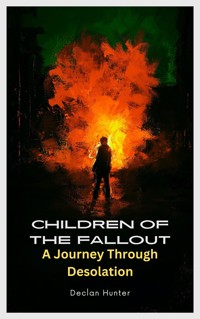
In the aftermath of a devastating global catastrophe, humanity has been left in ruins. The world is now a barren wasteland, where mutated creatures roam and food and water are scarce. But amidst the desolation, a group of children has emerged, banding together to survive and forge a new path forward.
In "Children of the Fallout: A Journey Through Desolation," readers are taken on a harrowing journey through this post-apocalyptic world. The story follows a group of young survivors as they navigate the dangers of this new world order, facing mutants, scarcity, and violence at every turn.
As they struggle to find food and water, build a home in the ruins, and fend off dangerous enemies, the children must also confront the corruption of the elite who seek to control what remains of society. But through their fight for survival, they begin to discover hope and the power of community.
As the children embark on a dangerous mission and the revolution spreads, they must face betrayal and loss, and ultimately make the ultimate sacrifice. But through their resilience and determination, they ultimately topple the regime and begin to rebuild from the ashes.
In this gripping tale of survival, readers are transported to a world where hope and determination are the only things keeping humanity alive. With vivid descriptions, compelling characters, and heart-pumping action, "Children of the Fallout: A Journey Through Desolation" is a must-read for fans of dystopian and post-apocalyptic fiction.
Das E-Book können Sie in Legimi-Apps oder einer beliebigen App lesen, die das folgende Format unterstützen:
Veröffentlichungsjahr: 2023
Ähnliche
















Children of the Fallout: A Journey Through Desolation
Declan Hunter
Published by RWG Publishing, 2023.
This is a work of fiction. Similarities to real people, places, or events are entirely coincidental.
CHILDREN OF THE FALLOUT: A JOURNEY THROUGH DESOLATION
First edition. April 13, 2023.
Copyright © 2023 Declan Hunter.
Written by Declan Hunter.
10 9 8 7 6 5 4 3 2 1
Also by Declan Hunter
The Last Beacon: A Battle Against Extinction
The Last Hope: A Fight for Survival in a Dying World
The Quantum Prophecy: A Revolution in Time
Children of the Fallout: A Journey Through Desolation
Table of Contents
Title Page
Copyright Page
Also By Declan Hunter
Chapter 1: The End of the World
Chapter 2: The Fall of Civilization
Chapter 3: Surviving the Fallout
Chapter 4: The Children Left Behind
Chapter 5: A New World Order
Chapter 6: The Barren Wasteland
Chapter 7: A Desperate Search for Food
Chapter 8: The Value of Water
Chapter 9: Into the Unknown
Chapter 10: Mutant Creatures and Their Dangers
Chapter 11: A Home in the Ruins
Chapter 12: The Fight for Survival
Chapter 13: A Glimmer of Hope
Chapter 14: Betrayal and Loss
Chapter 15: The Power of the Elite
Chapter 16: The Struggle for Justice
Chapter 17: Finding Allies in the Darkness
Chapter 18: The Toll of Violence
Chapter 19: Seeking Answers in the Archives
Chapter 20: Discovering the Past
Chapter 21: The Corruption of the System
Chapter 22: The Rebellion Begins
Chapter 23: The Price of Freedom
Chapter 24: Facing the Consequences
Chapter 25: The Ultimate Sacrifice
Chapter 26: A Dangerous Mission
Chapter 27: The Revolution Spreads
Chapter 28: The Fall of the Regime
Chapter 29: Rebuilding from the Ashes
Chapter 30: The Future of Humanity
Sign up for Declan Hunter's Mailing List
Also By Declan Hunter
About the Publisher
Chapter 1: The End of the World
It was the end of the world as we had known it. It didn't happen overnight, but it felt like it did. Although the warnings were present, we chose to ignore them. We were mistaken in our belief that we could find a solution to the problem.
Everything started with the weather. We were aware that things were going to change, but we didn't give it the importance it deserved. The weather patterns became more extreme, natural disasters occurred more frequently, and sea levels began to rise as a result. As quickly as it started, entire cities were engulfed in water, and millions of people were forced to flee their homes.
After that, there were wars. As a result of the scarcity of resources, nations fought bitterly over what was still available. The fighting was extremely violent, and there were a significant number of casualties. We were under the impression that the situation couldn't get any worse, but it did.
The bombs were dropped, and shortly after, a nuclear fire engulfed the entire world. The cities that were not submerged in water were completely demolished and reduced to rubble. The survivors were abandoned in a world that was barely habitable and were expected to fend for themselves.
I count myself among the fortunate ones. When the bombs started to drop, I was living in a small town that was located on the outskirts of a major city. The town was located at a safe distance from the epicenter of the nuclear explosion, but it was still close enough to feel the effects of the fallout.
I can still vividly recall looking up at the sky as the bombs were dropping. Both the sudden bright flashes of light and the intense heat caused temporary blindness. I felt as if the world were coming to an end as the ground shook violently beneath my feet.
As soon as the initial shock subsided, we became aware of the fact that we were on our own. When the government collapsed, any semblance of law and order vanished along with it. The few police officers and soldiers who were still on the scene were overpowered, and the majority of them had fled to be with their families.
The people in my neighborhood and I banded together and shared the meager amounts of food and water that we had. In spite of the roving bands of looters and raiders, we searched the ruins of the city for supplies while doing our best to stay out of their way.
The initial few months were by far the most challenging. We were on edge all the time because we had no way of knowing when an assault would start. We had several people die from illness, and others were taken from us by violent means. On the other hand, as time went on, we became better at adjusting.
We surrounded our town with a wall and constructed it out of whatever materials we could get our hands on. We developed a primitive farming system, using the polluted soil to cultivate crops that were only just about edible. We were able to learn how to clean water by constructing makeshift filters out of sand and gravel.
Our community endured hardships and emerged from them more resilient. We had a feeling of belonging to a community that we had never before possessed. We made sure to look out for each other, and we relied on one another to get through this.
However, the world that existed beyond our fortifications remained a hostile environment. We heard stories of other towns that had been overrun by raiders or destroyed by mutated creatures that roamed the wasteland. Some of these towns were said to have been in the middle of nowhere. We were well aware that our survival was a miracle, but we also understood that we could not remain hidden indefinitely.
The end of the world was merely the first step on our journey through desolation after the world had been destroyed. Even though we had no idea what lay ahead of us, we were well aware that in order to survive, we had no choice but to keep moving forward.
Chapter 2: The Fall of Civilization
It was like watching a train wreck play out in slow motion. We were aware that our society was disintegrating, but we were unable to prevent it. The warnings were there, but we allowed ourselves to become too complacent to take action.
It began with the state of the economy. The gap between the wealthy and those living in abject poverty widened, while those in the middle class began to vanish. There were not enough jobs to go around, and the cost of living continued to go up. People were upset and confused because they had no idea who was to blame for the situation.
The politicians made empty promises of change because their primary concern was how much money they could make for themselves rather than how much they could help the people. The people had completely lost faith in their leaders due to the widespread corruption that had taken place.
After that, there were riots. People took to the streets in order to voice their disapproval of the unfairness and inequality. The police did their best to maintain order, but they were outgunned and outnumbered by the crowd. The demonstrations quickly descended into violence, turning the cities into combat zones.
The government eventually resorted to declaring martial law, but by that point it was too late. The military was overworked and understaffed, and as a result, they were unable to maintain order. It was impossible for anyone to stop the people from taking matters into their own hands, and there was nothing anyone could do about it.
While the cities were on fire, the infrastructure started to deteriorate. Both the power grids and the water treatment plants went offline as a result of the outage. The roads were impassable, and there was a heavy patient load in the hospitals. The people were left to fend for themselves.
When everything started to fall apart, I was residing in a suburb that was located outside of one of the major cities. I will never forget watching the news in shock as the riots spread further and further. Together with my husband, we came to the conclusion that it was in both of our best interests to get out of the city as soon as possible.
We mistook ourselves for being prepared when in fact we were not. We were short on both food and water, and we lacked a strategy for how to proceed. On the highways, we joined the thousands of other refugees who were also looking for a safe haven.
We got very lucky when we came across a small community of people who had banded together for the purpose of surviving. They not only had a strategy, but also the necessary resources. We were greeted with open arms, but we were aware that our time there was limited and that we could not remain there permanently.
The collapse of civilization served as a rude awakening. We had become complacent with our way of life, and now we were having to pay the price for it. We were forced to acquire the skills necessary to live in a world devoid of the luxuries that are associated with modern society.
Our neighborhood became tighter-knit over the course of time. We created our own infrastructure by constructing solar panels, wind turbines, and rainwater collection systems to provide us with power and water, respectively. We arranged a system of bartering so that communities could trade goods and services with one another.
However, the world that existed beyond our community continued to pose risks. Raiders and looters were still active in the area, looking for easy prey among the vulnerable. We had no choice but to remain watchful at all times, looking out for potential threats.
The collapse of civilization provided us with an important education. We found out the hard way that we couldn't count on the government or anyone else to look out for our best interests. It was imperative that each of us take personal responsibility for our own well-being and that we collaborate in order to ensure our continued existence.
Chapter 3: Surviving the Fallout
After the bombs had exploded, our primary concern centered on the fallout. It was impossible to see, but it was extremely dangerous. We were forced to educate ourselves on how to live in a world that was polluted with radiation.




