


3,99 €
Niedrigster Preis in 30 Tagen: 4,49 €
Niedrigster Preis in 30 Tagen: 4,49 €
Mehr erfahren.
- Herausgeber: BRASPORT
- Kategorie: Wissenschaft und neue Technologien
- Sprache: Englisch
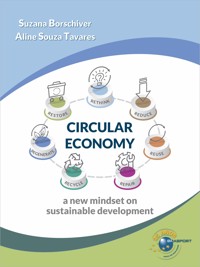
eBook: Circular Economy: a new mindset on sustainable development The concept of Circular Economy, which is the central theme of this book, is based on the preservation and increase of natural capital by controlling finite stocks and balancing the flow of renewable resources. Both sustainability and Circular Economy concepts go together and share the objective of mitigating the negative externalities mentioned here. The strategies to find the possible answers go through several actions. An economic model that implies changes in the way of thinking and acting in a society requires the training of people and professionals focused on its application. The publication of this book was a way of delivering the results of this work to the society, placing its individuals as agents of social transformation. In this context, the chapters are varied purposefully, so that topics pertinent to Circular Economy can be discussed, but not consolidated in one work alone so far. If we strive for a more resilient economy, a fairer society, and a healthier environment, walking the path is needed. We hope that this reading can elucidate the subject and awaken a critical sense of what attitudes or strategies can get us started. The book aims to reach from readers specialized in the subject, professors, high school students, undergraduate and graduate students, to the curious, beginners in the world of Circular Economy and new business models.
Sie lesen das E-Book in den Legimi-Apps auf:
Seitenzahl: 173
Veröffentlichungsjahr: 2024
Ähnliche



















Suzana BorschiverAline Souza Tavares
Circular Economy
A new mindset on sustainable development
Rio de Janeiro2024
Copyright© 2024 by Brasport Livros e Multimídia Ltda.
All rights reserved. No part of this book may be reproduced in any form without the written permission of the Publisher.
Editor: Sergio Martins de OliveiraEditorial Production Manager: Marina dos Anjos Martins de OliveiraCover project: Use DesignCover image: This cover was designed using Freepik.com resources.E-book: Loope - www.loope.com.br
Technique and a lot of attention went into the production of this book. However, typing and/or printing errors may occur. For any questions, including concepts, please email to [email protected], so that our team, together with the author, can clarify. Brasport and the author(s) do not assume any responsibility for any damages or losses to persons or property arising from the use of this book.
Dados Internacionais de Catalogação na Publicação (CIP) (Câmara Brasileira do Livro, SP, Brasil)
Circular economy [livro eletrônico] : a new mindset on sustainable development / Suzana Borschiver...[et al.]. -- Rio de Janeiro : Brasport Livros e Multimídia, 2024. ePub
Outros autores: Aline Tavares, Fernanda de Souza Cardoso, Raquel Cristina Gomes Silva, Renata Bandarra Marques Costa, Silmara Furtado.
Bibliografia.
ISBN 978-65-6096-006-0
1. Desenvolvimento econômico - Aspectos ambientais 2. Desenvolvimento sustentável - Aspectos econômicos 3. Economia circular 4. Reciclagem (Resíduos etc.) 5. Recursos naturais - Aspectos econômicos 6. Responsabilidade social das empresas I. Borschiver, Suzana. II. Tavares, Aline. III. Cardoso, Fernanda de Souza. IV. Silva, Raquel Cristina Gomes. V. Costa, Renata Bandarra Marques. VI. Furtado, Silmara.
24-194023 CDD-338.927
Índices para catálogo sistemático: 1. Desenvolvimento econômico : Economia ambiental 338.927 Eliane de Freitas Leite - Bibliotecária - CRB 8/8415
BRASPORT Livros e Multimídia Ltda.Rua Washington Luís, 9, sobreloja — Centro20230-900 Rio de Janeiro-RJTels. Fax: (21)2568.1415/3497.2162emails: [email protected]@[email protected]
Foreword
We live in a world that is experiencing profound, fast, and significant transformations. Particularly, the driving forces that fuel this turbulent period are many: the fast accumulation of technological knowledge, the already concrete consequences of the climate change, the ever-growing polluting of oceans, the exhaustion of the finite natural resources, the acceleration of the human-driven sixth mass extinction, the rise of authoritarian ideologies, among many others. The combination of all these factors creates a particularly challenging scenario for present and future generations, and simultaneously imposes the necessary revision of previously established practices, lifestyle, and concepts. After all, the present stage is certainly part of the long trajectory that brought us here, being consequence of human actions taken in the distant and not-so-distant past.
Although the critical analysis of the trajectory left behind us is definitely needed, the fact is that blaming the past for the present difficulties is not sufficient (because this will not modify the course of this movement) and may not be fair (as knowledge might not be available and consequences might not be clear for most of us). For this reason, the critical analysis of the past should be performed to allow the modification of this apparent stormy future through concrete implementable changes that can somehow bend the trajectory and lead us to a calmer place.
Amidst the many important reflections that current society must deepen at this time, one point certainly regards our relationships with produced goods, available resources, production procedures and generated wastes. As a matter of fact, the industrial revolution transformed the world and shaped the modern human society, although its resulting practices must be completely reinvented if we do intend to build a path to a more inspiring future. Indeed, it should be recognized that, despite the many possible benefits brought by the industrial revolution, most worrying challenges faced by modern society can also be assigned to it.
In this complex scenario, a new conceptual revolution is being nurtured and coming into reality very fast – the concept of circular economy and its respective circular practices. In fact, the critical analysis of the past brings us to the position where we can formulate very simple questions, that actually might have been formulated centuries ago, given their very fundamental character. For example, is it really necessary for citizens to become the owners of industrial goods? Doesn’t sharing make more sense than owning? Should we discard industrial goods as wastes after use, disposing them in industrial graveyards for eternity, and establishing a morbid parallel between the existences of living beings and industrial products? Shouldn’t a manufacturer be responsible for the produced emissions and wastes and find uses and clients for these undesired products?
In reality, these and other similar very simple and fundamental questions can be very powerful and eventually revolutionize the relationships that were originally created by the industrial revolution and that brought us to this historical moment. In this context, the concept of circular economy proposes more than a bend in the human trajectory, but a bifurcation point that may provide powerful tools to tackle the urgent challenges of the day and lead us to a completely different place. For this reason, it is extremely important to propose these very simple and revolutionizing questions to citizens of all regions of the globe, and to students and researchers in the academic environment in particular. In truth, discussion about these aspects must be stimulated and encouraged because the answers to these simple questions can be indeed very complex and demand important changes of social, economic and governmental actors.
For all the reasons described above, I became very happy with the invitation to write these lines for this important book on circular economy. Throughout the eleven chapters of the book, the reader will have the opportunity to go through thoughtful discussions on fundamentals, business models, logistics, industrial interactions, use of natural resources, recycling, among other subjects related to those very simple questions associated with the principles of circular economy. Besides, the book is written by Brazilian researchers who stimulate this important debate among Brazilian students and scholars, when Brazil introduces itself to the world as a sustainable powerhouse. It must be crystalline clear that this will not be possible at all without truthful commitment of the Brazilian society to the principles of circular economy.
Having said that, I sincerely hope this book will constitute an important tool for exposing, debating, and teaching principles of circular economy to students and researchers, in particular, and to global citizens, more generically.
I wish the reader good reading, good learning and good changing. The planet and the future thank you.
José Carlos Pinto
Programa de Engenharia Química/COPPEUniversidade Federal do Rio de Janeiro
About the e-book
This book was inspired in the results of several actions and researches that I have been working on over the last few years, focused on green economy, sustainability and more recently the specific theme of Circular Economy. These researches include an Extension Project carried out at the Federal University of Rio de Janeiro (Universidade Federal do Rio de Janeiro – UFRJ) entitled “Catalysing the Circular Economy”, taught by NEITEC – (Centre for Industrial and Technological Studies), from the School of Chemistry at UFRJ. The issue of environmental degradation is quite complex, and comprehends themes such as industrial waste, waste generation, climate change, air quality and the consequent disease risks to populations.
The theme of the book deals with the linear economy model, based on the generation of value driven by waste. Such model, which has proved to be obsolete, disregards responsibility at the time of manufacturing, distribution and dumping processes. Likewise, we have witnessed the growth of the world population, acceleration of the use of natural resources such as food, energy, and water, and, consequently, the unbridled consumption of products and services. In this sense, the reach of sustainable development has become increasingly challenging. How can we make more efficient use of resources without compromising values such as the promotion of a more just society and a healthy environment, without compromising the capacity of future generations; combined with a profitable economy?
The concept of Circular Economy, which is the central theme of this book, is based on the preservation and increase of natural capital by controlling finite stocks and balancing the flow of renewable resources. Both sustainability and Circular Economy concepts go together and share the objective of mitigating the negative externalities mentioned here. On the other hand, Circular Economy seeks to go deeper and deals mainly with innovations in product design and business models since its inception, in order to make the flow of resources a closed cycle. This model has its origins in the principles of different Schools of Thought, such as Industrial Ecology and Biomimetics. The Circular Economy, however, has been presented as an alternative model, whose estimates point to several economic opportunities.
As a concept in widespread, it also causes disruptive changes in society. Its large-scale implementation arises issues such as how to integrate the volume of discharges generated at the end of a production chain to its beginning, making each type of waste a new resource; and how to make the transition from the traditional linear model to the circular model.
The strategies to find the possible answers go through several actions. An economic model that implies changes in the way of thinking and acting in a society requires the training of people and professionals focused on its application. The publication of this book was a way of delivering the results of this work to the society, placing its individuals as agents of social transformation.
In this context, the chapters are varied purposefully, so that topics pertinent to Circular Economy can be discussed, but not consolidated in one work alone so far. If we strive for a more resilient economy, a fairer society, and a healthier environment, walking the path is needed. We hope that this reading can elucidate the subject and awaken a critical sense of what attitudes or strategies can get us started.
We would like to thank the School of Chemistry/UFRJ and the Graduate Program in Chemical and Biochemical Process Engineering (EPQB)/UFRJ for funding the translation of this book and Claudia Kamel Parslow for her efficient work as a translator.
In this way, the book aims to reach from readers specialized in the subject, professors, high school students, undergraduate and graduate students, to the curious, beginners in the world of Circular Economy and new business models.
Suzana Borschiver
Due to the relevance of the theme for the development of concrete actions for sustainability and compliance with global agendas, such as the UN 2030 Agenda, I became interested early in the Masters in Circular Economy. As a Bioprocess Engineer, I have always worked on projects aimed at the development of cleaner processes. When looking to learn more about the theme, I glimpsed its wide potential in the face of the challenges of making the world more sustainable.
The constant threats brought about by global warming and the need for better management of water resources and urban waste accelerated inventiveness aimed at promoting the dissemination of actions that not only mitigate socio-environmental degradation, but also systemic changes. Since it is a concept that is concerned with the design of a product from its conception and aimed at minimum or zero waste generation at each stage of a production chain, Circular Economy should be understood as a new way of thinking or rethinking sustainable development, dealing with a new mindset.
With this in mind, I sought to participate in congresses and discussion events on the topic, which helped me to deepen the research, which culminated in the creation of the Circular Economy blog, along with Professor Suzana Borschiver, who is not only a supervisor, but also a great motivator. Her invitation to participate as deputy coordinator of the extension project “Catalysing the Circular Economy” and the growing interest in the topic provided me with the opportunity to dive deeper into this PhD.
Whilst working massively throughout this time on this topic, I acknowledge the importance of spreading the Circular Economy not only at the theoretical level, but also mainly at the practical level. Thus, this book aims to provide readers with a more grounded understanding of the Circular Economy, in addition to provoking effective actions and contributing as a basis for the construction of public policies, strategic guidelines in Brazilian organizations and as fostering innovation and entrepreneurship, to leverage the Circular Economy in the country.
Aline Souza Tavares
Authors and Organizers
Organizers:
Suzana Borschiver – Chemical Engineer with a Degree in Chemistry from the State University of Rio de Janeiro (UERJ – Universidade Estadual do Rio de Janeiro). Master and PhD in Chemical Engineering from the Federal University of Rio de Janeiro (UFRJ – Universidade Federal do Rio de Janeiro). Full Professor at the School of Chemistry/UFRJ, in the area of Management and Technological Innovation. Coordinator of the Centre for Industrial and Technological Studies (NEITEC), of the Extension Project “Catalysing Circular Economy” at the School of Chemistry/UFRJ and Vice Coordinator of PROFNIT- Professional Master in Intellectual Property and Technology Transfer – Focal Point UFRJ – Specialist in Technological Roadmap, Circular Economy, Energy Transition, Technological Prospecting and Innovation, Industrial Studies and Strategic Planning. E-mail: <[email protected]>.
Aline Souza Tavares – Bioprocess Engineer from the Federal University of Rio de Janeiro (UFRJ – Universidade Federal do Rio de Janeiro), Master’s in Chemical and Biochemical Process Technology/UFRJ. Vice Coordinator of the Extension Project “Catalysing the Circular Economy” at the School of Chemistry/UFRJ. PhD student at the Centre for Industrial and Technological Studies (NEITEC)/UFRJ by the Chemical and Biochemical Process Engineering Program/UFRJ, in the area of Management and Technological Innovation and with a focus on Circular Economy and its business models. E-mail: <[email protected]>.
Co-authors:
Fernanda de Souza Cardoso – Chemical Engineer from the Federal University of Rio de Janeiro (UFRJ – Universidade Federal do Rio de Janeiro). Master’s in Chemical and Biochemical Process Technology/UFRJ and PhD student at the Centre for Industrial and Technological Studies (NEITEC)/UFRJ at the Chemical and Biochemical Process Engineering Program/UFRJ, in Management and Technological Innovation with focus on the elaboration of technological roadmaps, renewable bioproducts and biofuels, and waste valorisation. Researcher in Competitive Intelligence by the SENAI Institute of Innovation in Biosynthetic and Fibers. Manager of the Community Engineering line of Engineer without Borders – Rio de Janeiro. E-mail: <[email protected]>.
Raquel Cristina Gomes Silva – Designer by the Technology Center of the Chemical and Textile Industry, post-graduated in Production Engineering by the Technology, Management and Environment Laboratory, LATEC-UFF and master’s student in the Post-Graduate Program in Intellectual Property and Technology Transfer for Innovation – PROFNIT/UFRJ. Researcher – PD&I – DESIGN at NuSEC, Core catalyst for solutions and promoter of sustainability in the textile industry – SENAI-CETIQT. Entrepreneur and Mentor of impactful, cultural, and technology-based businesses, as a member of the Mentores do Brasil Network. E-mail: <[email protected]>.
Renata Bandarra Marques Costa – Chemical Engineer from the Federal University of Rio de Janeiro (UFRJ – Universidade Federal do Rio de Janeiro), Master’s in Chemical and Biochemical Process Technology/UFRJ and New Business Specialist, with focus on the development of reverse logistics in the context of Circular Economy at Pramar Carioca. Works on the “Catalysing Circular Economy” project since 2018. E-mail: <[email protected]>.
Silmara Furtado – Chemical Engineer and graduated in Chemistry Education from the Federal University of Rio de Janeiro (UFRJ – Universidade Federal do Rio de Janeiro). Master’s in Chemical and Biochemical Process Technology by the same institution and PhD student by the Graduate Program in Engineering of Chemical and Biochemical Processes/UFRJ, in the area of Heterogeneous Catalysis and with a focus on the development of alternative green routes to traditional petrochemical processes. She works in university extension projects on Circular Economy and Green Chemistry and integrated R&D projects on Biofuels and Alcohol Chemical Routes. E-mail: <[email protected]>.
List of abbreviations and acronyms
ABiogás - Brazilian Biogas Association
ABNT - Brazilian Association of Technical Standards
ACT - Accelerate, Collaboration and Technology
AISTAC - Asociación de Industriales del Sur de Tamaulipas
ANP - Brazilian National Agency of Petroleum, Natural Gas and Biofuels
B2B - Business to business
B2C - Business to consumer
BCSDGM - Business Council for Sustainable Development – Gulf of Mexico
BCSD-UK - Business Council for Sustainable Development – United Kingdom
BEEO - Buildings Energy Efficiency Ordinance
BNDES - Brazilian Development Bank
BPS - By-Product Synergy
CBL - Crown Beverages Limited
CEI - Circular Economy Index
CERTI - Centers of Reference in Innovative Technologies
CHP - Combined Heat and Power
CNI - National Industry Confederation
CO2 - Carbon dioxide
CRISP - Core Resource for Industrial Symbiosis Practitioners
EFSC - Enablers and Favourable System Conditions
ELV - End of Life Vehicle
EMSD - Electrical and Mechanical Services Department
EPE - Energy Research Office
ERA - Ecosystem Revitalization Agriculture
FIEMG - Federation of the Industries of the state of Minas Gerais
FINEP - Brazilian Innovation Agency
FIRJAN - Industry Federation of the State of Rio de Janeiro
FOMIN - Fondo Multilateral de Inversiones
GHG - Greenhouse Gas
ICE - Implement Circular Economy
ICTs - Science and Technology Institutions
IS - Infantile spasms
ISO - International Organization for Standardization
IST - SENAI Institute of Environmental Technology
Kg - Kilogram
KMT - Kilo metric ton
kW - Kilowatt
L - Liter
LED - Light-Emitting Diode
LCT - Life Cycle Thinking
LGS - Lennox-Gastaut-like Syndrome
MAPA - Ministry of Agriculture, Cattle and Supplying
MCI - Material Circularity Indicator
MDIC - Ministry of Development, Industry and Foreign Commerce
MDTF - Multi-Donor Trust Fund
MEELS - Mandatory Energy Efficiency Labelling Scheme
MFA - Material Flow Analysis
MME - Ministry of Mines and Energies
MOOCs - Massive Open Online Courses
MSW - Municipal Solid Waste
NaOH - Sodium hydroxide
NDF - Nordic Development Fund
NEITEC - Núcleo de Estudos Industriais e Tecnológicos
NISP - National Industrial Symbiosis Programme
Nm3/dia - Normal cubic meter per day
OSH - Occupational Safety and Health
PHA - Polyhydroxyalkanoates
PMSI - Industrial Symbiosis Program of Minas Gerais
PVC - Polyvinyl chloride
R&D - Research & Development
ResCoM - Resource Conservative Manufacturing
RNG - Renewable Natural Gas
RJ - Rio de Janeiro
RO - Reverse Osmosis
ROHS - Restriction of Certain Hazardous Substances
RS - Rio Grande do Sul
SEBRAE - Brazilian Micro and Small Business Support Service
SENAI - National Service of Industrial Training
SO2 - Sulfur dioxide
SP - São Paulo
MT/dia - Metric ton per day
TED - Technology; Entertainment; Design
TQEM - Total Quality Environmental Management
TSC - Tuberous Sclerosis Complex
UFMG - Federal University of Minas Gerais
UFRJ - Federal University of Rio de Janeiro
UN - United Nations
UNDP - United Nations Development Programme
UNEP - United Nations Environment Programme
UNIDO - United Nations Industrial Development Organization
UV - Ultraviolet
WCED - World Commission on Environment and Development
WEEE - Waste Electrical and Electronic Equipment
WRAP - Waste and Resources Action Programme
WTU - Waste Transfer Unit
ZSL - Zoological Society of London
Summary
Introduction
Suzana BorschiverAline TavaresSilmara Furtado




