


0,49 €
Niedrigster Preis in 30 Tagen: 0,00 €
Niedrigster Preis in 30 Tagen: 0,00 €
Mehr erfahren.
- Herausgeber: Musaicum Books
- Kategorie: Gesellschafts- und Liebesromane
- Sprache: Englisch
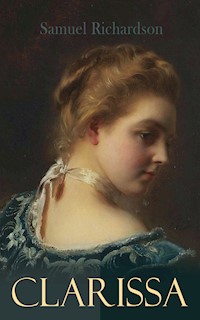
Samuel Richardson's monumental work, Clarissa, is a nine-volume epistolary novel that delves deep into the themes of morality, virtue, and the constraints of society on individual freedom. Written in the mid-18th century, Richardson's literary style is characterized by the intimate and emotional exchanges between the characters through letters, providing a profound insight into their thoughts and motivations. Clarissa's narrative is a prime example of the sentimental novel, a genre that focuses on the emotional experiences and moral dilemmas of its characters. The novel's intricate plot and complex characters have cemented its status as a classic of English literature. Readers will be captivated by the emotional depth and ethical complexity of this masterpiece. Samuel Richardson, a successful printer and novelist, drew inspiration for Clarissa from his own experiences and observations of the social dynamics of his time. His keen insight into human nature and ability to craft compelling narratives make Clarissa a timeless exploration of the human condition. I highly recommend Clarissa to readers seeking a profound and emotionally captivating literary experience. In this enriched edition, we have carefully created added value for your reading experience: - A succinct Introduction situates the work's timeless appeal and themes. - The Synopsis outlines the central plot, highlighting key developments without spoiling critical twists. - A detailed Historical Context immerses you in the era's events and influences that shaped the writing. - An Author Biography reveals milestones in the author's life, illuminating the personal insights behind the text. - A thorough Analysis dissects symbols, motifs, and character arcs to unearth underlying meanings. - Reflection questions prompt you to engage personally with the work's messages, connecting them to modern life. - Hand‐picked Memorable Quotes shine a spotlight on moments of literary brilliance. - Interactive footnotes clarify unusual references, historical allusions, and archaic phrases for an effortless, more informed read.
Das E-Book können Sie in Legimi-Apps oder einer beliebigen App lesen, die das folgende Format unterstützen:
Veröffentlichungsjahr: 2022
Ähnliche










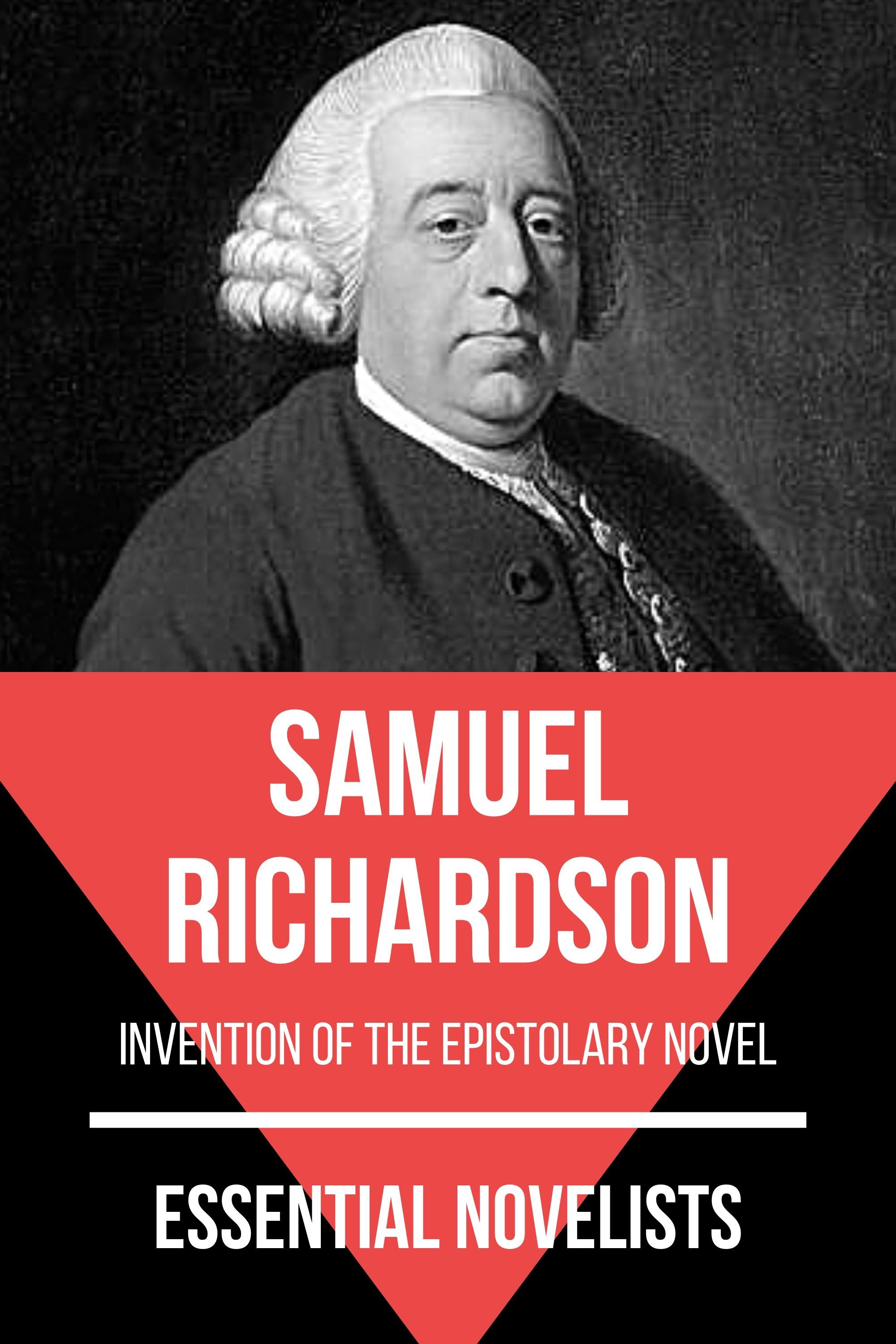

CLARISSA (Vol. 1-9)
Published by
Books
Table of Contents
Introduction
A young woman’s integrity collides with her family’s ambition and a brilliant libertine’s designs, and every letter they write becomes both a shield and a blade, testing how far persuasion can press upon consent, how reputation can be traded like coin, how friendship can steady a conscience besieged, and how the ordinary acts of courtship, negotiation, and refusal accumulate into a drama of private autonomy pursued against public power; in this contest of voices, silence itself is a tactic, time a pressure, and the very medium of intimacy a field of strategy where tenderness and danger constantly exchange disguises.
Clarissa holds classic status because it transformed what fiction could do with interior life and moral complexity. Richardson’s epistolary design made the novel a laboratory for motive, hesitation, and self-justification, while the scope of the narrative—among the longest in English—allowed character to unfold with unprecedented granularity. Its searching attention to conscience, social pressure, and the ethics of courtship established a model for later psychological and realist traditions. The book has remained influential not only for the history it made, but for the inexhaustible debates it invites about responsibility, freedom, and the costs of resisting a world determined to shape one’s fate.
Samuel Richardson, a London printer who became a leading novelist of the eighteenth century, composed Clarissa in the mid-1740s, publishing it in multiple volumes between 1747 and 1748. The work presents itself as a collection of private letters exchanged among its principals. At its core is Clarissa Harlowe, a young woman of rare discernment whose prosperous family presses her toward a strategic marriage. Her refusal places her at odds with kin who value advancement, and it draws the attention of a celebrated libertine, Lovelace. Through corresponding friends and observers, the opening movement frames a contest over choice, reputation, and protective friendship.
Because every event arrives as a dated letter, the novel creates a remarkable illusion of immediacy. Delays in the post, gaps in knowledge, and overlapping accounts generate suspense without authorial intrusion, while the careful calibration of tone lets readers hear competing moral vocabularies in real time. The format also multiplies points of view: Clarissa records a conscience under siege; Anna Howe offers candor and tactical advice; Lovelace turns style into persuasion. The result is a polyphonic narrative in which evidence must be weighed, motives inferred, and truth assembled from partial, sometimes self-serving testimony.
Character in Clarissa is inseparable from rhetoric. Each correspondent writes as an advocate for a particular vision of freedom, duty, or desire, and the book’s cumulative power derives from how those visions clash on the page. Clarissa argues from principle and care for others; Lovelace blends wit, audacity, and calculation; family members elevate prudence into a creed. Richardson’s genius lies in keeping every voice intelligible and forceful, so that even coercion can appear momentarily reasonable until countered by a more humane claim. The reader, positioned as a final arbiter, must test arguments and measure the gap between eloquence and right.
Although it is intimate in method, the novel is expansive in social reach. It examines how property, inheritance, and the commerce of reputation structure courtship and marriage, showing how families pursue status through alliances that can ignore the wishes of those most affected. The Harlowe household becomes a microcosm of eighteenth-century ambition, where letters function like contracts, oaths, or indictments. Richardson’s attention to class dynamics—the friction between established rank and newly acquired wealth—anchors the personal drama in the economic realities of his moment, illuminating how the language of prudence can mask fear, and how obedience can be mistaken for care.
Clarissa is a long book by design, and its length is not ornamental. The spaciousness allows Richardson to dramatize the slow pressures that alter conviction: a delayed answer, a rumor, a momentary lapse, a meticulously phrased appeal. Time itself becomes a character, pressing on readers as it presses on the correspondents, insisting that moral decisions ripen under sustained scrutiny. Far from an obstacle, this amplitude is a method for tracing causation with unusual honesty. In nine volumes, the accumulative detail clarifies how small concessions or steadfast refusals can reconfigure entire lives, without reducing complexity to neat, single-gesture turning points.
The book’s impact was immediate and far-reaching. It was debated in Britain and on the continent, praised for its moral seriousness and narrative invention, and discussed for the social questions it raises. The epistolary model it refined helped shape the development of the sentimental and psychological novel, and its influence can be traced in later writers who privilege interiority, ethical conflict, and the close observation of manners. Denis Diderot notably celebrated Richardson’s achievement, and European readers found in Clarissa a new standard for emotional truth in prose fiction. Its experiments quickly became foundations others extended, contested, and transformed.
Style is one of Richardson’s abiding strengths. He can turn a plea into an argument, an argument into a confession, and a confession into a strategy, all while preserving the particularity of a character’s education, class position, and temperament. The language ranges from pointed aphorism to extended casuistry, yet it rarely strays from the plausible rhythms of correspondence. Readers encounter the texture of social life—visits, rumors, misdelivered notes, and carefully staged encounters—rendered with a patient exactness that makes the fictional world feel documented rather than invented. That fidelity to the everyday is part of what grants the novel its authority.
Clarissa also presents itself as an edited archive, an artful pretense that enhances its realism while reminding us that letters are curated objects. The fiction of an arranging hand foregrounds selection, sequencing, and interpretation, and it quietly invites readers to become co-editors, asking what is omitted, emphasized, or misread. The multi-volume structure underscores this editorial frame: packets arrive, gaps are filled, and correspondents respond to developments readers have just processed. The result is a participatory reading experience that rewards attention to chronology and language, and that trains us to question how stories are assembled in the first place.
For contemporary readers, the novel’s preoccupations remain unsettlingly current. It probes how consent can be eroded by pressure rather than force, how charm can weaponize social expectations, and how private communication can be monitored, intercepted, or repurposed. It examines the emotional labor imposed on women to keep peace in households that mistake submission for virtue, and it explores the costs of claiming independence within a culture calibrated to punish noncompliance. In an era of constant messaging, the book’s letter world anticipates our own: screens and pages alike can conceal motives, magnify rumor, and complicate the fragile work of trust.
To read Clarissa today is to encounter a novel that helped invent modern psychological realism and that still speaks with unsettling clarity about power, persuasion, and the dignity of choice. Its formal audacity, social acuity, and moral seriousness explain its classic status; its humane attention to the pressures that shape a life explains its durability. Without relying on spectacle, it builds a drama out of conscience and circumstance, and it asks readers to answer for the judgments they make along the way. That challenge remains fresh, which is why this long, demanding, luminous book continues to compel new generations.
Synopsis
Samuel Richardson’s Clarissa (Vol. 1–9) is an epistolary novel published in 1747–1748, presented through letters that trace the fortunes of a young woman, Clarissa Harlowe, and those around her. The correspondence, mainly among Clarissa, her friend Anna Howe, the libertine suitor Robert Lovelace, his confidant John Belford, and members of the Harlowe family, records competing motives, misread intentions, and social pressures. The form allows the narrative to move intimately across perspectives while maintaining a chronological momentum. Questions of duty, autonomy, reputation, and moral authority emerge early and steadily, framing the conflicts that unfold as familial ambition collides with individual conscience.
The Harlowes, newly prosperous and keen to consolidate status, focus their hopes and resentments on Clarissa after she receives a significant bequest from her grandfather. Seeking to strengthen their position, they promote a match with Mr. Solmes, a suitor whose fortune appeals to them but whose character she finds unacceptable. The family’s insistence hardens into surveillance and confinement, fed by a bitter feud with Lovelace that reinforces their suspicions. Through letters to Anna, Clarissa articulates principles of duty and virtue alongside a desire for limited independence, as the household closes ranks and correspondence becomes her chief recourse for counsel and relief.
Lovelace, charismatic and calculating, presents himself as an ally against Clarissa’s coercive domestic situation. His professions of protection, however, carry undertones of control and experiment. Clarissa maintains boundaries and repeatedly seeks reconciliation with her family, proposing conditions that would protect her reputation and conscience. As pressure to accept Solmes intensifies and avenues of negotiation constrict, she faces a pivotal choice about her immediate safety and long-term integrity. The letters across this phase weigh prudence against trust, weighing what forms of escape or compromise might be permissible without surrendering principles that define her sense of self.
Clarissa departs the family home under Lovelace’s management, stipulating her refusal to enter any engagement without clear proof of his reform and her family’s sanction. Lodged in London with a landlady who claims respectability, she quickly discerns an ambiance misaligned with her standards. Lovelace, instead of promptly settling an honorable arrangement, delays, testing both her patience and the thresholds she will not cross. Clarissa sustains a disciplined reserve, writes persistent letters home for forgiveness and guidance, and seeks advice from Anna. The urban setting intensifies the moral uncertainty, revealing the limits of appearances and the perils of dependence on a suspect protector.
Lovelace expands his influence through intermediaries—familiar women in the lodging house, obliging servants, and convivial associates—who help shape Clarissa’s environment and intercept information. Miscommunications multiply as letters go astray, replies are delayed, and plausible fabrications cloud intentions. Clarissa pursues safer quarters and aims to put regulated distance between herself and Lovelace, but his social network narrows her options. Throughout, the narrative emphasizes vigilance and premeditation on one side and steadfastness and resourcefulness on the other. The tension escalates less through open confrontation than through the strain of confinement, surveillance, and the erosion of trustworthy channels.
Parallel correspondences broaden the moral frame. Anna Howe’s letters are energetic, pragmatic, and defiant, yet tempered by her mother’s attempts to restrain her involvement. Lovelace writes boastfully to John Belford, whose replies begin to register qualms about their circle’s amusements and designs. This counterpoint introduces skepticism within the libertine set, encouraging readers to assess motive, rhetoric, and reliability. The accumulation of viewpoints—friends, family, and bystanders—produces a layered portrait of character, showing how reputation is constructed publicly and privately, and how competing narratives complicate efforts to discern truth and assign responsibility.
Legal and spiritual considerations move to the foreground as Clarissa seeks to secure her rights under her grandfather’s bequest and to shield her person and property from manipulation. She consults advisers where possible, drafts careful statements of intention, and distinguishes between obedience to parents and obligations to conscience. The physical and psychological costs of prolonged distress become visible, yet she holds to a rigorous ethical vocabulary. Lovelace oscillates between conciliation and pressure, rehearsing promises without fulfilling them. The epistolary record underscores how power operates by means subtler than force: through social cunning, compromised intermediaries, and reputational leverage.
In the later volumes, negotiations proliferate while certainties diminish. Messages pass among the Harlowes, Lovelace’s companions, Anna, and others who attempt mediation. Proposals for honorable closure are aired, revised, and withdrawn, as timing, pride, and rumor interfere. Clarissa maintains a consistent declaration of principles, seeking arrangements that acknowledge her autonomy and restore her good name. Assistance arises from unexpected quarters, including a correspondent in Lovelace’s circle who becomes more attentive to her welfare. The consequences of earlier choices—familial rigidity, libertine bravado, and misplaced reliance—intensify, drawing the narrative toward decisive reckonings the letters carefully approach but do not prematurely reveal.
Across its full arc, Clarissa endures as an inquiry into consent, coercion, and the burdens of reputation in a society where family interest and male prerogative often override individual judgment. Richardson’s letter form supplies unmatched psychological depth, allowing readers to track self-justification, remorse, and resolve in real time. Without disclosing the novel’s final turns, the work’s broader message is clear: integrity tested by pressure demands exacting reflection and costly steadiness. Its influence on later fiction lies in showing how narrative can be an ethical instrument, making inner life and social structure mutually legible and morally consequential.
Historical Context
Samuel Richardson’s Clarissa, published in parts in 1747–1748 and set among the English gentry, unfolds within mid-eighteenth‑century Britain, principally London and provincial estates. The Anglican Church, the common law, and the patriarchal household structure frame social life. Political power rests largely with landholding elites, while commercial wealth is rising in towns. Manners and reputation are intensely policed by kin networks and a culture of “politeness.” Within this setting, family authority governs courtship and marriage, property settlements channel inheritance, and the law grants husbands broad control. The novel examines how these institutions shape a young woman’s freedom, safety, and moral agency.
Politically, the 1740s were dominated by Whig oligarchies after Robert Walpole’s long tenure (ending 1742) and the Pelham administrations. Britain fought the War of the Austrian Succession (1740–1748), and the Jacobite Rising of 1745 stirred fears of internal destabilization. Yet Clarissa pays little attention to grand politics. Its concentration on domestic life reflects a broader cultural shift: public stability coexisted with anxious debates about private virtue, manners, and authority. The novel’s insistent focus on family governance, individual conscience, and social reputation echoes this era’s belief that national character rested on the moral order of households.
Social hierarchy structured experience. Primogeniture and entails preserved estates for eldest sons, while younger children and daughters depended on dowries, jointures, and advantageous marriages. Trustees and marriage settlements negotiated money, land, and future claims. Under coverture, married women’s legal identities merged with their husbands’, limiting property control and recourse in law. Clarissa’s conflicts with kin over wealth, rank, and suitors mirror a world where family strategies could trump individual wishes. The tension between landed gentility and an ascendant commercial class informs the novel’s portrait of status anxiety, social mobility, and the bargaining power that money confers in courtship.
Marriage law was under scrutiny when Clarissa appeared. Before the Marriage Act of 1753 (Hardwicke’s Act), clandestine and irregular unions—especially “Fleet marriages” near the Fleet Prison—were common. Public banns or a bishop’s license existed but were easily evaded. The 1753 Act later required formal parish ceremonies and parental consent for minors, curbing secret unions. Clarissa predates the statute yet resonates with these anxieties: it dramatizes parental control, questions of consent, and the dangers of both coerced and clandestine matches. Readers recognized in the story the legal ambiguities and social risks surrounding courtship, contract, and the public proof of marriage.
Sexual crime law in eighteenth‑century England made rape a capital offense, but prosecutions were rare and convictions difficult, often hinging on proof of resistance, witness testimony, and the complainant’s reputation. Abduction and “ravishment” of heiresses, as well as seduction suits, featured in legal and pamphlet literature, revealing guardians’ concerns about property and lineage. Clarissa reflects these realities without relying on courtroom spectacle. It foregrounds consent, coercion, and reputation in a society where a woman’s credibility could determine her fate. The narrative’s attention to how communities judge women’s speech and conduct mirrors contemporary evidentiary norms and victim‑blaming culture.
Gender expectations were codified in conduct literature, periodical essays, and sermons. Women of Clarissa’s class were encouraged to be literate, pious, and skilled in household management and genteel accomplishments, while obedience and modesty were prized. The expanding market for advice books and letter‑writing manuals taught style as moral discipline. Richardson himself produced such a manual in 1741, underscoring the cultural link between writing and virtue. Female education remained limited in scope and legal rights were constrained under coverture. Clarissa’s intellectual seriousness and moral steadfastness represent an idealized but embattled model of feminine virtue within these prescriptive frameworks.
Religion permeated public and private life. The Church of England set the tone for parish governance and moral instruction, while Dissenting communities were significant in towns. From the 1730s, the Methodist revival led by John Wesley and George Whitefield stirred renewed emphasis on conversion, discipline, and heartfelt piety. Clarissa’s devotional reading, meditative practices, and emphasis on repentance and providence align with mainstream Anglican moralism yet resonate with evangelical sensibilities about conscience and regeneration. Its edifying purpose—so central to Richardson’s self‑presentation—fits an age that expected literature to reinforce virtue, provide examples, and prepare readers for trials and death.
London, the largest city in Europe, offered brilliant sociability and peril in equal measure. Coffeehouses, clubs, theaters, and masquerades cultivated fashionable “politeness,” yet the city’s lodging houses, bawdy districts, and clandestine entertainments bred moral panic. The “gin craze” of the 1730s–1750s prompted legislation (1736 and 1751 Gin Acts), emblematic of fears about urban vice. Policing was patchy, dependent on watchmen and magistrates, leaving room for predation and deception. Clarissa’s movement between respectable and dubious spaces reflects a metropolis where appearances could mislead, hospitality could be weaponized, and a woman without reliable escort faced genuine danger.
Eighteenth‑century Britain was a credit economy. Paper instruments—promissory notes, bills of exchange—moved money quickly, and reputation underwrote trust. The Bank of England and a network of bankers and merchants supported expanding trade, but defaults and fraud were common hazards. Debtors’ prisons such as the Fleet and Marshalsea, as well as “sponging houses” for temporary confinement, embodied the social reach of debt. This financial environment informs Clarissa’s world: obligations, bonds, and settlements constrain characters as surely as legal writs. Credit and character intertwine, and the novel shows how financial leverage and social standing can enable coercion or offer fragile protection.
The epistolary form flourished within an efficient, if imperfect, postal system. London’s Penny Post dated from the late seventeenth century, and by the mid‑eighteenth century the General Post Office coordinated expanding routes. Letters could travel faster than ever, but they were vulnerable to interception by servants, relatives, or rivals. A vibrant culture of letter‑writing—fostered by manuals that taught style and sincerity—made correspondence a site of self‑fashioning and moral reflection. Clarissa builds its psychological depth and moral argument through letters, doubling the historical reality that private communication was both intimate and socially exposed.
Print culture boomed after the lapse of pre‑publication licensing in 1695 and under the Statute of Anne (1710), which defined copyright. London’s booksellers clustered near St. Paul’s and grew adept at marketing multi‑volume works to a widening reading public, including women. Circulating libraries spread in the 1740s, making novels more accessible to middling readers. Richardson published Clarissa serially, revising in later editions as readers debated its morality and realism. This interactive print economy—reviews, pamphlets, coterie feedback—shaped the book’s form and reception. The novel’s length and documentary detail match a marketplace hungry for immersion and moral instruction.
Samuel Richardson (1689–1761) rose from provincial origins to become a successful London printer, active in the Stationers’ Company and trusted by institutional clients. His first novel, Pamela (1740), was a publishing sensation, championed for its virtue yet mocked for opportunism by satirists. Henry Fielding’s Shamela (1741) and Joseph Andrews (1742) sharpened the contest over fiction’s purpose. Clarissa can be read as Richardson’s austere reply: more tragic, morally exacting, and socially analytic. His professional immersion in letters, petitions, and proofs informed his narrative method, while his authorial persona as a moralist anchored the book in contemporary debates about the uses of fiction.
The period was steeped in Enlightenment moral philosophy and the culture of sensibility. Thinkers such as Shaftesbury and Francis Hutcheson argued for a moral sense and the centrality of sympathy, while Addison and Steele popularized polite sociability in periodicals. Clarissa’s epistolary self‑scrutiny, its cultivation of readerly compassion, and its acute attention to motive and feeling contribute to a new psychology of character. The novel tests whether refined sentiment corrects or excuses vice, probing the boundary between genuine virtue and performative politeness. In doing so, it helped prepare the later eighteenth century’s heightened investment in sensibility and tearful moral exempla.
At the heart of Clarissa lies a conflict between authority and liberty. Eighteenth‑century Britons celebrated political liberty in opposition to arbitrary rule, yet domestic governance often tolerated coercion by patriarchs and guardians. Guardianship laws protected family interests, especially property, and daughters’ wishes could be subordinated to dynastic planning. The novel transposes public arguments about consent into the private sphere, presenting a principled refusal as both morally admirable and socially perilous. By doing so, it scrutinizes the legitimacy of compulsion within families and questions whether obedience without conscience deserves respect in a nation that prized freedom.
Improving transport intensified the drama of elopement and pursuit. From the early 1700s, turnpike trusts improved roads, and stagecoaches and post‑chaises shortened travel times between towns. Inns multiplied as nodes of communication, hospitality, and surveillance, while hired coaches enabled discreet movement. This infrastructure made sudden flights, abductions, and rapid exchanges of letters feasible, heightening the stakes of reputation and timing. Clarissa exploits these conditions: mobility becomes both resource and risk, compressing the interval between decision and consequence. The same networks that speed rescue also abet deception, mapping an England where technological gains alter the balance of power in courtship.
Law and order were inconsistent. The “Bloody Code” made many offenses capital, but enforcement relied on private prosecution, local constables, and magistrates. In the late 1740s Henry Fielding, as a Bow Street magistrate (from 1748), and later the Bow Street Runners (circa 1749–1750) sought to professionalize policing, yet protection remained uneven. Moral reform societies campaigned intermittently against vice, and the 1737 Licensing Act censored the stage, reflecting anxieties about public immorality. Clarissa exposes the limits of legal remedies for private wrongs: even when statutes exist, honor, influence, and publicity often determine outcomes, leaving vulnerable individuals insufficiently shielded.
Richardson’s London combined moral edification with commercial entertainment. Competing fictions—from devotional narratives to libertine erotica—vied for attention; prosecutions for obscenity in the late 1740s signaled an unsettled boundary between instruction and titillation. Clarissa positions itself as a counter‑example to fashionable cynicism, drawing on devotional traditions, deathbed exempla, and exemplary biography to discipline readers’ passions. Its extreme narrative patience reflects confidence that sympathetic attention can reform hearts. In a society preoccupied with politeness yet wary of luxury’s corruptions, the book claims that true refinement lies in principled restraint, not merely in manners or wit, and that sentiment must answer to conscience and lawless desire to justice and reform.
Author Biography
Samuel Richardson (1689–1761) was an English printer and novelist whose epistolary fictions helped define the eighteenth-century novel. Working at the center of London’s book trade, he created psychologically probing, morally engaged narratives that reshaped ideas about character interiority and the social uses of reading. His major works—Pamela; or, Virtue Rewarded (1740), Clarissa, or, the History of a Young Lady (1747–48), and The History of Sir Charles Grandison (1753–54)—set new standards for narrative voice and ethical complexity. Bridging commercial print culture and literary ambition, Richardson became a pivotal figure in the rise of the novel, influencing readers and writers across Britain and continental Europe.
Born in Derbyshire in 1689, Richardson received limited formal schooling but was immersed in a culture of letters from an early age. Apprenticed to a London printer in the early eighteenth century, he educated himself through wide reading and daily work with manuscripts and proofs. The periodical essay tradition, conduct literature, and letter-writing manuals offered models of polite discourse and moral instruction that shaped his literary imagination. His lifelong fascination with the letter as a vehicle for self-revelation and persuasion developed alongside his practical knowledge of how texts were composed, revised, and circulated in the expanding marketplace of print.
After completing his apprenticeship, Richardson established a successful printing business by the late 1710s, building a reputation for accuracy and reliability. He produced a wide range of books and pamphlets for leading booksellers and took on steady commercial and occasional official work as the trade matured. Active within the Stationers’ Company, he rose to positions of responsibility during the mid-eighteenth century. This professional environment honed his editorial care and attention to typography, habits that later informed his fiction’s intricate framing devices, prefaces, and revisions. Richardson’s workshop experience grounded his literary experiments in the realities of production, distribution, and the tastes of a broad reading public.
Richardson’s emergence as a novelist was tied to his deep engagement with letter forms. Pamela (1740) drew on the conventions of private correspondence to present a morally charged narrative that many readers found immediately compelling. Its epistolary structure created an intimacy with character thought and feeling that felt new, prompting fervent admiration as well as sharp critique. The book became a cultural phenomenon, inspiring translations, stage adaptations, and notable parodies that debated its values and social implications. Pamela demonstrated how a sequence of letters could produce narrative momentum, ethical reflection, and the illusion of unmediated experience without relying on authorial omniscience.
Clarissa (1747–48) extended and deepened Richardson’s method. Issued in parts, it orchestrated multiple correspondents to explore questions of autonomy, obligation, power, and conscience within a complex social world. The scale and psychological richness of the work provoked intense reader involvement, including an extensive correspondence with the author and calls for revisions between editions. Many contemporaries praised its moral ambition and formal daring, while others contested its representation of desire, authority, and social constraint. Clarissa’s influence traveled widely through translations and critical commentary, becoming a touchstone for discussions of sensibility, narrative credibility, and the ethical stakes of fiction.
With The History of Sir Charles Grandison (1753–54), Richardson turned his epistolary art to the representation of a principled gentleman, exploring civility, benevolence, and the negotiation of social duties. Though less incendiary than his earlier successes, it consolidated his reputation for moral seriousness and technical control. Throughout these years, he maintained extensive correspondence with readers and writers, hosted sociable gatherings, and defended the idea that fiction could instruct as it delighted. He consistently opposed libertine postures and argued for virtue, sympathy, and careful self-scrutiny, especially in the education of young readers, women and men alike, within a culture of polite conversation and print.
Richardson remained active as a printer and man of letters into his later years, overseeing new editions and engaging with the public debate his novels continued to inspire. He died in 1761, leaving a body of work that shaped the modern novel’s concern with interiority, point of view, and moral complexity. His methods influenced major European writers; Denis Diderot praised him explicitly, and his epistolary techniques resonated with authors such as Jean-Jacques Rousseau and later innovators of sentimental and psychological fiction. Today, Richardson’s legacy endures in scholarship on gender, sociability, and print culture, and in the continuing relevance of narrative voices that reveal the mind from within.
CLARISSA (Vol. 1-9)
Volume 1
PREFACE
The following History is given in a series of letters, written Principally in a double yet separate correspondence;
Between two young ladies of virtue and honor, bearing an inviolable friendship for each other, and writing not merely for amusement, but upon the most interesting subjects; in which every private family, more or less, may find itself concerned; and,
Between two gentlemen of free lives; one of them glorying in his talents for stratagem and invention, and communicating to the other, in confidence, all the secret purposes of an intriguing head and resolute heart.
But here it will be proper to observe, for the sake of such as may apprehend hurt to the morals of youth, from the more freely-written letters, that the gentlemen, though professed libertines[1] as to the female sex, and making it one of their wicked maxims, to keep no faith with any of the individuals of it, who are thrown into their power, are not, however, either infidels or scoffers; nor yet such as think themselves freed from the observance of those other moral duties which bind man to man.
On the contrary, it will be found, in the progress of the work, that they very often make such reflections upon each other, and each upon himself and his own actions, as reasonable beings must make, who disbelieve not a future state of rewards and punishments, and who one day propose to reform—one of them actually reforming, and by that means giving an opportunity to censure the freedoms which fall from the gayer pen and lighter heart of the other.
And yet that other, although in unbosoming himself to a select friend, he discovers wickedness enough to entitle him to general detestation, preserves a decency, as well in his images as in his language, which is not always to be found in the works of some of the most celebrated modern writers, whose subjects and characters have less warranted the liberties they have taken.
In the letters of the two young ladies, it is presumed, will be found not only the highest exercise of a reasonable and practicable friendship, between minds endowed with the noblest principles of virtue and religion, but occasionally interspersed, such delicacy of sentiments, particularly with regard to the other sex; such instances of impartiality, each freely, as a fundamental principle of their friendship, blaming, praising, and setting right the other, as are strongly to be recommended to the observation of the younger part (more specially) of female readers.
The principle of these two young ladies is proposed as an exemplar to her sex. Nor is it any objection to her being so, that she is not in all respects a perfect character. It was not only natural, but it was necessary, that she should have some faults, were it only to show the reader how laudably she could mistrust and blame herself, and carry to her own heart, divested of self-partiality, the censure which arose from her own convictions, and that even to the acquittal of those, because revered characters, whom no one else would acquit, and to whose much greater faults her errors were owing, and not to a weak or reproachable heart. As far as it is consistent with human frailty, and as far as she could be perfect, considering the people she had to deal with, and those with whom she was inseparably connected, she is perfect. To have been impeccable, must have left nothing for the Divine Grace and a purified state to do, and carried our idea of her from woman to angel. As such is she often esteemed by the man whose heart was so corrupt that he could hardly believe human nature capable of the purity, which, on every trial or temptation, shone out in her's [sic].
Besides the four principal person, several others are introduced, whose letters are characteristic: and it is presumed that there will be found in some of them, but more especially in those of the chief character among the men, and the second character among the women, such strokes of gayety, fancy, and humour, as will entertain and divert, and at the same time both warn and instruct.
All the letters are written while the hearts of the writers must be supposed to be wholly engaged in their subjects (the events at the time generally dubious): so that they abound not only in critical situations, but with what may be called instantaneous descriptions and reflections (proper to be brought home to the breast of the youthful reader;) as also with affecting conversations; many of them written in the dialogue or dramatic way.
'Much more lively and affecting,' says one of the principal character, 'must be the style of those who write in the height of a present distress; the mind tortured by the pangs of uncertainty (the events then hidden in the womb of fate;) than the dry, narrative, unanimated style of a person relating difficulties and danger surmounted, can be; the relater perfectly at ease; and if himself unmoved by his own story, not likely greatly to affect the reader.'
What will be found to be more particularly aimed at in the following work is—to warn the inconsiderate and thoughtless of the one sex, against the base arts and designs of specious contrivers of the other—to caution parents against the undue exercise of their natural authority over their children in the great article of marriage—to warn children against preferring a man of pleasure to a man of probity upon that dangerous but too-commonly-received notion, that a reformed rake makes the best husband—but above all, to investigate the highest and most important doctrines not only of morality, but of Christianity, by showing them thrown into action in the conduct of the worthy characters; while the unworthy, who set those doctrines at defiance, are condignly, and, as may be said, consequentially punished.
From what has been said, considerate readers will not enter upon the perusal of the piece before them as if it were designed only to divert and amuse. It will probably be thought tedious to all such as dip into it, expecting a light novel, or transitory romance; and look upon story in it (interesting as that is generally allowed to be) as its sole end, rather than as a vehicle to the instruction.
Different persons, as might be expected, have been of different opinions, in relation to the conduct of the Heroine in particular situations; and several worthy persons have objected to the general catastrophe, and other parts of the history. Whatever is thought material of these shall be taken notice of by way of Postscript, at the conclusion of the History; for this work being addressed to the public as a history of life and manners, those parts of it which are proposed to carry with them the force of an example, ought to be as unobjectionable as is consistent with the design of the whole, and with human nature.
NAMES OF THE PRINCIPAL PERSONS
MISS CLARISSA HARLOWE, a young lady of great beauty and merit.
ROBERT LOVELACE, ESQ. her admirer.
JAMES HARLOWE, ESQ. father of Clarissa.
MRS. HARLOWE, his lady.
JAMES HARLOWE, their only son.
ARABELLA, their elder daughter.
JOHN HARLOWE, ESQ. elder brother of James Harlowe, sen.
ANTONY HARLOWE, third brother.
ROGER SOLMES, ESQ. an admirer of Clarissa, favoured by her friends.
MRS. HERVEY, half-sister of Mrs. Harlowe.
MISS DOLLY HERVEY, her daughter.
MRS. JUDITH NORTON, a woman of great piety and discretion, who had a principal share in the education of Clarissa.
COL. WM. MORDEN, a near relation of the Harlowes.
MISS HOWE, the most intimate friend, companion, and correspondent of Clarissa.
MRS. HOWE, her mother.
CHARLES HICKMAN, ESQ. an admirer of Miss Howe.
LORD M., uncle to Mr. Lovelace.
LADY SARAH SADLEIR, LADY BETTY LAWRANCE, half-sisters of Lord M.
MISS CHARLOTTE MONTAGUE, MISS PATTY MONTAGUE, nieces of the same nobleman.
DR. LEWEN, a worthy divine.
MR. ELIAS BRAND, a pedantic young clergyman.
DR. H. a humane physician.
MR. GODDARD, an honest and skilful apothecary.
JOHN BELFORD, ESQ. Mr. Lovelace's principal intimate and confidant.
RICHARD MOWBRAY, THOMAS DOLEMAN, JAMES TOURVILLE, THOMAS BELTON,
ESQRS. libertine friends of Mr. Lovelace.
MRS. MOORE, a widow, keeping a lodging-house at Hampstead.
MISS RAWLINS, a notable young gentlewoman there.
MRS. BEVIS, a lively young widow of the same place.
MRS. SINCLAIR, the pretended name of a private brothel-keeper in
London.
CAPTAIN TOMLINSON, the assumed name of a vile pander to the
debaucheries of Mr. Lovelace.
SALLY MARTIN, POLLY HORTON, assistants of, and partners with, the infamous Sinclair.
DORCAS WYKES, an artful servant at the vile house.
LETTERS OF VOLUME I
LETTER I. Miss Howe to Miss Clarissa Harlowe.—Desires from her the particulars of the rencounter between Mr. Lovelace and her brother; and of the usage she receives upon it: also the whole of her story from the time Lovelace was introduced as a suitor to her sister Arabella. Admires her great qualities, and glories in the friendship between them.
LETTER II. III. IV. Clarissa to Miss Howe.—Gives the requested particulars. Together with the grounds of her brother's and sister's ill-will to her; and of the animosity between her brother and Lovelace.—Her mother connives at the private correspondence between her and Lovelace, for the sake of preventing greater evils. Character of Lovelace, from an enemy.—Copy of the preamble to her grandfather's will.
LETTER V. From the same.—Her father, mother, brother, briefly characterized. Her brother's consequence in the family. Wishes Miss Howe had encouraged her brother's address. Endeavors to find excuses for her father's ill temper, and for her mother's passiveness.
LETTER VI. From the same.—Mr. Symmes, Mr. Mullins, Mr. Wyerley, in return, proposed to her, in malice to Lovelace; and, on their being rejected, Mr. Solmes. Leave given her to visit Miss Howe for a few days. Her brother's insolent behaviour upon it.
LETTER VII. From the same.—The harsh reception she meets with on her return from Miss Howe. Solmes's first visit.
LETTER VIII. From the same.—All her family determined in Solmes's favour. Her aversion to him. She rejects him, and is forbid going to church, visiting, receiving visits, or writing to any body out of the house.
LETTER IX. Clarissa to Miss Howe.—Her expedient to carry on a private correspondence with Miss Howe. Regrets the necessity she is laid under to take such a clandestine step.
LETTER X. Miss Howe to Clarissa.—Inveighs against the Harlowe family for proposing such a man as Solmes. Characterizes them. Is jealous of Antony Harlowe's visits to her mother. Rallies her friend on her supposed regard to Lovelace.
LETTER XI. Clarissa to Miss Howe.—Is nettled and alarmed at her raillery. Her reasons for not giving way to a passion for Lovelace.
LETTER XII. Miss Howe in reply.—Continues her raillery. Gives Lovelace's character from Mrs. Fortescue.
LETTER XIII. XIV. Clarissa to Miss Howe.—The views of her family in favouring the address of Solmes. Her brother's and sister's triumph upon the difficulties into which they have plunged her.
LETTER XV. Miss Howe to Clarissa.—She accounts for Arabella's malice. Blames her for having given up the power over the estate left her by her grandfather.
LETTER XVI. XVII. Clarissa to Miss Howe.—Offends her father by her behaviour to Solmes in his presence. Tender conversation between her mother and her.—Offers to give up all thoughts of Lovelace, if she may be freed from Solmes's address. Substance of one of Lovelace's letters, of her answer, and of his reply. Makes a proposal. Her mother goes down with it.
LETTER XVIII. From the same.—The proposal rejected. Her mother affects severity to her. Another interesting conversation between them.
LETTER XIX. From the same.—Her dutiful motives for putting her estate into her father's power. Why she thinks she ought not to have Solmes. Afflicted on her mother's account.
LETTER XX. XXI. From the same.—Another conference with her mother, who leaves her in anger.—She goes down to beg her favour. Solmes comes in. She offers to withdraw; but is forbid. What follows upon it.
LETTER XXII. Clarissa to Miss Howe.—Substance of a letter from Lovelace. She desires leave to go to church. Is referred to her brother, and insultingly refused by him. Her letter to him. His answer.
LETTER XXIII. XXIV. XXV. From the same.—Her faithful Hannah disgracefully dismissed. Betty Barnes, her sister's maid, set over her. A letter from her brother forbidding her to appear in the presence of any of her relations without leave. Her answer. Writes to her mother. Her mother's answer. Writes to her father. His answer.
LETTER XXVI. From the same.—Is desirous to know the opinion Lord M.'s family have of her. Substance of a letter from Lovelace, resenting the indignities he receives from her relations. She freely acquaints him that he has nothing to expect from her contrary to her duty. Insists that his next letter shall be his last.
LETTER XXVII. Miss Howe to Clarissa.—Advises her to resume her estate. Her satirical description of Solmes. Rallies her on her curiosity to know what opinion Lord M. and his family have of her. Ascribes to the difference in each of their tempers their mutual love. Gives particulars of a conversation between her mother and her on Clarissa's case. Reflects on the Harlowe family, and particularly on Mrs. Harlowe, for her passiveness.
LETTER XXVIII. Clarissa. In answer.—Chides her for the liberties she takes with her relations. Particularly defends her mother. Chides her also for her lively airs to her own mother. Desires her to treat her freely; but wishes not that she should impute love to her; and why.
LETTER XXIX. From the same.—Her expostulatory letter to her brother and sister. Their answers.
LETTER XXX. From the same.—Exceedingly angry with Lovelace, on his coming to their church. Reflections on pride, &c.
LETTER XXXI. Mr. Lovelace to John Belford, Esq.—Pride, revenge, love, ambition, or a desire of conquest, his avowedly predominant passions. His early vow to ruin as many of the fair sex as he can get into his power. His pretences for it. Breathes revenge against the Harlowe family. Glories in his contrivances. Is passionately in love with Clarissa. His high notions of her beauty and merit. Yet is incensed against her for preferring her own relations to him. Clears her, however, of intentional pride, scorn, haughtiness, or want of sensibility. What a triumph over the sex, and over her whole family, if he can carry off a lady so watchful and so prudent! Is resolved, if he cannot have the sister, to carry off the brother. Libertine as he is, can have no thoughts of any other woman but Clarissa. Warns Belford, Mowbray, Tourville, and Belton, to hold themselves in readiness to obey his summons, on the likelihood there is of room for what he calls glorious mischief.
LETTER XXXII. XXXIII. Clarissa to Miss Howe.—Copies of her letters to her two uncles; and of their characteristic answer.—Her expostulatory letter to Solmes. His answer.—An insolent letter from her brother, on her writing to Solmes.
LETTER XXXIV. Lovelace to Belford.—He directs him to come down to him. For what end. Description of the poor inn he puts up at in disguise; and of the innocent daughter there, whom he calls his Rosebud. He resolves to spare her. Pride and policy his motives, and not principle. Ingenuous reflections on his own vicious disposition. He had been a rogue, he says, had he been a plough-boy. Resolves on an act of generosity for his Rosebud, by way of atonement, as he calls it, for some of his bad actions; and for other reasons which appear in the sequel.
LETTER XXXV. From the same.—His artful contrivances and dealings with Joseph Leman. His revenge and his love uppermost by turns. If the latter succeeds not, he vows that the Harlowes shall feel the former, although for it he become an exile from his country forever. He will throw himself into Clarissa's presence in the woodhouse. If he thought he had no prospect of her favour, he would attempt to carry her off: that, he says, would be a rape worthy of a Jupiter[2]. The arts he is resolved to practise when he sees her, in order to engage her future reliance upon his honour.
LETTER XXXVI. Clarissa to Miss Howe.—Lovelace, in disguise, surprises her in the woodhouse. Her terrors on first seeing him. He greatly engages her confidence (as he had designed) by his respectful behaviour.
LETTER XXXVII. Miss Howe to Clarissa.—After rallying her on her not readily owning the passion which she supposes she has for Lovelace, she desires to know how far she thinks him eligible for his best qualities, how far rejectable for his worst.
LETTER XXXVIII. XXXIX. Clarissa to Miss Howe.—She disclaims tyranny to a man who respects her. Her unhappy situation to be considered, in which the imputed love is held by her parents to be an undutiful, and therefore a criminal passion, and where the supposed object of it is a man of faulty morals. Is interrupted by a visit from Mrs. Norton, who is sent up to her to influence her in Solmes's favour. An affecting conversation between them. What passes upon it, and after it.
LETTER XL. From the same.—Resumes the requested subject. What sort of man she could have preferred to Mr. Lovelace. Arguments she has used to herself in his favour, and in his disfavour. Frankly owns that were he now a moral man, she would prefer him to all the men she ever saw. Yet is persuaded, that she could freely give up the one man to get rid of the other, as she had offered to her friends. Her delicacy affected by Miss Howe's raillery; and why. Gives her opinion of the force which figure or person may be allowed to have upon her sex.
LETTER XLI. From the same.—A letter from her mother (with patterns of rich silks) in which she entreats her to comply with all their wishes. What ought to be the principal view of a good wife in adorning her person. Her distress. Begs leave to wait upon her mother alone. Her father's angry letter, ordering her to prepare for her wedding-day. Solmes requests to see her. She refuses. All in tumults below upon it. Her brother and her sister desire that she may be left to their management.
LETTER XLII. From the same.—A very warm dialogue between her sister and her. Her sister's envy, unnatural behaviour, and violence. Clarissa sends down proposals in writing to her friends, and a letter to her brother. His insolent answer; in which he tells her, that her proposal will be considered in full assembly next morning; but that, if they shall be complied with, he will retire to Scotland, and never more return to Harlowe-place.
LETTER XLIII. Clarissa to Miss Howe.—Hardly doubts but her proposals will be accepted. Paints to herself, as her relations arrive one by one, what their deliberations, and the result of them will be, when they are all assembled. Her proposals rejected. Her sister's cruel insults on the occasion produce another warm dialogue between them. Her sister leaves her in a fury. She is greatly disturbed at the contents of a letter from Lovelace.
LETTER XLIV. From the same.—Her aunt Hervey, accompanied by her sister, makes her a visit. Farther insults from her sister. Her aunt's fruitless pleas in Solmes's favour.
LETTER I MISS ANNA HOWE, TO MISS CLARISSA HARLOWE JAN 10.
I am extremely concerned, my dearest friend, for the disturbances that have happened in your family. I know how it must hurt you to become the subject of the public talk: and yet, upon an occasion so generally known, it is impossible but that whatever relates to a young lady, whose distinguished merits have made her the public care, should engage every body's attention. I long to have the particulars from yourself; and of the usage I am told you receive upon an accident you could not help; and in which, as far as I can learn, the sufferer was the aggressor.
Mr. Diggs, the surgeon, whom I sent for at the first hearing of the rencounter[3], to inquire, for your sake, how your brother was, told me, that there was no danger from the wound, if there were none from the fever; which it seems has been increased by the perturbation of his spirits.
Mr. Wyerley drank tea with us yesterday; and though he is far from being partial to Mr. Lovelace, as it may well be supposed, yet both he and Mr. Symmes blame your family for the treatment they gave him when he went in person to inquire after your brother's health, and to express his concern for what had happened.
They say, that Mr. Lovelace could not avoid drawing his sword: and that either your brother's unskilfulness or passion left him from the very first pass entirely in his power.
This, I am told, was what Mr. Lovelace said upon it; retreating as he spoke: 'Have a care, Mr. Harlowe—your violence puts you out of your defence. You give me too much advantage. For your sister's sake, I will pass by every thing:—if—'
But this the more provoked his rashness, to lay himself open to the advantage of his adversary—who, after a slight wound given him in the arm, took away his sword.
There are people who love not your brother, because of his natural imperiousness and fierce and uncontroulable temper: these say, that the young gentleman's passion was abated on seeing his blood gush plentifully down his arm; and that he received the generous offices of his adversary (who helped him off with his coat and waistcoat, and bound up his arm, till the surgeon could come,) with such patience, as was far from making a visit afterwards from that adversary, to inquire after his health, appear either insulting or improper.
Be this as it may, every body pities you. So steady, so uniform in your conduct: so desirous, as you always said, of sliding through life to the end of it unnoted; and, as I may add, not wishing to be observed even for your silent benevolence; sufficiently happy in the noble consciousness which attends it: Rather useful than glaring, your deserved motto; though now, to your regret, pushed into blaze, as I may say: and yet blamed at home for the faults of others—how must such a virtue suffer on every hand!—yet it must be allowed, that your present trial is but proportioned to your prudence.
As all your friends without doors are apprehensive that some other unhappy event may result from so violent a contention, in which it seems the families on both sides are now engaged, I must desire you to enable me, on the authority of your own information, to do you occasional justice.
My mother, and all of us, like the rest of the world, talk of nobody but you on this occasion, and of the consequences which may follow from the resentments of a man of Mr. Lovelace's spirit; who, as he gives out, has been treated with high indignity by your uncles. My mother will have it, that you cannot now, with any decency, either see him, or correspond with him. She is a good deal prepossessed by your uncle Antony; who occasionally calls upon us, as you know; and, on this rencounter, has represented to her the crime which it would be in a sister to encourage a man who is to wade into her favour (this was his expression) through the blood of her brother.
Write to me therefore, my dear, the whole of your story from the time that Mr. Lovelace was first introduced into your family; and particularly an account of all that passed between him and your sister; about which there are different reports; some people scrupling not to insinuate that the younger sister has stolen a lover from the elder: and pray write in so full a manner as may satisfy those who know not so much of your affairs as I do. If anything unhappy should fall out from the violence of such spirits as you have to deal with, your account of all things previous to it will be your best justification.
You see what you draw upon yourself by excelling all your sex. Every individual of it who knows you, or has heard of you, seems to think you answerable to her for your conduct in points so very delicate and concerning.
Every eye, in short, is upon you with the expectation of an example. I wish to heaven you were at liberty to pursue your own methods: all would then, I dare say, be easy, and honourably ended. But I dread your directors and directresses; for your mother, admirably well qualified as she is to lead, must submit to be led. Your sister and brother will certainly put you out of your course.
But this is a point you will not permit me to expatiate upon: pardon me therefore, and I have done.—Yet, why should I say, pardon me? when your concerns are my concerns? when your honour is my honour? when I love you, as never woman loved another? and when you have allowed of that concern and of that love; and have for years, which in persons so young may be called many, ranked in the first class of your friends,
Your ever grateful and affectionate, ANNA HOWE.
Will you oblige me with a copy of the preamble to the clauses in your grandfather's will in your favour; and allow me to send it to my aunt Harman?—She is very desirous to see it. Yet your character has so charmed her, that, though a stranger to you personally, she assents to the preference given you in that will, before she knows the testator's reasons for giving you that preference.
LETTER II MISS CLARISSA HARLOWE, TO MISS HOWE HARLOWE-PLACE, JAN. 13.
How you oppress me, my dearest friend, with your politeness! I cannot doubt your sincerity; but you should take care, that you give me not reason from your kind partiality to call in question your judgment. You do not distinguish that I take many admirable hints from you, and have the art to pass them upon you for my own: for in all you do, in all you say, nay, in your very looks (so animated!) you give lessons to one who loves you and observes you as I love you and observe you, without knowing that you do—So pray, my dear, be more sparing of your praise for the future, lest after this confession we should suspect that you secretly intend to praise yourself, while you would be thought only to commend another.
Our family has indeed been strangely discomposed.—Discomposed!—It has been in tumults, ever since the unhappy transaction; and I have borne all the blame; yet should have had too much concern from myself, had I been more justly spared by every one else.
For, whether it be owing to a faulty impatience, having been too indulgently treated to be inured to blame, or to the regret I have to hear those censured on my account, whom it is my duty to vindicate; I have sometimes wished, that it had pleased God to have taken me in my last fever, when I had every body's love and good opinion; but oftener that I had never been distinguished by my grandfather as I was: since that distinction has estranged from me my brother's and sister's affections; at least, has raised a jealousy with regard to the apprehended favour of my two uncles, that now-and-then overshadows their love.
My brother being happily recovered of his fever, and his wound in a hopeful way, although he has not yet ventured abroad, I will be as particular as you desire in the little history you demand of me. But heaven forbid that any thing should ever happen which may require it to be produced for the purpose you mention!
I will begin, as you command, with Mr. Lovelace's address to my sister; and be as brief as possible. I will recite facts only; and leave you to judge of the truth of the report raised, that the younger sister has robbed the elder.
It was in pursuance of a conference between Lord M. and my uncle Antony, that Mr. Lovelace [my father and mother not forbidding] paid his respect to my sister Arabella. My brother was then in Scotland, busying himself in viewing the condition of the considerable estate which was left him there by his generous godmother, together with one as considerable in Yorkshire. I was also absent at my Dairy-house, as it is called,* busied in the accounts relating to the estate which my grandfather had the goodness to devise to me; and which once a year was left to my inspection, although I have given the whole into my father's power.
* Her grandfather, in order to invite her to him as often as her other friends would spare her, indulged her in erecting and fitting up a diary-house in her own taste. When finished, it was so much admired for its elegant simplicity and convenience, that the whole seat (before, of old time, from its situation, called The Grove) was generally known by the name of The Dairy-house. Her grandfather in particular was fond of having it so called.
My sister made me a visit there the day after Mr. Lovelace had been introduced; and seemed highly pleased with the gentleman. His birth, his fortune in possession, a clear 2000L. a year[4]




