


1,99 €
Mehr erfahren.
- Herausgeber: DigiCat
- Kategorie: Gesellschafts- und Liebesromane
- Sprache: Englisch
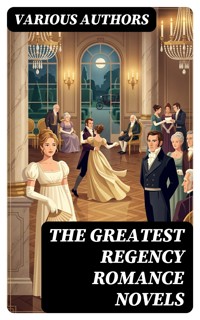
The anthology "The Greatest Regency Romance Novels" captures the essence of love, society, and intrigue that defined the Regency era, bringing together a vibrant tapestry of narratives that span various literary styles. From the epistolary form to rich prose, these works explore the intricacies of relationships and social dynamics with finesse. Notable pieces within this collection unveil the complexity of courtship and the delicate interplay of duty and desire, offering readers timeless insights into the human condition. Through this compendium, the nuances of Regency life and its enduring appeal manifest vividly, inviting reflection on the period's cultural and literary landscape. The assemblage of luminaries such as Jane Austen, Fanny Burney, and William Makepeace Thackeray fortifies the anthology's exploration of romance during the Regency period. These authors, alongside others like Mary Wollstonecraft and Leo Tolstoy, enrich the collection with their diverse backgrounds and perspectives, each contributing uniquely to the discourse on societal norms and personal agency. Their works align with and illuminate important correlates of the era, tracing the historical and cultural movements that shaped thematic evolutions in romance literature. Together, their voices provide a multifaceted exploration of love and societal constraints. Readers are invited to delve into this meticulously curated anthology for an immersive journey through a pivotal era in literature. Alongside literary enjoyment, the collection offers educational richness, invoking a dialogue across narratives that can challenge and expand contemporary understanding of romance and relationships. This unique convergence of styles and insights presents a rare opportunity to engage with iconic Regency romances, ensuring the reader leaves with both an enriched appreciation of the past and a keener sense of its resonance today. In this enriched edition, we have carefully created added value for your reading experience: - An Introduction draws the threads together, discussing why these diverse authors and texts belong in one collection. - Historical Context explores the cultural and intellectual currents that shaped these works, offering insight into the shared (or contrasting) eras that influenced each writer. - A combined Synopsis (Selection) briefly outlines the key plots or arguments of the included pieces, helping readers grasp the anthology's overall scope without giving away essential twists. - A collective Analysis highlights common themes, stylistic variations, and significant crossovers in tone and technique, tying together writers from different backgrounds. - Reflection questions encourage readers to compare the different voices and perspectives within the collection, fostering a richer understanding of the overarching conversation.
Das E-Book können Sie in Legimi-Apps oder einer beliebigen App lesen, die das folgende Format unterstützen:
Veröffentlichungsjahr: 2023
Ähnliche

















The Greatest Regency Romance Novels
Table of Contents
Introduction
The Greatest Regency Romance Novels gathers a body of fiction united by the drama of courtship, reputation, and social negotiation. Across these works, love is never purely private; it unfolds amid hierarchies of class, kinship, and influence. Whether the focus is a single heroine’s choices or a wider panorama of society, the novels examine how feeling and prudence contend, how ambition and duty shape attachment, and how public judgment shadows private desire. From scenes of drawing-room comedy to darker exposures of manipulation, the collection traces a coherent tradition of romance as ethical testing ground, where wit, irony, and sensibility are measured against the demands of community.
In the novels of Jane Austen, Maria Edgeworth, and Fanny Burney, the grammar of manners becomes a field for subtle moral inquiry. Pride and Prejudice, Sense and Sensibility, Mansfield Park, Emma, and Persuasion repeatedly stage choices between competing values, balancing affection with prudence and social responsibility. Belinda and Patronage foreground the pressures of influence and the calculus of alliance. Evelina, Cecilia, Camilla, and The Wanderer portray entrances onto the public stage, where naïveté, judgment, and esteem are tested. Together they cultivate a tempered comedy of insight, in which self-knowledge grows through misreading, correction, and the recognition that private happiness must negotiate public forms.
Eliza Haywood threads the collection with an alternative energy, pressing on desire, disguise, and the volatility of reputation. Fantomina, The History of Miss Betsy Thoughtless, and The Fortunate Foundlings signal fascination with performance and origins, asking how identities are made, unmade, or discovered within a watchful society. Anti-Pamela directly enters debate with Samuel Richardson’s Pamela, challenging simple equations between virtue and reward. In Haywood’s company, romance becomes a site of experiment: the heroine may improvise, test conventions, or confront their costs. This strand converses productively with the steadier moral temper of Austen and Edgeworth, widening the spectrum of female possibility and risk.
The conversation around Pamela is one of the collection’s most revealing threads. Richardson’s tale of virtue under scrutiny provokes immediate counter-scripts: Henry Fielding’s Shamela and Haywood’s Anti-Pamela expose comedic and satiric angles in the same materials, forcing readers to weigh sincerity against design. Pierre Choderlos de Laclos’s Dangerous Liaisons adds a European vantage, exploring seduction as strategy and the perilous economics of reputation. Mary Wollstonecraft’s Mary: A Fiction brings introspective gravity, insisting that inner integrity must answer to, yet not be consumed by, social expectation. Across these works, romance becomes a battleground over authenticity, power, and the narratives that society demands.
William Makepeace Thackeray and Mrs. Olifant extend the canvas from intimate courtship to bustling communities. Vanity Fair scrutinizes ambition and display, where marriage intersects with commerce, performance, and self-fashioning. Miss Marjoribanks and Phoebe, Junior consider how female initiative engages local networks of influence, leadership, and belonging. In dialogue with Edgeworth’s Patronage and Belinda, these novels show how the routes to affection and fulfillment are braided with institutions, favors, and the shifting theater of public esteem. Their tonal range—by turns comic, satiric, and earnest—clarifies that the stakes of romance are social as well as emotional, touching the governance of households and towns.
Read together now, these works illuminate an enduring human problem: how to reconcile autonomy with the claims of others. They anatomize the price of misjudgment and the uses of tact, the slow labor of self-education, and the way gossip, secrecy, and display regulate intimacy. The novels attend to money, lineage, and work as silent partners in affection, while dramatizing consent, persuasion, and the ethics of choice. Their humor and irony remain tools of critique, exposing pretension and highlighting resilience. By presenting competing models of love—calculating, idealistic, or pragmatic—the collection invites reflection on agency, solidarity, and the fragile economies of trust.
Artistically, the collection showcases the novel’s adaptability: from tightly focused courtship narratives to expansive social tapestries; from moral didacticism to layered satire; from inward psychological fictions to theatrical spectacles of manners. Intellectually, it offers a sustained inquiry into how stories teach feeling—how language, tone, and comic correction refine judgment. The intertextual play between Pamela, Shamela, and Anti-Pamela demonstrates the form’s argumentative vitality, while the poise of Austen, the experimentation of Haywood, the civic concerns of Edgeworth and Olifant, the audacity of Laclos, and the broad sweep of Thackeray together map a tradition where romance proves an instrument of social thought.
Historical Context
Socio-Political Landscape
Across these novels, political power appears intertwined with property, patronage, and patriarchy. The landed gentry define local governance and marriage markets in Pride and Prejudice, Emma, and Mansfield Park, where entail, stewardship, and parish oversight shape intimate choices. Edgeworth’s Patronage anatomizes the corrupting reach of favors in court and profession, while Cecilia and Camilla expose guardianship and debt as instruments of control. Richardson’s Pamela stages ambition and virtue across class boundaries, a scenario mocked by Fielding’s Shamela and Haywood’s Anti-Pamela. Laclos’s Dangerous Liaisons offers a French counterpart, revealing an aristocratic order sustained by salon influence and clandestine correspondence.
Revolution and war unsettle this landscape. The Wanderer traces the precarious position of émigrés and workers in a Britain anxious about continental upheaval, while Vanity Fair and Persuasion gauge the social recalibrations wrought by the Napoleonic campaigns—military promotion, prize money, and uncertainty. Urban expansion and commercial leisure in Evelina and Cecilia disclose new theatres of surveillance, where polite sociability polices female mobility. Miss Marjoribanks and Phoebe, Junior move into a later municipal sphere, charting middle-class committees, denominational influence, and civic ambition. Mansfield Park gestures toward imperial revenue and absentee estates, situating domestic virtue within larger circuits of extraction and reform.
Sexual politics and legal constraint underpin many plots. Haywood’s Fantomina dramatizes disguise, pursuit, and the punitive force of reputation, while The History of Miss Betsy Thoughtless tests the costs of desire within patriarchal guardianship. Wollstonecraft’s Mary: A Fiction indicts companionate ideals when yoked to economic dependence. Edgeworth’s Belinda debates courtship, rational education, and the calibrations of female autonomy within polite circles. In Austen’s novels, matchmaking intersects with parish relief, inheritance, and the disciplining gaze of neighbors. Across these works, choosing a spouse doubles as negotiating access to income, safety, and civic voice in a society suspicious of female agency.
Intellectual & Aesthetic Currents
Formal experimentation tracks changing ideas about truth and intimacy. Richardson’s Pamela pioneers epistolary immediacy to authenticate virtue and self-scrutiny; Fielding’s Shamela and Haywood’s Anti-Pamela invert that technique, exposing performance and opportunism. Laclos’s Dangerous Liaisons perfects lettered polyphony, where style itself becomes weapon and evidence. Burney’s Evelina adapts the form to map London manners, then shifts in Cecilia and Camilla toward mixed narration, anticipating broader omniscience. Austen consolidates these advances with free indirect style, blending reported thought with social observation in Sense and Sensibility, Pride and Prejudice, Emma, Mansfield Park, and Persuasion, yielding irony without abandoning moral inquiry.
Debates over sensibility inform tone and plot architecture. Sense and Sensibility explicitly weighs disciplined judgment against affective excess, while Belinda and Patronage imagine rational sociability tempered by sympathy. Wollstonecraft’s Mary: A Fiction interrogates sentimental conventions, depicting refined feeling as inadequate to structural injustice. Burney’s fiction experiments with comic embarrassment and moral testing, using blushes, scenes, and assemblies as ethical laboratories. In Austen, the picturesque and domestic detail become instruments of valuation: conversation, pianoforte skill, and walking routes signal character. Across the corpus, self-command is a public good, yet affect remains the currency enabling observation, persuasion, and reform.
Instructional aims coexist with satire and sensation. Pamela teaches by example; Anti-Pamela and Shamela teach by exposing exemplary fictions. Haywood’s Fantomina and The Fortunate Foundlings preserve amatory verve yet register modern concerns—consent, fortune, and reputation. Burney’s Cecilia and Camilla anatomize consumer desire and debt, treating shops and assemblies as classrooms in prudence. Edgeworth’s Patronage and Belinda make careers and courtship experiments in applied ethics. Austen’s novels refine social comedy into moral casuistry. Later, Miss Marjoribanks and Phoebe, Junior expand domestic realism into community study, while Vanity Fair reveals the marriage market as a satiric theater of credit.
Legacy & Reassessment Across Time
The afterlives of these works have been unusually visible. Pride and Prejudice, Sense and Sensibility, Emma, and Persuasion sustain cycles of stage and screen adaptation, translating free indirect irony into costume drama and romantic comedy. Vanity Fair repeatedly returns as a modern mirror of ambition and opportunism. Dangerous Liaisons has become shorthand for manipulative correspondence and erotic intrigue, renewing epistolary fascination. Burney’s Evelina and Cecilia, once eclipsed by Austen, have reappeared in syllabi and theatre. Edgeworth’s Belinda and Patronage circulate in discussions of career, merit, and manners, while Haywood’s fictions anchor anthologies of early women’s writing and desire.
Critical reassessment has focused on power and ethics. Pamela inspires disputes over consent, authorial didacticism, and reader complicity, answered by Shamela and Anti-Pamela’s parody. Fantomina and Dangerous Liaisons sharpen inquiries into seduction, coercion, and narrative reliability. Mansfield Park invites debate about imperial wealth and moral quietism; Belinda’s handling of race, domesticity, and revision across editions prompts continuing scrutiny. Wollstonecraft’s Mary: A Fiction anchors feminist genealogies of autonomy and care. Burney’s The Wanderer is read anew for its wartime precarity and labor politics. Oliphant’s Miss Marjoribanks and Phoebe, Junior gain stature as sophisticated studies of community leadership and voice.
Synopsis (Selection)
Pamela / Anti-Pamela / Shamela (Samuel Richardson, Eliza Haywood, Henry Fielding)
Richardson’s courtship narrative turns a servant’s defense of virtue into a route to security and status, while Haywood and Fielding respond with irreverent parodies that expose calculation, hypocrisy, and the tricks of narration.
Together they stage the collection’s core debate about sincerity, consent, class mobility, and the commodification of romance, a touchstone that later comedies of manners refine or resist.
Eliza Haywood: Fantomina; The History of Miss Betsy Thoughtless; The Fortunate Foundlings
From masquerade and role-play to the education of a spirited heroine and the adventures of foundling siblings, these narratives probe desire, reputation, and chance with brisk, theatrical energy.
They complicate the promise of romantic fulfillment by showing how performance and circumstance shape choice, enriching the spectrum between the Pamela debate and Austen’s more regulated social worlds.
Maria Edgeworth: Belinda; Patronage
Belinda and Patronage test rational affection and merit against the pull of fashion, influence, and spectacle, pairing clear-eyed moral inquiry with lively portraiture of high society.
They mediate between didactic tradition and witty observation, bridging Richardson’s earnestness and Austen’s balance of feeling and judgment.
Fanny Burney: Evelina; Cecilia; Camilla; The Wanderer
Burney charts young women negotiating crowded assemblies, tangled families, and perilous gossip, blending bright comedy with anxious realism about voice, propriety, and independence.
Her spacious social canvases anticipate Austen’s ironic precision and offer a humane counterpoint to Laclos’s ruthless gamesmanship.
Mary Wollstonecraft: Mary: A Fiction
A concise portrait of a woman’s interior life and unconventional attachments interrogates sensibility, duty, and the constraints of marriage and dependence.
It sharpens the volume’s focus on female autonomy and affect, deepening the ethical stakes that Austen, Burney, and Olifant pursue in more social frames.
Jane Austen: Pride and Prejudice; Sense and Sensibility; Mansfield Park; Emma; Persuasion
These courtship comedies turn drawing-room talk into moral action, tracing misreadings and self-revisions across estates and seaside towns with wit, irony, and steady psychological focus.
They distill debates opened by Richardson, Burney, Haywood, and Edgeworth into nuanced judgments about money, rank, and character, offering a genial corrective to the cynicism of Laclos and the worldliness of Thackeray.
Pierre Choderlos de Laclos: Dangerous Liaisons
An epistolary duel of seduction and revenge showcases strategists for whom desire is leverage and reputation a weapon, in a crystalline, amoral style.
Its elegant cruelty serves as a dark foil to companionate ideals elsewhere, pressing questions of agency, performance, and punishment.
Mrs. Olifant: Miss Marjoribanks; Phoebe, Junior
In two interlinked community studies, ambitious heroines orchestrate drawing-room politics, philanthropy, and public opinion with tact, humor, and strategic self-command.
They extend the village theatre of Austen into civic life, aligning with Edgeworth’s interest in institutions and tempering Thackeray’s satiric bite with sympathy.
William Makepeace Thackeray: Vanity Fair
A sprawling panorama of social climbing and moral evasions centers on an audacious protagonist who treats romance as opportunity within a market of status and spectacle.
Its sardonic tone reframes the marriage plot as social currency, conversing with Haywood’s masks and challenging the ethical optimism of Richardson, Burney, and Austen.
The Greatest Regency Romance Novels
Fantomina (Eliza Haywood)
In Love the Victors from the Vanquish’d fly.
They fly that wound, and they pursue that dye.
Waller.
A YOUNG Lady of distinguished Birth, Beauty,Wit, and Spirit, happened to be in a Box one Night at the Playhouse; where, though there were a great Number of celebrated Toasts, she perceived several Gentlemen extremely pleased themselves with entertaining a Woman who sat in a Corner of the Pit, and, by her Air and Manner of receiving them, might easily be known to be one of those who come there for no other Purpose, than to create Acquaintance with as many as seem desirous of it. She could not help testifying her Contempt of Men, who, regardless either of the Play, or Circle, threw away their Time in such a Manner, to some Ladies that sat by her: But they, either less surprised by being more accustomed to such Sights, than she who had been bred for the most Part in the Country, or not of a Disposition to consider any Thing very deeply, took but little Notice of it. She still thought of it, however; and the longer she reflected on it, the greater was her Wonder, that Men, some of whom she knew were accounted to have Wit, should have Tastes so very depraved.—This excited a Curiosity in her to know in what Manner these Creatures were address’d:—She was young, a Stranger to the World, and consequently to the Dangers of it; and having no Body in Town, at that Time, to whom she was oblig’d to be accountable for her Actions, did in every Thing as her Inclinations or Humours render’d most agreeable to her: Therefore thought it not in the least a Fault to put in practice a little Whim which came immediately into her Head, to dress herself as near as she cou’d in the Fashion of those Women who make sale of their Favours, and set herself in the Way of being accosted as such a one, having at that Time no other Aim, than the Gratification of an innocent Curiosity.—She no sooner design’d this Frolick, than she put it in Execution; and muffling her Hoods over her Face, went the next Night into the Gallery-Box, and practising as much as she had observ’d, at that Distance, the Behaviour of that Woman, was not long before she found her Disguise had answer’d the Ends she wore it for:—A Crowd of Purchasers of all Degrees and Capacities were in a Moment gather’d about her, each endeavouring to out-bid the other, in offering her a Price for her Embraces.—She listen’d to ’em all, and was not a little diverted in her Mind at the Disappointment she shou’d give to so many, each of which thought himself secure of gaining her.—She was told by ’em all, that she was the most lovely Woman in the World; and some cry’d, Gad, she is mighty like my fine Lady Such-a-one,—naming her own Name. She was naturally vain, and receiv’d no small Pleasure in hearing herself prais’d, tho’ in the Person of another, and a suppos’d Prostitute; but she dispatch’d as soon as she cou’d all that had hitherto attack’d her, when she saw the accomplish’d Beauplaisir was making his Way thro’ the Crowd as fast as he was able, to reach the Bench she sat on. She had often seen him in the Drawing-Room, had talk’d with him; but then her Quality and reputed Virtue kept him from using her with that Freedom she now expected he wou’d do, and had discover’d something in him, which had made her often think she shou’d not be displeas’d, if he wou’d abate some Part of his Reserve.—Now was the Time to have her Wishes answer’d:—He look’d in her Face, and fancy’d, as many others had done, that she very much resembled that Lady whom she really was; but the vast Disparity there appear’d between their Characters, prevented him from entertaining even the most distant Thought that they cou’d be the same.—He address’d her at first with the usual Salutations of her pretended Profession, as, Are you engag’d, Madam?—Will you permit me to wait on you home after the Play?—By Heaven, you are a fine Girl!—How long have you us’d this House?—And such like Questions; but perceiving she had a Turn ofWit, and a genteel Manner in her Raillery, beyond what is frequently to be found among those Wretches, who are for the most part Gentlewomen but by Necessity, few of ’em having had an Education suitable to what they affect to appear, he chang’d the Form of his Conversation, and shew’d her it was not because he understood no better, that he had made use of Expressions so little polite.— In fine, they were infinitely charm’d with each other: He was transported to find so much Beauty and Wit in a Woman, who he doubted not but on very easy Terms he might enjoy; and she found a vast deal of Pleasure in conversing with him in this free and unrestrain’d Manner.They pass’d their Time all the Play with an equal Satisfaction; but when it was over, she found herself involv’d in a Difficulty, which before never enter’d into her Head, but which she knew not well how to get over.—The Passion he profess’d for her, was not of that humble Nature which can be content with distant Adorations:—He resolv’d not to part from her without the Gratifications of those Desires she had inspir’d; and presuming on the Liberties which her suppos’d Function allow’d of, told her she must either go with him to some convenient House of his procuring, or permit him to wait on her to her own Lodgings.—Never had she been in such a Dilemma:Three or four Times did she open her Mouth to confess her real Quality; but the Influence of her ill Stars prevented it, by putting an Excuse into her Head, which did the Business as well, and at the same Time did not take from her the Power of seeing and entertaining him a second Time with the same Freedom she had done this.—She told him, she was under
Obligations to a Man who maintain’d her, and whom she durst not disappoint, having promis’d to meet him that Night at a House hard by.—This Story so like what those Ladies sometimes tell, was not at all suspected by Beauplaisir; and assuring her he wou’d be far from doing her a Prejudice, desir’d that in return for the Pain he shou’d suffer in being depriv’d of her Company that Night, that she wou’d order her Affairs, so as not to render him unhappy the next. She gave a solemn Promise to be in the same Box on the Morrow Evening; and they took Leave of each other; he to the Tavern to drown the Remembrance of his Disappointment; she in a Hackney-Chair hurry’d home to indulge Contemplation on the Frolick she had taken, designing nothing less on her first Reflections, than to keep the Promise she had made him, and hugging herself with Joy, that she had the good Luck to come off undiscover’d.
But these Cogitations were but of a short Continuance, they vanish’d with the Hurry of her Spirits, and were succeeded by others vastly different and ruinous:—All the Charms of Beauplaisir came fresh into her Mind; she languish’d, she almost dy’d for another Opportunity of conversing with him; and not all the Admonitions of her Discretion were effectual to oblige her to deny laying hold of that which offer’d itself the next Night.—She depended on the Strength of her Virtue, to bear her safe thro’ Tryals more dangerous than she apprehended this to be, and never having been address’d by him as Lady,—was resolv’d to receive his Devoirs as a Town-Mistress, imagining a world of Satisfaction to herself in engaging him in the Character of such a one, and in observing the Surprise he would be in to find himself refused by a Woman, who he supposed granted her Favours without Exception.—Strange and unaccountable were the Whimsies she was possess’d of,—wild and incoherent her Desires,—unfix’d and undetermin’d her Resolutions, but in that of seeing Beauplaisir in the Manner she had lately done. As for her Proceedings with him, or how a second Time to escape him, without discovering who she was, she cou’d neither assure herself, nor whether or not in the last Extremity she wou’d do so.—Bent, however, on meeting him, whatever shou’d be the Consequence, she went out some Hours before the Time of going to the Playhouse, and took Lodgings in a House not very far from it, intending, that if he shou’d insist on passing some Part of the Night with her, to carry him there, thinking she might with more Security to her Honour entertain him at a Place where she was Mistress, than at any of his own chusing.
THE appointed Hour being arriv’d, she had the Satisfaction to find his Love in his Assiduity: He was there before her; and nothing cou’d be more tender than the Manner in which he accosted her: But from the first Moment she came in, to that of the Play being done, he continued to assure her no Consideration shou’d prevail with him to part from her again, as she had done the Night before; and she rejoic’d to think she had taken that Precaution of providing herself with a Lodging, to which she thought she might invite him, without running any Risque, either of her Virtue or Reputation.—Having told him she wou’d admit of his accompanying her home, he seem’d perfectly satisfy’d; and leading her to the Place, which was not above twenty Houses distant, wou’d have order’d a Collation to be brought after them. But she wou’d not permit it, telling him she was not one of those who suffer’d themselves to be treated at their own Lodgings; and as soon she was come in, sent a Servant, belonging to the House, to provide a very handsome Supper, and Wine, and every Thing was serv’d to Table in a Manner which shew’d the Director neither wanted Money, nor was ignorant how it shou’d be laid out.
This Proceeding, though it did not take from him the Opinion that she was what she appeared to be, yet it gave him Thoughts of her, which he had not before.—He believ’d her a Mistress,but believ’d her to be one of a superior Rank, and began to imagine the Possession of her would be much more Expensive than at first he had expected: But not being of a Humour to grudge any Thing for his Pleasures, he gave himself no farther Trouble, than what were occasioned by Fears of not having Money enough to reach her Price, about him.
SUPPER being over, which was intermixed with a vast deal of amorous Conversation, he began to explain himself more than he had done; and both by his Words and Behaviour let her know, he would not be denied that Happiness the Freedoms she allow’d had made him hope.—It was in vain; she would have retracted the Encouragement she had given:—In vain she endeavoured to delay, till the next Meeting, the fulfilling of his Wishes:—She had now gone too far to retreat:—He was bold;—he was resolute: She fearful,—confus’d, altogether unprepar’d to resist in such Encounters, and rendered more so, by the extreme Liking she had to him.—Shock’d, however, at the Apprehension of really losing her Honour, she struggled all she could, and was just going to reveal the whole Secret of her Name and Quality, when the Thoughts of the Liberty he had taken with her, and those he still continued to prosecute, prevented her, with representing the Danger of being expos’d, and the whole Affair made a Theme for publick Ridicule.—Thus much, indeed, she told him, that she was a Virgin, and had assumed this Manner of Behaviour only to engage him. But that he little regarded, or if he had, would have been far from obliging him to desist;—nay, in the present burning Eagerness of Desire, ’tis probable, that had he been acquainted both with who and what she really was, the Knowledge of her Birth would not have influenc’d him with Respect sufficient to have curb’d the wild Exuberance of his luxurious Wishes, or made him in that longing,—that impatient Moment, change the Form of his Addresses. In fine, she was undone; and he gain’d a Victory, so highly rapturous, that had he known over whom, scarce could he have triumphed more. Her Tears, however, and the Distraction she appeared in, after the ruinous Extasy was past, as it heighten’d his Wonder, so it abated his Satisfaction:—He could not imagine for what Reason a Woman, who, if she intended not to be a Mistress, had counterfeited the Part of one, and taken so much Pains to engage him, should lament a Consequence which she could not but expect, and till the last Test, seem’d inclinable to grant; and was both surpris’d and troubled at the Mystery.—He omitted nothing that he thought might make her easy; and still retaining an Opinion that the Hope of Interest had been the chief Motive which had led her to act in the Manner she had done, and believing that she might know so little of him, as to suppose, now she had nothing left to give, he might not make that Recompence she expected for her Favours: To put her out of that Pain, he pulled out of his Pocket a Purse of Gold, entreating her to accept of that as an Earnest of what he intended to do for her; assuring her, with ten thousand Protestations, that he would spare nothing, which his whole Estate could purchase, to procure her Content and Happiness. This Treatment made her quite forget the Part she had assum’d, and throwing it from her with an Air of Disdain, Is this a Reward (said she) for Condescentions, such as I have yeilded to?—Can all the Wealth you are possess’d of, make a Reparation for my Loss of Honour?—Oh! no, I am undone beyond the Power of Heaven itself to help me!—She uttered many more such Exclamations; which the amaz’d Beauplaisir heard without being able to reply to, till by Degrees sinking from that Rage of Temper, her Eyes resumed their softning Glances, and guessing at the Consternation he was in, No, my dear Beauplaisir, (added she,) your Love alone can compensate for the Shame you have involved me in; be you sincere and constant, and I hereafter shall, perhaps, be satisfy’d with my Fate, and forgive myself the Folly that betray’d me to you.
BEAUPLAISIR thought he could not have a better Opportunity than these Words gave him of enquiring who she was, and wherefore she had feigned herself to be of a Profession which he was now convinc’d she was not; and after he had made her a thousand Vows of an Affection, as inviolable and ardent as she could wish to find in him, entreated she would inform him by what Means his Happiness had been brought about, and also to whom he was indebted for the Bliss he had enjoy’d.—Some Remains of yet unextinguished Modesty, and Sense of Shame, made her blush exceedingly at this Demand; but recollecting herself in a little Time, she told him so much of the Truth, as to what related to the Frolick she had taken of satisfying her Curiosity in what Manner Mistresses, of the Sort she appeared to be, were treated by those who addressed them; but forbore discovering her true Name and Quality, for the Reasons she had done before, resolving, if he boasted of this Affair, he should not have it in his Power to touch her Character: She therefore said she was the Daughter of a Country Gentleman, who was come to Town to buy Cloaths, and that she was call’d Fantomina. He had no Reason to distrust the Truth of this Story, and was therefore satisfy’d with it; but did not doubt by the Beginning of her Conduct, but that in the End she would be in Reality, the Thing she so artfully had counterfeited; and had good Nature enough to pity the Misfortunes he imagin’d would be her Lot: But to tell her so, or offer his Advice in that Point was not his Business, at least, as yet.
They parted not till towards Morning; and she oblig’d him to a willing Vow of visiting her the next Day at Three in the Afternoon. It was too late for her to go home that Night, therefore contented herself with lying there. In the Morning she sent for the Woman of the House to come up to her; and easily perceiving, by her Manner, that she was a Woman who might be influenced by Gifts, made her a Present of a Couple of Broad Pieces, and desir’d her, that if the Gentleman, who had been there the Night before, should ask any Questions concerning her, that he should be told, she was lately come out of the Country, had lodg’d there about a Fortnight, and that her Name was Fantomina. I shall (also added she) lie but seldom here; nor, indeed, ever come but in those Times when I expect to meet him: I would, therefore, have you order it so, that he may think I am but just gone out, if he should happen by any Accident to call when I am not here; for I would not, for the World, have him imagine I do not constantly lodge here.The Landlady assur’d her she would do every Thing as she desired, and gave her to understand she wanted not the Gift of Secrecy.
Every Thing being ordered at this Home for the Security of her Reputation, she repaired to the other, where she easily excused to an unsuspecting Aunt, with whom she boarded, her having been abroad all Night, saying, she went with a Gentleman and his Lady in a Barge, to a little Country Seat of theirs up the River, all of them designing to return the same Evening; but that one of the Bargemen happ’ning to be taken ill on the sudden, and no other Waterman to be got that Night, they were oblig’d to tarry till Morning.Thus did this Lady’s Wit and Vivacity assist her in all, but where it was most needful.—She had Discernment to foresee, and avoid all those Ills which might attend the Loss of her Reputation,but was wholly blind to those of the Ruin of her Virtue; and having managed her Affairs so as to secure the one, grew perfectly easy with the Remembrance, she had forfeited the other.—The more she reflected on the Merits of Beauplaisir, the more she excused herself for what she had done; and the Prospect of that continued Bliss she expected to share with him, took from her all Remorse for having engaged in an Affair which promised her so much Satisfaction, and in which she found not the least Danger of Misfortune.—If he is really (said she, to herself) the faithful, the constant Lover he has sworn to be, how charming will be our Amour?—And if he should be false, grow satiated, like other Men, I shall but, at the worst, have the private Vexation of knowing I have lost him;—the Intreague being a Secret, my Disgrace will be so too:—I shall hear no Whispers as I pass,—She is Forsaken:—The odious Word Forsaken will never wound my Ears; nor will my Wrongs excite either the Mirth or Pity of the talking World:—It will not be even in the Power of my Undoer himself to triumph over me; and while he laughs at, and perhaps despises the fond, the yeilding Fantomina, he will revere and esteem the virtuous, the reserv’d Lady.—In this Manner did she applaud her own Conduct, and exult with the Imagination that she had more Prudence than all her Sex beside.And it must be confessed, indeed, that she preserved an OEconomy in the management of this Intreague, beyond what almost any Woman but herself ever did: In the first Place, by making no Person in the World a Confident in it; and in the next, in concealing from Beauplaisir himself the Knowledge who she was; for though she met him three or four Days in a Week, at that Lodging she had taken for that Purpose, yet as much as he employ’d her Time and Thoughts, she was never miss’d from any Assembly she had been accustomed to frequent.— The Business of her Love has engross’d her till Six in the Evening, and before Seven she has been dress’d in a different Habit, and in another Place.—Slippers, and a Night-Gown loosely flowing, has been the Garb in which he has left the languishing Fantomina;—Lac’d, and adorn’d with all the Blaze ofJewels, has he, in less than an Hour after, beheld at the Royal Chapel, the Palace Gardens, Drawing-Room, Opera, or Play, the Haughty Awe-inspiring Lady.—A thousand Times has he stood amaz’d at the prodigious Likeness between his little Mistress, and this Court Beauty; but was still as far from imagining they were the same, as he was the first Hour he had accosted her in the Playhouse, though it is not impossible, but that her Resemblance to this celebrated Lady, might keep his Inclination alive something longer than otherwise they would have been; and that it was to the Thoughts of this (as he supposed) unenjoy’d Charmer, she ow’d in great measure the Vigour of his latter Caresses.
But he varied not so much from his Sex as to be able to prolong Desire, to any great Length after Possession: The rifled Charms of Fantomina soon lost their Poinancy, and grew tasteless and insipid; and when the Season of the Year inviting the Company to the Bath, she offer’d to accompany him, he made an Excuse to go without her. She easily perceiv’d his Coldness, and the Reason why he pretended her going would be inconvenient, and endur’d as much from the Discovery as any of her Sex could do: She dissembled it, however, before him, and took her
Leave of him with the Shew of no other Concern than his Absence occasion’d: But this she did to take from him all Suspicion of her following him, as she intended, and had already laid a Scheme for.—From her first finding out that he design’d to leave her behind, she plainly saw it was for no other Reason, than that being tir’d of her Conversation, he was willing to be at liberty to pursue new Conquests; and wisely considering that Complaints, Tears, Swoonings, and all the Extravagancies which Women make use of in such Cases, have little Prevailance over a Heart inclin’d to rove, and only serve to render those who practise them more contemptible, by robbing them of that Beauty which alone can bring back the fugitive Lover, she resolved to take another Course; and remembring the Height of Transport she enjoyed when the agreeable Beauplaisir kneel’d at her Feet, imploring her first Favours, she long’d to prove the same again. Not but a Woman of her Beauty and Accomplishments might have beheld a Thousand in that Condition Beauplaisir had been; but with her Sex’s Modesty, she had not also thrown off another Virtue equally valuable, tho’ generally unfortunate, Constancy: She loved Beauplaisir; it was only he whose Solicitations could give her Pleasure; and had she seen the whole Species despairing, dying for her sake, it might, perhaps, have been a Satisfaction to her Pride, but none to her more tender Inclination.—Her Design was once more to engage him, to hear him sigh, to see him languish, to feel the strenuous Pressures of his eager Arms, to be compelled, to be sweetly forc’d to what she wished with equal Ardour, was what she wanted, and what she had form’d a Stratagem to obtain, in which she promis’d herself Success.
SHE no sooner heard he had left the Town, than making a Pretence to her Aunt, that she was going to visit a Relation in the Country, went towards Bath, attended but by two Servants, who she found Reasons to quarrel with on the Road and discharg’d:
Clothing herself in a Habit she had brought with her, she forsook the Coach, and went into a Waggon, in which Equipage she arriv’d at Bath. The Dress she was in, was a round-ear’d Cap, a short Red Petticoat, and a little Jacket of Grey Stuff; all the rest of her Accoutrements were answerable to these, and join’d with a broad Country Dialect, a rude unpolish’d Air, which she, having been bred in these Parts, knew very well how to imitate, with her Hair and Eye-brows black’d, made it impossible for her to be known, or taken for any other than what she seem’d.Thus disguis’d did she offer herself to Service in the House where Beauplaisir lodg’d, having made it her Business to find out immediately where he was. Notwithstanding this Metamorphosis she was still extremely pretty; and the Mistress of the House happening at that Time to want a Maid, was very glad of the Opportunity of taking her. She was presently receiv’d into the Family; and had a Post in it, (such as she would have chose, had she been left at her Liberty,) that of making the Gentlemen’s Beds, getting them their Breakfasts, and waiting on them in their Chambers. Fortune in this Exploit was extremely on her side; there were no others of the Male-Sex in the House, than an old Gentleman, who had lost the Use of his Limbs with the Rheumatism, and had come thither for the Benefit of the Waters, and her belov’d Beauplaisir; so that she was in no Apprehensions of any Amorous Violence, but where she wish’d to find it. Nor were her Designs disappointed: He was fir’d with the first Sight of her; and tho’ he did not presently take any farther Notice of her, than giving her two or three hearty Kisses,yet she,who now understood that Language but too well, easily saw they were the Prelude to more substantial Joys.—Coming the next Morning to bring his
Chocolate, as he had order’d, he catch’d her by the pretty Leg, which the Shortness of her Petticoat did not in the least oppose; then pulling her gently to him, ask’d her, how long she had been at Service?—How many Sweethearts she had? If she had ever been in Love? and many other such Questions, befitting one of the Degree she appear’d to be: All which she answer’d with such seeming Innocence, as more enflam’d the amorous Heart of him who talk’d to her. He compelled her to sit in his Lap; and gazing on her blushing Beauties, which, if possible, receiv’d Addition from her plain and rural Dress, he soon lost the Power of containing himself.—His wild Desires burst out in all his Words and Actions; he call’d her little Angel, Cherubim, swore he must enjoy her, though Death were to be the Consequence, devour’d her Lips, her Breasts with greedy Kisses, held to his burning Bosom her half-yielding, half-reluctant Body, nor suffer’d her to get loose, till he had ravaged all, and glutted each rapacious Sense with the sweet Beauties of the pretty Celia, for that was the Name she bore in this second Expedition.— Generous as Liberality itself to all who gave him Joy this way, he gave her a handsome Sum of Gold, which she durst not now refuse, for fear of creating some Mistrust, and losing the Heart she so lately had regain’d; therefore taking it with an humble Curtesy, and a well counterfeited Shew of Surprise and Joy, cry’d, O Law, Sir! what must I do for all this? He laughed at her Simplicity, and kissing her again, tho’ less fervently than he had done before, bad her not be out of the Way when he came home at Night. She promis’d she would not, and very obediently kept her Word.
HIS Stay at Bath exceeded not a Month; but in that Time his suppos’d Country Lass had persecuted him so much with her Fondness, that in spite of the Eagerness with which he first enjoy’d her, he was at last grown more weary of her, than he had been of Fantomina; which she perceiving, would not be troublesome, but quitting her Service, remained privately in the Town till she heard he was on his Return; and in that Time provided herself of another Disguise to carry on a third Plot, which her inventing Brain had furnished her with, once more to renew his twice-decay’d Ardours.The Dress she had order’d to be made, was such as Widows wear in their first Mourning, which, together with the most afflicted and penitential Countenance that ever was seen, was no small Alteration to her who us’d to seem all Gaiety.—To add to this, her Hair, which she was accustom’d to wear very loose, both when Fantomina and Celia, was now ty’d back so strait, and her Pinners coming so very forward, that there was none of it to be seen. In fine, her Habit and her Air were so much chang’d, that she was not more difficult to be known in the rude Country Girl, than she was now in the sorrowful Widow.
She knew that Beauplaisir came alone in his Chariot to the Bath, and in the Time of her being Servant in the House where he lodg’d, heard nothing of any Body that was to accompany him to London, and hop’d he wou’d return in the same Manner he had gone: She therefore hir’d Horses and a Man to attend her to an Inn about ten Miles on this side Bath, where having discharg’d them, she waited till the Chariot should come by: which when it did, and she saw that he was alone in it, she call’d to him that drove it to stop a Moment, and going to the Door saluted the Master with these Words:
The Distress’d and Wretched, Sir, (said she,) never fail to excite Compassion in a generous Mind; and I hope I am not deceiv’d in my Opinion that yours is such:—You have the Appearance of a Gentleman, and cannot, when you hear my Story, refuse that Assistance which is in your Power to give to an unhappy Woman, who without it, may be render’d the most miserable of all created Beings.
IT would not be very easy to represent the Surprise, so odd an Address created in the Mind of him to whom it was made.—She had not the Appearance of one who wanted Charity; and what other Favour she requir’d he cou’d not conceive: But telling her, she might command any Thing in his Power, gave her Encouragement to declare herself in this Manner:You may judge, (resumed she,) by the melancholy Garb I am in, that I have lately lost all that ought to be valuable to Womankind; but it is impossible for you to guess the Greatness of my Misfortune, unless you had known my Husband, who was Master of every Perfection to endear him to a Wife’s Affections.—But, notwithstanding, I look on myself as the most unhappy of my Sex in out-living him, I must so far obey the Dictates of my Discretion, as to take care of the little Fortune he left behind him, which being in the Hands of a Brother of his in London, will be all carry’d off to Holland, where he is going to settle; if I reach not the Town before he leaves it, I am undone for ever.—To which End I left Bristol, the Place where we liv’d, hoping to get a Place in the Stage at Bath, but they were all taken up before I came; and being, by a Hurt I got in a Fall, render’d incapable of travelling any long Journey on Horseback, I have no Way to go to London, and must be inevitably ruin’d in the Loss of all I have on Earth, without you have good Nature enough to admit me to take Part of your Chariot.
Here the feigned Widow ended her sorrowful Tale, which had been several Times interrupted by a Parenthesis of Sighs and Groans; and Beauplaisir, with a complaisant and tender Air, assur’d her of his Readiness to serve her in Things of much greater Consequence than what she desir’d of him; and told her, it would be an Impossibility of denying a Place in his Chariot to a Lady, who he could not behold without yielding one in his Heart. She answered the Compliments he made her but with Tears, which seem’d to stream in such abundance from her Eyes, that she could not keep her Handkerchief from her Face one Moment. Being come into the Chariot, Beauplaisir said a thousand handsome Things to perswade her from giving way to so violent a Grief, which, he told her, would not only be destructive to her Beauty, but likewise her Health. But all his Endeavours for Consolement appear’d ineffectual, and he began to think he should have but a dull Journey, in the Company of one who seem’d so obstinately devoted to the Memory of her dead Husband, that there was no getting a Word from her on any other Theme:—But bethinking himself of the celebrated Story of the Ephesian Matron, it came into his Head to make Tryal, she who seem’d equally susceptible of Sorrow, might not also be so too of Love; and having began a Discourse on almost every other Topick, and finding her still incapable of answering, resolv’d to put it to the Proof, if this would have no more Effect to rouze her sleeping Spirits:—With a gay Air, therefore, though accompany’d with the greatest Modesty and Respect, he turned the Conversation, as though without Design, on that Joy-giving Passion, and soon discover’d that was indeed the Subject she was best pleas’d to be entertained with; for on his giving her a Hint to begin upon, never any Tongue run more voluble than hers, on the prodigious Power it had to influence the Souls of those possess’d of it, to Actions even the most distant from their Intentions, Principles, or Humours.—From that she pass’d to a Description of the Happiness of mutual Affection;—the unspeakable Extasy of those who meet with equal Ardency; and represented it in Colours so lively, and disclos’d by the Gestures with which her Words were accompany’d, and the Accent of her Voice so true a Feeling of what she said, that Beauplaisir, without being as stupid, as he was really the contrary, could not avoid perceiving there were Seeds of Fire, not yet extinguish’d, in this fair Widow’s Soul, which wanted but the kindling Breath of tender Sighs to light into a Blaze.—He now thought himself as fortunate, as some Moments before he had the Reverse; and doubted not, but, that before they parted, he should find a Way to dry the Tears of this lovely Mourner, to the Satisfaction of them both. He did not, however, offer, as he had done to Fantomina and Celia to urge his Passion directly to her, but by a thousand little softning Artifices, which he well knew how to use, gave her leave to guess he was enamour’d.When they came to the Inn where they were to lie, he declar’d himself somewhat more freely, and perceiving she did not resent it past Forgiveness, grew more encroaching still;—He now took the Liberty of kissing away her Tears, and catching the Sighs as they issued from her Lips; telling her if Grief was infectious, he was resolv’d to have his Share; protesting he would gladly exchange Passions with her, and be content to bear her Load of Sorrow, if she would as willingly ease the Burden of his Love.—She said little in answer to the strenuous Pressures with which at last he ventur’d to enfold her, but not thinking it Decent, for the Character she had assum’d, to yeild so suddenly, and unable to deny both his and her own Inclinations, she counterfeited a fainting, and fell motionless upon his Breast.— He had no great Notion that she was in a real Fit, and the Room they supp’d in happening to have a Bed in it, he took her in his Arms and laid her on it, believing, that whatever her Distemper was, that was the most proper Place to convey her to.—He laid himself down by her, and endeavour’d to bring her to herself; and she was too grateful to her kind Physician at her returning Sense, to remove from the Posture he had put her in, without his Leave.
It may, perhaps, seem strange that Beauplaisir should in such near Intimacies continue still deceiv’d: I know there are Men who will swear it is an Impossibility, and that no Disguise could hinder them from knowing a Woman they had once enjoy’d. In answer to these Scruples, I can only say, that besides the Alteration which the Change of Dress made in her, she was so admirably skill’d in the Art of feigning, that she had the Power of putting on almost what Face she pleas’d, and knew so exactly how to form her Behaviour to the Character she represented, that all the Comedians at both Playhouses are infinitely short of her Performances: She could vary her very Glances, tune her Voice to Accents the most different imaginable from those in which she spoke when she appear’d herself.—These Aids from Nature, join’d to the Wiles of Art, and the Distance between the Places where the imagin’d Fantomina and Celia were, might very well prevent his having any Thought that they were the same, or that the fair Widow was either of them: It never so much as enter’d his Head, and though he did fancy he observed in the Face of the latter, Features which were not altogether unknown to him, yet he could not recollect when or where he had known them;—and being told by her, that from her Birth, she had never remov’d from Bristol,a Place where he never was, he rejected the Belief of having seen her, and suppos’d his Mind had been deluded by an Idea of some other, whom she might have a Resemblance of.
They pass’d the Time of their Journey in as much Happiness as the most luxurious Gratification of wild Desires could make them; and when they came to the End of it, parted not without a mutual Promise of seeing each other often.—He told her to what Place she should direct a Letter to him; and she assur’d him she would send to let him know where to come to her, as soon as she was fixed in Lodgings.
SHE kept her Promise; and charm’d with the Continuance of his eager Fondness, went not home, but into private Lodgings, whence she wrote to him to visit her the first Opportunity, and enquire for the Widow Bloomer.—She had no sooner dispatched this Billet, than she repair’d to the House where she had lodg’d as Fantomina, charging the People if Beauplaisir should come there, not to let him know she had been out of Town. From thence she wrote to him, in a different Hand, a long Letter of Complaint, that he had been so cruel in not sending one Letter to her all the Time he had been absent, entreated to see him, and concluded with subscribing herself his unalterably Affectionate Fantomina. She received in one Day Answers to both these.The first contain’d these Lines:
To the Charming Mrs. Bloomer.
IT would be impossible, my Angel! for me to express the thousandth Part of that Infinity of Transport, the Sight of your dear Letter gave me.—Never was Woman form’d to charm like you: Never did any look like you,—write like you,—bless like you;—nor did ever Man adore as I do.—Since Yesterday we parted, I have seem’d a Body without a Soul; and had you not by this inspiring Billet,gave me new Life, I know not what by To-morrow I should have been.—I will be with you this Evening about Five:—O, ’tis an Age till then!—But the cursed Formalities of Duty oblige me to Dine with my Lord—who never rises from Table till that Hour;—therefore Adieu till then sweet lovely Mistress of the Soul and all the Faculties of
Your most faithful,Beauplaisir.
THE other was in this Manner:
To the Lovely Fantomina.
IF you were half so sensible as you ought of your own Power of charming, you would be assur’d, that to be unfaithful or unkind to you, would be among the Things that are in their very Natures Impossibilities.—It was my Misfortune, not my Fault, that you were not persecuted every Post with a Declaration of my unchanging Passion; but I had unluckily forgot the Name of the Woman at whose House you are, and knew not how to form a Direction that it might come safe to your Hands.—^nd, indeed, the Reflection how you might misconstrue my Silence, brought me to Town some Weeks sooner than I intended—If you knew how I have languish’d to renew those Blessings I am permitted to enjoy in your Society, you would rather pity than condemn
Your ever faithful, Beauplaisir.
P.S. I fear I cannot see you till To-morrow; some Business has unluckily fallen out that will engross my Hours till then.—Once more, my Dear, Adieu.
Traytor! (cry’d she,) as soon as she had read them, ’tis thus our silly, fond, believing Sex are serv’d when they put Faith in Man: So had I been deceiv’d and cheated, had I like the rest believ’d, and sat down mourning in Absence, and vainly waiting recover’d Tendernesses.—How do some Women (continued she) make their Life a Hell, burning in fruitless Expectations, and dreaming out their Days in Hopes and Fears, then wake at last to all the Horror of Dispair?—But I have outwitted even the most Subtle of the deceiving Kind, and while he thinks to fool me, is himself the only beguiled Person.
She made herself, most certainly, extremely happy in the Reflection on the Success of her Stratagems; and while the Knowledge of his Inconstancy and Levity of Nature kept her from having that real Tenderness for him she would else have had, she found the Means of gratifying the Inclination she had for his agreeable Person, in as full a Manner as she could wish.
She had all the Sweets of Love, but as yet had tasted none of the Gall, and was in a State of Contentment, which might be envy’d by the more Delicate.
WHEN the expected Hour arriv’d, she found that her Lover had lost no part of the Fervency with which he had parted from her; but when the next Day she receiv’d him as Fantomina, she perceiv’d a prodigious Difference; which led her again into Reflections on the Unaccountableness of Men’s Fancies, who still prefer the last Conquest, only because it is the last.—Here was an evident Proof of it; for there could not be a Difference in Merit, because they were the same Person; but the Widow Bloomer was a more new Acquaintance than Fantomina, and therefore esteem’d more valuable. This, indeed, must be said of Beauplaisir, that he had a greater Share of good Nature than most of his Sex, who, for the most part, when they are weary of an Intreague, break it entirely off, without any Regard to the Despair of the abandon’d Nymph. Though he retain’d no more than a bare Pity and Complaisance for Fantomina, yet believing she lov’d him to an Excess, would not entirely forsake her, though the Continuance of his Visits was now become rather a Penance than a Pleasure.
THE Widow Bloomer triumph’d some Time longer over the Heart of this Inconstant, but at length her Sway was at an End, and she sunk in this Character, to the same Degree of Tastelesness, as she had done before in that of Fantomina and Celia.—She presently perceiv’d it, but bore it as she had always done; it being but what she expected, she had prepar’d herself for it, and had another Project in embrio, which she soon ripen’d into Action. She did not, indeed, compleat it altogether so suddenly as she had done the others, by reason there must be Persons employ’d in it; and the Aversion she had to any Confidents in her Affairs, and the Caution with which she had hitherto acted, and which she was still determin’d to continue, made it very difficult for her to find a Way without breaking thro’ that Resolution to compass what she wish’d.—She got over the Difficulty at last, however, by proceeding in a Manner, if possible, more extraordinary than all her former Behaviour:—Muffling herself up in her Hood one Day, she went into the Park about the Hour when there are a great many necessitous Gentlemen, who think themselves above doing what they call little Things for a Maintenance, walking in the Mall, to take a Camelion Treat, and fill their Stomachs with Air instead of Meat. Two of those, who by their Physiognomy she thought most proper for her Purpose, she beckon’d to come to her; and taking them into a Walk more remote from Company, began to communicate the Business she had with them in these Words: I am sensible, Gentlemen, (said she,) that, through the Blindness of Fortune, and Partiality of the World, Merit frequently goes unrewarded, and that those of the best Pretentions meet with the least Encouragement:—I ask your Pardon, (continued she,) perceiving they seem’d surpris’d, if I am mistaken in the Notion, that you two may, perhaps, be of the Number of those who have Reason to complain of the Injustice of Fate; but if you are such as I take you for, have a Proposal to make you, which may be of some little Advantage to you. Neither of them made any immediate Answer, but appear’d bury’d in Consideration for some Moments. At length,We should, doubtless, Madam, (said one of them,) willingly come into any Measures to oblige you, provided they are such as may bring us into no Danger, either as to our Persons or Reputations. That which I require of you, (resumed she,) has nothing in it criminal:All that I desire is Secrecy in what you are intrusted, and to disguise yourselves in such a Manner as you cannot be known, if hereafter seen by the Person on whom you are to impose.—In fine, the Business is only an innocent Frolick, but if blaz’d abroad, might be taken for too great a Freedom in me:—Therefore, if you resolve to assist me, here are five Pieces to drink my Health, and assure you, that I have not discours’d you on an Affair, I design not to proceed in; and when it is accomplish’d fifty more lie ready for your
Acceptance.These Words, and, above all, the Money, which was a Sum which, ’tis probable, they had not seen of a long Time, made them immediately assent to all she desir’d, and press for the Beginning of their Employment: But Things were not yet ripe for Execution; and she told them, that the next Day they should be let into the Secret, charging them to meet her in the same Place at an Hour she appointed. ’Tis hard to say, which of these Parties went away best pleas’d; they, that Fortune had sent them so unexpected a Windfall; or she, that she had found Persons, who appeared so well qualified to serve her.




