


18,99 €
Mehr erfahren.
- Herausgeber: John Wiley & Sons
- Kategorie: Wissenschaft und neue Technologien
- Sprache: Englisch
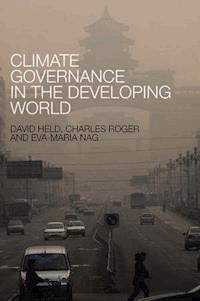
Since 2009, a diverse group of developing states that includes China, Brazil, Ethiopia and Costa Rica has been advancing unprecedented pledges to mitigate greenhouse gas emissions, offering new, unexpected signs of climate leadership. Some scholars have gone so far as to argue that these targets are now even more ambitious than those put forward by their wealthier counterparts. But what really lies behind these new pledges? What actions are being taken to meet them? And what stumbling blocks lie in the way of their realization?
In this book, an international group of scholars seeks to address these questions by analyzing the experiences of twelve states from across Asia, the Americas and Africa. The authors map the evolution of climate policies in each country and examine the complex array of actors, interests, institutions and ideas that has shaped their approaches. Offering the most comprehensive analysis thus far of the unique challenges that developing countries face in the domain of climate change, Climate Governance in the Developing World reveals the political, economic and environmental realities that underpin the pledges made by developing states, and which together determine the chances of success and failure.
Sie lesen das E-Book in den Legimi-Apps auf:
Seitenzahl: 616
Veröffentlichungsjahr: 2014
Ähnliche

















Climate Governance in the Developing World
Climate Governance in the Developing World
Edited by
David Held, Charles Roger and Eva-Maria Nag
polity
Copyright © David Held, Charles Roger and Eva-Maria Nag 2013
The right of David Held, Charles Roger and Eva-Maria Nag to be identified as Authors of this Work has been asserted in accordance with the UK Copyright, Designs and Patents Act 1988.
First published in 2013 by Polity Press
Polity Press65 Bridge StreetCambridge CB2 1UR, UK
Polity Press350 Main StreetMalden, MA 02148, USA
All rights reserved. Except for the quotation of short passages for the purpose of criticism and review, no part of this publication may be reproduced, stored in a retrieval system, or transmitted, in any form or by any means, electronic, mechanical, photocopying, recording or otherwise, without the prior permission of the publisher.
ISBN: 978-0-7456-7047-8
A catalogue record for this book is available from the British Library.
The publisher has used its best endeavours to ensure that the URLs for external websites referred to in this book are correct and active at the time of going to press. However, the publisher has no responsibility for the websites and can make no guarantee that a site will remain live or that the content is or will remain appropriate.
Every effort has been made to trace all copyright holders, but if any have been inadvertently overlooked the publisher will be pleased to include any necessary credits in any subsequent reprint or edition.
For further information on Polity, visit our website: www.politybooks.com
Contents
Contributors
Preface
Abbreviations
1. Editors’ Introduction: Climate Governance in the Developing World
David Held, Charles Roger and Eva-Maria Nag
Part I Asia
2. A Green Revolution: China’s Governance of Energy and Climate Change
David Held, Charles Roger and Eva-Maria Nag
3. The Evolution of Climate Policy in India: Poverty and Global Ambition in Tension
Aaron Atteridge
4. The Dynamics of Climate Change Governance in Indonesia
Budy P. Resosudarmo, Fitrian Ardiansyah and Lucentezza Napitupulu
5. Low Carbon Green Growth and Climate Change Governance in South Korea
Jae-Seung Lee
Part II Americas
6. Discounting the Future: The Politics of Climate Change in Argentina
Matías Franchini and Eduardo Viola
7. Controlling the Amazon: Brazil’s Evolving Response to Climate Change
David Held, Charles Roger and Eva-Maria Nag
8. Making ‘Peace with Nature’: Costa Rica’s Campaign for Climate Neutrality
Robert Fletcher
9. A Climate Leader? The Politics and Practice of Climate Governance in Mexico
Simone Pulver
Part III Africa
10. Resources and Revenues: The Political Economy of Climate Initiatives in Egypt
Jeannie Sowers
11. Ethiopia’s Path to a Climate-Resilient Green Economy
David Held, Charles Roger and Eva-Maria Nag
12. Reducing Climate Change Vulnerability in Mozambique: From Policy to Practice
Angus Hervey and Jessica Blythe
13. Reaching the Crossroads: The Development of Climate Governance in South Africa
Lesley Masters
Index
Contributors
Fitrian Ardiansyah has over fifteen years’ experience in the fields of natural resource management, climate change and energy. At present, he is finalizing his doctoral research at the Crawford School of Public Policy at the Australian National University. He is also the Program Development Director for Pelangi Indonesia and Fellow at the International League of Conservation Writers. In previous years, he was a Program Director for Climate and Energy (WWF-Indonesia) and an expert member of the Indonesia Forest Climate Alliance and the Indonesian Official Delegates to the United Nations Framework Convention on Climate Change. He has received Australian Leadership and Allison Sudradjat Awards from the Government of Australia.
Aaron Atteridge is a Research Fellow at the Stockholm Environment Institute in Sweden. His work focuses on different aspects of climate policy, with a particular emphasis on understanding the interaction between international policy processes and the needs of developing countries. This includes analysis of climate politics in different countries and of climate finance, as well as the development of guidance on national adaptation planning and the examination of traditional biomass energy economies in developing countries. Among his previous roles, he has worked as a Senior Policy Officer on climate change and energy issues for the New South Wales government in Australia.
Jessica Blythe is a PhD candidate in the Department of Geography at the University of Victoria, Canada. She investigates the dynamics of change in social-ecological systems and has worked with fishing communities in southern Africa since 2004. Her current research explores how coastal communities respond to environmental change in Mozambique in order to contribute to the development of adaptive actions that promote human well-being and ecological health.
Robert Fletcher is Associate Professor of Natural Resources and Sustainable Development in the Department of Environment, Peace, and Security at the United Nations mandated University for Peace in Costa Rica. His research interests include climate change, conservation, development, ecotourism, environmental governance, globalization, and resistance and social movements. He has conducted field research concerning these topics in a number of sites in North, Central and South America.
Matías Franchini is a member of the Brazilian Research Network on International Relations and Climate Change at the University of Brasilia, and a member of the Department of Environment at the University of La Plata, Argentina. He is a PhD candidate and holds an MA in International Relations from the University of Brasilia. His main research interests are climate change, global environmental governance and Latin American studies. With Eduardo Viola and Thaís Ribeiro, he is co-author of Sistema Internacional de Hegemonia Conservadora: Democracia e Governança Global na era da Crise Climática (International System with Conservative Hegemony) (2012).
David Held is Master of University College, Durham, and Professor of Politics and International Relations at Durham University, UK. Among his most recent publications are Gridlock: Why Global Cooperation is Failing When We Need It Most (2013), The Governance of Climate Change (2011), Cosmopolitanism: Ideals and Realities (2010), Globalisation/ Anti-Globalisation (2007), Models of Democracy (2006), Global Covenant (2004), Global Transformations: Politics, Economics and Culture (1999) and Democracy and the Global Order: From the Modern State to Cosmopolitan Governance (1995). His main research interests include the study of globalization, changing forms of democracy and the prospects of regional and global governance. He is a Director of Polity Press, which he co-founded in 1984, and General Editor of Global Policy.
Angus Hervey is a PhD candidate and Ralph Miliband Scholar at the London School of Economics and Political Science, UK. He is an expert on environmental issues in southern Africa, and has published a number of articles on land use change, deforestation and the impacts of climate change in the region. With David Held and Marika Theros, he is co-editor of The Governance of Climate Change: Science, Economics, Ethics and Politics (2011).
Jae-Seung Lee is a Professor in the Division of International Studies, Korea University. He is currently an Editor-in-Chief of Korea Review of International Studies and Vice-Director of the Institute of Sustainable Development. He also serves as a member of the Policy Advisory Board of the Presidential Secretariat (Foreign and Security Affairs). During the year 2011–12, he joined the Walter H. Shorenstein Asia-Pacific Research Center and the Center for East Asian Studies of Stanford University as a visiting scholar. He holds a BA in political science from Seoul National University and an MA (1993) and PhD in political science from Yale University.
Lesley Masters is a Senior Researcher within the foreign policy and diplomacy programme of the Institute for Global Dialogue (IGD) at the University of South Africa. Her research focuses on environmental diplomacy, South Africa’s foreign policy, the international politics of climate change and the governance of natural resources. She holds a PhD in International Relations from the University of Leicester, UK, and joined the IGD as a researcher in 2008 as part of its Multilateral Programme.
Eva-Maria Nag received her PhD on Indian political thought from the London School of Economics and Political Science (LSE), UK. She has taught undergraduate and postgraduate courses on political theory, ethics and public administration, and South and East Asian politics at the LSE, the School of Oriental and African Studies, King’s College London and the American University in London, UK. She has also worked on global corporate issues with the Bertelsmann Foundation (Germany) and Tomorrow’s Company (UK). She is one of the founding editors of Global Policy, an innovative and interdisciplinary journal bringing together world-class academics and leading practitioners to analyse both public and private solutions to global problems and issues. She is also a Visiting Fellow at the School of Government and International Affairs, Durham University, UK, where she works on comparative political thinking.
Lucentezza Napitupulu is an Affiliated Lecturer and Researcher in the Department of Economics, University of Indonesia. Having worked in climate change policy for the last eight years, she has provided consulting services for numerous stakeholders, including the Ministry of Environment and Ministry of Finance in Indonesia. She holds a Master’s degree in Economics from North Carolina State University, USA, and is currently pursuing her PhD in Environmental Science at the Autonomous University of Barcelona, Spain. Her research interests are in environmental management and community governance.
Simone Pulver is Assistant Professor of Environmental Studies at the University of California (UC), Santa Barbara, USA. She received her doctorate in Sociology from UC Berkeley and also holds an MA in Energy and Resources from UC Berkeley, as well as a BA in Physics from Princeton University, USA. Her research investigates organizational responses to environmental challenges. She has been analysing international climate politics for the past fifteen years, with a particular focus on transnational corporations and developing economies. Before joining UC Santa Barbara in 2009, she was the Joukowsky Family Assistant Research Professor at Brown University’s Watson Institute for International Studies, USA.
Budy P. Resosudarmo is an Associate Professor and Head of the Indonesia Project at the Arndt-Corden Department of Economics, Crawford School of Public Policy at the Australian National University. His research interests include determining the economy-wide impact of environmental policies and understanding the political economy of natural resource utilization. In 2005, he edited The Politics and Economics of Indonesia’s Natural Resources, and in 2009, he co-edited Working with Nature against Poverty: Development, Resources and the Environment in Eastern Indonesia. He received his PhD in Development Economics from Cornell University, USA.
Charles Roger is a PhD student at the University of British Columbia and Liu Scholar at the Liu Institute for Global Issues, Canada. His research focuses on transnational governance, global environmental politics and international political economy. He holds a BA from Concordia University, in Montreal, Canada, and an MSc from the London School of Economics and Political Science, UK. His research has been supported by the Liu Institute for Global Issues, the Centre for International Governance Innovation, the Research Center for Chinese Politics and Business, and the Social Sciences and Humanities Research Council of Canada.
Jeannie Sowers is Associate Professor of Political Science at the University of New Hampshire, USA. Her research focuses on the politics of environment and development in the Middle East and North Africa. She is the author of Environmental Politics in Egypt: Activists, Experts, and the State (2013) and co-editor of The Journey to Tahrir: Revolution, Protest, and Social Change in Egypt (2012). She has published articles in Climatic Change, Development and Change, Journal of Environment and Development and Middle East Report and is on the editorial boards of Global Environmental Politics and Middle East Report.
Eduardo Viola is a Full Professor at the Institute of International Relations, University of Brasilia, Senior Researcher of the Brazilian Council for Scientific Research and Chair of the Brazilian Research Network on International Relations and Climate Change. He has published four books and more than one hundred journal articles and book chapters. He has been visiting professor at several international universities – Stanford, Colorado, Notre Dame and Texas, USA, and Amsterdam, Netherlands – and a consultant with Brazilian Ministries – Science and Technology, Education, Defence and Environment. He has also been a member of the Committee on Global Environmental Change of the Brazilian Academy of Science.
Preface
The problem of climate change cannot be overstated. It is an issue of global significance with far-reaching transnational as well as intergenerational consequences for the life chances of people across the world. The brute fact is that greenhouse gas emissions are rising at an alarming rate and we have done far too little to reverse this shocking trend. We seem to be racing towards a tipping point after which the risks of climate change become tragic, irreversible realities. Having said this, there have been many important efforts, locally, nationally and globally, to address this threat. Some have been more promising than others, but where there have been some successes it is important to understand how this has occurred and to try and build on these relative achievements. By understanding what works and what does not we shed light on a path to more effective climate governance.
The responsibility for addressing climate change has conventionally been placed on the shoulders of the industrialized world. Indeed, this notion is more or less enshrined in the United Nations Framework Convention on Climate Change and, especially, in the Kyoto Protocol. Since the dawn of industrialization, now-developed states have contributed immensely to global stocks of greenhouse gas, and they must take action to mitigate future climatic changes and reduce the effects of those already imminent. However, with the rapid development of Asia and many other regions of the world, developing countries are now becoming major contributors to climate change as well. China has become the largest single emitter of greenhouse gases; Brazil, India and Indonesia now produce more greenhouse gas emissions individually each year than Japan or Germany; and South Korea and Mexico’s emissions outstrip those of France and Italy. As a result, the prospects for addressing climate change without major efforts by states in the developing world are rapidly diminishing. It is essential for them to shift their emissions trajectories downwards as they grow.
It is striking and encouraging that some developing countries have established sophisticated responses to climate change. This is a trend that warrants much greater attention. China, Brazil, South Korea, Mexico and others are increasingly on the frontline of climate policymaking and can be considered global leaders in a number of significant ways. Some of the actions they are taking are comparable to the finest efforts made by the wealthier, industrialized world. Others, such as Argentina and South Africa, are clearly laggards, and most developing states probably come closer to their poorer record. Yet this observation gives rise to an important question: how are some developing countries becoming more ambitious and successful than others in responding to climate change? Since many – perhaps most – developing countries remain unprepared for climate change and face immense political and economic barriers, the answer to this question is not obvious. This book explores this issue by closely analysing the experiences of twelve different countries in three regions of the globe, in Asia, the Americas and Africa. By examining these countries, it offers the most comprehensive study thus far on climate governance in the developing world.
The research undertaken in this book initially developed as a result of a generous grant provided to the editors by L’Agence Française de Développement (AFD). We are very grateful to the AFD for having provided the resources to conduct this work, which was undertaken over a three-year period and involved extensive travel, interviews and data gathering in several countries. While the original AFD-funded research focused on only a subset of those countries covered in this book, it revealed empirical complexities that had gone largely unnoticed and, in our view, presented a number of interesting puzzles. Thus, we expanded the project’s scale and scope by bringing a series of additional researchers on board in order to examine these new dimensions of climate policymaking across a wider range of countries.
The editors would like to thank the many people who have contributed to the development of this volume and the research that underpins it. Above all, the contributors have been more than generous in sharing their expertise for the benefit of this book. Working alongside them has been a learning experience in the best sense. Many more were involved in producing this book in other ways. For their support and/or for very helpful comments and discussion at various stages of research and writing, we would like to thank Richard Balme, Satishkumar Belliethathan, Jean-Marc Coicaud, Olivier Charnoz, Björn Conrad, Robert Falkner, Tony Giddens, Tom Hale, Jin Xiaoting, Vannina Pomonti, Eduardo Viola, Robert Wade, Anna Wishart, Zha Daojiong and Zhang Haibin. Angus Hervey and Kyle McNally are also to be thanked for providing important research support, as well as Aida Kowalska, Danielle Da Silva and Dave Steinbach. Finally, we would like to thank everyone at Polity for all they did to turn the manuscript into the book that is now in your hands.
David Held
Charles Roger
Eva-Maria Nag
5 November 2012
Abbreviations
AAP
Africa Adaptation Programme
ABD
Arab-British Dynamics Company
ADII
Association of Comprehensive Indigenous Development
AFE
average fuel economy
AIJ
activities implemented jointly
AMCEN
African Ministerial Conference on the Environment
ANC
African National Congress
AOI
Arab Organization for Industrialization
AOSIS
Alliance of Small Island States
AU
African Union
AusAID
Australian Agency for International Development
AWG-LCA
Ad Hoc Working Group on Long-Term Cooperative Action
BAPPENAS
National Development Planning Agency
BASIC
Brazil, South Africa, India, China
BAU
business-as-usual
BCCF
Brazilian Climate Change Forum
BRICS
Brazil, Russia, India, China, South Africa
C40
C40 Cities Climate Leadership Group
CAHOSCC
Conference of African Heads of State and Government on Climate Change
CANAECO
National Ecotourism Chamber of Commerce
CANE
Coalition Against Nuclear Energy
CAS
Chinese Academy of Sciences
CATIE
Centro Agronómico Tropical de Investigación y Enseñanza
CBD
Convention on Biological Diversity
CCA
Center for Atmospheric Sciences
CCGC
National Board for the Coordination of Disaster Management
CCS
carbon capture and sequestration
CDF
Clean Development Fund
CDM
Clean Development Mechanism
CER
certified emissions reduction
CFE
Comision Federal de Electricidad
CFL
compact fluorescent lamp
CI
Conservation International
CICC
Inter-Ministerial Commission on Climate Change
CIM
Inter-Ministerial Committee for Climate Change
CIMGC
Inter-Ministerial Commission on Climate Change
CMA
China Meteorological Administration
CNA
National Environment Commission
CO
2
e
carbon dioxide equivalent
COFEMA
Federal Council of the Environment
COMEGEI
Climate Change Office
CONCAMIN
Mexican Federation of Chambers of Commerce
COP
Conference of the Parties
CRE
Energy Regulation Commission
CRGE
climate-resilient green economy
CSE
Centre for Science and Environment (ch. 3);Conservation Strategy of Ethiopia (ch. 11)
CSP
Country Studies Program
CTGC
Technical Council for Disaster Management
CTL
coal-to-liquid
DANIDA
Danish International Development Agency
DEA
Department of Environment
DEAT
Department of Environment and Tourism
DME
Department of Minerals and Energy
DNPI
National Council on Climate Change
DOE
Department of Energy
EACP
East Asia Climate Partnership
EC
European Community
ED
Environmental Defense
EDRI
Ethiopian Development Research Institute
EEAA
Egyptian Environmental Affairs Agency
EECCHI
Energy Efficiency and Conservation Clearing House Indonesia
EIUG
Energy Intensive User Group
ENCC
National Strategy on Climate Change
EPA
Environmental Protection Authority
EPACC
Ethiopian Programme of Adaptation to Climate Change
ESCO
energy service company
EU
European Union
FCPF
Forest Carbon Partnership Facility
FDI
foreign direct investment
FONAFIFO
National Fund for Forestry Financing
FORESTA
Forest Resources for a Stable Environment
FRELIMO
Front for the Liberation of Mozambique
FUNDECOR
Fundación para el Desarrollo de la Cordillera Volcánica Central
FYP
Five-Year Plan
G8
Group of 8
G20
Group of 20
G77
Group of 77
GDP
gross domestic product
GEF
Global Environment Facility
GGGI
Global Green Growth Institute
GHG
greenhouse gas
GIR
Greenhouse Gas Inventory and Research Center
GIZ
German Agency for International Cooperation
Gt
gigatonne
GTP
Growth and Transformation Plan
GW
gigawatt
GWh
gigawatt-hours
IBA
important bird area
IBAMA
Brazilian Institute of Environment and Renewable Natural Resources
IBSA
India, Brazil, South Africa
ICCSR
Indonesia Climate Change Sectoral Roadmap
IEA
International Energy Agency
IFCA
Indonesian Forest Climate Alliance
IFI
international financial institution
IGCCC
Intergovernmental Committee on Climate Change
IMCCC
Inter-Ministerial Committee on Climate Change
IMF
International Monetary Fund
INAM
National Meteorological Institute
INBio
National Biodiversity Institute
INC
Intergovernmental Negotiating Committee (ch. 9); Initial National Communication (ch. 12)
INE
National Ecology Institute
INGC
National Institute for Disaster Management
IPCC
Intergovernmental Panel on Climate Change
IPM
integrated pest management
IREP
Integrated Rural Energy Programme
JI
Joint Implementation
JICA
Japan International Cooperation Agency
KBIZ
Korean Federation of Small and Medium Business
KCCI
Korean Chamber of Commerce and Industry
KCER
Korea Certified Emissions Reduction
KEF
Korea Employers Federation
KITA
Korean International Trade Association
KP
Kyoto Protocol
kWh
kilowatt-hour
LDC
least developed country
LED
low emissions development
LEDS
Low Emissions Development Strategy
LOI
letter of intent
LSE
London School of Economics and Political Science
LTMS
Long Term Mitigation Scenarios
LUCF
land use change and forestry
LULUCF
land use, land use change and forestry
MCT
Ministry of Science and Technology
MDM
Democratic Movement of Mozambique
MEMR
Ministry of Energy and Mineral Resources
MENA
Middle East and North Africa
MICOA
Ministry for the Coordination of Environmental Affairs
MINAG
Ministry of Agriculture
MINEAT
Ministry of Environment, Energy and Telecommunications
MMA
Ministry of the Environment
MME
Ministry of Mines and Energy
MOARD
Ministry of Agriculture and Rural Development
MoE
Ministry of Environment
MOFA
Ministry of Foreign Affairs
MOFED
Ministry of Finance and Economic Development
MOST
Ministry of Science and Technology
MOTC
Ministry of Transport and Communication
MOTI
Ministry of Trade and Industry
MOWE
Ministry of Water and Energy
MPD
Ministry of Planning and Development
MRV
measuring, reporting and verification
Mt
megatonne
MW
megawatt
NAMA
Nationally Appropriate Mitigation Action
NAPA
National Adaptation Programme of Action
NAPCC
National Action Plan on Climate Change
NBCI
National Biomass Cookstove Initiative
NCCCC
National Coordination Committee on Climate Change
NCCCLSG
National Climate Change Coordinating Leading Small Group
NCCS
National Climate Change Strategy
NDRC
National Development and Reform Commission
NEA
National Energy Administration
NEC
National Energy Commission
NEEDS
National Environment, Economic and Development Study
NELG
National Energy Leading Group
NEPA
National Environmental Protection Agency
NGO
non-governmental organization
NLCCC
National Leading Committee on Climate Change
NMA
National Meteorology Agency
NRDC
Natural Resources Defense Council
NREA
New and Renewable Energy Authority
ODA
official development assistance
OECD
Organization for Economic Cooperation and Development
PARP
Poverty Reduction Action Plan
PASDEP
Plan for Accelerated and Sustained Development for Ending Poverty
PBMR
Pebble Bed Modular Reactor
PCA
Partnership for Climate Action
PCGG
Presidential Committee on Green Growth
PCN
Paz con la Naturaleza
PCSD
Presidential Commission on Sustainable Development
PECC
Special Climate Change Programme
PES
payment for environmental services
PND
National Development Plan
PNMC
National Policy on Climate Change
PPCR
Pilot Programme for Climate Resilience
PPP
purchasing power parity
PQG
Five-Year Plan
PRI
Institutional Revolutionary Party
PROALCOOL
National Alcohol Programme
PSA
Pago por Servicios Ambimentales (payment for environmental services)
PV
photovoltaic
R&D
research and development
RAN-GRK
National Action Plan for Greenhouse Gases Reduction
REDD
Reducing Emissions from Deforestation and Forest Degradation
REDD+
Reducing Emissions from Deforestation and Forest Degradation Plus
RENAMO
Mozambique National Resistance
Rs
Indian rupees
RWA
Rural Women’s Assembly
SACP
South African Communist Party
SAGARPA
Ministry of Agriculture, Livestock and Rural Development
SANCO
South African National Civic Organization
SAP
structural adjustment programme
SAPCC
State Action Plan on Climate Change
SCT
Ministry of Communications and Transport
SDPC
State Development Planning Commission
SEA
Strategic Environmental Assessment
SECOFI
Ministry of Commerce and Industrial Development
SEDESOL
Ministry of Social Development
SEDUE
Ministry of Ecology and Urban Development
SEMARNAP
Ministry of Environment
SEMARNAT
Ministry of Environment
SENER
Ministry of Energy
SEO
State Energy Office
SIDS
small island developing state
SINAC
National System of Protected Areas
SME
small and medium-sized enterprise
SRE
Ministry of Foreign Relations
SSTC
State Science and Technology Commission
SUP
Structural Adjustment Programme
SWEG
Elsewedy for Wind Energy Generation
TERI
The Energy and Resources Institute
TFCA
Tropical Forest Conservation Act
TNA
Technology Needs Assessment
TNC
The Nature Conservancy
TPES
total primary energy supply
UAE
United Arab Emirates
UK
United Kingdom
UKP4
President’s Delivery Unit for Development Monitoring and Oversight
UN
United Nations
UNAM
Universidad Nacional Autónoma de México
UNCED
United Nations Conference on Environment and Development
UNDP
United Nations Development Programme
UNEP
United Nations Environment Programme
UN ESCAP
United Nations Economic and Social Commission for Asia and the Pacific
UNFCCC
United Nations Framework Convention on Climate Change
UN-REDD
United Nations collaborative initiative on Reducing Emissions from Deforestation and Forest Degradation
UNWTO
United Nations World Tourism Organization
US
United States (of America)
USAID
United States Agency for International Development
VA
voluntary agreement
VCO
voluntary carbon offset
WBCSD
World Business Council for Sustainable Development
WRI
World Resources Institute
WWF
World Wide Fund for Nature
1
Editors’ Introduction: Climate Governance in the Developing World
David Held, Charles Roger and Eva-Maria Nag
FOR most of the period since the early 1990s, the locus of action on climate change has largely been in the industrialized world. The 1997 Kyoto Protocol is, for example, the most ambitious international effort to establish quantitative limits on countries’ greenhouse gas (GHG) emissions. During the first commitment period, it obliged a group of thirty-seven countries to reduce their emissions collectively to 5 per cent below 1990 levels by 2008–12. Yet this only applied to industrialized states, known as ‘Annex I’ countries in the United Nations Framework Convention on Climate Change (UNFCCC). Developing countries, known as ‘non-Annex I states’,1 were effectively excluded from any binding obligations. Within the industrialized world, the European Union in particular has been at the forefront of efforts to govern climate change. The European Emissions Trading System, the world’s first multinational emissions trading scheme, was launched in 2005, and a range of other Europe-wide climate policies have been enacted since then. Many European states, like the United Kingdom, Denmark and Germany, have also established policies to promote the adoption of renewable sources of energy, created policies to encourage energy efficiency, or implemented national carbon taxes designed to put a price on carbon and abate emissions.
Action in the industrialized world is, of course, not confined to the European continent and the British Isles. Outside of Europe, Japan has created a range of climate mitigation policies, New Zealand operates a mandatory emissions trading system, and Australia now plans to establish one as well. National policies in North America are much less developed and coherent, but individual states, provinces and municipalities in the United States and Canada have taken the lead and created their own climate change policies despite the dearth of action at the national level. California, for instance, has set a goal of reducing its emissions to 1990 levels by 2020 and has established a statewide cap-and-trade system to meet it; Quebec and British Columbia (in Canada) have implemented carbon taxes, while Alberta operates a baseline-and-credit emissions trading scheme; and a number of cities in both the United States and Canada have established climate action plans. Finally, many sub-national governments in North America have also worked together through regional carbon trading schemes such as the Western Climate Initiative and the Regional Greenhouse Gas Initiative.
Even though the above developments in the industrialized world have been insufficient to meet the challenge of global warming, they have traditionally constituted the ‘frontline’ in the global battle against climate change. By contrast, developing countries since the early 1990s have consistently maintained that they have little obligation to take immediate action. In the international climate change negotiations, they have proven deeply reluctant to adopt binding mitigation targets similar to those adopted by industrialized states under Kyoto. Doing so, they have argued, would reduce the space for economic growth and development, which are viewed as overriding priorities. Further, since currently developed states did not have to curb emissions during their own industrialization experience, it would be patently unfair for developing countries to have to do so, even if this were for the ‘global good’. They should be allowed to emit more in order to meet their legitimate socio-economic and developmental needs. Thus, the domestic climate change policies of most developing countries have traditionally been thought to be much less proactive than those in the industrialized world. While they occasionally took actions that had the side-effect of abating emissions (by reducing energy subsidies, for example; see Reid & Goldemberg 1998), one early review of climate change policies in low income countries by an analyst from the United Nations Development Programme (UNDP) summed up its findings by explaining that ‘most developing countries are neither prepared to address nor interested in climate change’ (Gómez-Echeverri 2000). Climate considerations have, for the most part, hardly figured in plans for economic development, policymaking has been limited, and those actions that have been taken have often been driven by multilateral and transnational actors from wealthier countries, with little domestic ownership (Olsen 2006).
Lesen Sie weiter in der vollständigen Ausgabe!
Lesen Sie weiter in der vollständigen Ausgabe!
Lesen Sie weiter in der vollständigen Ausgabe!
Lesen Sie weiter in der vollständigen Ausgabe!
Lesen Sie weiter in der vollständigen Ausgabe!
Lesen Sie weiter in der vollständigen Ausgabe!
Lesen Sie weiter in der vollständigen Ausgabe!
Lesen Sie weiter in der vollständigen Ausgabe!
Lesen Sie weiter in der vollständigen Ausgabe!
Lesen Sie weiter in der vollständigen Ausgabe!
Lesen Sie weiter in der vollständigen Ausgabe!
Lesen Sie weiter in der vollständigen Ausgabe!
Lesen Sie weiter in der vollständigen Ausgabe!
Lesen Sie weiter in der vollständigen Ausgabe!
Lesen Sie weiter in der vollständigen Ausgabe!
Lesen Sie weiter in der vollständigen Ausgabe!




