



20,99 €
Mehr erfahren.
- Herausgeber: John Wiley & Sons
- Kategorie: Geisteswissenschaft
- Sprache: Englisch
This book sets out the case for a cosmopolitan approach to contemporary global politics. It presents a systematic theory of cosmopolitanism, explicating its core principles and justifications, and examines the role many of these principles have played in the development of global politics, such as framing the human rights regime. The framework is then used to address some of the most pressing issues of our time: the crisis of financial markets, climate change and the fallout from the wars in Afghanistan and Iraq. In each case, Held argues that realistic politics is exhausted, and that cosmopolitanism is the new realism.
See also Garrett Wallace Brown and David Held's The Cosmopolitanism Reader.
Sie lesen das E-Book in den Legimi-Apps auf:
Seitenzahl: 362
Veröffentlichungsjahr: 2013
Ähnliche


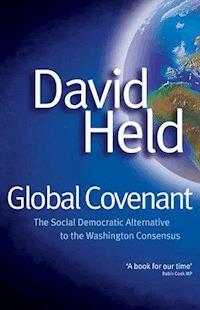

















Table of Contents
Cover
Title page
Copyright page
Preface
Introduction: Changing Forms of Global Order
Towards a multipolar world
The paradox of our times
Economic liberalism and international market integration
Security
The impact of the global fi nancial crisis
Shared problems and collective threats
A cosmopolitan approach
Democratic public law and sovereignty
Summary of the book ahead
1 Cosmopolitanism: Ideas, Realities and Deficits
Globalization
The global governance complex
Globalization and democracy: Five disjunctures
Cosmopolitanism: Ideas and trajectories
Cosmopolitan realities
Addressing the institutional deficit: Reframing the market
2 Principles of Cosmopolitan Order
Cosmopolitan principles
Thick or thin cosmopolitanism?
Cosmopolitan justifications
From cosmopolitan principles to cosmopolitan law
3 Cosmopolitan Law and Institutional Requirements
The idea of cosmopolitan law
Institutional requirements
In sum
Political openings
4 Violence, Law and Justice in a Global Age
Reframing human activity: International law, rights and responsibilities
9/11, war and justice
Islam, the Kantian heritage and double standards
Concluding reflections
5 Reframing Global Governance: Apocalypse Soon or Reform!
The paradox of our times
Why be concerned with global challenges?
Deep drivers and governance challenges
Global governance: Contemporary surface trends
Problems and dilemmas of global problem-solving
Strengthening global governance
Global governance and the democratic question
Multilevel citizenship, multilayered democracy
6 Parallel Worlds: The Governance of Global Risks in Finance, Security and the Environment
Global governance and the paradox of our times
The global governance of finance
The global governance of security
The global governance of the environment
Conclusion: Crisis, politicization and reform
7 Democracy, Climate Change and Global Governance
Democracy I: The democratic nation-state and climate change
Democracy II: Global governance and climate change
The policy debate: Squaring the circle?
The political elements of a democratic global deal
Democracy and the policy menu ahead
Afterword
Acknowledgements
Abbreviations
References
Index
Copyright © David Held 2010
The right of David Held to be identified as Author of this Work has been asserted in accordance with the UK Copyright, Designs and Patents Act 1988.
First published in 2010 by Polity Press
Polity Press
65 Bridge Street
Cambridge CB2 1UR, UK
Polity Press
350 Main Street
Malden, MA 02148, USA
All rights reserved. Except for the quotation of short passages for the purpose of criticism and review, no part of this publication may be reproduced, stored in a retrieval system, or transmitted, in any form or by any means, electronic, mechanical, photocopying, recording or otherwise, without the prior permission of the publisher.
ISBN-13: 978-0-7456-4835-4
ISBN-13: 978-0-7456-4836-1 (pb)
ISBN-13: 978-0-7456-5936-7 (Single-user ebook)
ISBN-13: 978-0-7456-5935-0 (Multi-user ebook)
A catalogue record for this book is available from the British Library.
The publisher has used its best endeavours to ensure that the URLs for external websites referred to in this book are correct and active at the time of going to press. However, the publisher has no responsibility for the websites and can make no guarantee that a site will remain live or that the content is or will remain appropriate.
Every effort has been made to trace all copyright holders, but if any have been inadvertently overlooked the publisher will be pleased to include any necessary credits in any subsequent reprint or edition.
For further information on Polity, visit our website: www.politybooks.com
Preface
The arguments in this volume have evolved over the past decade. Throughout this period three key terms have defined my intellectual preoccupations: democracy, globalization and cosmopolitanism. Each of these refers to a set of ideas as well as social processes which have shaped, and continue to shape, our lives.
Democracy, from ancient cities to contemporary political systems, has been the most powerful of all political ideas, expressing, as it does, the yearning for self-determination and all the achievements and limitations of the actual processes involved. From cities to nation-states, democracy has become associated with the aspiration of people to rule themselves in their own community, and with the gains and frustrations associated with this. Democracy has set itself against arbitrary rule in all its forms and yet has only incompletely achieved its core objective.
Globalization defines a set of processes which are reshaping the organization of human activity, stretching political, economic, social and communicative networks across regions and continents. Power is no longer simply articulated in particular geographic sites and locations, but is spread and diffused across the world in such a way that what occurs in one place can have ramifications across many others. If democracy expresses the idea of self-government within a delimited space, the local and national territory, globalization refers to activities and systems of interaction which create what I call overlapping communities of fate − the interlinking of the fortunes of cities and countries.
Democracy and globalization pull in different directions, or so it seems. Democracy pulls towards the self-organization of activity in delimited territories, and globalization pulls towards the creation of new dense forms of transborder interaction, raising the question of how these can be brought under democratic control and rendered accountable. If all our key political ideas and mechanisms have been developed with reference to particular communities and spaces, how can they be reinvented to embrace a global age?
Clues to an answer to this question can be found in the third term: cosmopolitanism. Cosmopolitanism elaborates a concern with the equal moral status of each and every human being and creates a bedrock of interest in what it is that human beings have in common, independently of their particular familial, ethical, national and religious affiliations. It does not deny the historical, sociological and political significance of these kinds of identity, but argues that they can obscure what it is that all people share − the bundle of needs, desires, anxieties and passions that define us all as members of the same species. Human life can come to an end for diverse reasons, but these have common roots: hunger, illness, loneliness and so on. Human life cannot be sustained without satisfying basic needs whether these be physical, psychological or social.
We need to understand the latter if we are to grasp the proper limits to human diversity, limits which specify necessary conditions for human activity, whether it is found in families, groups or nation-states. These limits articulate necessary boundaries which no human activity should cross – boundaries concerning violence, arbitrary decision-making, the nature and scope of power, among other pressing concerns.
If democracy is about self-determination, globalization about transborder processes and cosmopolitanism about universal principles which must shape and limit all human activity, together they help us understand that the fate of humankind can no longer be disclosed merely by examining self-enclosed political and moral communities, and that the principles of democracy and cosmopolitanism need to be protected and nurtured across all human spheres – local, national, regional and global. If some of the most powerful processes and forces in the world are to be brought under the sphere of influence of public deliberation and democratic accountability, then we need to articulate the changing basis of communities and the interconnection among them. This is both an empirical challenge and a political one.
These concerns do not generate a simple aspiration for one global community, democratically organized on cosmopolitan principles. Rather, it suggests the necessity to recognize the multilevel and multilayered nature of human associations in which we already live, and to find new procedures and mechanisms to ensure that they are bound together by common principles and democratic processes which allow for democracy to flourish, from cities to global networks, in the context of a shared commitment to boundaries which define necessary limits on human action, whether these are political, economic, social or environmental. This volume addresses this overriding concern.
The chapters that follow were all written initially as essays. The dates of their original publication can be found in the acknowledgements. They all have been substantially rewritten for this book in order to develop arguments where relevant, to minimize overlap, to avoid repetition and to change examples if the originals now seem out of date or anachronistic. Chapter 4, ‘Violence, Law and Justice in a Global Age’ (written in November 2001), has been least altered because it is my attempt to make sense of 9/11 and the military response that followed, and because I think the arguments and examples are still valid despite the passage of some years. Reworked, the chapters constitute an account of my thinking about democracy, globalization and cosmopolitanism – their changing rationale and relevance to life in a global age.
Of the many people who have influenced this book, I would particularly like to acknowledge my co-authors of chapter 6, Kevin Young, and of chapter 7, Angus Fane Hervey. Neither chapter would have the shape or detail they have without their contribution. Pietro Maffettone has been indispensable in helping to compile and edit the book, as has Charlie Roger, whose eye for detail has been immensely valuable.
David Held
January 2010
Introduction: Changing Forms of Global Order
Until recently, the West has, by and large, determined the rules of the game on the global stage. During the last century, Western countries presided over a shift in world power – from control via territory to control via the creation of governance structures created in the post-1945 era. From the United Nations Charter and the formation of the Bretton-Woods institutions to the Rio Declaration on the environment and the creation of the World Trade Organisation, international agreements have invariably served to entrench a well-established international power structure. The division of the globe into powerful nation-states, with distinctive sets of geopolitical interests, and reflecting the international power structure of 1945, is still embedded in the articles and statutes of leading intergovernmental organizations, such as the IMF and the World Bank. Voting rights are distributed largely in relation to individual financial contributions, and geo-economic strength is integrated into decision-making procedures.
The result has been susceptibility of the major international governmental organizations (IGOs) to the agendas of the most powerful states, partiality in enforcement operations (or lack of them altogether), their continued dependency on financial support from a few major states, and weaknesses in the policing of global collective action problems. This has been dominance based on a ‘club’ model of global governance and legitimacy. Policy at the international level has been decided by a core set of powerful countries, above all the ‘G1’, G5 and G7, with the rest largely excluded from the decision-making process.
Towards a multipolar world
Today, however, that picture is changing. The trajectory of Western dominance has come to a clear halt with the failure of dominant elements of Western global policy over the past few decades. The West can no longer rule through power or example alone. At the same time, Asia is on the ascent. Over the last half-century, East and Southeast Asia has more than doubled its share of world GDP and increased per capita income at an average growth rate almost two and a half times that in the rest of the world (Quah, 2008). In the last two decades alone, emerging Asian economies have experienced an average growth rate of almost 8 per cent – 3 times the rate in the rich world (, 2009).
Lesen Sie weiter in der vollständigen Ausgabe!
Lesen Sie weiter in der vollständigen Ausgabe!
Lesen Sie weiter in der vollständigen Ausgabe!
Lesen Sie weiter in der vollständigen Ausgabe!
Lesen Sie weiter in der vollständigen Ausgabe!
Lesen Sie weiter in der vollständigen Ausgabe!
Lesen Sie weiter in der vollständigen Ausgabe!
Lesen Sie weiter in der vollständigen Ausgabe!
Lesen Sie weiter in der vollständigen Ausgabe!
Lesen Sie weiter in der vollständigen Ausgabe!
Lesen Sie weiter in der vollständigen Ausgabe!
Lesen Sie weiter in der vollständigen Ausgabe!




