


Erhalten Sie Zugang zu diesem und mehr als 300000 Büchern ab EUR 5,99 monatlich.
- Herausgeber: Carcanet Poetry
- Kategorie: Poesie und Drama
- Sprache: Englisch
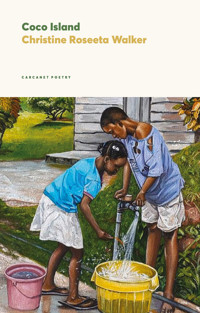
Shortlisted for the OCM Bocas Poetry Prize for Caribbean Literature 2025 Shortlisted for the John Pollard Foundation International Poetry Prize 2025 Christine Roseeta Walker's first book is set entirely in Negril, Jamaica. Coco Island presents a compelling cycle of poems, attentive to the undertow and hidden forces that shape a place and its people. In narrative poems, in songs, in fables, in comic scenes, ghost stories and vivid character sketches – especially of girls and women – Walker artfully lays bare how economic necessity, religious belief, illness and addiction reach far into the structures of family life and community. Piecing together the isolated lives of those left behind as the island modernises, her fearless, memorable poems chart the devastation of a world.
Sie lesen das E-Book in den Legimi-Apps auf:
Seitenzahl: 71
Veröffentlichungsjahr: 2024
Das E-Book (TTS) können Sie hören im Abo „Legimi Premium” in Legimi-Apps auf:
Ähnliche












3
Coco Island
Christine Roseeta Walker
CARCANET POETRY
Contents
9
For Winston Washington Walker10
COCO ISLAND
ONE
14
Coco Island
From behind the bottle tree, a red sun rises,
shifting colours of pink, orange, and yellow
onto the sand and out into the sea.
From daybreak to nightfall, the Island waits.
Sea-bound, knee-deep in waters too vast
to allow bridges to form between cays.
Each day, glass-bottom boats part waves
to unload the weight of them that come
to dine and dance beneath the bottle tree.
From zinc pits, the scent of meat burning
rises above easy reggae music and euphoric voices
as idle waves lap at the golden sands.
Beneath the bottle tree, they fall in love
with the blue sea and the blue sky blurring,
while the sun turns the evening blood-orange.
But the Island is listening, observing every
gesticulation and conduct until It identifies
them by their attentiveness.
When the Island had hosted them beneath
the bottle tree, they climbed back onto the boats,
delighted to have come to Coco Island.
But often, on the journey back, a sacrifice
must be made — a human offering must be given,
for the Island, too, must feed to survive.
16This is the law of paradise: something taken
for something given. It is Coco Island’s nature —
a muted transaction since its creation.
So, if you should come to Coco Island,
never dance beneath the bottle tree or behave
inattentively: The Island is watching.
Black Sheep
Dusk was near, but not nearby enough
for you to miss your way
onto our verandah.
White dress and hair cut like a man’s,
you sat with your legs wide
squinting into the fading light.
Two strangers we were, each one pretending
to know the other — mother, daughter —
daughter, mother, yet unfamiliar.
The black frock you brought was a funeral dress
puffing out at the hems with layers and layers
of black web… webbing
black with mesh netting to wrap
me in… to haul me away in that giant black bag
nesting at your restless heel.
I look at you without thought
like I did on the last Sabbath day I saw you stumbling
down that slippery slope.
When my father stood with me at the front door,
he said that I was the black sheep —
the black sheep… in your eyes.
And now, on this verandah with the black night
crawling in, all thought escapes me as I gaze
into your blue eyes — who are you?
18What were your excuses, then? Ends meet —
you had left to make ends meet, and now you have returned
holding the ends of a severed circle.
You carried the empty bag to my bedroom in silence,
ate quietly at my brother’s table and listened
as I read from a pile of textbooks.
The small double bed sinking under our weight
as we slip the thin cotton sheet over our feet.
You never talked of those lost years
or said why you had come or why you had with you
that empty bag. At daylight, when the rooster crowed thrice
I awoke from my sleep, you were gone.
A dead-ended telephone number fell off the pillow
onto the floor. I perceive the scourge
in me that had driven you away once more.
Years after my father had died, I saw you again.
But you had gotten smaller. Your blue
eyes were even bluer, still unfamiliar.
At dusk, I listened to you talk on the hotel balcony
and waited quietly for something visceral to happen —
for some pull to guide me.
It was on that night when the light from the moon
had flooded the mango tree that I saw a black shape
sitting in your seat.
The House
It’s the daylight darkness he remembers the most,
the windowless rooms and the rays of grey beams fighting
to float through the twisted stick walls.
He could never find anything in that black house.
But each time he thinks of the darkness, he sees his father
pulling at the end of the galvanised chain holding him to the wall.
The chains were secured in the mornings; his metal mother
chiding him with sharp clinking to stop him straying,
and were removed at night while he watched for empathy.
One morning, he searched the darkness and found the key
to freedom. After work, his worn father caught him
with the neighbours’ kids. The key disappeared for good.
Then, it was just the darkness, the weight of metal
scarfing his neck and the solemn vows to himself
of leaving once he was old enough to depart.
Years later, as he watched his only son playing
with the neighbours’ children, he thought of his father,
trying to understand his lasting cruelty.
At times, he finds himself drawn to the darkness
inside his scarred mind, and to resist, he paints
giant windows on his walls to let the light in.
Like Buffalos
That sweltering June day on the bridge
above the molasses waters of the Negril River
we saw him half-naked and vulnerable.
Passers-by had stopped to watch him
convulse involuntarily towards the riverbank
while hazarding a guess to his ailment.
Spasming, rolling, frothing at the mouth
and moving closer to the water’s pebbled edge,
he had no control of his defeated limbs.
We watched his body fall, rise, fall
thinking of a hundred ways to help, but knowing
we were too weak, too small to pull him back.
The adults looked numbed, petrified,
saying he might grab hold of them if they try
to stop him falling into the glossy marsh.
Our uncle signalled it was time to go
before the stranger rolled down the riverbank,
and plunged into the moving current.
We walked away, trying not to look back,
hearing our uncle’s guttural voice explaining
how quick it takes a human to drown.
21If only people were like buffalos,
it would take him hours before his lungs failed
and enough time to get help, he said.
The stranger had vanished behind
the crowd as we crossed the road to the market,
hoping the murky waters would revive him.22
TWO
24
Totems
Drunk Chaperone
We walked towards the party under a sky of stars
trying not to sway beyond a straight line
like he was. Our uncle, tour guide, tipsy chaperone
swore to show us, children, how to navigate
the night town.
We followed him, three girls, up a hill until we reached
the celebration, confetti floating in the hotel pool.
They served us soda and told us to sit wherever we wanted
while our guide drank rum and coke and quarrelled
with the host.
Minutes later, we followed the curving concrete wall
until we came to the town centre, the sea air raw
on our deflated faces as we climbed the local cinema steps.
Our uncle cajoled the man at the door until he let us in
free of charge.
As we sat down in the dark and crowded picture room,
he stood up, pointed at the screen and shouted,




