


2,99 €
Mehr erfahren.
- Herausgeber: Freegulls Publishing House LLC
- Kategorie: Fachliteratur
- Sprache: Englisch
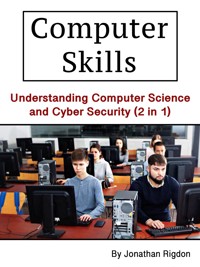
This book consists of two titles, which are the following:
1 - Computer Science: Computer science is a field that deals with the study of computers and computational systems. It encompasses both the theoretical and practical aspects of computing, including algorithms, data structures, programming languages, software engineering, and more. It's about understanding how computers work, how they can solve problems, and how they interact with humans and other systems.
2 - Cyber Security: To effectively defend against the threats, cybersecurity professionals employ a variety of strategies and technologies. This includes implementing robust firewalls and intrusion detection systems to monitor and control network traffic, deploying antivirus software to detect and remove malicious software, using encryption to secure sensitive data both in transit and at rest, and implementing strong authentication mechanisms such as multi-factor authentication to prevent unauthorized access.
Das E-Book können Sie in Legimi-Apps oder einer beliebigen App lesen, die das folgende Format unterstützen:
Veröffentlichungsjahr: 2024
Ähnliche

















Computer skills bundle
Table of contents
Computer Skills
By Jonathan Rigdon
The Complete Guide to Principles and Informatics
Cyber Security
By Jonathan Rigdon
Computer Skills
Understanding Computer Science and Cyber Security (2 in 1)
By Jonathan Rigdon
Computer Science
The Complete Guide to Principles and Informatics
By Jonathan Rigdon
Table of Contents:
1. Introduction to Computer Science
- History and Evolution
- Key Concepts and Terminology
- Importance and Applications
2. Foundations of Computing
- Algorithms and Data Structures
- Logic and Boolean Algebra
- Number Systems and Representation
3. Programming Languages
- Overview of Programming Paradigms
- High-Level vs. Low-Level Languages
- Popular Languages and Their Applications
4. Software Engineering
- Software Development Life Cycle
- Design Patterns and Best Practices
- Testing and Debugging
5. Computer Architecture
- CPU, Memory, and Storage
- Input/Output Devices
- Parallel and Distributed Computing
6. Operating Systems
- Functions and Components
- Process Management
- Memory Management and File Systems
7. Networking and Security
- Basics of Networking
- Internet Protocols and Standards
- Cybersecurity Threats and Countermeasures
8. Databases and Information Retrieval
- Relational Databases
- NoSQL Databases
- Information Retrieval Techniques
9. Artificial Intelligence and Machine Learning
- Introduction to AI
- Machine Learning Algorithms
- Applications of AI in Computer Science
10. Human-Computer Interaction
- Usability Principles
- User Interface Design
- Accessibility Considerations
1. Introduction to Computer Science
Computer science is a field that deals with the study of computers and computational systems. It encompasses both the theoretical and practical aspects of computing, including algorithms, data structures, programming languages, software engineering, and more. It's about understanding how computers work, how they can solve problems, and how they interact with humans and other systems.
History and Evolution
The history of computer science is rich and diverse, spanning centuries of human innovation. It began with the earliest attempts to automate calculations, such as the abacus and the Antikythera mechanism in ancient times.
The modern era of computer science emerged in the mid-20th century with the development of electronic computers. One milestone was the creation of the ENIAC (Electronic Numerical Integrator and Computer) in the 1940s, considered one of the first general-purpose electronic computers.
Theoretical concepts like Turing machines, introduced by Alan Turing in the 1930s, laid the groundwork for the theoretical understanding of computation.
The invention of programming languages, such as FORTRAN and COBOL in the 1950s and 1960s, revolutionized how people interacted with computers, making them accessible to a wider audience.
The development of the internet in the late 20th century and the subsequent explosion of digital technologies in the 21st century further propelled the evolution of computer science, leading to advancements in networking, artificial intelligence, cybersecurity, and more.
Today, computer science continues to evolve rapidly, shaping and reshaping the world we live in.
Key Concepts and Terminology
Key concepts and terminology in computer science include:




