


123,99 €
Mehr erfahren.
- Herausgeber: John Wiley & Sons
- Kategorie: Wissenschaft und neue Technologien
- Sprache: Englisch
The definitive contracting reference for the construction industry, updated and expanded
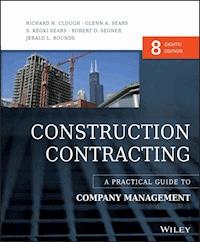
Construction Contracting, the industry's leading professional reference for five decades, has been updated to reflect current practices, business methods, management techniques, codes, and regulations. A cornerstone of the construction library, this text presents the hard-to-find information essential to successfully managing a construction company, applicable to building, heavy civil, high-tech, and industrial construction endeavors alike. A wealth of coverage on the basics of owning a construction business provides readers with a useful "checkup" on the state of their company, and in-depth exploration of the logistics, scheduling, administration, and legal aspects relevant to construction provide valuable guidance on important facets of the business operations. This updated edition contains new coverage of modern delivery methods, technology, and project management.
The field of construction contracting comprises the entire set of skills, knowledge, and conceptual tools needed to successfully own or manage a construction company, as well as to undertake any actual project. This book gives readers complete, up-to-date information in all of these areas, with expert guidance toward best practices.
- Learn techniques for accurate cost estimating and effective bidding
- Understand construction contracts, surety bonds, and insurance
- Explore project time and cost management, with safety considerations
- Examine relevant labor law and labor relations techniques
Between codes, standards, laws, and regulations, the construction industry presents many different areas with which the manager needs to be up to date, on top of actually doing the day-to-day running of the business. This book provides it all under one cover – for the project side and the business side, Construction Contracting is a complete working resource in the field or office.
Sie lesen das E-Book in den Legimi-Apps auf:
Seitenzahl: 1286
Veröffentlichungsjahr: 2015
Ähnliche



















Table of Contents
Title Page
Copyright
Chapter 1: The Construction Industry
1.1 Introduction
1.2 The Construction Project
1.3 Economic Importance
1.4 The People Involved on a Construction Project
1.5 Construction Categories
1.6 Project Financing
1.7 The Contract System
1.8 Project Delivery Methods
1.9 Types of Construction Contracts
1.10 Forms of Construction Contract Award
1.11 Forms of Negotiated Contracts
1.12 Basic Elements of Agreement in the Various Types of Cost-Plus Contracts
1.13 Competitive Sealed Proposals
1.14 Other Forms of Contracts
1.15 Small and Disadvantaged Business Enterprises
1.16 Seasonality in Construction
1.17 Licensing
1.18 License Bonds
1.19 Building Codes
1.20 Contractor Organizations
1.21 Management Practices in Construction
1.22 Business Failures in Construction
1.23 Summary and Conclusions
Chapter 1 Review Questions
Chapter 2: Business Ownership
2.1 Introduction
2.2 Alternative Forms
2.3 Construction Contracting Firms
2.4 The Individual Proprietorship
2.5 The General Partnership
2.6 Establishing a Partnership
2.7 Liability of a General Partner
2.8 Dissolution of a Partnership
2.9 Subpartnership
2.10 The Limited Partnership
2.11 The Corporation
2.12 The Foreign Corporation
2.13 Stockholders
2.14 Corporate Directors and Officers
2.15 The S Corporation
2.16 Employee Stock Ownership Plan (ESOP)
2.17 Limited Liability Company (LLC)
2.18 The Joint Venture
2.19 Summary and Conclusions
Chapter 2 Review Questions
Chapter 3: Company Organization
3.1 Introduction
3.2 Organization Basics
3.3 General Considerations
3.4 Principles of Organization
3.5 Responsibility, Authority, and Delegation
3.6 Making the Organization Work
3.7 Summary and Conclusions
Chapter 33 Review Questions
Chapter 4: Project Design and Contract and Bid Documents for a Project
4.1 Introduction
4.2 The Architect-Engineer
4.3 Designers' Professional Associations
4.4 Selection of the Architect-Engineer
4.5 Services Provided by the Architect-Engineer
4.6 Fee for Design Services
4.7 Responsibility to the Owner
4.8 Liability to Third Persons
4.9 Statutes of Limitations
4.10 Contractor Input into Design
4.11 Project Description—Communicating the Design
4.12 Announcing the Project to Contractors
4.13 Project Manual
4.14 Bid Documents
4.15 Instructions to Bidders
4.16 Contract Documents
4.17 Summary and Conclusions
Chapter 4 Review Questions
Chapter 5: Cost Estimating and Bidding
5.1 Introduction
5.2 General
5.3 Types of Estimates
5.4 Preliminary Considerations Prior to Commencing the Estimate
5.5 Set-Asides
5.6 Qualification
5.7 The Decision to Bid
5.8 The Bidding Period
5.9 Prebid Meetings
5.10 Work to Be Self-Performed and Work to Be Subcontracted
5.11 Site Visit
5.12 Project Time Schedule
5.13 Preparing the Estimate
5.14 Estimating Labor Cost
5.15 Estimating Equipment Cost
5.16 Indirect Costs
5.17 Subcontractor Proposals
5.18 Markup
5.19 The Lump-Sum Recap Sheet
5.20 The Unit-Price Recap Sheet
5.21 Bid Changes
5.22 Finalizing the Estimate
5.23 The Proposal
5.24 Bidding Procedures
5.25 Submission of Proposals
5.26 Responsive Bid and Technicalities
5.27 Bid Spread
5.28 Out of the Money
5.29 The Acceptance Period
5.30 Rejection of Proposals
5.31 Withdrawal of Bid by Prime Contractor
5.32 Withdrawal of Bid by Subcontractor
5.33 List of Subcontractors
5.34 Contingencies Allowances and Subcontract Allowances
5.35 Disclaimers and Waivers
5.36 Bid Ethics
5.37 Bid Depositories
5.38 Bid Rigging
5.39 Unbalanced Bids
5.40 Complimentary Bids
5.41 State Preference Statutes
5.42 Scheduling Bid Dates
5.43 Scope Bidding
5.44 Range Estimating
5.45 Introducing Probabilistic Determinations into the Estimate
5.46 Computer-Based Estimating
5.47 Summary and Conclusions
Chapter 5 Review Questions
Chapter 6: Construction Contract Provisions
6.1 Introduction—Construction Contracts
6.2 Contract Clauses
6.3 Rights and Responsibilities of the Owner
6.4 Duties and Authorities of the Architect-Engineer
6.5 Indemnification
6.6 Rights and Responsibilities of the Contractor
6.7 Subcontracts
6.8 Subcontract Provisions
6.9 Contract Time
6.10 Liquidated Damages
6.11 Extensions of Time
6.12 Acceleration
6.13 Differing Site Conditions
6.14 Owner-Caused Delay
6.15 The Agreement
6.16 Letter of Intent
6.17 The Notice to Proceed
6.18 Acceptance and Final Payment
6.19 Termination of the Contract
6.20 The Warranty Period
6.21 Summary and Conclusions
Chapter 6 Review Questions
Chapter 7: Contract Surety Bonds
7.1 Introduction
7.2 Basic Elements of Understanding
7.3 Forms of Contract Bonds
7.4 Bid Bonds
7.5 Performance Bonds
7.6 Payment Bonds
7.7 Statutory and Common-Law Bonds
7.8 The Miller Act
7.9 Claims for Payment
7.10 Contract Changes
7.11 Bond Premiums
7.12 The Surety
7.13 Indemnity of Surety
7.14 Investigation by Surety
7.15 Rationale for Requiring Construction Bonds
7.16 Bonding Capacity of Contractors
7.17 The Surety Agent
7.18 Default by the Contractor
7.19 Contract Bonds and Type of Contract
7.20 Subcontract Bonds
7.21 Contract Bond Alternatives
7.22 Additional Surety Bonds
7.23 Summary and Conclusions
Chapter 7 Review Questions
Chapter 8: Construction Insurance
8.1 Introduction
8.2 Risk Management
8.3 Construction Risks
8.4 The Insurance Policy
8.5 Contract Requirements
8.6 Legal Requirements
8.7 Analysis of Insurable Risks
8.8 Construction Insurance Checklist
8.9 Project Property Insurance
8.10 Builder's Risk Insurance
8.11 All-Risk Builder's Risk Insurance
8.12 Named-Peril Builder's Risk Insurance
8.13 Builder's Risk Policy Premiums
8.14 Provision of Builder's Risk Insurance by the Owner
8.15 Subrogation
8.16 Termination of Builder's Risk Insurance
8.17 Contractor's Equipment Floater Policy
8.18 Property Insurance
8.19 Crime Insurance
8.20 Liability Insurance
8.21 Commercial General Liability Insurance
8.22 Bodily Injury and Property Damage Liability Insurance
8.23 Contractor's Protective Public and Property Damage Liability Insurance
8.24 Completed-Operations Liability Insurance
8.25 Contractual Liability Insurance
8.26 Third-Party Beneficiary Clauses
8.27 Personal Injury
8.28 Exclusions from Commercial General Liability Policy
8.29 Property Damage Liability Exclusions
8.30 Automobile Insurance
8.31 Professional Liability Insurance
8.32 Umbrella Excess Liability Insurance
8.33 Wrap-up Insurance
8.34 Owner's Liability Insurance
8.35 Subcontractors' Insurance
8.36 Group Insurance Plans
8.37 Employee Benefit Insurance
8.38 Certificates of Insurance
8.39 The Principles of Workers' Compensation
8.40 Workers' Compensation Laws
8.41 Administration of Workers' Compensation Laws
8.42 Workers' Compensation Benefits
8.43 Additional Provisions of Workers' Compensation Laws
8.44 Workers' Compensation Insurance
8.45 Workers' Compensation Insurance Rates
8.46 Workers' Compensation Deductible Plan
8.47 Workers' Compensation Self-Insurance
8.48 Employer's Liability Insurance
8.49 Nonoccupational Disability Insurance
8.50 Unemployment Insurance
8.51 Insurance Claims
8.52 Social Security
8.53 Summary and Conclusions
Chapter 8 Review Questions
Chapter 9: Business Methods
9.1 Introduction
9.2 Financial Records
9.3 Accounting Methods
9.4 Accounting for Long-Term Contracts
9.5 Percentage-of-Completion Method
9.6 Percentage-of-Completion Capitalized Cost Method
9.7 Completed-Contract Method
9.8 Financial Statements
9.9 The Income Statement
9.10 The Balance Sheet
9.11 Financial Ratios
9.12 Significance of Ratios
9.13 Construction Equipment Acquisition
9.14 Equipment Management
9.15 Equipment Depreciation
9.16 Straight-Line Depreciation
9.17 Accelerated Depreciation
9.18 Modified Accelerated Cost Recovery System (MACRS)
9.19 Procurement
9.20 Discounts by Vendors and Suppliers
9.21 Title of Purchases
9.22 A Contractor's Right to Check on Project Financing
9.23 Payment to the General Contractor
9.24 Payment Requests for Lump-Sum Contracts
9.25 Payment Requests for Unit-Price Contracts
9.26 Payment Requests for Cost-Plus Contracts
9.27 Final Payment
9.28 Payments to Subcontractors
9.29 Direct Payment
9.30 Backcharges
9.31 Payments to Material Suppliers
9.32 Cash Flow
9.33 Cash Forecasts
9.34 The Mechanic's Lien
9.35 Release of Lien
9.36 Assignment of Contracts
9.37 Marketing
9.38 Employee Motivation
9.39 Substance Abuse Programs
9.40 Job Site Crime
9.41 Employee Training Programs
9.42 Summary and Conclusions
Chapter 9 Review Questions
Chapter 10: Project Management and Administration
10.1 Introduction
10.2 Project Organization
10.3 The Project Manager
10.4 The Project Superintendent
10.5 Field Engineer
10.6 Owner Project Representative
Lesen Sie weiter in der vollständigen Ausgabe!
Lesen Sie weiter in der vollständigen Ausgabe!
Lesen Sie weiter in der vollständigen Ausgabe!
Lesen Sie weiter in der vollständigen Ausgabe!
Lesen Sie weiter in der vollständigen Ausgabe!
Lesen Sie weiter in der vollständigen Ausgabe!
Lesen Sie weiter in der vollständigen Ausgabe!
Lesen Sie weiter in der vollständigen Ausgabe!
Lesen Sie weiter in der vollständigen Ausgabe!
Lesen Sie weiter in der vollständigen Ausgabe!
Lesen Sie weiter in der vollständigen Ausgabe!
Lesen Sie weiter in der vollständigen Ausgabe!
Lesen Sie weiter in der vollständigen Ausgabe!
Lesen Sie weiter in der vollständigen Ausgabe!
Lesen Sie weiter in der vollständigen Ausgabe!
Lesen Sie weiter in der vollständigen Ausgabe!
Lesen Sie weiter in der vollständigen Ausgabe!
Lesen Sie weiter in der vollständigen Ausgabe!
Lesen Sie weiter in der vollständigen Ausgabe!
Lesen Sie weiter in der vollständigen Ausgabe!
Lesen Sie weiter in der vollständigen Ausgabe!
Lesen Sie weiter in der vollständigen Ausgabe!
Lesen Sie weiter in der vollständigen Ausgabe!
Lesen Sie weiter in der vollständigen Ausgabe!
Lesen Sie weiter in der vollständigen Ausgabe!
Lesen Sie weiter in der vollständigen Ausgabe!
Lesen Sie weiter in der vollständigen Ausgabe!
Lesen Sie weiter in der vollständigen Ausgabe!
Lesen Sie weiter in der vollständigen Ausgabe!
Lesen Sie weiter in der vollständigen Ausgabe!
Lesen Sie weiter in der vollständigen Ausgabe!
Lesen Sie weiter in der vollständigen Ausgabe!
Lesen Sie weiter in der vollständigen Ausgabe!
Lesen Sie weiter in der vollständigen Ausgabe!




