


54,99 €
Mehr erfahren.
- Herausgeber: John Wiley & Sons
- Kategorie: Wissenschaft und neue Technologien
- Sprache: Englisch
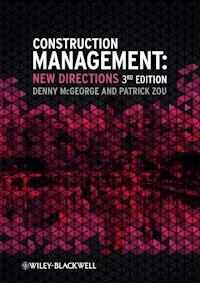
The construction industry faces continual challenges and demands, due to market conditions and coercion by governments, for improvements in safety, quality and cost control, and in the avoidance of contractual disputes. To meet these challenges construction enterprises need to constantly seek new directions and business models in construction management. A number of tools, methods and concepts have been developed and advocated as aids to achieving improved performance, but many in the industry find them confusing or are sceptical of their relevance.
The third edition of Construction Management: New Directionsbrings together, in a single volume, detailed discussion of a range of contemporary management concepts which are relevant to the construction industry, including strategic management; benchmarking; reengineering; partnering and alliancing; enterprise risk management; total safety management; total quality management; value management and constructability. It provides a straightforward, accessible and objective account of these concepts, showing how they interrelate and can be used to improve the performance of the construction firm.
This research based text will be essential reading for industry leaders and practitioners, as well as researchers, postgraduate and senior undergraduate students.
From a review of previous editions
I am in no doubt that this book will quickly become a favourite among students and practitioners alike —Construction Manager
Sie lesen das E-Book in den Legimi-Apps auf:
Seitenzahl: 560
Veröffentlichungsjahr: 2012
Ähnliche



















Contents
Preface to Third Edition
Acknowledgements
1 The Culture of the Construction Industry
The book’s contents
2 Strategic Management
Introduction
Overview
Strategic management process
Strategic management in construction
Paradoxes of strategic management processes in construction
Developing and implementing strategy in construction
Change management
Linking operational actions to strategy using a balanced scorecard
Stakeholder identification, analysis and consultation
Strategic management in action – a case study of Arup
An integrated strategic management framework
Conclusion
3 Benchmarking
Introduction
Definition of benchmarking
Historical development
Types of benchmarking
The process of benchmarking
The benchmarking team
Benchmarking Code of Conduct
Legal considerations
Benchmarking: The major issues
Case studies
Conclusion
4 Reengineering
Introduction
Reengineering: What’s in a name?
Origins of reengineering
Reengineering in a construction industry context
The goals of reengineering
Reengineering methodology
Pitfalls of reengineering
Information technology and reengineering
Reengineering from a European perspective
A case study of a process reengineering study in the Australian construction industry
Conclusion
5 Partnering and Alliancing
Introduction
The origins of partnering
Partnering in a construction industry context
The goals of partnering
Categories of partnering
Project partnering
Strategic or multi-project partnering
Legal and contractual implications of partnering
Dispute resolution
Partnering: Overview
Project alliancing – a natural progression from project partnering?
Alliance definitions
Alliancing in the construction industry
The differences between alliancing and partnering
Critical success factors in alliancing
The financial arrangements
The project outcome
Postscript
6 Enterprise Risk Management
Introduction
Why ERM in the construction industry?
Key terms and definitions
ERM principles and processes
The COSO ERM
AS/NZS ISO 31000 Risk Management Standard [1]
Establish objectives, context and criteria
Risk identification
Risk analysis and evaluation
Risk response and monitoring
Risk review and learning
Risk communication and consultation
A comparison of risk management processes
ERM application techniques
Implementing ERM in the construction industry
Organisational culture and ERM
ERM performance
ERM misconceptions
Relationship between ERM and strategic planning
Improving ERM capability and maturity
The ERM3 model
ERM3 example
ERM capability improvement
Project risk management
Conclusion
7 Total Safety Management
Introduction
The science of safety management
What is safety risk assessment at the design stage?
Why safety risk assessment at design?
Barriers for implementing safety risk assessment at design
Methods for safety risk assessment at design
Case study
The art of safety management
Components of a safety culture
Dimensions of a safety culture
Safety culture maturity models
A construction safety maturity model
Development of measurement instruments
Conclusion
8 Total Quality Management
Introduction
Definition of TQM
What is quality?
Historical development of TQM
The need for a paradigm shift
A change in the culture of the construction industry
Customer focus
Integration
The all-embracing nature of TQM
Continuous improvement
Quality costs and the cost of quality
Universal standards of quality such as ISO 9000
Change management
The methods of TQM
How to implement TQM
Kaizen [22]
Current research into TQM in the construction industry
Conclusion
9 Value Management
Introduction
Historical development
Function analysis
Organisation of the function analysis study
Who should carry out the study?
Who should constitute the team?
How should alternatives be evaluated?
Value management as a system
The American system
A case study of value management in the United States
The British/European system
A case study of value management in the UK [24]
Value management in Australia
A case study of value management (and constructability) in Australia
The Japanese system
A case study of value management in Japan
Why are the systems different?
Differences in the style of management
Differences in management systems
The relationship between value management and quantity surveying
Conclusion
10 Constructability
Introduction
Origins
The goals of constructability
Implementing constructability
Constructability in practice
Constructability and the building product
Constructability and Building Information Modelling
Good and bad constructability
Quantifying the benefits of constructability
Conclusion
11 Linking the Concepts
Bibliography
Strategic Management
Benchmarking
Reengineering
Partnering
Alliancing
Enterprise Risk Management
Total Safety Management
Total Quality Management
Value Management
Constructability
Index
This edition first published 2013© 2013 by John Wiley & Sons, Ltd.© 2002 Blackwell Publishing© 1997 Blackwell Publishing
Wiley-Blackwell is an imprint of John Wiley & Sons, formed by the merger of Wiley’s global Scientific, Technical and Medical business with Blackwell Publishing.
Registered OfficeJohn Wiley & Sons, Ltd, The Atrium, Southern Gate, Chichester, West Sussex, PO19 8SQ, UK
Editorial Offices9600 Garsington Road, Oxford, OX4 2DQ, UKThe Atrium, Southern Gate, Chichester, West Sussex, PO19 8SQ, UK2121 State Avenue, Ames, Iowa 50014-8300, USA
For details of our global editorial offices, for customer services and for information about how to apply for permission to reuse the copyright material in this book please see our website at www.wiley.com/wiley-blackwell.
The right of the author to be identified as the author of this work has been asserted in accordance with the UK Copyright, Designs and Patents Act 1988.
All rights reserved. No part of this publication may be reproduced, stored in a retrieval system, or transmitted, in any form or by any means, electronic, mechanical, photocopying, recording or otherwise, except as permitted by the UK Copyright, Designs and Patents Act 1988, without the prior permission of the publisher.
Designations used by companies to distinguish their products are often claimed as trademarks. All brand names and product names used in this book are trade names, service marks, trademarks or registered trademarks of their respective owners. The publisher is not associated with any product or vendor mentioned in this book. This publication is designed to provide accurate and authoritative information in regard to the subject matter covered. It is sold on the understanding that the publisher is not engaged in rendering professional services. If professional advice or other expert assistance is required, the services of a competent professional should be sought.
Library of Congress Cataloging-in-Publication Data
McGeorge, W. D.Construction management : new directions. – Third edition / Denny McGeorge, Patrick Zou, with Angela Palmer.pages cmIncludes bibliographical references and index.
ISBN 978-0-470-67401-7 (pbk.)1. Construction industry–Management. I. Zou, Patrick. II. Palmer, Angela. III. Title. HD9715.A2M354 2013624.068–dc23
2012028973
A catalogue record for this book is available from the British Library.
ISBN: 978-0-470-67401-7 (pbk.)
Wiley also publishes its books in a variety of electronic formats. Some content that appears in print may not be available in electronic books.
Cover design by Andy MageeCover image courtesy of iStockPhoto
Preface to Third Edition
In the preface to the first edition of Construction Management: New Directions we began with the rather bold statement that the book was meant to be topical. At the time of writing the first edition we realised that if the book was a success, then inevitably there would be succeeding editions. The book has indeed proved to be topical enough to justify the production of a second edition, and now a third edition. The primary reason for writing this book was the perceived need to bring together, in a single volume, contemporary management concepts which are relevant to the construction industry.
We realise that a book which attempts to bring together, in one volume, a wide spectrum of construction management concepts is liable to be guilty of the sins of omission and we quite happily confess to these sins. In selecting the concepts covered in this edition we have, perhaps rather egotistically, followed our own research interests on the assumption these will also be seen as relevant to our readers, and in this respect we have also been guided by the feedback that we have received for the previous editions. In making our selection, we have worked on the principle of omitting specialist areas such as information technology (IT) and Building Information Modeling (BIM) which are now rapidly developing fields in the architecture, engineering, and construction (AEC) industry and which have their own specialised publications [1]. The second edition (which was published some 10 years ago) included a chapter on supply chain management on the basis that it was, at that time, an emerging management tool. Now that supply chain management is well established as a discipline in its own right, including the introduction of an international journal of construction supply chain management, we direct interested readers to specialised publications in this field, for example Construction Supply Chain Economics by London [2].
A central theme that underpinned the first edition, and which still holds good, was the need to recognise cultural differences when importing or transplanting management concepts. We identified distinct cultural differences between the United States, Europe and Australia in their approach to concepts such as value management, total quality management, partnering and reengineering. By way of example, we described that when British companies tried to use the US system of value engineering they found initially that they could not make it work until the approach was modified to suit the UK professional environment. This is only one of many examples. It seems inevitable that the spread of Western management concepts into Asia will produce interesting sets of hybridised management concepts generated in response to differing cultural mores. The introduction of a ‘tangible construction market’ in China is an interesting and novel concept. In future, theflow of concepts may not only be from West to East but also in the reverse direction [3].
The original book was first published in 1997, followed by a second edition in 2002. During the 5-year period between the first and second editions the construction industry in developed countries enjoyed a period of steady growth. For example, in the UK the value of construction output for all work increased from 66 billion pounds to 85 billion pounds from 1997 to 2002. This growth continued more or less unabated until the impact of the global financial crisis (GFC) occurred in 2008 [4]. However, although the construction industry output for the UK is still at a higher level than post 2002, there is a clear recent decline in activity in the UK due to the global financial crisis which is mirrored in other economies throughout Europe, the United States and Australia. The following comment from Davis Langdon [5] echoes the sentiments of many economic commentators in the construction sector: ‘2010 was another difficult year for construction globally. Overall, world construction spending declined for the third consecutive year falling by 1% to $4.4 trillion (US). World construction spending growth is not expected to return until 2011, although it is forecast to be below 1% overall’. Some commentators are even less sanguine about a construction recovery, particularly in the UK where Reuters [6] uses the term ‘stagnation fears’. The economic backdrop to the third edition is therefore quite different to editions one and two. In this and in previous editions, we describe the numerous attempts by successive governments to change the culture of the industry. It is perhaps premature to speculate as to whether the GFC and economic imperatives will accelerate cultural change rather than government intervention. In any event, our view is that construction enterprises need to be constantly seeking new directions in construction management whether due to market demands or coercion by government agencies.
In writing this edition, the ever-present challenge has been for us to remain as detached and objective as possible. The intention of this book is not to champion any particular management concept in preference to another. Indeed, many of the concepts are well able to champion their own cause. The problem for the decision taker still remains in being able to relate to the many construction management concepts which, at times, appear to be in competition with one another for the decision taker’s attention. The purpose of this book is to provide a framework in which concepts are viewed as synergistic rather than mutually exclusive.
We are aware, from conversations with industry practitioners and academics, that a good deal of healthy scepticism abounds with respect to the efficacy of modern management concepts. Many practitioners would be sympathetic to Rigby’s view [7] that management concepts pass through a sequence of six phases. These are:
Whilst we do not subscribe to this viewpoint, we feel that it is important to explore genuine cultural shifts in the industry as opposed to that which can simply be trendy ideas. We are not alone in making this distinction. Godfrey [8] was also alert to this issue, arguing that ‘The use of partnering is growing fast, but there is a danger that this will be merely a passing fad’. Loosemore et al. also refer to the transient nature of management ‘fads’ [9].
What we have attempted to do in this text is to give a straightforward and objective account of our chosen concepts. Throughout the book we have diligently tried to differentiate between ‘concept’ as defined in Websters [10] as an abstract idea generalised from particular instances, and ‘technique’, defined as a method of accomplishing a desired aim. The book deals in detail with both concepts and techniques; the philosophical leaning is however, towards the conceptual.
We believe that this book is suitable for a wide range of readership, from industry leaders and practitioners to PhD, postgraduate and senior undergraduate students who are interested in current and future directions of construction management thinking. Topics such as the culture of the construction industry, strategic management, enterprise risk management, benchmarking and reengineering should engage industry leaders, whilst other topics such as enterprise risk management, total safety management, value management and constructability should be of particular interest to construction/project management personnel. A recurring theme in topics such as total safety management, enterprise risk management, value management and constructability is the need to consider the building life cycle at the design stage. These and other topics should therefore be of interest to design professionals in helping to improve the management of design, leading to better value for money and improved buildability of the building product whilst at the same time minimising safety risks.
References
[1] Azhar (2011) Building Information Modeling (BIM): Trends, Benefits, Risks and Challenges for the AEC Industry. 241–252.
[2] London, K. (2008) Construction Supply Chain Economics. Abingdon: Taylor & Francis, p. 472.
[3] McGeorge, D. and Zou, P.X.W. (2001) A perspective on construction management and economics issues in Western and Chinese construction industries. In 2001 International Conference on Project Cost Management. Beijing: Ministry of Construction, China Engineering Cost Association and the Hong Kong Institute of Surveyors.
[4] Office of National Statistics UK Government (2011) Value of Construction Output 1997–2010.
[5] Davis Langdon (2011) World Construction 2011: Construction Market Overview, p. 6.
[6] Egenter, S. and Milliken, D. (2011) Update 2: Weak UK construction raises stagnation fears. Reuters.
[7] Rigby, D. (1993) The secret history of process engineering. Planning Review, (March/April), 24–27.
[8] Godfrey Jr., K.A. (Editor) (1996) Partnering in Design and Construction. New York: McGraw-Hill.
[9] Loosemore, M., Dainty, A., and Lingard, H. (2003) Human Resource Management in Construction Projects: Strategic and operational approaches. London: Taylor & Francis.
[10] Websters (2012) Webster’s Online Dictionary.
Acknowledgements
We would like to thank: Professor Takayaki Minato of Tokai University, Japan, and Professor John Kelly, formerly of Glasgow Caledonian University, Scotland, for their value management case studies outlined in Chapter 9; Professor Vernon Ireland for allowing us to use the T40 case study material; Dr Selwyn Tucker and his colleagues, formerly of CSIRO, Victoria, Australia, for allowing us access to their extensive writings on reengineering; Professor Tony Sidwell and his colleagues at the Construction Industry Institute, Australia, for their input both on constructability and partnering; Glen Peters for allowing the use of his benchmarking survey; and Professor Chen Swee Eng, Dr Rod Gameson and colleagues formerly at the University of Newcastle for their input on constructability, decision support systems and alliancing and Professor Derek Walker for his advice on recent developments in alliancing in Australia; Rob Leslie-Carter for his insights and material assistance on the Arup approach to strategic management.
Michael Carr of the University of Newcastle for his patience in guiding us through the finer points of endnotes.
We would particularly like to thank Riza Sunindijo for his invaluable support which saved us countless hours of background research.
We would like to express our gratitude to the original co-author of the first and second editions, Dr Angela Palmer. We would also like to thank Professor Kerry London for her contributing chapter on supply chain management in the book’s second edition.
The nature of this book has meant that we have drawn on a large number of other sources and we acknowledge our indebtedness to many commentators in construction management and management science who are too numerous to mention by name, but without whom this book could not have been written.
1 The Culture of the Construction Industry
The construction industry has long been exhorted to change its ways and, in the UK in particular, there has been a seemingly endless procession of reports and enquiries ranging from the Simon Report [1], the Emmerson Report [2], the Banwell Report [3], the Latham Report [4], and the Egan Report [5]. In addition, reports such as ‘A Fresh Look at the UK and US Building Industries’ [6], ‘Controlling the Upwards Spiral: Construction Performance and Cost in the UK and Mainland Europe’ [7], ‘Building Britain 2001’ [8], ‘Strategies for the European Construction Sector: A Programme for Change’ [9], ‘UK Industry Performance Report’ [10] and, more recently, the report provocatively titled ‘Never Waste a Good Crisis’ [11] have increased pressure for change in the UK construction industry. (For readers interested in gaining a historical perspective on reports and inquiries into the UK construction industry during the twientieth century we would recommend the publication Construction Reports 1994–1998 edited by Murray and Langford [12].)
In Australia, pressure has been exerted through the ‘Gyles Royal Commission into Productivity in the Building Industry in New South Wales’ [13] and the ‘Construction Industry Development Agency’s Reform Strategy’ [14], both of which preceded Latham. An additional ‘Royal Commission into the Australian Building and Construction Industry’ was conducted by Cole from 2001 to 2003 [15]. One recommendation of this Royal Commission was the establishment of a special regulatory authority called the Australian Building and Construction Commission (ABCC). This recommendation was implemented in 2005 and, although there has been a change of political parties since the introduction of the Commission, the ABCC is still in existence at the time of writing. The reason for highlighting this issue is that as far as the Australian federal government is concerned there is a perceived need to have a different set of rules for building employees compared to workers in all other sectors. One can infer from this rather unusual set of circumstances that the building and construction sector, as far as the Australian federal government is concerned, is still in need of cultural change.
Powell [16], in his study of the economic history of the British building industry 1815 to 1979, comments, not unkindly, that the period of 1940 to 1973 was when the ‘work horse learned to canter’. Perhaps, to continue Powell’s analogy, the twenty-first century is when, as a result of vigorous prompting by observers such as Egan, Latham, Gyles and Cole and, perhaps more forcibly, by the increasing competitiveness of the market, the workhorse will move from a canter to a gallop.
The dominant message from both Latham’s final report and Gyles’s Royal Commission report, and indeed of most of the enquiries into the construction industry, is the key role of the client in activating a cultural shift in the industry through the adoption of modern management concepts. This is summarised by Latham who states that ‘implementation begins with clients. Clients are at the core of the process and their needs must be met by industry’.
Latham then goes on to recommend that ‘Government should commit itself to being a best practice client. It should provide its staff with the training necessary to achieve this and establish benchmarking arrangements to provide pressure for continuing improvements in performance’. More recently, however, Wolstenholme [11] has expressed an opposing view when he states that ‘We believe that the era of client-led change is over, at least for the moment, and that it is now time for the supply side to demonstrate how it can create additional economic; social and environmental value through innovation, collaboration and integrated working – in short, the principles outlined in Rethinking Construction, i.e. the Egan Report. Clients should focus instead on professionalising their procurement practices to reward suppliers who deliver value-based solutions. Government, as a client, needs to understand the enlightened thinking that better and more intelligent designs improve patients’ recovery in hospitals and learning outputs in schools. So, rather than reduce the number of schools and hospitals being built, it must sponsor smarter and more productive solutions and reduce the amount of money wasted on the procurement process. For Government as a policy maker, the challenge is to create an environment that incentivises innovation and speeds up the modernisation process’.
Our position is that whether the need for a cultural change in the industry is demand driven or supply driven it is essential to grasp the need for ‘value creation in the built environment over the whole life cycle of an asset’ [11]. We are further of the opinion that the adoption of the key management concepts contained in this book could be a useful pointer towards achieving this goal.
In 2002, in the second edition of this book, we made the statement that it would be fair to say that none of the concepts contained in the book at that time were, as yet, commonplace in the industry. Interestingly, Wolstenholme writing in 2009 makes a somewhat similar statement to the effect that ‘few of the Egan targets have been met in full, while most have fallen considerably short’ [11].
There are probably several reasons why many of the concepts in this book are not clearly understood and, hence, have yet to be adopted by the industry at large. One reason could simply lie in the fact that, hitherto, a balanced description of the concepts has not been presented in toto, and we have tried to redress this. Another and more complex reason might lie in the fact that many, if not all, of the concepts under consideration are philosophically grounded, if not in systems theory then at least in a holistic approach. We would contend that this common parentage has given rise to difficulties in terms of identifying the concepts as individual branches of the same family tree. This lack of differentiation between current concepts is typified in comments such as ‘constructability is not just value engineering or value management’, [17] or ‘is reengineering replacing total quality?’ [18] or, more confusingly, ‘as partnering is to the project, total quality management is to the construction company’ [19].
For many years, critics of the construction industry have dwelt on the perceived problems of fragmentation and compartmentalisation. Many of the ills which have beset the industry have been blamed on the inability of the industry to see the big picture. Many of the advocates of the techniques covered in this book claim that ‘their’ concept rectifies this. For example, Hellard [20] advocates that ‘Partnering will certainly be the key to the holistic approach which must first be brought to the organisation and then incorporated into the team performance with other sub-contractors and the main contractor’.
We strongly endorse Hellard’s view that a decision which is undertaken at ‘organisational’ (‘enterprise’ in our terminology) level will clearly have a flow-on effect to project level. Indeed, most commentators would subscribe to the view that the management culture at project level is predetermined by the culture at enterprise level. Inevitably, there is a continuum between enterprise and project. For example, the International Standards Organisation ISO31000 [21] applies to both enterprise and project levels. Again, as mentioned in the Preface, our selection of concepts does not claim to be exhaustive. We have revisited concepts included in previous editions to ensure that they are contemporary and have also introduced new chapters where we felt that management thinking has progressed in the intervening years between editions two and three.
All of the concepts in the book have the underlying ‘big picture’ theme. We have arranged the sequencing of topics more or less in sequence by starting with the really big picture in Strategic Management and concluding with the construction-specific concept of Constructability; however, this structure should be seen as, at best, tenuous. Although each topic can be read as a stand-alone subject we hope that readers will be encouraged to read the book in its entirety and by doing so may arrive at their own conclusions (which may not coincide with our views) as to how the concepts are linked.
The book’s contents
Strategic management
It is an old maxim that ‘strategy decides either winning or losing a battle’. A construction enterprise is no exception to the rule that a sound strategy is required in order to win projects and develop its business interests. The field of strategic management has grown quickly since its formal inception in the 1970s. This chapter discusses strategic management with specific reference to the construction industry, including the origins of strategic management, its application, the essential elements of strategic management that apply to a construction organisation and how to develop and implement strategies for a construction firm. This chapter also discusses the paradoxes of strategic management, relevant concepts such as change management and stakeholder management, and explains how to link actions with strategic goals. Finally, the chapter presents a current case study followed by a suggested integrated construction strategic management framework.
Benchmarking
Benchmarking is a concept aiming at improving the competitiveness of organisations through the examination and refinement of their business processes. The concept has its origins in the Xerox Corporation, who stripped down copiers manufactured by competitors and compared them to their own. They later extended this comparison to include the business processes of their competitors. Chapter 3 looks at types of benchmarking, the process of benchmarking, the benchmarking team and the benchmarking code of conduct. The chapter concludes by illustrating a simple case study of benchmarking: the customer focus of a national house builder against a national car manufacturer.
Reengineering
When first introduced, reengineering was hailed as a management revolution which could have repercussions on the scale of the industrial revolution that followed Adam Smith’s Wealth of Nations. The proponents of business process reengineering claimed quite dramatic results following its introduction. The opponents of reengineering also claimed quite spectacular disasters. The following aspects of reengineering are covered: origins; reengineering in a construction industry context; goals; methodology; implementation; time and cost saving; pitfalls; IT and reengineering; and the European perspective. Chapter 4 contains a detailed case study, known as the T40 project, describing the initiation, planning and implementation of a process reengineering in the Australian construction industry. The objective of the project was the reduction of construction process time by 40%.
Partnering and alliancing
The concept of formal partnering is of relatively recent origin, dating back to the mid-1980s. The concept was developed in the United States and has spread to other countries, including Australia and New Zealand in the southern hemisphere and also to the UK. Parties adopting partnering resolve to move away from the traditional adversarial relationships to a ‘win–win’ situation. Partnering can be undertaken either at the level of a single project and be of relatively short duration, or can be of a semi-permanent nature at a strategic level. Chapter 5 traces: the origins of partnering; partnering in a construction industry context; the goals of partnering; categories of partnering, project and strategic; the participants; commitment; the partnering process; how to conduct partnering workshops; partnering charters; the pitfalls of partnering; limits to partnering; legal and contractual implications of partnering; and dispute resolution. A substantial part of Chapter 5 is devoted to the exploration of ‘alliancing’ as a natural progression from partnering. Alliancing has been hailed as one of the most dynamic features of modern corporate development. Its uptake by the building industry is now significant. It could be argued that alliancing combines the cultural features of partnering with the cutting edge of economic rationalism.
Enterprise risk management
Chapter 6 makes the case that, while much research has been focused on project risk management, much less attention has been paid to developing theory and implementing enterprise risk management (ERM) in the construction industry. This chapter comprehensively reviews current ERM literature, and explains how an enterprise risk management maturity model (ERM3) was developed for implementation in the construction industry. The model includes five attributes, namely: management perspectives (people and leadership) in relation to risk; organisational risk culture; identifying risks; analysing risks and standardised risk management processes. This model was validated using selected risk management experts from a multinational construction sector enterprise. The chapter concludes by describing how organisations can develop strategies to manage risk at an enterprise level.
Total safety management
While construction safety is not new in itself, most previous research has been focused on improving construction site conditions (such as safe work method statement and site hazard management) or human factors (such as behaviour-based safety). This chapter, total safety management, or TSM, addresses construction safety from both perspectives – the science and art of safety management. In the science of safety management, the chapter provides a new method to assess and mitigate safety risk at project design stage. The principles of safety assessment at design are first discussed, followed by case studies that demonstrate how the concept has been applied in building projects’ design and construction, as well as the implication of such applications. Regarding the art of safety management, this chapter discusses a new concept of ‘safety culture maturity’. Following a comprehensive review of the current literature on maturity models, this chapter presents the criteria for a safety culture maturity model, which consists of five subcultures, namely Just Culture, Reporting Culture, Informed Culture, Flexible Culture and Learning Culture, with each sub-culture having three dimensions: psychological, behavioural and corporation. The maturity is measured using a 5-level instrument: Level 1 Emerging; Level 2 Managing; Level 3 Involving; Level 4 Cooperating; and Level 5 Continuously Improving. This chapter argues that to achieve the aim of zero incident and zero harm in a construction project life cycle, a TSM approach must be designed and implemented as part of construction enterprise decision-making and project management processes.
Total quality management
Total quality management, or TQM, is a concept aimed at improving the organisation through increased customer focus, integration of the organisation’s processes and a philosophy of continuous improvement. Chapter 8 discusses definitions of TQM; historical development; the need for a cultural change in the construction industry; customer focus; integration; continuous improvement; quality costs; and quality standards. Finally, Chapter 8 briefly examines the array of quality methods that are currently available.
Value management
Value management was developed by the United States’ manufacturing industry during World War II. Its aim was to improve the value of goods by concentrating on the functions that products perform. It was so successful in manufacturing that the United States Department of Defense began using it in the construction industry and it was around this time that an interest in value management was shown by the British construction industry. Chapter 9 traces the historical development of value management; the use of function analysis; organisation of value management studies; the evaluation of value management proposals; the American; British; Japanese and Australian systems of value management. The chapter ends by analysing why these systems are different and examines some of the major cultural influences on value management development.
Constructability
Constructability is the only concept in this book which is the exclusive domain of the construction industry. Constructability is concerned with how decisions taken during the procurement process facilitate the ease of construction and quality of the completed project. From its inception in the early 1980s, constructability has moved from its original narrow focus to incorporate decision support theory and decision support systems. The following aspects of constructability are covered: its origins; scope and goals; implementation; constructability in practice; the building – in use; good and bad constructability – indicators of success; and quantifying the benefits of constructability. Chapter 10 concludes by distinguishing between constructability and good multidisciplinary team working.
Linking the concepts
Chapter 11 explores the relationships between the various concepts. The case is made that the current raft of construction management concepts owes its parentage to systems theory and a systems approach. Rather surprisingly, the use of the systems approach has not had the effect of bringing the concepts together but rather the opposite. A conceptual model is proposed which illustrates the relationships of the concepts, one to the other, based on the use of ‘gentle guidelines’ from soft systems thinking.
The chapters are arranged in a roughly chronological order although, as readers will soon discover, the precise dating of the emergence of a concept is sometimes difficult, and in any event is usually of no particular significance. Each chapter can be read as a stand-alone topic although, like all authors, we would like to think that the book will be read from cover to cover. Certainly the arguments developed in Chapter 11 will only consolidate after reading Chapters 2 to 10.
References
[1] Central Council for Works and Buildings (1944) The Placing and Management of Building Contracts. London: HMSO.
[2] Emmerson, S.H. (1962) Survey of Problems before the Construction Industries. London: HMSO.
[3] Committee on the Placing and Management of Building Contracts (1964) Report on the Committee on the Placing and Management of Building Contracts. London: HMSO.
[4] Latham, M. (1994) Constructing the Team. London: HMSO.
[5] Egan, J. (1998) Rethinking Construction. London: DETR.
[6] Flanagan, R., et al. (1986) A Fresh Look at the UK and US Building Industries. London: Building Employers Confederation.
[7] The Business Round Table (1994) Controlling the Upwards Spiral: Construction Performance and Cost in the UK and Mainland Europe. London: The Business Round Table.
[8] University of Reading (1988) Building Britain 2001. London: Centre for Strategic Studies in Construction.
[9] European Commission (1994) Strategies for the European Construction Sector: A Programme for Change. Wadsworth, UK: KHL Publishing.
[10] Constructing Excellence (2008) UK Industry Performance Report. Constructing Excellence: London.
[11] Constructing Excellence (2009) Never Waste a Good Crisis: A Review of Progress since Rethinking Construction and Thoughts for Our Future. Constructing Excellence: London.
[12] Murray, M. and Langford, D. (Editors) (2003) Construction Reports 1994–98. Oxford: Blackwell Science Ltd., p.224.
[13] Gyles, R.V. (1992) Royal Commission into Productivity in the Building Industry in New South Wales. Sydney: Government of New South Wales.
[14] Construction Industry Development Agency (1992) Construction Industry: In-principle Reform and Development Agreement, Reform Strategy. Canberra: AGPS.
[15] Cole, T.R.H. (2003) Royal Commission into the Building and Construction Industry. Commonwealth of Australia: Melbourne.
[16] Powell, C.G. (1980) An Economic History of the British Building Industry. Cambridge, UK: Methuen.
[17] Sidwell, A.C. and Francis, V.E. (1995) The application of constructability principles in the Australian construction industry. In CIB W65 Conference: Glasgow.
[18] Kelada, J.N. (1994) Is re-engineering replacing total quality? Quality in Progress, 27(12), 79–83.
[19] Deffenbaugh, R.L. (1996) Why one contractor calls partnering project quality planning, in Partnering in Design and Construction, K.A. Godfrey Jr. (Editor). New York: McGraw-Hill, pp. 231–244.
[20] Hellard, R.B. (1995) Project Partnering: Principle and Practice. London: Thomas Telford.
[21] AS/NZS (2009) AS/NZS ISO 31000:2009 Risk Management – Principles and Guidelines. AS/NZS: Sydney.
2 Strategic Management
Introduction
A continuing theme which readers will observe throughout this text is that the construction industry needs to be viewed as a part of, not apart from, the business community as a whole. Certainly, the construction industry is a major economic driver in both developed and developing countries. The construction sector across the world contributes significantly to a nation’s employment and GDP growth. Moreover, in many instances, the construction sector has been one of the major rescue strategies when financial crises or economic downturns hit a nation’s economy and development. For example, in 2008 the Australian government injected AU$16.2 billion [1] as a major component of the nation’s economic stimulus package in the form of the BER (Building the Education Revolution) programme to upgrade the buildings and other learning facilities of its entire education sector. The aim of this BER strategy was to stimulate Australia’s national economy. Similar decisions and actions were taken by the US government during that time to invest heavily in the US infrastructure development (American Recovery and Reinvestment Act 2009). As with any major business, construction firms are influenced by a number of internal and external factors. Two major factors are: firstly, natural competition which involves the displacement of firms whose characteristics are less well suited to the prevailing circumstances relative to firms that are better suited; and, secondly, strategic competition involving conscious and planned adjustment by firms to improve their competitive position vis-à-vis rivals [2]. In addition, construction firms are characterised by competitive tendering and small profit margins, whilst having to be able to respond to fluctuating market demands in order to survive [3]. Therefore, as for any business, construction enterprises require high-level strategic planning, decision making and operational implementation. On the other hand, a construction business has its unique features in that it is project based and work is mainly obtained through competitive tendering or a negotiation process. As such, there is a need to understand the peculiarities of a construction business’s stakeholders.
Lesen Sie weiter in der vollständigen Ausgabe!
Lesen Sie weiter in der vollständigen Ausgabe!
Lesen Sie weiter in der vollständigen Ausgabe!
Lesen Sie weiter in der vollständigen Ausgabe!
Lesen Sie weiter in der vollständigen Ausgabe!
Lesen Sie weiter in der vollständigen Ausgabe!
Lesen Sie weiter in der vollständigen Ausgabe!
Lesen Sie weiter in der vollständigen Ausgabe!
Lesen Sie weiter in der vollständigen Ausgabe!
Lesen Sie weiter in der vollständigen Ausgabe!
Lesen Sie weiter in der vollständigen Ausgabe!




