


Erhalten Sie Zugang zu diesem und mehr als 300000 Büchern ab EUR 5,99 monatlich.
- Herausgeber: THP Ireland
- Kategorie: Fantasy und Science-Fiction
- Sprache: Englisch
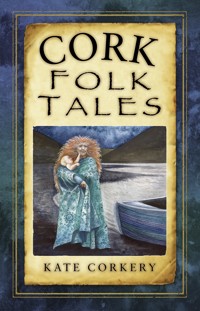
As the home of the famous Blarney Stone it is perhaps not surprising that the stories of County Cork could fill many libraries. Among its vast archive of myth and legend are tales of the Goddess Cliona, The Hag of Beara and the Giant Mac Mahon and the epic story of St Finbarr who bashed Louie, a fiery serpent, from the lake at Goughan Barra, its wriggling tail forming the course of the River Lee. These tales and more, drawn from historical sources and newly recorded local reminiscences, have been brought to life here by professional storyteller and Cork native Kate Corkery. This collection is a heady mix of bloodthirsty, funny, passionate and moving stories. It will take you into a remarkable world where you can let your imagination run wild.
Sie lesen das E-Book in den Legimi-Apps auf:
Seitenzahl: 265
Veröffentlichungsjahr: 2017
Das E-Book (TTS) können Sie hören im Abo „Legimi Premium” in Legimi-Apps auf:
Ähnliche









This book is dedicated to the memory of those who went before me, my wonderful grand-uncle Dan and my beloved parents William and Mary Corkery.
First published in 2017
The History Press Ireland
50 City Quay
Dublin 2
Ireland
www.thehistorypress.ie
The History Press Ireland is a member of Publishing Ireland, the Irish book publishers’ association.
This ebook edition first published in 2017
All rights reserved
Text © Kate Corkery, 2017
Illustrations © Emer Dineen, 2017
The right of Kate Corkery to be identified as the Author of this work has been asserted in accordance with the Copyright, Designs and Patents Act 1988.
This ebook is copyright material and must not be copied, reproduced, transferred, distributed, leased, licensed or publicly performed or used in any way except as specifically permitted in writing by the publishers, as allowed under the terms and conditions under which it was purchased or as strictly permitted by applicable copyright law. Any unauthorised distribution or use of this text may be a direct infringement of the author’s and publisher’s rights, and those responsible may be liable in law accordingly.
EPUB ISBN 978 0 7509 8297 9
Original typesetting by The History Press
eBook converted by Geethik Technologies
CONTENTS
Acknowledgements
Preface
1. Introductory Stories
The Man Who Had No Story
Tales from Eibhlís de Barra
The Giant’s Stairs
2. Great Gods and Goddesses along the Coast
Goibhniu the Wonder Smith and the Cow of Plenty
Clíona’s Wave
The House of Donn
The Cailleach Bhéarra
The Hag of Beare
3. Warriors, Kings, Lakes and Hills
The Vision of Anera Mac Conglinne
Lough Hyne – Loch Ine
The Legend of the Lough
The Fianna and the Banquet
Tryst after Death
Mogh Ruith – The Wizard Who Won Fermoy
The Legend of Cairn Theirna
The Soldier’s Billet
4. Women, Caves and Deep-Sea Caverns
The Cave of the Grey Sheep
Donal Rasca the Reparee
The Mermaid from Mizen Head
The Fisherman of Kinsale and the Hag of the Sea
5 Through the Fields to the Other World
Tales of the Wise Woman Máire Ni Mhurchú
The Old Woman in Cullane
How a Father Saved His Children
The Leprechaun from Leap
6. Love and Loss, Stones and Rocks
Carraig Chlíona
The Blarney Stone
The White Lady
Remmy Carroll, the Piper
7. Saints and Sinners, Wells and Rivers
It’s a Long Monday, Patrick
The Water of Eternity
St Ciaran
The Fire Carrier
St Finbarr
St Gobnait
The Spirit Horse
8. Restless Spirits on the Road
How Matehy Got Its Name
Petticoat Loose
The Ass of Carrigaphooca
The Stepson and the Three Spirits
Buried Alive
The Oatmeal Pooka
9. Wit, Wisdom and Journey’s End
The Wife Who Outwitted the Devil
The Big Fool
The Three Clever Sisters
The Hour of Our Death
Sources
ACKNOWLEDGEMENTS
This book would not be possible without the help and encouragement of many wonderful people: fellow storytellers from Aos Scéal Éireann, Nuala Hayes, Jack Lynch, Aideen McBride, Pat Speight, Bob Jennings, Liz Weir and Paddy O’Brien; Cristoír Mac Cárthaigh, archivist at the National Folklore Collection, UCD; Crónan Ó Doibhín, Head of Research Collections, Boole Library, UCC; the staff at Cork City Library; the staff at Charlesfort, Kinsale; family and friends, Trisha, Assumpta, Rose, Ger, Liam and Carmen. A huge thanks to my nearest and dearest, Denis and Fintan, for their love, support and listening ears and especially to Emer for bringing the stories to life with her beautiful illustrations.
PREFACE
Unlike the wife of the man in the first story, I’m not very good at knitting. However, I’ve never been thrown out on the road for want of a story to tell so maybe that was why I’ve been entrusted with putting together a few tales from my native County Cork. Like the bag of socks, it will be a varied collection – some well worn, others recently stitched together. There’s a lot of ground to cover!
Cork is the largest and southernmost county in Ireland. It has acres of rich fertile land, rolling hills, many bogs, lakes and three main rivers: the Bandon, the Blackwater and the Lee. It boasts 5,447 townlands and one beautiful city.
County Cork borders Kerry to the west, Limerick to the north, Tipperary to the north-east and Waterford to the east. Its magnificent coastline, stretching 680 miles, opens out to the wide Atlantic Ocean in a stunning panorama of peninsulas and islands second to none.
Our wonderful county is full of natural-born storytellers and every square inch of the place is bursting with tales to be told. This collection will only be the tip of a very big iceberg, but hopefully it will offer a sample of the types of stories that kept us enthralled on the dark evenings long ago, before everyone had a separate screen to swipe.
Stories were not only shared around the fire, but were told anywhere people gathered – while making hay or digging potatoes or spinning yarn; at sea, by fishermen as they waited to draw in their nets; on land by women collecting seaweed. The crowded wake house, the lodging house and the blacksmith’s forge were also great centres of storytelling.
Travelling seasonal labourers (spailpíní), as well as tinsmiths, peddlers, poets and wandering musicians, helped spread folk tales from one area to another. Of course, versions changed along the way – details were added or omitted according to the teller, the mood and the listeners – but the essence of the stories stayed the same.
In this collection I have woven together versions of much-loved stories which I hope are as easy on the ear as on the eye, so they may slip off the tongue as effortlessly as when they were first told.
Some material is taken directly from the National Folklore Collection and the Schools’ Collection and written as the stories were originally recorded.
Others have been adapted from literary sources and some more I have translated from the Irish-language originals – I hope I have done them justice.
They are not presented in chronological order, but more in the style of a journey, where the natural features of the landscape lead the way.
The collection opens with a version of ‘The Man Who Had No Story’, an absurd tale often recounted as a warning to those unable to ‘shorten the road’ with a story or song when requested. May you never be in that position!
Next we meet a much-loved Cork storyteller Eibhlís de Barra, who knew the roads of her native city like the back of her hand. Her style of telling was simple and heartfelt. She was a tradition-bearer in the true sense and firmly believed in the importance of really knowing your home place, remembering the stories of those who went before us and passing them down to those who follow on.
It’s thanks to storytellers like Eibhlís and writers like Frank O’Connor, Séan Ó Faoláin and Daniel Corkery that we have insightful stories of those who dwelled in the meandering streets and lanes of Cork city.
In recent years the Cork Folklore Project/Béaloideas Chorcaí has done sterling work in documenting and recording reminiscences from many areas across the city in an online Cork Memory Map – well worth visiting.
However, it was in the rural areas of County Cork that the tradition of storytelling survived unbroken for centuries.
Long ago, there were professional storytellers divided into ollaimh (professors), filí (poets) and seanchaithe (historian storytellers) who knew the tales, poems and history proper to their rank and who recited them for the entertainment and praise of their chiefs and princes. But the collapse of the Gaelic order after the Battle of Kinsale in 1601–1602 wiped out the aristocratic classes who maintained these wordsmiths, so the role of the bard/storyteller was reduced. The learned men started telling their stories to the ordinary people, who in turn became enriched. They enjoyed and memorised what they were told and that is how the stories entered the popular oral tradition and gained a new life in this form.
The repertoire of the seanchaithe went back to pre-Christian sources. They passed on ancient narratives, myths, legends and hero tales of the Celtic people, which were then performed and transmitted to others down through the generations.
It was not until the early nineteenth century, when antiquarians and folklorists such as Crofton Croker began to gather material from our oral tradition, that some of these stories became available in print. Croker was the first important collector in Ireland and his Researches in the South of Ireland (1824) and two series of Fairy Legends and Traditions in the South of Ireland in 1825 and 1826 were invaluable in bringing this treasure trove to a wider audience. He forged a new literature out of the oral heritage. His example was followed by some writers associated with the Anglo-Irish Literary Revival, such as Lady Gregory, also an avid collector of folklore.
Under the Gaelic League (1893), a more organised effort was made to identify active and talented carriers of rural Irish folklore. Stories of the Gaeltacht especially were diligently collected; these came from places such as Coolea, Ballingeary, Ballyvourney, Kilnamartyra and Cape Clear.
The Folklore of Ireland Society was set up and Seamas Delargy became editor of its journal, Béaloideas. In 1935, Delargy became the director of the Irish Folklore Commission and full-time folklore collectors were appointed.
In County Cork, about 300 collectors were sent out to rural areas. Armed with a questionnaire and a copy of the Handbook of Irish Folklore developed by archivist Dr Seán Ó Súilleábhain, they managed to produce 63,000 manuscript pages. Material was transcribed from people such as Tadhg Ó Buachalla (‘An Táilliúir’) of Gougane Barra, who later became widely known through Eric Cross’s book The Tailor and Ansty (1942).
Seán O’Cróinín was a diligent collector responsible for over half the entire corpus of County Cork. It was he who transcribed 1,600 manuscript pages from a wonderful storyteller in Coolea, whose invaluable contributions were later published in Seánchas Amhlaoibh Ó Luínse.
The vast archive of material recorded for the Schools’ Collection of 1937–38 has recently become available online. I would encourage anyone with an interest in local history to check the folklore of your district on www.dúchas.ie.
My fascination with stories began at school, when I first heard a version of Crofton Croker’s ‘The Giant’s Stairs’ and realised it was set in my own home town of Passage West. Since then, my enthusiasm has grown and it has been a joy to unearth many more folk tales from around the county.
Some of our oldest stories are set along the coastline, where the ever-changing weather and seascape was such a source of inspiration.
From Celtic mythology we learn that the world was ruled by forces of light and darkness. The Tuatha Dé Danann were said to be the divine and gifted race while the Fomorians were uncouth and evil. Mortals had to negotiate their survival through encounters with the sublime ever-living gods and the dark demons.
The mighty sea god Manannán Mac Lir features heavily in this cycle of Irish mythology. He presided over the waters, conjuring up storms and winds that affected the lives of many. It was he who created the gigantic wave that engulfed Clíona, the ill-fated goddess of love, and washed her up on the shores of Glandore, and it was he who fostered the sun god Lugh who grew up to defeat the forces of darkness when he put an end to the tyrant Balor on Mizen Head.
Goibhniu, the wonder smith, had his forge on Crow Island, reflecting early evidence of smelting around West Cork and the importance of the role of the blacksmith in Irish society. Boí, the earth goddess, was said to dwell on Cow Island. She was the one-time wife of the sea god and later became known as the Cailleach Bhéarra (Hag of Beara). Her tenacity and longevity went on to symbolise the strength and resilience of the land of Ireland in stories and poems down through the centuries. And of course, Bull Rock was the final resting place for Donn, Lord of the Dead, who cordially invites us all to join him in Teach Dúinn when our earthly lives come to an end.
Our coastline alone offers a rich tapestry of stories to rival any of the Greek and Roman mythologies where gods of the natural elements of sea, sun, earth and wind all play their parts.
Moving inland to the lakes and hills, we look at the plights of kings and warriors, their battles and power struggles with magical enchantments. Some of these are taken from the Fenian Cycle of hero and adventure tales.
Then we head deeper into the hidden caves and underwater caverns where secret passions lurk, often in the shape of a beguiling female from another dimension.
Apparently when the Tuatha Dé Danann were finally defeated by the Milesians (the first Gaels), they were advised by Manannán Mac Lir to retreat underground into the hills and mounds of Ireland. There they lived on as the daoine sídhe, the fairy people, residing in raths and forts all over the county – often unseen, but omnipresent.
This leads us to a section on encounters with fairies in the countryside. These tales illustrate popular belief in aspects of the other world. To many of our forefathers, it was almost as real as the world in which they themselves lived. There was constant communication between the fairies and mortal people.
Accounts of Máire Ní Mhurchú show the important role played by the bean feasa (‘wise woman’) in interceding with the fairies when someone was ‘taken’ to the other world and a changeling left in their place.
The section on broken hearts re-introduces Clíona, in her later incarnation as the seductive leannán sídhe (‘love fairy’) now dwelling in a rock in Kilshannig. The course of true love rarely runs smooth, but it does provide us with some haunting and heart-breaking stories, which are remembered in the very rocks and stones where they took place.
Religion was a major force in the life of Cork people and this collection would not be complete without a section on saints and sinners. We have a rich body of religious folktales and legends – both fanciful and credible – sometimes offering moral guidelines but not always.
Hardships and hunger often brought the reality of death uncomfortably close. The stories of restless spirits reveal the stout-heartedness and macabre sense of humour some poor people could display in the face of unbearable suffering.
From battling with gods and demons, to negotiating with fairies whilst still obeying the saints, scholars and clergy, to overcoming the fear of death and creatures of the night, we finish our journey with some stories of wit and wisdom, which reflect an indomitable spirit of fun and optimism. Most Cork people will delight in outwitting the powers that be (often in the guise of a greedy landlord – or even the devil himself) and believe that our efforts will be rewarded and things will work out well in the end.
Maybe we can’t outwit the hour of our death, but we can ensure that our stories live on after us.
I would like to thank all the storytellers, collectors, archivists and writers who have preserved for us such a rich oral heritage. May you go on to discover and enjoy many more stories hidden along the highways and byways of our beautiful County Cork.
1
INTRODUCTORY STORIES
THE MAN WHO HAD NO STORY
There was a man one time and his name was Rory O’Donoghue. His wife was a great woman for knitting stockings and Rory’s job was to go from town to town selling them.
There was to be a fair in Macroom on a certain day and Rory left home the evening before with his bag of stockings to sell at the fair the next morning. Night came on him before he reached the town. He saw a light in a house on the roadside and he went in. There was no one inside but a very old man.
‘You’re welcome, Rory O’Donoghue,’ said the old man.
Rory asked him for lodgings for the night and told him he was on the way to Macroom. The old man said he could stay and welcome. A chair that was at the bottom of the kitchen moved up towards the fire and the old man told Rory to sit in it.
‘Now,’ said the old man, in a loud voice. ‘Rory O’Donoghue and myself would like to have our supper!’
A knife and a fork jumped out from the drawer and cut down a piece of meat that was hanging from the rafters. A pot came out of the dresser and the meat hopped into it. Up went the tongs from the side of the hearth – they pulled out some sods of turf and made a fire. A bucket rose up and poured some water over the meat. Then the cover jumped onto the pot. A wickerwork sieve filled itself with potatoes and threw them into the bucket. The potatoes washed themselves, then hopped into the second pot. In no time, a meal was prepared.
‘Get up, Rory O’Donoghue,’ said the old man. ‘Let us start eating.’
When they had eaten, the tablecloth rose up and cleared off what was left into the bucket. Rory and the old man left the table and sat on either side of the fire. Two slippers came up to Rory and two others came up to the old man.
‘Take off your shoes, Rory, and put on those slippers,’ said the old man. ‘Do you know how I spend my nights here? One third of each night eating and drinking, one third telling stories and singing songs and the last third sleeping. Sing a song for me, Rory!’
‘I never sang a song in my life,’ said Rory.
‘Well, unless you can sing a song, or tell a story, you’ll have to go out the door!’ said the old man.
‘I can’t do either of those things.’
‘Off out the door with you then.’
Rory stood up and took hold of his bag of stockings. No sooner had he gone out than the door struck him a blow in the back. He went off along the road and he hadn’t gone far when he saw the glow of a fire by the roadside. Sitting by the fire was a man roasting a piece of meat on a spit.
‘You’re welcome, Rory O’Donoghue,’ said the man.
‘Would you mind, Rory, taking hold of this spit and turning that meat over the fire? But don’t let any burnt patch come on it!’
No sooner had Rory taken hold of the spit then the man left him. Then the piece of meat spoke. ‘Don’t let my whiskers burn!’ it shouted.
Rory threw the meat and the spit from him, snatched up his bag of stockings and ran off. The spit and the piece of meat followed him, striking Rory as hard as they could on the back. Soon Rory caught sight of a house at the side of the road. He opened the door and ran in. It was the same house he had visited earlier! And the same old man was in bed!
‘You’re welcome, Rory O’Donoghue,’ said the old man. ‘Come in here to bed with me.’
‘I couldn’t,’ said Rory. ‘I’m covered in blood.’
‘What happened to you since you left here?’ asked the old man.
‘Oh, the abuse I got from a piece of meat a man was roasting on the roadside!’ said Rory. ‘He asked me to turn the meat on the spit for a while and it wasn’t long before the meat screamed at me not to burn its whiskers. I threw it from me but it followed me, giving me every blow in the back so that I’m all bruised.’
‘Ah Rory, if you had a story like that to tell me when I asked you, you wouldn’t have been out until now. Lie in here on the bed now and sleep the rest of the night.’
Rory went into the bed and fell asleep.
When he awoke in the morning, he found himself on the roadside with his bag of socks under his head and not a trace of a house or dwelling anywhere around him.
TALES FROM EIBHLÍS DE BARRA
Eibhlís was a much-loved storyteller. She lived in Blarney Street, on the north side of Cork city, for much of her life but she grew up on the south side. Her mother and grandmother, who lived in Gillabbey Street, were full of stories from the city. Every street corner evoked a memory of what had happened there long ago.
Eibhlís walked with a memory map of stories logged in her head and would often say a little prayer as she passed the sites of the more tragic tales
‘A man drowned here over a hundred years ago, just where Hart’s Timber Mills used to be. He was backing his horse and cart when they fell into the river. Men dived in to help. Sadly they were able to release the horse, but they couldn’t find the man. It’s important to tell these things to your children, so you can pass on what happened in your city.’
Eibhlís recalled simpler times growing up in the 1930s, when most people were born and died at home. The midwife delivered babies, tended the mother for a week, registered children and got them ready for christening. Some households were so poor the babies were literally ‘born on the Echos’ (the Echo is a local daily newspaper), which were spread out under the pregnant women. ‘We used to joke that’s why we loved words and stories so much – we were literally born on ’em!’
When a person was dying, he or she would be surrounded by their loved ones. Nobody was to stand at the foot of the bed as the dying person’s people would be coming back for them, to help them cross over. Straight after they passed away, every mirror in the house would have to be covered up. People would open a window to let the soul out. Often a great sense of peace filled the room then.
One of her most vivid and frightening childhood memories was when she first heard the banshee cry, pre-empting the death of a neighbour.
‘Where I heard the banshee for the first time was in a little lane in the heart of the city. A little lane where no motor cars came. No owls or foxes came there either. They wouldn’t be that stupid to come to where there were so many dogs roaming about in the heart of the city. There were lots of dogs around at that time.
‘This is what I heard and I heard it more than once.
‘I was a young girl, about 9 or 10 years of age. We lived in a little lane and across from us were other small houses. I was in bed with my mother. She was on top. The other children were at the end. We were a big family at the time in a small house.
‘Living above us, up the lane, was an old woman whose daughter was in hospital. She had been to see her up in the Union at six o’clock and she was alright then so the woman came home.
‘There used to be a lot of “caulachs” [old derelict houses] in the lane at the time and a lot of stray dogs. Next I remember waking up and hearing all the dogs barking mad – barking mad! And then it was as if you got a knife and cut everything off. There was one moment of deathly silence.
‘Next I heard a loud cry. It went on for three long wails. I really can’t put into words the way I felt. The fear and the horror were overpowering. The nearest I could come to describing it was the sound of the air-raid sirens that used to go off during the war.
‘“Wooh … Wooh … Woooh …” And the last wail was pretty terrible. While this was going on, I heard the woman whose daughter was in hospital shouting. We were so near each other in the lanes you could hear everything in the other houses. I could hear her screeching out, “Jesus, Jesus, don’t take her”. I could hear she was trying to get out the door of her house to whatever was crying out on the lane. And I could hear the other people inside the house and they holding her back and she trying to get out. And that’s what she kept screaming: “Jesus, don’t take her!”
‘Wide awake and terrified, I was grabbing my mother by the leg. I couldn’t call out. I just couldn’t. No words would come. I was pulling at her and pulling at her. She knew then I was awake and I heard her saying, “Lil” (that’s what she called me) “it’s gone, it’s gone. It’s all right. It’s all gone.”
‘Then I heard the heavy tramp of the guard up the little lane. Up he came and knocked on a door. And sure enough it was into the woman’s house he went to tell her that her dear girl had died. The banshee had been warning her of the sad news to come.’
On a happier note, Eibhlís also remembered childhood rhymes and games that she was eager to pass on. She recalled playing shop with her friends, using ‘chainies’ for money (broken, colourful bits of china) and playing knuckle bones with ‘gobs’ (smooth stones collected from the seaside). She remembered skipping rhymes:
Queenie, Queenie, Carrigaline
Dipped her head in turpentine;
Turpentine made it shine,
Queenie, Queenie, Carrigaline.
Another rhyme was:
Who’s that coming up the street?
Mary Kelly, isn’t she sweet?
She stole wool once, twice before
And now she’s knocking at the jailhouse door …
(The name of girl in the rhyme would change according to whose turn it was in the skipping game.)
Finally, there was:
There’s somebody under the bed;
I don’t know who it is.
I got a shock in earnest so
I called my Mary in.
Mary, light the candle;
Mary, light the gas.
Come in! Come out!
Come in! Come out!
There’s somebody under the bed …
One girl comes in and another goes out and the rhymes starts off again.
One of Eibhlís’s favourite stories to tell was ‘The Wish’.
There was this man and he lived by a lios (an ancient ring-fort fairy dwelling). One day he was up early because he was very troubled. He lived with his wife, her mother and her father. Things were very bad. There wasn’t a bite of bread in the house. So he’s sitting down in despair and next he sees a strange man standing before him. The strange man said to him, ‘You have always been good to us. I know how bad things are for you, so I have permission to grant you one wish.’ And the poor man said, ‘Oh, that’s wonderful, could you just wait while I ask my wife and see what she would like?’
The man said, ‘Yes, I can.’
So he runs into the old house and he says, ‘Look, we’ve one wish. What’ll I wish for?’
The old man spoke up and said, ‘Wish for gold! We have never had money and t’would be a grand thing to have some gold.’
The old woman said, ‘No, that’s only a worldly thing. Ask that I might see the stars. For I have never had the gift of sight.’
The young wife said, ‘No, don’t mind those things. What is a house that hasn’t laughter? Or crying? Or tears? What is a house without a child? Wish for a baby! We have been married for years and we have no baby.’
The husband was a good, thinking man. He didn’t get his head for a hat. So he went back towards the lios and this was his wish: ‘I wish that my mother-in-law could see our new baby in a golden cradle.’
His wish was granted. They lived happily ever after.
THE GIANT’S STAIRS
On the road between my home town of Passage West and Cork city there used to be a fine old mansion called Ronayne’s Court. It was here that Maurice and Margaret Ronayne lived with their pride and joy of an only child, Philip, a clever and curious boy who was happy for long hours playing out on his own.
Sadly, one day he went missing. He never returned home and in spite of wide searches no trace of him could be found. His parents wondered had he been kidnapped by highwaymen who were about at the time or dragged into the River Lee by the big black ghost dog we were always told patrols the water’s edge. At 7 years of age, their beloved son vanished from their lives and left them broken-hearted.
No one heard tell of him for seven years until one night, a young local blacksmith, Rob Kelly, had a strange dream. He saw a red-haired, blue-eyed boy, dressed in green, sitting on a white horse. The boy called to him. ‘Wake up, Rob Kelly. Save me. I’m captive in the cave of Mahon Mac Mahon. My seven years of service are up tonight. Claim me at midnight and I can be set free.’
Rob Kelly scratched his head. ‘How do I know this is not just a dream I’m having?’
‘Take that for a sign,’ said the boy. The horse raised its hoof and gave Rob such a kick in the head he woke up with a jolt. Looking in the mirror, he could see the mark of a horseshoe on his forehead. Disturbed by the dream, Rob went and woke his neighbour, Dan Clancy, the ferryman.
‘They say a giant blacksmith lives inside a rock at the mouth of the harbour,’ said Dan. ‘It’s called after him, “Carrig Mahon” [the rock of Mahon]. Even though nobody has ever seen him, people believe he captures young apprentices to work in his forge. Hop in the boat and I’ll show you where the huge boulders rise up from under the water and stretch up like a giant’s stairs onto the cliff.
‘They say after midnight on a full moon you can see an opening in the rock. It’s a brave man that would go there. You’d better take a plough iron for protection!’
Off they rowed across the calm river, oars licking the water. They pulled the punt up onto the muddy strand where black seaweed shone and clusters of blue mussels crunched underfoot. Curlews cried in the night and wild ducks quacked in the shallows.
‘I should be old enough to know better than to believe in dreams,’ said Rob Kelly, feeling anxious and stupid. Just then a cloud crossed the moon and all went black. Above them a hidden crack in the rock yawned open and a sliver of light escaped from the cliff.
‘I’ll wait here and watch the tide,’ said Dan.
Rob Kelly, his heart pounding, climbed up the barnacled steps towards the entrance to the cave. Through the open portal he could see cold damp walls that bulged with grim, grotesque faces whose stony expressions chilled him to the bone, but still he entered.
Down a winding passageway he followed a tiny light twinkling in the darkness. It led him to a dimly lit chamber where a huge sleeping figure rested his head on a stone table. The matted hair and beard of the giant, Mahon Mac Mahon, had taken root and grown into the slab.
The plough iron slipped from Rob’s hand and clanked on the floor of the cave.
The giant awoke, shattering the table into a thousand pieces.
‘Who goes there?’ he thundered.
I’m Kelly from Carrigaline, sir,’ stuttered Rob. ‘I’m a blacksmith, like yourself.’
‘What are you after, smith?’ rasped the giant, spitting maggots and worms from his mouth.
‘I’ve come to claim young Philip Ronayne whose seven-year apprenticeship is up tonight.’
The giant shook himself and growled, ‘Tonight, is it? Ha? The small smith thinks he’s smart! Is that so?’




