


Erhalten Sie Zugang zu diesem und mehr als 300000 Büchern ab EUR 5,99 monatlich.
- Herausgeber: Luath Press
- Kategorie: Gesellschafts- und Liebesromane
- Sprache: Englisch
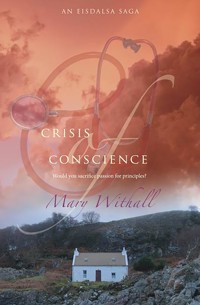
When Dr. Hugh Beaton dies of pneumonia, his son Ian decides to leave his new position in Edinburgh to take over his father's medical practice on Eisdalsa. As July 1948 approaches, the remote self-sufficient community of Eisdalsa in Argyll anticipates great changes in the provision of its health services. While it is generally agreed the proposals will be for the common good, the Beaton doctors are faced with significant career changes which threaten the unity of this close knit family.
Sie lesen das E-Book in den Legimi-Apps auf:
Seitenzahl: 538
Veröffentlichungsjahr: 2020
Das E-Book (TTS) können Sie hören im Abo „Legimi Premium” in Legimi-Apps auf:
Ähnliche




















MARY WITHALLWAS BORN IN 1930 near Epsom in Surrey. Having spent some thirty years as a lecturer in various colleges of technology, in 1988 she retired to Argyllshire where she began a new career as a writer. She has published six other Eisdalsa novels and three non-fiction works about the area in which she now lives, the Slate Islands of Netherlorn.
For Petre
First published 2009
eISBN: 978-1-913025-79-3
The paper used in this book is recyclable.
It is made from low-chlorine pulps produced in a low-energy, low-emission manner from renewable forests.
The author’s right to be identified as author of this book under the Copyright, Designs and Patents Act 1988 has been asserted.
Printed and bound by
xxx
Typeset in 10.5 point Sabon
© Mary Withall 2009
Contents
Foreword
1
2
3
4
5
6
7
8
9
10
11
12
13
14
15
16
17
18
19
20
21
22
23
24
25
26
27
28
29
30
31
32
33
34
35
36
37
38
39
40
41
42
43
44
45
46
47
48
49
50
51
52
53
54
55
56
Foreword
Like my other Eisdalsa novels which traced the history of general medical practice through the nineteenth and twentieth centuries, Crisis of Conscience is a work of fiction based on fact.
As one who has witnessed medical services in this country from a childhood in the 1930s, and who has made good use of the NHS when a student, as a young mother and latterly as an OAP, I can offer first-hand knowledge of the system from the receiving end. My teaching work in the field of sciences applied to medicine provided much of the academic background to this book and I also enjoyed the privilege of teaching nurses and nurse tutors in the course of a long career in Further Education. My researches included discussions with GPs and other doctors, in particular, Willie McKerrel and George Hannah, who between them have served the Easdale community where I live for a period which covers more than forty years of the sixty since the scheme was inaugurated. Statistical details owe much to a remarkable little volume by Graham Cannon, A Short History of the NHS, published in 1988. Historical references are drawn from the biographies of some distinguished politicians of the day, in particular, Aneurin Bevan and Michael Foot. I would like to thank my editor Jennie Renton for her wise counsel and my husband Petre for his technical skills with the computer, offered, always with the greatest patience, at every howl of frustration on my part.
1
IT WAS ONE of those April days in the Highlands when nature throws off the bleak drabness of winter and everything suddenly springs into life. A warm sun had drawn the fresh green leaflets of hawthorn and hazel from their brown buds and primroses peeped shyly from beneath the overhanging willow wands whose soft grey catkins scattered yellow dust on the dark sleeves brushing past. Daffodils glowed in the long grass beside the slate grey of the cemetery wall and here and there a flash of purple showed where an over enthusiastic violet had already dared to show its face. Beyond the wall sheep grazed, heavy with lamb and startlingly white after the recent showers, while a crown of golden gorse marked the horizon between green hillside and the brilliant blue of the western skies.
The church had been full to overflowing. They had chartered a bus to bring in the mourners from Oban and every one of the small fleet of vehicles which served the islands had arrived crammed with passengers. There were a few bicycles belonging to those who could attempt the steepest hills but most of the island people had walked along the narrow lanes, across the hills and over the bleak moor where the dead bracken crunched beneath their feet and the heather, just tinged with green following the snow, soaked boots and shoes especially polished for the occasion. Many had made the ferry crossing from the adjacent islands, for Hugh Beaton’s medical practice included all the inhabited islands in the Firth of Lorn.
Everyone had stories to tell about the doctor who had been such an important part of their lives for so long. Some spoke of having had to call him out on a wild night to make a sea crossing or to make a treacherous journey across the hills, on foot through fog or snow. They remembered how on such occasions he would arrive clad in waterproofs looking more like the fisherman pictured on sardine tins than their doctor. On these occasions he had never been heard to complain. Some even had stories to tell of emergency operations carried out on a kitchen table with only an oil lamp to see by, for the war had interrupted plans to bring electricity to the islands. Many could claim experience of a long night vigil to save a life or to draw one peacefully to a close.
Ellen Beaton drew back a little from the crowd gathered at the graveside. Despite their warm welcome and all their kindnesses, she still felt herself to be an outsider at this moment of family grieving. While she had grown to know and love Stephen’s parents, Annie and Stuart Beaton, she had met Hugh and his family only once before, when she and Stephen were married here, just a year ago. Then, Stephen’s aunt, Millicent, had been kindness itself, insisting that the reception must be held at Tigh na Broch because Annie and Stuart’s cottage on Eisdalsa Island was far too small for such an important event.
Ellen’s first visit to Eisdalsa had been very short. Stephen’s three cousins, all doctors, had taken special leave from their war duties to be at the wedding, but all three had gone by the next day. She had managed only a very brief exchange with Morag before she returned to her hospital job at Inverlinne, while Iain had left with his brother the following morning at crack of dawn to return to his regiment. Ellen had exchanged no more than a few words with David, the younger of Hugh and Millicent’s two sons. He had seemed rather quiet, she thought, almost withdrawn compared with his lively, outgoing siblings. She knew he held an important post in psychiatric medicine, and wondered if his work had some bearing on his somewhat distant manner.
While Stuart and his nephews, all three splendid in full Highland dress, took their places beside the coffin, Stephen placed himself opposite them. The most suitable outfit he had been able to lay hands on at such short notice was his full dress RAF uniform. How distinguished he looked standing there alongside the other mourners in their dark Sunday suits, men who had been lifelong friends of Hugh, either from the earl’s estate or from the village. When she and Stephen had taken their seats with the rest of the family in church that morning, Ellen had noticed a number of curious glances from the congregation, for those who understood the significance of the bands on the sleeve of Stephen’s tunic and could interpret a row of medal ribbons, might well be surprised. There weren’t that many medics in the RAF who had achieved the rank of Wing Commander or were entitled to wear the ribbon of the DFC.
At a pause in the proceedings, Ellen turned to the woman standing beside her. She had noticed her earlier, in the church. A solitary person immaculately turned out in the uniform of a district nurse. Ellen had at first supposed her to be one of the official representatives of the Local Authority, of whom there seemed to be a great many, but now she could see from the woman’s strained white face and sad eyes brimming with tears, that her pain was very personal.
‘Did you know Hugh Beaton well?’ she enquired, gently.
‘We worked together for a long time,’ the nurse replied, ‘and he has always been our family doctor. I grew up here on the island. In fact I once shared a desk with Iain Beaton in the village school.’
The nurse’s recollection raised a smile, which quite transformed her, making her younger and far more attractive.
‘I’m Alma Livingstone,’ she held out a gloved hand.
‘I’m Ellen. Ellen Beaton, Stephen’s wife.’ They shook hands.
‘I already knew who you were,’ Alma confessed. ‘I was in church the day you were married.’
Ellen looked a trifle embarrassed, feeling perhaps that she should have recalled their meeting. Alma added quickly, ‘You wouldn’t have noticed me. Everyone attends weddings and funerals here. You don’t wait for an invitation. We’re like one huge family.’
Ellen recalled the ceilidh they had had in the village hall after the official wedding reception. There had been so many people, she had wondered at the time how Stephen managed to amass so many friends when he himself had grown up in Glasgow, coming here only in his school holidays.
‘For a short while Stephen was at the village school too,’ Alma told her. ‘He was in the infants when Iain and I were in the top class. When his father returned in 1918, towards at the end of the first war, they went off to Glasgow. We didn’t see a lot of the Stuart Beatons after that.’
Ellen tried to imagine Stephen as an infant in the village school and couldn’t help smiling at the image the thought conjured. She regarded her companion with renewed interest.
Alma’s voice broke a little when she added, ‘It was Dr Hugh who recommended me to the Matron at the Cottage Hospital in Oban where I did my nurse training. I believe it was his word got me the job here. I owed so much to him. He was always very kind to my mother and me, especially after Dad died.’ The tears began to well again.
To spare the nurse’s embarrassment, Ellen turned her attention to the activity at the graveside and saw that Iain was looking in their direction and pointing them out to Stephen. He gave a smile and an almost imperceptible wave and when Ellen turned again to Alma, she noticed a flush in the nurse’s cheeks which had not been there a moment ago.
So the nurse had also seen Iain’s gesture. Whether it had been meant for Alma or for herself, she could see there was little doubt about Alma’s interpretation of that moment of recognition!
So that’s it, Ellen told herself. Well, it was high time one of Hugh’s sons found a wife. Iain must be past forty and David was only a year or two younger. Realising that her thoughts were straying, Ellen tried to focus on the proceedings, which were now reaching a climax.
Spanning the open grave, Hugh Beaton’s coffin rested beneath the Union Jack. Upon it lay his RAMC cap and cane from the Great War. Despite the fact that it had been the effects of that conflict which had blighted the remainder of her husband’s life, Millicent had insisted that Hugh would have wanted his military service recognised in this way.
‘It’s an impressive line-up.’ Stuart Beaton murmured to his nephews as they waited for the minister to take his place. He pointed out the Chief Medical Officer, who was conversing quietly with the Lord Lieutenant of Argyll. ‘I reckon old Hugh would have been pretty pleased with this send-off.’
The minister stood with his back to the afternoon sun. His unruly shock of white hair, blowing in the breeze, stood up like a halo around his shining, wrinkle-free brow and as he took up his position at the head of the coffin, his gown flapped around him like the wings of a raven preparing for flight.
The Reverend Archibald McCulloch spoke in a sepulchral voice loud enough to reach the furthest corner of the cemetery.
‘Man that is born of a woman has but a short time to live and is full of misery…’
Hugh’s widow clung to her daughter’s arm, wondering if she would be able to see this thing through to the end without giving way. For years she had struggled to maintain a calm outward appearance no matter what the turmoil within, and all those years of suppressing her true feelings had taken their toll. After a long week nursing her husband as well as holding the household together, she had been near the end of her tether by the time Hugh finally succumbed to the influenza virus. The disease had struck like a lightning bolt in the villages at the beginning of March and had kept both Hugh and Stuart on duty day and night with very little opportunity for sleep. Stuart had retired officially, the year before, but he could not stand by while his brother was run off his feet so despite Annie’s protestations, he too had joined battle with the disease and since Hugh’s death he had been running the practice, single-handed.
‘I must ask the CMO for the name of a good locum,’ Millicent told herself. It helped to think of practical matters. If she kept her mind busy with other things she did not have to be forever blaming herself, as she had been doing all week. Hugh had succumbed to the flu virus himself soon after an epidemic had been declared and rather than have him removed to the hospital, Millicent had undertaken to nurse him in the same way she had cared for him through all his troubles since the day the Army returned him to her, drained and disillusioned in 1918.
There had been many times in recent months when it had all got too much for her but rather than let Hugh see her distress, she would busy herself in the dairy or climb the hill behind the house and sit on the rocks gazing out to sea until she had calmed down. Since his death, however, she had been overwhelmed by self-recrimination.
‘I should have stopped him,’ she murmured, so quietly that Morag had to strain to hear what she was saying. ‘He ought never to have taken all those night calls in that freezing weather. I should have made him take more time off. I should have insisted he ask for help from the Chief Medical Officer.’
Morag squeezed her mother’s hand.
‘You did all you could, Mummy, much more than anyone should have expected of you.’
Millicent was not the only one to shoulder the blame for Hugh’s demise. As his doctor, Stuart Beaton was convinced he could have done more to prevent his brother’s death. He had confessed as much to Stephen and Ellen when he had met them from the train the day before.
‘In the old days I would have accepted the situation with a good grace,’ he admitted. ‘There was nothing one could do once pneumonia had set in but wait and hope for the best. Now of course we know that a shot of penicillin might have cleared the trouble up at once. I couldn’t get hold of any. Even Morag, with all her contacts, was unable to help.’
‘Penicillin is still in short supply, everywhere,’ said Stephen. ‘Even though we get a little, for our worst burn cases, we’re still expected to play God by deciding who can have it.’
Stuart nodded.
‘You’re right of course,’ he agreed. ‘It should be reserved for those who will benefit most. We’ve known for ages Hugh was living on borrowed time so it’s quite possible the penicillin wouldn’t have saved him anyway.’
‘We give thee hearty thanks, for that it hath pleased thee to deliver this our brother out of the miseries of this sinful world…’
As the service drew to a close, dark clouds began to gather on the horizon and a chill wind threatened to bring on the rain. The crowds melted away, the congregation hurrying to take shelter as best they could. At last, only the immediate family remained at the graveside. Millicent Beaton standing beside the open grave gazed on her husband’s coffin for the last time. With a strangled cry she turned away and clinging for support to an arm on either side, she allowed her two sons to escort her to the iron gateway which led out onto the road.
2
MILLICENT HAD INSISTED on holding the wake at Tigh na Broch. Stuart and Annie had tried to persuade her to engage Dougie McGowan from the Eisdalsa Inn to do the catering but she would not hear of it.
‘If I cannot make a few sandwiches and scones for my husband’s funeral tea, what use am I?’ she insisted and Stuart, seeing this as her way of picking up the pieces and getting down to the business of living, argued no further.
All the women of the family had been up since dawn and the dining room table creaked under its load of sandwiches, scones and pastries.
Now islanders, family friends and medical colleagues alike mingled cheerfully, tucking into the splendid feast like a hoard of locusts descending on a ripened wheat field. The first few drams loosened tongues and gradually conversations which had begun with the weather and its being a perfect day for a funeral, had turned to a thousand and one memories of Dr Hugh Beaton, some of them serious, others amusing.
‘What’s wrong with that?’ Annie wanted to know, when Stephen commented on the party atmosphere. ‘Hugh was a good man. He had a long and eventful life. It’s only right that it should be celebrated. He would have wanted people to have a few drams and a joke or two at his wake. Don’t you agree, Millicent?’
Her sister-in-law nodded absently, dabbing at her eyes with a damp, lacy handkerchief.
Stephen cast a professional eye over Millicent and saw that underneath her composed exterior she was quite exhausted. Her life had been changed so suddenly and so dramatically, he wondered how she was going to manage on her own. There was so much work here with the house and the farm. He supposed it would all be sold eventually. Millicent could do with a smaller place, perhaps a cottage like his mother’s. Maybe she would go and live on Eisdalsa Island. That would be nice for both her and for Annie.
‘Why don’t you two girls go into the conservatory,’ he suggested. ‘It’s quieter there. I’ll see if I can get someone to make you a cup of tea.’
‘Oh, would you dear,’ said Annie. ‘That would be lovely. Come along Millicent, it’s not every day we get a chance to be waited on.’
Annie led the way through the milieu and into the conservatory. It was pleasant to be away from the bustle and the noise. They settled, out of sight of the guests, in an arbour which had been created by the luxuriant growth of tropical plants, prominent among which were the orchids which had been one of Hugh’s consuming interests.
‘Isn’t it strange.’ Millicent spoke as though she were thinking out loud. ‘For all these years I have had to shoulder most of the burden of this place but now that Hugh’s gone, I just don’t know how I am going to manage without him!’
Annie said nothing to interrupt Millicent’s flow now she had, at last, started talking about what really mattered to her. For the past week Millicent had carried on running the household as before, showing little sign of her true feelings. It was time for her to let go.
‘It’s not that I didn’t love him,’ Millicent continued. ‘It was just that the man who returned from the war was not the man I married. He would never talk about the experiences that had changed him so much, but sometimes he would wake up in the night bathed in sweat, shouting out unintelligible things.’
Annie needed no telling. In 1918, her own husband had been returned to her by the Navy after three years, when everyone but she had believed him dead. There had been many nights when his experiences of war had returned to invade his dreams. Stuart’s response had been to immerse himself in his work. It had not been an easy life for a general practitioner between the wars. The patients that needed the most help were the ones least able to pay, but he had used the fees from his wealthier private patients to augment the meagre allowances provided by the various insurance schemes of the friendly societies to which most working men subscribed.
Hugh’s rural medical practice was very different. The slate quarrying operation which had sustained the economy of the area for two hundred years had fallen into decline. Many of the men had gone away to find work, leaving behind wives, children and elderly dependants, who, like the agricultural workers, were living at subsistence level. Hugh would never have been able to support his family solely on his work as a general practitioner. Between the wars he and Millicent had depended heavily on income from the family farm at Tigh na Broch. Few people realised that it had been Millicent who shouldered much of the responsibility for the management of the farm and who, with the help of a couple of hired hands, had undertaken the physical work as well.
‘The boys were too little to have remembered what their father was like before he went away but Morag was different,’ Millicent was saying. ‘As a wee girl she idolised Hugh, following him everywhere he went. In those days he adored his wee princess, as he always called her. They were inseparable. Often he would take her on his rounds and teach her all kinds of things to do with his work. I’m sure that was what inspired her to become a doctor. Morag never said anything,’ she went on, ‘but I used to see the bewilderment in her eyes when Hugh was sharp with her. She must have wondered what she had done to upset her father so. He took so little interest in what was going on with his children. What a good thing it was that her grandfather was there to encourage her.’
Annie couldn’t help but smile at this. Hugh’s father, David Beaton, had been a tower of strength to them all during those terrible times when Hugh was in France and Stuart missing, believed drowned; but as for encouraging his granddaughter, well, that was absolutely untrue. David had been totally opposed to his Morag becoming a doctor. It was Annie and Morag’s headmistress, Elizabeth Whylie, who had persuaded Hugh and Millicent to let their daughter study medicine. Millicent had taken a long time to convince. She had been quite adamant that medicine was no profession for a respectable young woman.
For a while the two women sat in silence, enjoying the peaceful interlude. Millicent, who had slept so little in the past few days, began to nod. She came to with a start when Annie suddenly got to her feet.
‘Stephen must have been waylaid,’ she said. ‘I’ll go and fetch that tea myself.’
Leaving Millicent alone with her thoughts, she rejoined the fray.
Amongst Millicent’s visitors that day was someone who believed he was the man to solve all her problems. Dermot Cameron owned the largest tenanted farm on the Isle of Seileach, grazing much of the better agricultural land as well as running a flock or two of sheep on some of the uninhabited islands in the Sound. It was his flocks which dotted the hillsides like confetti, and his ewes, with their young lambs, which found a way through poorly maintained fences in order to wander the village streets and destroy the plants in the tiny, well sheltered gardens by the shore. Fortunately for Dermot wool prices were still inflated following the war. His store cattle, a scruffy looking herd of carelessly interbred beasts, held the dubious distinction of commanding the poorest prices at the local market. His dairy herd of cross bred Friesians and Ayrshires, which provided milk for the surrounding district, faced slaughter once the Ministry of Agriculture began to enforce testing for bovine tuberculosis.
Dermot had long admired Dr Beaton’s magnificent prize bull and his herd of Highland cows, with their healthy calves and high milk yield. Taking the opportunity to catch Hugh’s widow at a low ebb and maybe strike a bargain that could lift him out of the clutches of the bank manager, he elbowed his way through the throng and found her sitting alone in the conservatory. This glassed-in extension spanned the front elevation of the house, giving access to the garden, with magnificent views across the meadows towards the rocky shore a few hundred yards to the west.
‘A grand send-off, Millicent,’ Dermot greeted her, ‘Old Hugh would have been delighted to see so many in attendance.’
Millicent smiled up at him, wanly. ‘It was good of you to come, Dermot,’ she replied automatically.
‘It was an excellent service,’ he continued, following the prescribed pattern to the letter. Millicent had heard it a dozen times already and scarcely listened.
Dermot allowed his gaze to rest on the prize bull grazing in the lower pasture.
‘What a fine old fellow that is. It will seem strange not to see him down there by the road as one drives past.’
Millicent turned a questioning gaze on him.
‘How do you mean?’
‘I naturally assumed that you would be giving up the farm. After all, it was Hugh’s hobby, wasn’t it?’
Dermot found it difficult to disguise his excitement at the thought of acquiring this herd of Highland cattle which had won awards all around the county and was the envy of every professional stockman. It seemed so unjust that a rank amateur should have done so well as a farmer.
Millicent regarded Dermot with a curious expression as though she had just woken up and was trying to remember what she had been dreaming about.
‘Give up the farm?’ she repeated. ‘Why should I give up the farm?’
‘I merely assumed…’ Dermot was at a loss to continue.
The output from the Beaton herd was insufficient for it to be a competitor for Dermot Cameron’s milk round. It was however famous locally for its butter and a unique range of cheeses. With the help of a single stockman and a couple of women from the village, the doctor and his wife had maintained the farm as a modest investment. Recently Hugh had spent more and more of his time amongst the animals, finding in their company the solace lacking in his human relationships. Sorlie McKinnon had looked after the day-to-day management of the stock when Hugh was otherwise occupied and the dairy had always been Millicent’s responsibility. The idea that things should not continue as before had never crossed her mind.
Placing her cup carefully on the little rattan table at her side, Millicent rose to her feet. ‘You will have to forgive me, Dermot,’ she said dismissively. ‘I really must attend to my other guests.’
Dermot followed her with his eyes as she mingled with the crowd in the drawing room. Perhaps it had been a bit precipitate of him to raise the question of the herd just now. Maybe he should wait a while before he approached one of the sons.
3
BY LATE AFTERNOON the last of the guests had departed and while the women of the household were busy in the kitchen clearing up, the men had gathered in the sitting room to discuss the future now that the head of the family was gone.
As Millicent reached for a tea towel, Annie stopped her.
‘You have done quite enough for one day Millicent,’ she said. ‘Leave it to the girls to finish up now.’
‘That’s right, Mother,’ Morag agreed. ‘You too Aunt Annie, it’s time you had a break. Why not go and join the men? Otherwise they will have your entire future mapped out for you before you have a chance to express any opinion.’
The two older women, grateful for any excuse to sit down, departed, giving Morag her first chance to become properly acquainted with her cousin Stephen’s wife.
Ellen Beaton lifted a pile of plates.
‘Where do these go?’ she asked, glancing around the generously proportioned kitchen. Generations of Beatons with their large families had accumulated great stocks of china and glass and rather than dispose of what was no longer wanted, they had provided more and more cupboard space to house it.
‘Best let me put away,’ suggested Morag. ‘Mind you, it’s so long since I had anything to do with running this house, I shall probably put everything in the wrong place! Perhaps you could deal with the cutlery.’ She indicated a large drawer in one of the dressers. ‘You can’t go wrong there!’
Ellen watched as Morag bustled about confidently. She had the bright auburn hair which distinguished all the members of the Beaton family, but unlike the men, the pale complexion of her Viking ancestry did not extend to invisibly fair eyelashes and brows. Her grey eyes were framed by long brown lashes, which gave them a peculiar radiance. Her high, intelligent brow, broad and as yet unlined, accentuated her finely cut features.
Both young women worked steadily, all the while exchanging their impressions of the events of the day. Gradually, as they began to feel more comfortable in one another’s company, the discussion rested upon more personal matters.
‘Do you have plans to return to Australia soon?’ Morag asked suddenly. ‘I seem to remember some mention of a visit to your parents at the wedding breakfast.’
‘Stephen had to stay on at the hospital while his boss went back to New Zealand to settle some family business,’ Ellen explained, ‘but Mr McIndoe is back now, so it should soon be Stephen’s turn for some leave. We’re hoping to get away in May. It will be autumn in Australia by then, a more suitable climate for Pommies.’
The reference to ‘home’ introduced a distinctly antipodean twang into Ellen’s speech.
‘You must miss your family, being so far away,’ Morag sympathised. ‘I don’t get home all that often, but I do have the consolation of knowing that if there is an emergency, I’m only a couple of hours’ drive away. Where do you two think you’ll live eventually?’
‘Stephen seems undecided about what he is going to do,’ Ellen confided. ‘I envy you and your brothers. You all seem so settled in your jobs and confident about the future. Down south, the whole medical world appears to be in a state of upheaval. Stephen’s colleagues can talk of nothing but this new National Health Service.’
‘I can’t speak for the men,’ Morag told her, ‘but I don’t think the new arrangements will affect me much.’
‘You’re not going to involve yourself in the political wrangle then?’ Ellen asked.
‘No. I might continue to do some consultancy work, but I think it’s time I paid more attention to my home and Duncan. We have both been so occupied with our work these past years, we’ve had precious little time to enjoy one another’s company.’
Ellen remembered Stephen telling her that Duncan McRae, older than Morag by some ten years, had made a lot of money from the manufacture of armaments. Morag had no need to work once she was married. She had continued with her job at Inverlinnie only because she wanted to.
‘What about you Ellen?’ Morag asked. ‘Will you go on working once Stephen leaves the RAF?’
‘It depends where he decides to go,’ Ellen answered. ‘There’s not a lot for me to do in East Grinstead. I’ve taken a job with the local vet but overfed moggies and pet poodles, not to mention their owners, are not my scene. I’m far happier dealing with farmers and their livestock. What I’d really like to do is carry on with the research programme I was engaged in when the war started.’
‘I thought you worked for the Ministry of Ag and Fish?’ Morag recalled.
‘Only after war broke out,’ Ellen explained. ‘I came over on a research scholarship, and was attached to the Veterinary College in London. As a matter of fact, the ideal place for me to continue with the research is back home, in Australia. It would be nice if Stephen could find an opening there.’
‘I don’t think Aunt Annie would be too keen on that idea,’ Morag observed. ‘Besides which,’ she gave the draining board a final rub down and tossed the wet dish towel over the radiator, ‘I’ve never had a female cousin before. I don’t want you to go rushing off before I get to know you properly.’ Morag was pleased to have such a good rapport with Stephen’s wife. They had a lot in common, each having succeeded in the struggle to gain a foothold in a man’s world.
Brought up within a typically Edwardian family, in which her mother had insisted upon maintaining the myth of the supremacy of its male members, Morag had had a supreme battle to become a surgeon. Once established in her profession, she had encountered few females in whose presence she felt really comfortable. Of the women who had featured in her early life, only Aunt Annie had understood her burning desire to make a career for herself.
‘Is it quite common for a woman to train for a profession in Australia?’ she wondered. ‘My mother nearly had an apoplexy when I announced I was going to be a surgeon.’
‘I’d always had a way with animals, especially horses. My mum and dad seemed to take it for granted I’d be a vet.’
Morag envied Ellen her freedom from the social barriers erected by the narrow, middle-class values upheld by her own parents. ‘How did the men treat you at the university,’ she asked.
‘I was the only girl in a class of thirty men. They never expected me to complete the course.’
‘I know the feeling!’
Morag could laugh now but there had been many moments of despair during in her long climb up the ladder of her profession. She grinned as she turned Ellen around and untied her borrowed pinafore.
‘C’mon, it’s time we joined the others!’
Ellen stopped to glance in the hall mirror and adjust her hair. Fine blonde tendrils clung to her sweaty brow. Reaching for her handbag which earlier in the day she had thrust beneath the hallstand out of the way, she pulled out a powder compact to make a few repairs.
Seeing her, Morag felt obliged to do the same.
‘What a mess!’ she exclaimed running her fingers through her tousled mop. She shifted a pile of hats, scarves and gloves to one side in search of her own bag and quickly gave up in disgust.
‘I don’t know how Mother manages the house these days, with just a daily help,’ she surveyed the chaos left by the departing guests. ‘There was always a live-in cook and a nanny in the old days. Now the only women employed here are in the dairy, and that’s only because the operation of the farm is subsidised by the Ministry of Agriculture.’
‘You have to face up to it Morag, the days of house servants are long gone,’ laughed Ellen. ‘I can’t see any of those young girls who have been in the Services or working in the factories ever accepting domestic service as an alternative, can you? The wages they demand will be far too much for most people to afford.’
Morag remembered the interviews she had conducted only last week at Achnafroach and how embarrassed she had been to offer the post of housemaid to a woman who six weeks earlier had been commanding a platoon of ATS on a parade ground somewhere in the Borders.
‘I suppose it depends on how much they need a job,’ she said. ‘Well paid work for women, no matter how talented, is not that easy to come by, especially up here in the Highlands.’
Ellen, having replaced her lipstick, put her bag back on the hall stand.
‘I’m ready,’ she announced.
4
‘SOMETHING HAS TO be decided about the practice, Mother. Uncle Stuart is not fit enough to take on the job on his own. After all, he’s supposed to be retired. Naturally, if the practice is put up for sale, the house will have to go with it. In any case, it’s far too large for you to manage alone.’
David Beaton, irritated by his mother’s endless string of sentimental reminiscences had perhaps put his point rather too bluntly but it was the subject they had all been trying to get around to for the past half hour.
Millicent regarded her son with the severe expression he remembered from their nursery days.
‘I was just waiting for Morag and Ellen to join us,’ she said testily. She motioned to Ellen, indicating the empty chair beside her. Morag joined her husband on the window seat.
‘It was your father’s wish that the practice should stay in the family,’ Millicent reminded them. ‘With four of you doctors, that can’t be too difficult. Surely there’s one of you will take it on? I realise it could be difficult for Morag, but what about you boys?’ She appealed to Iain who had propped himself against the mantle shelf while he cleaned his pipe, irritating her by allowing the dottle to fall into the grate. She held back the reproof which rose to her lips and turned to her younger son. ‘David?’
‘I know it means a lot to you, Mother,’ David said, ‘but I, for one, am not prepared to give up my career to bury myself in the country, lancing the occasional boil and dishing out a few aspirins. I’ve been offered a post as Superintendent of one of the London County Council Psychiatric Hospitals in Surrey and I have every intention of accepting.’
‘Congratulations Dave! That’s splendid news,’ exclaimed Stephen.
David, while accepting his cousin’s congratulations with good grace, looked to his brother for support in the question of the practice.
‘What about you, Iain?’
‘Perhaps we should hear what Morag has to say first,’ Millicent intervened. ‘After all, she is the oldest.’
Morag grasped hold of Duncan’s hand before replying.
‘General practice was never in my plans, Mother. As a matter of fact I’ve been offered an interesting research job which I can manage very well from home and I’ll probably be giving up my consultancy at Inverlinnie to do that.’
She smiled at Duncan as she spoke and he squeezed her hand affectionately. It was a relief to know she had made up her mind at last!
‘What about you, Iain?’ Despite his annoying habits, Millicent regarded her second child with affection. Of them all, he was most like the man she had married more than fifty years ago. Tall and broad shouldered, with that same shock of curly auburn hair; even his voice sounded like Hugh’s.
‘Well,’ he began hesitantly, ‘I can’t say that I haven’t thought about it a great deal over the years, especially when I was out there in France during that last long winter. I used to dream of nights by the fireside here and envied Pa his convenient list of well documented patients, most of whom were folk we had grown up amongst. D’you know, I even fancied myself carrying on the farm.’
He paused for a moment. The lengthening shadows emphasised the deep frown that grim memories had drawn across his brow.
‘When mutilated bodies are passing through your hands so rapidly that you don’t have time to put a name to them before they’re sent on down the line, you begin to see yourself as just a cog in a machine. There’s no satisfaction in that kind of medicine. I longed for the opportunity to watch just a few of my patients recover from their wounds. I used to think about Grandad and Father and how they had often boasted of caring for individuals from the cradle to the grave. If it were possible, I would gladly take on the practice. Unfortunately, it’s out of the question.’
‘Why?’ Millicent demanded. ‘What is there to stop you?’
‘Money. I don’t have any and that’s about the size of it. Do you have any idea what this practice is worth today? It must be thousands.’
‘Why should that bother you?’ Millicent asked. ‘Have I said one word about you having to buy it?’
‘No, Ma, but let’s be realistic. The others have a stake in the family business and anyway, there’s your own future to be considered. You have to have something to live on. The sale of the practice would provide you with a decent little annuity; enough to keep you comfortably for the rest of your life.’
Millicent would have protested, but he continued before she could interrupt him.
‘No, Mother, I’m quite determined. Unless I’m able to buy the practice outright, I don’t want any part of it.’
‘Now just a moment,’ Morag intervened. ‘Let’s look at this thing logically. If it was Dad’s wish that one of us should carry on the practice, then we ought to give the matter serious consideration. When we believed that none of us was interested, it was okay to talk of selling up. Now Iain’s saying that if he was in a position to, he would buy it.’ She glanced across at her brother, seeking his confirmation.
Iain nodded.
‘Well then, I don’t see any problem. Personally, I want nothing to do with the practice, and as for my share of the inheritance – I have everything I shall ever want. I’ll happily sign over my interest in the business to Iain.’
David remained silent. He had not anticipated anything from his father’s estate as yet, but he was not prepared to relinquish all interest.
‘If you will forgive me…’ Stephen intervened hesitantly.
Iain turned towards his cousin suspiciously. Was Stephen going to make a claim after all? The practice had been started by their great grandfather and carried on by their grandfather. Stephen had as much right to be considered as any of them. What was more, as a Wing Commander, his gratuity from the RAF would have been far more than either David’s or his own. He was probably in a position to offer enough money to buy the practice.
‘I don’t know how much attention you people have been paying to the discussions which have been going on at Westminster,’ Stephen continued, ‘but I understand that private practices are likely be subsumed by the National Health Service. Where the incumbent agrees to sign a contract with the Government, the authorities will pay rent for the business premises and assume responsibility for the cost of maintenance of that part of the building. What that means is that Aunt Millicent could expect a steady income from the surgery, waiting room and dispensary. The important thing is for Iain to be well established in the practice before the take-over, so that his appointment within the new set-up is assured.’
‘What would happen if Iain decided to pull out at a later date? How would that leave mother?’ David asked.
‘As I understand it, the house would remain Aunt Millicent’s,’ Stephen hastened to reassure him. If she chose to repossess the doctor’s premises, the Health Authority would have to provide suitable accommodation for the practice elsewhere.’
‘There, you see,’ Millicent smiled happily at them all, ‘Iain can come back here to live. I shall keep house for him and look after the farm with help from McKinnon. When the time comes that Iain needs the house for himself and his family, I shall move into the farm cottage. With a little fixing up, it will be ideal for a widow woman all on her own.’
‘You make yourself sound a hundred years old!’ laughed Morag. ‘But still, it seems the ideal solution. What do you think, David?’
David frowned. And what was going to happen when Millicent died? Chances were that Iain would end up with everything… house, farm, medical practice, the lot. He couldn’t help feeling unwilling to kiss his rightful inheritance goodbye. Accustomed as he was to analysing people’s reactions to every situation, he wondered whether these doubts arose from a genuine concern for his mother’s interests or from old sibling rivalries tinged with jealousy. Suspecting the latter and not liking himself for it he shrugged noncommittally but could not bring himself to express any agreement.
Morag’s husband, with the insight of the outsider and the mind of a businessman, appreciated David’s quandary and ventured a compromise.
‘Even within a close-knit family circle such as this,’ he observed, ‘it is a good idea to have matters of property set out within a legal framework to avoid argument and recriminations at a later date. Why don’t I have my solicitor draw up an agreement for you?’
‘That makes a lot of sense,’ said Stuart approvingly. ‘What do you say, Millicent?’
‘I can’t see that it’s necessary to be so formal,’ was Millicent’s emphatic response.
Morag glanced at her youngest brother, willing him to say something constructive. David was clearly relieved that Duncan’s suggestion had made it unnecessary for him to put forward a similar proposal.
‘Sounds okay to me,’ he assented.
Iain breathed more easily. An hour ago he had been resigned to the loss of the prize he had dreamed of for so long. Now there was every prospect that he might remain here at Eisdalsa after all.
‘Trust you to come up with the obvious solution,’ he said. ‘Thanks, Duncan.’
He shook his brother-in-law by the hand, kissed Morag on the cheek and returned to his place on the couch where David, smiling now that things had been settled to his satisfaction, was helping Millicent get to her feet.
When Iain attempted to give his mother a hug to show her how pleased he was, she ignored him and glared at Duncan. ‘No doubt that is the way things are done in business, but Hugh was always suspicious of lawyers. I’m quite certain we can get by without any legal rigmarole. Iain will take over the practice and I shall remain here with him. As for the inheritance, you children will just have to work things out for yourselves when the time comes.’
This new Millicent, so forceful and determined, was someone none of them recognised. For a moment the family was left speechless.
Ignoring the uncomfortable silence which followed her outburst, Iain thanked her effusively, promising to take care of her always. ‘We’ll get along fine together, Ma,’ he assured her.
Millicent released herself from his embrace and studied him at arm’s length. ‘Don’t expect me to go on taking telephone calls at all times of the day and night,’ she told him. ‘I’ve had a lifetime of that. It’s time you settled down properly. The sooner you get yourself a wife, the better!’
She had not meant it as a joke and seemed surprised when everyone laughed. Nevertheless, the tension had been broken.
‘I for one am delighted that the practice will stay in the family,’ Stuart declared. ‘So much so, that I’ll volunteer to continue to hold the reins until such time as Iain is relieved of his duties in Edinburgh. Only, don’t make it too long because I’ve committed myself to becoming the district representative for the BMA and will be obliged to attend quite a few meetings as we get nearer to July of next year.’
Stephen was taken completely by surprise at his father’s announcement. ‘Fancy keeping something like that to yourself, you old dog!’ he exclaimed, ‘That’s great news. Congratulations!’
‘Now we can be sure that the new Health Service will be in safe hands,’ Iain agreed, following suit with his own congratulations.
Stuart however, could not share their confidence. Already he had attended some meetings where he had found himself to be a lone voice in favour of Mr Bevan’s proposals. The majority of his colleagues appeared to be more concerned with their own position than with the extra benefits that might be enjoyed by their patients. If the top echelons of the British Medical Association were to have their way, Aneurin Bevan’s dream of health care for all, free at the point of delivery, was doomed to failure. While he acknowledged the family’s congratulations with a rather embarrassed smile, Stuart Beaton could only pray that they were right and he would be proved wrong.
5
ALISON MCKENZIE EMPTIED the steel pan in the sluice and thrust it into the steriliser with such force that the metal rang like a bell. The effort was sufficient to dispel at least a little of her anger. She rinsed her hands under the tap and dried them, pushing a wisp of hair out of her eyes as soon as she had done so.
Blast Sister! How did she imagine a girl could keep her hair tidy hauling patients in and out of bed and shoving furniture from one end of the ward to the other all day? Not a single word of appreciation for the fact that she had been the one to notice that Mrs McTavish had changed colour and was struggling for breath. The old girl would have died if she hadn’t called the crash team in time! As the experts went in with their resuscitator, all Sister had had to say to her was, ‘Fetch the monitor, Nurse, and be quick about it.’ When she returned pushing the massive trolley with its electrical cables dangling, it was, ‘Really, Nurse, don’t you know better than to leave wires trailing like that? You could trip someone up.’ And, ‘For goodness sake, girl, straighten your cap and tidy your hair, you look as though you had been dragged through a hedge, backwards!’
As Alison had fiddled with the pins which trapped her unruly curls beneath the ridiculous little cap, the woman was on at her again. ‘Answer that bell, Nurse. It will be Mrs Smithers wanting a bedpan.’
How had she known? Alison wondered. She’d probably forgotten that the poor old dear had asked her ages ago and was still waiting. Anyway, by the time Alison had got there it was too late and that had meant yet another bed to be stripped, the third on this shift!
She glanced at the fob watch attached to her apron. It was six thirty, another hour and a half before the night staff came on duty. Her feet ached, her back ached and her head was splitting. The nurses in those pre-war Dr Kildare movies never seemed to have such problems. Had she known it would be like this, she might have gone into a bank like her friend Kirsty or become a teacher like Katy Swinburn. It was those films that had made her decide to be a nurse. Those, and the way her mother’s eyes had lit up when she had said what she wanted to be. Lew Ayres was her film star pin-up. She had an autographed photograph stuck inside the lid of her desk at school. One of her cousin’s GI boyfriends had got it for her. Ever since she could remember, her one ambition in life had been to marry a doctor just like Dr Kildare.
As she made her way along the corridor past the bathroom and ducked to avoid being seen from Sister’s office, she caught a glimpse of the new surgical registrar all the girls were swooning over. It was unusual for Sister not to be hovering nearby. She seemed to have an instinct for knowing when doctors were on the ward and immediately went to them. This time, however, Alison aimed to reach him first. She checked that her fountain pen was still in her top pocket in case he wanted her to take notes.
Iain Beaton glanced up as she approached.
‘Ah, good,’ he said, ‘just the girl. Fetch me a chair, will you, Nurse. I’d like a chat with Mrs McDougall, just to let her know what we will be doing tomorrow.’
Alison felt the blood rushing to her cheeks and moved quickly to carry out his request. Sister was approaching rapidly from the far end of the ward. When she reached Mrs McDougall’s bed she halted, watching with pursed lips as Alison slipped past her carrying the chair.
‘Thank you, Nurse,’ she murmured, through clenched teeth. ‘You may go.’ As Alison turned away she called after her, ‘There is still the linen to be sorted for the laundry collection.’
Sister placed herself at the end of the bed, hands clasped in front of her, making it quite plain that she disapproved of the doctor’s casual approach to a patient in her charge.
Iain glanced up, smiled broadly and greeted her in a friendly manner.
‘Good evening, Sister Charles,’ he said cheerfully. ‘Just having a word with Mrs McDougall about tomorrow’s wee operation. We won’t keep you from your other duties!’
Sister Charles sniffed, disgustedly. This young man had a lot to learn about hospital etiquette. She must have a word with Mr Delaney. The principal consultant in surgery was unlikely to put up with such cavalier behaviour from his junior staff. Without another word she stalked off and Iain, grinning broadly at his minor victory, rubbed his hands together to warm them before placing them on Mrs McDougall’s swollen abdomen.
‘Yes, that’s an uncomfortable lump, Mrs McDougall,’ he said. ‘Better out than in, don’t you agree? Now, this is what Mr Delaney proposes.’
As Iain left the ward some time later, he collided with an untidy pile of bed linen approaching rapidly from the far end of the corridor.
‘Whoops, sorry Nurse,’ he said, as a couple of sheets fell from the top of the heap. He stooped to pick them up and found himself looking into a pair of green eyes as bright and sparkling as the Eisdalsa seas.
‘Where are you going with that lot?’ he asked, as Alison straightened up and re-balanced her load.
‘Just in here, Doctor,’ she indicated the door to the linen room. ‘Would you mind opening it?’
He reached around her to grasp the knob and the sleeve of his white coat brushed her bare arm, setting off a tingling sensation which almost made her gasp out loud. In spite of the overpowering scent of iodoform and carbolic soap, she could still detect a hint of the expensive pipe tobacco he smoked. It was her father’s favourite brand, Balkan Sobrani. The odour evoked memories of a childhood whose happiness had faded with the death of her mother in the first year of the war.
‘Thank you,’ she mumbled as she eased her burden past him and dumped it on the floor ready for counting into the laundry basket.
She turned, half expecting him to be gone, but Iain lingered in the doorway.
‘You’re new here aren’t you?’ he asked.
‘This is my first time on a surgical ward,’ she explained. ‘My last assignment before I take my finals in June.’
‘How’s it going? Sister a bit of a tyrant, is she?’ His sympathetic enquiry was almost too much for Alison. Despite every effort to control her emotions, she felt her eyes brimming with tears.
Sister Charles was a dragon where her staff were concerned but Iain could vouch for her knowledge and expertise. She was never slow to advise medical students and inexperienced housemen when she thought they were likely to slip up. Although she probably did not remember it now, there had been occasions in the past when Iain had had cause to be grateful to Sister Charles.
‘Don’t let her get you down,’ he said, alarmed to see tears trickling down Alison’s cheeks, ‘her bark’s much worse than her bite.’
He could see that she didn’t believe him.
‘No, honestly,’ he added hastily. ‘She was around when I was a student here, years ago. I promise you, if you stick it out, she’ll make a fine nurse of you. Her girls always do best in the exams.’
Alison tried to smile. She rubbed the back of her hand across her eyes, fiddled with her cap and tried to hide those unruly brown wisps which had once again escaped capture.
I’ll bet she’s a cracker out of uniform, thought Iain. He would love to get a proper look at those chestnut curls.
‘Best let you get on, before Sister comes back.’ He smiled broadly. ‘See you around,’ he added brightly. ‘Keep your chin up!’
He was gone through the swing door at the end of the corridor before she could reply. She watched until he was out of sight and then, with an unladylike sniff, rubbed her back where the pain was greatest and picked up the laundry list, checking off each of the items as she placed them in the basket.
An hour later, as the first of the new shift began to arrive, Alison was completing her reports before she went off duty. She looked up from the chart she was studying, to find Sister standing at her elbow.
‘Ah there you are, McKenzie,’ exclaimed the older woman. Alison wondered at the bright red colour in her cheeks. Could it be that Sister was embarrassed for some reason?
‘Mr Standish, the cardiologist, has just been in to check on Mrs McTavish. It seems that had you not observed her distress when you did and called for help, we would have lost her. Well done, Nurse!’
She stalked away, leaving Alison staring after her.
Perhaps it had not been such a bad day after all. She had at last made contact with an unmarried member of the medical staff who was under fifty and who, if not quite as handsome as Lew Ayres, was neither fat nor bald. What was more Iain Beaton was an inch or two taller than herself. Alison at five foot ten in her stockings, often towered over her dancing partners. It was a pity about that flaming red hair, but his eyes were nice. Then to round off what had turned out to be a pretty perfect day, the old dragon had shown a chink of humanity in that brittle armour of hers.
6
IAIN BEATON HAD returned to Edinburgh in a glow of euphoria. The local Medical Officer of Health had accepted his uncle’s recommendation that he take over the Eisdalsa practice, so the only task left was to deliver to the Superintendent the unwelcome news that he was about to lose his surgical registrar of only six months.
The wind caught him as he rounded the corner of the building, ruffling his hair and threatening to tear the papers out of his hands. Only in Edinburgh would you encounter a piercingly cold northeasterly like this in mid-May. That was another good thing about his decision to move back home. The Argyll winds were sometimes stronger but they were rarely as cold as this, even in midwinter. Iain put his head down and clutching the documents to his chest as he crossed the open square, he mounted the steps to the oldest part of the hospital.




